Avatar: Fire and Ash Review (dir. by James Cameron)


 “The fire came from the mountain… Eywa did not come. So I went to the fire, and I learned its way” – Varang

Avatar: Fire and Ash plays like a massive, molten crescendo for Cameron’s Pandora saga—visually overwhelming, emotionally heavier than the last two entries, but also very familiar in ways that will either feel comfortingly mythic or a little déjà vu, depending on your tolerance for repetition. The ash-choked skies, lava rivers, and volcanic Na’vi clans are often more compelling than some of the story beats, and the final stretch delivers the kind of operatic, war-movie scale that makes the three-plus-hour runtime go down easier than it should, even though the film clearly didn’t need to run this long.

This time around, the series leaves behind the cool blues and oceanic calm of the previous chapter for a harsher, volcanic corner of Pandora that feels like a nature documentary shot in a furnace. Jagged black rock, roiling lava, and smoke-stained skies dominate the frame, with creatures and plant life that look as if they evolved to survive heat and ash rather than coral reefs and open water, giving the movie an immediately distinct visual identity even when the story rhythms feel familiar.

At the center of this environment are the Ash People, or Mangkwan clan, a Na’vi group shaped by relentless scarcity and violence. They ride creatures adapted to fire and ash instead of waves, cover themselves in soot-black markings, and fight using a deliberate blend of traditional Na’vi weaponry and repurposed human tech, putting them ideologically at odds not just with the human invaders, but with other Na’vi clans who still cling to older, more spiritual ways of living with Eywa.

The story picks up with Jake and Neytiri’s family still reeling from Neteyam’s death, and the film leans hard into unresolved grief as its emotional baseline. Jake doubles down on his protector persona, treating every decision as a matter of survival, while Neytiri’s pain expresses itself as barely controlled rage, and that emotional weather trickles down to their children, who are increasingly frustrated at being treated like liabilities. The problem is that a lot of this family dysfunction was already unpacked in the second film, so instead of evolving those arcs, the script often feels like it is rehashing earlier conflicts.

The dynamic between Jake and Lo’ak is the clearest example of this repetition. Jake’s exasperation with Lo’ak’s impulsive, run-toward-the-bullets mentality resurfaces again and again, echoing arguments audiences have already seen: the father insisting his son isn’t ready, the son bristling at never being trusted. These moments still have emotional sting, but they circle the same drain so often that entire conversations could have been trimmed or removed without sacrificing character depth, and tightening that thread alone would have shaved a noticeable chunk off the runtime.

Where the film becomes more thematically interesting is in how it reframes Pandora’s conflict. Instead of a simple “Na’vi versus humans” setup, it pits the more traditional Na’vi clans—those still committed to a symbiotic relationship with Eywa—against the Ash People, whose warlike nature and embrace of human weaponry make them ideological outliers. That split plays as a pointed echo of historical events in the Americas, where European colonial powers armed and favored specific Indigenous nations to fight their neighbors, turning native communities into proxies in conflicts that ultimately benefitted outsiders more than the people doing the actual bleeding.

The analogy becomes sharper in how human forces hang back and quietly exploit these new divisions. By giving the Ash People access to superior firepower and nudging them toward confrontation, the outsiders effectively inflame existing grievances and reshape local power dynamics, much like colonial regimes once did by supplying guns and promises to one group while framing another as the enemy. The result is a Pandora that feels more fractured and politically complex, where internal Na’vi conflict is as dangerous as external invasion.

Varang, the leader of the Ash People, is one of the film’s strongest assets. She’s portrayed as a true believer who has taken real suffering and twisted it into a doctrine of purifying destruction, convinced that burning the world is the only way to save it. The character blends zealotry and charisma in a way that makes her both frightening and compelling, and she wields faith, desire, and fear as weapons with unnerving ease, giving the movie a volatile energy whenever she’s on-screen.

Her alliance with Quaritch pushes the story into darker, more uncomfortable territory. What begins as a pragmatic arrangement—a trade of firepower and influence for help tracking Jake—evolves into a twisted, intimate partnership that underlines just how far both are willing to go to achieve their goals. Their connection is meant to feel toxic and predatory, and it succeeds on that front, though some viewers may find the intensity of those scenes off-putting compared with the relatively straightforward romance and family dynamics of earlier entries.

On a craft level, the film is almost absurdly polished. Even if it no longer feels like a quantum leap in visual effects, the execution is meticulous: volcanic vistas glow with molten light, ash storms swirl with tactile grit, and the interplay of fire, smoke, and bioluminescence gives many shots a painterly quality. The action sequences rely on clear geography and patient staging, so even when the screen is full of creatures, machines, and chaos, it remains surprisingly easy to track who is where and what’s at stake.

The final act is where the movie unleashes everything it has: parallel battles on land, in the air, and over volatile seas, stitched together into a long, escalating crescendo. Familiar James Cameron signatures return—heroic last-second saves, nature itself intervening, climaxes that mirror earlier films—but the pacing of these sequences is handled with enough control that they rarely collapse into pure noise. Still, you can’t help but feel that with a leaner, more disciplined buildup, that climax would have hit even harder.

Structurally, the story leans heavily on patterns that loyal viewers will recognize. There is yet another relocation to a new culture, another period of uneasy assimilation, another slow slide into open warfare, and another sacrificial, emotionally charged finale. Whether that comes across as mythic repetition or simple recycling depends on how patient you are with Cameron’s tendency to “rhyme” his narratives rather than reinvent them.

Most of the main character arcs feel like refinements rather than reinventions. Jake remains the guilt-ridden warrior father terrified of losing his children; Lo’ak edges closer to full-on protagonist status as the reckless but big-hearted son; Kiri’s mystical bond with Eywa deepens while remaining intentionally enigmatic; and Quaritch once again fills the role of relentless, personal antagonist. With the same father–son friction repeatedly dragged back into the spotlight, the emotional landscape can feel stuck in place, and a stricter editorial hand might have refocused attention on the fresher elements—like Varang and the Ash People’s worldview.

Tonally, the film pushes into darker territory while still staying within a mainstream rating. The battles feel more brutal, with a greater emphasis on the physical cost of arrows, explosions, and close-quarters fighting, and there’s a persistent sense that no one is truly safe. That harshness extends to the emotional side as well, as the Sully family finds itself cornered into choices where every option exacts a price, reinforcing the idea that survival in this version of Pandora demands constant compromise.

Thematically, Avatar: Fire and Ash weaves together ideas about faith, extremism, and the way trauma can be weaponized. The Ash People act as a distorted mirror of earlier Na’vi cultures: a society that has taken genuine pain and turned it into an excuse for cruelty, abandoning balance in favor of cleansing violence. Layered on top of that is the divide-and-rule dynamic, where more technologically advanced outsiders stoke internal conflicts for their own advantage, mirroring how colonial powers in the Americas encouraged Indigenous groups to fight one another while expanding their control and extracting resources.

Despite all the digital wizardry, the performances still manage to cut through. Jake and Neytiri’s scenes carry the weight of years of loss and sacrifice, and there’s a believable exhaustion in the way they argue and compromise. The younger characters, especially Lo’ak and Kiri, feel more rooted and central than they did before, which helps sell the gradual shift toward a new generation, even if the script keeps dragging them back through conflicts that feel like reruns instead of genuine evolution.

At the same time, the movie sometimes undercuts its best character work in its rush to reach the next big set piece. Quieter moments that might have deepened side characters or given the Ash People’s beliefs more nuance are often compressed or sidelined, while scenes rehashing Jake and Lo’ak’s issues are allowed to run long. If the film had trusted audiences to remember the family dysfunction carried over from the second installment and cut down on repeated arguments, those smaller, richer beats could have had more space—and the whole piece would likely feel tighter and more focused.

For viewers already invested in Pandora, Avatar: Fire and Ash is clearly built for the biggest screen available: the volcanic vistas, layered sound design, and carefully staged action set pieces are all engineered to overwhelm in the best way. It delivers a darker chapter without abandoning the earnest, sometimes corny sincerity that has always defined this series, and as a conclusion to this phase of the story, it feels emotionally full even as it insists on revisiting familiar territory and stretching its narrative longer than necessary.

For more casual viewers or anyone who found the earlier films predictable, this is unlikely to be the conversion point. The structure is recognizable, the dialogue is often workmanlike rather than sharp, and the movie leans so hard into repeating certain family conflicts that it can feel like the story is padding itself instead of evolving. But if you can live with those flaws—the repetition, the length, the occasional heavy hand—the combination of technical craftsmanship, volcanic imagery, heavy emotional stakes, and that quietly pointed commentary on colonial-era divide-and-rule tactics makes Avatar: Fire and Ash a fiery, flawed, but undeniably impressive ride.

Avatar: The Way of Water Review


“I see now. I can’t save my family by running. This is our home. This is our fortress. This is where we make our stand.” — Jake Sully

Avatar: The Way of Water delivers jaw-dropping visuals and a sincere dive into family struggles, but it drags under its three-hour weight with repetitive plotting and uneven character depth that keeps it from breaking truly new ground.

James Cameron returns to Pandora over a decade after the original Avatar, catching up with Jake Sully and Neytiri as they’ve built a sprawling family amid fragile peace—only for human colonizers, the so-called Sky People, to crash back with upgraded tech, ruthless determination, and a deeply personal grudge led by a vengeful Colonel Quaritch reborn in Na’vi avatar form. This forces the Sullys into a desperate flight to the Metkayina, a reef-dwelling Na’vi clan whose ocean-adapted physiology and customs—broader tails for swimming, gill-like breathing aids, a deep spiritual bond with marine life—present a whole new cultural and environmental challenge, transforming the story from the first film’s jungle rebellion into a watery survival tale laced with themes of displacement and adaptation.​

What truly sets the film apart, even if the story treads familiar “pursued heroes vs. imperial baddies” territory without bold twists, is how it masterfully expands the Avatar universe’s worldbuilding, turning Pandora from a singular bioluminescent jungle into a teeming planet with diverse ecosystems and cultures. The Metkayina villages perch on floating lattices of woven kelp and coral, lit by phosphorescent anemones pulsing like underwater stars, while daily life revolves around symbiotic ties with ilu (skittish six-finned mounts) and skimwings (leathery ocean skimmers); nomadic Tulkun society—intelligent, philosophical whale-like beings communicating via sonic songs—clings to a strict non-violence “tulkun way” brutally shattered by human whalers.

These layers emerge organically through the Sullys’ awkward integration, like mastering fluid sign language or breath-holds for deep dives, and the spectacle dazzles relentlessly, powered by advancements in hyperrealistic CG that continue to erode the uncanny valley effect on characters—Na’vi faces now convey micro-expressions of pain, joy, and exhaustion with lifelike subtlety, their skin textures responding to water and light in ways that feel organic rather than synthetic.​

Bioluminescent reefs glow in electric blues and greens, iridescent fish schools dart through sun-dappled shallows, and massive Tulkun glide with skyscraper grace and scarred hides. Cameron’s pioneering underwater motion capture—actors in massive tanks layered with tactile CG—makes every bubble, flipper stroke, and coral sway palpably real, as Na’vi teens free-dive twisting kelp forests and maze-like atolls in lung-burning tension. The film also pushes 3D technology to new heights since the first film, baked natively into every frame rather than tacked on as a post-production gimmick—this integral approach ensures depth pops organically, from swirling plankton clouds enveloping swimmers to layered reef foregrounds framing distant horizons.​

The action peaks in the third-act frenzy of ship crashes against waves, flare-lit dogfights, Tulkun rams crumpling hulls, and a claustrophobic flooding vessel breach where air dwindles second-by-second. Cameron’s chaos clarity—echoing The Abyss or Titanic—ties stakes to family peril, amplified by thundering sound (crashing surf, whale calls, Na’vi gasps) and Jon Landau’s IMAX polish into sensory overload.

Family drives the lived-in, flawed emotional core: Jake (Sam Worthington’s gravelly gravitas) wrestles fatherhood’s math—stern orders backfiring into guilt—as he clashes with impulsive Lo’ak (Britain Dalton’s sulky edge), whose outsider rage forges a bond with scarred Tulkun Payakan, flipping “monster” tropes for real agency; dutiful Neteyam buckles under expectations, innocent Tuk (Trinity Jo-Li Bliss) witnesses horrors, and mystic Kiri—Grace’s avatar-born daughter linked to Eywa—teases lore like planetary souls, while Neytiri (Zoe Saldana’s fiery sorrow) simmers with grief-fueled, mama-bear savagery, her outbursts piercing deeper than rifles.​

These arcs convert invasions into gut punches on protection, belonging, parental failures, and war’s selfish costs—specific melodrama over generic heroism. Yet simplicity amplifies flaws over runtime: a chase loop (hunts, hides, teen trouble, repeat) grates, with middle sags of cultural lessons (sign language, ilu taming, Tulkun reverence) feeling like filler; humans are greed caricatures—whalers gutting pacifists for longevity goo amrita, suits enabling genocide—lacking nuance despite Earth’s biosphere desperation nods, preaching eco-colonialism to the choir. Neytiri gets benched post-roars (a co-lead letdown), Quaritch dangles complexity (death memories, Spider ties) but snarls relentlessly; reef archetypes (wise Tonowari, omen-Ronal, bully-to-ally Aonung) lopsided the cast, Tulkun elders out-nuancing humans.​

The film’s themes land with sincere force: whaling atrocities, from harpooned flesh and bloodied seas to a mother’s primal rage, hammer home human irredeemability without much subtlety, while family adaptation explores “forest people” taunts, strained bonds, and Eywa’s mystical interventions that weave personal growth into planetary balance—heartfelt without ironic quips, either refreshing in its earnestness or manipulative depending on your taste. Pacing remains deeply polarizing, offering immersive vibes for world-huggers who savor the slow builds but feeling bloated and front/back-loaded for plot purists impatient with the expansion-heavy middle.

Ultimately, Avatar: The Way of Water triumphs as a visual banquet and saga extender, hooking viewers with its aquatic marvels, raw parental fears, peerless craft (hyperreal CG and improved 3D elevating it), and smart universe growth through new clans, beasts, and lore seeds—all sans true narrative reinvention, as bloated length, repetitive echoes, and flat foes keep it from pantheon status. Fans of Pandora dive in sated; skeptics surface impressed by the technical wizardry yet impatient with the sprawl. It’s pure Cameron—huge swings promising more sequels ahead. Worth submerging for the spectacle.

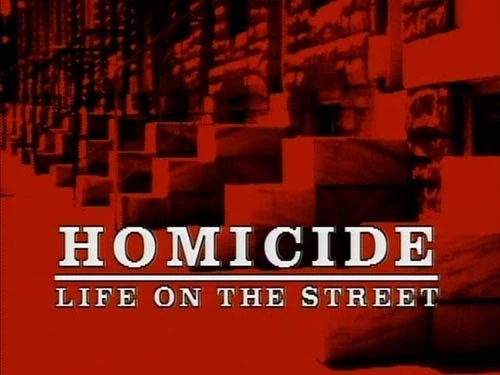
Retro Television Review: Homicide: Life On The Street 3.4 “Crosetti”


Welcome to Retro Television Reviews, a feature where we review some of our favorite and least favorite shows of the past!  On Sundays, I will be reviewing Homicide: Life On The Street, which aired from 1993 to 1999, on NBC!  It  can be viewed on Peacock.

This week, we discover why Steve Crosetti has not come back to work.

Episode 3.4 “Crosetti”

(Dir by Whitney Ransick, originally aired on December 2nd, 1994)

Detective Steve Crosetti has yet to return from a week-long vacation in Atlantic City.  When Giardello asks Lewis where Crosetti is, Lewis lies and says that he has the flu.  In truth, Lewis hasn’t heard from Crosetti but he remains convinced that his partner will soon return and will once again be annoying him with all of his theories about Abraham Lincoln.

Meanwhile, Bolander and Munch are called to the harbor.  A body has been fished out of the water.  The body has been in the water for a while and, from what we see, its bloated and the skin has turned the purplish color of decay.  Bolander and Munch have no idea who the man is but they see that he’s wearing a lapel pin that identifies him as a member of the Fraternal Order of Policeman.  They check the body for ID….

Lewis is called in Giardello’s office.  Giardello tells Lewis that Steve Crosetti is dead.  His body was found in the harbor.  Bolander is investigating but all signs seem to indicate that Crosetti’s death was a suicide.  Lewis refuses to believe it.  He is convinced that Crosetti was murdered, perhaps by someone he investigated.  Lewis takes out his anger on Bolander and Munch, feeling that they’re attempting to besmirch Crosett’s reputation by even considering the possibility of suicide.

It’s more than just Lewis’s feelings at stake.  If Bolander determines that Crosetti committed suicide, it will make him the fourth Baltimore cop to have committed suicide that year.  The brass says that Crosetti won’t get an honor guard if it’s determined that he committed suicide.  Giardello subtly suggests that Bolander should rule the death of homicide.  Bolander suggests that committing suicide was Crosetti’s final statement.   Who are they to ignore a man’s final statement?

In the end, the toxicology results reveal that Crosetti was drunk when he fell in the harbor, leading to Lewis saying the death was an accident.  Munch then reveals that Crosetti was also taking several anti-depressants at the time of his death and Lewis is finally forced to admit that Crosetti was not murdered.  Crosetti does not get his honor guard, though Pembleton, after spending the whole episode acting as if he didn’t care, puts on his full dress uniform and salutes as Crosetti’s casket passes.

This was an incredibly powerful episode, all the more so because no explanation is given as to what specifically led to Crosetti taking his own life.  The genesis behind the episode was not a happy one.  One of NBC’s conditions for renewing Homicide for a third season was that Jon Polito, who was not considered photogenic enough for television, be written out.  Showrunner Tom Fontana told Polito it would only be a temporary thing and that Crosetti would return once the show had been renewed for a fourth season.  Polito didn’t believe Fontana and went to the press, complaining about how the show was being run.  As a result, Crosetti ended his life.  (Polito and Fontana later ended their feud, allowing Polito to return as a ghost at the end of Homicide: The Movie.)  The show uses Crosetti’s suicide as a way to explore the psychological impact of being a cop as well as the impossibility of truly knowing what’s going on inside anyone’s head.  Only after Crosetti’s suicide has been confirmed can Lewis look back and see certain signs that Crosetti was unhappy.

Wonderfully acted and wonderfully written, this episode is a dark one but, as so often happens with life’s darker moments, there are moments of humor.  Pembleton brags about his parallel parking skills, just to discover that he can’t actually pull out afterwards.  An attempt to buy cookies for Crosetti’s reception leads to a fierce argument between Bayliss and Pembleton, regarding both the price of cookies and whether or not the baker was actually Italian.  We meet Munch’s younger brother, a rather bitter mortician.  When Lewis cleans out Crosetti’s desk, the first thing he pulls out is a slinky.  These are small moments but they affirm the humanity of the show’s characters and reminds us that the show and this episode in general is as much about living as it is about dying.

Steve Crosetti, RIP.

Retro Television Review: Homicide: Life on The Street 1.7 “A Dog and Pony Show”


Welcome to Retro Television Reviews, a feature where we review some of our favorite and least favorite shows of the past!  On Sundays, I will be reviewing Homicide: Life On The Street, which aired from 1993 to 1999, on NBC!  It  can be viewed on Peacock.

This week, everyone gets something to do!

Episode 1.7 “A Dog and Pony Show”

(Dir by Alan Taylor, originally aired on March 10th, 1993)

Still struggling to accept their failure to get the arraber to confess to the murder of Adena Watson, Bayliss and Pembleton find themselves investigating another mysterious death.  Jake, a healthy and apparently beloved member of the Baltimore police, has been found dead in a park.  No one is sure about the cause of death but Pembleton suspects that Jake may have been poisoned.  When Pembleton asks Jake’s partner (played by Nick Olcott) if Jake had any enemies, he replies, “Maybe just the Pekingese next door.”

Pembleton is determined to solve the mystery of Jake’s death.  Bayliss is less concerned with the case, largely because Jake was a dog.  Of course, as a member of a K-9 unit, Jake was also a member of the force.  Because Jake was a member of law enforcement, the Homicide unit is required to investigate his death.  Bayliss thinks that Pembleton’s interest in the case is just trying to show Bayliss up in front of Giardello but Pembleton claims that his only concer is seeing that justice is done.  Add to that, Pembleton just happens to like dogs.

And Pembleton does solve the case.  It turns out that Jake got loose and was picked up by an overworked animal control officer (Joy Ehrlich) who, back at the pound, mixed Jake up with another dog who was scheduled to be put down.  She only realized her mistake after Jake died.  In a panic, she dumped Jake’s body in the park.  Having solved Jake’s death, Pembleton and Bayliss attend his funeral.  As Jake’s partner dumps Jake’s ashes into a lake, Bayliss suddenly gets emotional.  He explains that he’s thinking about Adena.  Pembleton, for once, shows some sympathy for Bayliss.  It looks like the two are finally starting to bond and become true partners.  All it took was the death of one dog.  (I’m getting teary-eyed just writing that sentence.)

Meanwhile, Bolander continues to stress out about his relationship with Carol, which is a subplot that I find less and less interesting with each episode in which it is featured.  This time, Bolander and Munch take Carol’s teenage son, Danny (Stivi Paskoski), on a ride-along.  Bolander is disturbed at just how excited Danny gets about seeing a dead body.  When Danny says that he’d love to commit a murder and get away with it, Bolander decides that the kid is mentally disturbed.  He also lets Carol know that he thinks Danny is a bit sick in the head.  I get the feeling this relationship is not going to last much longer and that’s fine with me because Bolander’s love life (or lack thereof) is honestly the least interesting part of this show so far.

While all of that is going on, Crosetti tries to comfort the now blind Chris Thormann, who does not react well to the news that his wife (played by Edie Falco) is pregnant.  I’m not really a huge fan of the Thormann storyline, largely because I find it to be almost unbearably depressing.  But I do have to say that Jon Polito, Lee Tergesen, and Edie Falco all really gave great performance in this episode.

Howard and Felton investigate the murder of a drug dealer’s girlfriend.  This storyline was pretty typical of what you’d expect to see on a cop show.  The most interesting thing about it was the presence of Lawrence Gilliard, Jr. as an associate of the suspect.  Years later, Gilliard would play the tragic D’Angelo Barksdale on the first two seasons of The Wire, a show that feels like a direct descendant of Homicide.  (And, indeed, Richard Belzer did have a cameo as John Munch during The Wire‘s final season so the two shows do take place in the same universe, though it should be made clear that Gilliard is not playing D’Angelo in this episode.)

Finally, a retiring shift commander (played by Michael Constantine) warned Giardello that the bosses want to force out all of the veteran commanders so that they can be replaced by younger men.  As usual, Kotto shined in the role of Giardello, playing him as being the ideal boss.  In a police force where almost everyone else seems to be looking out for themselves, Giardello genuinely cares about the people working under him.

After the emotional intensity of the previous episode, A Dog and Pony Show feels a bit more like a traditional crime show.  It’s definitely an ensemble piece, with everyone getting something to do.  (Even Lewis gets to help out Felton and Howard while his usual partner, Crosetti, tends to Thormann.)  Though this episode doesn’t grab the viewer in the same way as the previous few episodes, it still gives the cast a chance to show off their strengths and it still features enough unexpected moments of mordant wit to keep things from getting too bleak.  (It’s hard not to smile at Bayliss and Pembleton bickering over dogs or at Yaphet Kotto’s delivery of the line, “I’m starting to dislike both of you.”)  This episode shows that, even with a somewhat conventional episode, Homicide could still get the job done without sacrificing its own unique identity.

Retro Television Review: Homicide: Life On The Street 1.5 “A Shot In The Dark”


Welcome to Retro Television Reviews, a feature where we review some of our favorite and least favorite shows of the past!  On Sundays, I will be reviewing Homicide: Life On The Street, which aired from 1993 to 1999, on NBC!  It  can be viewed on Peacock.

This week, the murders continue and two detectives continue to obsess.

Episode 1.5 “A Shot In The Dark”

(Dir by Bruce Paltrow, originally aired on February 24th, 1993)

As I watched this week’s episode of Homicide, it occurred to me that I really don’t care about Stanley Bolander’s relationship with Dr. Carol Blythe.

Seriously, I really did try to give this storyline a chance.  Bolander is played by the great character actor Ned Beatty.  Dr.  Blythe is played by Wendy Hughes.  Both Beatty and Hughes are no longer with us but they were both very good actors and I’m always in favor of giving good actors a plotline.  But, my God — Bolander is so whiny!  I mean, I get it.  He’s newly divorced and he’s unsure of himself and he’s a lot more comfortable investigating death than actually living life.  However, Dr. Blythe obviously likes him and Bolander had a fairly good date with her during the previous episode so why did he spend this episode afraid to talk to her on the phone?  During this episode, Bolander and Munch were investigating the murder of a drug dealer.  The only witness was a high-class prostitute who ended up hitting on Bolander, largely because she wanted him to buy her some food.  It was an interesting-enough case but instead of focusing on that, the whole thing was Munch telling Bolander to call Blythe and Bolander getting mad as a result.  It got old.

While Bolander whined about his relationship issues, Lewis and Crosetti continued to investigate the shooting of Officer Thormann.  Crosetti was convinced that Thormann had been shot by Alfred Smith (Mojo Gentry), largely because a man named Charles Flavin (Larry Hull) fingered Smith as being the shooter.  Lewis thought that Flavin was a more likely suspect, especially after Flavin failed a lie detector.  In the end, it was not superior police work that led to the arrest of Charles Flavin but instead his girlfriend telling Crosetti and Lewis that Flavin shot Thormann because he had a headache.  When confronted, Flavin immediately confessed and then started complaining about his migraine.

(As for Officer Thormann, he survives being shot in the head but he is now blind.)

Everyone is happy that Thormann’s shooter has been arrested but Crosetti finds himself wracked with guilt and self-doubt over the fact that he nearly arrested the wrong man.  In a wonderfully-acted moment, Crosetti tells Lewis that Giardello was right.  Crosetti was too close to Thormann to work the case.

Speaking of getting too involved in a case, Bayliss continues to obsess over the Adena Watson case.  After the incompetent Captain Barnfather (Clayton LeBouef) goes to a community meeting and reveals that a pipe was used to kill Adeena (and, in the process, ruins Bayliss’s plan to interrogate the man who he suspects is the murderer), Bayliss calls Barnfather and calls him a — cover your ears, if you’re young — “butthead.”  Barnfather is so offended that he comes to the station to demand that Bayliss be taken off the case.  Giardello tells Bayliss that he can either apologize or he can find another job.  Giardello also acknowledges that Barnfather’s an idiot and Bayliss has every reason to be upset.  Bayliss, who has a cold and is running a fever, apologizes and then tells Giardello that he’s willing to step down as primary and let Pembleton have the case.  Giardello, who really is the perfect boss, tells Bayliss to go home and get some sleep.

While Bayliss is losing his temper, Felton and Pembleton are investigating a man who lived in the neighborhood where Adeena’s body was found.  Felton’s theory is that the man killed Adeena and then kept her body in the trunk of his car before dumping her in the back yard where she was found.  The man’s car has subsequently been repossessed and Pembleton and Felton spend a night searching for the car on various impound lots.  When they finally find the car, they also find no evidence linking it to the Watson murder.  The focus of these scenes was less on the search for the car and more on listening to Pembleton and Felton bicker.  The two men sincerely dislike each other and Homicide deserves a lot of credit for acknowledging that working with someone is not the same thing as respecting them.  Pembleton views Felton as being a racist.  Felton views Pembleton as being a snob.  As they look for the car, they argue about everything, from the renaming of a street after Martin Luther King to Felton’s belief that Pembleton takes everything too personally.  Their argument is fascinating to listen to, largely because of the obvious disdain that each man has for the other.  Neither man is portrayed as having a monopoly on the truth.  Pembleton may be right about Felton’s prejudices but Felton is equally correct when he suggests that Pembleon is more concerned with showing up Bayliss than with investigating the case.  It’s the type of thing that you would never hear on television today.

In the end, the neighbor and his car prove to be a dead end.  But lab results come in that suggest that Bayliss’s suspicion that Adeena was killed by the local arabber may be correct.  While the rest of the squad celebrates the arrest of Charles Flavin, Pembleton and Bayliss prepare to bring in the arabber.

(According to Wikipedia, an arabber is a street vendor who sells fruits and vegetables from a horse-drawn cart.  Apparently, they’re a Northeastern thing and specifically a Baltimore thing.  Having grown up in the Southwest, I have to admit that I had never even heard the term before watching Homicide.)

All of the Bolander nonsense aside, this was a good episode that took a look at the mental strain involved in being a homicide detective.  Crosetti allowed himself to become so obsessed that he nearly arrested the wrong guy.  Bayliss allowed himself to become so obsessed that he nearly lost his job as a result.  Interestingly enough, Thormann’s shooter is captured because his girlfriend turned him in and not because of any superior policework.  Meanwhile, it’s easy to laugh at Pembleton and Felton spending an entire day chasing down a false lead but, in doing so, they eliminate the neighbor as a viable suspect and help to make the case against the arabber even stronger.  In the end, it’s a thankless job but this episode makes the viewer glad that someone’s doing it.

Next week, we finally meet the arabber!

Retro Television Review: Homicide: Life on the Street 1.4 “Son of a Gun”


Welcome to Retro Television Reviews, a feature where we review some of our favorite and least favorite shows of the past!  On Sundays, I will be reviewing Homicide: Life On The Street, which aired from 1993 to 1999, on NBC!  It  can be viewed on Peacock.

This week, things get emotional on Homicide!

Episode 1.4 “Son of a Gun”

(Dir by Nick Gomez, originally aired on February 10th, 1993)

Officer Chris Thormann (Lee Tergesen), a patrol officer who is friendly with the Homicide detectives and who is a bit of protegee to Steve Crosetti, has been shot.  While Thormann lies in surgery with a bullet in his brain, his wife (Edie Falco, in one of her first television appearances) waits for news from the doctors and tries to avoid the members of the callous press.  Crosetti demands to be put in charge of the investigation into Thormann’s shooting and when Giardello points out, quite correctly, that Crosetti is too close to the victim to be objective, Crosetti strips down to his boxers and shows Giardello the scars left behind by every time that he’s been shot.

It’s an odd scene, one that seems to come out of nowhere in an episode that, up until that moment, had been pretty serious.  Kotto does a great job of capturing Giardello’s horror as Crosetti drops his pants.  It’s obvious that this is not the first time that Crosetti has shown off his scars to get assigned to a certain case.  It’s a scene that shouldn’t work but it does work because not only is it well-acted by Yaphet Kotto and Jon Polito but it also captures the insanity of being a homicide detective.  Just four episodes in, Homicide has already shown that it can be a funny show but the humor is rooted in the darkest corners of the human experience.  To survive as a homicide detective, you have to harden yourself to the point of being callous and you have to be able to see the humor in just about everything.  Crosetti, with his constant analysis of the Lincoln assassination and his inventory of bullet scars, may seem crazy but actually, he’s doing what he has to do to survive.

The episode ends with Thormann alive but in a coma and possibly brain-damaged.  And it ends with the shooter still at large.  Crosetti has received an anonymous tip from someone saying that the killer was a man named Alfred Smith.  But who knows if that’s true.

The Adeena Watson case remains open, as well.  Bayliss and Pembleton are still struggling to figure out how to work together.  Bayliss is too obsessed with the case.  Pembleton is too determined to show up the new guy.  A raid on the apartment where it’s believed Adeena was murdered turns up nothing but more evidence of human misery.  That said, a cheerful guy (played by Paul Schulze) who claims to be an agent for hitmen does give up several of his clients, allowing Howard and Felton to close even more cases.  Even Calpurnia Church (Mary Jefferson), the “black widow” from the pilot, is finally arrested due to the agent’s testimony.

Finally, Stanley Bolander goes on his first date with Dr. Blythe.  Before going on his date, he meets his neighbor, Larry Molera (Luis Guzman).  Larry is a carpenter.  He’s built a coffin that is currently sitting in living room.  Bolander’s date goes well but the nervous Bolander turns down Blythe’s offer to go back to her place with her.  Bolander returns to his apartment, where he discovers that Larry is dead and lying in his coffin.  (Much, who was called when Larry’s body was discovered, is shocked to see Bolander.  Bolander is not happy that Much now knows where he lives.)  Larry’s death inspires Boland to return to Dr. Blythe’s apartment.

This was an emotional episode.  Thormann is clinging to his life while his wife and Crosetti wait for him to wake up.  The recently divorced Bolander finally found the courage to go out with Dr. Blythe.  Bayliss appears to be so obsessed with the Adeena Watson case that he’s struggling to think straight.  This episode takes a look at the mental strain that comes from dealing with crime and death on a daily basis.  It’s well-done, even if it’s not quite as memorable as Night of the Dead Living.  (The stuff with Larry and his coffin was a bit too self-consciously quirky to be as emotionally devastating as the show obviously meant for it to be.)  If I took anything away from this episode, it’s that fate is random.  Officer Thormann has been shot in the head but he survived hours of surgery.  Larry seemed to be healthy but he suddenly died while Bolander was on his date.  Adeena’s killer may never be caught while Calpurnia Church was caught because of an initially unrelated investigation.  Some of the detectives are skilled.  Some of them are not.  But, in the end, they’re all at the random mercy of fate.

Film Review: The Mother (dir by Niki Caro)


Jennifer Lopez is …. THE MOTHER!

The Mother is a professional assassin, a former U.S. military operative who has spent the last 12 years isolated in Alaska, hiding out from two of her former associates, drug lord Hector Alvarez (Gael Garcia Bernal) and mercenary Adrian Lovell (Joseph Fiennes).  In the past, The Mother went to the FBI when she discovered that Alvarez and Lovell were involved in human trafficking.  Lovell reacted by killing a bunch of FBI agent and attempting to kill The Mother’s unborn child by stabbing The Mother in the belly.  (I actually gasped in shock at this act of violence.)  Both The Mother and her daughter, Zoe, survived.

The Mother left her daughter to be raised by an FBI agent named William Cruise (Omari Hardwick).  But, twelve years later, Zoe (Lucy Paez) is kidnapped and The Mother has to come out of hiding to rescue her.  It’s a mission that will lead The Mother and Cruise to Cuba and which will eventually bring Lovell and his men back to Alaska.  Along the way, The Mother learns how to forgive herself and to how to open up emotionally and Zoe learns why her mother abandoned her so many years ago.  Zoe also learns that nature can be ruthless and unforgiving.

The Mother isn’t really a bad film as much as it’s just a very predictable film.  It’s very much from the Taken school of cinematic action, with a parent doing whatever is necessary to protect their children.  This is another one of those films where everyone tends to be very grim and there’s a lot of scenes of people coldly threatening each other.  The film opens with the FBI interrogating The Mother and the dialogue was so familiar and the attitudes so reminiscent of every single action film and television show that I’ve seen recently that I had to take a few minutes to remember which film I was watching.  Even The Mother’s eventual trip to snowy Alaska caused me to have flashbacks to both Those Who Wish Me Dead and the recent Dexter revival.  Oddly enough, it also reminded me of Sound of Metal, if just because The Mother‘s one friend in Alaska was played by Paul Raci.  It was nice to see Raci again.  With his haunted eyes and his kindly voice, he’s the type of guardian angel that everyone would want to have.  But again, it just all felt so familiar.

Jennifer Lopez gives a convincing performance as The Mother.  Though the film may be predictable, her commitment to protecting her daughter no matter what was undeniably moving and she and Lucy Paez has a believable mother/daughter relationship.  That said, Jennifer Lopez is always at her best when she’s allowed to play a character with a sense of playfulness and there’s little of that to be found in The Mother.  It’s a grim film about serious characters and it hits all of the expected beats with efficiency but not much more.  When it comes to 2023 Jennifer Lopez films, I still prefer the appealingly silly Shotgun Wedding.

Stallone Acts: Cop Land (1997, directed by James Mangold)


Garrison, New Jersey is a middle class suburb that is known as Cop Land.  Under the direction of Lt. Ray Donlan (Harvey Keitel), several NYPD cops have made their home in Garrison, financing their homes with bribes that they received from mob boss Tony Torillo (Tony Sirico).  The corrupt cops of Garrison, New Jersey live, work, and play together, secure in the knowledge that they can do whatever they want because Donlan has handpicked the sheriff.

Sheriff Freddy Heflin (Sylvester Stallone) always dreamed of being a New York cop but, as the result of diving into icy waters to save a drowning girl, Freddy is now deaf in one ear.  Even though he knows that they are all corrupt, Freddy still idolizes cops like Donlan, especially when Donlan dangles the possibility of pulling a few strings and getting Freddy an NYPD job in front of him.  The overweight and quiet Freddy spends most of his time at the local bar, where he’s the subject of constant ribbing from the “real” cops.  Among the cops, Freddy’s only real friend appears to be disgraced narcotics detective, Gary Figgis (Ray Liotta).

After Donlan’s nephew, Murray Babitch (Michael Rapaport), kills two African-American teenagers and then fakes his own death to escape prosecution, Internal Affairs Lt. Moe Tilden (Robert De Niro) approaches Freddy and asks for his help in investigating the corrupt cops of Garrison.  At first, Freddy refuses but he is soon forced to reconsider.

After he became a star, the idea that Sylvester Stallone was a bad actor because so universally accepted that people forgot that, before he played Rocky and Rambo, Stallone was a busy and respectable character actor.  Though his range may have been limited and Stallone went through a period where he seemed to always pick the worst scripts available, Stallone was never as terrible as the critics often claimed.  In the 90s, when it became clear that both the Rocky and the Rambo films had temporarily run their course, Stallone attempted to reinvent his image.  Demolition Man showed that Stallone could laugh at himself and Cop Land was meant to show that Stallone could act.

For the most part, Stallone succeeded.  Though there are a few scenes where the movie does seem to be trying too hard to remind us that Freddy is not a typical action hero, this is still one of Sylvester Stallone’s best performances.  Stallone plays Freddy as a tired and beaten-down man who knows that he’s getting one final chance to prove himself.  It helps that Stallone’s surrounded by some of the best tough guy actors of the 90s.  Freddy’s awkwardness around the “real” cops is mirrored by how strange it initially is to see Stallone acting opposite actors like Harvey Keitel, Robert De Niro, and Ray Liotta.  Cop Land becomes not only about Freddy proving himself as a cop but Stallone proving himself as an actor.

The film itself is sometimes overstuffed.  Along with the corruption investigation and the search for Murray Babitch, there’s also a subplot about Freddy’s unrequited love for Liz Randone (Annabella Sciorra) and her husband’s (Peter Berg) affair with Donlan’s wife (Cathy Moriarty).  There’s enough plot here for a Scorsese epic and it’s more than Cop Land‘s 108-minute run time can handle.  Cop Land is at its best when it concentrates on Freddy and his attempt to prove to himself that he’s something more than everyone else believes.  The most effective scenes are the ones where Freddy quietly drinks at the local tavern, listening to Gary shoot his mouth off and stoically dealing with the taunts of the people that he’s supposed to police.  By the time that Freddy finally stands up for himself, both you and he have had enough of everyone talking down to him.  The film’s climax, in which a deafened Freddy battles the corrupt cops of Garrison, is an action classic.

Though the story centers on Stallone, Cop Land has got a huge ensemble cast.  While it’s hard to buy Janeane Garofalo as a rookie deputy, Ray Liotta and Robert Patrick almost steal the film as two very different cops.  Interestingly, many members of the cast would go on to appear on The Sopranos.  Along with Sirico, Sciorra, Patrick, and Garofalo, keep an eye out for Frank Vincent, Arthur Nascarella, Frank Pelligrino, John Ventimiglia, Garry Pastore,  and Edie Falco in small roles.

Cop Land was considered to be a box office disappointment when it was released and Stallone has said that the film’s failure convinced people that he was just an over-the-hill action star and that, for eight years after it was released, he couldn’t get anyone to take his phone calls.  At the time, Cop Land‘s mixed critical and box office reception was due to the high expectations for both the film and Stallone’s performance.  In hindsight, it’s clear that Cop Land was a flawed but worthy film and that Stallone’s performance remains one of his best.


Insomnia File #33: The Comedian (dir by Taylor Hackford)


What’s an Insomnia File? You know how some times you just can’t get any sleep and, at about three in the morning, you’ll find yourself watching whatever you can find on cable? This feature is all about those insomnia-inspired discoveries!

http://www.youtube.com/watch?v=gLQXUmzXuEo

If you were having trouble getting to sleep around two in the morning last night, you could have turned over to Starz and watched the 2016 film, The Comedian.

It probably wouldn’t have helped.  It’s not that The Comedian is a particularly interesting movie or anything like that.  Abysmally paced and full of dull dialogue, The Comedian would be the perfect cure for insomnia if it just wasn’t so damn loud.  Robert De Niro plays an aging comedian named Jackie Burke and, in this movie, being an aging comedian means that you shout out your punch lines with such force that you almost seem to be threatening anyone who doesn’t laugh.  However, the threats aren’t necessary because everyone laughs at everything Jackie says.

Actually, it’s a bit of an understatement to say that everyone laughs.  In The Comedian, Jackie is such a force of pure, unstoppable hilarity that all he has to do is tell someone that they’re fat and literally the entire world will shriek with unbridled joy.  The thing with laughter is that, in the real world, everyone laughs in a different way.  Not everyone reacts to a funny joke with an explosive guffaw.  Some people chuckle.  Some people merely smile.  But, in the world of The Comedian, everyone not only laughs the same way but they also all laugh at the same time.  There’s never anyone who doesn’t immediately get the joke and, by that same token, there’s never anyone who can’t stop laughing once everyone else has fallen silent.  The Comedian takes individuality out of laughter, which is a shame because the ability to laugh is one of the unique things that makes us human.

Anyway, The Comedian is about a formerly famous comedian who is now obscure.  He used to have a hit TV show but now he’s nearly forgotten.  Why he’s forgotten is never made clear because nearly everyone in the movie still seems to think that he’s the funniest guy in the world.  Jackie’s an insult comic and people love it when he tells them that they’re overweight or when he makes fun of their sexual preferences.  This would probably be more believable if Jackie was played by an actor who was a bit less intense than Robert De Niro.  When De Niro starts to make aggressive jokes, you’re natural instinct is not so much to laugh as it is to run before he starts bashing in someone’s head with a lead pipe.

Anyway, the plot of the film is that Jackie gets into a fight with a heckler.  The video of the fight is uploaded to YouTube, which leads to a scene where his manager (Edie Falco) stares at her laptop and announces, “It’s going viral!”  Later on, in the movie, Jackie forces a bunch of old people to sing an obnoxious song with him and he goes viral a second time.  I kept waiting for a shot of a computer screen with “VIRAL” blinking on-and-off but sadly, the movie never provided this much-needed insert.

In between beating up the heckler, ruining his niece’s wedding, and hijacking a retirement home, Jackie finds the time to fall in love with Harmony Schlitz (Leslie Mann), a character whose name alone is enough to The Comedian one of the most annoying films of all time.  Harmony’s father is a retired gangster (Harvey Keitel) and you can’t help but wish that Keitel and De Niro could have switched roles.  It wouldn’t have made the movie any better but at least there would have been a chance of Keitel going batshit insane whenever he took the stage to deliver jokes.

I’m not sure why anyone thought it would be a good idea to cast an actor like Robert De Niro as a successful comedian.  It’s true that De Niro was brilliant playing a comedian in The King of Comedy but Rupert Pupkin was supposed to be awkward, off-putting, and not very funny.  I’m not an expert on insult comics but, from what I’ve seen, it appears that the successful ones largely succeed by suggesting that they’re just having fun with the insults, that no one should take it personally, and that they appreciate any member of the audience who is willing to be a good sport.  Jackie just comes across like a cranky old misogynist.  Watching Jackie is like listening to your bitter uncle play Vegas.  I guess it would help if Jackie actually said something funny every once in a while.  A typical Jackie joke is to refer to his lesbian niece as being a “prince.”  Speaking for myself, when it comes to Robert De Niro being funny, I continue to prefer the scene in Casino where he hosts the Ace Rothstein Show.

Perhaps the funniest thing about The Comedian is that, when it originally released into theaters, it was advertised as being “The Comedian, a Taylor Hackford film,” as if Taylor Hackford is some type of Scorsese-style auteur.  Taylor Hackford has been making films for longer than I’ve been alive and he has yet to actually come up with any sort of signature style beyond point and shoot.  The second funniest thing is that The Comedian was billed as a potential Oscar contender, up until people actually saw the damn thing.

Though it may have failed at the box office, The Comedian seems to show up on Starz quite frequently.  They always seem to air it very late at night, as if they’re hoping people won’t notice.  

Previous Insomnia Files:

  1. Story of Mankind
  2. Stag
  3. Love Is A Gun
  4. Nina Takes A Lover
  5. Black Ice
  6. Frogs For Snakes
  7. Fair Game
  8. From The Hip
  9. Born Killers
  10. Eye For An Eye
  11. Summer Catch
  12. Beyond the Law
  13. Spring Broke
  14. Promise
  15. George Wallace
  16. Kill The Messenger
  17. The Suburbans
  18. Only The Strong
  19. Great Expectations
  20. Casual Sex?
  21. Truth
  22. Insomina
  23. Death Do Us Part
  24. A Star is Born
  25. The Winning Season
  26. Rabbit Run
  27. Remember My Name
  28. The Arrangement
  29. Day of the Animals
  30. Still of The Night
  31. Arsenal
  32. Smooth Talk

Playing Catch-Up With The Films of 2017: Megan Leavey (dir by Gabriela Cowperthwaite)


One of the best (and, in my opinion, overlooked) films of 2017 was Megan Leavey.

Based on a true story, Megan Leavey tells the true story of … well, Megan Leavey.  When the film starts, Megan (played, in one of the best performances of 2017, by Kate Mara) is living a somewhat directionless life in upstate New York.  Her parents are divorced and she’s closer to her father (Bradley Whitford) even though she has more contact (and shares a much more strained relationship) with her mother (Edie Falco).  Speaking as a child of divorce, the scenes of Megan trying to navigate the mine field between her parents rang painfully true at times. I spent the entire movie waiting for Megan and her parents to have some sort of big moment where, in typical artificial movie fashion, all conflicts would be solved and everything would suddenly be okay.  To the film’s credit, that moment never comes.

Instead, Megan enlists in the Marines.  She finds herself assigned as a Military Police K9 handler.  What that means is that Megan finds herself in Iraq, working with a dog named Rex.  Rex’s job is to sniff out explosives and other threats.  One wrong move by either Megan or Rex will result in not only their deaths but also the deaths of everyone around them.  Remember how tense some of the scenes in The Hurt Locker were?  Well, that’s nothing compared to the intensity of the bomb-sniffing scenes in Megan Leavey.  After all, in The Hurt Locker, we only had Jeremy Renner to worry about.  Megan Leavey, however, features a truly adorable dog.

When Megan returns home from serving two tours in Iraq, she struggles with PTSD and the adjustment to civilian life.  Rex is assigned to a different handler and continues his duties, leaving Megan without the one creature that she felt she could trust.  And again, Megan Leavey deserves a lot of credit for not offering up any easy or pat solutions for Megan’s difficulties to adjusting to life back in the States.  It’s too honest a film and has too much respect for it audience to cheapen its narrative with easy or manipulative sentiment.

When Rex develops facial paralysis, he is retired from active duty.  With the help of her U.S. Senator, Megan adopted Rex and gave him a home until he passed away in 2012.  That senator was Chuck Schumer and thankfully, Megan Leavey resisted the temptation to cast Chuck Schumer as himself.  Instead, when Megan approaches her Senator on the Capitol steps, the senator is played by a professional-looking character actor who looks and sounds absolutely nothing like Chuck Schumer.  By making this simple casting decision, the film keeps the focus off of the politicians and on Megan and Rex, where it belongs.

Did Megan Leavey make me cry?  You better believe it did.  However, it earned every one of these tears.  This is a wonderfully sweet and moving film, one that works largely because it refuses to overemphasize the sentimental aspects of the story.  Instead, Megan Leavey always remains rooted in reality.  It’s a gritty film about a dog and a soldier who survived being sent to one of the most dangerous places n the world.  It’s the story of how Rex saved Megan’s life and how Megan returned the favor by saving Rex’s.  It’s a sweet, straight forward story that can be appreciated even by people, like me, who prefer cats.