The Film of Dario Argento: Two Evil Eyes


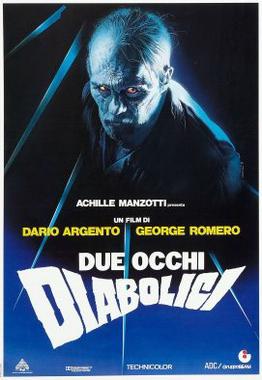
In 1990, long-time friends George Romero and Dario Argento collaborated on Two Evil Eyes, anthology film that was based on the writings of Edgar Allan Poe.  An Italian-American co-production, Two Evil Eyes featured two stories.  The first was directed by George Romero, while the second was directed by Argento.

The Facts In The Case of Mr. Valdemar

(Dir by George Romero)

The first story is Romero’s, a modernized version of The Facts In The Case of M. Valdemar.

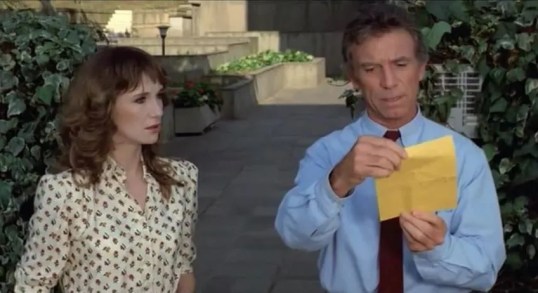
Jessica Valdemar (Adrienne Barbeau) is the 40 year-old wife of 65 year-old, Ernest Valdemar (Bingo O’Malley).  Jessica only married Ernest for her money and, now that he’s on his death bed, she and her lover, Dr. Robert Hoffman (Ramy Zada), have hypnotized to him to do and say whatever they tell him to say and do.  Even though Ernest is essentially comatose, the hypnosis allows them to force Ernest to sign his name to legal documents and to tell his suspicious attorney (E.G. Marshall) that he indeed wants to leave all of his money to Jessica.

When Ernest dies while under the influence of hypnosis, Jessica and Robert attempt hide his body in the basement.  But is Ernest really dead?  Jessica is convinced that she hears groaning from the basement and she wonders if the hypnosis has somehow left Ernest in limbo, between life and death.  Robert thinks that Jessica is being foolish but it turns out that she’s not.  After much paranoia and betrayal, one conspirator is dead and the other is a part of the living dead.

Usually, I like Romero’s work but this one didn’t work for me.  From the flat cinematography to the shallow performances, this film felt more like an episode of a television show than anything else.  Perhaps if it had been a stand-alone film, Romero could have found a way to make the material a bit more cinematic.  (The story’s final shot, of blood dripping on a hundred dollar bill, is the film’s strongest moment and the part that feels the most Romeroesque.)  But as a shortened chapter of an anthology film, it fell flat.

The Black Cat

(Dir by Dario Argento)

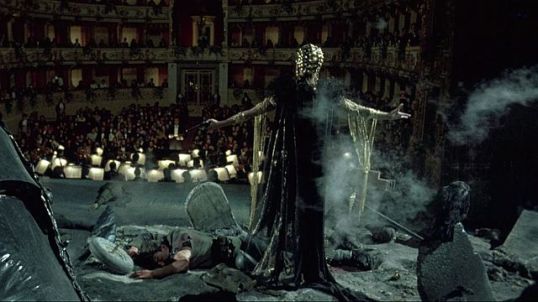
The Dario Argento segment is based on several different Poe stories.  While the majority of the story is taken from The Black Cat, it also contains elements of Annabel Lee, Telltale Heat, The Pit and the Pendulum, and Buried Alive.  Though this segment doesn’t really work, it’s obvious that Argento is a fan of Poe’s work and, for other Poe fans, there’s a lot of fun to be found in all of the Poe references that Argento sneaks into his story.

Harvey Keitel stars as Rod Usher, a crime scene photographer who loves his work a bit too much.  He’s excited about the fact that his book of photography is about to be published.  He’s less happy about the fact that his girlfriend, Annabel (Madeleine Potter), has adopted a black cat that is constantly glaring at Rod.  Rod is eventually driven mad by both the cat’s apparent hatred of him and the fact that the cat itself keeps showing up no matter how far he goes to get rid of it.  (This film features violence against a cat, which I hated.  But it also featured a cat getting revenge and I appreciated that.)  Eventually, Rod’s paranoia leads to violence and murder.

Look, this is a film about a guy who has an obsessive hatred of a cat.  Obviously, this is not a film that I’m going to enjoy because I love cats.  That said, I can still judge the film on its merits, even if it’s not for me on a personal level.  While Argento is able to build up a good deal of tension and suspense in this film, the overall film doesn’t work because Harvey Keitel, supremely talented actor that he is, was totally the wrong choice for Rod Usher.  Keitel, who reportedly did not get along with Argento during filming, gave a self-indulgent performance that featured a lot of bellowing.  It’s as if Keitel is trying to compete with the constantly moving camera.  The problem is that a star of a film like this has to be the director and Keitel’s histrionics take the viewer right out of the story.

Considering all of the talent involved, Two Evil Eyes is a disappointment.

The (Reviewed) Films of Dario Argento:

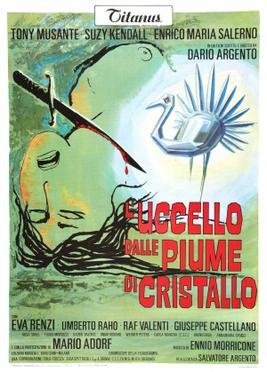
  1. The Bird With The Crystal Plumage
  2. Cat O’Nine Tales
  3. Four Flies on Grey Velvet
  4. Deep Red
  5. Suspiria
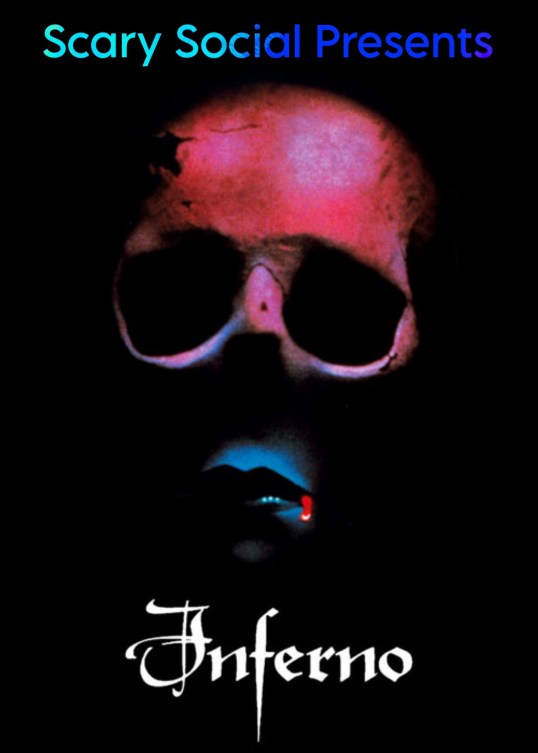
  6. Inferno
  7. Tenebrae
  8. Phenomena
  9. Opera

The Films of Dario Argento: Opera


It can be argued that 1987’s Opera is one of Dario Argento’s most personal films.

In the mid-80s, Argento was hired to direct an opera, in this case a production Giuseppe Verdi’s Macbeth.  Argento described the opportunity to direct an opera as being a case of one of his childhood dreams coming true.  Unfortunately, certain people were scandalized with the idea of hiring a director of violent horror films to direct the opera, even though Macbeth is one of the most horrific of Shakespeare’s plays.  I mean, if any story seems to be custom-made for a director who is known for his complex set pieces and his willingness to indulge in graphic imagery, it would seem to be Macbeth.  Despite this, the production was canceled and Argento was left feeling like an outsider in his own industry.

Along with his disappointment over the canceled production of Macbeth, Argento was also suffering on a personal level when he directed Opera because he had just separated from his long time partner and collaborator, Daria Nicolodi.  The two of them had a notoriously volitale relationship, one that led to some of Argento’s best films and reportedly some of his biggest on-set fights.  Despite the fact that they had split up, Argento still wrote a role for her in his latest film.  At first, Nicolodi refused the role but she changed her mind when Argento promised her the most spectacular death scene in the movie.  However, when it came time to shoot the scene, Nicolodi apparently grew paranoid that Argento was planning to kill her for real.  Fortunately, Nicolodi was incorrect about that and Argento was totally correct about her scene being one of the best in the film.

Opera takes place during a production of Macbeth, one that is directed by a controversial horror director named Marco (played by Ian Charleson, the star of the Oscar-winning Chariots of Fire).  When his star is injured in an auto accident, Marco is forced to cast the young understudy, Beth (Cristina Marsillach), as Lady Macbeth.  Despite the doubts of many, Betty gives a strong performance in the role.  She stuns the audience.  Perhaps the power of her performance is due to her own traumatic memories of her mother being murdered by a never captured assailant.

Speaking of murder, people around Betty start dying as well, often while Betty is forced to watch.  The black-gloved killer often come out of nowhere, gags Betty, and ties her to whatever is nearby.  The killer always tapes a row of needles under Betty’s eyes, keeping her from being able to close them or to look away as the killer then proceeds to murder her friends.  The first victim is Betty’s handsome boyfriend, Stefano (William McNamara).  The second murder is a costumer (Barbara Cupisti).  Three of the opera’s ravens are killed, leaving the remaining ravens determined to get revenge.

Betty, it should be noted, refuses to go the police about what she has witnesses because she thinks that the killer is the same person who murdered her mother.  You have to wonder at her logic or the fact that director Marco agrees with her decision.  Personally, if I witnessed a murder as brutal as the murder of Stefano, I would go to the police.  It’s hard to really sympathize with Betty’s decision, as much as the film seems to think that I should.

Opera has a lot of fans and it does feature some of Argento’s strongest visuals.  Towards the end of the film, there’s an extended raven attack in the opera house that is one of Argento’s greatest set pieces.  And, for all of her fears that she was about to be killed for real, Daria Nicolodi’s shocking death scene is Argento at his best.  Both Ian Charleson and Urbano Barberini give excellent performance and, even if the genesis of the film was found in Argento’s anger over his canceled version of Macbeth, there’s a lot of affection to be found in the film’s portrayal of what goes into putting on a massive production.  One gets the feeling that, for once, Argento actually likes the majority of the characters in the film.

That said, I have to admit that there are a few things that I don’t particularly care for in Opera.  If I liked Phenomena more than most viewers, I like Opera a bit less.  After each murder, Argento attacks our ears with heavy metal and I assume the point is to contrast the stateliness of the opera with the chaos of the killer’s actions.  But, while I can respect Argento’s logic (assuming that was his logic), the music itself tends to be repetitive and, after the second time that we hear it, it gets kind of boring.  And Betty is not a particularly sympathetic protagonist, both due to the way she’s written and also Cristina Marsillach’s less than convincing performance in the role.  Reportedly, Argento and Marsillach did not get along during filming and perhaps that explains why her performance never really seems to come alive.  Everyone in the film insists the Betty is a revelation of Lady Macbeth but there’s nothing about Marsillach’s performance that makes us believe that.  It’s hard not to feel that the film would have been improved if Cristina Marsillach and Barbara Cupisti had switched roles.

(Director Michele Soavi, who has a small role in this film, did later cast Cupisti as the lead in his film Stage Fright and watching Cupisti in that film, it’s even easier to imagine her as the lead in Argento’s film.)

The film ends on a strange note, one that seems to serve as a call-back to Phenomena.  What I find interesting is that critics who like the film overall tend to be critical of the ending and the idea of Marsillach talking to a lizard.  Whereas I, someone who does not like the film quite as much as some others, absolutely loves the ending because it’s just so weird and it comes to use from out-of-nowhere.  It’s as if Argento is saying, “You might have kept me from directing an opera but it’s my movie and I’m in control here.”

Opera did well in Italy and the rest of Europe but, as was so often the case, Argento was screwed by his American distributors.  Opera was originally supposed to get an American theatrical release but, when the distributor went bankrupt, the film was only given a video release, with much of the gore edited out to ensure that the film received an R-rating and could be carried by Blockbuster.  (That’s right.  Blockbuster wouldn’t carry anything above an R.  Where’s your God now, video nerds?)  Fortunately, all that was edited out was put back in when Opera was released on DVD in 2002.

The (Reviewed) Films of Dario Argento:

  1. The Bird With The Crystal Plumage
  2. Cat O’Nine Tales
  3. Four Flies on Grey Velvet
  4. Deep Red
  5. Suspiria
  6. Inferno
  7. Tenebrae
  8. Phenomena 

Horror Scenes That I Love: Daria Nicolodi in Deep Red


Born in Florence, the outspoken Daria Nicolodi had already appeared in a quite a few films before Dario Argento cast her as the female lead in 1975’s Deep Red.  Nicolodi would spend the rest of her career being closely associated with Argento, both as Dario’s partner and as the mother of Asia Argento.  Dario and Daria had a notoriously volatile relationship.  While one can sense Argento falling in love with Nicolodi while watching the way he films her in Deep Red, she is noticeable in her absence from Suspiria despite the fact that she is generally acknowledged as being the one who came up with the idea of the film.  (Angered that, despite the collaborative nature of their partnership, Argento did not offer her the lead role in Suspiria and instead offered a supporting role that Nicolodi felt was not particularly interesting, she instead accepted an offer from Mario Bava and gave what is generally considered to be her best performance in Shock.)  She appeared in Dario’s subsequent films, through Opera.  She eventually split with Argento and continued her film career, playing Asia’s mother in Scarlet Diva.  Daria Nicolodi also became a popular and witty interview subject, one who was always good for a few shocking quips.  While Daria could be very critical of Dario in those interviews, she was also often the quickest to defend his talent as a director.

Daria Nicolodi appeared in a lot of horrifying scene but today, I want share this rathe gentle scene from Deep Red, in which Daria’s journalist playfully challenges David Hemmings to a little arm-wrestling.  It is scenes like this that make Deep Red one of the greatest examples of the giallo genre.

The Films of Dario Argento: Phenomena


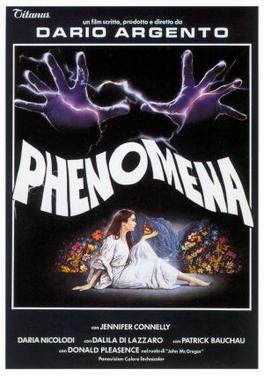
First released in 1985, Phenomena is the Dario Argento film with all the insects.

Phenomena is one of the most divisive of Argento’s film.  Throughout the years, many critics have cited Phenomena as being the first Argento film to not really work.  Some have called it Argento’s worst and most self-indulgent film and the first sign that he had lost his way.  At the same time, I know quite a few people who consider Phenomena to be among Argento’s best films.  The one thing that both camps seem to have in common is that their takes are all inspired by the film’s use of insects.

That said, Argento has always claimed that Phenomena is less about the insects and more about a world in which the Nazis conquered Europe.  Much as with Argento’s claim that Tenebrae is actually a science fiction film, the idea that Phenomena takes place in a Europe controlled by Nazis can be found but only if you specifically look for it.  For instance, the film is set in the Swiss countryside, with a similar emphasis on the mountains and the forests that were present in the German propaganda pictures that were taken of Hitler and his inner circle “relaxing” at his mountain residence.  Much of the film takes place at a private school that is named after Richard Wagner, where the privileged students — with their always crisp uniforms and their haughty attitude — feel as if they could be descendants of the kid who sang Tomorrow Belongs To Me in Cabaret.  One of the chaperones at the school is a German woman named Frau Bruckner (Daria Nicolodi).  Again, much as with Tenebrae, Argento has said the Phenomena takes place in a world where terrible things have happened but the population has collectively decided to forget about them.  Willfully forgotten seems to have been a major theme for Argento in the years following his unhappy experience with Inferno.

The film opens with the murder of 14 year-old Danish girl named Vera Brandt (played by Fiore Argento, the director’s daughter) who is a part of a tour group but who misses her bus.  When she walks through the Swiss countryside in search of help, she comes across a house that’s not as abandoned as it originally.  She is attacked and beheaded by the house’s resident.  Eight months later, Vera’s decaying and maggot-covered heard is discovered and taken to forensic entomologist John McGregor (Donald Pleasence).  Though McGregor uses a wheelchair, he has a monkey named Inga who takes care of him.  Inga is quite capable with a straight-razor.

Meanwhile, chaperoned by Frau Bruckner, Jennifer Corvino (Jennifer Connelly) has just enrolled in the Richard Wagner Academy For Girls.  Jennifer is the daughter of a Hollywood star.  (Argento originally wanted Jennifer to be Al Pacino’s daughter, with Pacino playing himself.  Pacino reportedly turned Argento down.)  Jennifer is also a sleepwalker who has an intense mental connection with insects.  Insects do her bidding and, in return, Jennifer protects them.  When Frau Brucker and her chauffeur attempt to kill a bee, Jennifer is able to calm down the bee and set it free from the limo.

Jennifer struggles to fit in at the Academy.  Much like Jessica Harper’s Suzy Banyon in Suspiria, she discovers that the other students are an idiosyncratic and not particularly friendly group.  Whereas poor Suzy Banyon just had to accept her situation, Jennifer has an army of insects on her side and she’s willing to call them down on her snooty classmates.  Of course, when Jennifer isn’t communing with the insects, she’s having to deal with the fact that she witnessed a murder while she was out sleepwalking.  Haunted by images of the murder and being stalked by the murderer, Jennifer also learns that Frau Bruckner wants to send her to a mental hospital for being “diabolic.”

Jennifer’s only real friend in Switzerland is John McGregor and it must be said that Donald Pleasence, who was so misused in so many horror films in the 80s and 90s, is perfectly cast as the eccentric but kindly entomologist.  Pleasence was one of those actors who could deliver even the strangest of lines with enough gravity to make them memorable and McGregor’s easy acceptance of the idea that Jennifer has a psychic connection with insects make it much easier for the viewer to accept it as well.  As well, McGregor’s friendship with the monkey is far more touching than it has any right to be.

Phenomena is an odd mix of giallo and fantasy, with the brutal and violent murders uneasily playing out with more lyrical scenes featuring the beauty of Switzerland and the loyalty of the animal kingdom.  Perhaps the best way to view Phenomena is as being an extremely bloody fairy tale, with Jennifer as a Cinderella-figure who depends on nature to stay safe from the adults and the students who stand in for the wicked stepmother and the ugly stepsisters.  Visually, there are moments of haunting beauty in the film.  There are other moments in which Argento seems to be determined to test how long the audience would be willing to accept the idea Jennifer and her insect army.  Because of the whimsical insects, the film is often described as being an oddity in Argento’s filmography but actually, psychic insects and animals would pop up in future Argento films, so it seems that this was something that had obsessed him for a long time.  Either that or the negative reaction afforded to Phenomena inspired Argento to continue to use the insects as his way of letting the critics know his true opinion of their worth.

I have to admit that I am amongst those who like Phenomena.  It’s such a strange film that it’s hard for me not to admire it and, much as with Suspiria, the film benefitted from having a strong female protagonist in Jennifer Calvino.  (For her part, Jennifer Connelly has said that she’s not particularly a fan of Phenomena.)  Finally, this is a film that gave Donald Pleasence a chance to show what an engaging actor he could be when he had the right role.  Critics be damned, I like this movie!

The (Reviewed) Films of Dario Argento:

  1. The Bird With The Crystal Plumage
  2. Cat O’Nine Tales
  3. Four Flies on Grey Velvet
  4. Deep Red
  5. Suspiria
  6. Inferno
  7. Tenebrae

The Films of Dario Argento: Tenebrae


A few Octobers ago, I got the bright idea to try to review all of Dario Argento’s films over the course of TSL’s annual horrorthon.  Unfortunately, I got that idea on September 29th, two days before the start of Horrorthon.  I managed to make my way through Inferno until I had to temporarily abandon the project to focus on everything else that was going on that month.  However, since I’m not the type to fully give up on anything, I figured this would be the great year to finish up my Argento reviews.

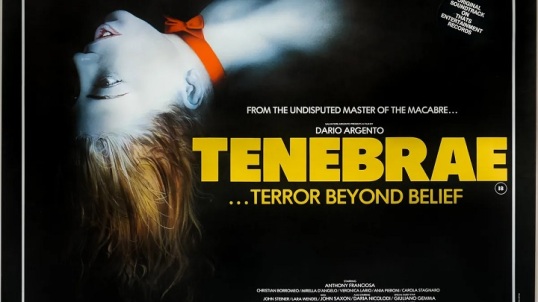
Following the commercial failure of Inferno, a disillusioned Dario Argento returned to Rome.  His bad experience with 20th Century Fox had soured Argento on continuing to work with Hollywood and his struggles to film Inferno (as well as his increasingly strained relationship with girlfriend Daria Nicolodi) left him with little desire to continue The Three Mothers trilogy.  Instead, he focused on a new idea, one that was inspired by his own experience with an obsessed fan who had left vaguely threatening messages for him when he was in New York.  Released in 1982, Tenebrae was Argento’s return to the giallo genre and it would turn out to be a very triumphant return, even if in, typical Argento fashion, it would take a few years for many people to realize just how triumphant.

Argento himself claimed that, while the film was certainly a giallo, it was also his first stab at science fiction.  In an interview that appeared in Cinefantastique, Argento said that the film was meant to take place a few years in the future, after some sort of calamity had occurred that has greatly reduced the world’s population.  Interestingly, Argento said that the survivors were largely from the upper class and that none of them wanted to talk about or remember what had happened.

Is the science fiction element actually present in this film?  I think it is, though perhaps only because I’ve specifically looked for it.  Rome, as portrayed in Tenebrae, is a city that is full of sleek but impersonal buildings, the type that would have been recently built by a wealthy society that was unsure of what it believed.  Argento specifically avoids filming any scene near any historical landmarks, suggesting all of the evidence of Rome’s former greatness has been wiped out.

Perhaps the most futuristic element of the film (and the most prophetic) is that no one really seems to have a connection with anyone else.  The crowd scenes in Tenebrae aren’t really that crowded, even the ones that take place in what should be a busy airport.  (In many ways, the film’s portrayal of a Rome that is both busy but strangely empty brings to mind Jean Rollin’s portrayal of Paris in The Night of the Hunted.)  Even when we see people socialize, there seems to be an invisible barrier between them, as if they don’t want to run the risk of getting too close to each other.  When one character is fatally stabbed while out in public, perhaps the most disturbing aspect of the murder is that so many people just walk away, as if they’ve been conditioned to ignore anything unpleasant.  The only thing that prevents this scene from feeling like a vision of 2023 is that there aren’t a bunch of people filming the victim’s final moments on their phone.

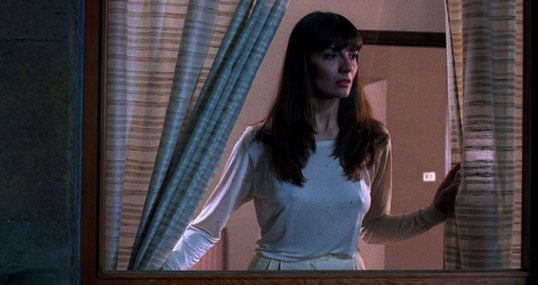
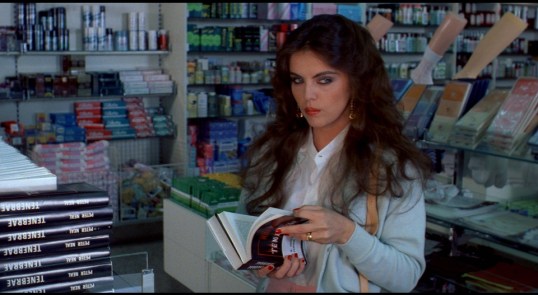
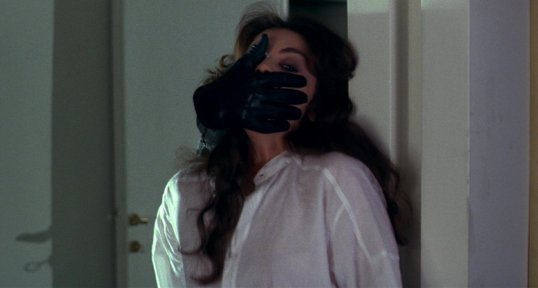
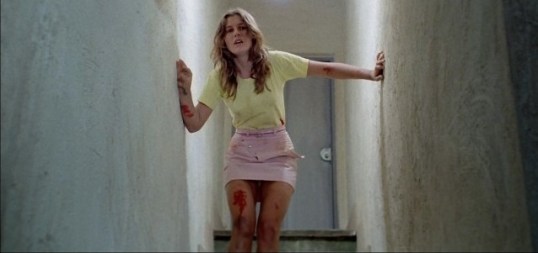
The film opens with a sequence that, as a former teen shoplifter, left me feeling disturbed.  Elisa Manni (Ania Pieroni, who played The Mother of Tears in Inferno and the enigmatic housekeeper in Fulci’s The House By The Cemetery) is a shoplifter who gets caught trying to steal the latest book by thriller novelist Peter Neal.  After being released, the carefree Elisa walks back to her home and, after being menaced by both a barking dog and a pervy old man, Elisa arrives in the safety of her house, starts to undress, and is promptly attacked by a black-gloved killer who slashes her neck and stuffs pages of Neal’s book into her mouth.  It’s not just the murder that makes this scene disturbing but also the fact that the killer was somehow waiting for Elisa in her house, establishing that this is a world where the safety of even a locked door is an illusion.

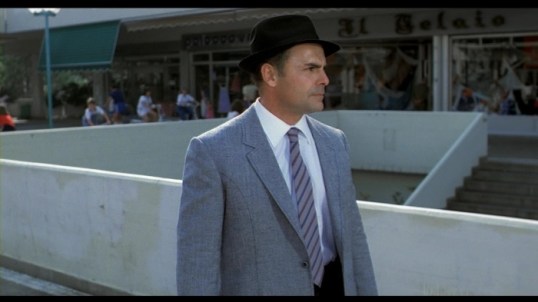
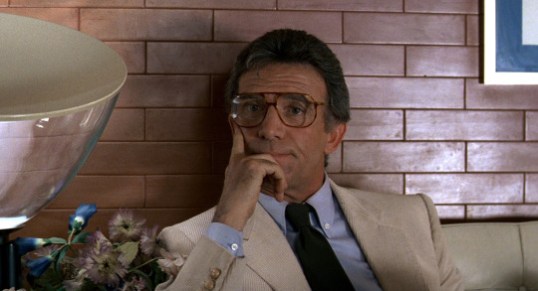
Peter Neal (Anthony Franciosa), who we first see riding his bicycle in New York, has come to Italy to promote his latest book, Tenebrae.  He arrives in Rome with his manager, Bullmer (John Saxon, giving a likable performance) and his assistant, Anne (Daria Nicolodi).  Confident to the point of arrogance, Peter is a pro at dismissing claims that his books are violent and misogynistic but even he is taken aback when an old friend of his, the journalist Tilde (Mirella D’Angelo), suggests that Tenebrae might inspire violence.

Peter Neal is a celebrity and a pretty obvious stand-in for Argento and everyone in the film is obsessed with him.  His ex-fiancée, Jane (Victoria Lario), has followed Peter to Rome, intent on getting some sort of revenge for the way that he treated her while they were together.  (Daria Nicolodi felt the vindictive and unstable Jane was based on her, which was another thing that strained her notoriously volatile relationship with Dario.)  Peter’ young assistant, Gianni (Christian Borromeo, of Deodato’s The House on the Edge of the Park and Fulci’s Murderrock) hero worships him.  The puritanical talk show host, Christiano Berti (John Steiner), wants to interview Peter about the morality of his books.  And the killer, whoever they may be, is leaving letters for Peter, informing him that his book have inspired the killer’s crimes.  Detective Germani (Spaghetti western star Giuliano Gemma) is investigating the letters and he is an admitted fan of Peter Neal’s novels but, somewhat alarmingly, he mentions that he’s never able to guess the killer’s identity.

Argento’s camera restlessly prowls his futuristic Rome while Goblin’s music booms on the soundtrack as the people in Peter Neal’s life are murdered by a killer wearing black gloves and carrying a straight razor.  The murder scenes feature some of Argento’s best work, directed in such a ruthless and relentless manner that we understand the killer’s determination without having to see their face.  This is a film of elaborate set pieces and, as if in direct response to 20th Century Fox’s attempts to control his work on Inferno, Argento is eager to show what he can do when left alone.  The film is remembered for the sequence where the camera glides over the exterior of an apartment building while the killer stalks the inhabitants but, for me, the scariest scene is when poor Maria (Lara Wendel), the daughter of Neal’s landlord, finds herself being chased straight into the killer’s lair by a very viscous Doberman.

When the film does slow down, it’s for flashbacks to a beach and acts of sexual violence performed by and against an enigmatic woman (who is played by transgender performer, Eva Robbins).  The beach flashbacks unfold in a hazy, dream-like manner and they leave us to wonder if what we’re watching is real or if it’s just a fantasy.  If the “modern” scenes feature Argento at his most energetic, the beach scenes feature Argento at his most enigmatic.

Daria Nicolodi often said that she considered her final scene in this film to be Argento’s greatest act of cruelty to her.  Coming across the killer’s final tableaux and discovering the truth about who the killer is, Anne stands in the rain and screams over and over again.  Nicolodi apparently felt that Argento required her to stand there soaked and screaming in order to punish her for having worked (with Tenebrae co-star John Steiner) on Mario Bava’s Shock, instead of having accepted a supporting role in Suspiria.

Whatever personal motives may have been involved in the decision, I think Nicolodi’s screaming is one of the most powerful moments to be found in Tenebrae.  It’s certainly the most human moment because I think anyone with a soul would scream upon learning the truth of what has been happening in Rome.  Every assumption that Anne had has been overturned.  Who wouldn’t scream?  Continuing with Argento’s claim that the film was about a world where people no longer discuss the terrible things that have happened, Anne’s screams are the most human part of the movie.

Tenebrae is the last of Agento’s truly great and flawless films.  Of course, in usual Argento fashion, it was not treated well in the States, where it was initially released in a heavily edited version and with a terrible title (Unsane, under which it can still be found in certain Mill Creek box sets).  But Tenebrae has since been rediscovered and today stands as one of Argento’s greatest triumphs.

The (Reviewed) Films of Dario Argento:

  1. The Bird With The Crystal Plumage
  2. Cat O’Nine Tales
  3. Four Flies on Grey Velvet
  4. Deep Red
  5. Suspiria
  6. Inferno

8 Shots From 8 Horror Films: Special Dario Argento Edition


8 Shots From 8 Films is just what it says it is, 8 shots from 8 of our favorite films. As opposed to the reviews and recaps that we usually post, 8 Shots From 8 Films is all about letting the visuals do the talking.

This October, I am going to be using our 8 Shots From 8 Films feature to pay tribute to some of my favorite horror directors, in alphabetical order!  That’s right, we’re going from Argento to Zombie in one month!

As you might have just guessed, today’s director is Dario Argento.  And these are 8 shots from 8 films!

8 Shots From 8 Dario Argento Films

The Bird With The Crystal Plumage (1970, dir by Dario Argento, DP: Vittorio Storaro)

Deep Red (1975, dir by Dario Argento, DP: Luigi Kuveiller)

Suspiria (1977, dir by Dario Argento, DP: Luciano Tovoli)

Inferno (1980, dir by Dario Argento, DP: Romano Albani)

Tenebrae (1982, dir by Dario Argento, DP: Luciano Tovoli)

Phenomena (1985, dir by Dario Argento, DP; Romano Albani)

Trauma (1993, dir by Dario Argento, DP: Raffaele Mertes)

The Stendhal Synrome (1996, dir by Dario Argento, DP: Giuseppe Rotunno)

Live Tweet Alert: Watch Bird With The Crystal Plumage with #ScarySocial


As some of our regular readers undoubtedly know, I am involved in a few weekly live tweets on twitter.  I host #FridayNightFlix every Friday, I co-host #ScarySocial on Saturday, and I am one of the five hosts of #MondayActionMovie!  Every week, we get together.  We watch a movie.  We tweet our way through it.

Tonight, for #ScarySocial, I will be hosting 1970’s Bird With The Crystal Plumage!  I can’t wait to watch Dario Argento’s directorial debut with everyone!

If you want to join us on Saturday night, just hop onto twitter, start the film at 9 pm et, and use the #ScarySocial hashtag!  The film is available on Prime and Tubi.  I’ll be there co-hosting and I imagine some other members of the TSL Crew will be there as well.  It’s a friendly group and welcoming of newcomers so don’t be shy.

Scenes That I Love: The Puppet Scene From Deep Red


Today is a special day here at the Shattered Lens as we celebrate the birthday of Dario Argento!

Now, we’ve got a lot of Argento-related stuff scheduled for October so, for today, I’m just going to share one of the best scenes from one of my favorite Argento films, 1975’s Deep Red.  This scene features what is seriously the creepiest puppet that I’ve ever seen.

Live Tweet Alert: Watch Dario Argento’s Inferno with #ScarySocial


Inferno (1980, dir by Dario Argento, DP: Romana Albano)

As some of our regular readers undoubtedly know, I am involved in a few weekly live tweets on twitter.  I host #FridayNightFlix every Friday, I co-host #ScarySocial on Saturday, and I am one of the five hosts of #MondayActionMovie!  Every week, we get together.  We watch a movie.  We tweet our way through it.

Tonight, for #ScarySocial, I will be hosting 1980’s Inferno!  Dario Argento’s sequel to the original Suspiria is one of his best films, a dream-like exploration of the dark and the disturbing.  I can’t wait to share it with everyone!


If you want to join us on Saturday night, just hop onto twitter, start the film at 9 pm et, and use the #ScarySocial hashtag!  The film is available on Prime.  I’ll be there co-hosting and I imagine some other members of the TSL Crew will be there as well.  It’s a friendly group and welcoming of newcomers so don’t be shy.


2022 In Review: Lisa Marie’s Top 30 Films of 2022


Without further ado, here are my top 30 films of 2022!

(Why 30?  Because Lisa doesn’t do odd numbers!  Also, be sure to check out my picks for 2010201120122013201420152016201720182019, 2020, and 2021!  Wow, I’ve been doing this for a while!)

30. Marcel The Shell With Shoes On (dir by Dean Fleischer Camp)

An animated film with heart, Marcel The Shell With Shoes On would probably be ranked higher if Marcel’s favorite news show had been something other than 60 Minutes.  Still, questionable viewing habits aside, Marcel and Nana Connie and all the other shells were amazing characters and the end of the movie brought tears to my mismatched eyes.  With this film and I Want You Back, Jenny Slate had quite a year.

29. Ted K (dir by Tony Stone)

Released in February of this year, this film about Ted Kaczyski and his descent into madness was unfairly overlooked. Sharlto Copley was perfectly cast as Ted K.  This is a film that probably won’t make Ted’s supporters happy but, at the same time, it also avoids painting him as just being a straight-out madman.  It’s refusal to simplify makes the film far more than just another true crime biopic.
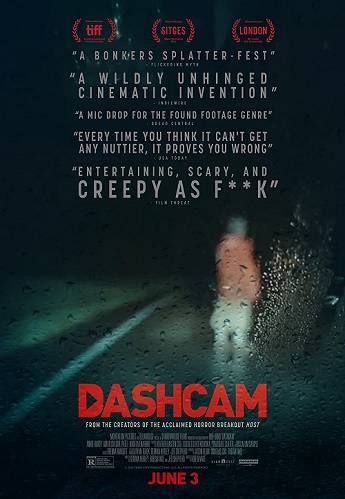
28. Dashcam (dir by Rob Savage)

Starring Annie Hardy as herself, this low-budget horror film is a scathing satire of life during the age of COVID and performative “wokeness.”  After the past few years, there’s something rather cathartic about Hardy’s refusal to obey.

27. The Batman (dir by Matt Reeves)

At this point, I’m fairly cynical about comic book movies in general and Batman films in specific.  I mean, how many Batmen have we had over the past ten years?  (Actually, I think only four but it feels like a lot more!)  That said, I enjoyed The Batman, for both its noirish atmosphere and it’s willingness to embrace the melodrama.  You have to love the fact that the villain was basically a nerdy podcaster.

26. Operation Mincemeat (dir by John Madden)

Based on a true story, this film was a throwback to the earnest World War II films of the past.  Colin Firth, Kelly MacDonald, Matthew McFayden, and Johnny Flynn were all well-cast and did their part to bring this moment of WWII history to life.
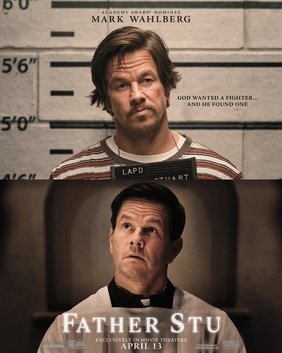
25. Father Stu (dir by Rosalind Ross)

You don’t have to be from a Catholic background to appreciate Father Stu but it probably helps.  This was one of those roles that only Mark Wahlberg could have pulled off.

24. See How They Run (dir by Tom George)

This stylized murder mystery was terrifically entertaining and witty.  Sam Rockwell and Saoirse Ronan are both treasures.

23. I Want You Back (dir by Jason Orley)

Two friends conspire to win back their respective romantic partners and end up falling in love with each other instead.  This was an enjoyable comedy, one that was blessed with an outstanding cast that included Jenny Slate, Charlie Day, Scott Eastwood, and Gina Rodriguez.  The scene in which Jenny Slate sings Suddenly Seymour is a classic.

22. Ambulance (dir by Michael Bay)

This was the film that Michael Bay was born to direct.  For once, Bay’s hyperkinetic style was perfectly matched by the story being told.  It also helped that the ambulance was a real ambulance and not a robot pretending to be an ambulance.

21.Send Me (dir by Nick Palmisciano)

This is a heart-breaking documentary about the efforts of 12 veterans to evacuate as many allies as they could during the disastrous withdraw from Afghanistan.  This film deserved more attention than it got.

20. The Bombardment (dir by Ole Bornedal)

Based on a true story, this Danish film deals with the accidental bombing of a school during World War II.  It’s been overshadowed a bit by All Quiet On The Western Front but, in its quieter way, The Bombardment is also a strong look at the horrors of war.

19. Goodnight Oppy (dir by Ryan White)

This is a poignant documentary about Opportunity, the NASA exploration rover that spent 15 years exploring Mars.  This movie proves that a robot can make you cry.
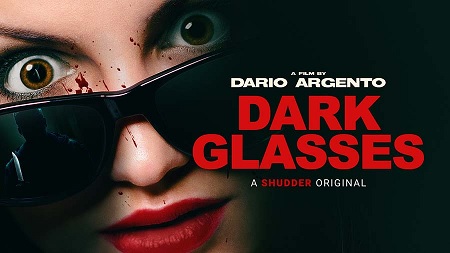
18. Dark Glasses (dir by Dario Argento)

Don’t listen to the critics.  This enjoyably over-the-top giallo was an entertaining return-to-form for Dario Argento.

17. Wildcat (dir by Melissa Lesh and Trevor Fost)

This poignant documentary follows a depressed veteran as he finds purpose helping to raise a baby ocelot in Peru.  Be prepared to cry.

16. Apollo 10 1/2 (dir by Richard Linklater)

Richard Linklater’s animated film was well-received by critics but it’s still hard not to feel that it’s been a bit overlooked.  Narrated by Jack Black, the film details the 1969 moon landing from the perspective of a child with a very active imagination.  Nostalgic, sweet-natured, and ultimately rather moving, Apollo 10 1/2 is a film that celebrates life.

15. Three Minutes: A Lengthening (dir by Bianca Stigner)

This haunting and moving documentary, which is narrated by Helena Bonham Cater, examines a three-minute snippet of 16mm film that was shot in a Jewish town in Poland in 1938, shortly before the Nazis invaded.  By examining every aspect of those three minutes, this documentary becomes both a memorial for the inhabitants of that town and a much-needed reminder of the horrors and reality of the Holocaust.  With anti-Semitism and Holocaust denial on the rise, this is an important documentary.

14. The Northman (dir by Robert Eggers)

The Northman is occasionally thrilling and occasionally ludicrous but it’s always watchable.  Robert Eggers finds moments of humor and odd beauty in this Viking epic.  Nicole Kidman embraces the melodrama and goes all out.  I just hope Valhalla was actually worth all the trouble.

13. Puss In Boots: The Last Wish (dir by Joel Crawford)

Yeah, you knew this film was going to show up on my list.  To be honest, the film could have been about just about anything.  I’d watch Puss In Boots read the phone book as long as Antonio Banderas returned to do his voice.  The fact that the film itself was cute and even touching was an added bonus.

12. Guillermo del Toro’s Pinocchio (dir by Guillermo del Toro and Mark Gustafson)

Yes, a puppet can make you cry.

11. Babylon (dir by Damien Chazelle)

Was it flawed?  You bet.  Did it run a little bit too long?  Yes, it did.  Could I have done without the scene with the elephant?  You better believe it.  That said, this film was so gloriously excessive and over-the-top that it was easy for me to forgive its flaws.  The critics may not have liked it but Babylon is a film that will be rediscovered.

10. The Fabelmans (dir by Steven Spielberg)

I went back and forth over whether to put The Fabelmans or Babylon in the number ten spot.  In a way, they’re kind of similar in that they have their flaws but they’re both saved by their director’s obvious love of cinema.  In the end, David Lynch’s role as John Ford moved The Fabelmans into the 10th spot.
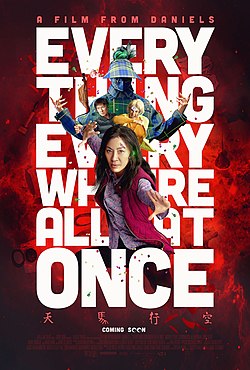
9. Everything Everywhere All At Once (dir by the Daniels)

To be honest, I think some people are going a little bit overboard in their praise for this film.  Yes, it’s one of the year’s best but 2022 wasn’t that strong of a year and Everything is one of those probable Best Picture winners that, like Nomadland and CODA, will probably not be quite as celebrated after it actually wins.  That said, Michelle Yeoh and especially Ke Huy Quan deserve all the praise that they’ve received and I appreciated that the film featured the destruction of an IRS office.  It’s not as perfect as some say but, due largely to the cast, it still deserves to be in my top ten.

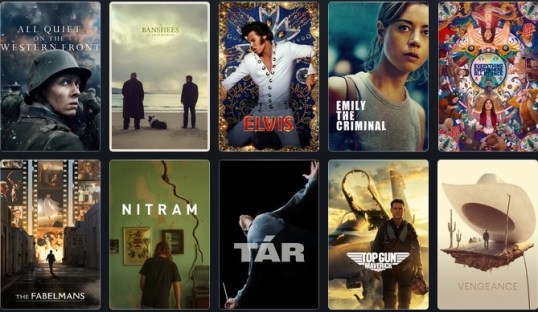
8. Nitram (dir by Justin Kurzel)

This is another unfairly overlooked film, this time from Australia.  Caleb Landry Jones gives a powerful and disturbing performance as a troubled young man named Nitram who commits an act of shocking violence.  Anthony LaPaglia and Judy Davis play Nitram’s parents, who are both troubled in their own individual ways.  Essie Davis plays the older woman who falls in love with Nitram, despite the fact that Nitram is incapable of loving anyone.

7. Emily the Criminal (dir by John Patton Ford)

Aubrey Plaza plays Emily, who discovers that not only does crime pay but, in the gig economy, it’s one of those few ways to get ahead.  Part thriller and part satire, Emily the Criminal reminds us that Plaza is one of the most interesting actresses working today.

6. All Quiet On The Western Front (dir by Edward Berger)

This German anti-war epic stays true to the themes of its source material while updating the plot for the modern era.  The contrast between the generals and the diplomats planning battles and the soldiers dying in them is a powerful one.

5. Elvis (dir by Baz Luhrmann)

This wonderfully excessive biopic features good music, a great performance from Austin Butler, and a wonderfully eccentric one from Tom Hanks.  Luhrmann is hardly a subtle director but Butler’s performance keeps the film from spiraling out of control.

4. Vengeance (dir by B.J. Novak)

This whip-smart satire of both true crime podcasts and the red state/blue state divide deserved far more attention than it received.  Ashton Kutcher has actually become a surprisingly dependable character actor.  Director and screenwriter Novak tells the story with sensitivity and a sharp eye for the absurd.
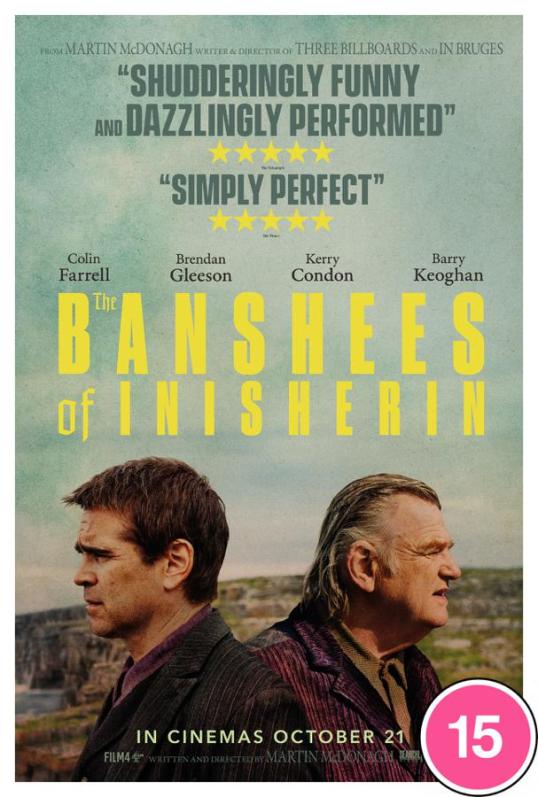
3. The Banshees of Inisherin (dir by Martin McDonagh)

In his best film yet, Martin McDonagh examines friendship, art, violence, and anger in Ireland.  Brendan Gleeson no longer wants to be Colin Farrell’s friend.  Farrell’s attempts to discover why leads to all sorts of surprising and macabre developments.  Gleeson and Farrell have never been better.  Kerry Condon and Barry Keoghan offer up poignant support.

2. Tar (dir by Todd Field)

Lydia Tar is a brilliant artist.  Does it matter that she also might be a terrible human being?  Todd Field’s return to filmmaking meditates on the meaning of art, morality, and the consequences of hubris.  Cate Blanchett is perfectly cast.  The scene where Tar talks to a student who objects to playing music by a white male is a real litmus test.  Do you think Tar is a bully or do you think the student is being too sensitive?  For all the talk about how Lydia dismisses the student’s claims, many also fail to note that the student is the one who calls her a “bitch” and runs out of the room.  Much as in Field’s previous film, no one is as perfect or as justified or as blameless as they may believe.

And, finally, my top film of 2022 is….

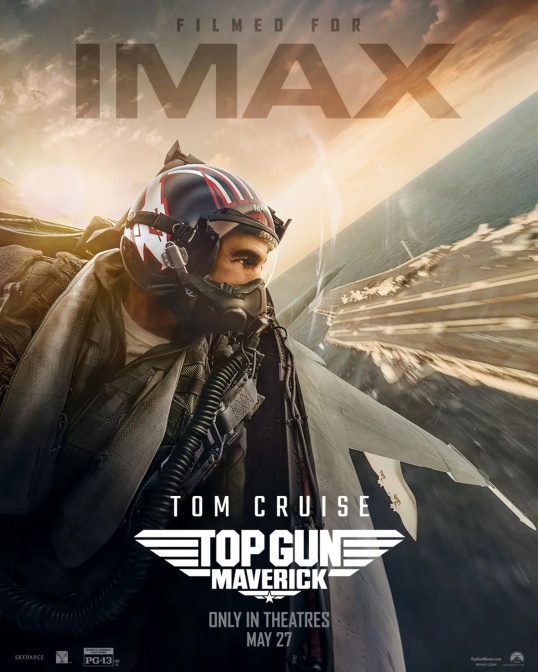
  1. Top Gun: Maverick (dir by Joseph Kosinski)

After 2 years of lockdowns and pessimism, Top Gun: Maverick was finally released and it reminded audiences of what they loved about movies in the first place.  Top Gun: Maverick was the movie that we needed in 2022.
Well, that concludes my late look back at 2022!  Now, let’s focus on 2023!

Lisa Marie’s 2022 In Review:

  1. 16 Worst Movies
  2. 10 Favorite Songs
  3. 10 Top Non-Fiction Books
  4. Lisa Marie’s Favorite Novels
  5. The Best of Lifetime
  6. 10 Good Things I Saw On Television