One of my all-time favorite comedies is the Zucker-Abrahams-Zucker 80’s classic, RUTHLESS PEOPLE! I’ll never forget watching it with my mom when I was a teenager. She laughed so hard, which made it loads of fun for me! I’ve been a fan of Danny DeVito ever since. As a matter of fact, DeVito is turning 81 today, which means he’s only a month older than my dad. Enjoy my friends!
Tag Archives: Danny DeVito
Music Video of the Day: When The Going Gets Tough, The Tough Get Going by Billy Ocean (1985, dir by ????)
Sometimes, on twitter (or whatever it’s called nowadays), people will just become fixated with something. Yesterday, it was this music video for a song called When The Going Gets Tough, The Tough Gets Going. I lost track of how many times I saw this video shared on Saturday.
So, I figured, why not share it here as well?
This music video was made to promote the 1985 film, The Jewel of the Nile. Along with Billy Ocean, the stars of the film — Kathleen Turner, Danny DeVito, and Michael Douglas — also appear in this video. Was Danny really playing the saxophone? No, he was not. Apparently, in the UK, this video was briefly banned because Danny was not a member of the Musicians’ Union and his miming of the sax solo went against the rules.
The UK banning something because an American broke a rule? Wow, that’s so unlike them!
Enjoy!
Guilty Pleasure No. 84: Last Action Hero (dir by John McTiernan)
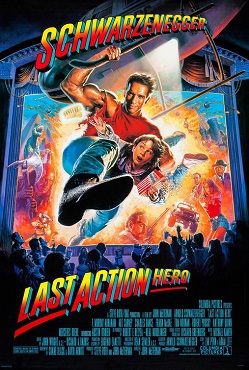
Oh, Last Action Hero.
Ever since this film was first released in 1993, it’s usually held up as an example of a Hollywood fiasco. The script was originally written to be a modest satire of action films. The screenwriters wrote the character of Jack Slater, an movie action hero who comes into the real world, for Dolph Lundgren. Instead, the film became an Arnold Schwarzenegger extravaganza and the studio ended up tossing a ton of money at it. When the film was originally released, the reviews were mixed and the box office was considered to be disappointing. (That it went up against the first Jurassic Park was definitely an underrated issue when it came to the box office.) Ever since then, The Last Action Hero has had a reputation for being a bad film.
Well, I don’t care. I like The Last Action Hero. Yes, it’s a bit overproduced for a comedy. (It breaks my own rule about how no comedy should run longer than two hours.) Yes, it gets a bit sentimental with ten year-old Danny Madigan (Austin O’Brien) using a magic, golden ticket to enter the film world of his hero, Jack Slater. If you want to argue that the film should have devoted more time to and gone a bit deeper into contrasting the film world with the real world, I won’t disagree with you. But I will also say that Sylvester Stallone starring as The Terminator in Jack’s world was actually a pretty funny sight gag. Danny knowing better than to trust a character played by F. Murray Abraham made me laugh. Danny’s fantasy in which Arnold Schwarzenegger played Hamlet was made all the better by the fact that his teacher was played by Laurence Olivier’s wife, Joan Plowright. Danny DeVito as Whiskers the Cartoon Cat makes me laugh as well, even if it is perhaps a bit too bizarre of a joke for this particular film. (There’s nothing else about the Jack Slater films that would explain the presence of a cartoon cat.)
When you set aside the idea of the Last Action Hero being a symbol of Hollywood bloat and just watch it as a film, it emerges as an enjoyably goofy action movie, one that captures the joy of watching movies (because who hasn’t wanted to enter a movie’s world at some point in their life), and also one that features a rather charming performance from Arnold Schwarzenegger. (Schwarzenegger, I should add, plays both himself and Jack Slater. One of my favorite jokes is when the real Schwarzenegger is at a premiere and he mistakes the evil Ripper for Tom Noonan, the actor who played him in the previous Jack Slater film.) Yeah, the golden ticket is a little bit hokey but who cares? Underneath all of the special effects and action and money spent on star salaries, Last Action Hero is an action movie and comedy with a heart. Danny meets his hero but also gets to become a hero himself. And Jack Slater turns out to be everything you would hope your movie hero would be. In the end, it’s obvious that a lot of the criticism of this film has more to do with the appeal of riding the bandwagon as opposed to what actually happens on screen.
Last Action Hero is a movie that I’ll happily defend.
Previous Guilty Pleasures
- Half-Baked
- Save The Last Dance
- Every Rose Has Its Thorns
- The Jeremy Kyle Show
- Invasion USA
- The Golden Child
- Final Destination 2
- Paparazzi
- The Principal
- The Substitute
- Terror In The Family
- Pandorum
- Lambada
- Fear
- Cocktail
- Keep Off The Grass
- Girls, Girls, Girls
- Class
- Tart
- King Kong vs. Godzilla
- Hawk the Slayer
- Battle Beyond the Stars
- Meridian
- Walk of Shame
- From Justin To Kelly
- Project Greenlight
- Sex Decoy: Love Stings
- Swimfan
- On the Line
- Wolfen
- Hail Caesar!
- It’s So Cold In The D
- In the Mix
- Healed By Grace
- Valley of the Dolls
- The Legend of Billie Jean
- Death Wish
- Shipping Wars
- Ghost Whisperer
- Parking Wars
- The Dead Are After Me
- Harper’s Island
- The Resurrection of Gavin Stone
- Paranormal State
- Utopia
- Bar Rescue
- The Powers of Matthew Star
- Spiker
- Heavenly Bodies
- Maid in Manhattan
- Rage and Honor
- Saved By The Bell 3. 21 “No Hope With Dope”
- Happy Gilmore
- Solarbabies
- The Dawn of Correction
- Once You Understand
- The Voyeurs
- Robot Jox
- Teen Wolf
- The Running Man
- Double Dragon
- Backtrack
- Julie and Jack
- Karate Warrior
- Invaders From Mars
- Cloverfield
- Aerobicide
- Blood Harvest
- Shocking Dark
- Face The Truth
- Submerged
- The Canyons
- Days of Thunder
- Van Helsing
- The Night Comes for Us
- Code of Silence
- Captain Ron
- Armageddon
- Kate’s Secret
- Point Break
- The Replacements
- The Shadow
- Meteor
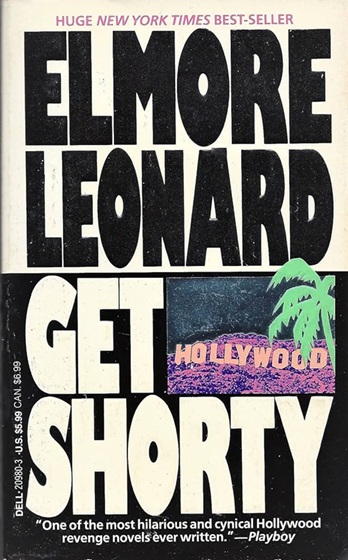
Book and Film Review: Get Shorty (by Elmore Leonard and dir by Barry Sonnenfeld)
In 1995’s Get Shorty, John Travolta stars as Chili Palmer.
Chili is a loan shark for the mob, an effortlessly cool guy who lives in Miami and who loves to watch old movies. Chili may work for the Mafia and he may make his living by intimidating people but he doesn’t seem like such a bad guy, especially when compared to someone like Ray “Bones” Barboni (Dennis Farina). Bones is an uncouth and rather stupid gangster who steals Chili’s leather jacket from a restaurant. Chili reacts by breaking Bones’s nose with just one punch. Bones reacts by trying to shoot Chili but instead, he gets shot by Chili himself. (The bullet only grazes his forehead.) Chili can do all this because he’s protected by Momo (Ron Karasbatsos) but, after Momo drops dead after having to walk up several flights of stairs just to then be given a surprise birthday party, Chili suddenly finds himself working for Bones. (This all happens in the first few minutes of this perfectly paced film.)
Bones, eager to humiliate Chili, sends him to Vegas to collect on a debt owed by a dry cleaner named Leo (David Paymer). Leo is thought to be dead but Bones wants to collect the money from Leo’s widow. It’s not the sort of thing that Chili likes to do so instead, he ends up going to Hollywood to collect a debt from B-movie director Harry Zimm (Gene Hackman). Chili happens to like Harry’s movies. He also likes Harry’s current girlfriend and frequent co-star, actress Karen Flores (Rene Russo).
Chili ends up in Hollywood, a town where everyone has some sort of hustle going. Chili finds himself dealing with drug dealers (Delroy Lindo), egocentric film stars (Danny DeVito), stuntmen-turned-criminals (James Gandolfini), and the widow (Bette Midler) of a screenwriter. Chili also finds himself looking to escape from the debt collection business by becoming a film producer. Harry has a script that he wants to make. Chili proposes a film based on the story of Leo the dry cleaner. Danny DeVito’s Martin Weir wants to be a “shylock” in a movie just so he can show off his intimidating stare. (“Is this where I do the look?” he asks while listening to the pitch.) Get Shorty is a whip-smart satire of Hollywood, one in which the gangsters want to be film people and all of the film people want to be gangsters. It features wonderful performances from the entire cast, with Travolta epitomizing cool confidence as Chili Palmer. Hackman, Russo, DeVito, Gandolfini, and Lindo are all excellent in their supporting roles but I have to admit my favorite performance in the film is probably given by Dennis Farina, who turns Bones Barnobi into a very believable (and a believably dangerous) buffoon.
Get Shorty is based on a book by Elmore Leonard. First published in 1990, the book is a quick and entertaining read, one that reminds us that Leonard was one of the best “genre” writers of his time. When I read that book, I was surprised to see how closely the movie stuck to the book’s plot. Much of the film’s dialogue is right there in the book. It’s a book that practically shouts, “Turn me into a movie!” and fortunately, director Barry Sonnenfeld did just that.
RUTHLESS PEOPLE (1986) – In remembrance of Jim Abrahams
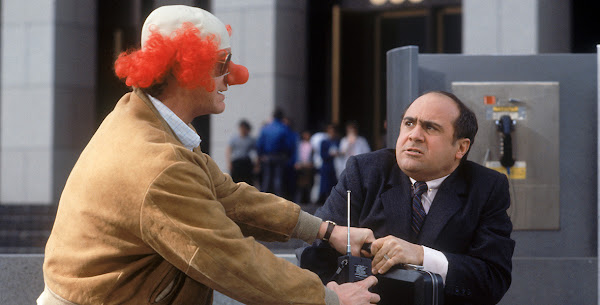
It made me sad when I saw that writer/director Jim Abrahams had passed away on November 26, 2024 at 80 years of age. Growing up in the 1980’s, Mr. Abrahams is responsible for some of my favorite comedies. AIRPLANE, TOP SECRET, and THE NAKED GUN would not exist without Jim Abrahams. As much as I love all of those movies, my personal favorite film that Jim Abrahams co-directed is RUTHLESS PEOPLE. I remember when our family rented this film and watched it in the ‘80’s. We thought it was so funny. I specifically remember my mom laughing out loud on multiple occasions as the ridiculous scenario played out. That was a fun movie night in the Crain household.
RUTHLESS PEOPLE is about a rich businessman named Sam Stone (Danny DeVito) who truly hates his wife Barbara (Bette Midler), and hatches a plan to kill her so he can inherit her money. Unfortunately he runs into a couple of problems. First, his mistress Carol (Anita Morris) knows about the plan, so she and her dimwitted boy toy Earl (Bill Pullman) want to film Sam dumping his wife’s body so they can blackmail him for millions. Second, before Sam can execute his plan, Barbara is kidnapped and held for a ransom of $500,000 by Ken and Sandy Kressler (Judge Reinhold and Helen Slater). It seems that Sam stole Sandy’s idea for the spandex miniskirt, screwed them out of millions with a handshake deal, and then kept the money for himself. This seems like an answer to prayer at first for Sam because they threaten to kill Barbara if he doesn’t meet their needs or if he calls the police or the media. After saying no to their demands, and then immediately calling the police and the news, Sam realizes that they don’t want to kill her when they keep coming back with lower demands. Sandy tells Barbara that Sam refuses to pay even $10,000 for her safe return. Eventually the kidnappers and Barbara join together to try to take the unfaithful and unethical Sam for everything he’s worth!!
RUTHLESS PEOPLE is one of my favorite comedies of the 1980’s. It has such a great cast. Danny DeVito and Bill Pullman are especially hilarious and have some of the film’s best lines. At the time the movie came out in 1986, DeVito was already established as a master of comedy, so Pullman’s performance as Earl, the dumbass Sonny Crockett wannabe, was the real revelation to me. Pullman made his film debut in RUTHLESS PEOPLE, and I never see him to this day that I don’t think of his character Earl’s excitement over the prospect of his newfound blackmail money:
“And then we’re off, to Haiti!”
“It’s Tahiti, you moron!”
One of the most interesting things about RUTHLESS PEOPLE is just how different it is from the directing trio’s (Zucker / Abrahams / Zucker) other popular films like THE KENTUCKY FRIED MOVIE and AIRPLANE. Those films are based on non-stop visual and verbal gags. I love those films, but this is quite different. The comedy of RUTHLESS PEOPLE is based on the story itself, which is a comedy of confusion, coincidence, and character. I know it’s awesome because I still think of the film often. “Give the bag to bozo” and “a little poke in the whiskers” are phrases I’ll remember up to the point I go to my grave.
Even though the film is almost 40 years old, if you’re looking for a laugh, I don’t think you can do much better than RUTHLESS PEOPLE.
Film Review: Deadly Hero (dir by Ivan Nagy)
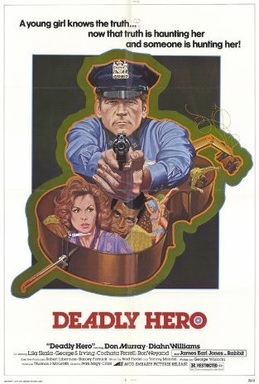
First released in 1975, Deadly Hero tells the story of Edward Lacy (Don Murray).
Lacy is an 18-year veteran of the New York Police Department and a proud family man. Lacy is clean-cut, handsome in a blandly pleasant way, and he has a wife and several children. He’s a member of the Knights of Columbus and there are times when he imagines himself pursuing a career in politics. One of the first things that we see Lacy do is introduce an anti-crime mayoral candidate named Reilly (George S. Irving) at a Knights of Columbus rally. Lacy goes out of his way to make sure that he and his family make a good impression but Reilly barely seems to notice him.
Lacy is also a racist who enjoys pulling and using his gun. He was once a detective but a long string of brutality complaints has led to him being demoted back down to being a patrolman. He and his partner (Treat Williams, making his film debut) spend their time patrolling the streets of New York City, getting dirty looks and verbal abuse from the people who they are supposed to be protecting. Much like Travis Bickle in the following year’s Taxi Driver, Lacy obsesses on the crime and the decay that he sees all around him.
Sally (Diahn Williams) lives a life that is a hundred times different from Lacy’s. She’s a cellist and a conductor. She spends her days teaching and her nights conducting at an avant-garde theater. Sally and Lacy have little in common but their lives become intertwined when Sally is attacked and briefly held hostage by a mentally disturbed mugger named Rabbit (James Earl Jones). Responding to a call put in by Sally’s neighbor (Lila Skala), Lacy discovers Rabbit holding a knife to Sally’s throat in the hallway of Sally’s apartment building. At first, Lacy handles the situation calmly and he manages to talk Rabbit into not only releasing Sally but also dropping his knife. However, instead of arresting the now unarmed and docile Rabbit, Lacy shoots and kills him.
Knowing that he’s about to be investigated and that he’s made enemies in the department due to his political activities, Lacy convinces the still-shocked Sally to lie and say that she witnessed Rabbit lunging for Lacy’s gun before Lacy fired. Lacy is proclaimed a hero and soon, Reilly is inviting him to appear at rallies with him. Lacy’s political dreams seem to be coming true but Sally starts to feel guilty about lying. Realizing that Sally is planning on revealing the truth about what happened, Lacy goes to extreme measures to try to keep her quiet.
Deadly Hero is an interesting film, one that is certainly flawed but which ultimately works as a portrait of the authoritarian mindset. Ivan Nagy directs without much visual flair and, especially at the start of the film, he struggles to maintain a consistent pace. For instance, the scene where Rabbit initially menaces Sally seems to go on forever, long beyond whatever was necessary to convince the audience that Rabbit was a dangerous guy. (With the amount of time that Nagy lingers over shots of Sally being menaced by Rabbit, I was not surprised to read that Nagy and Dianh Williams apparently did not get along during filming.) That said, the film’s low budget actually works to its advantage, with the grainy cinematography giving the film a gritty, documentary feel. The film was shot on location in New York City and it’s interesting to watch the actors interact with real New Yorkers. While Lacy is never a sympathetic character, seeing the actual streets of New York does go a long way to explaining why he’s so paranoid. This is one of the many 70s films in which the overriding message seemed to be that New York City was the worst place on the planet.
The film is dominated by Don Murray, who plays Lacy as being a blue-collar fascist who has learned how to hide his anger and his hatred behind a quick smile and an outwardly friendly manner. Feeling confident that everyone will back him up, he has no hesitation about executing an unarmed black man. Even when it becomes obvious that Sally is not going to continue to lie about what happened, Lacy is still arrogant enough to assume that he can charm her into changing her mind. When that doesn’t work, Lacy becomes increasingly unhinged and vindictive. The film’s final ambiguous image suggests that there really is no way to escape the Edward Lacys of the world.
With its portrayal of a violent cop who is convinced that he will be protected by the system, Deadly Hero feels extremely relevant today. Of course, Deadly Hero also suggests that the same system that Lacy is exploiting can be used to take him down, with Lacy eventually being investigated by both Internal Affairs and the District Attorney’s office. The film leaves it ambiguous as to whether or not the rest of the police are as dangerous as Lacy. Is Lacy a product of the system or is he just someone who has figured out how to exploit the system? To its detriment, that’s a question that the film doesn’t answer. Still, much like Harvey Hart’s similarly underappreciated Shoot, Deadly Hero is an always-interesting and occasionally insightful look at the authoritarian mindset.
Lisa Reviews An Oscar Winner: One Flew Over The Cuckoo’s Nest (dir by Milos Forman)
Technically, the 1975 film One Flew Over The Cuckoo’s Nest is not a horror film.
Though it may take place in a creepy mental hospital, there are no ghosts or zombies. There’s no masked killer wandering the halls. The shadows do not leap off the walls and there are no ghostly voice in the night, unless you count the rarely heard voice of Will Sampson’s Chief Bromden.
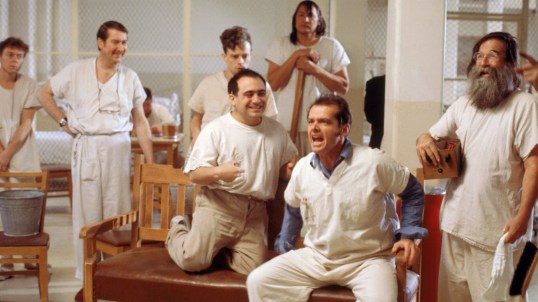
Admittedly, the cast is full of horror and paranormal veterans. Michael Berryman, of the original Hills Have Eyes, plays a patient. Louise Fletcher, who won an Oscar for playing the role of Nurse Ratched, went on to play intimidating matriarchs in any number of low-budget horror movies. Vincent Schiavelli, a patient in this film, played the angry subway ghost in Ghost. Another patient, Sidney Lassick, played Carrie’s condescending English teacher in Carrie. Brad Dourif, who received an Oscar nomination for playing the meek Billy Bibbit, has become a horror mainstay. Will Sampson appeared in the Poltergeist sequel. Both Scatman Crothers and Jack Nicholson would go on to appear in The Shining.
Nicholson plays Randle Patrick McMurphy, a career criminal who, hoping to get out of prison early, pretends to be mentally ill. He ends up getting sent to an Oregon mental institution, where his rebellious ways upset the administrators while, at the same time, inspiring the patients to actually try to take some control over their lives. The film is, in many ways, a celebration of personal freedom and rebellion. The only catch here is that, in One Flew Over The Cuckoo’s Nest, being a little bit too rebellious can lead to not only electroshock treatment but also a lobotomy. Those in charge have a way of making you permanently compliant.
And really, to me, that’s what makes One Flew Over The Cuckoo’s Nest a horror film. It’s about the horror of conformity and bureaucracy. The film may start out as something of a comedy and Nicholson brings a devil-may-care attitude to the role of McMurphy but then, eventually, you reach the scene where McMurphy is tied down and given electrical shocks to make him compliant. You reach the scene where Ratched coldly informs Billy Bibbit that she will be telling his mother that Billy lost his virginity to a prostitute and Billy reacts by slicing open his wrists. Finally, you reach the scene where McMurphy returns to the ward having had a bit of his brain removed. In those scenes, One Flew Over The Cuckoo’s Nest becomes a horror movie. The monster is not a ghost or a demon or a serial killer. Instead, it’s a system that is determined to squash out any bit of rebellion or free thought.
What makes Nurse Ratched such a great villain is the fact that, as opposed to being some sort of a maniacal force of evil, she’s really just someone doing her job and refusing to question her methods. She’s the ultimate symbol of bland authoritarianism. Her job is to keep the patients from getting out of control and, if that means lobotomizing them and driving one of them to suicide …. well, that’s what she’s going to do. For all the time that Ratched spends talking about therapy, her concern is not “curing” the patients or even helping them reach a point where they can leave the hospital and go one with their lives. Ratched’s concern is keeping everyone in their place. As played by Fletcher, Ratched epitomizes the banality of evil. (That’s one reason why it was so silly for Ryan Murphy to devote his most recent Netflix series to giving her an over-the-top origin story. Ratched is a great villain because she doesn’t have any complex motivations. She’s just doing whatever she has to do to keep control of the people are on her ward. Part of keeping control is not to allow anyone to question her methods. Everyone has had to deal with a Nurse Ratched at some point in the life. With the elections coming up, we’re about to be introduced to whole new collection of Nurse Ratcheds.)
I like One Flew Over The Cuckoo’s Nest, even though it’s an undeniably dated film. That said, it’s not as dated as the novel on which it’s based, nor is it as appallingly misogynistic. Jack Nicholson’s rough but charismatic performance holds up wonderfully well. (I don’t know if an actor has ever matched a character as perfectly as Nicholson does with McMurphy.) Louise Fletcher brings a steely resolve to the role of Nurse Ratched. Fans of spotting character actors in early roles will probably get a kick out of spotting both Danny DeVito and Christopher Lloyd as patients. The movie skillfully combines drama with comedy and the ending manages to be both melancholy and hopeful.
When it comes to the 1975 Oscar race …. well, I don’t know if I would argue that One Flew Over The Cuckoo’s Nest deserved to win Best Picture over Nashville, Dog Day Afternoon, or Barry Lyndon or Jaws. Dog Day Afternoon and Nashville feel as if they were ahead of their time, with their examination of the media and politics. Jaws set the template for almost every blockbuster that would follow and it’s certainly one of the most influential horror films ever made. Barry Lyndon is a stunning technical achievement. Compared to those films, One Flew Over The Cuckoo’s Nest seems rather simplistic. Watching it today, you’re very much aware of how much of the film’s power is due to Jack Nicholson’s magnetic screen presence. Nicholson definitely deserved his Oscar but it’s debatable whether or not the same can be said of One Flew Over The Cuckoo’s Nest as a whole.
So no, I wouldn’t necessary say that One Flew Over The Cuckoo’s Nest was the best of the films nominated that year. Still, it’s an entertaining film and a helluva ride. It’s a great film to watch whenever you’re sick of faceless bureaucrats trying to tell you what to do. And, in its own odd way, it’s a great film for Halloween season.
An Offer You Can Take or Leave #13: Hoffa (dir by Danny DeVito)
The 1992 film, Hoffa, opens in 1975, with two men sitting in the backseat of a station wagon. One of the men is the controversial labor leader, Jimmy Hoffa (Jack Nicholson). The other is his longtime best friend and second-in-command, Bobby Ciaro (Danny DeVito). The two men are parked outside of a roadside diner. They’re waiting for someone who is late. Jimmy complains about being treated with such disrespect and comments that this would have never happened earlier. Jimmy asks Bobby if he has his gun. Bobby reveals that he does. Jimmy asks him if he’s sure that there’s a loaded gun in the diner, as well. Bobby goes to check.
Jimmy Hoffa, of course, was a real person. (Al Pacino just received an Oscar nomination for playing him in The Irishman.) He was a trucker who became a labor leader and who was eventually elected president of the Teamsters Union. He was a prominent opponent of the Kennedys and that infamous footage of him being interrogated by Bobby Kennedy at a Senate hearing seems to sneak its way into almost every documentary ever made about organized crime in the 50s. Hoffa was linked to the Mafia and was eventually sent to prison. He was freed by the Nixon administration, under the condition that he not have anything to do with Teamster business. When he disappeared in 1975, he was 62 years old and it was rumored that he was planning on trying to take over his old union. Everyone from the mob to the CIA has been accused of having had Hoffa killed.
Bobby Ciaro, however, was not a real person. Apparently, he was a composite character who was created by Hoffa’s screenwriter, David Mamet, as a way for the audience to get to know the enigmatic Jimmy Hoffa. Bobby is presented as being Hoffa’s best friend and, for the most part, we experience Jimmy Hoffa through his eyes. We get to know Jimmy as Bobby gets to know him but we still never really feel as if we know the film’s version of Jimmy Hoffa. He yells a lot and he tells Bobby Kennedy (a snarling Kevin Anderson) to go to Hell and he talks a lot about how everything he’s doing is for the working man but we’re never really sure whether he’s being sincere or if he’s just a demagogue who is mostly interested in increasing his own power. Bobby Ciaro is certainly loyal to him and since Bobby is played by the film’s director, it’s hard not to feel that the film expects us to share Bobby’s admiration. But, as a character, Hoffa never really seems to earn anyone’s loyalty. We’re never sure what’s going on inside of Hoffa’s head. Jack Nicholson is always entertaining to watch and it’s interesting to see him play a real person as opposed to just another version of his own persona but his performance in Hoffa is almost totally on the surface. With the exception of a few scenes early in the film, there’s doesn’t seem to be anything going on underneath all of the shouting.
The majority of Hoffa is told via flashback. Scenes of Hoffa and Bobby in the film’s present are mixed with scenes of Hoffa and Bobby first meeting and taking over the Teamsters. Sometimes, the structure of the film is a bit cumbersome but there are a few scenes — especially during the film’s first thirty minutes — that achieve a certain visual poetry. There’s a scene where Hoffa helps to change a man’s flat tire while selling him on the union and the combination of falling snow, the dark city street, and Hoffa talking about the working man makes the scene undeniably effective. The scenes where Hoffa spars with Bobby Kennedy are also effective, with Nicholson projecting an intriguing blue collar arrogance as he belittles the abrasively ivy league Bobby. Unfortunately, the rest of the movie doesn’t live up to those scenes. By the time Hoffa becomes a rich and influential man, you realize that the film isn’t really sure what it wants to say about Jimmy Hoffa. Does it want to condemn Hoffa for getting seduced by power or does it want to excuse Hoffa’s shady dealings as just being what he had to do to protect the men in his union? The film truly doesn’t seem to know.
Hoffa is definitely not an offer that you shouldn’t refuse but, at the same time, it’s occasionally effective. A few of the scenes are visually appealing and the cast is full of character actors like John C. Reilly, J.T. Walsh, Frank Whaley, and Nicholas Pryor. It’s not a disaster like The Gang Who Couldn’t Shoot Straight. Hoffa is an offer that you can take or leave.

Previous Offers You Can’t (or Can) Refuse:
Goin’ South (1978, directed by Jack Nicholson)

Jack Nicholson was not an overnight success.
Nicholson was 17 years old when he first came to Hollywood in 1954. Looking to become an actor, Nicholson toiled as an office worker at the MGM cartoon studio, took acting classes, and went to auditions. It would be four years before he even landed his first role, the lead in the Roger Corman-produced The Cry Baby Killer. When that film failed to become a hit, Nicholson spent the next ten years doing minor roles and occasionally starring in a B-picture. He auditioned for some big parts, like Benjamin Braddock in The Graduate, Buck Barrow in Bonnie and Clyde, and Guy Woodhouse in Rosemary’s Baby, but his big break continued to allude him. By 1969, Nicholson was so disillusioned with acting that he was planning to instead pursue a career as a director. However, before Nicholson officially retired from the acting game, he received a call from the set of Easy Rider. Depending on who you ask, Rip Torn, who had previously been cast in the role of alcoholic George Hanson, had either quit or been fired. Bruce Dern, the first choice to replace Torn, was busy filming They Shoot Horses, Don’t They? Nicholson agreed to step into the role and the rest is history.
Easy Rider may have made Jack Nicholson one of the world’s biggest film stars but he never lost his ambition to direct. In 1971, he made his directorial debut with Drive, He Said, a film about campus unrest. At the time, the film flopped at both the box office and with critics and quickly sunk into obscurity. (It has subsequently been rediscovered and, in some cases, positively reevaluated.) After the failure of Drive, He Said, it would be another seven years before Nicholson again got a chance to direct.

Nicholson’s second film as a director, Goin’ South, is a comedic western. Nicholson plays Henry Lloyd Moon, an unsuccessful outlaw who used to ride with Quantrill’s Raiders. When Moon is captured in Longhorn, Texas, he is sentenced to be hanged. Fortunately, for Moon, Longhorn has a special ordinance. Any man condemned for any crime other than murder can be saved from the gallows if a local woman agrees to marry him and take responsibility for his good behavior. As a result of this ordinance, Longhorn is populated almost exclusively by single women and reformed outlaws.
While standing on the gallows, the cocky Moon is stunned to discover that none of the women want to marry him. Finally, an old woman emerges from the crowd and announces that she’ll become Moon’s wife. When Moon hops off the gallows and thanks her, the woman drops dead. Fortunately, another, younger woman, Julia Tate (Mary Steenburgen, making her film debut), steps forward.
Once they’re married, the lecherous Moon discovers that Julia is a virgin and that the only reason she married him was so she could force him to work in the secret gold mine that’s hidden underneath her property. The railroad will soon be taking over the land and Julia wants to get all of the gold before she leaves town for Philadelphia. Though Julia, at first, wants nothing to do with Moon, he eventually wears her down through sheer persistence and the two fall in love.
Complicating matters is Deputy Towfield (Christopher Lloyd), who is upset because he feels that Julia was meant to be his wife. Also, the members of Moon’s former gang (including Danny DeVito and Veronica Cartwright) show up at Julia’s house and discover the truth about the mine.

Goin’ South gets off to a good start. The scene on the gallows, where Moon waits for someone to marry him and save his life, is genuinely funny and Nicholson and Steenburgen have a playful chemistry for the first hour of the movie. Nicholson leers even more than usual in this film but the script is written so that the joke is always on Moon. Much of the film’s humor comes from Moon always overestimating both his charm and his cleverness. However, once Moon and Julia finally consummate their marriage, the movie loses whatever narrative momentum it may have had and gets bogged down with the subplots about Towfield and Moon’s gang. There are funny moments throughout but the story gets away from Nicholson and the film is reduced to a series of set pieces, none of which build up to much.
Not surprisingly, Nicholson gets good performances from his cast, which is largely made up by the members of his 1970s entourage. Along with Danny DeVito and Christopher Lloyd, longtime Nicholson associates like Tracey Walter, Ed Begley Jr., Richard Bradford, Jeff Morris, and Luana Anders all appear in small roles. John Belushi plays the tiny role of Deputy Hector. (Goin’ South was actually the first film in which Belushi was cast, though production didn’t actually begin until after Belushi had finished working on National Lampoon’s Animal House.) Unfortunately, despite all of the good performances, the script doesn’t do much to develop any of the characters. Belushi especially feels underused. (Because Belushi had moved on to Animal House by the time the film went into post-production, Nicholson ended up dubbing several of Belushi’s lines himself.)

Drive, He Said was largely considered to have failed at the box office because Nicholson remained behind the camera so he took the opposite approach with Goin’ South. Nicholson is in nearly every scene and he gives one of his broadest performances. It works for the first half of the film, when Moon is constantly trying to get laid and failing every time. But, during the second half of the movie, Nicholson’s failure to reign in his performance works to the film’s detriment. When the movie needs Nicholson to be romantic, he’s still behaving like a horny cartoon. Whenever he looks at Mary Steenburgen, it seems as if his eyes should be popping out of his head, Tex Avery-style. He’s an entertaining cartoon, but a cartoon nonetheless. As a result, Goin’ South is often funny but it still feels very inconsequential.
Like Drive, He Said, Goin’ South was both a critical and a box office flop and it temporarily turned Nicholson off of directing. It would be another 12 years before he would once again step behind the camera. In 1990, Nicholson directed The Two Jakes, the sequel to one of his best films, Chinatown. That would be Nicholson’s last film as a director. Nicholson acted for another 20 years, following the release of The Two Jakes. To date, he made his final screen appearance in 2010, with a supporting role in James L. Brooks’s How Do You Know. Nicholson has disputed claims that he’s officially retired, saying that he’s instead just being more selective about his roles. Even though it’s been ten years since we last saw him on screen, Jack Nicholson remains an American icon and a living legend.

Film Review: Dumbo (dir by Tim Burton)
Tim Burton’s remake of Dumbo actually wasn’t that bad.
I know! I’m as shocked as anyone. Usually, I’m against remakes on general principle and I’m certainly not a fan of the current trend of doing live-action versions of classic animated films. (There’s a reason why I haven’t seen the new The Lion King.) Dumbo is one of my favorites of the old Disney films, one that’s always brought tears to my mismatched eyes so I was naturally predisposed to be critical of the remake. Add to that, I’m not particularly a huge fan of Tim Burton, a director who too often seems to be coasting on his reputation for being a visionary as opposed to actually being one.
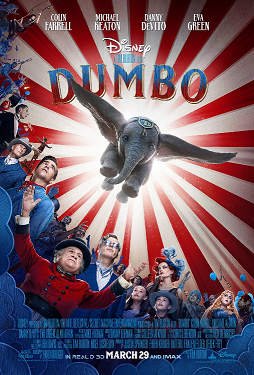
And yet, I have to admit that I enjoyed this new version of Dumbo. To call it a remake is actually a mistake. It’s a reimagining, as I suppose any live action remake of an animated film about a flying elephant, a talking mouse, and a group of sarcastic crows would have to be. So, the crows are gone, which is understandable as I doubt you could get away with a bird named “Jim Crow” today. And sadly, Timothy the Mouse is gone. He’s been replaced by several human characters, including Colin Farrell as a one-armed, former equestrian, Eva Green as a French trapeze artist, and Danny DeVito as the rough-around-the-edges but good-hearted ringmaster. However, Dumbo’s still present and he’s still got the big ears. He can still fly, as long as he’s holding a feather.
Dumbo’s only a CGI elephant but he’s still adorable. Of course, I should be honest that I’ve always loved elephants. I even rode one at Scarborough Fair once! It was like a totally bumpy and somewhat uncomfortable ride but, at the same time, it was also totally cool because I was on top of an elephant! The other thing I love about elephants is that elephants form real families. They love each other. They look out for each other. They mourn their dead, which is one of many reasons why ivory poachers are some of the worst people in the world. Elephants may not fly but there’s a sweetness to them that makes the story of Dumbo and his mother extra poignant, regardless of whether it’s animated, CGI, or live-action. Anyway, the remake’s version of Dumbo is absolutely lovable, from the minute he reveals his ears to the triumphant moment when he soars through the circus tent.
As a director, Tim Burton has always struggled with pacing. Watching his films, you always dread the inevitable moment when he gets distracted by a red herring or a superfluous storyline because you know that, once it happens, the entire film is going to go off the rails. Dumbo starts out slowly and it seems like forever before the baby elephant actually shows up. Fortunately, once Dumbo does show up, Burton’s direction becomes much more focused. The story stops meandering and, for once, Burton actually manages to maintain some sense of narrative momentum.
Visually, the film’s a feast for the eyes. Even though it’s a live-action film, the sets and the costumes are all flamboyantly and colorfully over-the-top, giving the film the feeling of being a child’s imagination come to life. I mean, when you’re making a film about a flying elephant, there’s no point in trying to go for gritty realism. While the film does mention some real-world tragedies — Farrell lost his arm in World War I and his wife to Spanish Flu — Burton plays up the fantasy elements of the story. He’s helped by Danny DeVito and Michael Keaton who both give cartoonishly broad performances. Fortunately, they’re both good enough actors that they can get away with it.
So, the live-action reimagining of Dumbo is not that bad. It has its slow spots and it really can’t match the emotional power of the original animated version. But, with all that taken into consideration, it’s still an undeniably entertaining two hours.
 Through the Shattered Lens