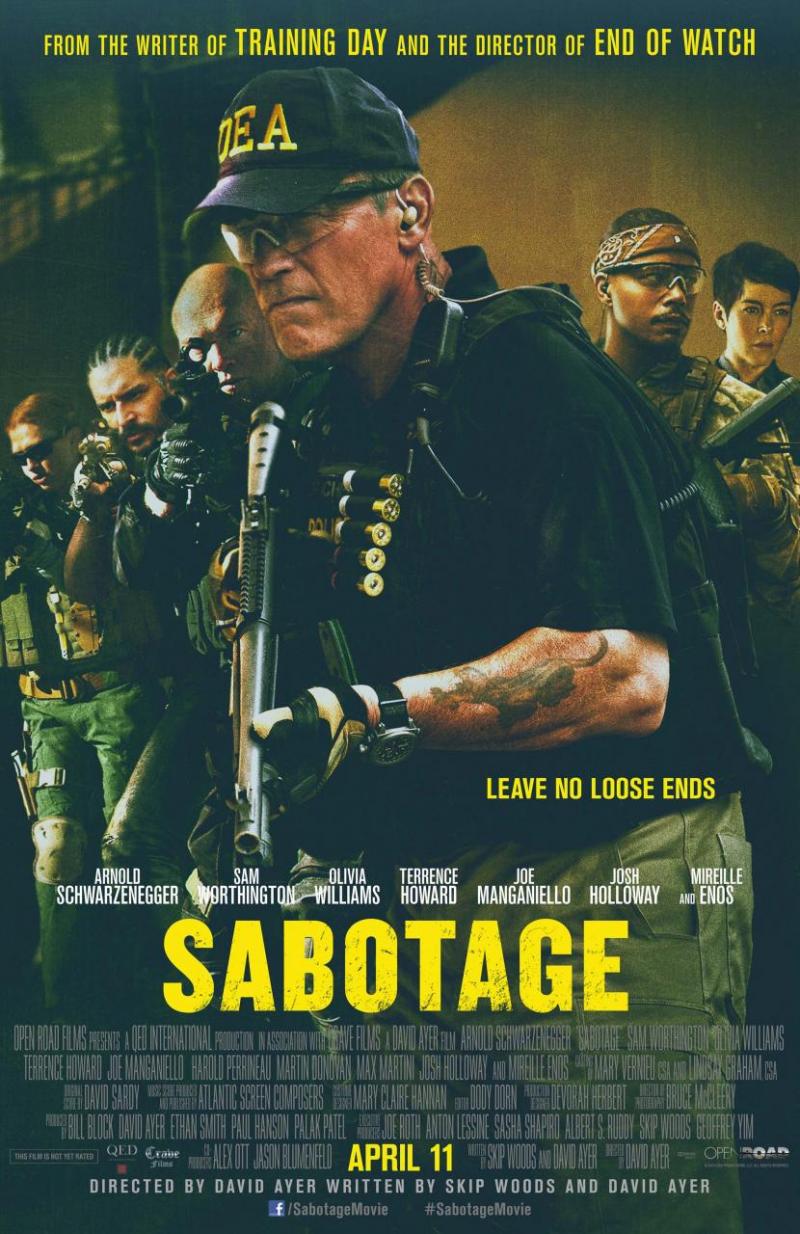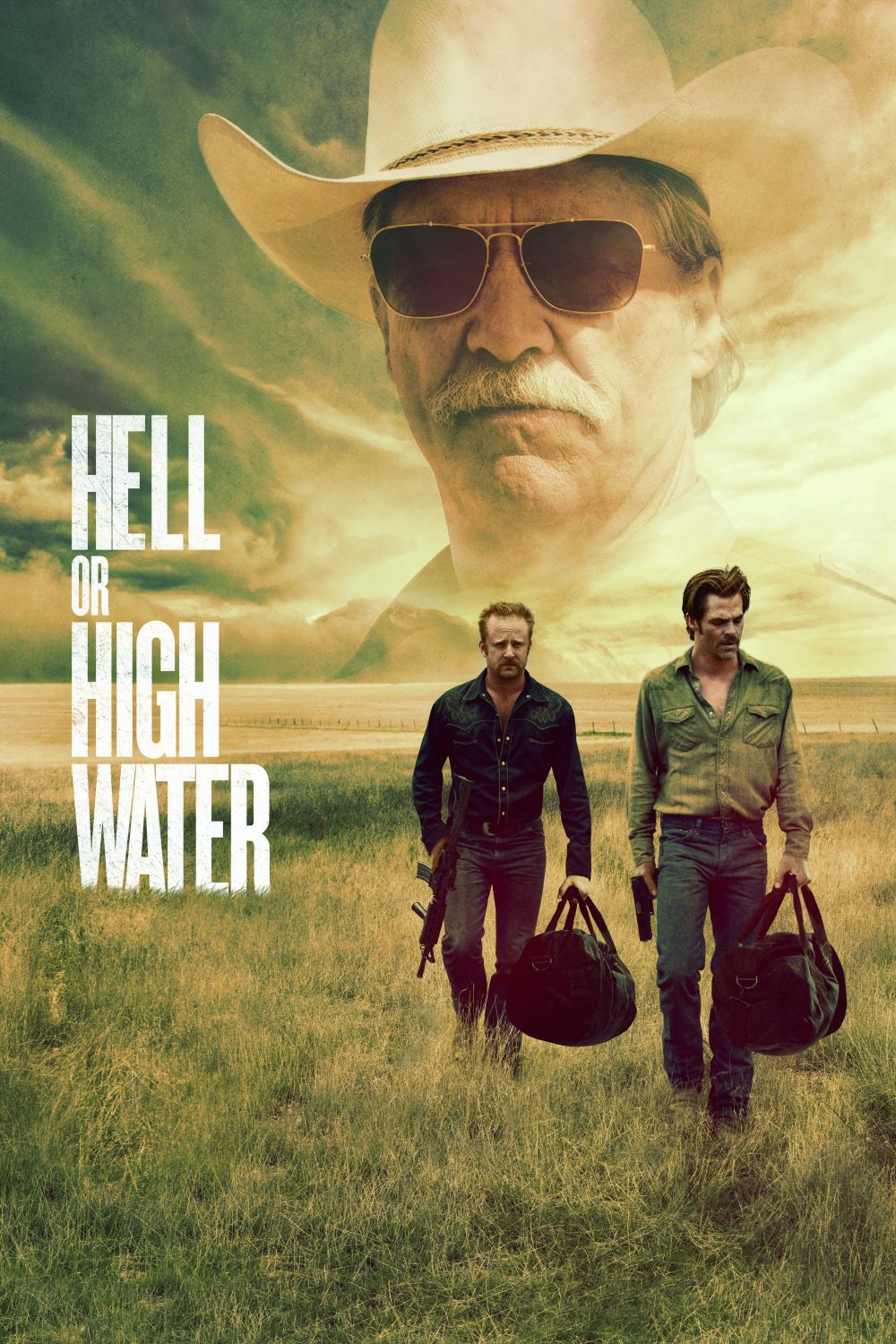
Review: Hell of High Water (dir. by David MacKenzie)


“I’ve been poor my whole life… like a disease passing from generation to generation. But not my boys, not anymore.” == Toby Howard

Hell or High Water is a gritty neo-Western that captures the desperation of rural America with sharp dialogue and tense heists. Directed by David Mackenzie and written by Taylor Sheridan, it stars Chris Pine and Ben Foster as brothers robbing banks across West Texas to save their family ranch. As the second film in Sheridan’s American Frontier Trilogy, it dives deep into economic despair on the fraying edges of modern America, carving out a raw, personal tale of survival amid systemic rot.

The story kicks off with Toby Howard (Pine), a quiet divorced dad scraping by at a casino, teaming up with his wild older brother Tanner (Foster), fresh out of prison and itching for chaos, for a string of quick bank jobs. They’re targeting branches of the Texas Midlands Bank, the same predatory outfit that’s been bleeding their late mother’s ranch dry with reverse mortgages that ballooned after her death. Toby’s motive is pure and heartbreaking: he wants to pay off the debt and hand the property—now sitting on untapped oil reserves—to his estranged kids, breaking a multi-generational cycle of poverty that’s crushed their family under debt, divorce, and dead-end jobs. It’s not about greed; it’s survival, wrapped in a fierce code of brotherly loyalty that feels timeless, echoing the blood oaths of classic Westerns like The Searchers or Unforgiven. Sheridan builds this setup methodically, letting the brothers’ quiet desperation simmer before the first robbery, making their partnership feel inevitable and doomed from the start. You get these early glimpses of their bond—Toby’s measured calm clashing with Tanner’s explosive energy—over shared meals or late-night drives, hinting at the fractures that prison and hardship have carved into their lives.

What stands out right away is how the film paints West Texas as its own brutal character—dusty highways stretching into infinity, faded diners serving coffee and Whataburger breakfast tacos, ghost towns where the only new construction is more banks or payday loan shacks preying on the broke. Giles Nuttgens’ cinematography turns the landscape into a vast, unforgiving canvas, with wide shots of endless plains, shimmering heat haze, and abandoned oil pumps that mirror the characters’ isolation and the weight of their choices. The visuals aren’t flashy; they’re oppressive, framing lone figures against horizons that swallow them whole, emphasizing how small these men feel against the indifferent sprawl. Nick Cave and Warren Ellis’ score adds a haunting twang—sparse piano notes, eerie strings, and subtle guitar plucks that build tension without ever overpowering the dialogue or action. It’s masterfully subtle, letting the silence between robberies speak volumes about the boredom, hopelessness, and fleeting camaraderie of these small, overlooked lives in flyover country. Even the sound design nails it: the rumble of getaway trucks, the click of slot machines in casinos, the distant wail of sirens—all weaving a sonic tapestry of gritty realism.

Chris Pine shines as Toby, completely shedding his action-hero polish for a layered everyman performance full of bottled-up resolve and quiet pain. You see the weight of his failures—a loveless marriage shattered, kids he barely knows living hours away—in every furrowed glance, every deliberate pause before he pulls a mask down. He’s the planner, the reluctant criminal whose moral compass wavers just enough to justify the heists in his mind, but you sense the toll it’s taking, like a man grinding his teeth through every moral compromise. Ben Foster, though, steals every scene he’s in as Tanner, the hothead ex-con with a wolfish grin that barely masks his pent-up rage and damage. His unhinged energy explodes during the heists—like firing warning shots at terrified tellers or flipping off pursuing cops mid-chase—but it’s always undercut by real pathos; years in prison have broken something fundamental in him, turning brotherly love into a volatile lifeline. Their dynamic is the beating heart of the film—casual banter over stolen cars, casino poker games, or roadside Whataburger runs feels achingly genuine, a brief respite from the doom that’s closing in. Moments like Tanner teasing Toby about his ex-wife or the brothers sharing a rare laugh humanize them, making their inevitable collision with fate hit that much harder.

Then there’s the pursuit side of the equation: Texas Rangers Marcus Hamilton (Jeff Bridges) and his partner Alberto Parker (Gil Birmingham), who provide the perfect counterpoint to the brothers’ frenzy. Bridges chews the scenery with gleeful abandon as the grizzled vet nearing retirement, obsessed with cracking one last big case before hanging it up. His folksy drawl delivers casual racist jabs at his Native American partner—not out of outright malice, but as a form of twisted, old-school affection that reveals Marcus’s own deep-seated insecurities about aging and obsolescence. It’s uncomfortable, authentic, and played with such charm that it lands as character revelation rather than cheap shock. Birmingham matches him beat for beat with deadpan comebacks that land like quiet thunder, turning their stakeouts into a buddy-cop routine laced with sharp cultural commentary. Chats about diner waitresses’ curves, Comanche history, or the ethics of bank robbery add unexpected levity and depth, transforming the cat-and-mouse chase into something richer, almost philosophical, amid the choking West Texas dust. Bridges’ Marcus isn’t just hunting criminals; he’s confronting his own mortality, piecing together the brothers’ pattern like a puzzle that might define his legacy.

Taylor Sheridan’s script nails modern American malaise without ever slipping into preachiness or melodrama. Poverty isn’t some abstract talking point; it’s visceral—Toby’s trailer-park existence with its peeling paint and flickering lights, the single mom’s quiet despair over her mortgage payments, the rusted oil rigs promising riches that never trickle down to anyone local. The banks emerge as the true villains, plastering billboards with false salvation (“Texas Midlands: Your Friend in Need”) while gobbling up ranches through fine-print loopholes and aggressive collections. Sheridan weaves in these details organically—no info-dumps, just overheard conversations at diners or glimpses of foreclosure signs dotting the highway—that build a world where desperation breeds crime. Violence erupts organically from this pressure cooker—robbers improvise with stolen cars and sawn-off shotguns, rangers swap hunches over lukewarm diner coffee—not in overblown Hollywood set pieces, but in raw, consequential bursts that leave real scars. A botched heist introduces innocent blood on their hands, forcing you to grapple with whether Toby’s noble ends can ever justify Tanner’s reckless means, a moral tightrope Sheridan walks with unflinching precision. It’s this nuance that elevates the film: no one’s purely good or evil, just products of their environment, clawing for a scrap of dignity.

The film’s slow burn pays off in spades. Early jobs are clinical and methodical: masks on, small bills only from the tellers’ drawers, in-and-out in under two minutes to avoid dye packs or alarms, always hitting small branches mid-morning when staff is light. Tension simmers in the mundane details—laundering dirty cash at Native casinos amid blinking lights and cigarette smoke, dodging security cams with cheap disguises, or holing up in cheap motels with peeling wallpaper—building inexorably to a final showdown that’s as brutal as it is poetic. No heroes ride off into the sunset unscathed; justice twists unpredictably like the West Texas wind, leaving you questioning who’s really won in this rigged game. It’s balanced too—no glorifying crime without consequences. Toby’s noble intent constantly clashes with Tanner’s powder-keg recklessness, while Marcus’s dogged pursuit peels back layers of his own regrets about a life spent chasing ghosts. Everyone’s deeply flawed, chasing some form of redemption in a system that’s stacked against the little guy from the jump, and Sheridan lets those contradictions breathe without forcing resolutions.

Pacing does drag a tad in the middle, with those ranger stakeouts testing patience at times, but it masterfully mirrors the tedious grind of real low-level crime—the waiting, the watching, the endless coffee refills—making the climaxes land with twice the force. Character depth is rock-solid across the board, though side players like the waitress (Katy Mixon) or the casino manager get a bit short shrift in the script’s tight focus. Still, the core quartet carries the weight effortlessly, with Bridges delivering a masterclass in weathered charm—part crusty mentor, part comic relief, all heart. Even smaller beats, like a teller’s trembling hands or a deputy’s split-second choice, add texture without stealing focus.

Hell or High Water revives the Western genre for the 21st century—less six-guns and saloons, more economic gunslinging and ATM skimmers. At its core, it’s about family ties that bind even as they strangle, personal failures that haunt like ghosts on the plains, and faceless corporations devouring the heartland one foreclosure at a time. Toby’s final call to his ex-wife, hinting at a freer future for his boys on the now-clear-titled ranch, lands with bittersweet punch, his voice cracking just enough to sell the lie he tells himself. Marcus, surveying the bloodied aftermath from a ridge, mutters about Comanches losing their land centuries ago—a stark reminder that history’s cycles of loss and revenge remain unbroken, no matter who holds the deed. No tidy Hollywood bows, just hard-earned truth staring you down from the screen.

In a landscape clogged with summer blockbusters, this indie gem—backed by bold financiers—proves that small-scale stories pack the biggest emotional wallop. Watch it for the immersive vibes and regional flavor, from the twangy accents to the sun-bleached pickups; stay for the soul-stirring performances and themes that linger long after the credits. If you dug the Coens’ No Country for Old Men, this slots right in—tense as a taut wire, thoughtful without pontificating, unflinching in its gaze at America’s underbelly. Hell yeah, it’s absolutely worth your time.
Forever Knight – S1:E3 – “For I Have Sinned”


“He was brought across in 1228. Prayed on humans for their blood. 
Now, he wants to be mortal again.To repay society for his sins. 
To emerge from his World of Darkness. From his endless Forever Night.”

The Prologue opens in the back of an electronic store, where a couple is making out. The woman pushes her Security Guard lover away playfully and states she has to go, fastening a cross around her neck before leaving. Inside her car, the woman puts on a wedding ring. Before she can leave, a figure grabs her from the back seat, ripping the cross from her neck and whispering “You don’t deserve this.” as she screams. It’s time for another case!

Nick arrives at Janette’s nightclub, greeting each other with a small dance before Nick relays the recent murders in the city. “Two women, one decapitated, one disembowled.” Janette wonders why he came to her. She doesn’t care about mortals and reminds Nick that he’s “not people”, by dipping her finger in her blood filled glass, offering a taste. Schanke arrives in the club, getting a little close to one of the vampire patrons when Nick escorts him out. “It’s dangerous in there, Schanke.”, to which Schanke argues that his entire lineage are filled with ladies men who fooled around. They don’t have much time to go into details as he tells Nick about the latest crime scene.

With the chalk outline and blood splatter, Nick is quickly able to discern the crime as a crucifixion and has the cops on the scene bring in the guard as a suspect. One thing is certain, there is a an incredible about of blood loss. Could another vampire be doing this? At the morgue, Natalie’s analysis supports Nick’s theory. Death by a coronary. As she removes the victim’s cross, she sees Nick flinch and says “These things really make you uncomfortable, don’t they?” His response is that they make him sick. Natalie apologizes, noting he’ll have to keep the cross as evidence, with the other two woman all having had crosses with them and were all Catholic. 

In a church, a priest listens to a confession. The voice in the other room explains that he’s not a sinner, that he holds the keys of perdition and of death. Father Pierre Rochefort (Michael McManus, TV’s Lexx) tries to dissuade the individual, but only receives a warning that more sinners will face his wrath. The priest hears footsteps scamper away, visibly shaken. 

At his apartment, Nick tries some garlic pills that send him into a short fit. As he recovers, he examines the cross Natalie gave him that causes him to remember being in a chapel in the Dark Ages. He recalls Joan(Christine Cox, who ironically played a cop in her own vampire show, Blood Ties) who tells him he’s cursed because his salvation has him living in fear of death. As he raises his hand to the nearby cross in the flashback, his hand catches fire. At the same time, he drops the evidence cross into his palm, which burns a small imprint. “Well, the garlic pills are definitely an improvement.”, he whispers. 

The next day, Father Pierre approaches another priest and asks his advice about going to the police. The elder price reminds him that what’s said in the confessional stays there, and has to be protected. This leaves Father Pierre a bit troubled. That night, Schanke makes a visit to Janette’s nightclub, where he catches the attention of Alma (Tracey Cook). She dazzles him with her vampire eyes and leads him into the back of the club, away from the others. Janette breaks up Alma and Schanke before she can have a drink. Janette warns Schanke to stay away from the club, else he might find himself a permanent member of the night shift. Schanke quickly runs out of the room and the club.

At a Naughty phone line service desk, a woman named Magda receives a call from the villain. He tells her he knows her name and that she “profanes the church by feeding the fires of lust”, threatening to burn her alive. Playing the call for her manager, she’s sent home. The poor girl can’t even make it out of the building before she’s caught by the masked killer. Nick, who happens to just be driving in the vicinity, hears her screams and pulls over his car, taking flight. He arrives in the building from the room and pulls his firearm on the villain. The villain pushes the girl into Nick’s arm and reveals a revolver of his own, shooting Nick at point blank range before darting down the stairs. Nick makes the girl call an ambulance, using the moment to change the villain out into the alleyway. He stops the masked individual who turns out to be Father Pierre. Nick’s seen a lot over the years, but even he seems shocked at the revelation. 

In the Interrogation Room, Father Pierre says that he’s not protecting the killer, but the rules and beliefs of his religion. Nick scoffs at this, but the Captain (who’s also in the room) kicks Knight out after his outburst. Father Pierre poses a question: “Faith is the cornerstone of the church…I believe in it. Is there nothing you believe in that strongly?” We see another flashback, with Nick talking to Joan, who is due to be burned at the stake. He offers to make her a vampire, but she refuses. It’s something Nick can’t understand. She gives him her cross to remind him that “the faith you’ve lost is always there to regain.”

At the Precinct, Magda finds Nick, asking him if he’s okay. He shrugs off the shooting as just a grazing and that he’ll be fine. Magda suggests setting herself up as bait, but Knight refuses, sending her away. She then turns to Father Pierre, who comes into the hallway from the interrogation room, but he sends her away as well. The Captain has Nick find someone to put Magda in a hotel until everything’s safe. 

Back at Nick’s apartment, Natalie discovers the old wooden cross and Nick tells her it belonged to Joan of Arc. Natalie is amazed by this, gently caressing the cross while listening as Nick talk about Joan. “You know, she had this incredible strength, this courage…” he smiles, reminiscing. “Faith.” Natalie smiles, still admiring the cross. Nick asks Natalie to bring the cross closer to him. When she does, he flinches, but fights against it. To Nat’s question of why he fears it, he says it’s because it’s “the One True Light and we’re creatures of the Dark.” Nick tells Natalie that he has to spend the day in the church in case the villain returns. 

Dawn. We find Nick staring at the front of Father Pierre’s church. He has a quick conversation with Schanke, letting him know he doesn’t need any extra backup as it might tip the villain off. In the church, Knight moves through the pews, pausing at a row of candles. He remembers watching Joan, burning at the cross. He tries to run out the door, but with the sun already out, he’s trapped. Instead, he hides himself inside Father Pierre’s confessional box. Schanke, still feeling some guilt over his antics at Janette’s, steps into the church and into the other area of the confessional. Knight hears Schanke out, having some fun at the poor guy’s expense. 

As the evening starts, the police are ready to close the stakeout when Schanke catches sight of Magda. She snuck out of the hotel and made her way into the church. Schanke gets knocked out in his car, and Magda is kidnapped by the villain and is taken behind the church to a hilltop where a large cross awaits. The villain ties Magda to the cross, preparing to start a bonfire. Knight arrives (via flight) and tackles the villain, eventually knocking him out. The villain’s torch lands in the kindling, starting the bonfire. Remembering Joans words about Faith being ready to be reclaimed, he leaps over the fire onto the platform and unties Magda. He covers her head with his jacket and jumps away from the bonfire saving them both. “How….” she breathes, “How did you do that?!” to which Knight replies…”A little bit of adrenaline…and a lot of faith.” 

With the day (or night) saved, everyone’s at the precinct. Magda thanks Father Pierre and Nick as well, giving him her cross. He refuses at first, but she places it in his hand and closes it, smiling. Nick makes his way to the recovering Schanke and Natalie. Natalie notices the cross in Knight’s hand, amazed he’s able to hold it. “It still burns, but not as much.”, he says. Natalie suggests that he’s perhaps one step closer to redemption. Schanke offers to get them all food, but Nick states he can’t, putting on his sunglasses in a move that would make CSI’s Horatio Caine proud…”..the sun is coming up.” are his final words. 

Forever Knight – S1:E1 – “Dark Knight, Part I”


“He was brought across in 1228. Prayed on humans for their blood. 
Now, he wants to be mortal again. To repay society for his sins. 
To emerge from his World of Darkness. From his endless Forever Night.”

I stumbled onto Forever Knight late one early pre-dawn Sunday Morning, which would show up on a special “Crimetime After Primetime”. Although the cast was different (save for John Kapelos, still playing Don Schanke), it still had the flavor of the 1989 TV Film. It also ended up trading the streets of Los Angeles for Toronto, Canada, which meant that the production also had to include Canadian talent. The two part pilot, which aired in May of 1992, was just a beat for beat revamp of the TV film’s story. I’ll try to find a way to not make these so long as this progresses. 

In the prologue, we open in Paris in the year 1288. A young woman welcomes a man to the rest of his unlife, letting him know that while he’s now as eternal as the city, he must kill. This trio of vampires are our hero, Nicholas (Geraint Wyn Davies, Airwolf), his maker LaCroix (Nigel Bennett, HBO’s Gotti), and Janette (Deborah Duchene, TV’s Street Legal). Moving to the present day, the night watchman of a museum is murdered, and a jade cup stolen. 

At the crime scene, Schanke is still going wild with the camera, assisting the forensic crew. He and Nick have a few words before Nick interviews the assistant curator, Dr. Alyce Hunter (Christine Reeves) about the missing cup. Alyce seems somewhat fascinated about Knight’s knowledge of the history and the use of the jade cup in blood drinking rituals. There’s a moment of quiet between them as they consider what that could mean. 

Heading over to the morgue, we’re introduced to Natalie (Catherine Disher, who voiced Jean Grey in Fox’s X-Men and Val Cooper in Disney Plus’ X-Men ’97). She offers Nick some tea that he can’t quite stomach, but he’s making some progress in staying away from blood. The victim from the museum is one of three, all with large blood loss and some tell-tale puncture marks on their necks. “Nick, Is this something I should worry about?” she asks. Nick doesn’t have an answer. Back at the Precinct, the Captain (Gary Farmer, Tales From the Crypt: Demon Knight) is nervous about these murders and wants some results. A food order comes in, giving Nick three hamburgers that the Captain snarks over. “Skinny guy. Eats like a pig.” The Captain pairs Knight with Schanke, to Don’s delight and Nick’s aggravation. 

The 2 elderly hobos from the film are now 3 people. Dr. Dave (George Buza, the voice of Beast in both Fox’s X-Men and in X-Men ’97), Topper (Zack Ward, Transformers) and Jeannie (Deep Space Nine’s Nicole De Boer). Nick warns the three to spend their nights inside with the murders going around. Jeannie lets Nick know they’ll be careful. 

Nick heads home for the day, turning on the window shutters for the coming dawn. His fridge is stocked with bottles of the good stuff. He pours himself two glasses full of blood and drinks heartily. It’s been a long night, indeed. 

Knight regroups with Schanke the following night. Schanke asks about Nick’s Cadillac and Nick explains that it has some incredible trunk space (for daytime sleeping, though he doesn’t share that tidbit). While on patrol, Nick hears some commotion in a building and detours the car. When they arrive at a nearby building, a woman informs Nick in Mandarin that her daughter’s inside and someone has an Uzi. Running inside, Nick and Schanke stack up on the door to the perp’s room, kicking the door open. The response is a blaze of gunfire. Thankfully, Knight’s vision clearly picks up the enemy with the hostage and has Schanke hold in place while he heads around to the back. Nick floats up to the window and pulls the gunman through it, quickly dispatching him outside of Schanke’s view. 

Relaxing in a dark alley, Topper and Jeannie are arguing over what to do for the evening. Topper suggests that they could go to Nick’s Garage, where it’s much warmer, but Jeannie won’t want to have to owe him anything. Dr. Dave is no where to be found, but someone approaches the pair from the dark, attacking Topper causing Jeannie to scream. 

Nick takes flight, paying Alyce a late night visit. Just before he shows up, however, Alyce finds a picture of Nick in an old book on archeology. Unlike the film, this doesn’t bring any kind of questioning or curiosity about why he was in the picture. What we do get is a nice flirtatious moment between Nick and Alyce. She loves the dark, and he’s all about the dark. Nick gets a little too close with a kiss, nearly losing control of himself. He pulls away and leaves Alyce be, just in time for a guard to show up. The romance will have to wait for another night. At the same time, Schanke debriefs the Captain, relaying that the captured perp claimed a vampire attacked him. The Captain relays a legend about how burning scorpions attaches other ones from miles around, which spooks Schanke. The Captain reminds him it’s just a legend, like vampires, and he should focus on the real world. 

With Nick failing to check in the following morning, Natalie borrows his Caddy from the precinct and visits him at home. She finds him in a blood drunken self pitying stupor. With no fear of who or what she is, she lays into him for falling off the wagon. “You don’t want help, hey, I’m a dot on the horizon.”, she says. Their argument is interrupted by Alyce’s voice message, asking Nick to “talk about last night.” Nat, a little shaken by this, inquires what happened. Nick confesses that he kissed Alyce and then nearly killed her. Nat softens and asks him about the other vampires. Nick shares that the jade cup is part of a pair that could possibly cure vampirism. LaCroix has been keeping Nick away from both cup to ensure he stays immortal. Could he be the source of the current killings? 

The next day, Topper’s body is discovered in a barrel. According to Nat, he was hit by a blunt object and then had the neck incision done. Nick becomes livid that he lost Topper on his watch and that Jeannie is missing, though we get a major clue in that there was a blood mobile that recently visited the area. Nick snaps at Schanke and pays a visit to Jeanette to find LaCroix. She’s adjusted to modern times pretty well, owning her own vampire nightclub. They share a quick discussion in French, with Jeanette informing Nick that LaCroix is indeed very much around and is keeping his eyes on him. As he leaves the nightclub and drives away, we find Alyce trailing behind him. 

We end the episode with Nick turning on the car radio, hearing the voice of the Nightcrawler (LaCroix) who laments being in town and not having heard from his friend. The music station is still Metal, and yet the show still decides to play something different, this time a violin. “I am waiting.” LaCroix says to the microphone. 

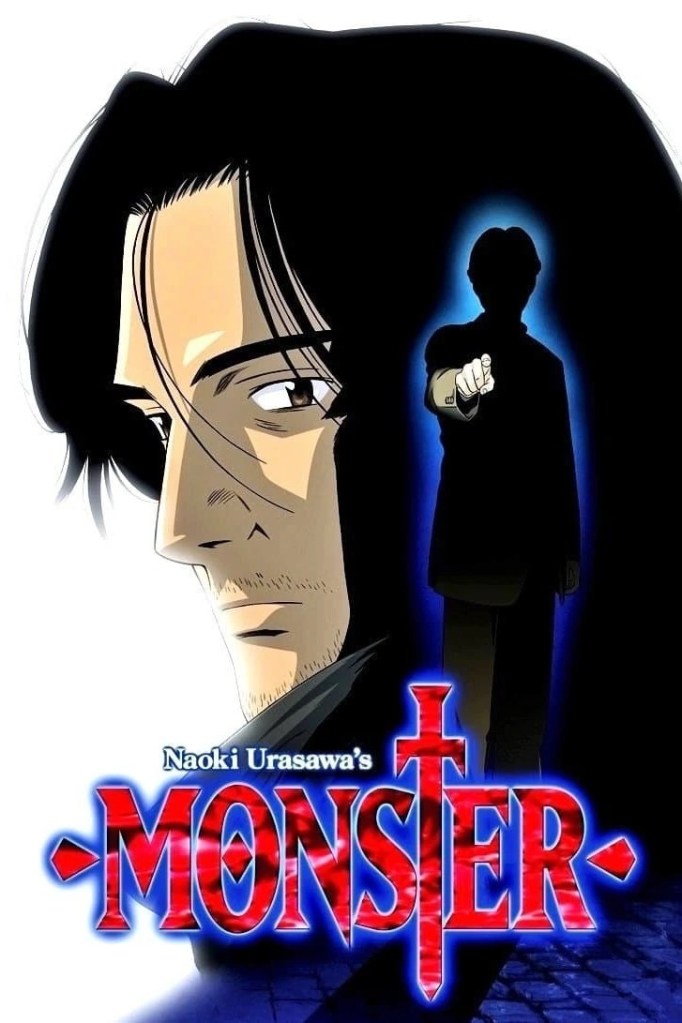
Anime You Should Be Watching: MONSTER


Naoki Urusawa is widely considered one of the great mangaka (comic artist who illustrates and/or writes manga) and some sees him as one of the great storytellers of our time. His work ranges from science fiction (20th Century Boys) to sports (Happy!) and to psychological thriller (MONSTER). It is his foray into the psychological thriller realm that we are here today.

MONSTER was originally published through 18 volumes from December 1998 to December 2001. This is a rarity amongst non-shonen manga which tend to be the type of manga that remains the most popular and non-ending publishing run. Urusawa’s psychological thriller wasn’t initially seen as something that would become popular and well-received when he first approached his editor about the idea for the epic story. Yet, despite his editor’s misgivings, MONSTER gained not just critical-acclaim but a strong following not just from manga readers, but from those who usually do not subscribe to what some would see as just another comic. It is this crossover appeal along all types of readers that would see Urusawa’s dark work sell over 20 million copies sold.

Like all popular manga, MONSTER would get an anime adaptation that ran from early April 2004 and to the series’ finale late September 2005. Just like its manga, the anime series would come to be known as one of the great anime series of the past 25 years. Where some anime adaptations of popular and critically-acclaimed works tend not reach the same level quality, MONSTER avoids the pitfalls of telling such a dense and heavy story by taking on the challenge and letting the series run for as long as it needs to be able to tell a faithful adaptation.

MONSTER the anime I would put up with all the other great live-action thrillers whether film or tv and for the most part would surpass most of them. The sophistication of its execution from the making the complex plot of the story easy to follow without dumbing it down for the general audience and, this is where MONSTER hits the mark, in keeping a steady and pace that neither rushes things or keep scenes last longer than they should before boredom begins to creep in.

Those who are not big on the cutesy and/or the hyper-action of most anime that tend to be popular with the general public, I suggest taking on MONSTER and just see just how mature and sophisticated the medium can be in addition to the rest.

Scenes I Love: Mr Inbetween


There’s something to say about an individual who follows a code of behavior and has a moral compass that may seem archaic for today’s sensibilities, but when one really thinks about it…well, they’re not wrong.

We may hate that such people may be correct in their way of thinking and that it may offend certain sensibilities but that doesn’t necessarily means its wrong.

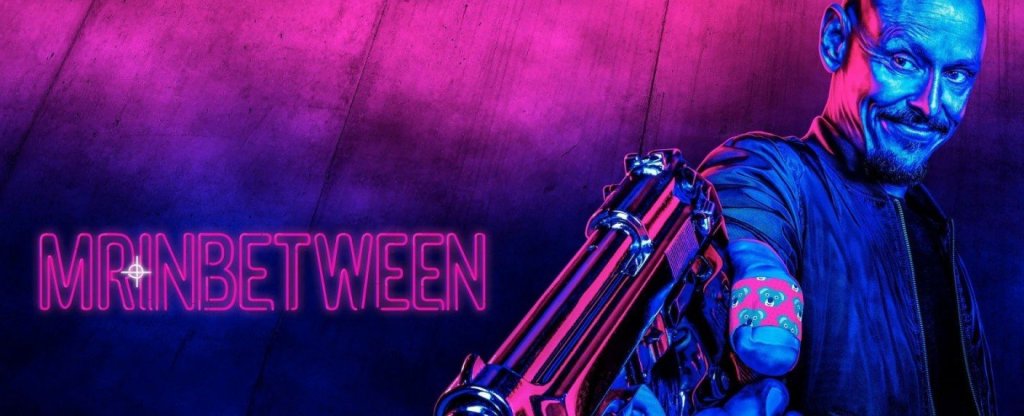
And on that note let me introduce you to Ray Shoesmith aka Mr Inbetween. This scene of him attending an anger management class best describes not just who Ray is but sets the tone for what this series is all about.

The Too Old to Die Young Teaser


Here’s one for the cinemaphile’s glossary.totdy.jpg

In cinema circles, an Auteur is described as “a filmmaker whose personal influence and artistic control over a movie are so great that the filmmaker is regarded as the author of the movie” (Wikipedia). I’ve looked at films as a three-way set of responsibilities. You have the writer, because without the story, there’s nothing. You’ve the Director, who takes that Writer’s vision and presents it on film, and then there’s the cinematographer, who makes sure that the Director’s work is well-lit and shot. I feel all three roles can tip the ownership of a film in anyone’s favor. A great story can be damaged by a bad director, and a good director can try to the make the best out of a bad story. On top of that, you could also have bad movies that look really good.

There are a number of directors out there who fit this designation. Brian DePalma, Guillermo del Toro, David Fincher, Terrence Malick (who shows up every half a decade with a film) David Cronenberg, Richard Linklater,  Jean-Luc Godard (who I’m learning a lot about lately), the list is a large and heavily argued one. Each person has their own picks and favorites.

For me, Nicolas Winding Refn fits that role. With films like Valhalla Rising, Drive , Only God Forgives and The Neon Demon, it’s hard not to recognize the color contrasts and flow of his stories. In writing this, I also found out that Refn is colorblind, which makes what he’s done so far more amazing for me.

Refn’s latest project for Amazon Studios is a series called Too Old to Die Young. The most anyone really knows is that is supposedly “explores the criminal underbelly of Los Angeles by following characters’ existential journeys from being killers to becoming samurai in the City of Angels.”

Here’s a teaser starring Miles Teller, Callie Hernandez, Jena Malone, John Hawkes and William Baldwin. It appears to still carry that wild color scheme and may possibly be just as dark and brutal as his previous work. I’m curious as to whether they’ll stick with a standard approach or follow True Detective’s style of a single writer/director pair for all of the episodes. Either way, we’ll find out when it releases next year.

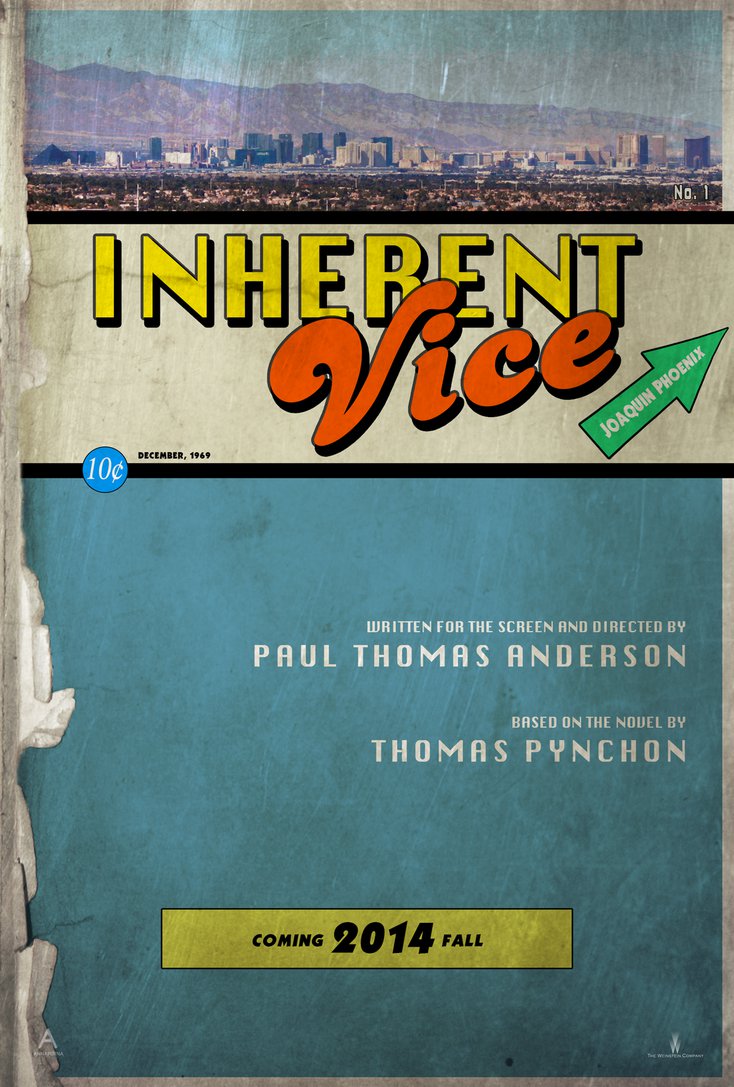
Trailer: Inherent Vice (Official)


Inherent-Vice-poster

The arrival of a new Paul Thomas Anderson film seems to always be a time for excitement. P.T. Anderson’ films can never be called boring. They’re all entertaining on some level for even those who don’t quite get Anderson’s quirky-style of storytelling.

I’ve admired all of Anderson’s films. Have I liked all of them? Not really, but I can understand why many anticipate each and every new film he releases like it was the second coming.

I have no idea what’s going in just going by the trailer, but it does have a noir vibe going for it. Plus, it has Joaquin Phoenix and Josh Brolin.

Inherent Vice is set to premiere on October 4, 2014 during the New York Film Festival before going wide release on December 12, 2014.

Quick Review: The Raid 2 (dir. by Gareth Huw Evans)


the-raid-2-posterI didn’t know much about The Raid 2 (or The Raid: Berandal) prior to it’s release. Yes, I loved The Raid Redemption so much that after my initial viewing, I bought another ticket for the next available showing. I also saw the initial trailer, but other than that, I walked in blind. Truth be told, if the season finale of The Walking Dead wasn’t on the same night I saw this and the trains weren’t so damn slow, I would’ve gone right back in for The Raid 2. I know I’ll go back to it later this week, that’s for sure.

Here’s the short of it: The Raid 2 gives you all of the great martial arts from its predecessor (thanks to Choreographers and stars Iko Uwais, Yayan Ruhian, along with writer/director Gareth Evans). The fight scenes are incredibly fluid and well choreographed, some ramped up way past what the first movie delivered. The film also manages to build a story so big that it almost reaches levels akin to Michael Mann’s Heat.  That story length also threatens to hurt the film. Where Redemption was a tight package, the sequel has a 2 1/2 hour-long running time. It moves like an Opera, and as such, there maybe at least one chapter where you kind of wonder where it’s all going and why it’s moving in the chosen direction. The film does a great job of righting itself afterward and everything syncs up.

It’s an absolute fight to keep myself from going into every fight and saying “Did you catch that part when..?! Omigod, wasn’t that awesome!” No spoilers here, but this is one time where I wish I could. This review’s vague on purpose.

Taking place just hours after the events of Redemption, The Raid 2 finds supercop Rama (Iko Uwais) working undercover between 2 rival mob families and trying to weed out rogue cops. The premise sounds simple, but the movie is pretty layered.  Just how deep can Rama go without exposing himself or losing his humanity? In this sense, a lot of the writing pays homage to movies like Donnie Brasco, The Godfather and The Departed (or Internal Affairs, which The Departed was based on). This is all you really need to know about the plot itself, it’s a crime drama. How it conveys the story on-screen is something else entirely.

The balance between the action and drama is pretty even. Each dramatic moment seems to fit well to the ones before and after it. While there maybe one or two areas that require a huge suspension of belief (a person can bleed profusely and still manage to cause a wave of destruction), but depending on one’s mindset, these can be forgiven…or not. Evans chooses his shots carefully, and in some places it’s downright beautiful – especially in an area that focuses on three assassins with a particular skillset.

The fight scenes are rapid fire moments of hard-hitting shots and bloodshed that may have you wincing or even cheering (like my audience). People are sliced, shot, beaten to a pulp and your jaw may drop at the inventive ways a bat or hammer can be used. In some cases, it takes Close Quarters Combat in as tight as you can possibly get, using camera work that moves above, around and even inside the action when working with multiple fights. The camera isn’t so fast that it suffers from the Bourne Identity/Batman Begins fight blur, but it’s not static either. Remember that free roaming camera technique used in the car ride from Spielberg’s War of the Worlds? There’s a similar usage here that’s beautiful, but in the midst of all that stunt work, one has to wonder if anyone was seriously hurt. The audience lost their minds when Yayan Ruhian appeared, playing a character separate from Mad Dog in Redemption, and our showing ended with a half standing ovation. Not bad for a film focused on fighting.

If you understand that The Raid 2 is hyper-violent, it’s perfectly okay. It’s almost expected, and it works out so very well.

Basically, if you either went to see the The Raid: Redemption and/or enjoyed that film, there’s no reason to avoid The Raid 2. I honestly didn’t think it could get better than the first film and am happily surprised that it has. The film is in a limited release in New York and Los Angeles for now, moving to a wider release on April 11th.

Trailer: Sabotage (Red Band)


Sabotage

Since Arnold Schwarzenneger left the California governor’s office and politics he’s gone back to doing what he was good at (or at least good at during the 80’s and 90’s). His first couple of films since getting back in front of the camera has been average at best (though I must say that Last Stand was pretty fun).

Now, we have him back in another film, but this time around one that’s a very hard, gritty R-rating that he hasn’t done since ever. He’s always had rated-R films, but they had a certain fun tone to them. With David Ayer’s Sabotage it looks like Schwarzenneger is trying to flex his hardcore bones. It’s definitely a surprise to hear him curse like a sailor during the red band trailer.

Sabotage is set for a March 28, 2014, release date.