4 Shots From 4 Films is just what it says it is, 4 shots from 4 of our favorite films. As opposed to the reviews and recaps that we usually post, 4 Shots From 4 Films lets the visuals do the talking.
Happy birthday to my pre-code role model, the amazing Clara Bow!
4 Shots From 4 Clara Bow Films
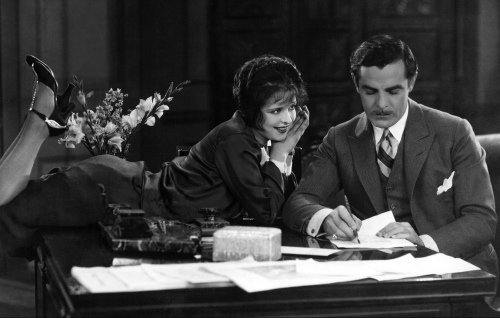
It (1927, dir by Clarence G. Badger)
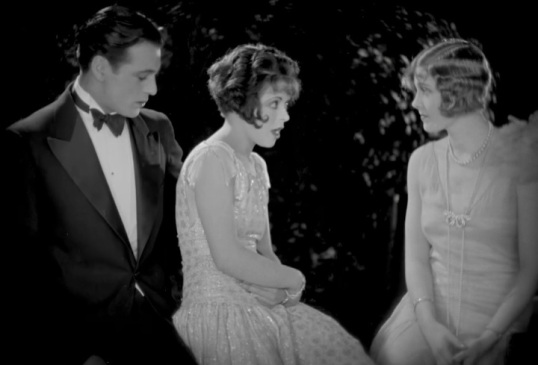
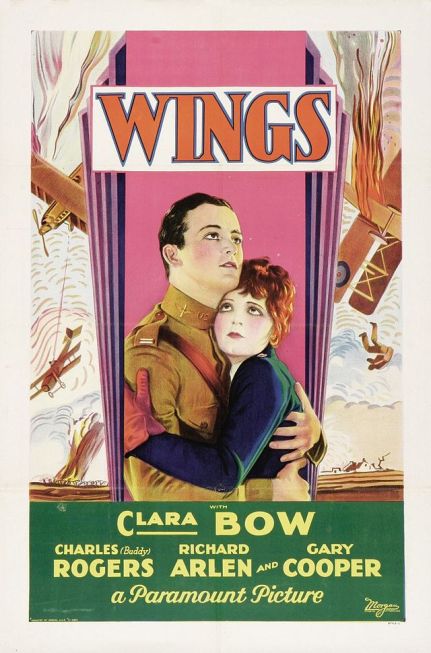
Wings (1928, dir by William Wellman)
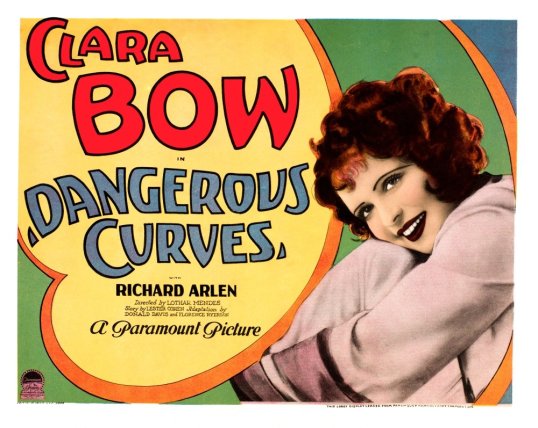
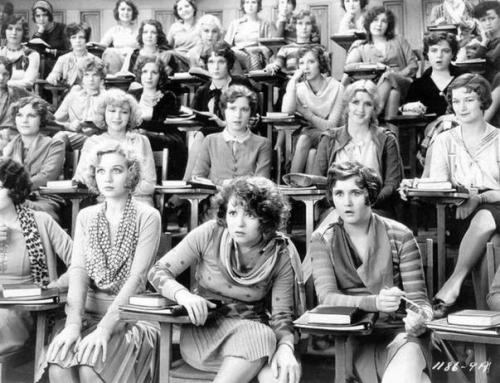
Dangerous Curves (1929, dir by Lothar Mendes)
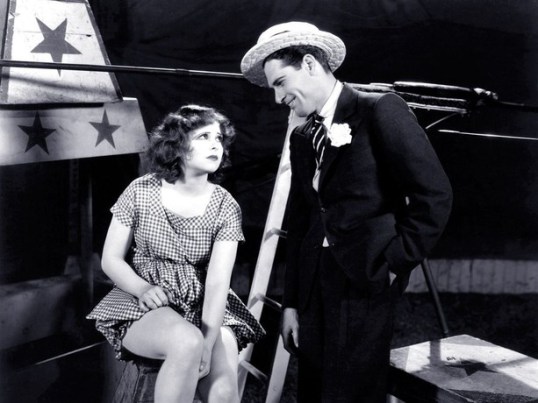
Call Her Savage (1932, dir by John Francis Dillon)
Today, we celebrate the birthday of my pre-code, silent film role model, the amazing Clara Bow! Clara was born 120 years ago, on this date, in Brooklyn, New York. As an actress, she was one of the biggest stars of the silent era. She came to represent the the Roaring 20s in all of their glory. She also co-starred in the first film to ever win the Oscar for Best Picture, Wings!
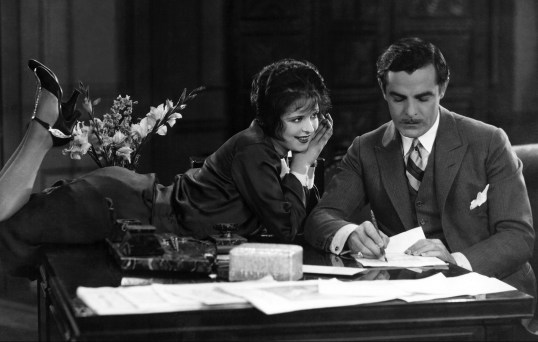
Below is a scene from my favorite Clara Bow film, 1928’s It. Playing a poor but confident shopgirl who falls in love with her wealthy boss, Bow was so popular with audiences that she became known as the “It Girl.”
In the scene below, she prepares for a date with her boss. She may not be as rich as her romantic rivals but she doesn’t let that stand in her way. She’s Clara Bow. She’s got it and she knows it.
4 Shots From 4 Films is just what it says it is, 4 shots from 4 of our favorite films. As opposed to the reviews and recaps that we usually post, 4 Shots From 4 Films lets the visuals do the talking.
Happy birthday to my pre-code role model, the amazing Clara Bow!
4 Shots From 4 Clara Bow Films
It (1927, dir by Clarence G. Badger)
Wings (1928, dir by William Wellman)
Dangerous Curves (1929, dir by Lothar Mendes)
Call Her Savage (1932, dir by John Francis Dillon)
The 1929 film, Dangerous Curves, takes place at the circus.
Larry Lee (Richard Arlen) is a tightrope walker and, when we first meet him, he’s a bit of a cad. He knows he’s the best and he knows that the crowds are specifically showing up to watch him risk his life on a nightly basis. Every woman at the circus is crushing on him but Larry hardly notices because he’s used to being desired. He’s in love with his tightrope-walking partner, Zara (Kay Francis). Everyone can tell that Zara is manipulative and not even loyal to her relationship with Larry. She wastes his money and Larry sometimes spends so much time thinking about her that it breaks his concentration on the tight rope.
Eventually, Larry discovers that Zara has been cheating on him! When Larry finds out about Zara and Tony (David Newell), he cannot get the image of them kissing out of his head. When he tries to walk across the tight rope, he loses his focus and, as the audience gasps, Larry falls to the ground below. (In an impressively-edited sequence, we see Larry falling from about five different angles before we finally see him hitting the ground.) Larry recovers but his confidence has been broken. Instead of returning to the circus, he just wants to drink and obsess on Zara and Tony.
Can bareback rider Patricia Delaney (Clara Bow) convince him to return to the circus? Can she give him the confidence to once again walk across the tightrope? Will Larry then teach Pat how do the tightrope act herself? Will Larry finally realize that Pat loves him and that he loves her? And how will Pat react when, after all she’s done for Larry, he suddenly decides that he wants to bring Zara back into the act?
Dangerous Curves is a mix of melodrama and romance, all taking place at the circus. It’s also a pre-code film, which means it’s a bit more honest about the relationships between the characters and Larry’s subsequent drinking problem than it would have been if the film had been made just a few years later. As a result, this is a melodrama with an edge. The members of the circus community are living on the fringes of polite society and they’ve built their own community, one that is based on their unique talents. Larry’s sin isn’t so much that he’s arrogant and tempermental. It’s that he doesn’t properly respect the community of which he’s a part. He thinks he’s above the rest of the circus. His fall from the high wire humbles him. His relationship with Patricia eventually redeems him.
That said, the main appeal of this film is that it features Clara Bow in one of her early sound-era performances. Bow became a star during the silent era but, unlike many of her contemporaries, she was able to make the transition to sound. I absolutely love Clara Bow and this film features one of her best performances. She’s determined and energetic and she plays the stereotypical “good” girl with just enough of a mischievous glint in her eye to make her compelling. She may be willing to help Larry get back on the tightrope and then subsequently learn how to walk the tightrope herself but she also shows that she’s not going to put up with him taking her for granted. As well, both Clara and Kay Francis get to wear a lot of cute outfits, which is always one of the pleasures of a pre-code film.
Dangerous Curves is worth watching for the chance to see Clara Bow at her best.
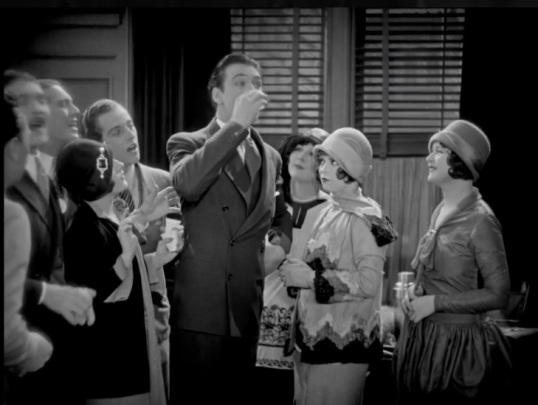
The 1927 silent melodrama, Children of Divorce, opens at a private Catholic boarding school in Paris. It’s a place for rich and idle parents to dump off their children while they enjoy the City of Lights. Jean Waddington is dropped off at the school and struggles to make friends until she meets the vivacious Kitty Flanders. Jean and Kitty bond because they are both children of divorced parents. (Kitty says that she has only one mother but that’s she’s had four different fathers.) Jean meets Ted Larrabee, who is Kitty’s neighbor back in New York and who has also been dumped off at the school by his divorced parents.
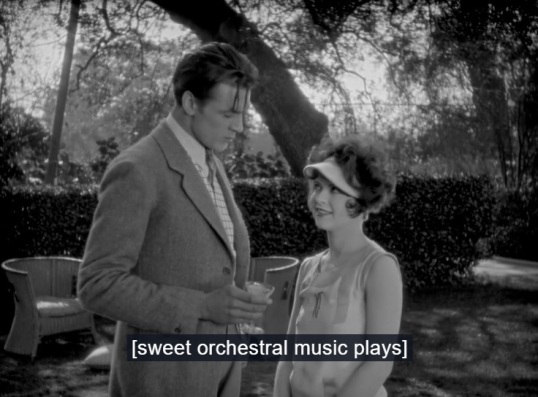
Flash forward a few years and Kitty (Clara Bow), Jean (Esther Ralston), and Ted (Gary Cooper) are all young adults. Kitty is in love with Prince Vico (Einar Hansen) but the Prince’s father refuses to allow Vico to consider marrying her because Kitty’s mother (played by future gossip columnist and Queen of Hollywood, Hedda Hopper) is not rich. Believing that the only way that she’ll ever be happy is if she marries a rich man, Kitty set her eyes on Ted. Ted, however, wants to marry Jean but Jean says that she’ll only consider marrying Ted if he gets a real job and proves that he can do something more than just live off of his father’s money.
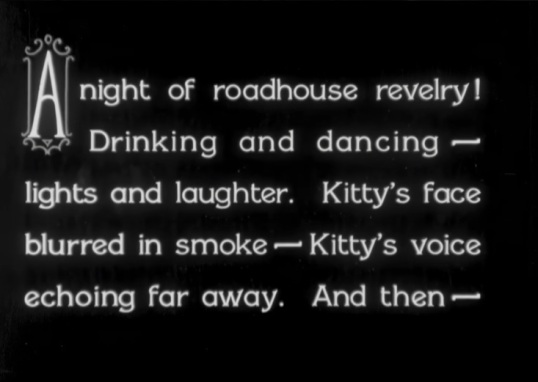
Ted starts his own architectural firm and proves that he’s capable of hard work. However, when Kitty convinces Ted to celebrate his success by going out drinking with her….
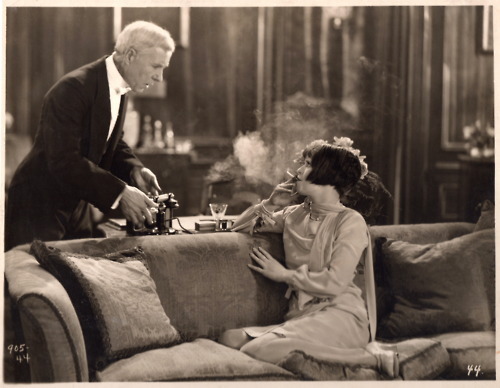
Ted wakes up with a hangover. He soon discovers that he’s also woken up with a wife! While he was drunk, he married Kitty! Ted is stunned. Jean is heart-broken. She begs Kitty to grant Ted a divorce so that she can marry him but Kitty reveals that she has no intention of ever getting divorced. As she explains it, Kitty has been raised to marry a rich man, Ted is rich, and now, she’s married to him. Why would Kitty want to give that up? When Ted says that he’ll file for the divorce, Jean tells him that she can’t marry a man who would leave his wife and then she leaves for Europe….
Of course, that’s not the end of the story. This wouldn’t be a silent melodrama if it ended that simply. Instead, years later, Kitty does come to see the error of her actions and she also discovers that her true love remains Prince Vico. But, by that point, it’s too late and, of course, Jean still refuses to marry a divorced man. Kitty seeks redemption in the most extreme was possible….
Clocking in at a brisk 70 minutes, Children of Divorce is a wonderful showcase for Clara Bow, who was born 118 years ago on this date. Gary Cooper is properly handsome and sincere as Ted and Esther Ralston is lovely if a bit boring as Jean but the film ultimately belongs to Clara Bow, who brings so much vitality and energy to her role that it doesn’t matter that Kitty tricks Ted into marrying her and destroys all of Jean’s romantic dreams. Most viewers will instantly sympathize with Kitty and, to be honest, it’s kind of hard not to be on her side. Kitty has fun. Kitty refuses to let society stand in her way. While Jean makes a list of demands about what she needs Ted to do before she can even consider marrying him, Kitty encourages Ted to loosen up and enjoy his success. Kitty is the one who I think most viewers, at the very least, would want to be friends with. While Jean tries to run away from her problems, Kitty is determined to live her best life. Indeed, Kitty’s ultimate redemption is all the more effective because, once again, Kitty is the one who is making things happen while Ted and Jean just passively accept the conventions of society.
Clara Bow was one of the greatest of the silent film stars and Children of Divorce shows why. As opposed to many of the other actresses of the day, Clara Bow was convincingly cast as women who were willing to do whatever needed to be done to find happiness. Sadly, Clara Bow’s later years were not happy ones. She deserved better than the world gave her. Watching her in films like this one and It feel like looking out a window into the past, a time when it seemed like anything was possible.
Today, we celebrate the birthday of my pre-code, silent film role model, the amazing Clara Bow! Clara was born 115 years ago, on this date, in Brooklyn, New York. As an actress, she was one of the biggest stars of the silent era. She came to represent the the Roaring 20s in all of their glory. She also co-starred in the first film to ever win the Oscar for Best Picture, Wings!
Below is a scene from my favorite Clara Bow film, 1928’s It. Playing a poor but confident shopgirl who falls in love with her wealthy boss, Bow was so popular with audiences that she became known as the “It Girl.”
In the scene below, she prepares for a date with her boss. She may not be as rich as her romantic rivals but she doesn’t let that stand in her way. She’s Clara Bow. She’s got it and she knows it.
4 Shots From 4 Films is just what it says it is, 4 shots from 4 of our favorite films. As opposed to the reviews and recaps that we usually post, 4 Shots From 4 Films lets the visuals do the talking.
Happy birthday to my pre-code role model, the amazing Clara Bow!
4 Shots From 4 Clara Bow Films
It (1927, dir by Clarence G. Badger)
Wings (1928, dir by William Wellman)
Dangerous Curves (1929, dir by Lothar Mendes)
Call Her Savage (1932, dir by John Francis Dillon)
As I mentioned in my previous review, Sunrise may have won the 1927 Oscar for Unique and Artistic Production but the official winner of the first Academy Award for Best Picture was the silent World War I romantic melodrama, Wings. Wings is one of those films that doesn’t seem to get much respect from contemporary critics, many of whom are quick to dismiss the film as being corny and clichéd. It’s not unusual to see Wings cited as being the first example of the Academy honoring the wrong film.
Wings tells the story of David Armstrong (Richard Arlen) and Jack Powell (Charles “Buddy” Rogers), who both live in the same small town and who are both in love with the pretty but self-centered Sylvia (Jobyna Ralston). Sylvia, meanwhile, is in love with the wealthy David but, when Jack asks for a picture of her, she gives him one that she had been planning to eventually give to David. Meanwhile, Mary (Clara Bow), who is literally the girl next door, pines for Jack.
When World War I breaks out, both Jack and David join the Air Force. At first they’re rivals but, under the pressure of combat and the threat of constant death, they become friends. When David flies, he has a tiny teddy bear to bring him luck. Jack, meanwhile, has Sylvia’s picture. Meanwhile, their tentmate — Cadet White (Gary Cooper) — insists that he doesn’t need any good luck charms and promptly suffers the consequences for upsetting God.
Meanwhile, Mary has joined the war effort and is driving an ambulance around Europe. Will Mary ever be able to convince Jack that they belong together? Will David ever catch the legendary German pilot, Kessler? Perhaps most importantly, will this new bromance be able to survive both war and the charms of Clara Bow? And finally, will anyone be surprised when all of this leads to a tragic conclusion with an ironic twist?
Wings has got such a bad reputation and is so frequently dismissed as being the first case of the Academy picking spectacle over quality that I was actually shocked when I watched it and discovered that Wings is actually a pretty good movie. Yes, it is totally predictable. Every possible war film cliche can be found in Wings. (From the minute that handsome and confident Gary Cooper announced that he didn’t need any lucky charms, I knew he was doomed.) And yes, the film does run long and it does feature a totally out-of-place subplot involving a character played by someone named El Brendel (who was apparently a popular comedian at the time). This is all true but, still, Wings works when taken on its own terms.
Here’s the thing with Wings: the aerial footage is still impressive (all the more so for being filmed without the benefit of CGI) and both Charles “Buddy” Rogers and Richard Arlen are handsome and appealing in a 1927 silent film sort of way. In fact, the entire film is appealing in a 1927 silent film sort of way. This is a time capsule, one that shows what films were like in the 20s and, as a result of the combat scenes, also provides a hint of what lay in the future for the film industry. Most importantly, Wings features Clara Bow, who has been my silent film girl crush ever since I first saw It. Whether she’s attempting to flirt with the clueless Rogers or hiding underneath her ambulance and shouting curses at the Germans flying above her, Clara brings a lot of life to every scene in which she appears.
If you’re a film historian, Wings is one of those films that you simply have to see and, fortunately for you, it’s actually better than you may have been led to think.