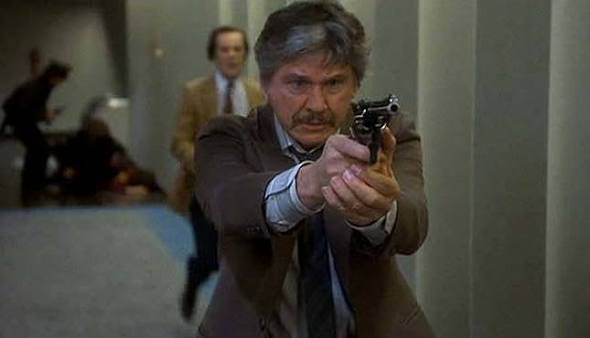
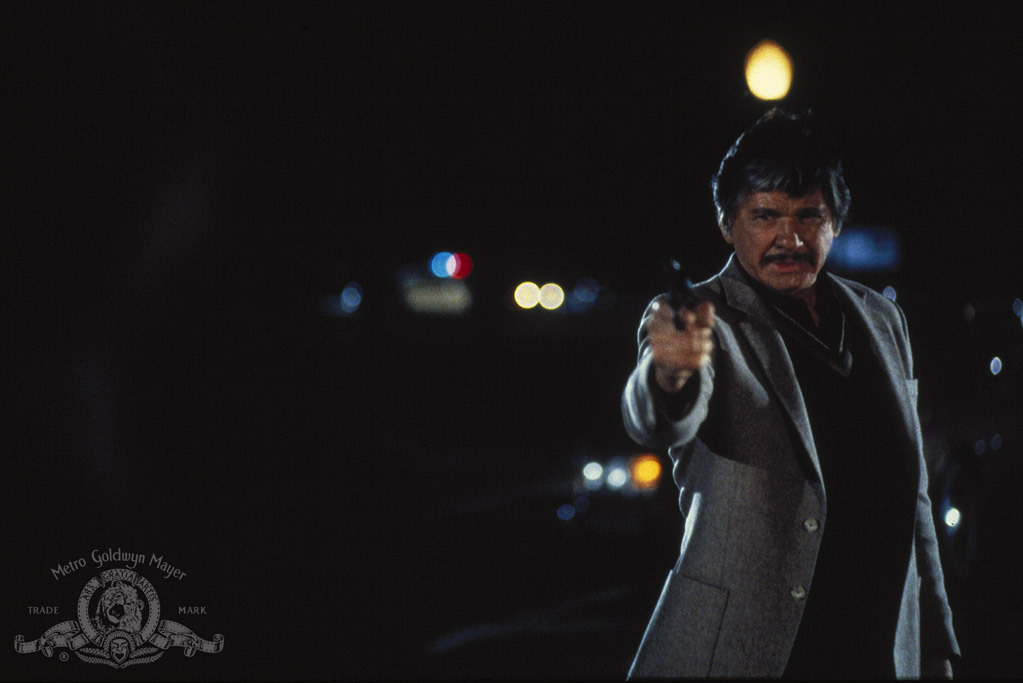
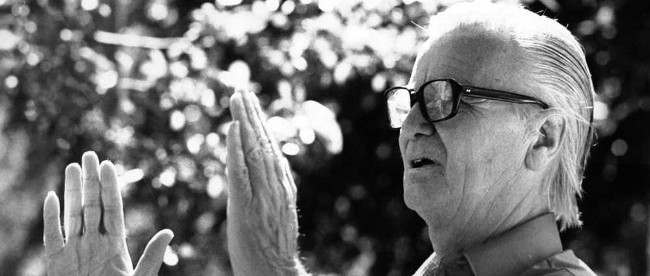
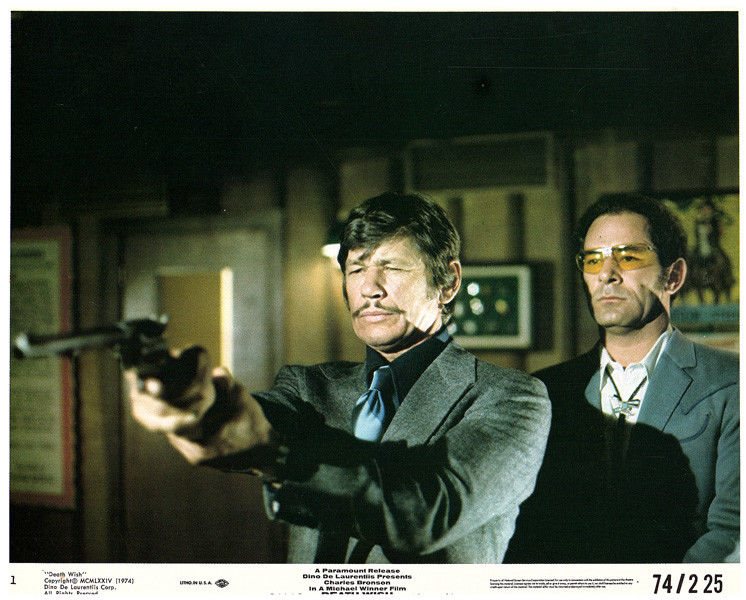
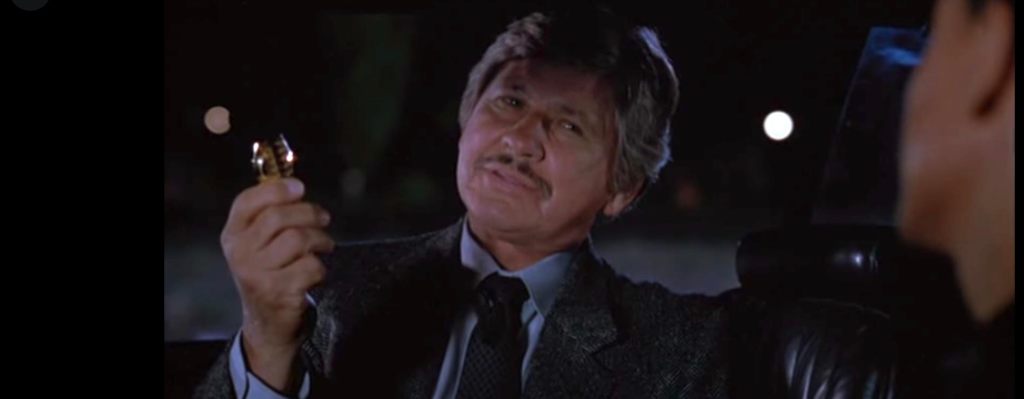
It was such an honor getting to meet Val McCallum this summer in Vermont. He wrote this beautiful song about Charles Bronson called “Charlie’s Coal” that he included on his 2019 album Chateauguay. It’s a moving tribute to his dad. I still can’t believe that I had the good fortune to be able hear him perform this live at the Skunk Hollow Tavern. His cousin Lindsay told me later that he wasn’t going to sing that night but decided to when he met me and my wife and found out we were visiting the area there to pay tribute to Bronson. What a great guy!
I thought I would share it with you today! I hope you enjoy!
Charlie’s Coal
Follow the highway, follow the heart, to the green hills of ScoopTown, where my daddy grew up. Working down in the darkness, hauling out the coal. Stays on your skin, never leaves your soul.
Digging coal, black coal, from down in that hole. Digging coal, black coal, makes the engines roll.
He dreamed of a woman, so blonde and so fair. So, he had to go find her, climbing up out of there. Together they handled, any twist in the road.It strengthens your life, when you share the load.
When daddy wasn’t well, she knew just what to do.Held him in her arms, ‘til the night turned blue.Made a fire in the fireplace from some of his coal. Power from so long ago.
I live by the ocean, California dream.He lives under the earth now, what he left isn’t seen. He gave me my first guitar. I still remember that day.I still see him smile, every time I play.It gets into your heart, never goes away.
Digging coal, black coal, down in that hole. Digging coal, pure gold, makes the engines roll. Daddy’s coal, pure gold. May the cameras roll.
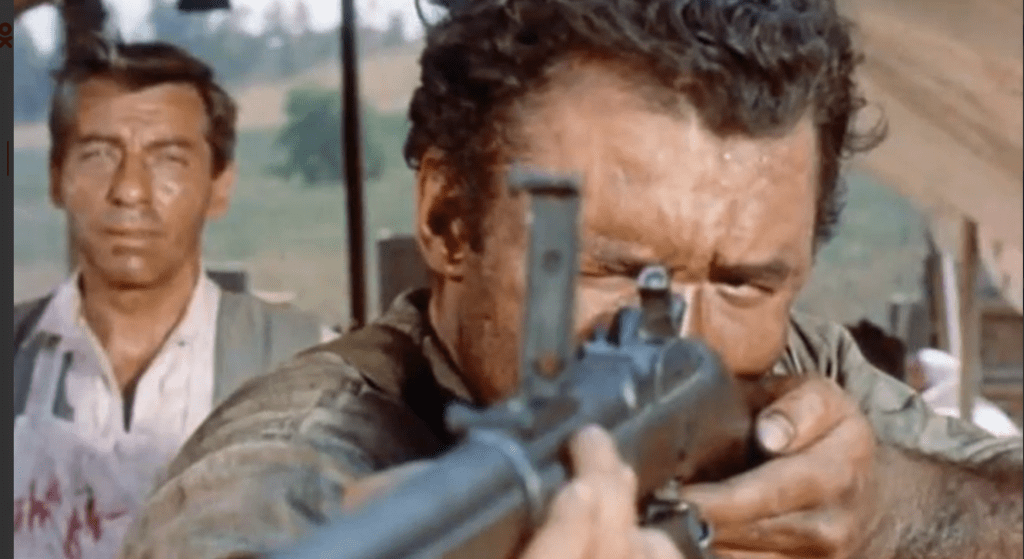
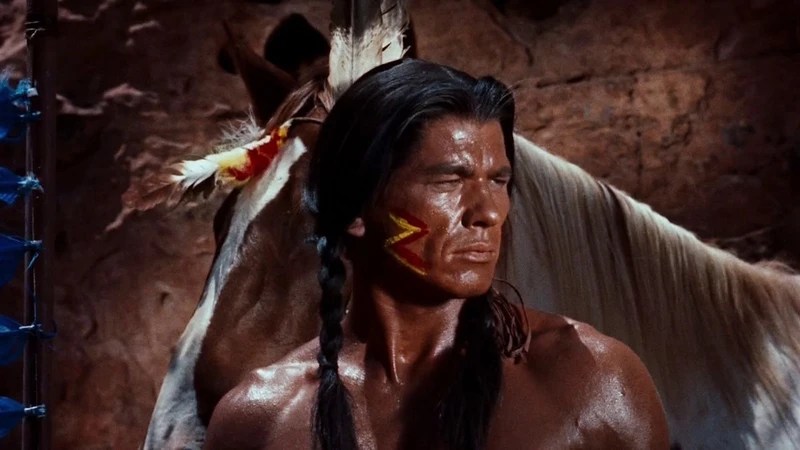
RUN OF THE ARROW opens with confederate sharpshooter O’Meara (Rod Steiger) shooting the final shot of the Civil War. With no war to fight and with a heart full of hate for the Yankees, O’Meara declares himself to be a man without a country and heads west. When he’s captured by a band of Sioux warriors led by Crazy Wolf (H.M. Wynant), he invokes the “run of the arrow”, a ritualistic game that could save his life. The problem… no one has ever survived the run of the arrow, but today’s his lucky day as he’s wounded but survives just long enough to be saved by the beautiful Yellow Moccasin (Sarita Montiel). She nurses him back to health and presents him to her tribal chief, Blue Buffalo (Charles Bronson), who eventually allows O’Meara and Yellow Moccasin to get married. Things seem to be going so well, too well. When Crazy Wolf starts another violent campaign against the American army, O’Meara must decide if he’s a Sioux warrior willing to kill American soldiers, or if there’s a part of him that can still love his country?
In RUN OF THE ARROW, director Samuel Fuller made a movie about the damage that occurs when human beings allow their hearts to be so filled with hate that they quit caring about other people. It’s also about what happens when those same people run into rational people, and we find out if they’re capable of considering the possibility that their own hate has blinded them from the truth. In other words, it’s a film that’s possibly more relevant today than it was when it was made in 1957. Bitterness and hate are represented by the characters of O’Meara (Steiger), Crazy Wolf (Wynant), and Lieutenant Driscoll (Ralph Meeker). O’Meara hates Yankees, Crazy Wolf hates the white man, and Driscoll hates the Indians. The rational people are the characters of Yellow Moccasin (Montiel), Blue Buffalo (Bronson), and Captain Clark (Brian Keith). Yellow Moccasin saves O’Meara when everyone else would have just let him die. Blue Buffalo engages in honest conversation with O’Meara and even welcomes him into their tribe. Captain Clark shows O’Meara an empathetic ear and kindness when others have told him to just get over himself. The actions and fates of the characters play out against this dynamic of hatred versus humanity, with the results underscoring just how tragic it is when people focus on the things that separate us rather than the things that unite us. It’s all so unnecessary, but it’s also a realistic vision of the world we live in. The film also struck me as particularly violent for a 50’s western, which also underscores that reality.
Some of the performances are very effective in the film. Rod Steiger’s Irish, confederate Sioux is an interesting character and the actor gives it his all as you’d expect. I’m a big fan of Steiger and his performance here only solidifies my respect for him. Brian Keith’s Captain Clark arrives fairly late in the proceedings and comes across as a tough, but honest man of integrity at a point when the movie really needs him. He has an excellent scene with Steiger where he debates the old confederate’s reasons for renouncing his citizenship with both sound logic, empathy, kindness and a hint of likable sarcasm all at the same time. It’s one of the best scenes in the film. And likewise, Charles Bronson, the most buff Hollywood Indian to ever strip down to a loincloth, comes across as a reasonable and kind tribal chief in his dealings. Bronson had played American Indians before, but he was usually more of the renegade, warpath variety, so it was nice seeing him as a good guy here. H.M. Wynant took the renegade Sioux warrior role here which you might have expected for Bronson at the time. He’s suitably fierce but one-dimensional. The same can be said for Ralph Meeker as Lieutenant Driscoll. He’s pretty much just a stereotypical jerk. He’s good at being a jerk though! And Sarita Montiel, voiced by Angie Dickinson, is quite the beauty as Yellow Moccasin.
I’ve recently heard RUN OF THE ARROW compared to Kevin Costner’s DANCES WITH WOLVES, and there are definitely similarities. I won’t go into all of those here, but one of the things I appreciated the most about RUN OF THE ARROW is the fact that the movie makes its feelings known about politics. In a movie filled with characters who have had their lives upended by the various decisions of political leaders, Fuller has crafted a story that focuses most sharply on defining the quality of men based on what’s in their “hearts.” When it’s all said and done, oftentimes the only control we have is the way we respond to the events in our lives, and that’s not politics, it’s personal. To drive this home, an older scout named Walking Coyote tells O’Meara that he could have been a chief if he had wanted to be. When O’Meara pushes him on why he didn’t want the position, Walking Coyote responds with, “Because I hate politics!” On that point, I couldn’t agree more.
My title may be a little misleading, but I always find it fascinating when certain iconic individuals work together on screen. Tom Laughlin and Charles Bronson crossed paths early in both of their careers, with Laughlin accomplishing something that very few actors would be able to claim later on… he knocked out Bronson!
It all goes back to the pilot episode of Charles Bronson’s T.V. series MAN WITH A CAMERA, titled “Second Avenue Assassin,” which premiered on October 10th, 1958. In that first episode, Mike Kovac (Charles Bronson) wants to get a picture of his old neighborhood pal, Joey Savoyan (Tom Laughlin). Joey has risen in the boxing ranks, and is getting a title shot at the champ, Sal Benning. But it seems that success has changed Joey from the guy Mike knew, and there have been many reports that he’s turned into a jerk who’d rather punch a reporter or photographer than look at them. When Mike goes to Joey’s training camp and proceeds to tell him that his attitude is an embarrassment to the people pulling for him back home, Joey gets pissed and the two men end up in the ring. Apparently, Mike could whip him back in the day, but times have changed and after absorbing a few of Mike’s jabs, Joey lays his ass out cold with one punch. The photograph that makes the papers that night is Mike lying flat on his back with the headline “Joey Savoyan puts ace photographer in darkroom!” There’s more to the story, and Bronson and Laughlin end up working together, but not many characters have knocked Bronson out and got to live to tell about it!
In celebration of Laughlin’s 95th birthday in badass heaven, I decided to share that video with you today. Enjoy!
British director J. Lee Thompson was born on August 1, 1914. He directed some classics in the early 60’s, movies like THE GUNS OF NAVARONE (1961), where he received an Oscar nomination for Best Director, and the original CAPE FEAR (1962), which I personally consider superior to Scorsese’s 1991 remake. Gregory Peck, who starred in both films, once said there were only four directors he could trust to tell him whether or not he was faking his performance: Alfred Hitchcock, George Cukor, William Wyler and J. Lee Thompson. High praise indeed!
When the British film industry began caving in at the end of the decade, Thompson moved into Hollywood productions and continued to work steadily for the next couple of decades. He worked on films in all genres, like westerns (MACKENNA’S GOLD – 1968), science fiction (CONQUEST OF THE PLANET OF THE APES – 1972) and horror (HAPPY BIRTHDAY TO ME – 1981). After Thompson retired in 1989, he would sometimes lament that he had “sold out” his individual artistic desires in order to just keep working. But he would never be too hard on himself, because he enjoyed making movies and always brought professionalism and competence no matter the movie.
The main reason I like J. Lee Thompson is because he would make 9 films with actor Charles Bronson from 1976 to 1989. With Thompson as director, you knew the film would always have a certain level of quality, and Bronson loved his fast, no-frills method of shooting. In celebration of Thompson’s 112th birthday in cinema heaven, I thought it might be fun to provide my ranking of those 9 films. So here we go!
Messenger of Death
Coming in at #9 is MESSENGER OF DEATH (1988). Thompson is at his best during the incredibly tense and vicious opening sequence, but the script ultimately can’t keep the momentum going, and it’s one of Bronson’s more boring films. On some positive notes, it’s a different kind of movie for Bronson, more of a whodunnit than a straight action film. It has a strong cast, filled with veterans like John Ireland, Jeff Corey, and Trish Van Devere. It also has some beautiful Colorado scenery.
Cabo Blanco
Next up at #8 is CABO BLANCO (1980). After years of poor video releases, Kino Lorber released the film on a special edition Blu-ray in 2016, which highlights how Thompson was able to capture the natural beauty of the Mexican locations. Bronson gives a committed performance as Giff Hoyt. The casting of legends like Jason Robards and Fernando Rey, in a fantastically corrupt turn, are a big plus as well. Unfortunately, the film’s script and story never really come together and the end doesn’t make much sense.
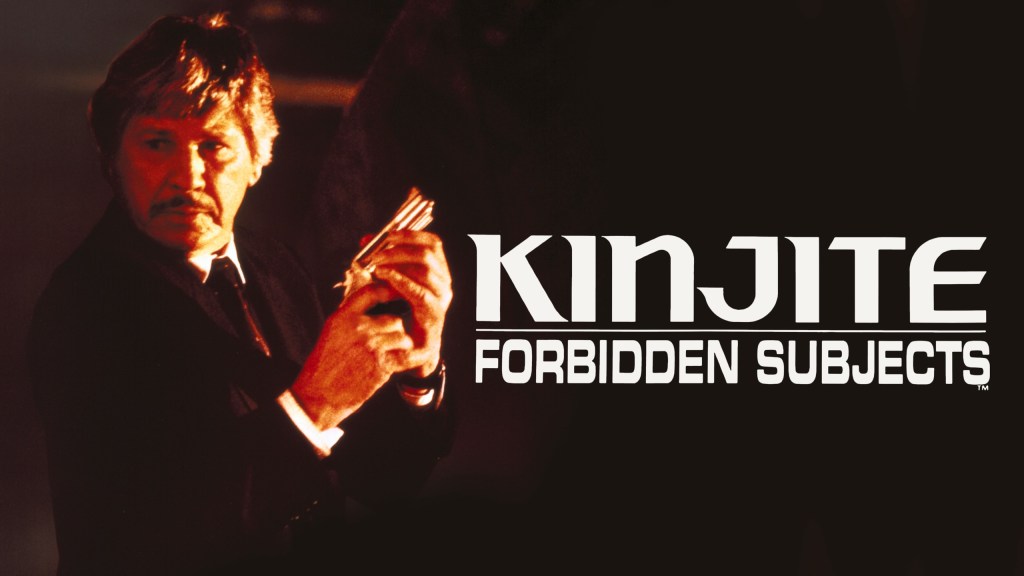
Kinjite: Forbidden Subjects
Coming in at #7 is KINJITE: FORBIDDEN SUBJECTS (1989). This would be Thompson’s final film, and he goes out with a slick and sleazy thriller. In my opinion, KINJITE contains one of Bronson’s stronger Cannon performances, but the subject matter is particularly dark and ugly, with themes of child exploitation, human trafficking, sexual violence, and prejudice. I think it’s a good film, but you definitely need a bath afterwards. Juan Fernandez is odd and memorable as the villainous pimp, Duke.
Death Wish 4: The Crackdown
For #6, I’m going with DEATH WISH 4: THE CRACKDOWN. After the bonkers outrageousness of DEATH WISH 3, Thompson took the reins from Michael Winner for this entry, and delivered a much more straightforward action film. There is so much action in DEATH WISH 4, and the oilfield shootout contains some of Bronson’s more iconic imagery of the 80’s. The film was a huge renter at the video store, the most successful of the entire franchise in that department. John P. Ryan is also gleefully over the top as the bad guy.
The White Buffalo
At #5, I’m going with THE WHITE BUFFALO (1977). This western has grown on me over the years. Thompson is able to pull strong performances out of Charles Bronson and Will Sampson in the lead roles of Wild Bill Hickok and Crazy Horse. Combined with John Barry’s musical score, he’s able to give the film an eery, otherworldly quality with each appearance of the white buffalo. The film may have bombed at the box office, but it’s pretty darn good movie.
The Evil That Men Do
At #4, I’m going with THE EVIL THAT MEN DO (1984). I’m especially appreciative of Thompson for his work on Bronson’s final badass hitman film. The original director, Fielder Cook, was fired and Thompson was brought in at the last minute with very little prep time. He was still able to deliver a violent, brutal thriller. This one has its rough moments, but I’ve always liked Bronson as the amoral instrument of justice. And his down-low takedown of the giant sexual predator in the slimy Mexican bar is one of the more memorable scenes in any action film!
St. Ives
Heading into the top 3, I’m going with ST. IVES (1976) at #3. In Thompson’s first movie with Bronson, he delivers a fun, little mystery thriller. I particularly enjoy Bronson’s performance as Ray St. Ives. He seems to always have a smile on his face as he makes his way through the various Los Angeles locations. With definitely less action than your average Bronson film, I enjoy the change of pace as well as the excellent supporting cast of veteran actors like John Houseman, Jacqueline Bisset, Maximillian Schell, Harry Guardino, Harris Yulin, Dana Elcar and Michael Lerner. Heck, Jeff Goldblum and Robert Englund even show up as some henchmen. This is Bronson at the peak of his movie stardom.
Murphy’s Law
At #2, I make an extremely personal choice with MURPHY’S LAW (1986). While the film is definitely an 80’s Cannon time capsule, this is one of two movies that kicked off my lifelong obsession with Charles Bronson, with the other being DEATH WISH 3. Thompson keeps the action moving efficiently from one set piece to another as Jack Murphy and Arabella McGee (Kathleen Wilhoite) try to figure out who is framing him for the murder of his stripper ex-wife. Carrie Snodgress is enjoyably nuts as the bad lady. Not only have I watched this movie dozens of times, I have been blessed to meet the film’s composer (Val McCallum) and interview Murphy’s partner (Robert F. Lyons). This movie is just special to me in ways that critical analysis can never capture.
10 To Midnight
And at #1 in my list of Bronson-Thompson collaborations, I choose the 1983 tough cop/slasher hybrid TEN TO MIDNIGHT. Charles Bronson is particularly strong as Leo Kessler, the veteran detective and dad who will go to any length to bring down a vicious, impotent killer of women, played brilliantly by Gene Davis. It has one of the best and most controversial endings of Bronson’s career. I give credit to Thompson for delivering an entertaining thriller that would appeal to an audience outside of Bronson’s normal fanbase. 10 TO MIDNIGHT would be a major player on premium cable channels like HBO. When I met my wife, she didn’t know who Bronson was, but she knew the film and loved it. Even though he was already an aging action star, the success of this movie propelled Bronson’s theatrical leading man career to the end of the 80’s.
Thanks for all the memories, J. Lee. Your films have been an endless source of entertainment for me for over 40 years! Rest in peace, sir
July 25th is the birthday of actor Woody Strode. In celebration of what would have been the icon’s 112th birthday, I’m sharing one of my favorite scenes in the history of cinema, which was made greater by the presence of Strode. One of the genius movies that Sergio Leone made when filming ONCE UPON A TIME IN THE WEST (1968) was casting Jack Elam and Woody Strode as two of the three men waiting for Harmonica to get off the train in the opening scene. It’s a classic!
I’m not sure how many of you are aware of this, but I love Charles Bronson. I don’t mean I just enjoy his movies, either. I have been obsessed with him for most of my life, well at least for about the last 40 years. During that time, I have watched all of his movies, I have driven 17 hours just to watch a Bronson triple-feature at the drive-in, I’ve visited the Colorado filming locations of MR. MAJESTYK, and I’ve visited his gravesite in Vermont. I’m currently a co-host of the “This Week in Charles Bronson Podcast” where I’ve been able to be parts of interviews with his co-stars and even a family member. For a man in his early 50’s, I think an awful lot about a movie star who passed away over 20 years ago. I call it a healthy obsession, but you can feel free to draw your own conclusions.
Well, it all began sometime in ’84 or ’85 when I stayed up one night with my Dad, and we watched the late movie. The movie that night was the TV edit of the Bronson classic, DEATH WISH. Before that night I had never heard of Bronson, but as the movie progressed and bad things happened to his family, Dad assured me that Bronson would take care of the bad guys. Looking back now, it’s ironic since Bronson didn’t kill any of the actual bad guys who brutalized his wife and daughter. Regardless, I didn’t know anything about Bronson, but my Dad certainly did, and that intrigued me as a boy. This also coincided around the same time when our family got our first VCR. Every time we’d go to the video store, I’d see that same guy from DEATH WISH, and I would beg mom and dad to rent one of his movies. I can assure you that no junior high kid in Arkansas knew as much about Charles Bronson in the 80’s than I did.
DEATH WISH premiered at the movies on July 24, 1974! It was an immediate, controversial smash hit, and in today’s dollars, it earned the equivalent of around $150 Million in America and approximately $300 Million around the globe. It cemented Bronson as a bonafide box office star in his home country and spawned the series that he would be most connected with for the remainder of his career. In honor of the 52nd anniversary of DEATH WISH, I’m sharing this iconic scene from the classic:
“You think I am brave because I carry a gun? Well, your fathers are much braver because they carry responsibility… This is bravery.”
Bernardo O’Reilly, played by Charles Bronson in the classic 1960 western THE MAGNIFICENT SEVEN, is not a character that I often hear discussed among the great western heroes. In a film that featured so many movie stars portraying so many memorable characters, O’Reilly may be somewhat overlooked in the annals of film history. But the truth is, the man is a true hero who just doesn’t happen to fit the traditional mold. He’s not the fastest gun, the most charismatic, or the natural leader… rather, his heroism comes from a place of incredible character.
Consider these heroic traits:
Bernardo is motivated more by compassion and camaraderie than money. Bernardo agrees to join the seven because he wants to help the Mexican villagers and ride with men he respects. He’s not chasing money or glory because we find out how much more he’s made in some of his earlier jobs. He knows the reward is small and the opposition is large, but he goes anyway.
He becomes the voice of truth that the village boys need to hear. My favorite storyline in the film concerns Bernardo’s relationship with a few of the boys in the village. These boys idolize the gunfighters and are embarrassed by their own fathers, who they see as cowards. Bernardo not-so-gently teaches them, and by that I mean he takes one of the boys over his knee and spanks his butt, that their fathers possess a courage he could never have, and that is the courage of responsibility. His speech about the true bravery of their fathers is one of the best character moments in the film.
He combines toughness with kindness. Like many of the characters played by Charles Bronson, Bernardo is a physically intimidating man of few words, yet he’s also gentle under that surface. At the very beginning, we see him make the wooden whistle that he then offers to the young village girl with that wonderful Bronson smile. This love for children is most certainly an element of Bronson’s own personal character that shows up in Bernardo O’Reilly. His understated performance lets you see that he’s so much more than just a hardened gunman.
He leaves the greatest legacy. Bernardo doesn’t just preach selflessness. During the final battle, he risks his own life without hesitation to protect the village boys and pays the ultimate sacrifice. While the surviving gunfighters get to ride away, Bernardo has taught the boys the ultimate lesson. He changes how they see their fathers and what it really means to be a man. His acts of heroism outlive him.
For me, Bernardo O’Reilly redefines what it means to be a western hero. He proves that courage isn’t ultimately measured by how many men you kill, but by whether you’re willing to put someone else’s life ahead of your own. Even in a film filled with iconic characters like Chris (Yul Brynner), Vin (Steven McQueen), and Britt (James Coburn), Bernardo is the character that stands out the most. In his words and his final sacrifice, he’s transformed from a hired gun into a genuine hero.
Back when I was a teenager, I would always get the entertainment section out of my dad’s Sunday paper so I could check out the movie listings. I was mainly looking for information about my favorite movie star, Charles Bronson. Nowadays, we know about new movies months, even years, in advance, but back then I would learn about them from the entertainment section of dad’s paper. One Sunday in early 1989, when I was 15 years old, I saw an advertisement for a new Bronson film called KINJITE: FORBIDDEN SUBJECTS. It was the first time I had ever heard of it. I knew I wasn’t going to get to see it at the movies because it was only playing in Little Rock, but I was excited anyway because it would be on its way to video soon!
In the film, Bronson plays police Lieutenant Crowe. Along with his partner Eddie Rios (Perry Lopez), he deals with the sleaziest criminals in Los Angeles on a daily basis and it’s starting to take a toll on his personal life. He’s currently invested in bringing down an underage prostitution ring led by Duke (Juan Fernandez) and Lavonne (Sy Richardson). When Japanese businessman Hiroshi Hada’s (James Pax) young daughter is kidnapped by Duke, Crowe decides he must do everything in his power to get her back to her family.
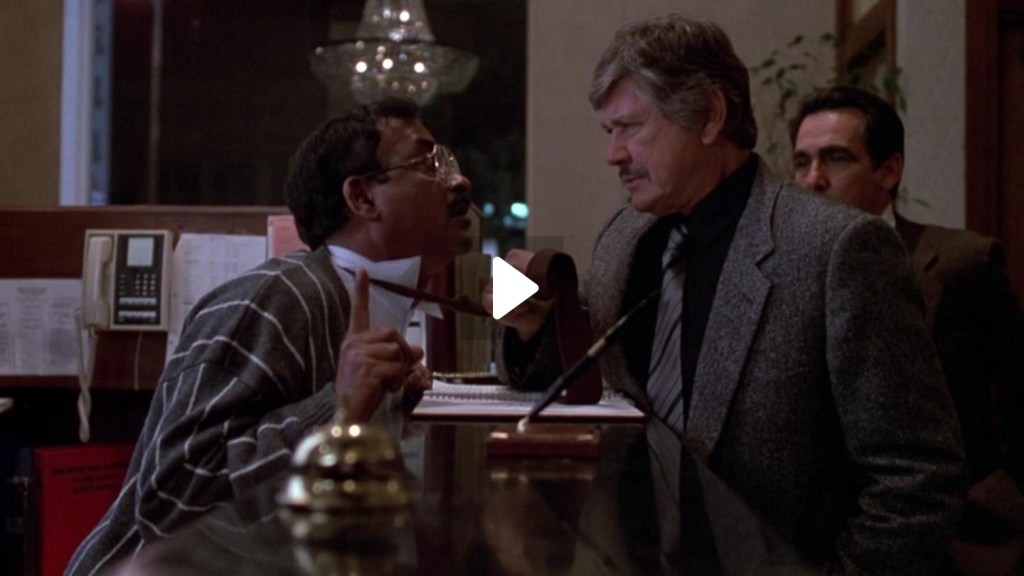
KINJITE reunites Bronson with director J. Lee Thompson for the ninth and final time, bringing to an end what I think is one of the more underrated actor-director partnerships of the action genre. Bronson had first worked with Thompson on the fun mystery film ST. IVES at the peak of his 70’s career. By 1989, Bronson was in his late sixties and understandably slowing down on the action front, but he still possessed that unmistakable presence on screen. He’s more invested in his performance as the prejudicial Lt. Crowe than he’s usually given credit for. There’s one specific scene where he goes off on a group of Japanese businessmen and women who are holding up traffic in front of a large hotel. It’s one of Bronson’s strongest scenes of the 1980’s as he yells various traffic code violations, and obscenities, at the surprised guests. It’s a bad moment for his character, but a well-acted moment for Bronson.
None of Bronson’s ‘80’s action films were based on stories about sunshine and roses, but the subject matter of KINJITE is particularly dark and ugly. Themes of child exploitation, human trafficking, sexual violence, and prejudice are all given screen time in a world that’s so corrupt that only someone as committed as Lt. Crowe is even capable of taking on the evil that’s presented here. Crowe is not necessarily a good man, and his sense of justice goes completely overboard at times. For example, in one scene where he catches a pervert preparing to commit an assortment of depraved sexual acts on a young prostitute (played by Nicole Eggert), Crowe says “I’m going to show you what it feels like to be one of these girls,” and we, along with his partner, hear the screams off-screen as he honors his word. In another scene, he makes the pimp Duke eat a giant Rolex watch, which prompts the trafficker to say, “I’m gonna die…” None too concerned about Duke’s health, Crowe casually tells him, “No you won’t, but you will have to stick your head between your legs to tell the time.” This is not a well-adjusted human being, but with all the evil acts being committed around him, you still can’t help but root for the guy.
The supporting cast around Bronson is quite good. Juan Fernandez is a standout as the despicable pimp, Duke. There’s something about Fernandez that just makes him great as a bad guy, as he had proved a few years earlier in the Oliver Stone film SALVADOR. His character here has this odd energy about him that oozes evil. Veteran character actor Perry Lopez, who had worked with Bronson going all the way back to the 1954 western DRUM BEAT, provides the aging icon a solid partner who helps smooth out his character’s roughest edges. Their scenes together are very strong because they feel like two weary detectives and old friends trying to deal with a world they’re both sick of.
While I think Bronson provides a good performance and that Thompson provides solid direction, I wouldn’t rank KINJITE among the star’s best 80’s films. It tries to juggle a lot of difficult themes and wants to comment on cultural differences, built-in prejudices, and sexual deviance, and it also wants to deliver the kind of action that audiences expected from Bronson’s Cannon films. It’s a well-made film, but the results aren’t completely effective because it can’t find the right balance between the serious dramatic themes and the expected action heroics. In the end, the events depicted on screen are too disturbing for the film to qualify as fun, escapist entertainment, but they’re not handled with enough depth for the film to make any sort of serious statement. The film ends up making you pretty darn uncomfortable, so I don’t revisit it as often as I do other Bronson / Thompson collaborations like 10 TO MIDNIGHT and MURPHY’S LAW.
Based on the dark subject matter I’ve described above, I can’t give KINJITE: FORBIDDEN SUBJECTS an unreserved recommendation like I do so many other Bronson films. But as the final collaboration between Bronson and J. Lee Thompson, it does carry a certain historical significance. And for fans interested in seeing the darker side of Bronson’s film career, it remains a memorable, and unsettling, final chapter in one of action cinema’s most enduring partnerships.
For most of my life, I’ve wanted to visit the state of Vermont. It started because I loved the 80’s sitcom NEWHART when I was a kid. In the show, Bob Newhart and his wife were innkeepers in rural Vermont so I just knew it had to be beautiful. And then, as Charles Bronson’s biggest fan, I learned that his favorite place on earth was his horse farm in Vermont, which was named Zuleika Farm after his daughter with Jill Ireland. This became the place that he would escape to as his filming schedule allowed. He is even buried there at the Brownsville Cemetery at the foot of Mount Ascutney. Visiting that area of Vermont that sits close to the New Hampshire border became the ultimate Charles Bronson “bucket list” item for me. In 2026, at the ripe old age of 52, I was able to mark this off my list, as my wife and I spent a few days in West Windsor, VT.
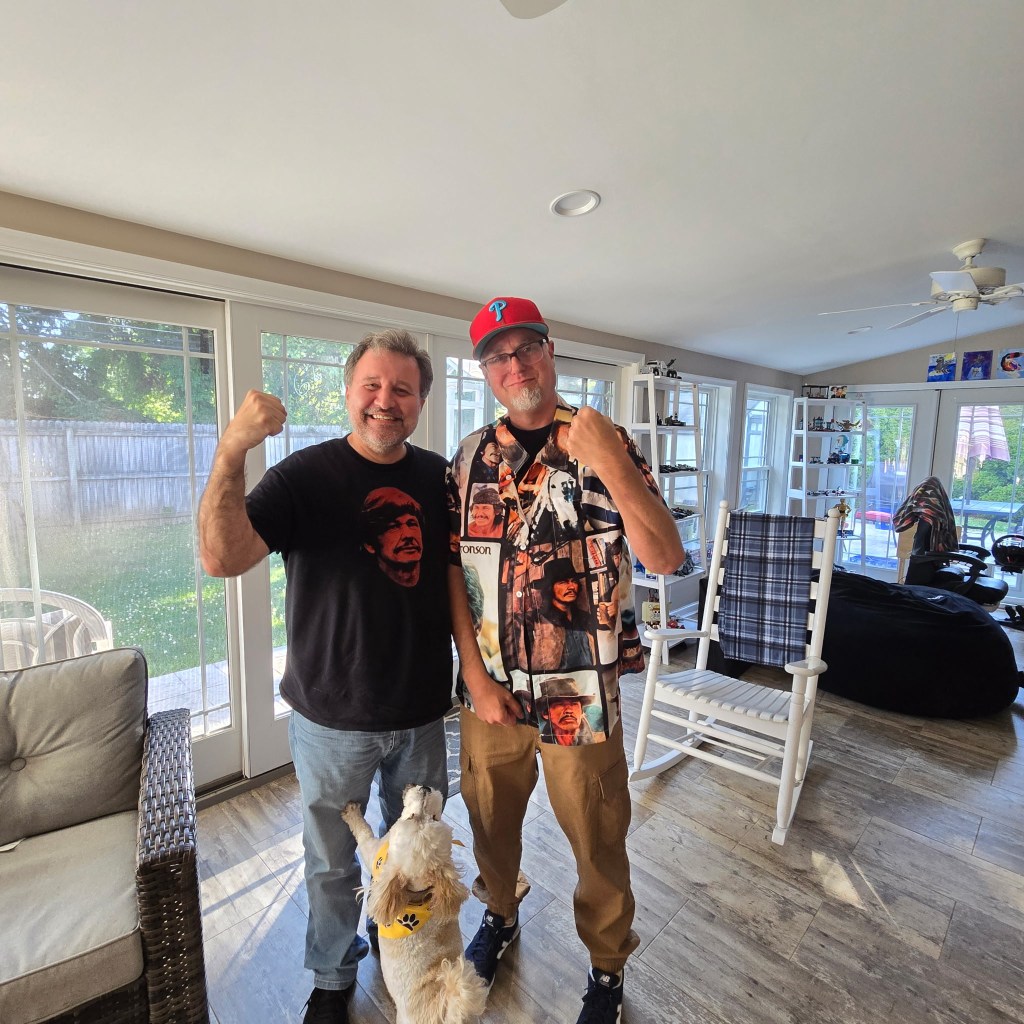
But first, if we were going to drive all the way to Vermont, I decided we should stop off in Philadelphia and see Eric Todd, the host of the THIS WEEK IN CHARLES BRONSON podcast. Eric’s vision to create a podcast dedicated to keeping Bronson’s memory alive has been so special to me. Thanks to Eric, who has allowed me to be his co-host on multiple occasions, I have met several actors who worked with Charles Bronson, and even some of his own family. Although we talk and text almost every day, this was our first time to meet in person. We had the best time over dinner, and we enjoyed meeting Eric’s wife Tina and his son Noah as well. Eric has truly become one of my very best friends!
Brad and Eric in our Bronson shirts, and a sweet puppy who just wants to be loved!
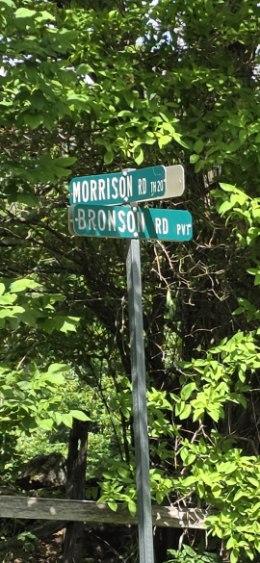
Once we arrived in Vermont the next day, our first stop was at “Bronson Road” in West Windsor, VT. This road went right through Bronson’s farm property. It’s a private road now so we couldn’t drive down it, but we did get a couple of pictures from the corner of Morrison and Bronson!
Zuleika Farm is no longer there, but it’s memory lives on!My beautiful travel companion took a pose at the entrance of the property Charles Bronson once loved!
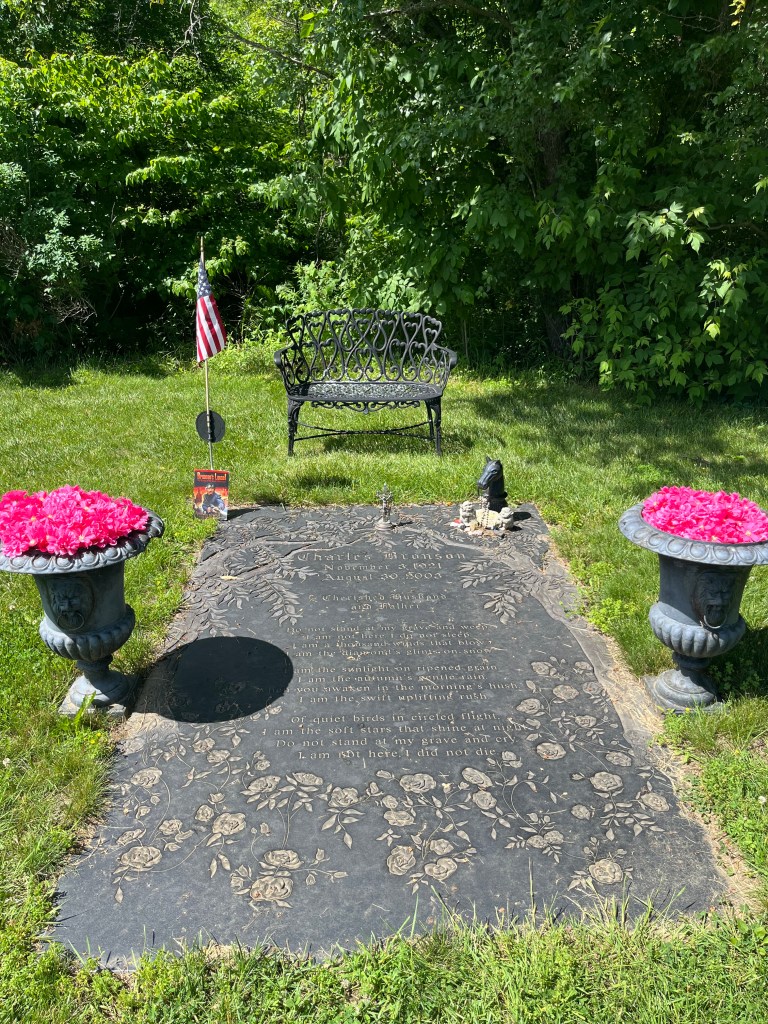
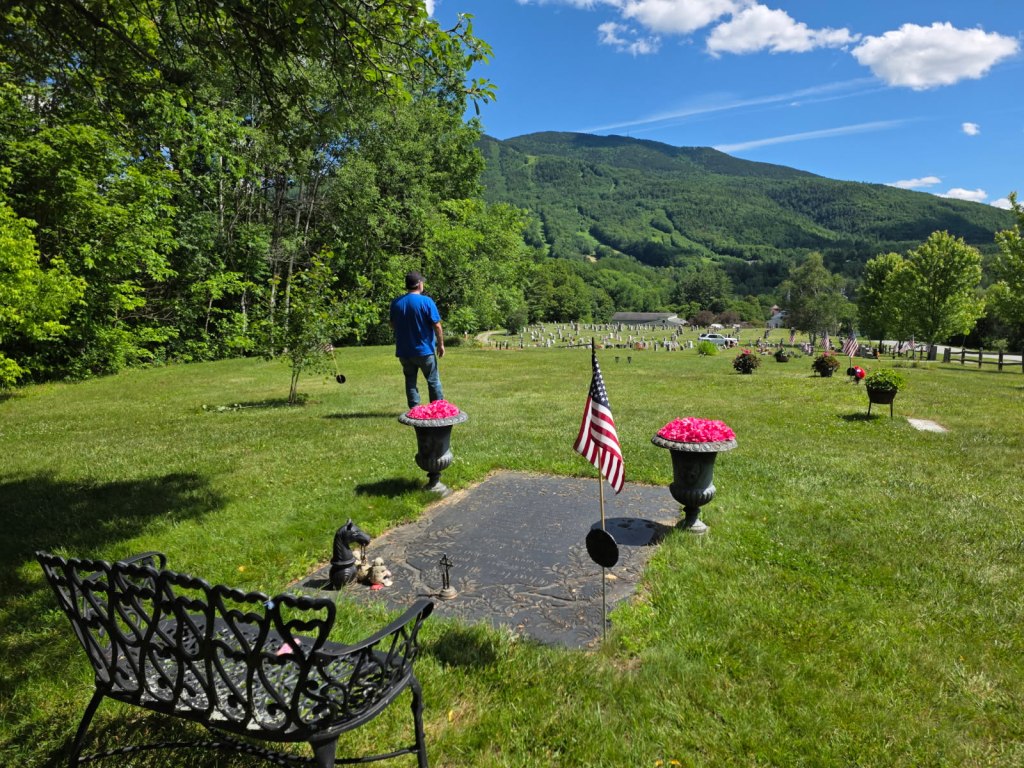
After that, we made our way to the Brownsville Cemetery and paid our respects to the film icon and legendary action star. It’s hard to put into words exactly how I felt that day. I wasn’t there as just a fan. I was there as a person who has spent the majority of his life with a healthy obsession for the man and his work. I’ll just say it was a beautiful experience. On an interesting note, a man from Alabama stopped by to pay his respects while we were there as well. It makes me happy that Charles Bronson is still beloved over 20 years after his death.
Charles Bronson’s gravesite in the Brownsville Cemetery. The view from Bronson’s gravesite is beautiful Mount Ascutney!
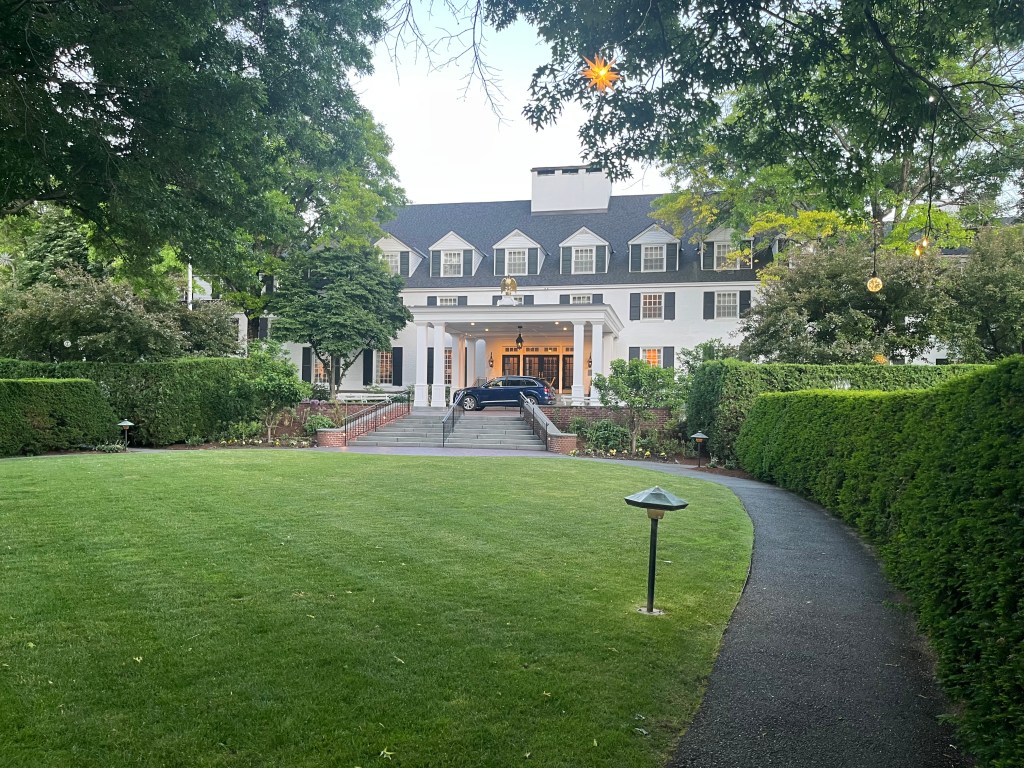
One of the perks of being a co-host of the THIS WEEK IN CHARLES BRONSON podcast, is the fact that I’ve been able to meet Charles Bronson’s niece, Lindsay Ireland. She used to spend summers in Vermont with the Bronson’s when she was a teenager. She told me about some of Bronson’s favorite places to eat. We were able to eat at The Woodstock Inn, which was kind of fancy for Bronson’s personal tastes, but the food was great.
The beautiful entrance to The Woodstock Inn. The restaurant there is called “The Red Rooster.”
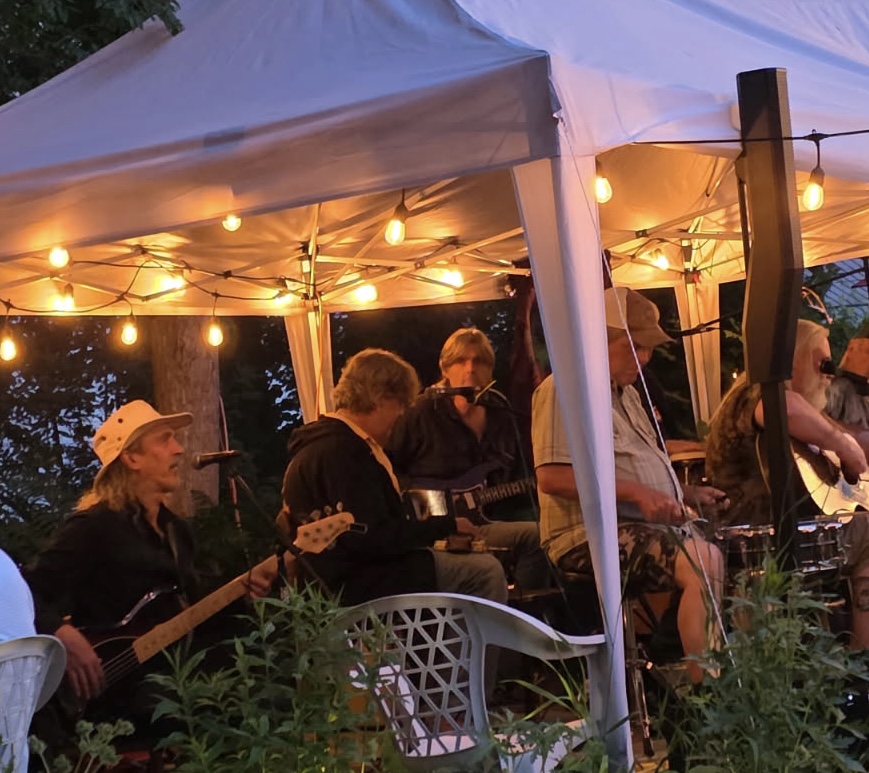
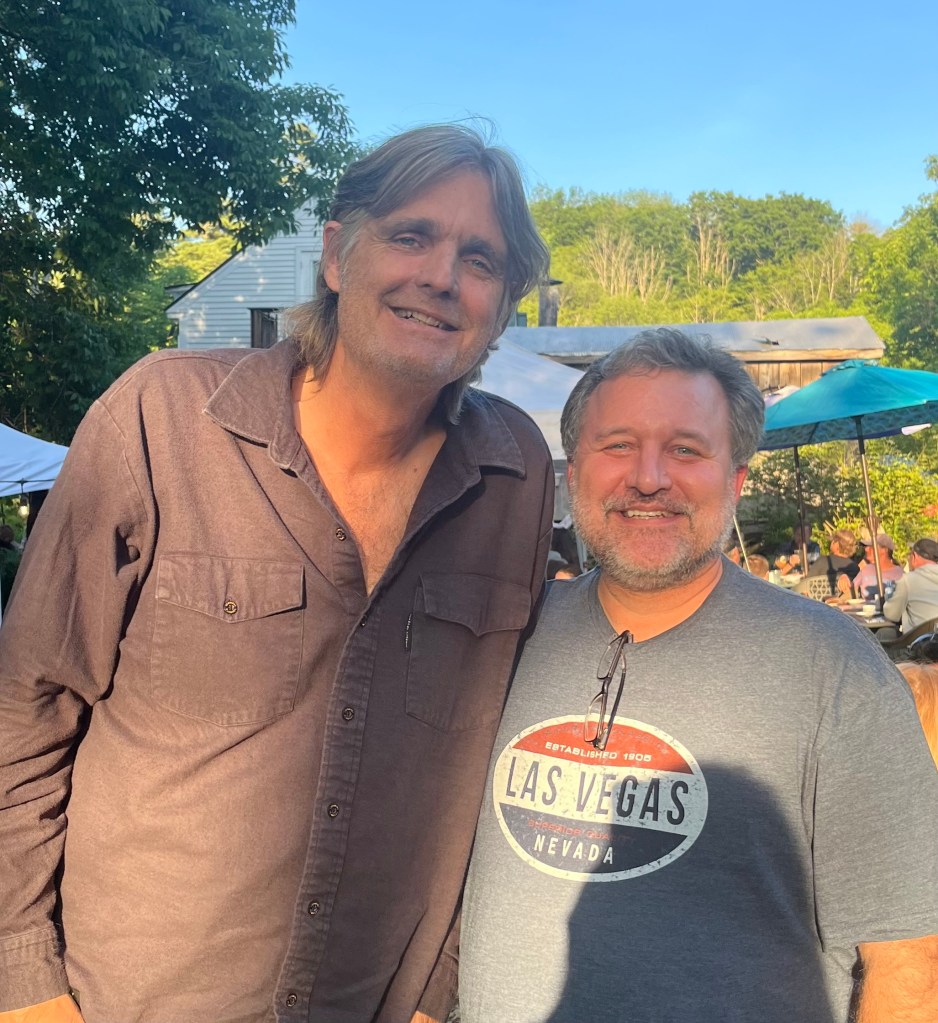
The place he really loved to eat was the Skunk Hollow Tavern, which is about 5 miles from the farm. I made us a reservation for “open mic” night at the Skunk Hollow Tavern on Wednesday, June 17th. Little did I know that Bronson’s stepson, Val McCallum, would be sitting in with the band that night. An incredible professional guitar player on his own, Val has been Jackson Browne’s lead guitarist going back to the early 2000’s. He also helped compose the film scores for the Bronson films MURPHY’S LAW, DEATH WISH 4, and ASSASSINATION back in the late 80’s. We got to meet him, and he even played a couple of songs for us, including “Charlie’s Coal,” an amazing song of love and respect for his “daddy.” It was a lucky and unexpected meeting I’ll never forget!
Val McCallum sitting in with the band on Open Mic night at the Skunk Hollow Tavern!Val McCallum, son of David McCallum and stepson of Charles Bronson, graciously taking a picture with yours truly!
Our trip to Vermont was truly incredible, exceeding every expectation I had. I can’t wait to see where my next “movie trip” takes us. I just know it will be hard to top this one!
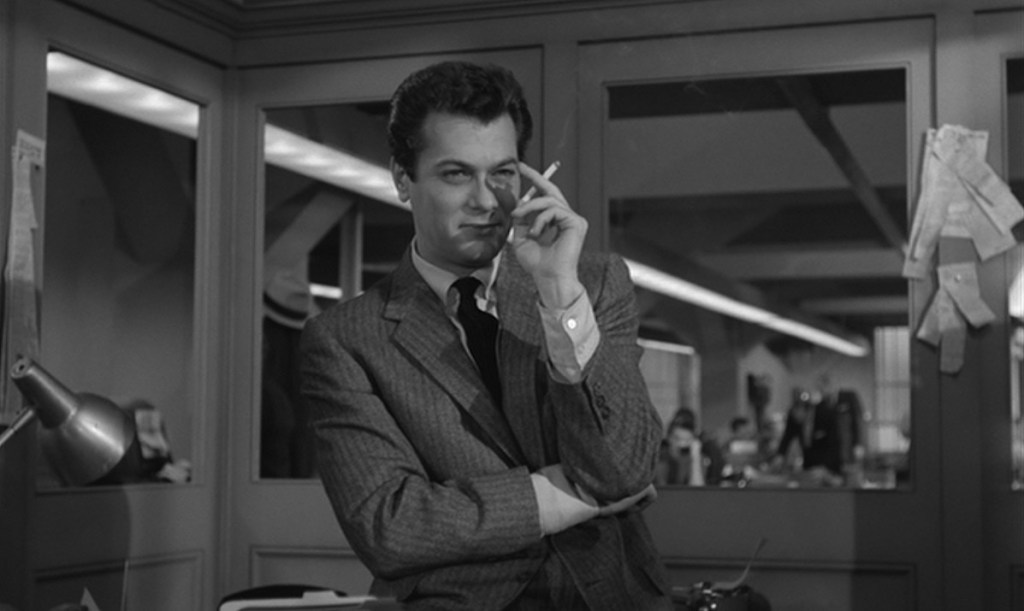
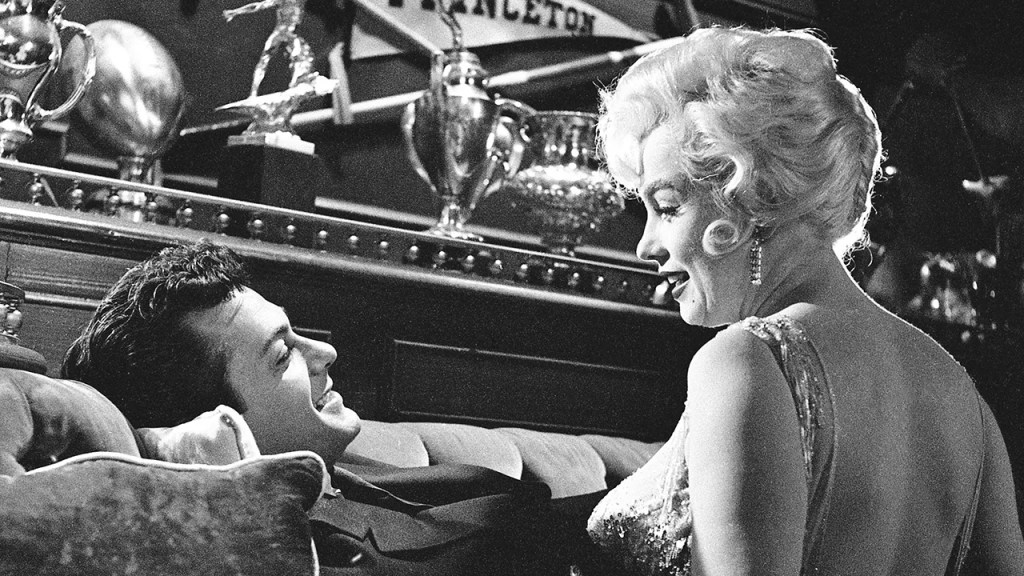
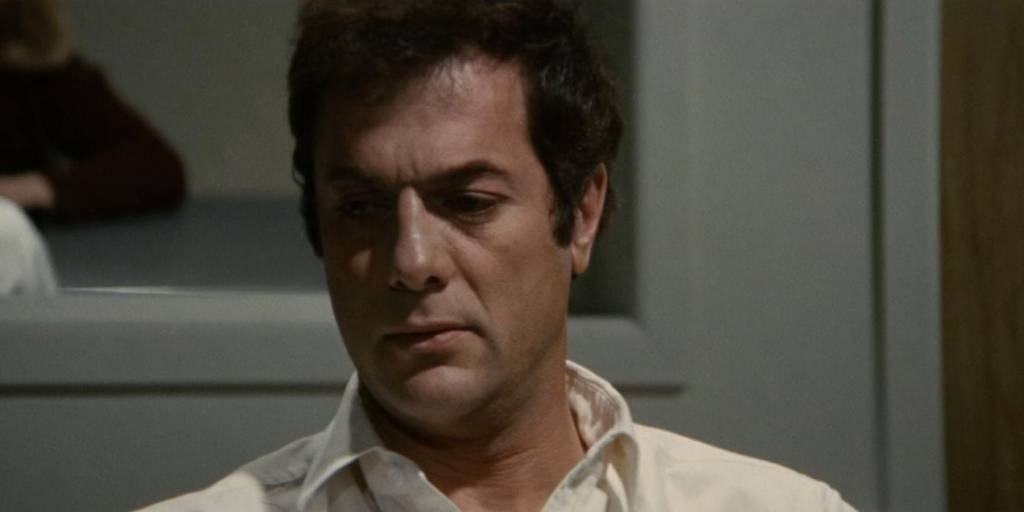
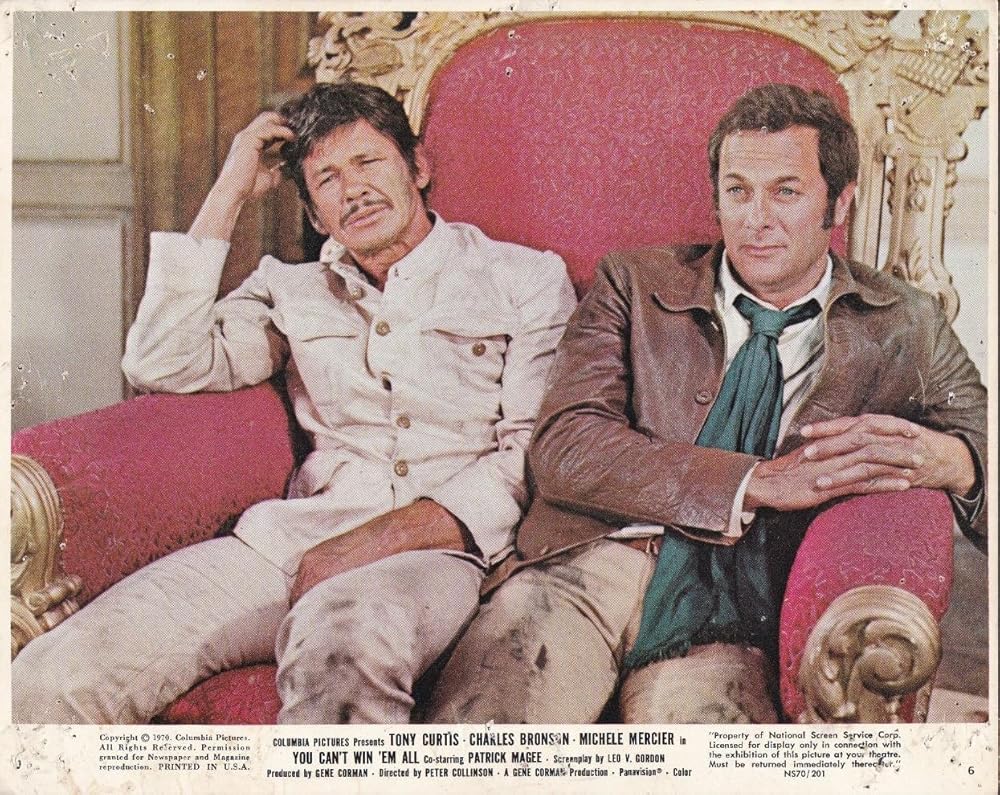
Today would have been actor Tony Curtis’ 101st birthday!
With a career that spanned almost 60 years, Tony Curtis starred in a whole bunch of classics, especially in the 50’s and 60’s. I’ve always enjoyed watching Curtis, as he could be suave and debonair, hilarious, or even a murderous sociopath, depending on what the role required. Thanks for the memories, Tony!
Sweet Smell of Success (1957)With Marilyn Monroe in Some Like it Hot (1959)As Albert DeSalvo in The Boston Strangler (1968)With Charles Bronson in You Can’t Win ‘Em All (1970)
And one bonus shot…
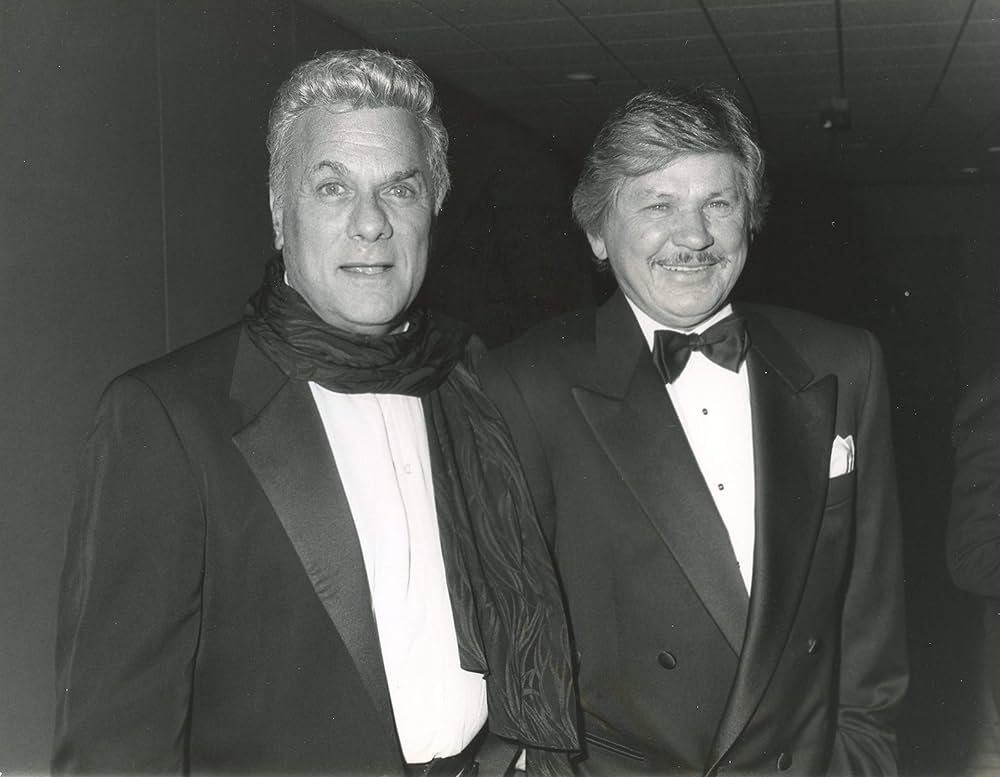
Just hanging out at a black-tie event with Charles Bronson (sometime in the late 80’s)!