Review: Law Abiding Citizen (dir. by F. Gary Gray)


“Christ! Whatever happened to right and wrong!? Whatever happened to the people!? Whatever happened to justice!?” — Clyde Shelton

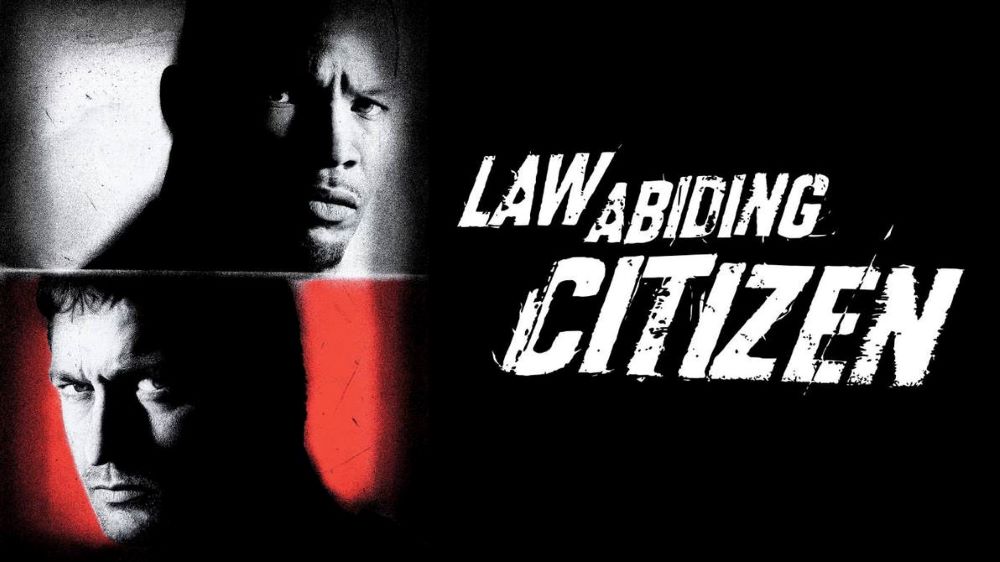
Law Abiding Citizen is one of those thrillers that grabs you right from the start and refuses to let go, even as it spirals into moral chaos. Directed by F. Gary Gray and released in 2009, the film pits two central performances—Gerard Butler as Clyde Shelton and Jamie Foxx as Nick Rice—against each other in a brutal chess match of justice, revenge, and control. On the surface, it’s a revenge thriller about a man wronged by a broken justice system. But dig a little deeper, and it becomes a dark commentary on the limits of law, the manipulation of morality, and the ethics of punishment. It’s not perfect—it veers toward implausibility at times—but it’s undeniably gripping, stylishly cold, and lingers in your mind long after the credits roll.

The film begins with a horrifying scene that immediately sets the tone for what’s to come. Clyde Shelton, an inventor and family man, watches helplessly as his wife and young daughter are brutally murdered in their home. When the killers are caught, Assistant District Attorney Nick Rice cuts a deal that lets one murderer go free in exchange for testifying against his partner. The decision, made in the name of efficiency and legal pragmatism, destroys Clyde’s faith in the justice system. Ten years later, when the murderer is executed under mysterious and gruesome circumstances, Clyde resurfaces—not as a grieving victim but as a brilliant, calculated force determined to expose the system’s corruption in the most explosive way imaginable.

What makes Law Abiding Citizen so effective early on is its sympathy play. The audience initially feels the same fury Clyde does. We understand his pain and disillusionment, and for a brief moment, we want him to succeed in making the system accountable. Butler captures that emotional transition perfectly—from quiet devastation to methodical vengeance. The scene where Clyde calmly watches his first victim die, having orchestrated the man’s death with near-surgical precision, is shocking yet disturbingly satisfying. This is where the film hooks its audience: it asks whether revenge can ever be justified when justice fails.

But as the killings pile up and Clyde’s plan grows more elaborate, that empathy begins to slip. The real tension of the film lies in that moral gray space—where Clyde’s righteous anger turns monstrous. His war isn’t just against the criminals but against the entire justice system, targeting judges, lawyers, and anyone he sees as complicit. Nick Rice, on the other hand, becomes the face of that system. He’s young, successful, and smug—a prosecutor obsessed with his win-loss record. Jamie Foxx’s performance gives Rice an icy veneer of confidence that slowly cracks as Clyde’s campaign escalates. The interplay between these two men—the avenger and the pragmatist—is the film’s heartbeat. It’s less about who will win and more about whether either man can still claim moral authority when the dust settles.

From a narrative standpoint, Law Abiding Citizen is structured like a dark puzzle. Each scene unveils another layer of Clyde’s intelligence and ruthlessness. The tension comes not from knowing who’s doing it—we know—but from wondering how he’s doing it. The film’s most audacious twist is that Clyde continues orchestrating murders even while locked in a high-security prison cell. This push toward psychological warfare turns the story into a cat-and-mouse game with shades of Seven and The Silence of the Lambs. However, where those films maintained a clear thematic direction, Law Abiding Citizen sometimes stumbles under the weight of its ambition. The logic of Clyde’s omnipotence starts to stretch believability, and the film sacrifices realism for spectacle. Still, it’s hard to look away when the spectacle is this sharp and aggressive.

Visually, F. Gary Gray directs with a crisp, metallic style. The cinematography uses muted tones and sharp contrasts to reflect the film’s moral ambiguity. The more the story dives into Clyde’s schemes, the colder and more sterile the visuals become, echoing his detachment from human empathy. The editing is snappy and kinetic, especially during the interrogation scenes and courtroom exchanges. Brian Tyler’s score underscores the tension with brooding, pulsing beats that heighten the sense of dread. Every technical element supports the emotional core—revenge as obsession, intelligence as a weapon.

Gerard Butler, best known for roles that highlight his physicality, delivers one of his most controlled performances here. His portrayal of Clyde is chilling because of how calm it is. He doesn’t yell or flail; his menace is intellectual. Even in scenes where the dialogue leans toward theatrical monologues about justice and morality, Butler maintains focus, grounding the performance in conviction rather than chaos. Jamie Foxx, meanwhile, brings subtlety to Nick Rice. His transformation from ambitious lawyer to shaken moralist is gradual. By the final act, Nick’s self-assurance has eroded into doubt—about the system, his choices, and his own complicity. Foxx and Butler’s dynamic never feels forced; it’s built on escalating tension, mutual respect, and bitter irony.

Where Law Abiding Citizen truly provokes is in its ethical questioning. What does justice mean when the system serves convenience instead of truth? Is it right to play by the rules if those rules protect the guilty? Clyde’s crusade, as twisted as it becomes, emerges from a very real frustration—one viewers can sympathize with, especially in a world full of technicalities that favor the powerful. But the film also serves as a warning. In trying to dismantle corruption, Clyde becomes its reflection. His vigilante justice ultimately mirrors the same indifference he condemns. By the time the film reaches its explosive climax, viewers are left torn—not cheering for Clyde’s punishment, but not wanting him to win either. This ambiguity gives the film an edge that lingers long after the credits roll.

That said, the story’s final act is where opinions tend to divide. Once strategy gives way to spectacle, the film trades nuance for action. The ending, while satisfying in terms of closure, feels somewhat abrupt and simplified compared to the build-up. The moral complexity that defined the first two acts begins to blur into a conventional revenge-thriller showdown. Still, even in its imperfections, the film sustains a dark fascination. It never feels lazy or hollow—it’s just that its ideas might have deserved a slightly more refined execution.

Despite its narrative stretches, Law Abiding Citizen remains a standout in the late-2000s thriller landscape. It’s unapologetically intense, dramatically charged, and philosophical enough to make its explosions feel earned rather than gratuitous. The film thrives on its contradictions: it condemns violence while indulging in it, critiques the system while sensationalizing its collapse. For all its over-the-top plotting, the emotional truth stays intact—when justice becomes negotiable, vengeance becomes inevitable. And whether viewers side with Clyde or Nick, the uneasy feeling the film leaves behind is its greatest triumph.

At its core, Law Abiding Citizen is less about revenge and more about control—who wields it, who loses it, and how the pursuit of it can consume both sides. F. Gary Gray’s direction, backed by two commanding performances, turns what could’ve been a formulaic thriller into something more charged and psychological. It’s a film that asks uncomfortable questions about morality, justice, and the price of vengeance, even if its answers are messy. And maybe that’s the point—justice, like humanity, rarely fits into a clean equation.

A Vision of the Avengers: Age of Ultron for the Third Time


AgeofUltron

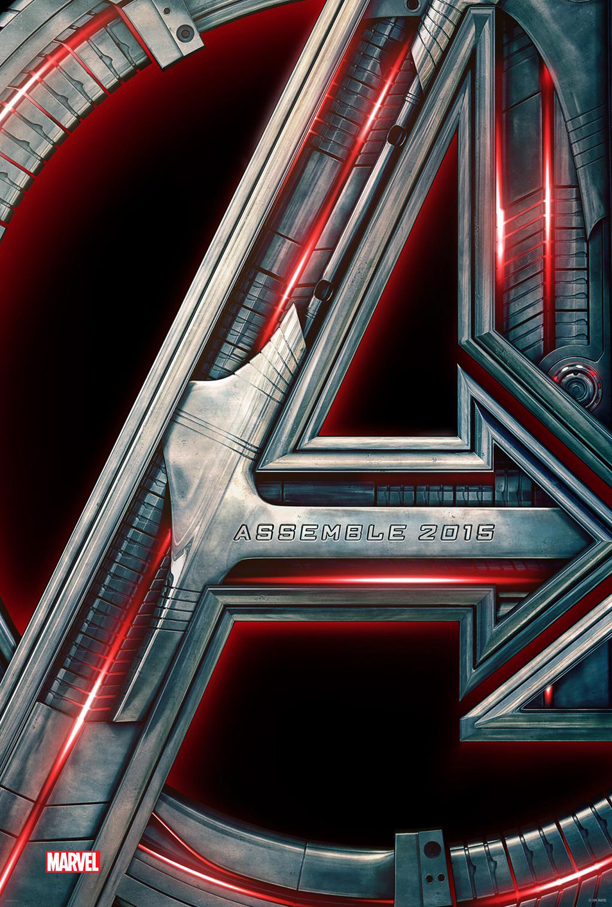
The third and, hopefully, final trailer for Avengers: Age of Ultron was unlocked today after a Twitter event which had millions of people tweeting the hashtag #AvengersAssemble. One has to give it up to the Marvel marketing machine. They know how to get the public clamoring for more when it comes to their films.

All that could be said has been said about this film. Just sit back and enjoy (or critique) one of the most highly-anticipated films of the year.

Trailer: Furious 7 (Extended)


Furious7

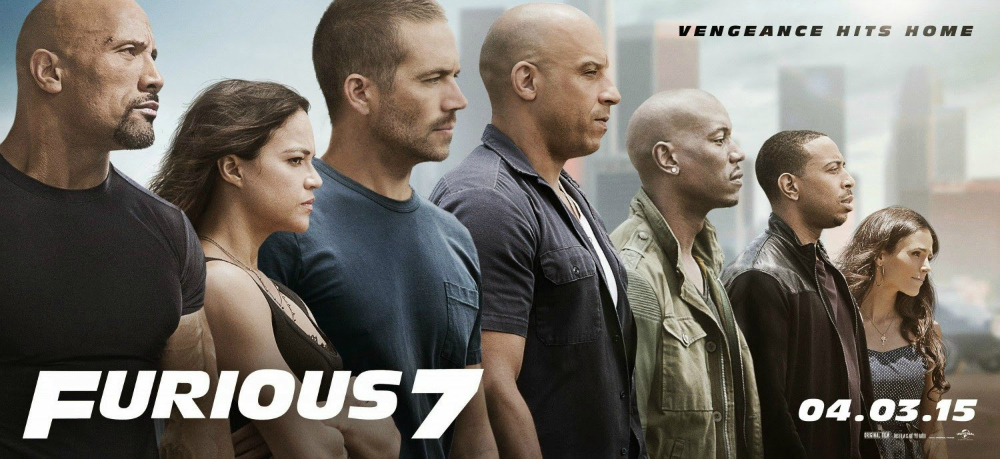
We saw the Super Bowl trailer of Furious 7 (formerly known as Fast & Furious 7). Well, here’s the extended version of it with more Jason Statham mayhem added to the mix. We also get The Rock get beatdown by Statham. Then again we’re all pretty much aware that Statham probably is the only person can put a beatdown on the Rock.

It looks like the summer blockbuster season starting out earlier and earlier with each passing year. Furious 7 is set for an April 3, 2015 release date.

Avengers: Age of Ultron (2nd Trailer)


AVENGERS-ULTRON-POSTER

“Everyone creates the thing they dread.” — Ultron

New Avengers: Age of Ultron trailer has dropped during the inaugural College Football Playoff Championship game between Oregon and Ohio State.

For all the underwhelming reaction that the Ant-Man teaser trailer got after it premiered last week it looks like this latest trailer for Avengers: Age of Ultron just builds on the immense buzz and hype created by the leaked trailer from November 2014.

No need to say more. Just watch the new hotness as we wait for May 1, 2015 when Avengers: Age of Ultron shows us something beautiful.

Trailer: Avengers: Age of Ultron (Extended)


AVENGERS-ULTRON-POSTER

“I know you mean well. You want to protect the world, but you don’t want it to change. There’s only one path to peace…your extinction.” — Ultron

Marvel has released a new extended version of the teaser trailer they released a couple weeks ago. While it’s pretty much similar to the first teaser trailer this extended version has a new intro with Ultron in his initial form confronting the partying Avengers in Avengers Tower. The voice-over by James Spader as Ultron also sounds much different in this trailer than the first. We also get more lingering shots of all the Avengers from Iron Man all the way to Hawkeye rather than the rapid-fire cuts we saw in the first teaser.

May 2015 cannot come soon enough.

Avengers: Age of Ultron is set for a May 1, 2015 release date in North America.

Trailer: Furious 7 (Teaser)


Furious7

To much fanfare we finally have the teaser trailer to the latest adventures of Dominic Toretto and his band of misfit drivers.

Now officially titled as Furious 7, the latest film in the franchise goes further away from it’s street racing roots and into the spy thriller and superhero genres it drifted into with Fast Five. Even the title alone sounds like a superhero team straight out of Marvel Comics. It’s almost as if I expect to see Iron Fist, Luke Cage, Daredevil and Elektra plus three other furious heroes fighting the good fight.

The teaser pretty much teases the sort of over-the-top, physics-defying action scenes we’ve come to expect from this franchise. It’s almost as if with each new film they up the ante as to how much universal laws Dom and his crew will break in order to entertain it’s massive fan audience.

Furious 7 is set to ride and die this April 3, 2015.

Movie Review: Teenage Mutant Ninja Turtles {2014} (dir. by Jonathan Liebesman)


teenage_mutant_ninja_turtles_ver15_xxlg-720x1066Before I start, I’d like everyone in advance to understand I’m aware this is a kid’s movie. So, when I complain, feel free to throw it out there like the hula hoop in The Hudsucker Proxy (“You know…for kids”). I may be nitpicking about this movie, looking at it with eyes that are older than the intended audience. It may also be somewhat spoiler filled, so a little warning beforehand.

When it comes to Kevin Eastman and Peter Laird’s Teenage Mutant Ninja Turtles, I grew up on the 90’s Era cartoon. Truth be told, though, the Turtles started way back in the early 80s and the new movie may be closer to that in some ways. I can’t really say for sure due to my unfamiliarity with the comics.

I can say that while Jonathan Liebesman’s Teenage Mutant Ninja Turtles may not be my Ninja Turtles, but they may end up being someone’s Ninja Turtles. That’s really the kindest thing I can say about it. A number of kids in my audience seemed to really enjoy it, though the adults who came for the nostalgia factor (myself included) looked a little disappointed. It’s not a horrid movie. I had moments – particularly the snow sequence – that I truly enjoyed, but at best this Turtles feels like an action demo reel sliced together.

The beginning of the movie explains the Turtles, the Foot Clan, and The Shredder in the space of five minutes. This is helped along with some drawings down by Kevin Eastman himself. Everyone in the city is aware of the Foot Clan, and reporter April O’Neil (Megan Fox) is trying to crack her first big story with anything she can find about the Ninja groups criminal acts. This leads her to discovering the Turtles, Splinter and together they try to stop the Shredder’s master plan – one that involves poisoning all of New York City with a deadly mist from the top of a tower. This involves the Turtles because their blood still contains remnants of the Mutagen used to change them, which assists in their amazing healing factors. The Mutagen also acts as an antidote to the poison. It’s almost the same premise used in The Amazing Spider-Man and Batman Begins. Would it hurt to have a little creativity? Didn’t anyone in the writing department say “wait, we’ve seen this trend in movies about as much as we’ve seen the ‘Captured-Villian-taken-to-Hero’s-Base-who-Springs-Trap-that-Disables-Hero’s-Ability-to-do-Good’. Maybe we should try something different here?” Nope. Let’s simply take a tired plot line and do it again. Teenage Mutant Ninja Turtles deserves to be the final film that uses the Toxic Mist angle for a while.

A moment of silence, if you will:

R.I.P. “Toxic Mist, a.k.a. Mutagen Mist, a.k.a. Scarecrow Dust” – Born 2005 (Batman Begins) – Died 2014 (Teenage Mutant Ninja Turtles)

Here’s what I had a problem with:

Exposition by way of Explanation –
The rule of “Show, don’t Tell” states that it’s better to reveal information on screen – to the characters and the audience – than it would be to have someone just tell you what’s up. Most of Turtles moves in this fashion. When April witnesses a crime thwarted by Raphael, she runs to her boss, her room mate and pieces it all together, telling everyone exactly what we just saw – that a vigilante is fighting back against the Foot Clan. The argument could be made that the explanation is done to help kids understand what’s going on, but the scene before that already covered it.

Plot holes within plot holes-
Turtles also suffers from giving the audience information that the writers completely ignore later on. At one point, one of the members is wounded and the remaining Turtles have to get Mutagen to save them. Wait. The story already mentioned that they all had Mutagen in them – the “Mutant” part that accelerates their healing – so why would you need to administer more when what they have can already save them? It’s face palm moments like these that show how much focus was done on making the movie look good, compared to writing a solid plot. Some things don’t make sense here.

What did work:

Brian Tyler’s score for the film may be the best element of the entire movie. It may sound similar to Thor: The Dark World in some ways, but it’s a good theme for the heroes overall. I’ve had some of it on repeat on Spotify, truth be told.

The action is actually pretty good, though it takes some time to get there. Some of the fight scenes suffer from the Bourne Identity and Batman Begins blur effects, but overall, it works out. Again, I wouldn’t mind seeing that snow sequence again if I didn’t have to sit through the entire film. From that point forward, the action picks up. Each turtle (and Splinter) has their own moment in the spotlight and when it happens, it can cause a smile or two, however brief that may be. The Turtles themselves are huge and highly mobile, which make the fights look like Power Rangers battles before the enemy grows to a huge size. There aren’t as many Bay like explosions in this as you’d find in Transformers, but you can feel his influence on this. That could be considered a problem when you compare Turtles with Battle: L.A. (which I enjoyed).

The In Between:

The casting on this movie is a mixed bag. Megan Fox isn’t a bad April O’Neil by any means (she’s good), but April herself in this version isn’t the sharpest tool in the shed. By that, I mean she is as abbreviated in this as Lois Lane was in Man of Steel. In an age where we’re trying to see more well rounded female leads on screen, O’Neil becomes just another Lara Croft / Carol Marcus / Sydney Bristow with issues circulating around her father. Not saying it’s unlikely, but they could have found something else to work with as background. Again, it’s a kid’s movie. Maybe it doesn’t need to be that complex. Will Arnett felt like a sidekick in this, and I found it a little difficult to not hear his Lego Batman when he spoke, but that’s just me. The Turtles themselves could be voiced by anyone, really. I didn’t feel too much of a difference between them, save that they played to their archetypes. Raphael always seemed angry, Mike is playful and so on.

Overall, Teenage Mutant Ninja Turtles is a kid’s film and maybe only young kids will really enjoy it. There’s action for both old and new fans of the Heroes in a Halfshell, but it’s wrapped up in stories we’ve heard before. This probably one you’ll want to wait for video, at best.

Song of the Day: Can You Dig It (by Brian Tyler)


IronMan3

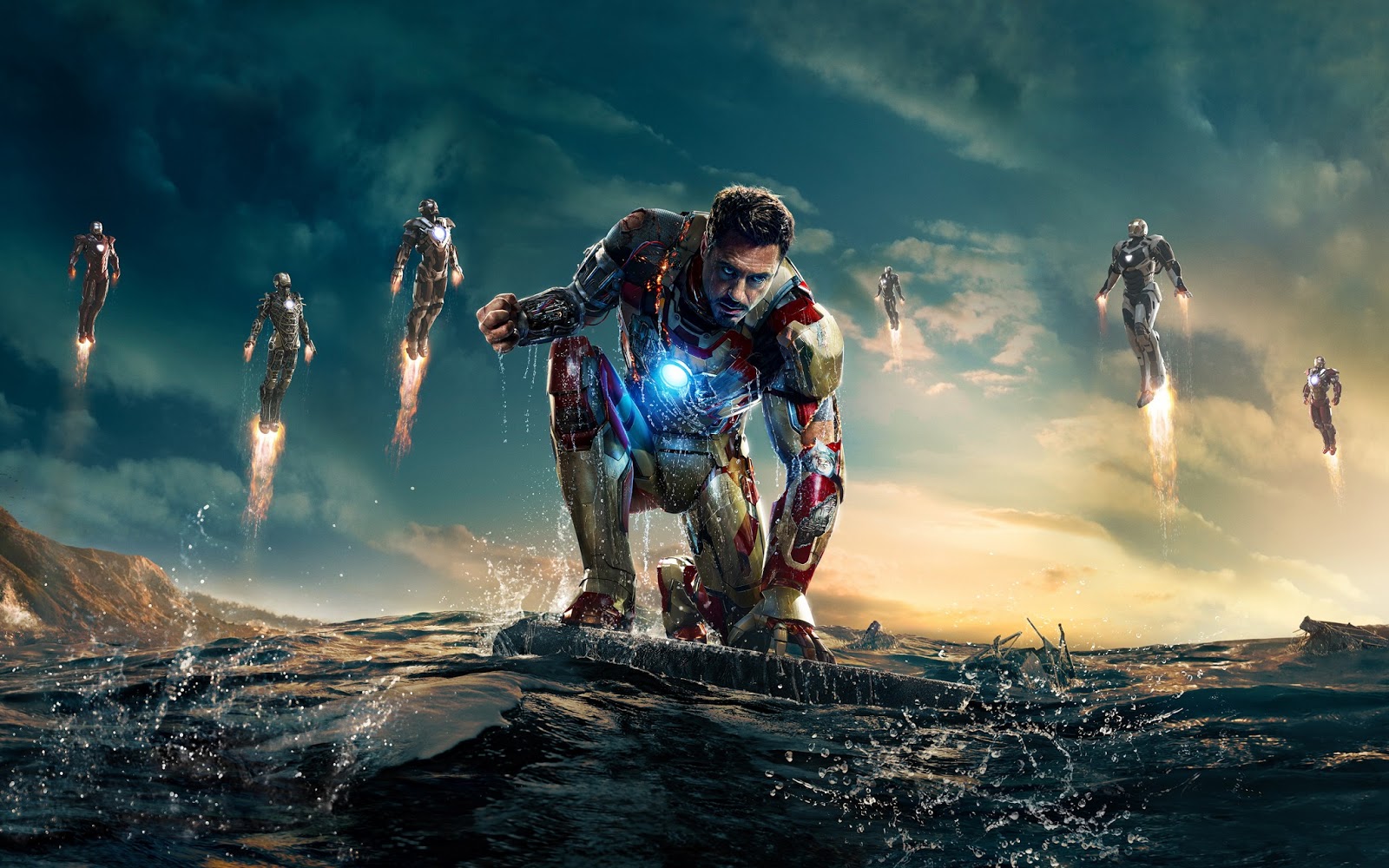
In continuing the horror detox from this past month we bring to you one of the more fun film music from this past summer’s slew of blockbusters. The latest “Song of the Day” comes courtesy of Brian Tyler’s score for Shane Black’s Iron Man 3.

The first two Iron Man films had their score composed by Ramin Djawadi and John Debney, respectively. The first score was considered one of the finer efforts in the Marvel Cinematic Universe film scores. Djawadi brought a much needed fun tone to set-up the wise-ass persona of billionaire, playboy genius Tony Stark. It also had a very metal and hard rock component to it’s sound that put into the forefront that this was Iron Man.

The second film’s score by John Debney wasn’t as well-received by fans and critics alike. Which just goes to show just how much of a misfire the middle film in the trilogy was. It tried to build on what Djawadi did in the first score, but ended up becoming just a derivative version that brought nothing new to the Tony Stark series.

Now this third film brings a new film composer in Brian Tyler who has had some experience in scoring big-budget spectacles and he doesn’t disappoint with his new take on the Iron Man score. While this third score doesn’t bring back any recognizable leitmotifs from Djawadi’s score it does bring in a new sound that’s more reminiscent of 60’s action spy thrillers like the Connery and Moore Bond films. It actually evokes quite a heavy, fun 60’s psychedelic tone. This is best heard in the film’s main end titles credit sequence which brings an animated look back at the trilogy and it’s many characters.

“Can You Dig It” is just a very fun song and it brings much hope that Brian Tyler being assigned to do the film score for Thor: The Dark World will do for that series what he did to finish off the Iron Man trilogy.

Trailer: Thor: The Dark World (Official)


1001383_551270781575795_85777536_n

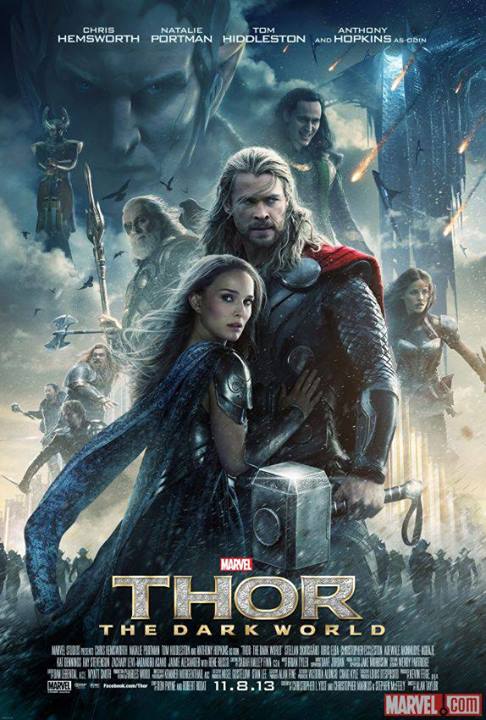
The second film of Marvel’s Phase 2 for it’s Cinematic Universe comes in the form of Thor: The Dark World. I’m sure the title should give as to which of the Avengers character is front and center for this Phase 2 film.

Above is the official theatrical poster for the film which has a strong fantasy, Drew Struzan feel to it. That’s more than appropriate since Thor bridges the gap between the more grounded superheroics of Midgard’s (that’s Earth to the layman) heroes (Captain America, Black Widow, Hawkeye and Iron Man) and the more fantasy and scifi denizens of Asgard like Thor and the upcoming film, Guardians of the Galaxy.

While this latest trailer released by Marvel is not the footage that was shown to Hall H attendees during Marvel’s panel at this year’s Comic-Con, it still manages to show some new footage in addition to one’s already shown at the initial teaser earlier. For one, it has more Loki (which is smart of Marvel since Loki has become this Cinematic Universe’s resident bad boy everyone seems to love or hate to love.) and it also shows some hints at the darker, grittier look that Alan Taylor looks to bring from his time as director of episodes of Game of Thrones for HBO.

Natalie Portman’s character, Jane Foster still seems to come off as not belonging to this ensemble, but there’s still chance that the finished product will flesh her out and her relationship with Thor to everyone’s satisfaction.

Thor: The Dark World is set for a November 8, 2013 release date.

Review: Iron Man 3 (dir. by Shane Black)


IronMan3

“You can take away my suits, you can take away my home, but there’s one thing you can never take away from me: I am Iron Man.” — Tony Stark

[WARNING: SPOILERS WITHIN]

Iron Man 3 review by Leonard Wilson

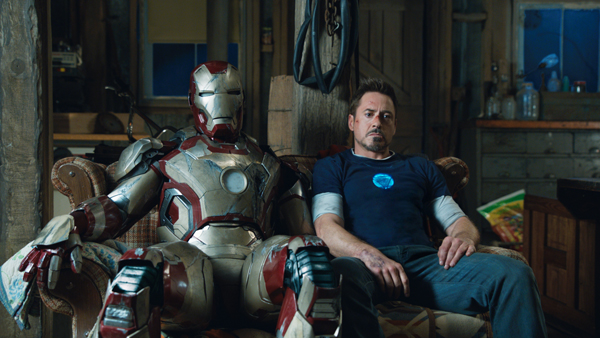
That line above would make such a great send-off for what could be the final Iron Man film. In a perfect world, having Shane Black’s Iron Man 3 as the final one in the franchise wouldn’t be such a bad thing. This doesn’t mean that Iron Man will not appear in any future Marvel Studios endeavors, but as a solo franchise a series couldn’t have found a better way to fly into the Malibu sunset. I say this because in over 5 years Marvel Studios has created a trilogy that took a character in Tony Stark and put him through a character journey encompassing four major film releases and one cameo. They did so in such a way that we saw the character grow from a rich genius dilletante, to a desperate asshole trying to find his identity as Iron Man to finally realizing that he’s the hero with or without the Mark suits he’s has created.

Iron Man 3 is the culmination of what Jon Favreau began with Iron Man in 2008 and Joss Whedon expanded on in 2012’s Marvel’s The Avengers. It took a writer of renown such as Shane Black (who also replaced Favreau as director) to get to the heart of what makes Iron Man ticks. It helped that the returning cast led by Robert Downey, Jr. as Tony Stark and Iron Man once again did a great job in their roles with some characters even getting to do some surprising heroic stuff on the screen.

IronMan3

Iron Man 3 starts off with a flashback scene just hours before the arrival of the new millennium. This is just Tony Stark before he becomes Iron Man so we see the character in full charming asshole mode. This sequence is important in that it sets up the whole plot of the film and, in my opinion, the overall story for the entire trilogy. We’re introduced to the geeky Aldritch Killian (played with equal amounts of geeky desperation and overconfident megalomania by Guy Pearce) who sees in Stark the mentor he needs to get his think tank going. With only sex with brilliant scientist Maya Hansen (played by Rebecca Hall) on his mind Killian is soon forgotten and humiliated by Stark.

The rest of the film sees Tony Stark having to pay a steep price for his behavior towards Killian in that flashback and, in conjunction, with his days and nights haunted by the events in New York with the invading Chitauri invasion having given him a case of the PTSD the film looks to bring Tony Stark at his most vulnerable and lowest. It’s a return to the proverbial “Cave” for Tony Stark as he must contend not just with the elusive terrorist mastermind The Mandarin, but also solve the mystery of who or what’s causing the inexplicable explosions and bombings occurring around the nation. All this he must do through most of the film without the use of his Iron Man suits and relying mostly on his own genius intellect and skill with making weapons and gadgets out of anything readily available.

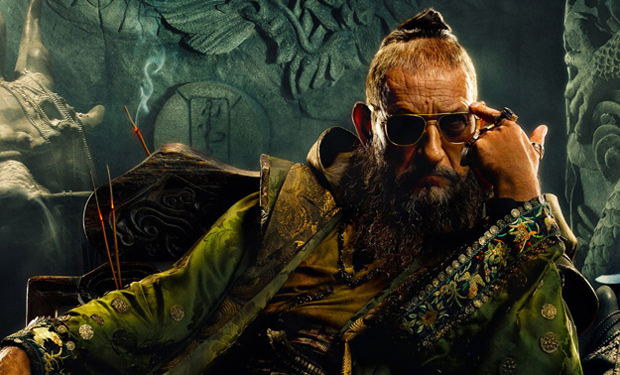
Speaking of The Mandarin (in an excellent performance by Sir Ben Kingsley), Shane Black and co-writer Drew Pearce made a controversial decision (for comic book fanboys at least) to make the iconic Iron Man villain more than he appears to be. It’s a decision that won’t sit well with the more vocal and rabid comic book fans who sees any deviation from Iron Man lore as an affront worth of loud, vociferous rabble, rabble, rabbling that would make Randy Marsh and the people of South Park proud.

mandarin-iron-man-3

To say that the twist in the story that explains who The Mandarin was such a surprise would be quite the understatement. The most important and iconic nemesis of Tony Stark comes out with both barrels of deliberate menace and sociopathic showmanship. We’re meant to see this character as the face of all the evils and troubles that has plagued Tony Stark since the first film. Kingsley plays this part of the character in the film to the hilt. Yet, it’s not until the second half of the film when we find out just who exactly The Mandarin really was and is that Black and Pearce finally put to rest whether the producers and writers would be able to handle a character that’s been seen as a racial caricature from a less than enlightened time.

Whatever howls and apoplectic ravings fanboys might be having about changing the traiditional character of The Mandarin into the pill-popping, drunk British wanna-be actor Trevor Slattery as a bait-and-switch was a brave move on the parts of Black and Pearce. To find out that The Mandarin was just a conjuration by Aldritch Killian to keep the eyes of the world’s governments and superheroes on someone else was very Bond-like. The fact that Killian himself is the true Mandarin and the Ten Rings terrorist organization his creation to have his revenge on Stark for humiliating him on the even of the new millennium closes the circle on what was begun all the way back in the first Iron Man.

This so-called “twist” was so unexpected (the internet scouring for any tidbits about the film’s plot having found nary a hint of this change) that it seemed like some sort of gimmick but as the film barreled on through the second half into it’s explosive conclusion one had to admire the massive stones by Black and Pearce to change such an iconic character knowing how it could easily alienate and anger fans of comic book. It’s this thinking outside the box by this franchise’s new director and screenwriter which makes me feel like Marvel Studios (especially studio head Kevin Feige) have their Phase 2 plan set to spring surprises on comic book and non-comic book fans alike as it marches on towards Avengers 2.

originalIron Man 3 was a definite improvement over the bloated second film in the series. It also manages to reach the high bar set by the first film, though as an origin story it still comes away as being the best of the trilogy, but not by much. There was much trepidation from fans of the film franchise when Favreau was replaced by Marvel Studios as director by one Shane Black. While Black was well-known for being a top-notch screenwriter who literally redefined the buddy cop genre his work as a filmmaker was just still only the suprise film Kiss, Kiss, Bang, Bang. While this third film still had some holes in it’s plot that was explained rather conveniently by some brief bits of dialogue it still managed to tell a compelling story of actions and consequences and the discovery that our hero finally makes about just who is the hero of the saga: the man or the machine.

If there’s to be another film bearing the title of Iron Man I would surely hope that Feige and the powers-that-be over at Marvel Studios and Walt Disney just speed-dial Shane Black’s name and to also bring back his co-conspirator Drew Pearce. The franchise is well and good in their keeping. As the final moments of the end credits tick by we’re promised that Tony Stark will return. I sure hope so.