Holidays On The Lens: Christmas In Palm Springs (dir by Fred Olen Ray)


Today, we have another cute little Christmas film from the insanely prolific director, Fred Olen Ray.

In 2014’s Christmas In Palm Springs, Dina Meyer is a divorced workaholic who is due to give a presentation in Palm Springs.  Patrick Muldoon is her ex-husband, who would like to get back together with her.  Fortunately, their children want them to get back together as well and will do anything to make it happen….

It’s cute and Christmas-y and Ian Ziering and David Chokachi in small roles.   (You may remember Chokachi as the speedo-wearing Baywatch lifeguard that my friend Evelyn nicknamed “The Bulge.”)  And it’s also a Starship Troopers reunion.  Personally, I just like it when Patrick Muldoon shows up in these movies!

October Positivity: Broken Church (dir by Michaux Muanda)


Eric Roberts is in this film!

That, in itself, is perhaps not a surprise.  Roberts, by his own admission, is an actor who will appear in just about any production that is willing to pay him a relatively modest fee.  As a result, this Oscar nominee and industry veteran has appeared in a countless number of low-budget movies, many of which would be considered far outside of the Hollywood mainstream.  For example, Broken Church, which was released earlier this year, is an evangelical religious film and, hence, about as far outside of the Hollywood mainstream as you can get.

That said, Eric actually gets to a do a bit more than usual in this film.  He plays John Parker, the father-in-law of Rev. James Logan (Art Parsells).  When the Rev. Logan is released from prison after being wrongfully convicted of embezzling from his church, Logan and his wife, Beverly (Jennifer Adams) move in with Parker.  John Parker is running for the U.S. Senate and the last thing he wants or needs bad publicity about his son-in-law.  It leads to a tense relationship between Parker and Logan.  Luckily, by the end of the film, Logan has become a faith healer (the type who inspires the crippled to toss down their crutches and then run around the churchyard) and this leads to Parker moving up in the polls.  The same demon that framed the Rev. Logan also tries to frame Parker but Parker’s too smart to accept any campaign donations from her.  In a film that is full of all sorts of implausible plot contrivances, a politician refusing money may be the biggest.

Broken Church is a low-budget film that features a few familiar faces, like Robert and Bill Cobbs and Kevin J. O’Connor.  It’s portrayal of a church divided by rumor and accusations will undoubtedly ring true for some, just as its portrayal of politics will leave most people rolling their eyes.  John Parker may be running for the Senate but he seems to be spend most of his time hanging out in his suburban home.  Where are the campaign aides?  Where are the reporters?  Why is the phone not ringing nonstop?  With his campaign falling apart, Parker goes on vacation with his wife and declares he doesn’t want to hear anything else about the election.  That attitude won’t get anyone to the White House!

This is a bit of a silly film, really.  But at least Eric Roberts is in more than just one scene.

Previous Eric Roberts Films That We Have Reviewed:

  1. Paul’s Case (1980)
  2. Star 80 (1983)
  3. Runaway Train (1985)
  4. To Heal A Nation (1988)
  5. Best of the Best (1989)
  6. Blood Red (1989)
  7. The Ambulance (1990)
  8. The Lost Capone (1990)
  9. Best of the Best II (1993)
  10. Love, Cheat, & Steal (1993)
  11. Voyage (1993)
  12. Love Is A Gun (1994)
  13. Sensation (1994)
  14. Dark Angel (1996)
  15. Doctor Who (1996)
  16. Most Wanted (1997)
  17. Mercy Streets (2000)
  18. Raptor (2001)
  19. Rough Air: Danger on Flight 534 (2001)
  20. Strange Frequency (2001)
  21. Wolves of Wall Street (2002)
  22. Border Blues (2004)
  23. Mr. Brightside (2004)
  24. Six: The Mark Unleased (2004)
  25. We Belong Together (2005)
  26. Hey You (2006)
  27. Depth Charge (2008)
  28. Amazing Racer (2009)
  29. The Chaos Experiment (2009)
  30. In The Blink of an Eye (2009)
  31. Bed & Breakfast (2010)
  32. Enemies Among Us (2010)
  33. The Expendables (2010) 
  34. Sharktopus (2010)
  35. Beyond The Trophy (2012)
  36. The Dead Want Women (2012)
  37. Deadline (2012)
  38. The Mark (2012)
  39. Miss Atomic Bomb (2012)
  40. Assault on Wall Street (2013)
  41. Bonnie And Clyde: Justified (2013)
  42. Lovelace (2013)
  43. The Mark: Redemption (2013)
  44. The Perfect Summer (2013)
  45. Self-Storage (2013)
  46. Sink Hole (2013)
  47. A Talking Cat!?! (2013)
  48. This Is Our Time (2013)
  49. Bigfoot vs DB Cooper (2014)
  50. Doc Holliday’s Revenge (2014)
  51. Inherent Vice (2014)
  52. Road to the Open (2014)
  53. Rumors of War (2014)
  54. Amityville Death House (2015)
  55. Deadly Sanctuary (2015)
  56. A Fatal Obsession (2015)
  57. Las Vegas Story (2015)
  58. Sorority Slaughterhouse (2015)
  59. Stalked By My Doctor (2015)
  60. Enemy Within (2016)
  61. Hunting Season (2016)
  62. Joker’s Poltergeist (2016)
  63. Prayer Never Fails (2016)
  64. Stalked By My Doctor: The Return (2016)
  65. The Wrong Roommate (2016)
  66. Dark Image (2017)
  67. The Demonic Dead (2017)
  68. Black Wake (2018)
  69. Frank and Ava (2018)
  70. Stalked By My Doctor: Patient’s Revenge (2018)
  71. Clinton Island (2019)
  72. Monster Island (2019)
  73. The Reliant (2019)
  74. The Savant (2019)
  75. Seven Deadly Sins (2019)
  76. Stalked By My Doctor: A Sleepwalker’s Nightmare (2019)
  77. The Wrong Mommy (2019)
  78. Exodus of a Prodigal Son (2020)
  79. Free Lunch Express (2020)
  80. Her Deadly Groom (2020)
  81. Top Gunner (2020)
  82. Deadly Nightshade (2021)
  83. The Elevator (2021)
  84. Just What The Doctor Ordered (2021)
  85. Killer Advice (2021)
  86. Megaboa (2021)
  87. Night Night (2021)
  88. The Poltergeist Diaries (2021)
  89. The Rebels of PT-218 (2021)
  90. Red Prophecies (2021)
  91. A Town Called Parable (2021)
  92. Bleach (2022)
  93. Dawn (2022)
  94. My Dinner With Eric (2022)
  95. 69 Parts (2022)
  96. The Rideshare Killer (2022)
  97. D.C. Down (2023)
  98. Aftermath (2024)
  99. Bad Substitute (2024)
  100. Devil’s Knight (2024)
  101. The Wrong Life Coach (2024)
  102. When It Rains In L.A. (2025

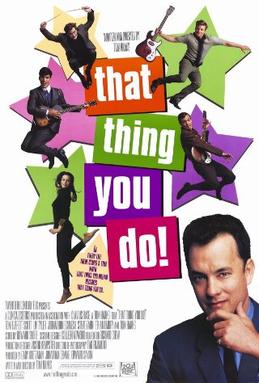
That Thing You Do! (1996, directed by Tom Hanks)


That Thing You Do! is the story of a one-hit wonder.

In 1964, an aspiring Jazz drummer named Guy (Tom Everett Scott) is a last minute addition to the a local band called the Oneders.  (It’s meant to sound like Wonders but almost everyone mispronounces it as O-Needers.)  The band’s egotistical leader, James (Jonathon Schaech) has written a slow ballad called That Thing You Do! but when Guy’s drumming causes the band to perform the song at a faster tempo, they end up with a local hit on their hands.  That local hit becomes a national hit when The Oneders are signed by Play-Tone Records.  First, Mr. White (Tom Hanks), their new manager, officially changes the name to The Wonders.  Secondly, he makes sure that every teen in America is dancing to That Thing You Do!  Third, he tells Guy to always wear sunglasses.  Fourth, he tells James that he will record and perform what Play-Tone tells him to.  Guitarist Lenny (Steven Zahn) and the unnamed Bass Player (Ethan Embry) are happy to be along for the ride but James chafes at his lack of artistic freedom.  Guy, meanwhile, falls for James’s girlfriend (Liv Tyler, at her loveliest) and dreams of meeting his idol, jazzman Del Paxton (Bill Cobbs).

That Thing You Do! was Tom Hanks’s directorial debut and, with its careful recreation of a bygone era and its collection of authentic sounding early 60s rock on the soundtrack, it was obviously a labor of love.  Considering the number of times that the song is played in the movie, it helps that it is a very good song.  That Thing You Do! is a catchy tune, one that you can’t help but tap your feet to.  At the same time, it also sounds like a one hit wonder.  It’s good but not so great as to make you expect much else from The Wonders.

Not surprisingly, Tom Hanks gets great performances from the entire ensemble cast.  Johnathon Schaech and Tom Everett Scott have never been better.  Liv Tyler is lovely and vulnerable as James’s unappreciated girlfriend.  Familiar faces like Peter Scolari, Kevin Pollak, Chris Isaak, and Clint Howard make welcome appearances.  Hanks himself is surprisingly intimidating as Mr. White.  When he says that the band will cover something the Play-Tone catalogue, it’s obvious that he’s not making a request.

The film is a tribute to being young and to loving music bit it’s also a study in the disillusionment of discovering that everything is ultimately a business.  James is frequently an arrogant jerk and he treats his girlfriend terribly but it’s hard not to sympathize with him when he says that he wants to do more than just cover songs from the Play-Tone catalogue.  To James and Guy, the Wonders are about self-expression and their love of music.  To Mr. White, the Wonders are just another band that came up with one catchy tune and who probably aren’t ever going to be heard from again.   That Thing You Do! pays tribute to all of the one-hit wonders out there, the bands who you forget about until you just happen to hear that one song on the radio or in a movie and suddenly, all the memories come flooding back.


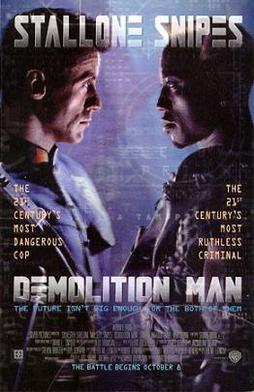
Demolition Man (1993, directed by Marco Brambilla)


File written by Adobe Photoshop¨ 4.0

In the near future, law-breakers and other destructive types are not put in prison but are instead cryogenically frozen and left in suspended animation until they’ve served out their sentences.  The most fearsome criminal in the world, Simon Phoenix (Wesley Snipes) has been frozen but so has his nemesis, Detective John Spartan (Sylvester Stallone).

In the far future, Los Angeles is a part of a megalopolis named San Angeles.  Envisioned and watched over by a seemingly benign dictator named Cocteau (Nigel Hawthorne), San Angeles is a wannabe utopia where cursing leads to an automatic fine and all of the restaurants are Taco Bell.  When he’s thawed out for a parole hearing, the suddenly super-powered Phoenix makes his escape.  The police, no longer knowing how to deal with violence, make the reluctant decision to thaw out John Spartan.  Assigned to work with the enthusiastic Lenina Huxley (Sandra Bullock), Spartan must navigate this strange future to defeat Phoenix.

For some reason, Demolition Man never seems to get the respect that it deserves.  Made at a time when both the Rambo and the Rocky franchises appeared to be over, Demolition Man features one of Stallone’s most appealing performances as he deals with a society where just saying a bad word can cause a scandal.  Just as Spartan proves that his brand of destructive police work still has its place in the future, Stallone proved that he could still carry an action movie in 1993.  There’s a lot of knowing humor to Stallone’s performance.  After a series of failed comedies in the 80s, Demolition Man was the movie that proved that Stallone could be intentionally funny.  Stallone is also surrounded by one of his strongest supporting casts.  Wesley Snipes attacks his villainous role with gusto while Denis Leary breaks out his stand-up routine as Edgar Friendly, the leader of San Angeles’s rebels.  This is also the film that led to Sandra Bullock getting cast in Speed and she’s so incredibly adorable here that even Stallone breaks out into a smile while acting opposite her

(In 1993, you couldn’t turn on television without seeing Sandra Bullock saying, “All restaurants are Taco Bell.”)

Demolition Man is an action film and it lives up to its name, with all the demolition that a viewer could want.  Even more so, It’s also a satire, of both Stallone’s previous films and what was then known as “political correctness.”  Demolition Man’s portrayal of a sterile society where everyone had been programmed to be docile and inoffensive wasn’t that far off from what a lot of politicians were then promoting for America at large.  Luckily, John Spartan was around to put an end to that.  The end result is one of Sylvester Stallone’s most memorable films.

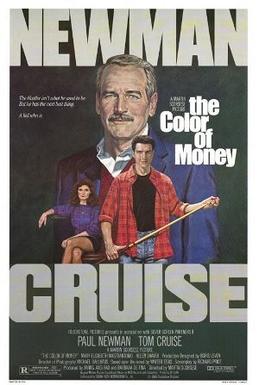
The Color of Money (1986, directed by Martin Scorsese)


ÀW

If you grew up in the 80s or 90s, you probably had at least one friend whose father kept a pool table in the garage.  This movie was probably the reason why.

Fast Eddie Felson (Paul Newman) was once The Hustler, the legendary pool player who recovered from having his fingers broken with a bowling ball and went on to defeat the legendary Minnesota Fats.  That was a long time ago.  Now, Fast Eddie is a slick liquor salesman in Chicago.  Eddie stills hangs out at the pool halls, despite his bad memories of the game.  When he sees a cocky young player named Vincent (Tom Cruise) and his girlfriend Carmen (Mary Elizabeth Mastrantonio), he takes them under his wing and teaches them how to hustle.  It’s not always easy because Vincent doesn’t like to lose, even if it means a chance to score an even bigger victory later on.  Eddie finds himself being drawn back into the game, even as he starts to wonder who is hustling who.

I always forget that The Color of Money is a Martin Scorsese films.  It’s a film that Scorsese made at a time when he had a reputation for only being able to make art films that critics loved but audiences stayed away from.  After the box office failure of The King of Comedy and his abortive first attempt to make The Last Temptation of Christ, Scorsese took The Color of Money to prove that he could work with a studio.  This is a Disney Scorsese film, with his signature camera moves but not much of his religious torment.  Even if it’s not one of his personal films, Scorsese makes pool look exciting, a battle that is as much about psychology as physicality.  Watching The Color of Money, you can smell the chalk on the tip of the pool cue.

Scorsese brings the seedy pool halls to life but it’s Paul Newman’s performance that dominates.  The Color of Money won Newman his first and only Oscar and he deserved it.  Newman had first played Fast Eddie Felson in 1961, in The Hustler.  Returning to the role twenty-five years later allowed Newman to show what would eventually happen to the angry young men that he played in the 60s.  Eddie has grown up and he’s got a comfortable life but he’s not content.  He finally has stability but he misses the game.  He needs the thrill of the hustle.  Newman is at his best in The Color of Money, building on The Hustler but also revealing new sides of Eddie Felson.

Newman is so good that Tom Cruise often gets overlooked but both Cruise and Mastrantonio hold their own against Paul Newman.  Cruise especially does a good job as Vincent, playing him as someone who is too cocky for his own good but also not as dumb as he looks.  Just when you think you’ve got Vincent figured out, Cruise surprises you.  The Color of Money came out the same year as Top Gun and Cruise’s Vincent feels like a commentary on the talented, troubled, but cocky characters that Cruise was playing at that time.  Cruise, Scorsese, and Newman make a good team in this more-than-worthy sequel.

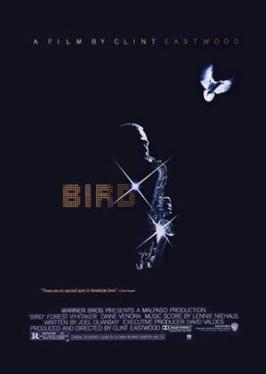
Bird (1988, directed by Clint Eastwood)


Forest Whitaker stars as the legendary saxophonist Charlie “Bird” Parker.  The film, which is structured around flashbacks and time jumps and features some of the most beautifully-done transitions that I’ve ever seen, follows Parker as he plays his saxophone, challenges the jazz purists who his own individual style, and looks for work in both America and France.  Along the way, we watch as he befriends and learns from Dizzy Gillespie (Samuel Wright), mentors a young trumpet player named Red Rodney (Michael Zelniker), and has a complex relationship with a white jazz lover named Chan Parker (Diane Venora).  Throughout his life, Charlie Parker struggles with his addiction to heroin and alcohol, occasionally getting clean to just then fall back into his habit.  To its credit, the film avoids most of the biopic cliches when it comes to portraying Parker’s addiction.  Parker accepts that he’s an addict, just as he accepts that he has a talent that is destined to revolutionize American music.

Director Clint Eastwood has always been a fan of jazz and he actually saw Charlie Parker perform when he was a young man.  His love of jazz had been present in almost every modern-era film that he has directed, staring with Play Misty For Me’s lengthy trip to the Monterey Jazz Festival.  Bird was a passion project for Eastwood, the first film that Eastwood directed without also appearing in.  (Eastwood doesn’t star in his second directorial effort, Breezy, but he does have a brief and silent cameo as a man standing on pier.)  Eastwood takes a nonlinear approach to telling the story, eschewing the traditional bopic format and instead putting the focus on Parker’s music.  Eastwood was able to get several never bef0re-released recordings of Parker performing and, when Whitaker is blowing into his saxophone in the film, we’re actually hearing Parker.  Eastwood’s direction captures the smoky atmosphere of the jazz clubs where Parker and Gillespie made their name while the nonlinear style reflects the feeling of just letting a song take you to wherever it’s going.  This is a movie about jazz that plays out like a jazz improvisation.

Forest Whitaker gives an amiable and charismatic performance as Charlie Parker, playing him as someone who has found both an escape and peace in his music, even as he physically struggles with the ravages of his drug addiction.  Whitaker won the Best Actor at Cannes for his performance in Bird.  Eastwood received the Golden Globe for Best Director.  Bird feels like it was labor of love for both of them.  Bird may not have set the box office on fire when it was originally released but it remains one of the best jazz films.

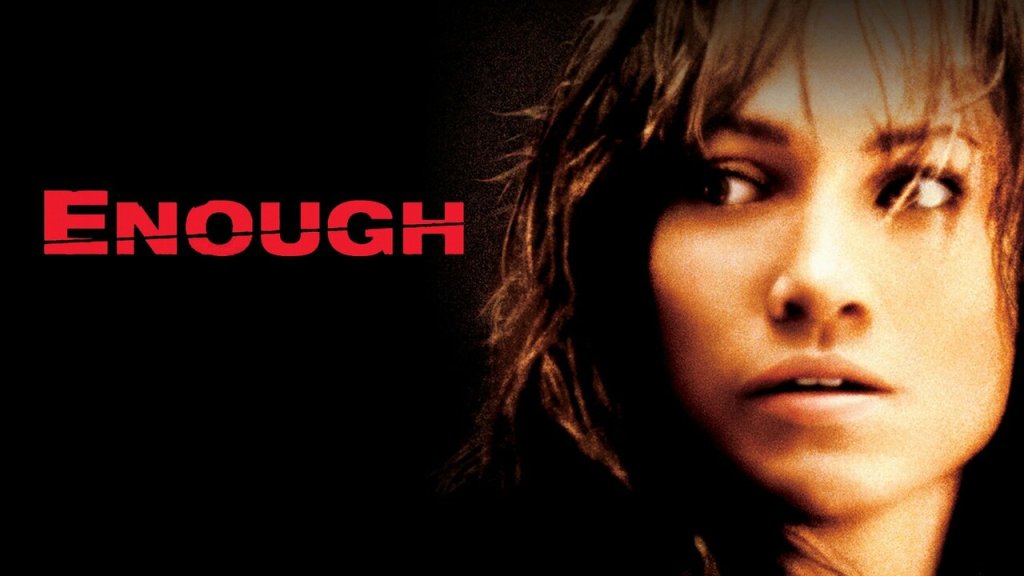
Jennifer Lopez has had ENOUGH (2002)! 


This morning I got up to make coffee for me and my wife. When I came back to our room, she had started the movie ENOUGH (2002) with Jennifer Lopez on the new projector that she bought me for Christmas. I’m not that big of a fan of Lopez, but I decided I’d go ahead and sit down to sip on my coffee prior to starting my day. I ended up watching the whole movie! 

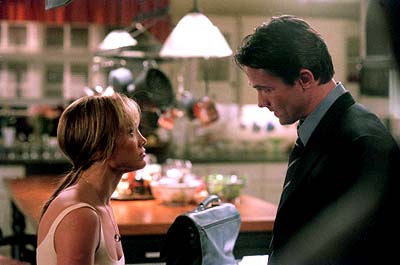
Jennifer Lopez plays Slim, a waitress in a diner in L.A., who meets a rich guy named Mitch Hiller (Billy Campbell) who impresses her when he gets rid of this rude jerk (Noah Wyle) trying to hit on her. Mitch and Slim get along famously, eventually getting married and having a cute little girl named Gracie. Everything seems perfect in their little world. Unfortunately, things aren’t what they seem, and one night Slim checks her husband’s pager. She calls the number and discovers Mitch has been cheating on her. When she confronts him about the affair, his entire countenance changes, and he begins beating the crap out of her. After the altercation, and before heading out to continue his affair, Mitch warns Slim not to leave because he refuses to live without her. With the help of her friend Ginny (Juliette Lewis) and a couple of others, Slim takes Gracie and they escape from Mitch. With all his money and connections, Mitch is able to track her down no matter where she goes. Feeling like she has no other options, Slim turns to her wealthy, estranged father, Jupiter (Fred Ward). He provides her the funds she needs to set up a new life and identity. Unfortunately, that damn Mitch tracks her down again. Narrowly escaping, Slim decides that she’s done running. She sends Gracie away with Ginny and begins training rigorously in self defense techniques. This time she’s taking the fight to Mitch with plans to end this shit once and for all. 

If you’re looking for a realistic drama about the effects of spousal abuse on the family unit and then across the larger society, ENOUGH is not the movie for you. This movie is more for the Charles Bronson crowd, where the bad guys are truly evil and the audience is in complete agreement with their need to perish. This is a formula that continues to work even if you have to completely suspend your disbelief. For example:

-Is it realistic that Mitch would be able to conceal what a complete and total asshole he is for many years from Slim, but then one night turn out to practically be the sidekick of Satan?

-Is it realistic that Mitch would be able track Slim and Gracie down time and time again, no matter where she goes across the country, even after she uses her Dad’s resources to change her identity?

-Is it realistic that Slim would be able to get enough self defense training in a short period of time to be able to confront the extremely fit Mitch at the end and kick his ass? 

While the setup is probably not the most realistic, we have to see images of Mitch beating up Slim on multiple occasions, even trying to kill her at one point. We also see him knock little Gracie to the ground and hurt her. We see him terrorizing her and anyone who tries to help her. This audience member just wanted to see Mitch pay.

I don’t really have any close connections to the main actors in ENOUGH, but they all do their jobs well enough to keep me involved. I have always been a fan of its director, Michael Apted. He’s made a few movies that I really like in CLASS ACTION (1991) with Gene Hackman, THUNDERHEART (1992) with Val Kilmer, and BLINK (1993) with Madeleine Stowe. He’s a more than competent director who knows how to get a reaction from his audience. This certainly may not reflect his best work, but he still handles the material in a professional manner. 

My final word on ENOUGH… I enjoyed the film in the same way I like the 3 piece combo at KFC, which I really do enjoy. I know it’s probably not the best stuff out there, but the classic formula still works, and I’m satisfied when it’s all gone! 

See the trailer for ENOUGH below:

The Hard Way (1991, directed by John Badham)


Lt. John Moss (James Woods) is a cop with a problem.  A serial killer who calls himself the Party Crasher (Stephen Lang) is killing people all across New York and he has decided that he will be coming for Moss next.  However, Moss’s captain (Delroy Lindo) says that Moss is off of the Party Crasher case and, instead, he’s supposed to babysit a big time movie star named Nick Lang (Michael J. Fox)!

Nick is famous for playing “Smoking” Joe Gunn in a series of Indiana Jones-style action films.  However, Nick wants to be taken seriously.  He wants to play Hamlet, just like his rival Mel Gibson!  (That Hard Way came out a year after Mel Gibson played the melancholy Dame in Franco Zeffirelli’s 1990 adaptation of Shakespeare’s play.)  Nick thinks that if he can land the lead role in a hard-boiled detective film, it will give him a chance to show that he actually can act.  To prepare for his audition, he’s asked to spend some time following Moss on the job.  Mayor David Dinkins, always eager to improve New York’s reputation, agrees.  (David Dinkins does not actually appear in The Hard Way, though his name is often mentioned with a derision that will be familiar to anyone who spent any time in New York in the 90s.)  Of course, Moss isn’t going to stop investigating the Party Crasher murders and, of course, Nick isn’t going to follow Moss’s orders to just stay in his apartment and not get in his way.

The Hard Way is a predictable mix of action and comedy but it’s also entertaining in its own sloppy way.  Director John Badham brings the same grit that he brought to his other action films but he also proves himself to have a deft comedic touch.  Most of the laughs come from the contrast between James Woods playing one of his typically hyperactive, edgy roles and Michael J. Fox doing an extended and surprisingly convincing impersonation of Tom Cruise.  Woods and Fox prove to be an unexpectedly effective comedic team.  One of the best running jokes in the film is Woods’s exasperation as he discovers that everyone, from his girlfriend (Annabella Sciorra) to his no-nonsense boss, are huge fans of Nick Lang.  Even with a serial killer running loose in the city, Moss’s captain is more concerned with getting Nick’s autograph.

Woods and Fox are the main attractions here but Stephen Lang is a good, unhinged villain and Annabella Sciorra brings some verve to her underwritten role as Moss’s girlfriend.  Viewers will also want to keep an eye out for familiar faces like Penny Marshall as Nick’s agent, a very young Christina Ricci as Sciorra’s daughter, and Luis Guzman as Moss’s partner.

With its references to David Dinkins, Mel Gibson’s superstardom, and Premiere Magazine, its LL Cool J-filled soundtrack, and a plot that was obviously influenced by Lethal Weapon, The Hard Way is very much a period piece but it’s an entertaining one.

Catching-Up With Two Courtroom Dramas: Suspect and 12 Angry Men


As a part of my continuing effort to get caught up with reviewing all of the movies that I’ve seen this year, here’s two courtroom dramas that I recently caught on This TV.

  • Suspect
  • Released in 1987
  • Directed by Peter Yates
  • Starring Cher, Dennis Quaid, Liam Neeson, John Mahoney, Joe Mantegna, Philip Bosco, Fred Melamed, Bernie McInerney, Bill Cobbs, Richard Gant, Jim Walton, Michael Beach, Ralph Cosham, Djanet Sears 

Suspect is a hilariously dumb movie.  How dumb is it?  Let me count the ways.

First off, Cher plays a highly successful if rather stressed public defender.  And don’t get me wrong.  It’s not that Cher is a bad actress or anything.  She’s actually pretty good when she’s playing Cher.  But, in this movie, she’s playing someone who managed to graduate from law school and pass the DC bar.

Secondly, Cher is assigned to defend a homeless man when he’s accused of murdering a clerk who works for the Justice Department.  The homeless man is deaf and mute, which isn’t funny.  What is funny is when he gets a shave and a shower and he’s magically revealed to be a rather handsome and fresh-faced Liam Neeson.  Liam doesn’t give a bad performance in the role.  In fact, he probably gives the best performance in the film.  But still, it’s hard to escape the fact that he’s Liam Neeson and he basically looks like he just arrived for a weekend at Cannes.

Third, during the trial, one of the jurors (Dennis Quaid) decides to investigate the case on his own.  Cher even helps him do it, which is the type of thing that would get a real-life attorney disbarred.  However, I guess Cher thinks that it’s worth the risk.  I guess that’s the power of Dennis Quaid’s smile.

Fourth, the prosecuting attorney is played by Joe Mantegna and he gives such a good performance that you find yourself hoping that he wins the case.

Fifth, while it’s true that real-life attorneys are rarely as slick or well-dressed as they are portrayed in the movies, one would think that Cher would at least take off her leather jacket before cross-examining a witness.

Sixth, it’s not a spoiler to tell you that the homeless man is innocent.  We know he’s innocent from the minute that we see he’s Liam Neeson.  Liam only kills who people deserve it.  The real murderer is revealed at the end of the film and it turns out to be the last person you would suspect, mostly because we haven’t been given any reason to suspect him.  The ending is less of a twist and more an extended middle finger to any viewer actually trying to solve the damn mystery.

I usually enjoy a good courtroom drama but bad courtroom dramas put me to sleep.  Guess which one Suspect was.

  • 12 Angry Men
  • Released 1997
  • Directed by William Friedkin
  • Starring Courtney B. Vance, Ossie Davis, George C. Scott, Armin Mueller-Stahl, Dorian Harewood, James Gandolfini, Tony Danza, Jack Lemmon, Hume Cronyn, Mykelti Williamson, Edward James Olmos, William Petersen, Mary McDonnell, Tyrees Allen, Douglas Spain

The 12 Angry Men are back!

Well, no, not actually.  This is a remake of the classic 1957 film and it was produced for Showtime.  It’s updated in that not all of the jurors are white and bigoted Juror #10 (Mykelti Williamson) is now a member of the Nation of Islam.  Otherwise, it’s the same script, with Juror #8 (Jack Lemmon) trying to convince the other jurors not to send a young man to Death Row while Juror #3 (George C. Scott) deals with his family issues.

I really wanted to like this production, as it had a strong cast and a strong director and it was a remake of one of my favorite films.  Unfortunately, the remake just didn’t work for me.  As good an actor as Jack Lemmon was, he just didn’t project the same moral authority as Henry Fonda did the original.  If Fonda seemed to be the voice of truth and integrity, Lemmon just came across like an old man who had too much time on his hands.  Without Fonda’s moral certitude, 12 Angry Men simply becomes a story about how 12 men acquitted a boy of murder because they assumed that a woman would be too vain to wear her glasses to court.  The brilliance of the original is that it keeps you from dwelling on the fact that the accused was probably guilty.  The remake, however, feels like almost an argument for abandoning the jury system.

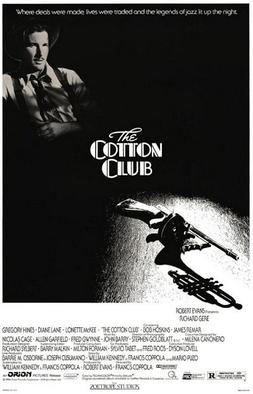
A Movie A Day #264: The Cotton Club (1984, directed by Francis Ford Coppola)


The time is the 1930s and the place is New York City.  Everyone wants to get into the Cotton Club.  Owned by British gangster Owney Madden (Bob Hoskins), the Cotton Club is a place where the stage is exclusively reserved for black performers and the audience is exclusively rich and white.  Everyone from gangsters to film stars comes to the Cotton Club.

It is at the Cotton Club that Dixie Dwyer (Richard Gere) meets everyone from Dutch Shultz (James Remar) to Gloria Swanson (Diane Venora).  Shultz hires Dixie to look after his girlfriend, Vera (Diane Lane).  Swanson arranges for Dixie to become a movie star.  Meanwhile, Dixie’s crazy brother, Vincent (Nicolas Cage), rises up through the New York underworld.  Meanwhile, dancing brothers Sandman and Clay Williams (played by real-life brothers Gregory and Maurice Hines) are stars on stage but face discrimination off, at least until Harlem gangster Bumpy Rhodes (Laurence Fishburne) comes to their aid.

The Cotton Club was a dream project of the legendary producer, Robert Evans, who was looking to make a comeback after being famously charged with cocaine trafficking in 1980.  Having commissioned a screenplay by his former Godfather collaborators, Mario Puzo and Francis Ford Coppola, Evans originally planned to direct the film himself.  At the last minute, Evans changes his mind and asked Coppola to direct the film.  After working with him on The Godfather, Coppola had sworn that he would never work with Evans again. (When he won an Oscar for The Godfather‘s screenplay, Coppola pointedly thanked everyone but Robert Evans.)  However, by 1984, a series of box office flops had damaged Coppola’s standing in Hollywood.  Needing the money, Coppola agreed to direct The Cotton Club.

Evans raised the film’s $58 million budget from a number of investors, including Roy Radin.  Roy Radin was best known for putting together Vaudeville reunions in the 70s and being accused of raping an actress in 1980.  Radin and Evans were introduced to each other by a drug dealer named Lanie Jacobs, who was hoping to remake herself as a film producer.  During the production of The Cotton Club, Radin was murdered by a contract killer who was hired by Jacobs, who apparently felt that Radin was trying to muscle her out of the film production.

While all of this was going on, Coppola fell into his familiar pattern of going overbudget and falling behind schedule.  This led to another investor filing a lawsuit against Orion Pictures and two other investors, claiming fraud and breach of contract.  When the film was finally released, it received mixed reviews, struggled at the box office, and only received two Oscar nominations.

With all of the murder and drama that was occurring offscreen, it is not surprising that the film itself was overshadowed.  The Cotton Club is a disjointed mix of gangster drama and big production numbers.  As always with post-Apocalypse Now Coppola, there are flashes of brilliance in The Cotton Club.  Some of the production numbers are impressive and visually, this movie has got style to burn.   However, among the leads, neither Richard Gere nor Diane Lane seem to be invested in their characters while the talented Hines brothers are underused.  The supporting cast is full of good character actors who are all in a search of a better script.  A few do manage to make an impression: James Remar, Bob Hoskins and Fred Gwynne as veteran gangsters, Nicolas Cage as the film’s stand-in for Mad Dog Coll, and Joe Dallesandro as Lucky Luciano.  The Cotton Club is sometimes boring and sometimes exciting but the onscreen story is never as interesting as what happened behind the scenes.