Today’s song of the day is the oddly cheery theme music of 1975’s Trip With The Teacher. Composed by Igo Kantor, this music may be inappropriate for a film about a teacher and four students who are kidnapped by a sociopath with narcolepsy but I defy you to get it out of your head!
Scene that I Love: Yojimbo
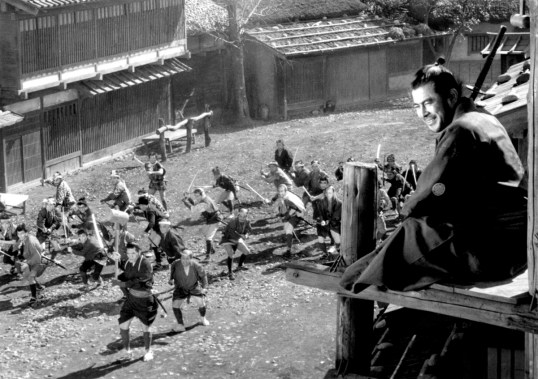
Yojimbo (1961, directed by Akira Kurosawa)
The great filmmaker, Akira Kurosawa, was born 116 years ago today, in Tokyo. Kurosawa would go on to become one of the most influential directors of all time, making 30 films over a career that lasted 57 years. Though Kurosawa is often cited as an influence on westerns (Seven Samurai became The Magnificent Seven, Yojimbo inspired Serigo Leone to create The Man With No Name), Kurosawa’s influence goes for beyond just one genre. He directed action films. He directed gangster films. He directed social problem films. He directed historical epics. Kurosawa taught an entire generation of future film film directors the language of cinema.
In honor of the anniversary of Akira Kurosawa’s birth, here is a scene that we all love from his 1961 masterpiece, Yojimbo. Playing the lead role of the lone swordsman is, of course, Kurosawa’s frequent star, Toshiro Mifune.
4 Shots From 4 Films: Special Akira Kurosawa Edition
4 Or More Shots From 4 Or More Films is just what it says it is, 4 shots from 4 of our favorite films. As opposed to the reviews and recaps that we usually post, 4 Shots From 4 Films lets the visuals do the talking!
Today, the Shattered Lens honors both the birth and the legacy of the great filmmaker, Akira Kurosawa! It’s time for….
4 Shots From 4 Akira Kurosawa Films

The Hidden Fortress (1958, dir. by Akira Kurosawa, DP: Kazuo Yamasaki)

Yojimbo (1961, dir by Akira Kurosawa, DP: Kazuo Miyagawa)
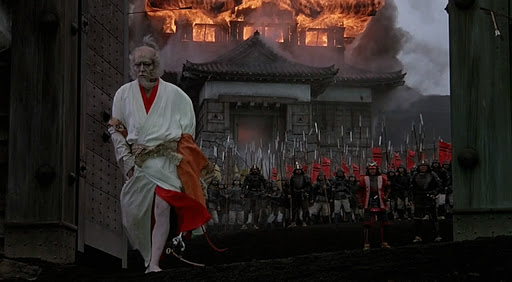
Ran (1987, dir by Akira Kurosawa, DP: Takao Saito)

Dreams (1990, dir by Akira Kurosawa, DP: Takao Saito)
Monday Live Tweet Alert: Join Us for Slaughter in San Francisco!
As some of our regular readers undoubtedly know, I am involved in hosting a few weekly live tweets on twitter and occasionally Mastodon. I host #FridayNightFlix every Friday, I co-host #ScarySocial on Saturday, and I am one of the five hosts of Mastodon’s #MondayActionMovie! Every week, we get together. We watch a movie. We snark our way through it.
Tonight, for #MondayActionMovie, the film will be Slaughter in San Francisco!
If you want to join this watch party, just hop onto Mastodon, pull up Slaughter in San Francisco on YouTube, start the movie at 8 pm et, and use the #MondayActionMovie hashtag!
Enjoy!
Artwork of the Day: Girl In The Middle (by Paul Rader)
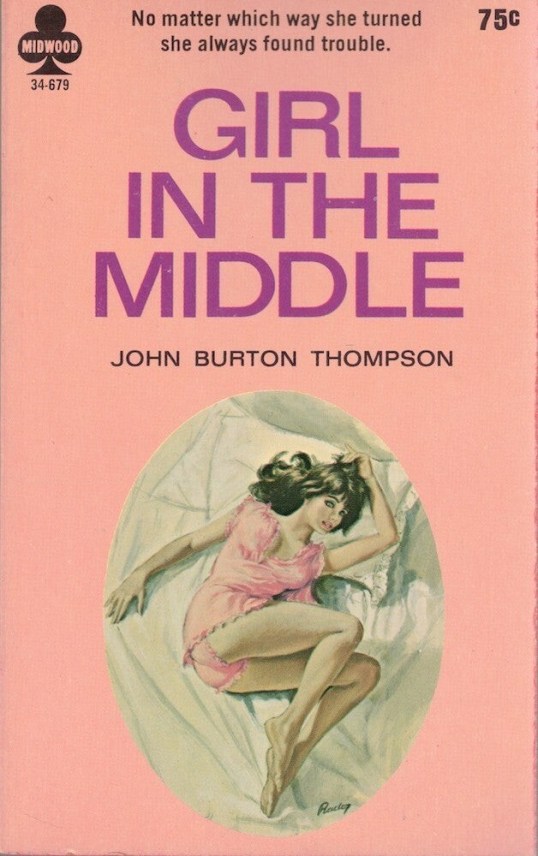
by Paul Rader
This cover is from 1966.
Music Video of the Day: Don’t Let Me Be The Last To Know by Britney Spears (2001, dir by Herb Ritts)
It’s Britney on the beach! This video was controversial when it was first released. It seems rather tame now.
This video was directed by photographer Herb Ritts and Britney’s boyfriend was played by French model Brice Durand. Supposedly, neither Justin Timberlake nor Lynne Spears were happy with this video. Lynne felt it was too explicit and Justin apparently had an issue with Britney kissing another guy, even though Britney was just acting, it was just for the music video, and it’s not as if Justin wasn’t messing around behind Britney’s back.
Enjoy!
Lisa Marie’s Week In Review: 3/16/26 — 3/22/26
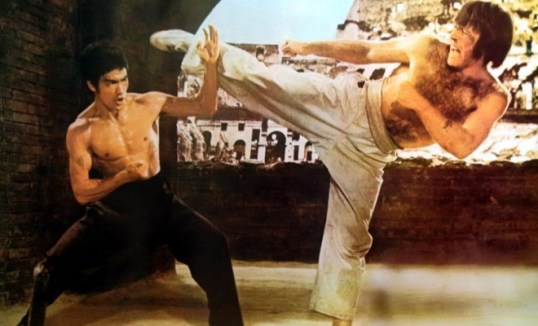
Rest in Peace, Chuck Norris.
Films I Watched:
- Color of Night (1994)
- Dodgeball: A True Underdog Story (2004)
- Evil Nanny (2016)
- Fear City (1984)
- Fire Maiden From Outer Space (1956)
- Firewalker (1986)
- Hard Ticket To Hawaii (1987)
- Mortal Thoughts (1991)
- Once Upon A Time In Venice (2017)
- Out of Death (2021)
- Resident Evil (2002)
- Setup (2011)
- The Siege (1998)
- 10 to Midnight (1983)
- Used Cars (1980)
- 1st & Ten
- CHiPs
- The Love Boat
- Miami Vice
- Pacific Blue
- Radio 1990
- Saved By The Bell: The New Class
Books I Read:
- Out of the Woods (2025) by Gregg Olsen
Live Tweets:
News From Last Week:
- Chuck Norris Dies At 86
- Art Critic Calvin Tomkins Dies At 100
- Nicholas Brendon Dies At 54
- Director Jamie Blanks Dies At 54
- Actor Matt Clark Dies At 89
- Oscars Ratings Hit 17.9 Million Viewers, Down 9% From Last Year and Lowest Since 2022
- The Latest Season Of The Bachelorette Has Been Canceled
- Champagne socialists in Cuba stage concert, stay in 5-star hotel as country plunges into nationwide blackout
- Afroman Wins Civil Trial Over Use of Police Raid Footage in His Music Videos
- Box Office: ‘Project Hail Mary’ blasts off with $80.5 million, a best for Amazon MGM, and the year
Links From Last Week:
Links From The Site:
- Arleigh reviewed Project Hail Mary, Made In Abyss, Interspecies Reviewers, and Dune Part One! Arleigh reviewed episodes 4, 5, 6, and 7 of One Piece: Into The Grand Line! He shared a song from Led Zeppelin!
- Brad wrote about Soldier and Chuck Norris!
- Erin reviewed Look Who’s Talking and The Whole Nine Yards!
- Erin shared Too Many Girls, St. Patrick Bishop of Ireland, Nurse On The Beach, Die Hard, Johnny Havoc, Invasion USA, and Amazing Stories! She also wished all of you a happy St. Patrick’s Day!
- Jeff shared music videos from House of Pain, INXS, and INXS again. He reviewed Blind Date and Beavis and Butt-Head Do America!
- I shared scene of the day featuring William Shatner, Gary Oldman, Wesley Snipes, Bruce Willis, Peter Graves, Kurt Russell, and Erik Estrada!
- I paid tribute to William Shatner, Russ Meyer, Chuck Norris, Hollywood, Bruce Willis, Luc Besson, Kurt Russell, and Bernardo Bertolucci!
- I shared songs from Angelo Badalamenti, The Dust Brothers, Badalamenti again, Bruce Willis, The Who, and Alan Silvestri!
- I shared music videos from Tomoyasu Hotei, Laura Michelle, Afroman, and Tom Jones!
- I reviewed the Oscar ceremony!
- I congratulated you — yes, you! — for surviving Oscar Sunday!
- I shared my early Oscar predictions!
Review: Project Hail Mary (dir. by Phil Lord and Christopher Miller)
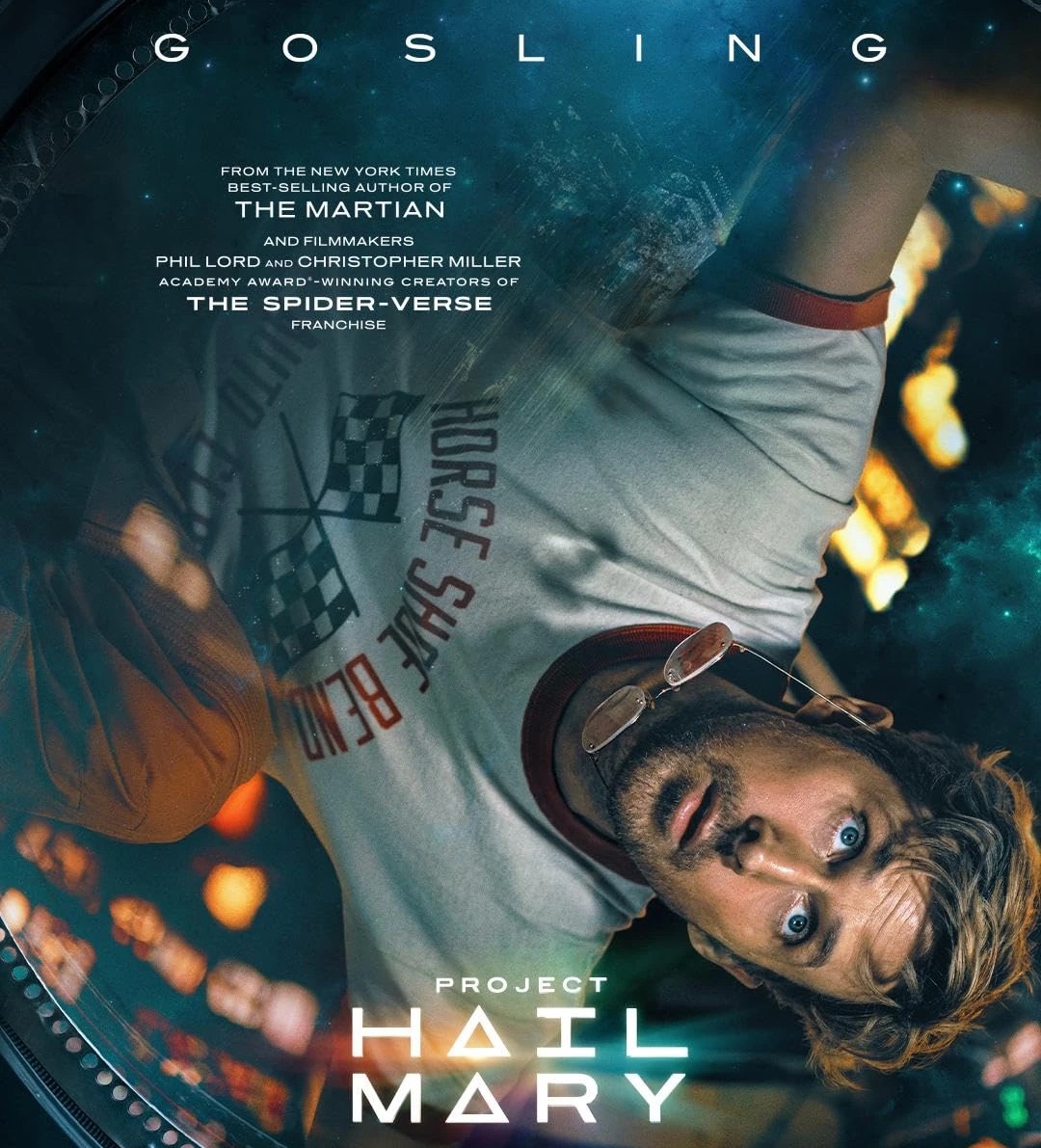
“I am happy. You no die. Let’s save planets!” — Rocky
Project Hail Mary delivers a crowd-pleasing space adventure that captures the spirit of Andy Weir’s bestselling novel without reinventing the sci-fi wheel. Ryan Gosling shines as the reluctant hero, carrying the film through its mix of brainy puzzles and heartfelt moments. Directed by Phil Lord and Christopher Miller, this big-budget adaptation balances wonder with some familiar tropes, making it a solid popcorn flick for fans of hard science fiction laced with humor.
The story kicks off with Dr. Ryland Grace, a brilliant but socially awkward science teacher played by Gosling, who wakes up alone on a spaceship hurtling through the solar system. He has amnesia, no crewmates, and a mission he can’t quite remember—saving Earth from a mysterious microbe called Astrophage that’s dimming the sun and threatening global catastrophe. As Grace pieces together his past through flashbacks, we see how he went from a disgraced academic debunking fringe theories to humanity’s last-ditch savior. The setup echoes The Martian, Weir’s previous hit, with its lone survivor using wit and science to beat impossible odds.
Gosling nails the everyman genius vibe, blending wide-eyed confusion with deadpan quips that keep things light. His Grace is no stoic astronaut; he’s a guy who’d rather teach middle school than lead a suicide mission, cracking jokes about his fear of commitment even as he’s rigging experiments with duct tape and hope. The performance anchors the film’s emotional core, especially in quieter moments where Grace grapples with isolation and doubt. Sandra Hüller adds gravitas as Eva Stratt, the no-nonsense project leader who strong-arms world governments into action—she’s all icy efficiency, a nice counterpoint to Gosling’s rumpled charm.
Lord and Miller, the duo behind The Lego Movie and Spider-Man: Into the Spider-Verse, bring their signature visual flair to the vastness of space. The Hail Mary ship feels lived-in and jury-rigged, with practical sets that pop against sweeping CGI vistas of alien planets and swirling Astrophage clouds. Early scenes use dreamlike tilts and blurred transitions to mirror Grace’s foggy memory, creating a disorienting but captivating rhythm. It’s not always seamless—the nonlinear structure can jolt you out of the immersion—but it builds tension effectively as revelations stack up.
Screenwriter Drew Goddard, who collaborated with Weir on The Martian, stays faithful to the book’s plot beats and scientific grounding. Astrophage isn’t just a plot device; it’s a clever microorganism that feeds on starlight, explained through Grace’s whiteboard scribbles and explosive demos. The film dives into real astrophysics—like orbital mechanics and xenobiology—without dumbing it down, yet it keeps the pace brisk with problem-solving montages set to a retro-futuristic score. Think Guardians of the Galaxy vibes, complete with a catchy farewell tune that hits surprisingly hard.
About halfway through, the story pivots to its most memorable element: Grace’s encounter with Rocky, an alien engineer from the 40 Eridani system. Voiced and puppeteered by James Ortiz, Rocky is a spider-like creature with a high-pitched ammonia-breathing voice, communicated via a bulky translation rig à la Arrival. Their friendship is the heart of Project Hail Mary, turning a solo survival tale into a buddy sci-fi romp. The xenolinguistics—figuring out math and music as common ground—feels fresh and fun, with practical effects making Rocky endearing rather than creepy.
That said, the film isn’t flawless. Clocking in around two hours, it rushes some of the book’s deeper world-building, like the global panic on Earth or the crew’s backstories, which get condensed into quick flashbacks. Grace’s arc from coward to hero leans on a simple mantra—”bravery is fighting for someone else”—that’s uplifting but predictable. It doesn’t push cinematic boundaries like Interstellar or Dune, settling for feel-good spectacle over profound philosophy. The massive budget shows in the polish, but it occasionally feels like a theme-park ride: thrilling set pieces, like a high-stakes EVA gone wrong, prioritize awe over subtlety.
Visually, the film excels in its alien encounters and spacewalk sequences, with IMAX-friendly shots of Eridani b’s jagged landscapes and bioluminescent horrors. The Astrophage effects are a standout—tiny, shimmering specks that swarm like deadly fireflies, rendered with meticulous detail. Sound design amplifies the isolation, from the hum of life support to Rocky’s echolocating chirps. It’s all wrapped in a score that mixes orchestral swells with synth grooves, evoking 80s space operas while feeling modern.
Thematically, Project Hail Mary champions collaboration across species and borders, a timely nod amid real-world divisions. Grace’s growth isn’t just about smarts; it’s about vulnerability, learning to trust Rocky despite zero shared language or biology. The film handles this with sincerity, avoiding preachiness by grounding it in humor—imagine two nerds bonding over thermodynamics while one’s in a pressurized suit and the other’s a five-eyed rock. It’s optimistic sci-fi that posits curiosity as humanity’s superpower, even if the execution stays safely within blockbuster lanes.
Supporting cast fleshes out the ensemble without stealing focus. Tracy Letts chews scenery as a blustery politician, while smaller roles like the multinational crew add diversity to the stakes. Production design nods to NASA realism, with the Beetle probes (Grace’s mini-shuttles) stealing scenes in their plucky, R2-D2 fashion. Pacing dips in the mid-act info dumps, but Goddard trims the fat smartly, ensuring the climax—a desperate race against entropy—delivers white-knuckle payoff.
Early reactions praise its fidelity to Weir’s page-turner, with fans thrilled by the faithful visuals and emotional beats. Detractors might call it formulaic, but in a genre crowded with grimdark dystopias, this one’s a breath of fresh (oxygenated) air. It’s not the most original sci-fi, but it’s entertaining as hell, blending laughs, tears, and light-speed thrills.
For book purists, the adaptation honors the source without copying verbatim—key twists land with impact, and the science holds up under scrutiny. Weir himself has endorsed it, chatting about Rocky’s creation and making quantum mechanics accessible. If you’re burned out on capes or zombies, Project Hail Mary offers smart, hopeful escapism that sticks the landing.
Ultimately, this is peak “movie medicine”—a fun, moving reminder that lone wolves become legends with the right friends, human or otherwise. Gosling’s charisma, paired with Lord and Miller’s playful direction, makes it soar higher than its plot alone might suggest. Worth the ticket for any sci-fi buff craving brains with their spectacle; just don’t expect it to redefine the stars.
Scenes That I Love: William Shatner Interprets Rocket Man
Today, we wish a happy 96th birthday to the one and only William Shatner!
In this scene that I love, William Shatner performs Rocket Man at the 1978 Science Fiction Film Awards (better known as the Saturn Awards). This video has become a bit of tradition around here. Only Shatner could make this work so brilliantly.
Song of the Day: Twin Peaks Theme by Angelo Badalamenti
On today, what would have been Angelo Badalamenti’s birthday, there’s little question as to what our song of the day should be.
 Through the Shattered Lens