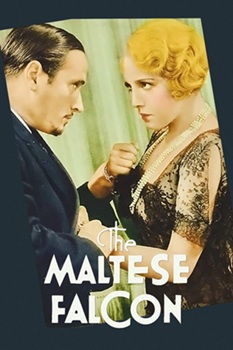
The Maltese Falcon (1931, directed by Roy Del Ruth)


Detective Sam Spade (Ricardo Cortez) may be an immoral lech but when his partner, Miles Archer, is murdered, Sam sets out to not only figure out who did it but to also eliminate himself as a suspect.  Sam was having an affair with Miles’s wife, Ivy (Thelma Todd).  Sam’s investigation leads to him falling for the mysterious Miss Wonderly (Bebe Daniels) and getting involved with a trio of flamboyant criminals who are searching for a famous relic, the Maltese Falcon.  Dudley Digges plays Casper Gutman.  Otto Matieson plays Dr. Joel Cairo.  Dwight Frye plays the gunsel, Wilmer, who Gutman says he “loves … like a son.”

The first film adaptation of Dashiell Hammett’s classic detective novel is overshadowed by the version that John Huston would direct ten years later.  That’s not surprising.  There’s a lot of good things about the first version but it’s never as lively than John Huston’s version and neither Dudley Digges nor Otto Matieson can compare to Sydney Greenstreet and Peter Lorre.  Of the supporting cast, Dwight Frye makes the best impression as the twitchy Wilmer and Bebe Daniels and Thelma Todd are both sexy as the story’s femme fatales.  That doesn’t mean that they’re better than their counterparts in John Huston’s film.  It just means they all bring a different energy to their roles and it’s interesting to see how the same story can be changed by just taking a slightly different approach.  Elisha Cook, Jr. was perfect for Huston’s version of the story.  Dwight Frye is similarly perfect for Roy Del Ruth’s version.

Needless to say, Ricardo Cortez can’t really compare to Humphrey Bogart.  But, if you can somehow block the memory of Bogart in the role from your mind, Cortez actually does give a good performance as Spade.  Because this was a pre-code film, Cortez can lean more into Spade’s sleaziness than Bogart could.  Also, because this was a pre-code film, the first Maltese Falcon doesn’t have to be as circumspect about the story’s subtext.  Spade obviously tries to sleep with every woman he meets and is first seen letting a woman out of his office.  (The woman stops to straighten her stockings.)  Gutman and Cairo’s relationship with Wilmer becomes much more obvious as well.  What’s strange is that, even though this Maltese Falcon is pre-code, it still ends with the type of ending that you would expect the production code to force onto a film like this.

If you’re going to watch The Maltese Falcon, the Huston version is the one to go with.  But the first version isn’t bad and it’s worth watching for comparison.
Retro Television Review: Fantasy Island 7.4 “God Child/Curtain Call”


Welcome to Retro Television Reviews, a feature where we review some of our favorite and least favorite shows of the past!  On Tuesdays, I will be reviewing the original Fantasy Island, which ran on ABC from 1977 to 1984.  Unfortunately, the show has been removed from most streaming sites.  Fortunately, I’ve got nearly every episode on my DVR.

This week, the curse of Lawrence continues.

Episode 7.4 “God Child/Curtain Call”

(Dir by Ted Lange, originally aired on October 29th, 1983)

Tori Spelling is in this episode.  She was only ten years old at the time but she was already a terrible actress.   In the role of Laurie, a poor little rich girl whose fantasy is to ask God why her parents died in a crash, Spelling gives a performance that is overly cutesy.  There’s nothing authentic about her or her delivery.  Her role on the show was obviously a result of her father being the producer.

Laurie doesn’t find God.  (At first, she assumes Roarke is God but he assures her that he is not, despite the fact that he has God-like powers.  Ricardo Montalban, for his part, said that he always felt that Roarke was a fallen angel who was doing penance on Fantasy Island.)  Laurie does however find Adam Cobb (George Kennedy), a former circus clown-turned-alcoholic who briefly pretends to be God.  At first, Laurie hates Adam for lying about being God.  Then Mr. Roarke explains that Adam’s wife died in a circus fire and that his own daughter was adopted by another family.  Laurie feels sorry for him and invites Adam to come live in her mansion with her aunt.  Adam considers it but ultimately decides that he needs to instead search for his own daughter.  In a rather bizarre turn of events, he dances with Laurie while singing Funny Face to her.

As for Laurie meeting God, Adam suggests that maybe there’s a bit of God in everyone and therefore, we’re all God.  Whatever, you hippie.

This storyline was ugh.  Like seriously, just ugh.  Laurie didn’t get her fantasy.  She just met some old alcoholic who spouted a bunch of a Unitarian mumbo jumbo at her.  As for Adam leaving the Island to find his own daughter …. well, did he?  This episode doesn’t tell us.  How exactly is he going to find her?  Does she want anything to do with him?  How was the penniless Adam able to afford a trip to Fantasy Island in the first place?

AND WHERE THE HELL IS TATTOO!?

Meanwhile, Milton Berle played an old comedian who wanted his former partners (Imogene Coca and Howard Morris) to forgive him so that they could perform together one last time.  This storyline felt very familiar and it featured a lot of singing.  Even Mr. Roarke sang a song.  It’s actually kind of strange how many songs were sung in this episode because this wasn’t a musical episode.  This wasn’t like that musical episode of The Love Boat where the songs were evenly distributed across the program.  Instead, towards the end of the episode, people just started singing.  It was weird.

Speaking of The Love Boat, this episode was directed by Isaac himself, Ted Lange.  Lange keeps the action movie but I just wish this episode had been better written.  This is another episode where it’s easy to imagine how much better it would have been with Tattoo than with Lawrence.  Tattoo would have definitely gotten emotionally involved with Laurie’s search for God.  Lawrence, on the other hand, is just a stiff upper lip butler whose main concern is making sure everyone gets their drink order.  It’s nothing against Christopher Hewett, who I have read was a good Catholic.  It’s just that he’s stuck playing a character who does not belong on the Island.

This was a pretty desultory trip to the Island.


4 Shots From 4 Films: Special John Huston Edition


4 Or More Shots From 4 Or More Films is just what it says it is, 4 shots from 4 of our favorite films. As opposed to the reviews and recaps that we usually post, 4 Shots From 4 Films lets the visuals do the talking!

119 years ago today, the writer/director/actor John Huston was born in Nevada, Missouri.  Today, we honor his life and films with….

4 Shots from 4 John Huston Films

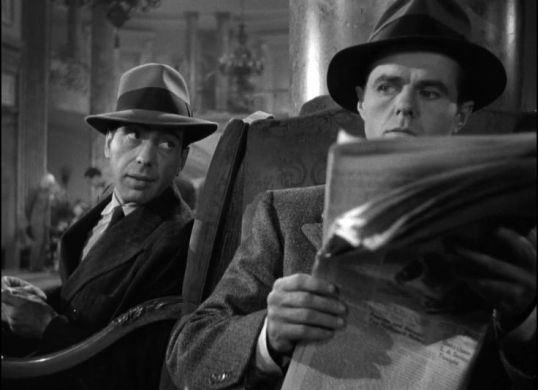
The Maltese Falcon (1941, dir by John Huston, DP: Arthur Edeson)


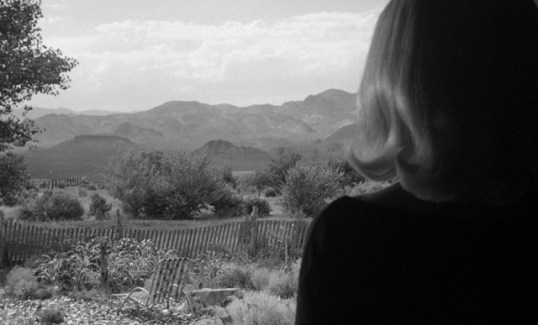
The Misfits (1961, dir by John Huston, DP: Russell Metty)


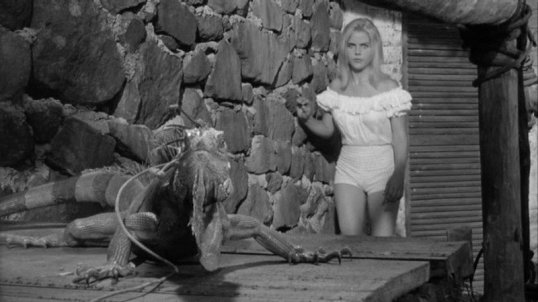
The Night of the Iguana (1964, dir by John Huston, DP: Gabriel Figueroa)


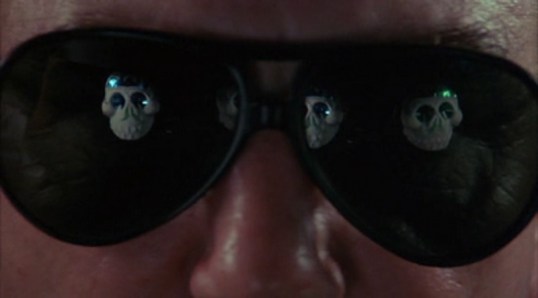
Under the Volcano (1984, dir by John Huston, DP: Gabriel Figueroa)

Scenes I Love: The Opening of Guardians of the Galaxy


Today, the Shattered Lens wises director James Gunn a happy 59th birthday!

My favorite James Gunn film remains 2014’s Guardians of the Galaxy.  Not coincidentally, that’s also my favorite comic book film.  A good deal of that love has to do with the film’s absolutely brilliant introduction of Chris Pratt’s Star-Lord.  In the scene below, both the film and Gunn announce that this is a comic book movie that actually has a sense of humor.  Let the other franchises specialize in depressed heroes and grim themes.  The Guardians of the Galaxy are all about dancing.

Here’s a scene that I love, directed by James Gunn:

Music Video of the Day: Summers in Vegas by Lolo Zouaï (2019, dir by Lolo Zouaï and Tommy Nowels)


This is a nicely evocative video.  Las Vegas is the quintessential American city, a celebration of commerce and hospitality that happens to be sitting out in the middle of an inhospitable desert.  Vegas could only have been founded in America and it’s only in America that it could have thrived to become the iconic city that it is today.

Of course, I should also mention that, whenever I see any clips of the Las Vegas strip, I automatically think about the movie Casino and the Ace Rothstein Dancers.  If I ever go to Vegas, I’m going to let Commissioner Pat Webb know that Sam “Ace” Rothstein has nothing to hide.

Enjoy!

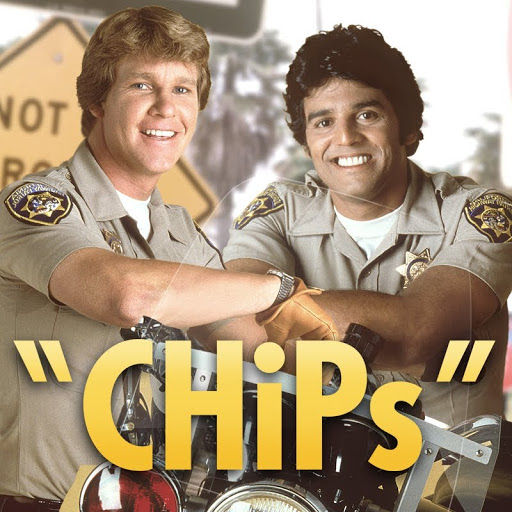
Late Night Retro Television Review: CHiPs 4.7 “Satan’s Angels”


Welcome to Late Night Retro Television Reviews, a feature where we review some of our favorite and least favorite shows of the past!  On Mondays, I will be reviewing CHiPs, which ran on NBC from 1977 to 1983.  The entire show is currently streaming on Prime!

This week, Bonnie is taken hostage!  It’s good thing Ponch exists because you know no one else on this show is going to able to rescue her.

Episode 4.7 “Satan’s Angels”

(Dir by Phil Bondelli, originally aired on December 14th, 1980)

When confronting a group of outlaw bikers who are harrassing a teenager (Heather Locklear, in her screen debut), Bonnie is kidnapped!  Reno (John Quade) manages to snap her own handcuffs on her wrists and then drags her to a cabin owned by Stan (William Smith) and his wife (Candice Azzara).

Can the Highway Patrol find the cabin?  The cabin is in the mountains it might not be easy to locate.  It’s a good thing that Ponch and Jon just happen have those motorized hang gliders!   It’s California living to the rescue!  Needless to say, Ponch and Jon (but mostly Ponch) are able to swoop in for the rescue.

This episode didn’t do much for me but then again, episodes about hostage situations rarely do.  Once a character is taken hostage, it pretty much causes the action to slow down to a crawl.  There’s only so many times you can listen to someone being told not to even think about escaping before it gets kind of boring.  This episode did feature the great villainous character actor, William Smith.  It had that going for it.  But, otherwise, the episode itself moved very slowly and it didn’t help that Bonnie herself was required to make a lot of very stupid mistakes so that she could be kidnapped in the first place.  When a show’s storyline depends on a previous competent person suddenly being amazing incompetent, it’s an issue.

This episode’s b-plot featured Getraer’s very pregnant wife continually going the hospital, just to discover it was a false alarm.  Getraer’s wife was played Gwynne Gilford who was (and is) married to Robert Pine.  Their son, Chris Pine, was born a few months before this episode aired.

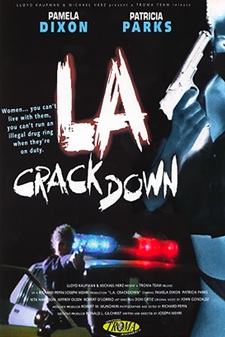
L.A. Crackdown (1987, directed by Joseph Mehri)


Karen (Pamela Dixon) is a tough L.A. cop who is sick of seeing runaways disappear into the system.  Fionna (Kit Harrison) and Angie (Tricia Parks) are two delinquents who have been used and abused on the streets.  They’ve worked as prostitutes and been forced to appear in films with titles like Cockadile Dundee.  (L.A. Crackdown actually opens with the filming of Cockadile Dundee.)  Karen tries to rescue them from the streets by springing them from jail and taking them home with her.  At first, her husband (Jeffrey Olsen) is not amused but Karen is determined to do the right thing.  After several long stretches of nothing happening and two montages of the women bonding, things go downhill, Karen loses everything, and she decides to get justice by killing a bunch of drug dealers.

I knew what I was getting myself into when I saw the Troma logo at the start of this movie.  I respect Troma’s willingness to distribute anything that they can get for cheap but that doesn’t make it any easier to sit through their movies.  L.A. Crackdown is slowly paced, badly acted, and looks like it was lit by a flashlight with a dying battery.  There are two action scenes, one at the beginning and one towards the end, that manage to be presentable but the rest of the film is full of the long, dull stretches that Troma is known for.  Karen seeking revenge on the drug dealers should be the whole point of the movie but it takes forever to reach that point.  The revenge isn’t bad but you’ll probably fall asleep before you get there.

L.A. Crackdown is on Tubi.  If you’re like me, you might make the mistake of watching it because you’ve gotten it mixed up with a Michael Mann film called L.A. Takedown.  Take my word for it.  Michael Mann has nothing to do with L.A. Crackdown.

Retro Television Review: Miami Vice 4.14 “Baseballs of Death”


Welcome to Retro Television Reviews, a feature where we review some of our favorite and least favorite shows of the past!  On Mondays, I will be reviewing Miami Vice, which ran on NBC from 1984 to 1989.  The entire show can be purchased on Prime!

I saw the title of this week’s episode and I immediately called my sister….

Episode 4.14 “Baseballs of Death”

(Dir by Bill Duke, originally aired on February 19th, 1988)

“Watch this with me,” I told Erin, “it’s a baseball episode!”

“It is?” Erin asked.

“Look at the title!”

I was excited.  I always like to find things that I can watch with my sister and, as we all know, she loves baseball.  She certainly loves baseball more than she loves tv shows about bombs that blow up when you step on them.

Unfortunately, it turned out that this episode was not about baseball.  Instead, it featured a bunch of bombs that blow up when you step on them.  According to this episode, those bombs are known as baseballs.  Sorry, Erin!  Honest mistake….

Misleading title aside, this is a really good episode.  It features Tony Plana as a Chilean diplomat who is trying to buy a shipment of weapons, including the explosive baseballs.  Plana is a chilling villain.  In fact, he’s the first villain of season 4 to actually feel dangerous.  When we first meet him, he’s coldly executing the girlfriend of a tabloid reporter.  Plana’s lack of emotion as he kills and plots to kill feels like a throwback to the soulless sociopaths who made the first season’s rogue gallery.  A very young Oliver Platt shows up as an arms dealer and his nerdy confidence adds to some comedy to what is an otherwise fairly grim episode.  Just as with Plana’s cold villainy, Platt’s cheerful amorality felt like a throwback to the first season.

Indeed, this entire episode felt like a return to what the show used to be.  After a season that’s involved televangelists, bull semen, UFOs, and Crockett getting married to Sheena Easton, it was nice to see an episode that actually felt like an episode of Miami Vice.  Director Bill Dule gave this episode a stylish and, at times, almost surrealistic feel.  Crockett was back to be a cynic.  Castillo stared at the floor and spoke through clenched teeth while Switek actually got to put his phone-tapping skills to good use.  In the end, Tony Plana may have been the villain but, in old school Miami Vice style, the majority of the blame was still put on the U.S. government.  The episode even ended with an exciting boat chase.  All this episode needed was Phil Collins on the soundtrack and it could have passed for something from the first two seasons.

Season 4 has been uneven but this episode felt like classic Vice.  Erin thought the episode would have been better with actual baseballs and I agree with her that the title was misleading.  That said, this was still an enjoyable throwback to what the show used to be.