Ghosts of the Frontier: Vengeance and Redemption in Eastwood’s Twin Westerns


“It’s what people know about themselves inside that makes ’em afraid.” — The Stranger

Mythic Outsiders and the Shape of the Stranger

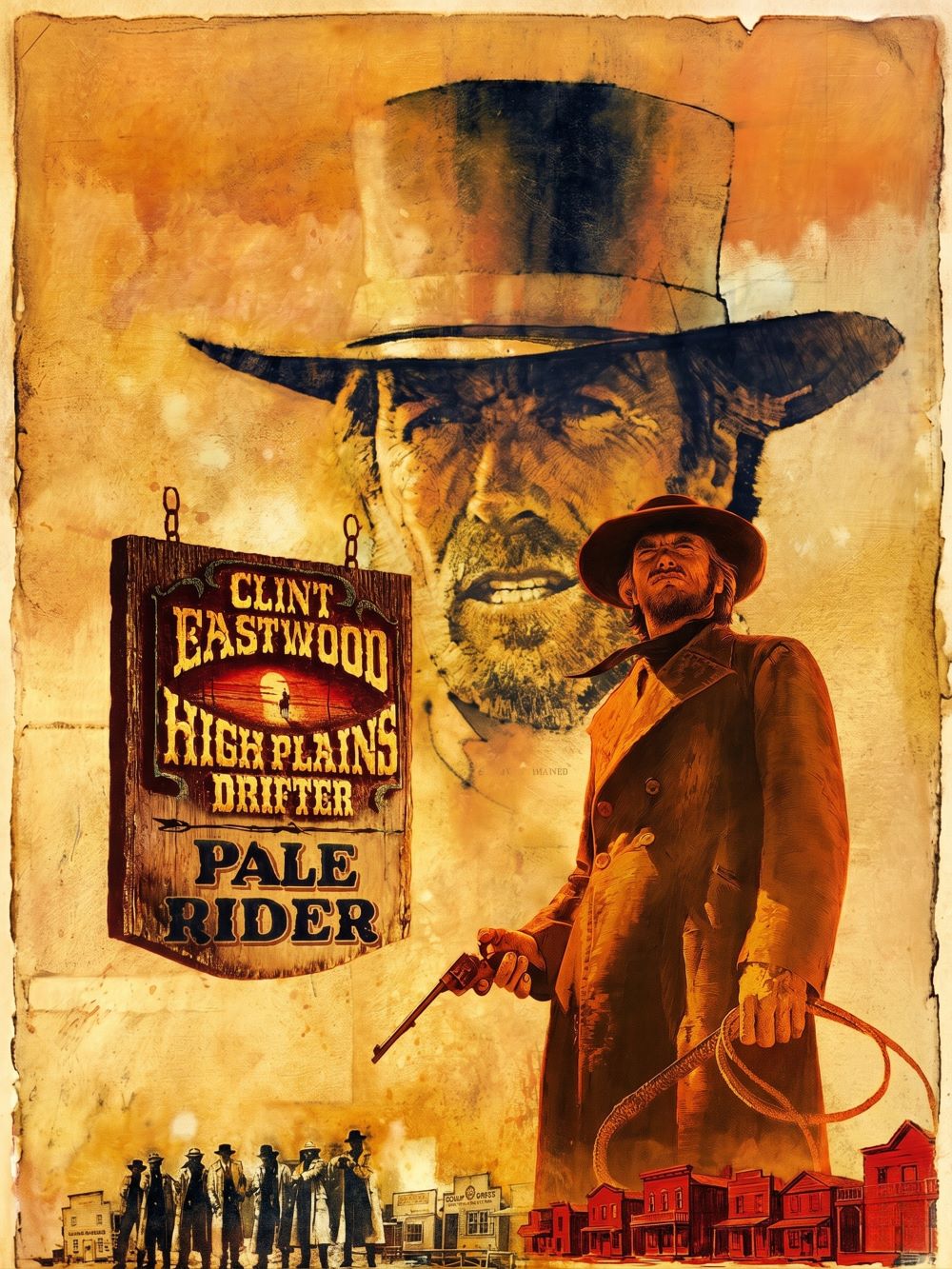
Clint Eastwood’s High Plains Drifter and Pale Rider both revolve around the arrival of a mysterious outsider whose presence destabilizes and reconfigures a frontier community already burdened by moral pressure, economic vulnerability, or buried violence. In High Plains Drifter, the Stranger arrives with the weight of something closer to metaphysical judgment than human intention. He is introduced not as a conventional protagonist but as an unsettling disruption of reality itself, a figure who seems to exist slightly outside the normal rules governing cause and consequence. His relationship to the town of Lago is immediately adversarial, but not in a personal sense—it is structural, almost cosmic, as though he is less reacting to the town than fulfilling a prewritten moral outcome.

By contrast, Pale Rider preserves the same narrative skeleton but shifts the emotional and moral emphasis toward intervention rather than judgment. The Preacher still carries ambiguity—his scars, his sudden appearance, and his almost supernatural timing all suggest something beyond ordinary human agency—but his role is fundamentally protective. He enters a world defined by industrial pressure and economic coercion rather than buried collective sin, and his presence functions as a counterweight to imbalance rather than an execution of moral sentence. The result is that both films feel like variations of the same mythic story, but one is written as condemnation while the other reads as reluctant guardianship.

Old Testament Retribution vs. Folkloric Myth

One of the most revealing ways to distinguish the two films is through their mythic grammar. High Plains Drifter reads like an Old Testament narrative of retribution, where morality is absolute, guilt is inherited collectively, and punishment is not only justified but structurally inevitable. The Stranger operates like a figure of divine wrath, not because he explicitly claims divine authority, but because the world of the film behaves as though such authority is implicit. Lago is not a community undergoing moral testing; it is a community already judged. Every act the Stranger commits feels like the unfolding of a sentence that predates his arrival. Violence in this framework is not expressive or emotional—it is procedural, almost liturgical, as though the town is being dismantled according to a moral code that does not permit negotiation.

The Old Testament quality of High Plains Drifter is also evident in its treatment of time and consequence. The past is not past—it is active, invasive, and inescapable. The town’s buried crime against its former marshal is not simply a backstory element; it functions as a theological stain that structures everything that follows. The Stranger does not introduce justice into the world; he reveals that justice was already waiting, dormant and inevitable.

Pale Rider, by contrast, operates within a folkloric mode that feels less doctrinal and more narrative in the oral-tradition sense. The Preacher is not a judge delivering sentence but a figure who appears within a story because the story requires balance. Folklore does not insist on moral finality in the same way scripture does; instead, it preserves ambiguity, repetition, and interpretive openness. The Preacher’s identity remains unresolved not because the film withholds information, but because resolution itself is not the point. He resembles figures from frontier legend—wandering spirits, unnamed avengers, or protective ghosts whose purpose is understood only through their effects on a community rather than through explicit explanation.

Where High Plains Drifter insists on inevitability, Pale Rider allows for contingency. The Preacher arrives in response to suffering rather than in fulfillment of punishment. His presence suggests that moral intervention is episodic rather than absolute, something that occurs when imbalance becomes intolerable rather than something decreed in advance. The result is a world that feels open-ended rather than sealed.

Moral Worlds: Guilt Versus Vulnerability

The moral architecture of each film is constructed through the condition of its community. In High Plains Drifter, Lago is defined by collective guilt so pervasive that it erases meaningful individuality. The townspeople are not simply flawed characters; they are components of a shared moral collapse. Their original crime—the betrayal and murder of their marshal—functions as the foundation of their identity. The Stranger’s arrival does not introduce new moral tension; it activates an existing one that has been suppressed but never resolved. The town’s psychology is therefore circular: guilt produces fear, fear produces complicity, and complicity guarantees punishment.

This circularity is what gives High Plains Drifter its claustrophobic quality. There is no outside moral perspective capable of altering the town’s fate. Even resistance or survival strategies feel complicit in the same moral structure. The town is effectively trapped inside its own ethical architecture.

In Pale Rider, however, the mining community is framed through vulnerability rather than guilt. These characters are not haunted by a collective sin but threatened by external forces—specifically Coy LaHood’s industrial expansion, which seeks to displace them through economic pressure and intimidation. The moral stakes are therefore asymmetrical: a powerful industrial entity versus a fragile group of independent miners. This reframing is crucial because it transforms the Preacher’s role from agent of punishment to agent of protection. He does not expose corruption within the miners; he resists corruption directed toward them.

Tone and Philosophical Direction

The tonal difference between the films reflects Eastwood’s evolving relationship with the Western mythos. High Plains Drifter is austere, surreal, and deliberately disorienting. The town of Lago feels less like a historical location than a moral construct, a space designed to contain judgment. The visual and narrative isolation of the town reinforces its status as a closed system, one in which moral consequence operates without interference from broader social or geographic context. The result is a film that feels almost metaphysical in its severity, as though it is staging a moral experiment rather than telling a grounded story.

Violence in this context becomes an instrument of revelation. Each act performed by the Stranger peels back layers of denial and self-deception, leaving only the raw structure of guilt beneath. The tone is not merely dark—it is stripping, reductive, and final.

Pale Rider, while still restrained and often somber, introduces a more grounded emotional texture. The mining settlement feels materially real, shaped by labor, scarcity, and interpersonal bonds. This grounding prevents the film from collapsing into abstraction. Even when supernatural ambiguity is present, it is embedded within a world that feels historically and physically tangible. This creates a tonal tension between myth and realism that softens the absolutism found in High Plains Drifter. Instead of moral vacuum, Pale Rider offers moral friction.

The Outsider as Moral Force

Eastwood’s performances in both films embody the evolution of the outsider archetype. In High Plains Drifter, the Stranger is almost entirely detached from human relatability. His silence is not contemplative but destabilizing, creating unease in every interaction. He functions like a moral solvent, dissolving social bonds and exposing hidden structures of guilt. There is no suggestion that he belongs to the world he enters; instead, he appears to impose a structure upon it.

In Pale Rider, the Preacher retains the same controlled economy of expression, but his presence is tempered by moments of relational meaning. His connection to the miners, particularly the young girl whose prayer summons him, introduces a reciprocal dimension absent from High Plains Drifter. He is not simply an external force acting upon the world; he is a figure whose arrival is framed as response. This responsiveness is what aligns him more closely with folkloric tradition, where characters are defined not by origin but by function within a narrative ecosystem.

Violence as Judgment vs. Necessity

Violence in High Plains Drifter operates as moral inevitability. It is structured, ritualized, and unavoidably recursive. Each act feels like the continuation of a moral sequence already underway, as though the Stranger is simply advancing toward a predetermined conclusion. The emotional effect is one of inevitability without catharsis.

In Pale Rider, violence is repositioned as necessity rather than inevitability. It emerges only when economic exploitation and coercion leave no viable alternatives. This reframing is subtle but significant: violence becomes situational rather than cosmic. The Preacher does not embody judgment; he responds to imbalance. As a result, even the film’s climactic confrontations carry a different emotional charge—they feel like interruptions in injustice rather than fulfillments of destiny.

Supporting Communities and Narrative Focus

Both films maintain a strong central focus on Eastwood’s outsider, which inevitably limits the depth of supporting character development. However, the implications of this limitation differ between them. In High Plains Drifter, the flattening of the townspeople reinforces the idea of collective moral identity. Individual psychology is irrelevant because the town functions as a single ethical organism. The lack of distinction between characters serves the film’s allegorical purpose.

In Pale Rider, the miners are more individualized in performance even if not fully developed in script. Actors such as Michael Moriarty and Carrie Snodgress bring emotional specificity that suggests lives extending beyond the frame. This helps ground the film’s mythic structure in human stakes, preventing it from becoming purely symbolic. Even if the characters are archetypal, they are not abstract.

Visual Mythmaking

Cinematographically, the two films articulate their mythic identities through environment. High Plains Drifter constructs a space that feels artificially isolated, as though removed from ordinary geography and placed into a moral void. The town becomes a sealed chamber in which ethical consequences unfold without external interference. This abstraction reinforces its Old Testament quality: a world governed by decree.

Pale Rider, shot by Bruce Surtees, leans into environmental tactility. The forests, mountains, and mining encampments feel embedded in a larger natural system. This grounding creates a sense of narrative openness. Rather than existing as a moral stage, the landscape feels like a lived world in which myth temporarily emerges before receding again into ordinary life. This is essential to its folkloric tone.

Conclusion: Two Mythic Languages of the Western

Ultimately, High Plains Drifter and Pale Rider function as two distinct mythic languages within Clint Eastwood’s evolving critique of the Western. One articulates itself through Old Testament logic—absolute judgment, collective guilt, and irreversible consequence. The other speaks in folkloric terms—episodic intervention, narrative ambiguity, and moral imbalance temporarily corrected rather than permanently resolved. Together, they form a sustained meditation on the Western outsider as both executioner and legend: one who arrives to complete a sentence already written, and another who arrives like a story that briefly becomes real before fading back into myth.
A War in Three Acts: Platoon, Full Metal Jacket, Hamburger Hill


“It don’t mean nothing, man. Not a thing.” — Motown

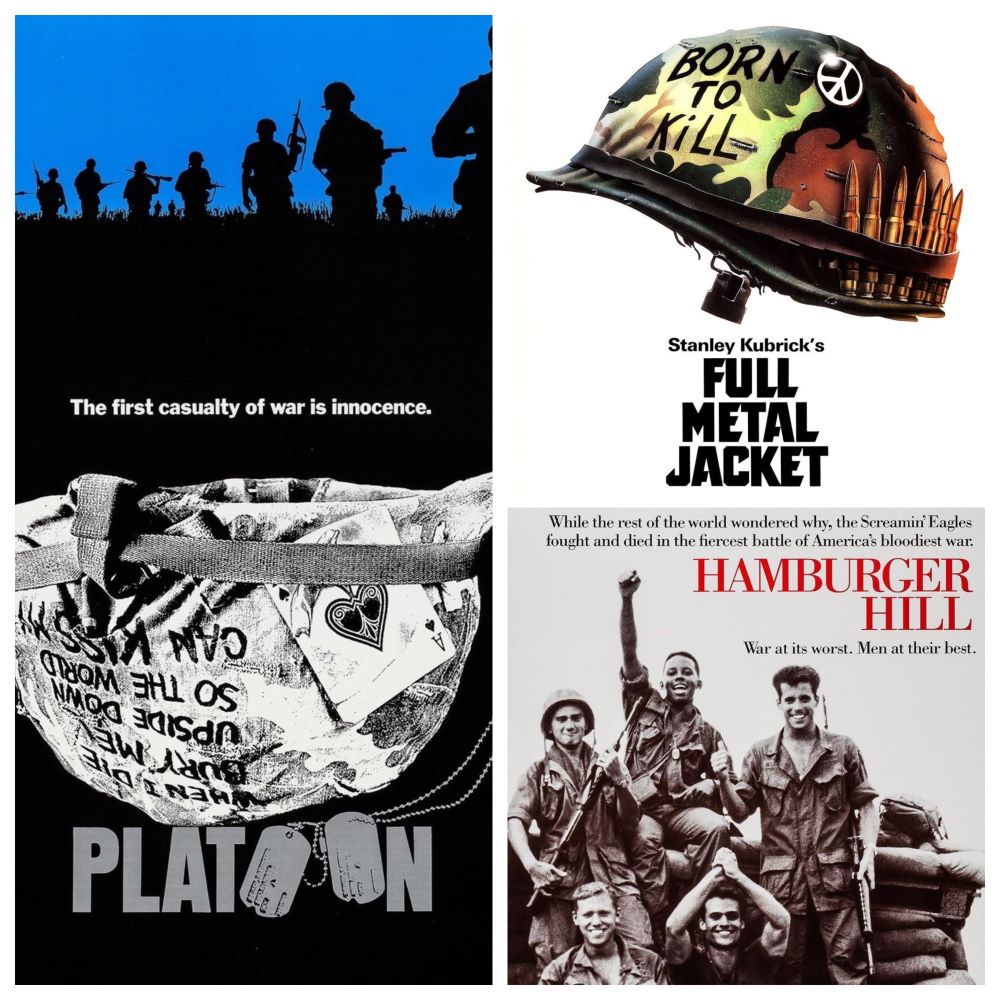
Between 1986 and 1987, American cinema gave us three tightly packed visions of the Vietnam War: Platoon, Full Metal Jacket, and Hamburger Hill. Released in rapid succession, these films all wrestle with the same historical trauma, but they do so in wildly different voices, rhythms, and moral registers. Together, they form a kind of triptych: one film leans into psychological moral chaos, another into ironic, machine‑like detachment, and the third into a quietly punishing realism that refuses to dress up the slaughter in metaphors. More than just their content, the way each film moves through its story is shaped entirely by the director’s fingerprint—Oliver Stone, Stanley Kubrick, and John Irvin—so the narrative flow of each movie becomes a direct extension of its directorial worldview.

The timing and the directorial context

The dates matter, because they show how a single era of pop culture could generate such divergent treatments of the same war. Platoon hit in 1986, right when Hollywood was trying to reframe Vietnam as a moral and psychological disaster, not just a geopolitical blunder. Then, almost as if the studios had hit “play” on a three‑channel experiment, Full Metal Jacket and Hamburger Hill both arrived in 1987. That tight window turns the comparison into something richer: same war, same decade, but three very different directors reordering the same raw material into different cinematic engines.

What’s even more interesting is that the three directors arrive with fully formed styles already in place. Stone, the veteran turned auteur; Kubrick, the perfectionist ironist; Irvin, the no‑frills dramatist—each brings his own choreography to the war, so the way each story unfolds matches the way each director thinks about power, systems, and the human body under pressure. That’s why, when you watch them back‑to‑back, the transitions feel organic: the emotional spiral of Platoon slides into the clinical detachment of Full Metal Jacket, which then hardens into the attritional grind of Hamburger Hill.

Oliver Stone and Platoon: an emotional spiral

Oliver Stone’s background as a Vietnam veteran inflects Platoon with a semi‑autobiographical, almost fever‑dream energy. The film doesn’t just tell a story; it feels like a memory returning in fragments, haunted by shock, guilt, and moral erosion. The narrative is built around Chris Taylor’s voice‑over, which acts less like exposition and more like a confessional diary. That choice gives the film a lyrical, almost jagged rhythm: quiet jungle moments bleed into sudden night attacks, tenderness collapses into atrocity, and moral clarity dissolves into confusion.

Because Stone thinks of war as a kind of moral purgatory, the story doesn’t march steadily toward a clear climax. Instead, it spirals. The Barnes–Elias conflict—brutal, pragmatic Barnes versus idealistic, wounded Elias—functions as a kind of internal compass for Chris, and the film’s pacing keeps snapping back to that moral tug‑of‑war. Action sequences are often disorienting, with overlapping sound, quick cuts, and long stretches of jungle unease, so the narrative feels less like a linear plot and more like a psychological collapse happening in real time. The whole movie feels like a descent that only slows down long enough for Chris to realize how far he’s fallen.

In aesthetic terms, Stone leans into handheld camerawork, natural light, and a gritty, almost documentary‑like texture, which makes the violence feel unfiltered and immediate. But it’s the emotional rhythm that’s most Stone‑ian: the film is never neutral. It wants you to feel the weight of each decision, each atrocity, and that emotional burden is coded into the editing and the pacing. So when the narrative moves from boot‑camp–like introduction to jungle chaos, it’s not just a setting change; it’s a shift into a darker, more volatile psychological state.

Stanley Kubrick and Full Metal Jacket: geometry and detachment

If Stone’s Platoon feels like a pressure cooker of emotions, Kubrick’s Full Metal Jacket feels like a cold, geometric diorama. The film’s narrative is famously bipartite: the first half is boot camp, the second half is Vietnam, and the shift between them is as abrupt as a switchblade. This structure doesn’t just happen to be there; it reflects Kubrick’s obsession with systems, control, and the way institutions prepare men for violence. The story doesn’t so much build as it compartmentalizes: each section is a discrete unit of dehumanization.

Kubrick’s directorial signature—tight symmetry, precise framing, and a wry, almost clinical camera—means that the narrative never settles into the raw, unsteady rhythm of Platoon. Instead, events feel staged, rehearsed, and ritualized. The drill‑instructor sequences play like a grotesque performance, where brutality is delivered in rhythm and repetition. Even when the film moves to Vietnam, it keeps cutting back to Joker’s voice‑over and to moments of ironic distance, so the story feels controlled, almost surgical. The famous “I am the Monster” line doesn’t land as a catharsis so much as a rehearsed line in a larger script, and that’s very Kubrick: the narrative refuses to offer a neat emotional arc. There’s no gradual hero’s journey, no tidy redemption.

The sniper sequence at the end may feel like a climax, but it’s really more of a microcosm: it condenses the film’s themes into one tight, brutal encounter. Conceptually, the narrative is more like a diagram than a journey, and that’s why it feels so natural that Full Metal Jacket follows Platoon in any viewing order. Where Stone’s film is all about internal collapse, Kubrick’s is about systemized violence, so the transition from spiral to schema feels logical. The aesthetics and the narrative are perfectly aligned: every composition and every cut reinforces the idea that war is a machine, and the men are its interchangeable parts.

John Irvin and Hamburger Hill: attrition as narrative

If Platoon spirals inward and Full Metal Jacket diagrams the machinery, Hamburger Hill simply grinds. John Irvin’s directing style is lean and actor‑driven, which means the film’s narrative is built around one real‑life battle—the assault on Hill 937 in the A Shau Valley—and the story basically becomes a relay race without a finish line. Irvin doesn’t reach for mythic symbolism the way Stone does, nor does he sculpt the war into a cold diagram the way Kubrick does; he just lets the hill devour the men, assault after assault.

The pacing is deliberately slow and physical, so the narrative feels less like a progression and more like an accumulation. The film lingers on the weight of the packs, the mud, the smoke, and the bodies stacked around the soldiers. There’s little in the way of elaborate visual flourishes or philosophical monologues; instead, the story keeps returning to the climb, the push, the retreat, and the regrouping. That repetition is the core of its storytelling: the film isn’t about a big reveal, but about the slow erosion of morale and the body’s limits.

In aesthetic terms, Irvin’s Hamburger Hill is stripped‑down: handheld shots, naturalistic lighting, and a focus on small, believable interactions between soldiers. There’s no overt symbolism hovering over the hill; just a convergence of stubborn orders, exhausted bodies, and the slow wearing‑down of the unit. The narrative feels like it’s being pulled forward by physical exhaustion rather than by psychological revelation, so the film’s rhythm is the one you’d expect from a unit that’s been told to “take it again” one too many times. In this sense, the director’s hand is most visible in the absence of embellishment: the story isn’t dressed up, it’s simply put through a meat grinder.

How the narrators shape the story

Each film also has its own kind of narrator, which alters the way the story flows. In Platoon, Chris Taylor’s voice‑over is the bloodstream of the film: it stitches together the chaotic action into a kind of moral confession. The narrative feels like it’s being filtered through his memory, so the pacing isn’t about strict chronology; it’s about emotional emphasis. In Full Metal Jacket, Joker’s voice‑over is cooler and more ironic, functioning less as confession and more as commentary. The film’s over‑voice creates distance, so the narrative feels like it’s being watched from the outside, even as it moves through intimate scenes. In Hamburger Hill, there’s no guiding voice‑over at all; the story is driven by the unit itself, by group dynamics and shared experience rather than a single pair of eyes.

That absence of a narrator makes the film feel more “collective,” so the narrative flows like a shared burden rather than a private reckoning. If you line up the three films, you can see how the narration evolves: Platoon gives you one man’s haunted monologue, Full Metal Jacket gives you a dead‑pan reporter’s voice, and Hamburger Hill gives you silence broken only by commands and gunfire. Each mode of narration pulls the story in a different psychic direction.

Structure, tone, and psychological design

Beyond the directorial fingerprints, each film’s structure gives it a different kind of spine. Platoon is the most traditionally dramatic of the three, even though it still feels raw and unstable. The story follows Chris Taylor’s descent into Vietnam and uses the Barnes–Elias conflict as a moral engine, giving the film a clear emotional axis. Even when the film feels episodic—raids, patrols, drug‑fueled downtime—it keeps snapping back to that central tension, so the narrative never fully loses its dramatic center.

Full Metal Jacket breaks free from that kind of unified arc altogether. The boot‑camp half is about the making of soldiers, while the Vietnam half is about the disintegration of everything those soldiers were taught. The film’s structure feels like a diptych because Kubrick wants you to see how the two halves talk to each other: the drills, the chants, the dehumanizing rituals all come back to haunt the men once they’re in combat. The sniper sequence condenses all of that into a single, brutal encounter, so the narrative feels like a series of boxes that, when opened, reveal the same underlying machinery.

Hamburger Hill has the most straightforwardly procedural structure. It doesn’t really spiral inward like Platoon’s moral descent, nor does it fracture into symbolic set‑pieces like Full Metal Jacket; it just keeps going. The story is anchored to a single objective—the hill—and the narrative returns to it over and over, each pass costing more lives and more sanity. That repetition is the core of its storytelling: the film isn’t about a big reveal, but about the slow wearing‑down of the unit as a collective body.

All of this shows up in how each film handles tone and psychological design. Platoon behaves like a psychological tragedy, where violence is an ethical test and every atrocity marks a turning point in Chris’s moral collapse. Full Metal Jacket operates more like a satire with a pulse, where violence is part of a system that has already turned people into functions. Hamburger Hill doesn’t really ask whether the soldiers are good or bad, enlightened or corrupted; it asks why they keep climbing the same damn hill. Thematically, the movie is about shared suffering, endurance, and the absurdity of trying to locate meaning inside a slaughterhouse mission. The narrative doesn’t privilege any one character’s epiphany; it spreads the weight of the experience across the unit, so the moral landscape feels diffuse and worn‑down rather than dramatically concentrated.

Violence, realism, and the final arc

Each director also decides what violence means in the story, which shapes the final arc. In Platoon, violence is moral theater: night raids, village atrocities, and the final confrontation between Barnes and Elias are framed as defining moments. The film behaves like a tragedy, where action reveals character and character collapses under pressure. The narrative circles back to these scenes, so the emotional arc feels like it’s being built on top of a foundation of shock and guilt.

In Full Metal Jacket, violence is more alienated and ironic. The first half turns cruelty into institutional theater, while the second half turns combat into fragmentation and shock. The sniper sequence is the film’s most intense set‑piece, but it’s also one of its coldest, because it’s framed as a ritual: the men perform their roles, repeat their lines, and then disengage. The narrative doesn’t really resolve; it just stops, which feels right for a film that treats war as a never‑ending system.

Hamburger Hill treats violence as exhaustion made visible. The hill itself is a passive, almost indifferent character: it keeps taking bodies without offering any higher meaning. Each assault costs more than it gains, and the film steadily strips away any illusion that heroism or sacrifice will redeem the effort. The narrative doesn’t pause to moralize; it just shows the cost in bodies, bandages, and broken faces, so the film’s tone feels more like a grim balance sheet than a philosophical treatise.

Final round‑up: one war, three cinematic engines

If you line them up in a viewing order that makes sense narratively, the sequence feels almost organic. Platoon introduces you to the war as a psychological and moral descent, with Stone’s direction bending the narrative into a jagged, emotionally charged spiral. Full Metal Jacket then reframes that same war as a machine, where Kubrick’s clinical distance and formal structure turn the story into a diagram of dehumanization. Finally, Hamburger Hill strips away both the myth and the diagram, leaving only the physical, grinding reality of a hill that keeps eating men.

In the end, these three films don’t just show different angles on the Vietnam War; they show how three very different directors—Stone, Kubrick, and Irvin—can reorder the same raw material into entirely different cinematic engines. Stone’s Platoon gives you the wounded soul of the genre, Kubrick’s Full Metal Jacket gives you the machine, and Irvin’s Hamburger Hill gives you the mud, blood, and repetition underneath both. Together, they form a kind of trilogy of approaches: spiral, schema, and slog. And that’s why, when you watch them in sequence, the transition from one to the next feels less like a jump and more like a steady, grim evolution of how war cinema learned to talk about the same nightmare.

Under the Moon’s Shadow: The Many Faces of the Modern Werewolf in Cinema


“Beneath the full moon’s gaze, the werewolf’s howl reminds us that the monster we fear most lives within.”

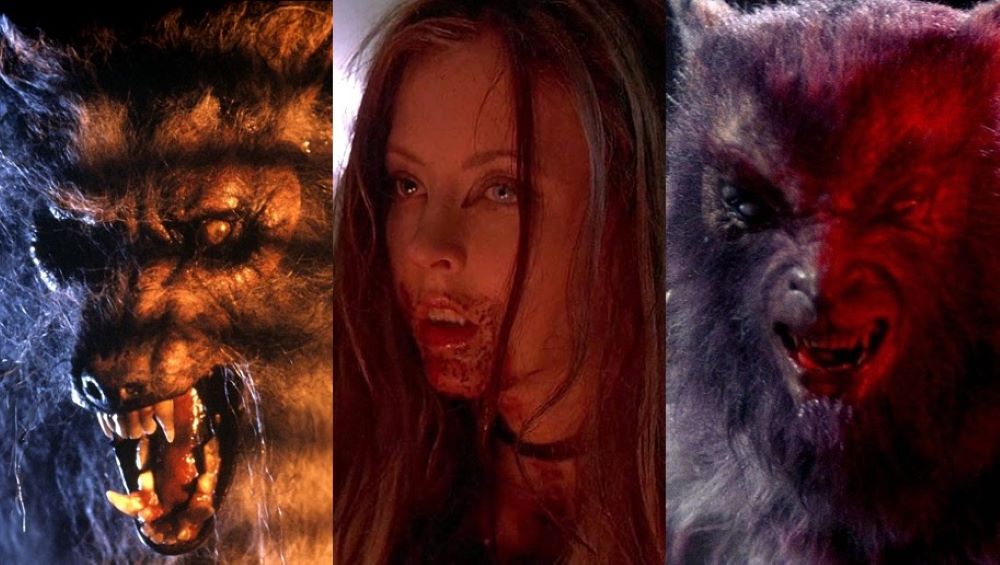
Werewolves have been haunting movies for almost a century, capturing our deepest fears and hidden desires. But today’s werewolf films go beyond the classic horror formula, offering fresh takes that reflect different genres, tones, and cultural vibes. From the intense, action-packed Dog Soldiers to the emotionally charged coming-of-age story in Ginger Snaps, modern werewolf stories keep evolving. This piece explores five standout films—Dog Soldiers (2002), Ginger Snaps (2000), Wolfen (1981), The Howling (1981), and An American Werewolf in London (1981)—to see how they each put their unique spin on the age-old monster myth.

The Werewolf as Warrior: Dog Soldiers’ Brutal Siege

Neil Marshall’s Dog Soldiers breaks away from the lonely, tragic werewolf trope and cranks up the action. Set deep in the Scottish Highlands, it throws a squad of British soldiers against a ferocious pack of werewolves. This film turns the myth into a survival war story packed with tension and raw energy, reminiscent of classics like Aliens and Zulu. The werewolves here aren’t lonely victims—they’re terrifying predators, more beast than man, rarely fully shown to keep the suspense sharp. The movie focuses on the squad’s fight to survive and the bonds they share, putting teamwork and instinct front and center.

The werewolves are intentionally faceless threats, less about human drama and more about pure danger. Instead of personal transformation, Dog Soldiers is about external combat, the struggle between man and beast in its rawest form.

Adolescence Unleashed: Ginger Snaps and the Lycanthropic Metaphor

Ginger Snaps takes a totally different route, using werewolf transformation as a metaphor for female puberty and all the confusing emotions that come with growing up. The bridge between monster and metaphor is Ginger’s first period, which triggers her curse and mirrors the changes and fears of adolescence. The movie digs deep into sisterhood, identity crises, and the loss of control, wrapping its horror in psychological drama and dark humor.

Instead of flashy creature effects, Ginger Snaps keeps things subtle, focusing on emotional truth. It’s a personal story about change and fear of becoming “other,” making the monster symbolic of real-life struggles rather than just an external threat.

Urban Shadows: Wolfen’s Mystical Guardians of Decay

Wolfen stands apart for taking the werewolf myth into the world of urban decay and social unrest. Set in New York City’s rundown South Bronx, it follows detectives chasing a mysterious “Wolfen” creature tied to Native American spirituality. These aren’t just monsters—they’re ancient protectors fighting back against the destruction of nature by the city.

This movie trades fast-paced horror for slow-building atmosphere and social commentary. It uses the werewolf myth to reflect on displacement, environmental trauma, and the clash between nature and modern life.

Satire and Savagery: The Howling’s Shifting Tones

Joe Dante’s The Howling mixes body horror, camp, and satire in a way few horror movies do. The film tracks a journalist who stumbles upon a hidden werewolf colony and shifts effortlessly between chilling scares and self-aware humor. The transformation scenes set a new standard with unforgettable effects, and the movie sneaks in sharp critiques of media culture and cult mentality.

The werewolves in The Howling have a raw, animalistic design inspired by medieval art, which adds to the unsettling vibe. The film plays with expectations, flipping between serious horror and playful camp to keep viewers on their toes.

Tragedy and Humor: An American Werewolf in London’s Genre Fusion

An American Werewolf in London changed the game by blending horror, comedy, and tragedy all in one. It tells the bittersweet story of an American backpacker cursed after a werewolf attack in England. The special effects were groundbreaking, making the transformation scenes legendary. But more than the effects, its mix of sharp wit and real sadness gives it an emotional depth rare for horror films.

Unlike the external threats in Dog Soldiers or Wolfen, this film focuses on the inner turmoil of becoming a monster and the tragic human cost. The humor lightens the mood but never undercuts the emotional punch.

Thematic and Stylistic Divergence: A Closer Look

What stands out most when looking at these films is just how differently each approaches the werewolf myth, using it to tap into a wide variety of fears and ideas.

Tone and Mood

The films differ widely in tone. Dog Soldiers is intense and gritty, pulling viewers into a tense battle for survival marked by an unrelenting external threat. In contrast, Ginger Snaps is more reflective and symbolic, presenting the werewolf as a metaphor for adolescent change and identity struggles, especially in the context of female puberty. Its tone is intimate and emotionally charged.

Wolfen adopts a slower, more brooding atmosphere, emphasizing mystery and social critique through ecological and urban decay themes. The Howling fluctuates between genuine body horror and camp satire, challenging viewer expectations with its mix of fear and humor. Finally, An American Werewolf in London balances horror and comedy with a tragic undertone, creating an emotional complexity that few other werewolf films achieve.

Narrative Focus

The stories told by these films further highlight their differences. Dog Soldiers centers on a group dynamic, focusing on survival against a faceless external menace. Ginger Snaps is more inward-looking, exploring personal growth, family bonds, and the emotional upheaval of transformation.

Wolfen zooms out to look at social and environmental issues, making the werewolf a symbol of nature fighting back against urban chaos. Similarly, The Howling blends personal horror with cultural critique, exploring media obsession and cult psychology, all while keeping the story focused on its characters. An American Werewolf in London chooses to dive deep into one man’s tragic journey, showing the emotional impact of becoming a monster.

Cultural Themes

Together, these films show how the werewolf myth can reflect whatever fears or themes society is grappling with. Dog Soldiers taps into worries about survival and overwhelming outside forces; Ginger Snaps gets at the confusion and pain of growing up; Wolfen reflects alienation and environmental concerns; The Howling examines media hype and societal madness; and An American Werewolf in London highlights inner conflict and loss.

This broad range of themes and styles proves the werewolf legend is still incredibly adaptable—still a powerful way for films to engage with human experience in all its complexity.

Other Modern Werewolf Films in Context

Beyond these main works, many other films contribute to the werewolf legacy. The Company of Wolves (1984) explores gender and sexuality through fairy tale visuals. Silver Bullet (1985) adapts Stephen King for a small-town horror tale. Joe Johnston’s The Wolfman (2010) revives gothic horror with modern effects and includes standout makeup work by Rick Baker, delivering a visually rich yet emotionally complex take on the classic. Mike Nichols’ Wolf (1994) uses lycanthropy as a metaphor for aging and desire.

Most recently, Leigh Whannell’s remake of The Wolfman (2024) offers a fresh perspective on the myth, blending psychological horror with visceral transformation sequences. Whannell’s version emphasizes the protagonist’s internal struggle and familial curses within a contemporary setting, melding suspense with a nuanced character study and updated special effects to appeal to modern audiences while honoring the gothic roots.

Adding a lighter touch is The Monster Squad (1987), where a group of kids face off against classic monsters—including a reluctant Wolfman—in a mix of horror, adventure, and youthful courage. Its playful tone offers a nostalgic, fun take on the werewolf legend, proving that these creatures can captivate across genres and generations.

Together, these films highlight how the werewolf myth keeps evolving, adapting to reflect new cultural moments and storytelling styles.

Conclusion: Why the Werewolf Still Howls

The lasting power of werewolves in cinema lies in their extraordinary adaptability. These films show how the werewolf morphs to fit different narratives and cultural concerns: from brutal external threats in Dog Soldiers to metaphors for personal growth in Ginger Snaps; from mystical protectors in Wolfen to symbols of media mania in The Howling; and from tragic heroes in An American Werewolf in London to youthful adventurers in The Monster Squad.

The werewolf is not just a monster of flesh and fur but a cultural shape-shifter—malleable, symbolic, and endlessly fascinating. Its transformations mirror not only physical change but societal anxieties, personal struggles, and the complexities of human nature. This versatility guarantees the werewolf’s howl will echo across cinema for generations to come.

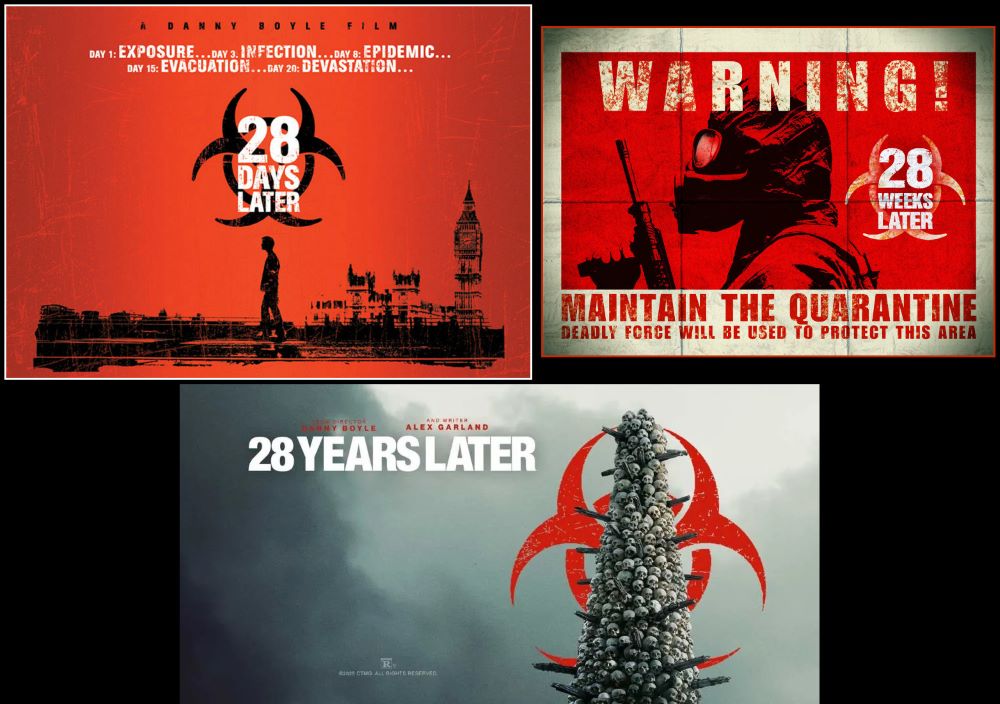
Rage, Ruin, and Redemption: The Evolving Horror of the “28 Days Later” Series


Raw Urgency and Psychological Horror in 28 Days Later

The original 28 Days Later broke new ground in horror filmmaking with its raw depiction of societal collapse fueled by a bioengineered rage virus. Danny Boyle and cinematographer Anthony Dod Mantle’s decision to shoot on early digital video cameras gave the film a distinct grainy, handheld aesthetic that enhanced the feeling of immediacy and disorientation. This style was pivotal in immersing the audience in the eerie emptiness of a London ravaged by infection and abandonment. The stark realism allowed viewers to viscerally experience the isolation and relentless threat surrounding the protagonists.

Unlike traditional zombie films that relied on the supernatural or undead creatures, 28 Days Later introduced infected humans whose fast, uncontrollable aggression metaphorically represented not just a physical virus but the eruption of primal rage and societal breakdown. The tension escalates beyond the infected themselves, focusing sharply on human nature’s darker side through the militarized faction led by Major West, whose corruption and moral decay pose threats as dangerous as the virus itself. This potent blend of external horror and ethical decay elevated the film into a profound exploration of survival, despair, and moral ambiguity in post-apocalyptic conditions. The film resonated deeply with early 21st-century anxieties about sudden disaster and social breakdown, marking a revitalization of horror that has influenced countless works since.

Expansion and Escalation in 28 Weeks Later: A Cinematic Allegory of Its Time

Five years later, 28 Weeks Later expanded the series’ scope significantly. Director Juan Carlos Fresnadillo shifted the narrative from personal survival to the complexity of institutional attempts at restoring order. The film’s polished 35mm cinematography reflected its larger budget and ambition, with expansive urban destruction, dynamic action sequences, and a broader focus on systemic chaos. The narrative unfolds against the backdrop of a militarized “Green Zone” in London, an unmistakable cinematic parallel to the fortified American-controlled zone in Baghdad during the Iraq War.

This allegory extends beyond setting: it captures the tangled failures and ethical dilemmas inherent in the military occupations of Iraq and Afghanistan. The film’s military forces struggle to differentiate friend from foe, ally from insurgent, mirroring the real-world complexities and frequent tragic mistakes of those conflicts. The virus and subsequent resurgence symbolize not only physical contagion but institutional and social rot—highlighting how the rage of war, betrayal, and corruption can infect governance and community trust. The film’s grim depiction of fractured family relationships echoes a society strained by war and occupation, portraying how betrayal and mistrust pervade all levels of social interaction. Through this lens, 28 Weeks Later critiques the hubris of militarized control and the illusion of security, underscoring the fragile, often illusory nature of civilization under stress.

The film’s slicker, high-production-value style distances the viewer somewhat from the intimate immediacy of 28 Days Later but serves its themes by creating a sensation of broad and relentless turmoil. Thematically, this sequel embraces a darker cynicism by portraying militaristic and bureaucratic responses to crisis as part of the problem rather than the solution, intensifying the series’ meditation on rage to encompass political and social failure as well as personal violence.

Reflection and Maturation in 28 Years Later: Evolution of Horror, Philosophy, and a Pandemic Mirror

Returning to the director’s chair decades after the original, Danny Boyle’s 28 Years Later marks a tonal and stylistic evolution that reflects not only the temporal distance from the initial crisis but also a deepening philosophical introspection. The film depicts a Britain still struggling under the long shadow of trauma left by the rage virus. Its infected are no longer iconic red-eyed figures vomiting blood but more mutated, less defined threats, symbolic of how trauma itself can evolve into something less visible but more pervasive.

Cinematographically, 28 Years Later blends moody, shadowy aesthetics with intimate, often handheld shots. Notably, the production’s use of modern digital technology, including iPhone cameras, allowed the film to maintain an intimate feel despite technological shifts. This stylistic choice reflects the thematic focus on memory, decay, and fragile attempts at normalcy. The film’s visual language speaks to a world where the horrors of the past persist beneath the surface, influencing human behavior and societal structures.

Importantly, 28 Years Later serves as a cinematic allegory to the global COVID-19 pandemic and its aftermath. In interviews, both Boyle and Garland acknowledged how the experience of living through the COVID crisis deeply informed the film’s narrative and tone. The pandemic effectively turned empty urban landscapes and daily precautions—once confined to dystopian fiction like 28 Days Later—into real shared experience. The film’s story of a society struggling to live with the virus, navigating quarantine zones and adapting to endemic conditions, echoes how the world has contended with COVID-19’s ongoing impact. Themes of risk, resilience, and generational divide are foregrounded: characters grapple with what it means to live “28 years later,” taking long-term risks even as uncertainties remain. This mirror between fiction and reality deepens the film’s resonance, showing how past speculative fears have become present-day lived realities.

The tonal shift to a more contemplative and somber horror reflects how the pandemic shifted global consciousness from immediate crisis to endurance and adaptation. The film acknowledges grief, loss, and the cultural memory of lives disrupted and taken. Notably, a character’s act of creating memorials to victims reflects real-world efforts to remember those lost to COVID-19, underscoring cinema’s role in processing collective trauma. While this evolution away from pure terror to introspection divides audiences—some missing previous visceral scares—it represents a mature reckoning with the lasting scars pandemics imprint on humanity.

Pandemic Parallels: The Trilogy as a Cinematic Allegory for COVID-19 and Endemic Realities

While each film in the 28 Days Later trilogy originally reflected the anxieties and socio-political contexts of its own era, together they now resonate profoundly as a prophetic allegory of the global COVID-19 pandemic and humanity’s ongoing struggle to live with viral threats as part of everyday life. The trilogy’s trajectory—from sudden catastrophic outbreak to institutional collapse to long-term trauma and adaptation—mirrors the historical arc the world has experienced with COVID-19, offering viewers insight into the psychological, societal, and cultural impacts of pandemics.

28 Days Later anticipated much of the early pandemic experience—fear of rapid contagion, empty cityscapes, social disintegration, and the terrifying vulnerability of individuals isolated amid a global crisis. Jim’s awakening into an eerily deserted London strikingly parallels the empty streets during COVID lockdowns around the world, turning what was once dystopian fantasy into frightening reality. The film’s exploration of panic, isolation, and distrust toward institutions echoes widespread experiences of confusion, fear, and uncertainty during the first months of the pandemic when COVID-19 was unfamiliar, unpredictable, and devastating.

28 Weeks Later deepens this pandemic allegory by portraying the consequences of failed institutional responses and attempts at control. The militarized “Green Zone” concept eerily parallels the real-world challenges of creating “safe zones” amid outbreaks, with tensions between enforcement, mistrust, and community survival. The film’s depiction of fractured families and systemic collapse reflects how social solidarity frays under the pressure of prolonged crisis, political distrust, and ethical quandaries surrounding public health measures experienced globally during COVID waves. The allegory isn’t just about physical infection but social contagion—fear, misinformation, and political polarization as viral threats themselves.

With 28 Years Later, the trilogy fully embraces its role as a cultural mirror to COVID-19’s enduring legacy. Danny Boyle and Alex Garland have openly discussed how the realities of the pandemic shaped the film’s narrative and tone, with characters navigating life decades after the outbreak under quarantine and endemic conditions. The film presents a world where viral infection is an ongoing condition to be managed rather than eradicated, reflecting how many experts now view COVID-19’s transition from acute pandemic to endemic presence. This shift from immediate horror to long-term social and psychological adaptation speaks to the global experience of living alongside risk and uncertainty, balancing caution with the human drive to reconnect and rebuild.

Visual motifs such as quarantine zones, memorial walls, and generational divides throughout the film underscore real-world pandemic realities about loss, resilience, and the passing of collective trauma. The story’s focus on a new generation born into post-virus society echoes global concerns about children’s—educational, emotional, and social—impacts during and after COVID. The film’s meditative tone reflects the world’s evolving understanding that recovery from a pandemic is neither swift nor purely scientific but deeply human, requiring reckoning with grief, memory, and ethical questions about care and sacrifice.

Together, the trilogy transcends traditional horror storytelling to become a cinematic meditation on humanity’s confrontation with biological catastrophe—capturing the terror of sudden collapse, the anguish of institutional failure, and the fragile hope of enduring and adapting to an altered world. In doing so, the 28 Days Later series offers both a chilling warning and a compassionate reflection on survival in an age defined by viral uncertainty.

Stylistic Evolution: From Gritty Realism to Reflective Sophistication

The trilogy’s visual evolution is a testament to the shifting thematic priorities and growing artistic ambition of the filmmakers. 28 Days Later’s raw digital aesthetic—with grainy textures and handheld immediacy—rooted the audience in the chaos of sudden societal collapse, pioneering an immersive and tangible horror. The decision to film real, unpopulated London streets added an authentic eeriness that fueled the film’s power.

With 28 Weeks Later, the move to 35mm film signaled a turn toward cinematic polish, spectacle, and scope. The expansive shots, precise lighting, and dynamic action sequences reflect the film’s thematic scale, portraying systemic collapse and institutional failure with cinematic authority. The surveillance-like camerawork amplifies feelings of observation and control that echo its allegorical engagement with military occupation themes.

28 Years Later rebalances styles, fusing intimate handheld shots with shadowy, atmospheric imagery, aided by modern digital filmmaking tools including smartphone cameras. This blend cultivates mood and emotional depth over traditional jump scares, visually representing a society haunted by trauma and in cautious recovery. The stylistic shift underscores the trilogy’s journey from immediate survival panic to measured reflection on long-term consequences.

Thematic Progression and the Metaphor of Rage

Rage is the fundamental metaphor animating the trilogy, but its form and focus evolve significantly. In 28 Days Later, rage manifests as an explosive primal force embodied in the infected—visible, aggressive, and terrifying, stripping away thin veneers of civilization to reveal instinctual violence.

28 Weeks Later expands rage to include institutional rot, betrayal, and the failure of governance. The infected remain threats but rage’s more insidious expressions appear in military violence, political cynicism, and fracturing communities. Rage becomes a societal contagion undermining cohesion as thoroughly as any virus.

28 Years Later shifts to a metaphor of inherited trauma and enduring wounds. Rage here is less overt but deeper—passed through generations in memory, ethics, and societal dysfunction. The virus and its mutated infected echo how psychological and cultural trauma evolve and persist, questioning humanity’s capacity for healing or self-destruction.

Characters and Emotional Depth: From Intimate Survival to Generational Reckoning

Character arcs reflect this thematic evolution. 28 Days Later centers on individual survival and fragile relationships formed amid chaos. Jim’s transformation from bewildered victim to protector provides audiences emotional grounding in a shattered world.

28 Weeks Later explores family ruptures wrought by betrayal and trauma, mirroring broader social breakdowns. Characters’ struggle with trust and loss enriches the narrative with psychological realism.

28 Years Later depicts survivors burdened by collective memory and ethical dilemmas, often across generations. Its characters wrestle not only with the immediate horrors but with legacies of violence and the search for reconciliation, offering psychological and moral complexity rare in horror narratives.

Cultural Impact and Legacy

28 Days Later transformed horror by replacing slow, supernatural zombies with fast, rage-fueled infected who symbolize contemporary fears about sudden collapse and human savagery. It revitalized a moribund genre and influenced popular culture globally.

28 Weeks Later expanded on this foundation with action spectacle and socio-political allegory, polarizing audiences but enriching thematic depth, especially with its projection of military occupation anxieties.

28 Years Later confronts the real-world pandemic experience directly, integrating cultural trauma into its narrative and style. It challenges genre boundaries by emphasizing reflection and resilience over instant terror, heralding a new phase for horror cinema aware of global trauma.

The Future of the “28 Days Later” Series: Continuing the Journey

Building on the foundation of its groundbreaking predecessors, the “28 Days Later” series is set to continue with two more films that promise to expand its intricate narrative and thematic depth. 28 Years Later: The Bone Temple, directed by Nia DaCosta and scripted by Alex Garland, is scheduled for release in January 2026. This film, shot back-to-back with 28 Years Later (2025), will deepen the post-apocalyptic exploration with returning characters and new threats, continuing the saga of trauma, survival, and societal collapse.

Additionally, a fifth film in the series is currently in development, though its title and release date remain unannounced. With Danny Boyle and Alex Garland involved in these projects, audiences can expect a thoughtful continuation that balances horror with reflective inquiry into humanity’s resilience. The return of Cillian Murphy as Jim further ties the new films to the series’ emotional origins, ensuring that the evolving mythology stays grounded in personal stakes.

As these future films approach, the 28 Days Later series remains ripe for ongoing critical and cultural re-examination, especially given its enduring power to mirror contemporary fears—from early 2000s anxieties to the global experience of the COVID-19 pandemic and beyond. The series stands as a dynamic, evolving reflection on rage, ruin, and the hope for redemption in an uncertain world.