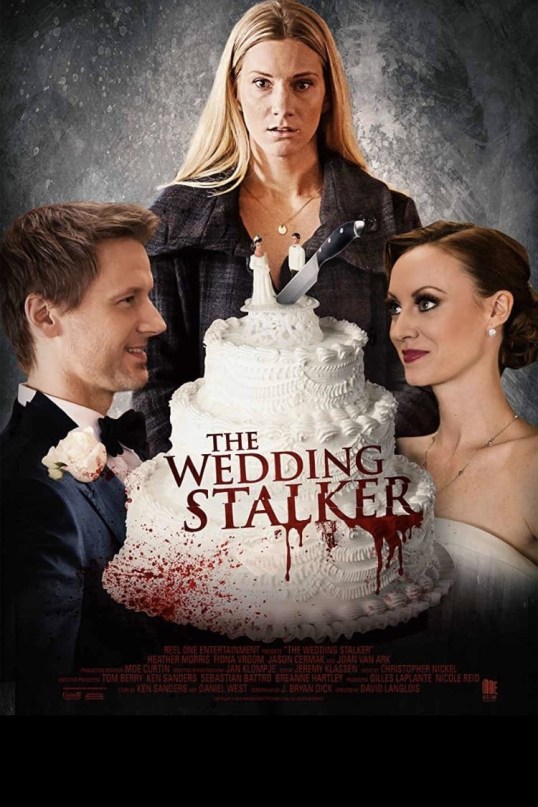
Hi, everyone! Tonight, on twitter, I will be hosting one of my favorite films for #MondayMania! Join us for 2017’s The Wedding Stalker (a.k.a. Psycho Wedding Crasher)!
You can find the movie on Prime and then you can join us on twitter at 9 pm central time! (That’s 10 pm for you folks on the East Coast.) See you then!
This song was one of my father’s favorites. I miss you, Dad.
He was a hard-headed man He was brutally handsome, and she was terminally pretty She held him up, and he held her for ransom in the heart of the cold, cold city He had a nasty reputation as a cruel dude They said he was ruthless, they said he was crude They had one thing in common, they were good in bed She’d say, ‘Faster, faster. The lights are turnin’ red.” Life in the fast lane Surely make you lose your mind, mm Are you with me so far? Eager for action and hot for the game The coming attraction, the drop of a name They knew all the right people, they took all the right pills They threw outrageous parties, they paid heavenly bills There were lines on the mirror, lines on her face She pretended not to notice, she was caught up in the race
Out every evening, until it was light He was too tired to make it, she was too tired to fight about it
Life in the fast lane Surely make you lose your mind Life in the fast lane, everything all the time Life in the fast lane, uh huh Blowin’ and burnin’, blinded by thirst They didn’t see the stop sign, took a turn for the worse
She said, “Listen, baby. You can hear the engine ring. We’ve been up and down this highway; haven’t seen a goddam thing.” He said, “Call the doctor. I think I’m gonna crash.” “The doctor say he’s comin’, but you gotta pay him cash.” They went rushin’ down that freeway, messed around and got lost They didn’t know they were just dyin’ to get off And it was life in the fast lane Life in the fast lane
Songwriters: Joseph Fidler Walsh / Glenn Lewis Frey / Donald Hugh Henley
Today, we wish a happy birthday to actor, director, and producer Warren Beatty.
In Alan J. Pakula’s 1974 film The Parallax View, Beatty plays a seedy journalist who goes undercover to investigate the links between the mysterious Parallax Corporation and a series of recent political assassinations. In the film’s most famous sequence, Beatty — pretending to be a job applicant (read: potential assassin) for the Parallax Corporation — is shown an orientation film that has been designed to test whether or not he’s a suitable applicant. The montage is shown in its entirety, without once cutting away to show us Beatty’s reaction. The implication, of course, is that what’s important isn’t how Beatty reacts to the montage but how the viewers sitting out in the audience react.
So, at the risk of furthering the conspiracy, here’s that montage.
4 Or More Shots From 4 Or More Films is just what it says it is, 4 shots from 4 of our favorite films. As opposed to the reviews and recaps that we usually post, 4 Shots From 4 Films lets the visuals do the talking!
Today, let’s celebrate the year 1959! It’s time for….
4 Shots From 4 1959 films
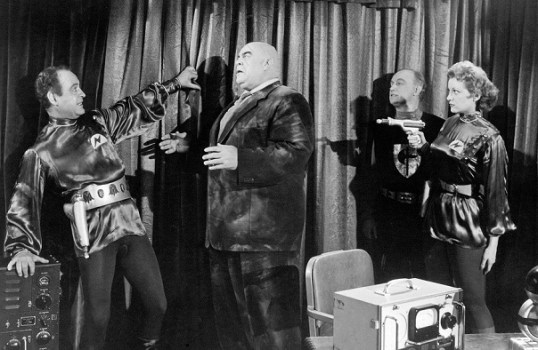
Plan 9 From Outer Space (1957, dir by Edward D. Wood, Jr., DP: William C. Thompson)
House on Haunted Hill (1959, dir by William Castle, DP: Carl E. Guthrie)
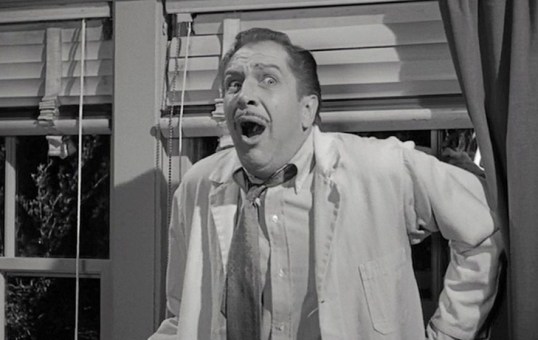
The Tingler (1959, dir by William Castle, DP: Wilfred M. Cline)
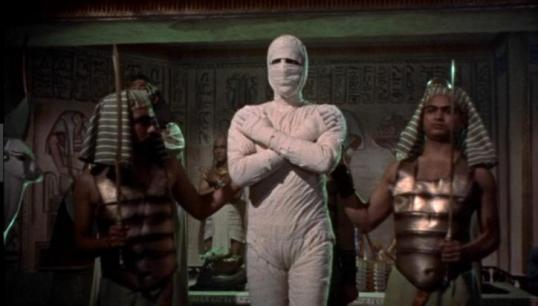
The Mummy (1959, dir by Terence Fisher, DP: Jack Asher)
As some of our regular readers undoubtedly know, I am involved in hosting a few weekly live tweets on twitter and occasionally Mastodon. I host #FridayNightFlix every Friday, I co-host #ScarySocial on Saturday, and I am one of the five hosts of Mastodon’s #MondayActionMovie! Every week, we get together. We watch a movie. We snark our way through it.
Tonight, for #MondayActionMovie, the film will be Starship Invasions! I picked it so you know it’ll be good.
It should make for a night of fun viewing and I invite all of you to join in. If you want to join the live tweets, just hop onto Mastodon, find the movie on YouTube, hit play at 8 pm et, and use the #MondayActionMovie hashtag! The watch party community is a friendly group and welcoming of newcomers so don’t be shy.
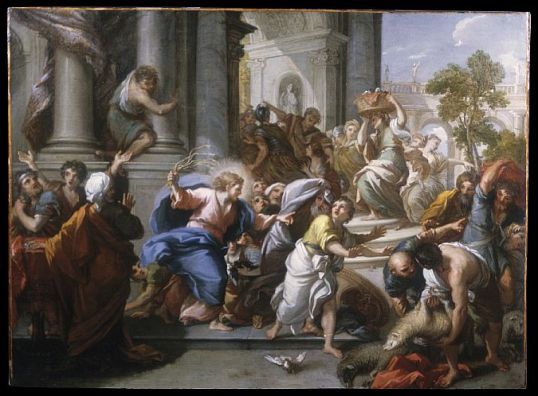
Painted in 1714, this painting depicts Jesus driving the money changers and the sellers of sacrificial animals out of the Temple. This painting currently hangs in the Walters Art Museum.
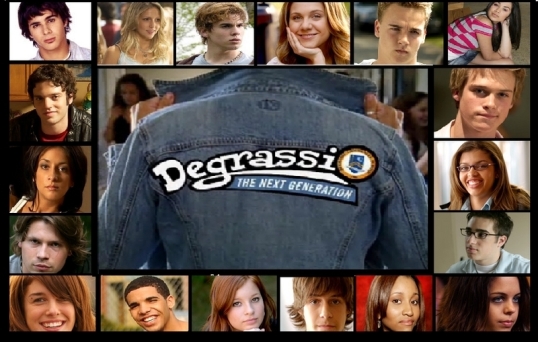
Welcome to Late Night Retro Television Reviews, a feature where we review some of our favorite and least favorite shows of the past! On Sunday, I will be reviewing the Canadian series, Degrassi: The Next Generation, which aired from 2001 to 2015! The series can be streamed on YouTube and Tubi.
Don’t watch this episode if you have a weak stomach.
Episode 2.9 “Mirror In The Bathroom”
(Dir by Paul Fox, originally aired on July 18th, 2003)
This is the one where Toby decides that the only way to get people to notice him in school is to join the wrestling team. However, when he discovers that he and Sean are in the same weight class (and there’s no way that Toby could ever beat Sean), Toby decides to lose a lot of weight in a very short amount of time.
Yep, this is the episode were Toby starts taking laxatives and throwing up his lunch.
Ugh. Yes, I know that eating disorders are serious. It’s nice that Degrassi did an episode about a guy doing something stupid instead of a girl. If there’s anything I get sick of, it’s the assumption that some people have that any woman who isn’t fat must have an eating disorder. Seriously, you can’t win. If you gain weight, you endanger your health. If you don’t gain weight, everyone assumes you’re throwing up everything you eat. This episode featured a guy struggling with body issues and I appreciated the change of pace.
That said …. ugh! Toby using laxatives! Ugh, ugh, ugh!
While Toby is losing weight, Terri is using her weight to get rich as a plus-sized model. Good for her, I guess. Terri’s kind of a boring character so, for now, it’s difficult to really care about her storylines. In season 3, she’ll start dating Rick Murray and everything will change. But we’ve still got a while to go.
Anyway, as always happens when someone gets an eating disorder, Toby ends up fainting in front of the entire school. He’s off the wrestling team but at least he’ll never take another laxative.
“To know the future is to be trapped by it.” — Leto II Atreides
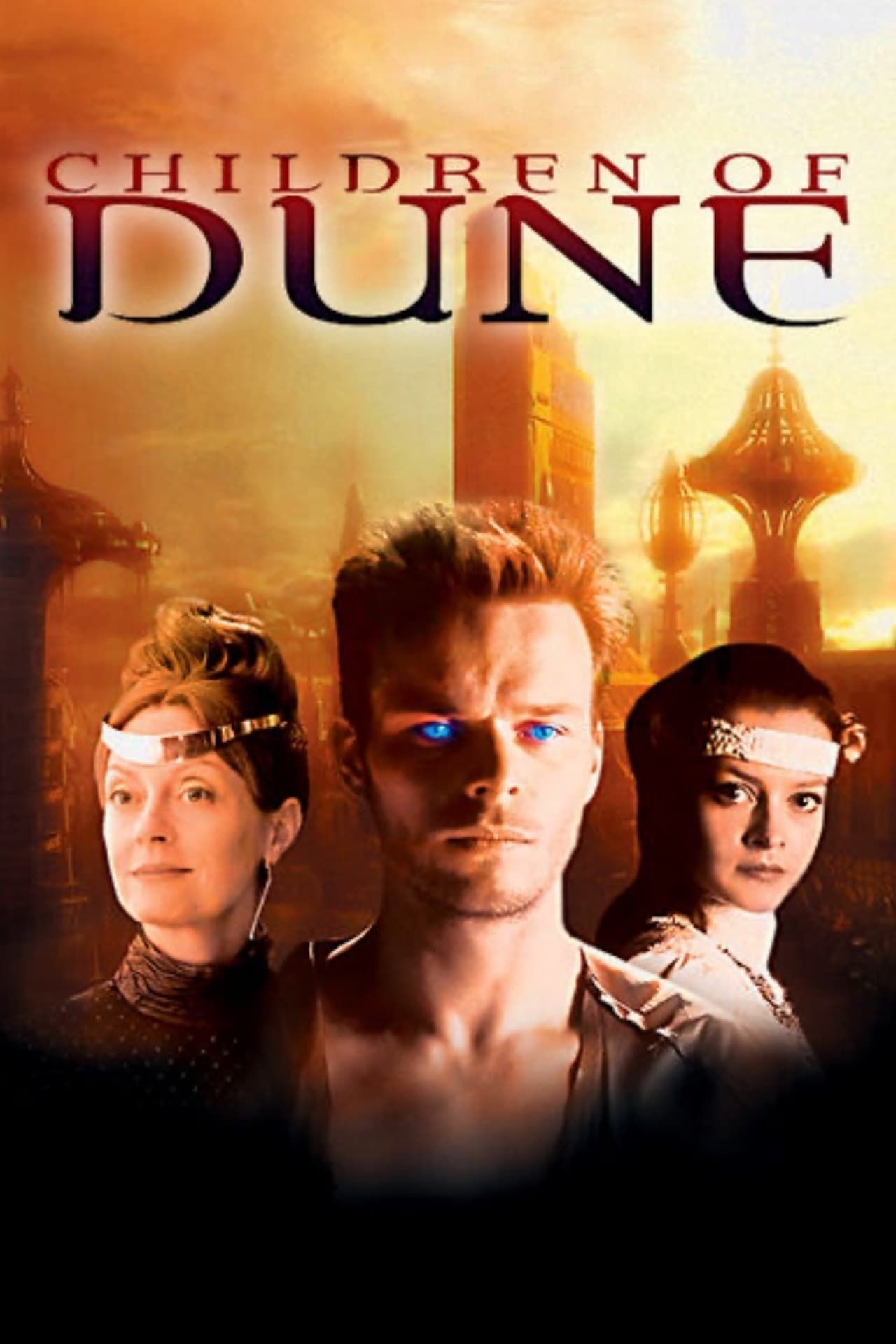
Children of Dune is one of those sci-fi miniseries that feels a little rough around the edges, but still manages to hit with real ambition, atmosphere, and a lot more emotional weight than its modest TV budget might suggest. It is based on Frank Herbert’s Dune Messiah and Children of Dune, aired on the Sci Fi Channel in 2003 as a three-part miniseries, and it serves as a continuation of the 2000 Frank Herbert’s Dune adaptation.
What makes this version stand out is that it doesn’t just try to retell a story about desert politics and giant worms. It digs into legacy, prophecy, religious fanaticism, and the terrifying cost of being treated like a messiah. That sounds heavy, and it is, but the miniseries keeps moving with enough drama, betrayals, and strange mythic energy that it rarely feels static.
The opening section works especially well because it immediately reminds you that Paul Atreides’ victory was never a clean one. By the time the story gets going, his empire is already rotting from the inside, and the series makes a strong case that power on Arrakis is always poisoned by something, whether it is politics, faith, or the sand itself. The shift from Paul’s once-legendary rise to the unraveling of the world around his children gives the story a tragic tone that fits Herbert’s universe perfectly.
A big reason the miniseries works is that it understands Dune is not really about flashy action, even though it has some. It is about ideas, and this adaptation is willing to spend time on them. The show’s best material comes from the way it frames religion as both weapon and trap, especially once the myth of Muad’Dib starts consuming the people who worshiped him. That theme gives the whole thing a haunted feeling, like everyone is living inside a prophecy they do not fully understand.
The cast does a lot of heavy lifting, too. Alec Newman brings a wounded, exhausted quality to Paul that fits the role well, and his scenes carry real sadness because he feels like a man who has seen too far and cannot unsee it. Jessica Brooks, James McAvoy, and Julie Cox all help ground the family drama, while Susan Sarandon brings a cold intensity that gives the political side of the story some bite. Even when the dialogue gets stiff, the actors usually sell the material better than the script itself does.
One of the most interesting choices in Children of Dune is how it treats the twins, Leto II and Ghanima, as more than just plot devices. Their importance is obvious from the beginning, but the series gradually builds them into the real center of gravity. That works because the story is partly about inheritance, and these kids are inheriting not just a throne, but a nightmare of destiny, expectation, and manipulation. The series knows that the most dangerous thing in this universe is not a blade or a bomb, but a future someone insists is already written.
The production design is another area where the miniseries earns a lot of goodwill. It has that early-2000s TV look, sure, and some effects are clearly limited by the era, but the sets, costumes, and overall visual imagination give it a strong sense of place. Arrakis feels harsh and ceremonial at the same time, which is exactly what it should feel like. The costumes also help sell the political divide between factions, making the whole thing look more like a living empire than a generic sci-fi stage.
There are moments where the miniseries feels very theatrical, almost to a fault. Characters occasionally deliver lines with so much seriousness that the show risks sounding like it is declaring its themes instead of dramatizing them. That said, this is also part of the charm. Children of Dune is not embarrassed by its own scale or its own weirdness, and that confidence helps it pull off material that could easily have collapsed under a more self-conscious approach.
The pacing is mostly solid across the three parts, though it does have the usual miniseries issue of compressing a very large story into a limited runtime. Because it covers most of Dune Messiah in the first installment and then adapts Children of Dune in the later parts, some transitions feel abrupt and some developments move faster than they probably should. Still, the adaptation largely keeps its focus, and it is impressive how much story it packs in without turning into total chaos.
If there is a weakness here, it is that the miniseries can sometimes feel like it is working harder to explain the mythology than to make you feel it. Herbert’s world is notoriously dense, and this version does not always smooth that out for viewers who are not already familiar with the books. A newcomer could easily feel like they have been dropped into the middle of a dynastic collapse with very little hand-holding. But for a follow-up to Frank Herbert’s Dune, that density is more of a feature than a bug.
The best compliment I can give Children of Dune is that it respects the seriousness of its material without becoming completely lifeless. It has the courage to be grand, strange, and a little mournful all at once. Even when the execution is uneven, the miniseries understands that the heart of this saga is not a simple battle for power. It is the burden of seeing the future and realizing it may be worse than the present.
As a sequel, it improves on the sense of scale and emotional consequence from the earlier adaptation. It feels less like an introduction to a universe and more like the tragic fallout of one. That makes it a more satisfying watch for viewers who want Dune to feel like an epic family tragedy instead of just a sand-covered political thriller. The fact that it does this on TV, with all the limitations that implies, makes the achievement even more impressive.
In the end, Children of Dune is a flawed but memorable miniseries that succeeds because it commits to its own strange seriousness. It may not be sleek, and it may not always be easy to follow, but it has ideas, mood, and a genuine sense of doom that suits Herbert’s universe. For fans of the books, it is one of the more interesting screen adaptations because it is willing to lean into the philosophical and tragic side of the saga rather than sanding it down into something safer. For everyone else, it is still a fascinating piece of early-2000s sci-fi television that swings bigger than most shows of its era.