
by Earle Bergey
This cover is from 1936.
by Earle Bergey
This cover is from 1936.
If the teacher in this video looks familiar, that’s because Nancy Parsons also played the famous (or infamous) Ms. Ballbricker in Porky’s.
Director Marc Reshovsky also directed videos for Poison, Lita Ford, and Skidrow. He was far more busy as a cinematographer than a director. As a cinematographer, he worked with basically everyone who was anyone. Ice Cube, U2, Van Halen, Whitney Houston, Seal, they are just some of the bands who worked with Reshovsky the cinematographer.
Enjoy!
Welcome to Late Night Retro Television Reviews, a feature where we review some of our favorite and least favorite shows of the past! On Sunday, I will be reviewing the Canadian series, Degrassi: The Next Generation, which aired from 2001 to 2015! The series can be streamed on YouTube and Tubi.
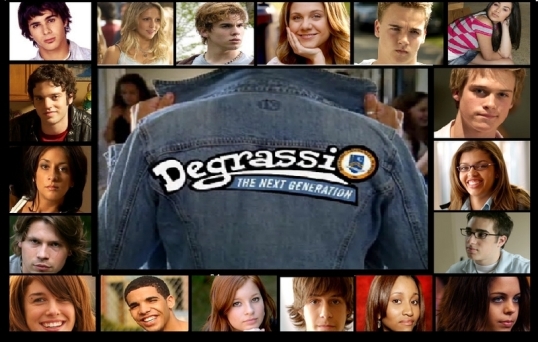
This week, Degrassi goes there.
Episode 2.20 “How Soon Is Now?”
(Dir by Eleanore Lindo, originally aired on February 9th, 2003)
After intensive therapy with the school’s counselor, Ms. Sauve (Jennifer Podemski), Paige convinces herself that she’s emotionally recovered from being raped by Dean. Paige says she doesn’t need any more therapy and she just wants to get on her with her life. However, when she discovers that Dean’s school will be coming to Degrassi for a basketball game, she starts to spiral.
Paige’s rape was one of Degrassi’s first “mature” storylines, in that it dealt with a controversial issue and it did so in a realistic way. Instead of simply wrapping things up after an episode or two, Degrassi stretched this storyline over several seasons and let it play out with an honesty that is rarely seen on television.. Instead of having Paige magically go back to being who she was before she was raped, Degrassi portrayed how Paige changed as a result of both the rape and her struggle to get justice. That the show did so realistically is a credit to both Degrassi and Lauren Collins’s portrayal of Paige.
One of the things that makes this episode difficult to watch is that Paige largely suffers alone. Only a few people know about the rape. A bitter Spinner still thinks that the encounter between Paige and Dean was consensual. When Dean does show up at Degrassi, it’s obvious that he feels no guilt about what happened and, soon, he’s even hitting on Manny. When Paige tries to warn Manny, Manny replies that Dean told her all about how crazy Paige is. It’s only when Paige tells JT about what happened that someone finally stands up for her. JT may just be the mascot but he doesn’t hold back when he attacks Dean on the court. Of course, JT is still JT so it’s not like he really does that much physical damage to Dean but it’s still gratifying to see. In fact, this is the first episode in which JT actually reveals himself to be something other than just the annoying class clown.
At the end of the episode, Paige tells Ms. Suave that she wants to press charges against Dean. Ms. Suave warns her that, with the amount of time that has passed, it’s going to be Paige’s word against his. Paige says she understands. I always want to applaud at the end of this episode, even though I know how things are going to develop.
As for the B-plot, Marco’s being a jerk. He and Ellie are working on a class project. They have to create an ad campaign for a fake cologne. Marco wants to do a “Bollywood thing.” Ellie wants to turn Marco into a sex symbol. Marco gets annoyed because Ellie hasn’t fully accepted that he’s gay and not romantically attracted to her. Hey, Marco — you’re the one who asked her to pretend to be your girlfriend so that you could stay in the closet so instead of getting mad at her, maybe think about what you’re putting her through!
Seriously, I get that Marco was a ground-breaking character at the time and I respect that, just as with Paige’s storyline, the show attempted to be realistic in its portrayal of Marco slowly finding the confidence to be his true self. That said, Marco could be really self-righteous.
But no matter. Even with Marco acting like Marco, this was an important episode. Degrassi went there.
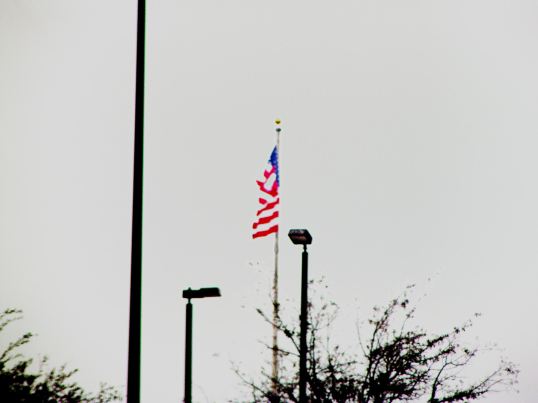
Flag (Erin Nicole Bowman, 2010)
I hope everyone had a great Flag Day!
Here’s what I watched this week:
Films I Watched:
Live Tweets:
4 Shots From 4 Films:
Scenes I Love:
Songs of the Day:
Artworks of the Day:
Music Videos of the Day:
Links From Last Week:
News From Last Week:
Links From The Site:
Welcome to Retro Television Reviews, a feature where we review some of our favorite and least favorite shows of the past! On Sundays, I will be reviewing Homicide: Life On The Street, which aired from 1993 to 1999, on NBC! It can be viewed on Peacock.
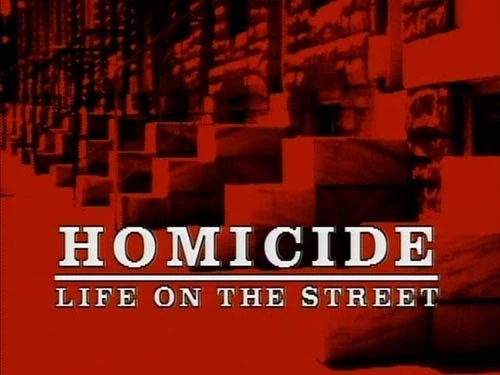
Luther Mahoney returns.
Episode 5.13 “Have A Conscience”
(Dir by Uli Edel, originally aired on January 17th, 1997)
Mike Kellerman is back on the job but he’s still angry. He’s angry that the U.S. Attorney didn’t officially announce that he had been cleared. He’s angry because he feels that his fellow detectives failed to support him when he was at his lowest. He’s angry because people like Roger Gaffney continue to assume that he’s guilty.
Given how angry Kellerman is, the last thing he needs to get stuck with another case involving the arrogant and apparently untouchable Luther Mahoney. However, that is exactly what Kellerman gets when an Asian shopkeeper is gunned down after trying to chase one of Mahoney’s crews off the corner. Everyone knows that Mahoney is behind the murder but, as always, there’s not enough evidence to take him down. Witnesses won’t talk. No one can connect Mahoney directly to the murder. While the smug Mahoney heads off to a fund raiser, a bitter Kellerman goes to his boat and considers suicide.
Fortunately, Lewis barges onto the boat and keeps Kellerman from shooting himself. This episode reveals a lot about Homicide’s less heralded pair of detectives. Kellerman is desperate for his father’s approval and he has a huge chip on his shoulder. Just the fact that anyone would even consider the idea that Kellerman would ever take a bribe is enough to set Kellerman off and Kellerman does not easily forgivce. Lewis, meanwhile, is still haunted by the death Crosetti.
The majority of this episode is just Lewis talking to Kellerman and Kellerman talking to Lewis. It’s not the most exciting episode of Homicide but it is wonderfully acted by both Clark Johnson and Reed Diamond. While Pembleton and Bayliss appear to be growing apart (with Bayliss spending most of this episode politely ignoring Pembleton while Pembleton solved one of his cold cases), Lewis and Kellerman are now even closer than they were before.
That’s a good thing. Luther Mahoney is still out there and, for whatever reason, Lewis and Kellerman seem to be the two detectives who always end up investigating Mahoney’s crimes. That’s a little hard to believe. With the number of people that Mahoney kills and the size of the Homicide division, you would think at least one Mahoney-directed murder would be investigated by either Munch or Pembleton. Regardless, Luther Mahoney is a great villain and I look forward to seeing where Kellerman’s obsession with taking him down is heading.
Finally, I hope this Pembleton/Bayliss estrangement won’t go on for too long. We just got Pembleton back and Pembleton was finally starting to accept that he could actually handle working with a partner. I get that Bayliss is upset but breaking up Pembleton and Bayliss just doesn’t feel right. They’re just meant to work together.
Happy Flag Day!
Today’s song of the day comes from the score of 1970’s Patton.
Today’s scene that I love comes from 1970’s Patton.
This scene, which occurs at the start of the film, won George C. Scott an Oscar …. which he refused to accept. Scott announced, even before he was nominated, that he wouldn’t accept the Oscar. One gets the feeling that probably made it all the more likely that he would win. To Scott’s credit, he did not send someone else to refuse the Oscar (and take the boos) in his place.
Would George Patton have refused the Oscar? Probably not.
4 Or More Shots From 4 Or More Films is just what it says it is, 4 shots from 4 of our favorite films. As opposed to the reviews and recaps that we usually post, 4 Shots From 4 Films lets the visuals do the talking!
Happy Flag Day! It’s time for….
4 Shots From 4 Films For Flag Day
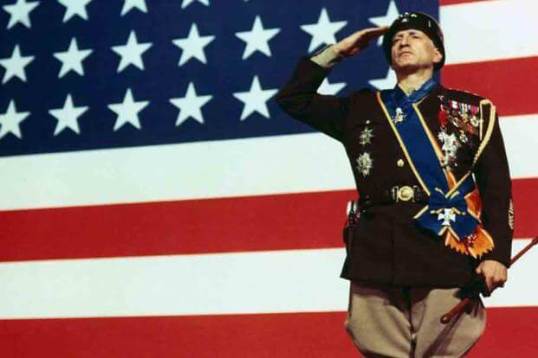
Patton (1970, dir by Franklin J. Schaffner)
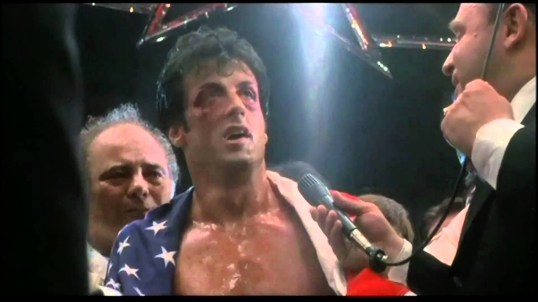
Rocky IV (1985, dir by Sylvester Stallone)
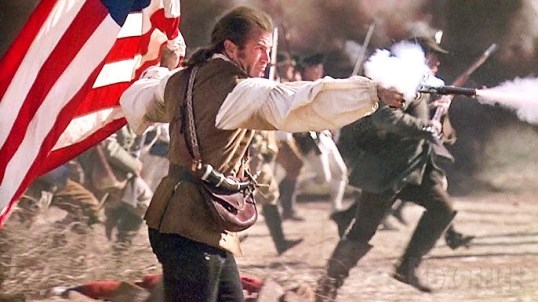
The Patriot (2000, dir by Roland Emmerich)
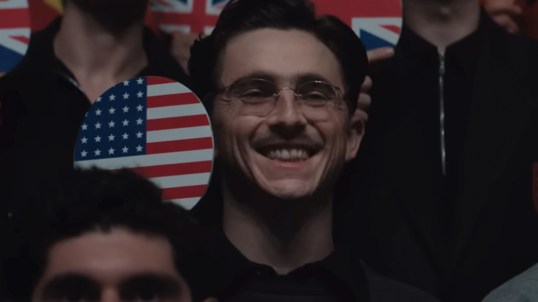
Marty Supreme (2025, dir by Josh Safdie)

by Erin Nicole
Happy Flag Day!
This song and video comes from Megadeth’s final album. Dave Mustaine may have retired but it’s good to see that he went out doing what he did best.
Enjoy!

