
Here to help you get into the holiday spirit is Vincent Price, reading Edgar Allan Poe’s The Raven. This scene comes from a 1985 television special that was called The Teller and the Tale.
Here to help you get into the holiday spirit is Vincent Price, reading Edgar Allan Poe’s The Raven. This scene comes from a 1985 television special that was called The Teller and the Tale.

1958’s War of the Satellites opens with a tragedy.
The United Nations is leading the way in humanity’s attempt to explore space. Unfortunately, ten manned spaceships (or “satellites” as they’re called in this film) all run into the same problem. There’s a “space barrier” around the Earth, one that traps any ship that flies into it. On Earth, Dr. Pol Van Ponder (Richard Devon) is forced to remotely blow up both the ships and the UN’s astronauts. It looks like the the UN’s space program is coming to an end.
Or, at least, it does until an unseen group of aliens drop a missile on Earth. The missile, when it’s discovered by two “teenagers” who appear to be in their 30s, doesn’t explode. Instead, it simply carries a message. Don’t try to explore space, the message says. A group of snooty aliens have decided that humanity is not ready to leave the planet. The message is read at the UN. In a scene that warmed my heart, the American delegate replies that no one tells humanity what to do. The aliens don’t want us in space? Well, guess where we’re going, baby!
(Woo hoo! I love my country!)
Unfortunately, Dr. Van Ponder is in a serious car accident and is killed. Or, at least, that’s what everyone believes until he shows up at the UN without a scratch on him. Van Ponder explains that he miraculously survived the accident and he’s now ready to lead the UN mission into space. The UN takes his survival as a sign that Van Ponder is meant to take humanity to the stars.
Of course, the truth of the matter is that Dr. Van Ponder actually was killed in that accident and the man at the UN is not Van Ponder but instead just an alien pretending to be him. A few people notice that Dr. Van Ponder is acting strangely. He speaks without emotion and uses curious phrases. When he burns his hand during an experiment, he barely seems to notice. When he’s alone in his office, he creates a second duplicate Van Ponder so that he can be two places at once. Everyone who suspects that Van Ponder is actually an alien ends up dead. Once the satellite takes off, it falls to crewman Dave Boyer (Dick Miller) to not only thwart Van Ponder’s evil scheme but to also convince Sybil Carrington (Susan Cabot) that Van Ponder is no longer the man who she thinks she loves.
Reportedly, a day after the Russians launched Sputnik, Roger Corman met with film producer Steve Broidy and said that, in return for $80,000, he could have a satellite movie ready to go in 90 days. Broidy asked him what the film would be about and Corman replied, “I don’t know but I will have the picture ready.” Broidy handed over the money and Corman shot War of the Satellites over the course of ten days. Corman also said that Broidy was so impressed with the film that he gave Corman an extra $500 to throw a party for the cast and crew. Corman never threw the party.
As for War of the Satellites, it clearly a rush job. The interior of the space ship is basically two rooms and a couple of chairs. The idea of the UN having a space program feels ridiculous today and I imagine it probably felt just as ridiculous in 1958. (We should have kicked the UN out of New York decades ago) That said, I have to admit that I really enjoyed this film. Richard Devon gives an appropriately off-center performance as Dr. Van Ponder and this film actually features Dick Miller in a rare heroic starring role. Even though he’s playing an astronomer, Miller still comes across like a New York wiseguy and my favorite scenes are the one where he gives Van Ponder a look that just seems to shout, “What are ya talking about, ya putz?” There’s something really enjoyable about watching scrappy Dick Miller play the type of role that would usually go to someone like Peter Graves or Kenneth Tobey. In an interview, Miller said that he felt miscast as the hero because he was only 5’5 while Devon was 6’1. But the fact that Devon is actually so much taller than Miller only makes us rooft for Dick Miller even more. As played by Dick Miller, Dave Boyar becomes the type of underdog that you can’t help but cheer for.
The best thing about this film is that it loudly declares that no one, no matter how scientifically-advanced or snooty, gets to tell humanity what to do. You want us to stay on Earth? We’re coming for the moon!
No one puts us in a corner.
I used to love storms.
Living in Texas, you eventually get used to the long and dry summers, but it’s still always a good feeling when it starts to rain again. Up until two years ago, I got excited whenever I saw that we were under any type of weather alert. I loved the sound of the rain. I loved the way the wind howled. I even loved the thunder and the lightning. Sometimes, the lights would blink and the power would go out, but it didn’t bother me because it just added to the atmosphere.
That all changed on the night of May 27th, 2o24. I was already feeling anxious because my father was in the hospital. On Sunday, he had been in a car accident and, when I went to the hospital, he seemed like he was going to be okay. He had a broken shoulder and was obviously tired, but he was speaking normally and, when he saw me, he said he was happy to see me. He smiled, I remember that. A nurse told me that they were going to keep him for the night for observation. On Monday morning, I drove back to the hospital and, when I arrived, he was basically passed out in his bed. When I asked another nurse if he would be ready to go home anytime soon, she looked at me like I was asking a crazy question. I remember another nurse saying something about “rehab.” They promised me that a doctor would call. I went home. It turned out that they weren’t lying. A doctor did call that evening. He said my father was having trouble walking. I explained that he had Parkinson’s. The doctor said he would email me some information on the rehab centers that worked with my father’s insurance. “So,” I dumbly asked, “he’s not going home tonight?” The doctor laughed and said, “No, it’s going to be a while.”
At 9:00, I lay down on my couch and, exhausted, I fell asleep. I didn’t even bother to take off my clothes. I woke up at four in the morning to the sound of thunder and rain and howling wind. I tried to turn on the living room light, just to discover that the power was out. I stood up, stubbed my toe on an end table, said the F-word as loudly as I’ve ever said it, and then I limped over to the front door. I looked outside and the scene was apocalyptic. Rain was falling in sheets, the streets were flooded, and there were tree limbs strewn everywhere. A few trees had fallen over. The ones that still stood were violently swaying in the wind. I immediately thought of the stray cats that I fed every morning. Stupidly, I opened the front door to yell for them and I was immediately drenched.
By 7 in the morning, the rain was steady but light. I saw that Hunter and Hannah, who lived across the street from me, were outside, looking at the storm’s aftermath. I stepped outside, waved, and started to walk towards them. They saw me limping so they told me to stay where I was and came over to me. They asked me if Erin and I were okay. They told me that power was out all over town and that, when they called Oncor, they were told there was no estimate on when it would come back. We stood there and we looked up and down the block. Everything was wet. The road was so full of limbs that it appeared to be practically impassable. Trees had fallen over. Some people had broken windows. My own front door was sitting slightly off of its hinges.
(Don’t worry. Despite all the damage, the strays showed up to ask for food.)
I assumed that we would have our power back by the end of the day. Instead, the power was out for six days. It fell to the people living in the neighborhood to clean up the debris. (Even after the power came back, it would still be nearly a month before city clean-up crews got to us.) I saw a lot of really impressive things during those six days. Jeff helped to clean the streets and also helped our older neighbors with their fallen trees. Erin Nicole went to the store for people who couldn’t make it there on their own. As for me, I worried. I worried about everything. Several times, I tried to call the hospital to check on my father and all I got was some vague talk about how he had been moved to a different room. Meanwhile, the rain continued to fall. Sometimes, it was a drizzle and sometimes it was a shower, but every time it was a reminder of how little control I had over anything.
Eventually, the power came back. All of the debris was cleared. The rain stopped. My father was transferred from the hospital to the rehab center and then to home hospice, where he died two and a half months later. Ever since that week, there’s been a part of me that’s gotten anxious whenever I’ve seen that there’s a storm coming. It just brings back too many bad feelings.
A storm was predicted for October 1st this year and I was nervous. What if the power went out? What if I couldn’t contribute to this year’s Horrorthon? Well, I’m happy to say that the storm turned out to be a gloriously beautiful and rather peaceful rain shower. Sometimes, it was a heavy shower and sometimes it was a light shower, but there was a gentleness to it. I spent most of Thursday afternoon lying in bed in a comfy t-shirt and underwear, looking out the window and watching as the trees slowly and rhythmically swayed. The sound of the rain was relaxing and, as I listened to it, I remembered how much I loved the rain when I was growing up. And I realized that I still do.
It was the perfect start for October.
Previous Moments:

Produced by Mick Garris, Fear Itself was an attempt to bring the Masters of Horror format to network television. Each week, a different director would present a tale of terror. The series aired on NBC. 13 episodes were filmed but only five were broadcast before the show was put on hiatus for the 2008 Summer Olympics. The Olympics eventually ended but Fear Itself never returned.
The first episode of Fear Itself featured Jesse Plemons as one of four criminals who finds themselves holed in an isolated fort with three mysterious women. The women are not what they seem and the criminals soon find themselves fighting for their lives.
The Sacrifice first aired on June 5th, 2008. It was directed by Breck Eisner, who went on to direct the 2010 remake of The Crazies.

First released in 2020, Slashlorette Party is a decent indie slasher. It isn’t totally successful, but it deserves credit for respecting the rules of the genre while using those rules to explore something more than the usual hacking and slashing. This is a film that never apologizes for being a slasher, and I appreciated that. I’m tired of horror movies made by people who think they’re better than the genre. At the same time, this is a film that not only has blood on the floor but thoughts in its head. There’s something to be said for that.
Molly Souza plays Brie, who is engaged to Dolph (Andrew Brown). The wedding is just around the corner, but there’s one big problem: Brie has just realized that she doesn’t really like Dolph that much. In fact, Dolph is such a jerk that he almost feels like a parody of the bad boyfriend who always shows up in romantic comedies so the sweet, sensitive guy will look even better as he encourages the female lead to dump him. (Strangely, no one ever asks, “What did you ever see in someone like that to begin with?”) Brie’s therapist (Ginger Lynn Allen) thinks Brie should consider ending the engagement. Meanwhile, Brie’s friends Alexa (Brooke Morris) and Nia (Nina Lanee Kent) want her to stay engaged at least long enough for them to throw her a bachelorette party at a remote cabin in the woods. You know who else loves parties in remote cabins in the woods? Homicidal maniacs!
Slashlorette Party is about more than just people being murdered in the woods. Absolutely no one in the film seems to believe that Brie should marry Dolph. Dolph is such a jerk that even when Brie disappears in the woods, he responds by sitting around and drinking a beer. Brie can barely stand Dolph, but she feels that she’s obligated to marry him because he asked and that otherwise she’ll run the risk of being forever single. Meanwhile, Dolph and his friends spend their time talking about how easy they believe women have it compared to men. In their worldview, all women are teases and all men are victims. (Ironically, the dumbest and most outspoken of the men actually does end up getting teased by one of the women shortly before getting his hand cut off by someone who is even more misogynistic than he is. His prediction of being both teased and victimized comes true, even if he’s too stupid to appreciate it.) When the deaths occur, they feel like a commentary on incel self-pity. Brie and her friends are targeted because of the male gaze. The men fall victim because they’re too hopelessly whiny and beta to defend themselves.
Slashlorette Party is a low-budget indie horror film. At first I didn’t have much hope for it. It seemed like just another movie that would feature a lot of bad acting and maybe some semi-decent gore. For the first half, the pace does feel off, and I spent a lot of time wondering if anyone was actually going to die. In the second half, though, things pick up. There are a few memorably bloody deaths. There are a few interesting twists. It becomes obvious that the film is meant to be more than a typical wilderness slasher. There’s some bite to the dialogue. There’s a funny joke about a male stripper who shows up as a policeman and finds himself stumbling onto a real crime scene. When the film started, I thought Dolph was too much of a lout to be believed, but the movie has a few surprises up its sleeve when it comes to his character. It ends with a final twist you will either love or hate. I always appreciate a film that’s willing to risk being hated.
I’ve been to enough bachelorette parties that I could relate. It isn’t really a bachelorette party until at least one person has said something they shouldn’t have and the bride-to-be is locked in the bathroom having a panic attack. If nothing else, this film captures the feeling of a bunch of people realizing their friend is about to make the biggest mistake of her life and deciding to throw a party to celebrate.

In an alley in the middle of a big city, a junkie puts a human-sized mirror on the ground so that he can snort one tiny line of cocaine. Suddenly a disturbing image is reflected in the glass: a young woman (Tracy Rankin) plunges to the ground and crashes straight into the mirror. The mirror is shattered. So is the woman. The cocaine? Presumably it’s scattered to the wind. There’s probably a lesson for us all there.
So starts Psycho Scarecrow, a surprisingly enjoyable shot-on-video horror film from 1996.
The woman is named Sheila Murphy. When two detectives (Tim Vince and Joe Parro) arrive at Sheila’s apartment, they debate whether she committed suicide or was thrown to her death. The veteran detective thinks it is a clear case of suicide. It’s late, and he just wants to wrap up the investigation and go home. The younger detective, however, insists that they listen to the message Sheila tape-recorded before her death.
The rest of the film switches back and forth between the past and the present. Sheila’s final message tells the story of how she and her friends decided to go camping for the weekend and, after their car broke down, ended up spending the night in a cornfield. When one of the friends was accidentally killed, they decided to cover up the death by dressing him up as a scarecrow and leaving him in the field. Unfortunately, the field was cursed. Soon Sheila and her friends found themselves being stalked by a heavy-set scarecrow that had a pumpkin for a face. He also rides a motorcycle.

Psycho Scarecrow took me by surprise. This is a low-budget, shot-on-video horror film that actually features clever dialogue, a lot of atmosphere, and a villain who should be silly but is actually pretty creepy. Psycho Scarecrow pokes fun at the conventions of the horror genre while also showing that it understands how to use those conventions to tell an effectively spooky story. It plays out like a story you might hear while sitting around a campfire, or maybe in your living room when a storm is raging outside and the electricity is out. (Sheila’s taped narration definitely helps as far as that’s concerned.) It’s a story that will occasionally make you roll your eyes or even laugh, but it’s still told effectively enough that you’ll look over your shoulder before walking off on your own.
What makes this film so effective is that the filmmakers obviously understood the limitations of the shot-on-video (SOV) genre and, instead of being imprisoned by those limitations, used them to their advantage. The majority of the film is shot at night. Actually shooting at night is a dangerous thing. I’ve seen so many SOV films where the night scenes were so dark that you couldn’t even see what was happening on screen. (There’s a reason Hollywood developed the day-for-night shot.) In Psycho Scarecrow, the night scenes are dark but still lit enough that you can actually see who is in the scene. The background darkness becomes a character of its own. Characters emerge from and disappear into the darkness, and we’re always aware that there could be anything hiding in the shadows.
I assume the cast was made up of amateur and local actors, but everyone does a good job of bringing their characters to life. Even the scenes with the two detectives don’t slow down the action, and it’s hard not to smile at how the veteran detective refuses to accept that Sheila was murdered despite all of the evidence his partner easily uncovers.
Ultimately, what makes the film work is its rural atmosphere, which is both intriguing and ominous at the same time. Watching the film, I was reminded of the times I’ve spent in the country. I remembered walking through fields of high grass in shorts and a T-shirt and freezing in place because I heard what sounded like a snake slithering nearby. I remembered stopping to use my inhaler and trying not to think about how easy it would be for someone or something to hide behind the round bales of hay that decorated the landscape. I remembered the feeling that anything could be out there. It was scary and exciting at the same time.
Psycho Scarecrow is an enjoyably creepy SOV production. It’s the type of film that deserves to be rediscovered this Halloween.

Let’s give some credit to the Amityville franchise. It simply does not stop.
In November 1974, 23-year-old Ronald DeFeo Jr., a heroin user, murdered his entire family in their home at 112 Ocean Avenue in Amityville, New York. After realizing no one was going to buy his original claim that the Mafia killed everyone but left him alive, he eventually said a demon had possessed him. Some people believed that story because some people will believe anything that involves demonic possession.
A family called the Lutzes moved into the Amityville murder house, lasted a few weeks, then fled and claimed they’d been haunted by the same demons that drove DeFeo to kill. It was a stupid story, but it fed the 1970s obsession with the apocalypse and demonic possession. That was the decade of The Exorcist and The Omen. A “non-fiction” novel was published and became a bestseller. In 1979 a movie was made and became a hit. In the years since, there have been dozens upon dozens of films with “Amityville” in the title. Some are actual Amityville films. Most are generic low-budget horror that just borrowed the name. What they all have in common is the claim that DeFeo was possessed by Satan and that the Lutzes weren’t lying about the house being haunted. If there really is an Amityville Demon, it’s probably furious by now. These films do not make it look good.
In 2024’s Amityville A.I., Stuart Birdsall (William Childress) is the latest person to move into a house in the Amityville area. (It doesn’t appear to be the original house, though a few shots suggest they share the same attic windows.) Stuart is developing an A.I. and he’s convinced he’ll get the work done in the new place. Unfortunately the house is possessed, and soon so is his program. Even worse, the demon starts possessing the other electronic devices in the neighborhood. Stuart’s neighbor owns a sex doll that is soon running around saying, “Do you want to have sex?” while flashing a knife.
Amityville A.I. mixes demonic possession with the current moral panic around artificial intelligence and data centers. To be honest, Stuart’s A.I. doesn’t seem particularly practical. Its name is VIC 3000 and it is clearly riffing on HAL 9000 from 2001: A Space Odyssey. Setting Vic up means lugging around a lot of bulky equipment. There are several scenes of Stuart staring at diagrams on his laptop, and it’s never quite clear what any of it has to do with VIC or why anyone would pick VIC over the other A.I. options out there. Perhaps that’s why the demon starts messing with him. Hubris, not artificial intelligence, will be the downfall of .… well, it feels a bit too dramatic to say humanity. How about Amityville? Hubris will be the downfall of Amityville.
That said, I actually enjoyed Amityville A.I. It’s a low-budget movie that looks like a low-budget movie, but it commits to the bit. The sight of Stuart being chased by a psychotic, smiling sex doll belongs in the Amityville Hall of Fame. Whether it’s the demon, the A.I., or just his own twisted mind, Stuart is put through the wringer, and the film does tap the fear a lot of people have right now: that A.I. is both convenient and destined to destroy us.
If the first Amityville film’s message was that you should just leave the house, this one suggests you should consider disconnecting. Good luck with that.
Previous TSL Amityville Reviews:
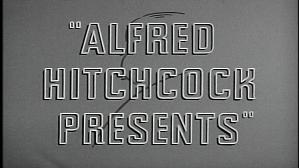
71 years ago today, Alfred Hitchcock Presents premiered on CBS. Produced and hosted by Alfred Hitchcock, this series featured stories of suspense and real-life horror and set the standard for the anthology shows that followed.
Revenge, the first episode, was directed by Hitchcock himself. Elsa Spann (Vera Miles) is a housewife who is recovering from a mental breakdown. When a man breaks into her home and assaults her, the police struggle to come up with any leads. Elsa’s husband, Carl (Ralph Meeker), takes Elsa on a vacation to try to help her heal. While they’re driving through town, Elsa spots a man in a gray suit and says that he is the man who attacked her. Carl stalks the man and then murders him, beating him to death in a motel room. Later, while driving through another town, Elsa spots another man and says that he was the one who attacked her. Carl realizes that he may have murdered an innocent man. He turns himself in to the police and goes to jail while Elsa is sent to a mental asylum.
When I was a kid, one of the local stations used to air a nightly block of Alfred Hitchcock Presents and The Twilight Zone. I think I was ten or eleven when I first saw Revenge and it made such an impression on me that I still haven’t forgotten it. The scariest thing about this episode? The man who attacked Elsa and started all of this was probably still out there, walking free.
Alfred Hitchcock Presents ran for ten seasons. It all started 71 years ago, on a night in October.
Previous Moments In Television History:
 John Henry Irons (Shaquille O’Neal) is one of the Army’s top weapons designers but, after a malfunction at a demonstration leads to the death of a senator and the crippling of Irons’s closest friend, Sparky (Annabeth Gish), Irons resigns and goes to work at a steel mill. Irons wants nothing more to do with violence and destruction, but then he discovers that a former colleague, Nathaniel Burke (Judd Nelson), has set himself up as an arms dealer and is selling Irons’s weapons to the local street gangs. With the help of Sparky and his Uncle Joe (Richard Roundtree), Irons descends into the local junkyard and returns with a clanky suit of armor and an electromagnetic hammer.
“Hammer time!” Irons announces.
“I love the shaft!” Uncle Joe says.
Now known as Steel, Irons sets out to save Los Angeles from Judd Nelson.
Steel is a good example of what comic-book movies used to be like. In DC Comics, John Henry Irons was a steelworker who became a hero when it appeared that Superman had been killed by Doomsday. He wore a cape in honor of Superman and fought to keep Superman’s ideals alive. In the movie version, Steel is a former weapons designer who doesn’t wear a cape and looks really silly in his clunky suit of armor. The special effects are noticeably cheap and the villain’s plan is simplistic. Burke wants to sell weapons and, coincidentally, he does it in the same neighborhood his former coworker moved to. Watching the movie, I had to keep reminding myself that this was actually released in theaters. (I saw it in a theater!) The whole thing has a made-for-TV feel.
Of the cast, Richard Roundtree gives the best performance and appears to be having a good time as Uncle Joe. Judd Nelson is hammy as the villain, but that’s the way the role was written, and at least Nelson didn’t try to pretend Steel was something it wasn’t. Shaquille seems to be trying really hard as Irons. Shaq has never been a great actor, but he’s got enough natural likability to carry him through. Unfortunately, he looks ridiculous in the armor. In a comic book, donning a costume is what transforms an average person into a superhero. But Shaq is already 7’1″, so the costume doesn’t even feel necessary. Just give him the hammer and let him call himself Thor.
Released at the same time as Batman & Robin, Steel was a box-office bomb and contributed to the general feeling that, unless a film featured Batman or Superman, the public didn’t care about comic-book movies. Three years after Steel came and went, the first X-Men film would prove the doubters wrong.
 The year is 2036 and the world is at war. Col. Flemming (Troy Donahue) assigns his protégé, Major Agatha Doyle (Terry Farrell), to infiltrate a facility with a group of specially selected soldiers. All of the soldiers were previously on death row and will be given a full pardon if they complete their mission. Siegal (Corey Feldman) is the neurotic hacker who was convicted of desertion. Cutter (Trevor Goddard) is a straight-up psycho. Ryan (Rick Springfield) wishes he had Jessie’s Girl… no wait, he’s a demolitions expert. Sorry, my mistake. Dr. Jones (Audie England) is a doctor who is also a religious fanatic. Koosman (Richmond Arquette) is probably on death row for having an embarrassing name. Captain Aldrich (Parker Stevenson) is the most competent officer on death row and also the only one of the soldiers who isn’t a complete lunatic. Poe (Elston Ridgle) is the soldier who initially gets blamed when members of the team start dying inside the facility. It’s actually not Poe’s fault. There’s something in the facility and it’s not human.
Though the movie starts out as a rip-off of Aliens, with its collection of cocky soldiers coming up against an enemy that’s greater than all of them, it soon settles into being an Alien rip-off, with plenty of scenes of people being stalked while walking down dark, pipe-lined hallways. Not surprisingly, it fails to capture both the kinetic energy of Aliens and the heart-pounding suspense of Alien. The entire film feels very familiar, and the decision not to show the monster until the final few minutes feels cheap.
The cast is probably the most interesting thing about the movie, with Audie England, Rick Springfield, and Trevor Goddard actually committing to their roles. Parker Stevenson looks embarrassed, and Terry Farrell is one of the least convincing military officers that I’ve ever seen. (Her dialogue largely consists of shouting “MOVE!” whenever one of the convicts tries to get out of being sent to their death.) Corey Feldman overacts as Siegal, making him so nervous that you wonder why he was selected for the mission.
Legion steals the plots of Alien and Aliens but not the quality.

