Film Review: Valley of the Dolls (dir. by Mark Robson)


(Photograph by Erin Nicole Bowman)

(Warning: This review contains spoilers.  A lot of them.)

Last week, I posted a poll and I asked you, the Shattered Lens readers, which film I should watch on March 20th and then subsequently review.  You voted and the winner was the classic 1967 trashfest, Valley of the Dolls.

Based on a best-selling (and trend-setting) novel by Jacqueline Susann, Valley of the Dolls starts out with a disclaimer that informs us that the story we’re about to see is totally fictional and purely imaginative.  That disclaimer is probably the funniest part of the entire film as Valley of the Dolls is notorious for being one of the first films dedicated to showing middle America just how miserable and screwed up those famous show business types truly are.  As such, the main reason for watching a movie like this is so you can sit there and compare the cinematic troubles of a character like Neely O’Hara to the true-life troubles of an actress like Lindsay Lohan.  Valley of the Dolls tells the story of three aspiring stars who, as they find fame, also find themselves dealing with heartbreak, insanity, and dolls.  No, not the type of dolls that my mom used to collect.  These “dolls” are a bunch of red pills that do everything from keeping you thin to keeping you awake and focused.  (Though the pills are never actually called anything other than “dolls,” they appear to be the same pills that I take for my ADD.)   

The least interesting of our three heroines is Anne Welles (Barbara Parkins).  Unfortunately, Anne is also pretty much the center of the rather draggy first hour of the film.  Anne is a walking cliché, a naive girl from a small town in New England who moves to New York, gets a room at the Martha Washington Hotel for Women, and a job at a local theatrical agency.  “I want to have a marriage like mom and dad…but not yet!”  Anne breathlessly tells us.  Anne eventually ends up as the mistress of Lyon Burke (played by Paul Burke), a writer-turned-theatrical-agent who you know has to be a cad because his name is Lyon Burke and he takes Anne’s virginity but then refuses to marry her afterward.  Anne eventually becomes a model and finds fame as the face of Gilligan Hairspray but she soon finds herself forced to watch as her two best friends travel down a path of self-destruction.

Anne is the film’s token “good girl” and, as such, she’s rather bland and boring.  However, her character is interesting when considered as a symbol for the confused sexual politics of the time.  Valley of the Dolls was made in 1967, at a time when Hollywood was still trying to figure out how to deal with the emerging counter-culture.  The end result? A lot of rather old-fashioned films that were full of jarringly out-of-place counter-culture moments.  By the time Valley of the Dolls came out, it was allowable to acknowledge that a single girl might actually have sex but she still had to, at the very least, feel an unbelievable amount of angst about it.  That certainly is the case with Anne.  Watching the film today, it’s hard to understand just what exactly Anne’s feeling guilty about.  Lyon isn’t married.  Anne finds success even as she pursues her relationship with him.  Up until the final half of the film (at which point the morality of the time demands that both Anne and Lyon suddenly start acting totally out-of-character), Lyon treats her with about as much respect as you could probably expect to get from a man in the 1960s.  And yet, Anne can’t feel complete simply because Lyon is hesitant about marrying her.  When she and Lyon finally do make love, they do it with the lights off so the only thing the viewer sees are two shadowy figures holding each other.  Following the film’s logic, if the lights had been left on, the character of Anne would have had to have been punished later in the film for allowing the audience to see too much of her.

When Anne first comes to New York, she befriends two actresses.  The more tragic of the two is Jennifer North (played by Sharon Tate, who would be tragically murdered two years after this film came out), an insecure blonde who is valued more for her body than her talent.  Jennifer spends her spare time doing bust exercises (“To hell with them!” she declares at one point as she glares down at her chest, “Let ’em droop!”) and dealing with phone calls from her mother, demanding that Jennifer send her money.  Jennifer eventually ends up marrying a singer named Tony (played by Tony Scotti).  Tony is a well-meaning if simple-minded guy who is married to a creepily overprotective sister (played by Lee Grant).  Eventually, it turns out that Tony has a neurological disease and he’s eventually checked into a sanitorium.  Penniless, Jennifer goes France and makes “art films.”  (In one of Valley of the Dolls’ better moments, we’re shown a clip of this “art film” and it turns out to be a pitch perfect satire of every single pretentious soft-core film to ever come out of Europe.)  Upon returning to America, Jennifer discovers that she has breast cancer and, declaring “All I’ve got is my body,” she commits suicide.

Though Sharon Tate gets considerably less screen time than her co-stars, she probably gives the strongest performance in this film.  Certainly, her story is the most emotionally effective (even if it’s hard not to feel that, as is typical of the films of both the 60s and today, Jennifer is being punished for taking off her clothes on camera).  Tate perfectly captures the insecurity that comes from being continually told that you have nothing more to offer beyond how you look.  In her first appearance, she’s wearing an outrageously large headdress.  “I feel a little top-heavy,” she says.  “You are a little top-heavy,” some guy replies while leering at her breasts.  If you doubt that Sharon Tate was a good actress, just watch her reaction.  She perfectly captures a pain that I personally know far too well.  Her subsequent suicide scene, which has the potential to be the most tasteless part of this film, is actually the most powerful and again, it’s because Tate plays the role perfectly.

(It’s been nearly four years since I lost my mom to breast cancer and I have to admit, I had a hard time watching the scenes where Jennifer discusses her diagnosis.  Tate gave a great performance here and it’s a shame that she’s been permanently linked in the public imagination with Charles Manson and the later accusations against her husband, Roman Polanski.  She had real talent.)

As poignant of Sharon Tate was in her role, the film’s fame (and infamy) ultimately rests with our third heroine, Neely O’Hara (played by Patty Duke in a performance that suggests that she was literally possessed during the filming).  Neely is a scrappy, aspiring singer who is fired from a broadway show when her singing threatens to upstage aging star Helen Lawson (played by Susan Hayward, who was brought in to replace Judy Garland).  Neely, however, refuses to let anything keep her  down and soon, she’s singing at a Cystic Fibrosis telethon and becoming a big star.  She marries her boyfriend Mel (played by Martin Milner, who grits his teeth and spits out every line) and moves to California where she soon becomes a big star and then finds herself hooked on “booze and dolls.”  (“I need a doll!” she insists on several occasions.) 

One reason the film’s 2nd hour is so much more fun than the first is because the film’s focus shifts from boring Anne to out-of-control Neely.  Increasingly temperamental and unstable, Neely soon starts to spend all of her time with dress designer Ted Casablanca (a great name, if nothing else.)  “You’re spending more time than necessary with that fag Ted Casablanca,” Mel tells her to which Neely replies, “Ted Casablanca’s no fag and I’m the dame who can prove it.”  This, of course, leads to a divorce and soon Neely is living with Mr. Casablanca who informs her, after he gets caught cheating, “You made me feel as if I was queer…that little whore makes me feel 9 feet tall.”

When Lyon and Anne attempt to force Neely to enter a sanitorium, she responds to running off to San Francisco where she enters a bar and shouts, “I’M NEELY O’HARA!” before then wandering down a sleazy street and ranting, “Boobies, boobies!  Nothing but boobies!  Who needs them!?”  Needless to say, this leads to her eventually overdosing and ending up in that sanitorium where she has a huge freak-out before singing a duet with Tony and resolving to get her life back in order.  This, naturally, leads to her getting released, having an affair with Lyon, and then returning to Broadway where, in the film’s most deliriously odd moment, she steals Helen Lawson’s wig and flushes it down a toilet.

Valley of the Dolls is, admittedly, a terrible film but it’s also a lot of fun and that’s largely because of Patty Duke’s berserk performance as Neely O’Hara.  Earlier, I said that Duke’s performance appears to suggest that she may have been possessed but, honestly, that barely begins to describe it.  Whereas Tate managed to find some truth in the film’s melodrama and Parkins gives a performance that suggests that the script put her in a coma, Duke attacks every inch of melodramatic dialogue, barking out her dialogue with all the ferocity of a yapping little chiuaua.  Duke gives a performance that is so completely and totally over-the-top that it’s hard not to respect her commitment to capturing every overheated, melodramatic moment.

I have to admit that one reason why I love this film is because I’m hoping that someday some enterprising director will remake it and cast me as Neely O’Hara.  Everytime I watch this film, I find myself thinking about how much it would be to respond to every petty annoyance by screeching out, “I’m NEELY O’HARA!”  Seriously, just think about it.  As a character, Neely is a talented, ambitious, emotional, unstable, immature, demanding, bratty, spoiled, and determined.  Sound like anyone whose film reviews you might have been reading recently?  From my previous experience as a community theater ingenue, I can assure you that I can deliver melodramatic dialogue with the best of them and, unlike Patty Duke in this film, I can actually dance.  Unfortunately, I can’t carry a tune to save my life but I’m thinking maybe they could bring in Kelly Clarkson to serve as my singing voice.  (Or maybe Jessica Simpson.  Did I ever mention that we both went to the same high school?  Though not at the same time, of course.) After all, if Patty Duke could be obviously dubbed, why not me?  I can just see myself now, wandering down some sleazy city street, singing to myself and declaring at the top of my lungs, “Ted Casablanca’s no fag and I’m the dame who can prove it!”  I know that Lindsay Lohan will probably insist that this is the role she was born to play, but seriously, who needs Linsday when you’ve got a Lisa?

Beyond the so-bad-that-its-good appeal of the film, Valley of the Dolls is a fascinating cultural artifact for the reasons that I previously hinted at while talking about the character of Anne Welles.  Valley of the Dolls was made in 1967 and, as such, it’s a perfect exhibit of an unstable time when Hollywood was unsure about whether it should embrace the “new morality” or if it should continue to recycle the same sort of old-fashioned filmmaking that had nearly bankrupted the big studios.  The result was several films that felt oddly schizophrenic in their approach and that is certainly the case with Mark Robson’s direction of Valley of the Dolls.  Whether it’s the way the film continually hints at nudity and sex while carefully not revealing too much or the way that random psychedelic sequences seem to suddenly appear on-screen, this is a movie that perfectly captures an uncertain film industry trying to figure out where it stands in a scary new world.

As always, I enjoyed watching this undeniably bad but just as undeniably compelling film.  Our readers chose well!  Thank you to everyone who voted and I hope you’ve enjoyed reading this review almost as much I enjoyed writing it.

(Photograph by Erin Nicole Bowman)

Criterion Collection Viewing: Week 1


So I have not posted in a while. Mainly because I was without a laptop for about two months, but also because I have not watched anything recently worth reviewing or discussing. That was until last week when I decided to subscribe to Hulu Plus to access their large  selection of Criterion films. For those that might not have heard of the Criterion Collection, it is a DVD/Blu-Ray distribution company that acquires, restores and beautifully packages “classic”, “important”, foreign and American films with a focus on art-house and hard to find releases. I’ve been a fan for quite some time and recently had an urge to explore their collection more deeply, which has led to this post and hopefully more to come.

————————————————

“The Cranes Are Flying” is a visually dazzling, humane and emotional war drama about a girl struggling to survive during WWII as her boyfriend is on the front lines and communication with him is lost. This might sound like a story ripe for melodrama and clichés but instead it is very delicate and sincere. The development of the relationship between the young lady, Veronika, and her boyfriend, Boris, is handled so well and their chemistry so deep that when they are apart and when thing take a turn for the worst the pain and heartbreak feels all too real.

What truly made me fall in love with this film, beyond that touching and humane story, was just how exceptionally well crafted the film itself is. The visuals are at times stunning and the camera work, cinematography and crane movements are superb. It is one of those films that is the total package, delivering on an emotional, technical and storytelling level unlike most films made today. A definite must see.

“El Sur” is a lyrical and often haunting portrait of alienation, dislocation and the often un-remarkability of being human. Its story is seen through the eyes of a young girl named Estrella who is living with her family in northern Spain after the Spanish Civil War. We watch, in an almost mystical but utterly mesmerizing fashion as she begins to mature and realize truths about the world around her. The most shocking, and the one that plays the biggest role in her development has to do with her father who we learn comes from a deeply troubled past and is filled with pain. Like Victor Erice’s other film, “The Spirit of the Beehive” (one of my top fifteen favorite films of all time), it all plays out in a rather delicate manner and because the world we see is one through the eyes of a child it is often surreal and enigmatic. This is all handled with fantastic direction by Erice whose brilliant use of natural light and granulation adds a special touch to the visuals and tone. It definitely is a wonderful film and perhaps a new favorite.

*An interesting, albeit sad, fact about “El Sur” is that Erice had planned an additional 90 minutes to be added to the end of the story but the producers wouldn’t allow it. Luckily the final result was still near perfect and ends on a very fine note. The film is also apparently very hard to find, even Criterion has not released it but luckily was able to offer it for streaming. I do hope it gets a restored release sometime soon.

“Knife in the Water”, Roman Polanski’s first feature film, is a competently directed chamber piece about a couple who pick up a young hitch hiker and take him along as they go sailing out on a lake. Polanski seemed to have had some social themes he wished to address but personally I felt none of them really came through, and since their isn’t much in the way of thrills or humor the result was a rather boring affair that ended with no new insight or entertainment to be had. I guess I’d recommend it to those interested in seeing the first film of Polanski’s career, but other than that I doubt I’ll ever find myself considering watching it again.

“Umberto D.”, Vittorio De Sica’s neorealist tale of a pensioner struggling to get by, is an emotional depiction of the human condition, solitude and dignity. It stars Carlos Battisti, non-professional actor and university professor at the time, as Umberto Domenico Ferrari who after decades of civil service is left struggling to get by off of the small pension he receives. He has no family, and lives under the roof of a cruel landlady who wants him out. His only friend is his dog Flike, though he does have a good relationship with the landlady’s young maid.

The story begins as Umberto’s time in his apartment is nearing its end and unless he can pay his rent he will be evicted and left with no place to go. With a pension too small to make up for this debt he must sell his possessions for money and refuses to beg on the streets. When things do not seem to be going his way Umberto considers more drastic measures to escape his unhappiness and plight. It all builds up to a very sad, but also inspiring ending that nearly left me in tears.

Like De Sica’s other and perhaps more well known film “Bicycle Thieves”, the story appears rather simple on the surface but its examination of such universal and emotional themes is what makes it so profound. “Umberto D.” avoids melodrama and sentimentality in its portrayal of its protagonists struggle and instead handles it with a quiet sadness. I couldn’t recommend it more.

“Vivre Sa Vie” or ‘My Life to Live (It’s My Life)’ is the episodic telling of a period in time in the life of Nana, a mother and wife turned aspiring actress who turns to prostitution in search or happiness and money. In telling her story director Jean Luc Godard uses the camera as if it were the human eye, seeing at times the perspective of Nana viewing her surroundings; but is at its most interesting when it acts as an onlooker, mesmerized by her beauty and sadness, fixated on her flawless face. Often, like with “Breathless”, Godard’s overindulgence leads to excruciating viewing experiences, but because the camera and editing her serve some purpose it is not only bearable but escalates what on the surface appears to be a simple story. I found the whole thing to be rather fascinating and its ending stuck with my longer than I thought it would. Another high recommendation.

“Tokyo Drifter” and “Branded to Kill” by Japanese ‘B-movie’ director Seijun Suzuki can both best be describe, as one critic put it, like this “…Suzuki doesn’t do establishing shots and when he does, they don’t establish shit.” As true as that statement is, and the editing and fractured pacing (even more prevalent in ‘Tokyo Drifter’) are unusual and at times distracting, both still contain a level of uniqueness and visual splendor to make for satisfying and often amusing viewing experiences.

The first I watched was “Tokyo Drifter”, about a gangster trying to go legit though the world around him is trying to pull him back in or bump him off. It is definitely the most visually stunning of the two but contains a very fractured plot with at times hectic editing. Scenes often skip from one moment to the next which is at first hard to follow, especially considering how much story and how many characters are crammed into the short running time. And yet, its pop-art look, visuals and fresh and cool main character make it such a treat to watch that I just have to recommend it.

Next up was “Branded to Kill”, the more ‘conventional’ of the two, which had a much more fluid story and editing that wasn’t as chaotic. The story follows a hit man who after messing up a job struggles to survive as the organization that hired him tries to kill him. It honestly isn’t the most original or thrilling story. The most exciting parts come during a few surreal sequences when the main character seems to be losing his mind. Overall I wasn’t too impressed, though it still holds a visual uniqueness that makes it worth watching for those interested, and is perfect for a double feature alongside “Tokyo Drifter”.

“Summer Interlude” could be described as lesser Bergman, which isn’t surprising being that it is one of his earlier films, coming out before 1957 when he released “Wild Strawberries” and “The Seventh Seal” and his popularity and the quality of his films increased greatly. Still, it is a very good story about an unhappy ballet dancer who, when visiting a summer home, remembers her tragic past through flashbacks. The plot very much reminded me of “Wild Strawberries” (flashbacks/reevaluation of ones life) meets “Summer With Monika” (a summer fling on a beautiful island), which was a pleasant surprise considering this came out before both.

There honestly isn’t much more to say other than that the themes Bergman tackles here will be very familiar to those who enjoy his work.  Its only fault in my opinion would be an end revelation that comes a bit too abruptly. Overall it is a must watch for any Bergman fan, but an ultimately unremarkable motion picture.

*This is the 16th film I’ve seen from Ingmar Bergman (my favorite director by a large margin) and the first of many of Bergman’s early films that Criterion and Hulu Plus have available.

“Eyes Without a Face”, Georges Franju’s gothic horror tale of guilt, obsession and beauty, is an atmospheric, finely shot and haunting film. The story follows Dr. Genessier whose daughter Christiane, after a serious car accident, is left with a face scared and practically missing. Feeling the guilt of having caused the accident, and wanting badly to give his daughter back her beauty while also furthering advances in the field of transplantation, Dr. Genessier hatches out a gruesome plan. He and his assistant track down and kidnap women bearing a resemblance to Genessier’s daughter so that they can remove their faces and try to successfully transplant them onto Christiane.

What makes the story and film so effective is the atmosphere and imagery. The buildup to the first surgery is a slow one, but as the fate of the woman chosen for the graphic procedure becomes clear there is a level of dread that fills the story that would make anyone uncomfortable. Add onto that graphic imagery like the facial surgery, shown in full, and the mask Christiane wears to hide her scars (which is arguably one of the creepiest I have ever seen) and it becomes a chill inducing experience.

The film isn’t without its flaws. The biggest being the way in which it often jumps from one scene to another, in which the audience can easily assume what happened but still periods of times seem missing.  Luckily that is never really an issue and the end result is something I’d recommend to anyone, especially those with a preference for horror.

————————————————–

At the moment I still have 47 Criterion films in my queue to watch on Hulu Plus, and that is just those that I have a strong interest in. The size of the full collection to stream is around 130. I doubt I’ll make it through them all, but I hope to post another group of reviews like this every week.

I hope you enjoyed the reviews, and leave any comments (good or bad) below.


6 Trailers For The Day After St. Patrick’s Day


Hi!  I hope everyone had a good St. Patrick’s Day because I know that I had a great time honoring the Meehan side of my family.  I danced so much that I am quite literally hopping about this morning.  It was a lot of fun but now, it’s the day after St. Patrick’s Day.  And that can only mean that it’s time for another edition of Lisa Marie’s Favorite Grindhouse and Exploitation Film trailers!  Now, admittedly, these trailers might not seem to have much to do with the Irish but look closer and you’ll see that they do have at least one thing in common … they’re all totally awesome in their own unique and special way.

1) Playing For Keeps (1986)

“The new Hotel Majestic … FOR KIDS ONLY!”  You can tell this is a good movie just by the way that the title is introduced all Ten Commandments style.  Marisa Tomei is in this trailer for a split second.  The film itself was directed by future movie moguls Harvey and Bob Weinstein.

2) The Forbidden Dance Is Lambada (1990)

I just like this one because it’s not just about dancing but it’s about a forbidden dance!  Passion, by the way, has a rhythm all its own…

3) Lambada (1990)

In fact, the dance was so forbidden that apparently a totally separate movie was made about it at the exact same time as The Forbidden Dance Is Lambada.    This one looks a lot less fun, to be honest.  “This is the 90s, man, kids got a right to choose…”

4) The Chicken Chronicles (1977)

Judging from the previous trailers and the title of this film, you would be justified in expecting this trailer to be about a bunch of dancing chickens that open up their own hotel.  Sadly, this is not the case.  However, this trailer does continue the theme of “the right to choose” and a school divided.

5) Coach (1978)

Hmmmm…I wonder how this film ends…

6) The Sister-In-Law (1974)

Like Coach, the Sister-in-Law is available in a few of those cheap-but-oh-so-fun Mill Creek box sets.  Unlike Coach, the Sister-in-Law is actually a pretty good film.  By the way, I’m built for love and trouble…

Lisa Marie Bowman Does It At Casa de mi Padre (dir. by Matt Piedmont)


Having seen the new Spanish-language comedy Casa de mi Padre on Friday, I now know what I want for Christmas.  I want a big white tiger that can talk and sit in trees and laugh, just like the big white cat that shows up and serves as spirit guide to Will Ferrell.

Seriously, let’s make it happen!

As for Case de mi Padre, the film is a deliberately absurd homage to both telenovelas and the B-movies of the 70s.  Armando Alvarez (played by Will Ferrell) is a stupid but good-hearted Mexican rancher whose drug dealer brother (Diego Luna) is on the verge of marrying the niece (played by Genesis Rodriguez) of another drug dealer (Gael Garcia Bernal).  Ferrell, of course, falls in love with Rodriguez and this leads to a deliriously over-the-top wedding party massacre and … well, listen the plot isn’t important.  The plot makes no sense.  It’s not supposed to make sense.  It’s not only a Will Ferrell movie, it’s a Will Ferrell movie based on telenovelas.  In short, the film is deliberately designed not to make any sense and, on that count, it succeeds admirably.

Despite a lot of funny moments and Ferrell’s admirable commitment to the film, Casa de mi Padre ultimately works better as a concept than an actual film.  In the past, Ferrell’s comedies have worked because they’ve satirized pompous institutions and people who generally take themselves far too seriously, with the obvious example being Anchorman‘s cast of self-important television reporters.  However, the majority of telenovelas are already essentially satiric in their intent.  Casa de mi Padre finds itself in the odd position of satirizing satire and, as a result, it never feels as outrageous as an actual telenovela.  The end result is hardly perfect but it’s silly enough to be consistently amusing.


Casa de mi Padre is a pretty uneven film that’s never as funny as you want it to be but I would be lying if I said I didn’t enjoy watching it.  Will Ferrell’s strength as both a comedic and a dramatic actor is his willingness to totally commit to his performance.  No matter how ludicrous or silly things get, Ferrell gives 100% and that’s never been more obvious than in his performance here.  Not only does he deliver all of his dialogue in Spanish (apparently he learned his lines phonetically) but he also totally throws himself into the melodrama of it all. 

A similar commitment can be seen in just about every frame of the film.  For me, the film’s best moments come from the small details that the filmmakers take the time to get right.  It’s there in every scene from the film’s deliberately tacky sets to the way that the characters randomly break out into overdone laughter to the fact that every female character in the film down to even the maids who work for Ferrell’s father wander around showing off miles of cleavage.  Perhaps my favorite scene in the film is when Ferrell and Rodriguez go for a horse ride and it’s obvious from the way the scene is framed that neither one of them is actually sitting on a horse.  These are the type of details that will leave boring mainstream audiences scratching their heads but for those of us who speak B-movie, these are the details that make this film worth seeing.

Film Review: Joe (dir. by John G. Avildsen)


(Warning: This review contains some spoilers.)

On Monday night, my movie before bedtime was an old one from 1970, John G. Avildsen’s Joe.  Though Joe is an occasionally uneven and rather heavy-handed film, it’s also a brutally effective one that I haven’t been able to get out of my mind since watching it.

Joe opens with Melissa Compton (played by Susan Sarandon, in her film debut) and her boyfriend, Frank Russo (Patrick McDermott).  It is quickly established that Melissa is a “rich girl” who has dropped out of society while Frank is a drug dealer.  Frank, incidentally, is probably one of the least likable characters in the history of cinema.  When we first meet Frank, he’s taking a bath but it makes no difference as the character just seems to covered in a permanent layer of grime.  Both Frank and Melissa are also drug addicts.

Patrick McDermott (left) and Susan Sarandon

When Melissa has a drug overdose and ends up in the hospital, Frank doesn’t really care but her father, advertising executive Bill Compton (Dennis Patrick) does.  He promptly goes over to Frank’s apartment and after Frank taunts him by saying that Melissa “had a real hang-up about you,” Bill beats Frank to death in a fit of rage.  Shaken by his actions, Bill goes to a neighborhood bar where he runs into a factory worker named Joe Curran (Peter Boyle).   A drunken Joe rants about how much he would like to kill a hippie.  Bill replies, “I just did.”

This leads to an odd relationship between the two men.  While Bill originally fears that Joe wants to blackmail him, Joe appears to just want to be his friend.  Soon, Joe is introducing Bill to his bowling league and Bill introduces Joe to his colleagues at the advertising firm.  Bill and his wife even have a memorably awkward dinner with Joe and his wife.  Bill’s wife worries that Joe might be dangerous but Bill smugly assures her that he is Joe’s hero.

Meanwhile, Melissa is released from the hospital and moves back in with her parents.  One night, she hears them talking about how Bill killed Frank.  Melissa flees from the apartment and when Bill chases after her, she shouts at him, “Are you going to kill me too!?” before disappearing into the New York night.

Searching for Melissa, Bill and Joe go to various hippie hangouts in Manhattan.  Every hippie they meet tends to be dismissive of the suit-wearing Bill and the uneducated Joe.  However, once Bill reveals that his car is full of drugs that he stole from Frank, the hippies are suddenly a lot more friendly.  A group of hippies take Joe and Bill back to their apartment.  At Bill’s insistence, both of the men smoke weed for the first time and then have sex with two of the hippie girls.  While they’re busy doing it, the rest of the hippies steal their money and all of the drugs.

Suddenly, Joe takes charge of the situation, leaving Bill to watch helplessly as Joe repeatedly slaps one of the girls until she tells them where her friends have gone.  (I’ve seen a lot of movies and I like to think that there’s little I can’t handle watching but the scene where Joe interrogates the girl was genuinely disturbing and I actually had a hard time watching it.  This was largely due to the intensity of Boyle’s performance.)  Joe drags Bill to the commune where the hippies live.  Standing outside the house, as snow falls around them, Joe gets two hunting rifles out of his car and tosses one to Bill before the film reaches its inetivable conclusion. 

Joe With Friend

Like many films released in the early 70s, Joe is distinguished by a continually shifting tone. The film’s opening (which feature Susan Sarandon getting naked and then watching her disturbingly unhygienic boyfriend shooting up) feels almost like it’s composed of outtakes from some lost Andy Warhol Factory film while the scenes immediately following Melissa’s drug overdose feel like a melodramatic Lifetime special.  After Bill kills Frank, the film briefly becomes a Hitchcockian thriller just to then segue into heavy-handed social satire as we watch the development of Joe and Bill’s unlikely, hate-fueled friendship.  The awkward comedy continues for a while until, somewhat jarringly, Joe suddenly becomes a violent revenge film.  While many films have been doomed by the lack of a consistent tone, it actually works here.  Joe‘s odd mishmash of comedy, tragedy, and exploitation actually perfectly reflects the uncertain worldview and hidden fears of Bill Compton.  Much as the audience is often times left uncertain whether they’re watching a comedy or a tragedy, Bill is a man who is no longer sure how to react to the world around him.

And make no doubt about it, Joe may be the title character but the film is truly about Bill Compton.  It’s Bill’s repressed anger (and desire for his own daughter) that fuels the plot.  As played by Dennis Patrick, Bill Compton is the type of smugly complacent figure whose outward confidence hides the fact that he’s been rendered impotent by the world changing around him.  For the majority of the film, Bill looks down on both sides of the cultural divide, looking down on both his daughter’s hippie friends and his new blue-collar acquaintance Joe.  (He assures his wife that Joe would never attempt to blackmail him because Joe “looks up” to him.)  It’s only at the film’s conclusion that Bill realizes just how powerless he is to control anything.  In those final scenes, Dennis Patrick’s face reveals what the audience has already figured out.  By trying to place himself above it all, he’s left himself with nowhere to go. 

Dennis Patrick (left) and Peter Boyle

That said, the film truly is dominated by Peter Boyle’s demonic performance as Joe.  For much of the movie, Joe is a buffoonish figure (he even gets his own mocking theme song “Hey Joe” which plays as he wanders around his house and scratches his navel) and it’s sometimes hard not to feel like you’re watching a long-lost episode of Everybody Loves Raymond where Frank Barone remembers the time that he killed a lot of hippies.  However, once Bill and Joe find themselves searching for Melissa among the hippies, Boyle slowly starts to pull back the layers and a new, far more threatening Joe emerges.  By the end of the film, Joe has become a nightmarish figure and we’re forced to reconsider everything that we’ve previously assumed.  By the film’s end, Joe almost seems to be a direct personification of Bill’s Id, a man who exists solely to force Bill to do what he’s always secretly wanted to do.*

When Joe was first released back in 1970, it apparently made a lot of money, generated a lot of controversy, and even managed to score an Oscar nomination for best original screenplay.  Oscar nomination aside, Joe is the epitome of a well-made and effective exploitation film.  While Joe and Bill are basically counter-culture nightmares of a murderous American establishment, the film’s hippies are portrayed as being so smug and so scummy that I’m not surprised to read that apparently audiences cheered once Joe and Bill started gunning them down.  (Peter Boyle, however, was apparently so shocked that he swore he would never make another film that “glamorized violence.”)  By embracing the best traditions of the grindhouse and attempting to appeal to both sides of the cultural divide in the crudest way possible, the filmmakers ended up making a film that, over 40 years later, somehow feels more honest than most of the other “generation gap” films of the 60s and 70s. 

As any film lover knows, any film made between 1966 and 1978 tends to age terribly, to the extent that often times they’re impossible to take seriously when watched today.  (And anyone who doubts me on this should track down films like R.P.M, Thank God It’s Friday, Skatetown  U.S.A.,  Getting Straight, and Zabriskie Point.)  However, watched today in our present age of Occupiers and Tea Partiers, Joe still feels relevent and, at times, downright prophetic.

—-

* In many ways, Joe Curran is a cruder, balder version of Tyler Durden.

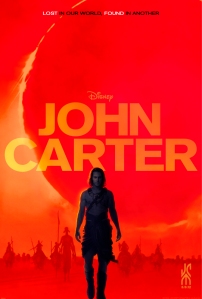
Quick Review: John Carter (dir. by Andrew Stanton)


John CarterThe First Impression:

John Carter is a cute Disney film that you may enjoy more than you’d thought you would. It’s lively like The Rocketeer was and really has some great moments and interesting characters. Both the leads carry their roles well, and are eye candy for the audience. It’s worthy of all of the love it should get, but obvious comparisons to movies that came before it (even though the story predates those films), along with a shockingly forgettable score by Michael Giacchino may actually hurt it. If you’re expecting blood and guts, not so much. It’s a Disney film. The kids should love it, though the pace of the film in the beginning may seem a little slow for younger audiences. Skip the 3D version and go for the 2D instead.

The Longer Version:

It’s really sad when you see a movie that deserves all the love in the world, but for some reason just doesn’t quite hit the mark. Part of that is due to the way this was marketed. It really didn’t feel to me that Disney was putting their all behind this. When you look at how heavily marketed Tron: Legacy was, this seemed like a “Hey, we made it, just give us money.” kind of push.

As far as John Carter is concerned, maybe it’s better to look at it like this. We tend to compare things to make sense of them:

This object reminds me of that object.

All of James Cameron’s Avatar reminds me of Ferngully.

Remember, Short Controlled Bursts. What movie comes to mind when I say that?

This is ultimately the problem with Andrew Stanton’s John Carter. In watching it, you’ll end up making comparisons to so many other films that came before it. However, knowing that it was based on the stories of Edgar Rice Burroughs, it’s a lot like seeing Lord of the Rings for the first time when all you know of Elves and Dwarves comes from Dungeons & Dragons, The Elder Scrolls games or World or Warcraft. Burroughs’ material predates just about everything it showcases, from a pop culture standpoint. Hell, for all I know, John Carter was probably the original inspiration for the Kwisatz Haderach in Frank Herbert’s Dune (though that’s just my speculation). The problem is, with comparisons being what they are, audiences may view John Carter as a copycat of all the movies that were probably influenced by it.

I didn’t walk into John Carter with a lot of expectations. Andrew Stanton, for me, has the track record of being Pixar’s Dark Horse. This is the same guy that killed off a mother and a hundred of her babies in the opening moments of Finding Nemo. A man who gave a bleak, dirty and desolate future in Wall-E. Yet, both of those films had a theme of love and of heroes that rose to the occasion, so seeing the previews for John Carter told me enough.

John Carter is the story of a man in search of a cave full of gold. He wants no part of anyone’s battles and when he’s asked to join a faction, he does his best to avoid it. This leads him to a situation where he’s transported to another world. Just as it was with Earth, he encounters a number of different factions (all of which seem to feel he could aid them), but he simply wishes to return home. When he meets a fierce female fighter (who also happens to be a scientist), they work on figuring out how he arrived on Barsoom and how to get back.

The beautiful thing about John Carter is that it really feels like one of those old serials, or to make a more modern comparison, like an adventure film on the Indiana Jones level of things. There are a number of scenes where I found myself genuinely laughing at what was on screen. The visuals could be better in some places, but it’s nothing that’s groundbreaking. I look at John Carter as a pop culture lesson. You can see where other stories have used elements in the Burroughs tale. In that, it worked for me. The action scenes were really enjoyable for me, but some of the scenes between that could have been tighter. When you find out the reasoning behind Carters arrival, you may end up wondering why more wasn’t done with it with that story arc (on a technical level, anyway). As I’m unfamiliar with the original John Carter stories, I watched a few interviews of the cast and Taylor Kitsch noted that in the books themselves, Carter was pretty much the same person through every one. Stanton added a bit of character depth to him, with a little help from Spider-Man 2 scribe Michael Chabon. Chabon’s also responsible for the great Wonder Boys and The Adventures of Kavalier and Clay, which I still haven’t finished as of this writing. Carter is a conflicted individual for Disney purposes, but you shouldn’t expect Oscar performances here. It’s far better then Immortals was, in that sense.

Both Taylor Kitsch and Lynn Collins do well with their roles. Having worked together for about a hiccup in X-Men Origins: Wolverine, they have a good chemistry together. Kitsch is gruff with his mannerisms, and I can almost forgive him for playing Gambit. Collins is beautiful, statuesque even, and her character really does a lot of damage, fight wise. She’s very strong in some areas, though later on in the film, it felt like they may have eased that down a bit. Willem Dafoe has an inspired role in the leader of one of the alien groups that find Carter first when he arrives in Barsoom. Of course, no film would be complete without a villain and John Carter features two in Dominic West (Zack Snyder’s “300”) and Mark Strong (who’s almost always a go to bad guy). West’s character is more of the take action baddie, while Strong’s character is more of a calculating, behind the scenes one. Of note are Samantha Morton (“Minority Report”) as Sola and a little creature called Woola, that really reminded me a lot of Dug from Disney / Pixar’s Up. I wouldn’t mind having a few of those around the house.

The music for this film worked when the scenes were slow. However, when it called for action, I really didn’t feel anything special about it. I stayed to watch the credits only to find that it was Michael Giacchino’s work, who’s normally really good. I don’t know, this one seemed like it was phoned in for the action scenes. It’s okay, but I didn’t have that urge to buy the soundtrack afterward (which I have done for more memorable scores after leaving the theatre).

Overall, John Carter was a fun film in the vein of Disney’s earlier movies, but it’s not anything you absolutely have to run out to the theatre for. I’d love to see it do well and hope that there’s a sequel on the way, but when you’re paying a good $15 dollars for a 3D movie ticket ($20 for an IMAX 3D showing), the visual return on investment isn’t all that great. The story was enjoyable and didn’t slow down too much, but you may find yourself thinking that you’ve seen this film before in the way that so many other movies reference Burrough’s tale.

As a bonus, Disney released 10 minutes of the film. Enjoy:

The Return of the 6 Trailers


Well, it took a nice, long weekend up at Lake Texoma (I actually got in the water and practiced swimming which is a big deal for a drowningphobe like me but then I ended up cutting my foot on a rock on the lakefloor — agck!) and another few nights of a little bit more sleep than usual but I am happy to say that I am back and I’ve brought the latest edition of Lisa Marie’s Favorite Grindhouse and Exploitation Trailers with me!  So, without further ado, let’s get started…

1) Killer Fish (1979)

In honor of my weekend at the lake, let’s start out with this trailer for a little film called Killer Fish…

2) Dogs (1976)

Now, I may have conquered my fear of swimming for like 10 minutes at the lake but I have yet to conquer my fear of dogs and this trailer shows why.  Seriously, dogs are freaking scary!

3) The Doberman Gang (1972)

Dogs don’t just kill people.  They rob banks too.

4) King Frat (1980)

Wow!  Those dogs are scary, aren’t they?  Let’s take a break from scary dogs with another breed of dog — the American frat boy.

5) Chain Gang Women (1971)

I love trailers that brag about how the characters in the movie live by only “one rule.”  (Speaking of chain gangs, I recently saw an excellent film from 1932 that was called I Am A Fugitive From A Chain Gang.  But that’s something I’ll save for a future post…)

6) The Stranger and the Gunfighter (1974)

Yes, between the chain gangs, the killer fish, the dogs, and the frat boys, it’s a scary world out there.  Luckily, protection is right around the corner because here comes “(a) savage…a saint…a stranger…”

A Quickie With Lisa Marie: Silent House (dir. by Chris Kentis and Laura Lau)


In the new horror film Silent House, Elizabeth Olsen plays Sarah, an emotionally unstable young woman who goes to her family’s old lakefront vacation home with her father.  After years of neglect, the cottage is on the verge of collapse and Sarah has been recruited to help her dad and her uncle prepare the house for collapse.  It’s obvious from the first minute that Sarah appears on-screen that she’s emotionally unstable.   Whether she’s staring out at the desolate lake or (in the first genuinely disturbing scene in a film that’s full of them) awkwardly dealing with her uncle’s blatant attempt to flirt with her, Sarah is a bundle of nerves.  When, at one point, Sarah hears something wandering around the house, her father replies that he’ll check it out because “I know how you are.” 

Unfortunately for Sarah, things are about to get a lot worst.

Shortly after Sarah is visited by a mysterious girl who claims to be a childhood friend (“I do remember you,” Sarah says at one point though she doesn’t sound too convinced herself), her father disappears and Sarah finds herself being chased through the house by a pursuer who only seems to exist in the shadows.  As she struggles to escape the house, she continually sees a silent girl watching her, just to disappear whenever Sarah tries to approach her.  Even when Sarah does manage to get out of the house, she quickly finds herself brought back against her will until finally, she discovers the dark secrets that are hidden within the house and she’s forced to confront an evil far more disturbing than she had originally suspected.

Silent House is a film with a gimmick — director Chris Kentis and Laura Lau have filmed and edited it to give the impression that the movie was shot in a single take and, therefore, all of the horror takes place in real time.  Usually, I’m not a big fan of movies that rely on gimmicks but, in this case, it actually works pretty well at giving the impression of a truly relentless thrill ride.  Fortunately, Kentis and Lau don’t just rely on the film’s gimmick to make the movie effective.  From this film, it’s obvious that they understand that taking the time to create the right atmosphere is just an important to a succesful horror film as having proverbial monster suddenly jump out of the shadows.

It helps that Elizabeth Olsen (who really should have received an Oscar nomination for Martha Marcy May Marlene) is totally believable and sympathetic as Sarah.  It takes a while to realize that Olsen is giving a great performance.  For most of the film, I just thought she was doing a good job at playing scared.  (For most actresses, being chased in a horror movie is a rite of passage.)  It was only during the final 15 minutes that it become apparent that, more than just playing frightened, Olsen was instead laying down the foundation for the film’s finale.  I’ve read some criticism claiming that the film’s final twist came out of nowhere but I actually found it to be effective and disturbingly plausible.  That is almost totally due to commitment that Olsen shows in creating the character of Sarah.

I saw Silent House earlier today with Jeff and seriously, I was so happy he was there because I spent almost the entire movie with my face buried in his shoulder.  Admittedly, I’m usually pretty jaded when it comes to gore and horror.  (For example, I saw Dale get his guts ripped out on The Walking Dead last Sunday and I may have arched an eyebrow but otherwise, it was nothing I hadn’t seen before.)  But seriously, Silent House is an intense film that, wisely, doesn’t allow logic to get in the way of being scary.  The critics can nitpick all they want on this film.  What matters is that Silent House works. 

(As a sidenote, I really hope that after this movie and Martha Marcy May Marlene, Elizaebeth Olsen takes break from running for her life and makes a nice, happy romantic comedy.  She deserves a break!)

Lisa’s Thoughts On 10 Best Picture Nominees That She’s Recently Seen: The Alamo, Becket, Elmer Gantry, Gaslight, Gladiator, Kramer Vs. Kramer,Marty, Of Mice and Men, Out of Africa, and Wilson


Since it’s Oscar weekend, I’ve been watching past and present Best Picture nominees like crazy.  Here are my thoughts on ten of them.

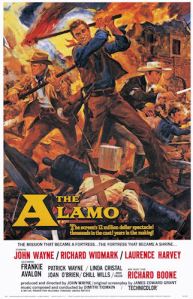
The Alamo (1960, directed by John Wayne, lost to The Apartment) — I’m a Texan which means that I’m legally required to watch both this film and the 2004 remake whenever they show up on television.  Both films are way too long and feature way too many characters speaking speeches as opposed to dialogue but, if I had to choose, I would have to go with the 1960 version of the story.  The original Alamo might be heavy-handed, poorly paced, and awkwardly acted but at least it’s sincere in its convictions.  I always cry when Richard Widmark dies.

Becket (1964, directed by Peter Glenville, lost to My Fair Lady) — This one is a personal favorite of mine.  The film is about the friendship and the eventual rivalry of King Henry II (Peter O’Toole) and Thomas Becket (Richard Burton).  Becket and Henry II start out the film drinking and whoring but eventually, Henry makes Becket Archbishop of Canterbury.  Becket, however, rediscovers his conscience and soon, Henry is famously asking, “Who will rid me of this troublesome priest?”  Becket is an exciting historical drama and Peter O’Toole is at his absolute best as the flamboyantly decadent Henry.

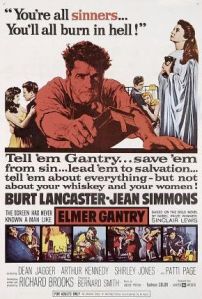
Elmer Gantry (1960, directed by Richard Brooks, lost to The Apartment) — Burt Lancaster plays Elmer Gantry, a traveling salesman and con artist who ends up falling in love with a saintly evangelist (played by Jean Simmons).  Gantry soon starts preaching himself and soon has an army of loyal followers.  However, Gantry’s new career is threatened when an ex-girlfriend-turned-prostitute (Shirley Jones) pops up and starts telling people how Gantry “rammed the fear of God into” her.  With its unapologetically corrupt lead character and its looks at how commerce and religion are often intertwined, Elmer Gantry makes a perfect companion piece to Paul Thomas Anderson’s There Will Be Blood.  Lancaster won an Oscar for his powerful and intense performance in the title role.

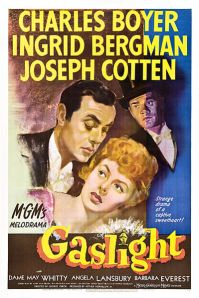
Gaslight (1944, directed by George Cukor, lost to Going My Way) — Evil Charles Boyer marries Ingrid Bergman and then attempts to drive her crazy.  Luckily, Inspector Joseph Cotten is on the case.  Gaslight is, in many ways, an old-fashioned melodrama but it’s still a lot of fun to watch.  Boyer is a suave devil and Joseph Cotten (one of my favorite of the old film actors) is a dashing hero.

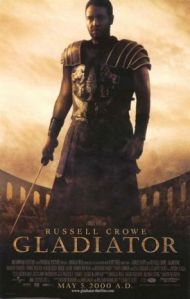
Gladiator (2ooo, directed by Ridley Scott, won best picture) — One thing that I’ve recently discovered is that men love Gladiator.  Seriously, they obsess over this film and hold Russell Crowe’s surly gladiator up as some sort of mystical ideal and if you dare to say a word against it in their presence, be ready for big and long argument.  So, I won’t criticize Gladiator too much other than to say that the film has always struck me as being kinda overlong, that the CGI is occasionally cartoonish, and that, despite his fearsome reputation, Russell Crowe is a lot more interesting as an actor when he plays a thinker as opposed to a fighter.  Joaquin Phoenix, playing the Emperor Commodus, is a lot of fun to watch.

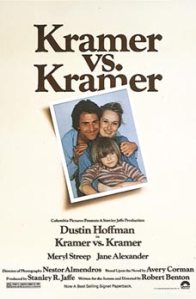
Kramer Vs. Kramer (1979, directed by Robert Benton, won best picture) — Dustin Hoffman plays a workaholic New York advertising executive who, after his wife Meryl Streep leaves him, ends up as a single father.  Kramer Vs. Kramer won best picture in 1979 but I have to admit that I didn’t care much for it.  Then again, I don’t think that I was the intended audience.  Instead, Kramer vs. Kramer appears to have been made to appeal to men frustrated with women wanting to have a life outside of being a domestic servant.  The film is well-acted though Hoffman’s character becomes insufferably smug once he gets comfortable with being a single father.

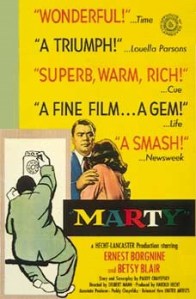
Marty (1955, directd by Delbert Mann, won best picture) — Lonely butcher Marty (Ernest Borgnine) romantically pursues a shy school teacher named Clara (Betsy Blair).  However, Marty’s friends and his family don’t like Clara and Marty soon finds himself having to choose between them.  Marty is a bit of an anomaly when it comes to best picture winners.  It’s not an epic, it doesn’t claim to solve any of the world’s problems, and it’s based on a tv show.  However, it’s also a sincerely sweet and heartfelt  film and also features excellent performances from Borgnine and Blair.

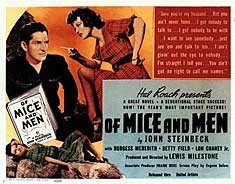
Of Mice and Men (1939, directed by Lewis Milestone, lost to Gone With The Wind) — “Tell me about the rabbits, George.”  Yes, it’s that film.  Smart and little George (Burgess Meredith) and big but simple Lenny (Lon Chaney, Jr.) are migrant farm workers who get a job working at ranch where Lenny ends up accidentally killing the rancher’s daughter-in-law.  Despite the fact that we all now tend to naturally smirk when we hear anyone say “Tell me about the rabbits, George,” Of Mice and Men remains an effective tear-jerker and both Meredith and Chaney give strong performances.

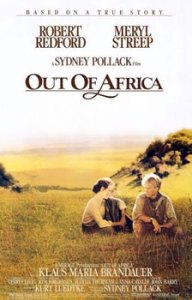
Out of Africa (1985, directed by Sydney Pollack, won best picture) — I recently sat down to watch this film because 1) my aunts love this film and get excited whenever they see that it’s going to be on TV and 2) Out of Africa was named the best film of the year I was born.  So, I sat down and watched it and then three or five hours later, I realized that the film was nearly over.  Anyway, the film is about a Danish baroness (Meryl Streep) who moves to a plantation in Africa and ends up having an affair with a British big game hunter.  The hunter is played by Robert Redford, who refuses to even try to sound British. (USA! USA! USA!)  Anyway, the film is pretty in that generic way that most best picture winners are but the film ultimately suffers because its difficult to care about any of the characters.  Streep acts the Hell out of her Danish accent but she and Redford (who seems to be bored with her) have absolutely no chemistry. I saw one review online that dismissed Out of Africa as a “big budget Lifetime movie” but Lifetime movies are a lot more fun.

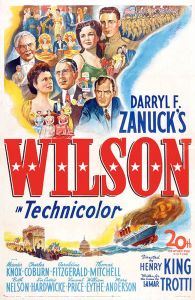
Wilson (1944, directed by Henry King, lost to Going My Way) — Wilson is a two-and-a-half biopic about Woodrow Wilson and his presidential administration.  Wilson is well-played by Alexander Knox, who later showed up in countless exploitation films.  Wilson shows up on cable occasionally and every time I’ve seen it, I’ve had mixed feelings about it.  The critical part of me tends to be dismissive of this film because it’s way too long, extremely stagey, and it glosses over the fact that Wilson was a virulent racist who idolized the Ku Klux Klan.  However, as a secret history nerd, I can’t help but enjoy seeing a film where Vincent Price plays the Secretary of the Treasury.

Review: Act of Valor


A lot of film critics are giving Act of Valor a negative review but I think they’re missing the point.  Featuring an actual Navy SEAL squad and real-life military tactics (and weapons), Act of Valor feels like a documentary and serves as a much-needed tribute to these brave men.  The action scenes are intense and exciting and the movie makes great use of the “helmet cam” vantage point to truly make you feel as if you’re actually there in the middle of the action.

Yes, the Seals aren’t actors but they are the men who are putting their lives on the line for this country and seeing them recreating their missions is exciting in a way that watching Matt Damon or (sorry, Lisa) James Franco going through the motions wouldn’t be.   Act of Valor is a movie that makes you want to stand up and salute.  You might not start cheering at the end of it but you will appreciate the willingness to sacrifice and the sense of duty that epitomizes the best of our armed forces.  It’s a tribute to the men and women who truly deserve the honor.