Beginners Review (dir. Mike Mills)


I noticed that Lisa had posted a quick review about this, but I saw it recently and have been wanting to review it because it was something I connected with and really wanted to share my opinion.

I honestly cannot think of another film I have seen this year that I found as charming and heartfelt as ‘Beginners’ which stars Ewan McGregor as Oliver, a middle aged man who has just lost his father Hal to lung cancer. Oliver reveals to us, through narration, that after the death of his mother a few years back his father came out, having been gay throughout the 40 plus years of his marriage. Oliver’s life following his father’s passing is a lonely one that often leads to him talking to Arthur, his father’s dog. One night at a party he meets a beautiful actress named Anna. The two hit it off quickly and the rest of the film follows the development of their relationship, set among flashbacks of Oliver’s parents and his father’s new life as a gay man in the years before his death. Through these memories we get a better understanding, as to why Oliver has been alone, and why his time with Anna may be short lived; he has had 4 relationships in the past, but left them all. The result is a film about being open and honest, and finding love and happiness through from it.

This idea of being honest was difficult for Oliver because of his parents. Their hollow marriage cast a shadow on his view of love. Wanting to avoid what they had created, this constant uncertainty and sadness caused him to think love was doomed and so he would break relationships off in fear of what he thought was their inevitable conclusion.

Luckily Oliver is able to find inspiration in his father who was able to be open and honest in the final months of his life. Through the memories of Hal, Oliver is able to take those steps towards true joy. One reason being that when he found out his father was gay it finally dawned on him why his parents’ marriage seemed so empty. It wasn’t genuine and so not a good example of how things really are. Which brings up another important theme, that being change and starting over.

The title ‘Beginners’ refers to both Oliver and Hal being at the beginning of their new respective lives. Anna points out towards the end of the film, after reading a funny but sweet personal ad Hal had made, that Oliver’s father “Didn’t give up”. Even facing death, in his 70’s, Hal wanted to be happy and be himself by embracing his sexuality. It is in remembering these moments, seeing how happy his father was, that Oliver is able to look forward in a positive light, with a new perspective on love and an understanding of why his mother was always so sad. Oliver too has a new beginning and like Hal can now be open and embrace his love for Anna.

What held this whole story together for me were the characters, and more importantly the chemistry between them. I felt the dynamic between Anna and Oliver, the feelings and time they shared was incredibly sweet. Upon first seeing him Anna instantly recognized Oliver’s sadness. She too felt alone, having spent most of the past few years going from one hotel room to another. It is the sort of relationship in which the one thing that makes the love between them so poignant is that they can save each other, filling the voids in each other’s hearts. This makes it harder to watch as Oliver’s misconceptions on love cause a divide between them. At the beginner Oliver worries, like he did in his previous relationships, where this one is heading. He fears Anna will become his mother, unhappy and bitter. But when Oliver does change, and get her back, the result is an incredibly sweet ending.

All of this is done with a collection of small, genuine and heartfelt moments that build upon one another to form something much greater. On top of that were three wonderful performances. Christopher Plummer was so lovable as Hal, and clearly had a lot of fun with the character. Melanie Laurent was mesmerizing and sweet, she is so beautiful and easy to fall for. Ewan McGregor was also fantastic, and the real stand out here, carrying a great deal of pain adding depth to his performance in a way I’ve rarely seen him do. The structure and visual devices also worked incredibly well, helping to give it a unique feel. I really loved the use of photographs, montages to the 50’s and how it handled the history of the gay rights movement. The music was also lovely and fit the tone perfectly. It is a score that I’ve listened to a few times since watching the film.

Honestly, it had me smiling from start to finish. It just had this emotional resonance that clicked for me in a way that can hardly be explained. I ended up watching it two nights in a row just because I loved it so much the first time and I just wanted to watch the characters again soon after. It saddens me that so few people seemed to have seen it. I can easily say that ‘Beginners’ is a charming, smart, funny, sentimental and quirky film, one of my new favorites and I loved every single moment of it.

Hugo Review


‘Hugo’ is not only an old fashion and heartfelt adventure with enough whimsy and fun for all ages; but also a love letter to cinema, by one of this generation’s masters, and a plea to support film preservation.

Most of the credit for the its success has to be given to Martin Scorsese, who in an attempt to tell the story about the value of art and the dream like and important nature of films, managed to not only capture the magic of moving pictures but in doing so make one just as magical and beautiful as those he admires. The story follows a young boy named Hugo Cabret (Asa Butterfield). He lives among the gears and machinery within the walls of a grand train station in Paris where he keeps the clocks in working order. He is alone in this task and spends most of his free time trying to fix an automaton that his father found rusting away in a museum, and attempted to fix before he tragically died in a fire. With his father dead he was sent to work in the station with his uncle, a drunk who has gone missing leaving Hugo to live alone, stealing food from the shops to survive and avoid the orphanage. One morning Hugo gets in trouble with the owner, George Melies (Ben Kingsley), of a toy shop located within the station. Hugo had been stealing small trinkets for parts so he could use them in fixing the automaton, which he believes contains a message left to him by his father. The shop’s owner forces Hugo to hand over the stolen trinkets along with a notebook detailing the machine he was trying to fix. Oddly his drawings cause Melies to get emotional and he takes it. In an attempt to get it back, Hugo ends up getting help from the shop owner’s goddaughter, Isabelle (Chloe Moretzs), who is a lover of books and desperate for some kind of adventure. Together they try to unravel the mystery behind her godfather’s reaction to the notebook and the automaton’s message. It is a slow moving, but richly detailed journey that leads to them discovering George Melies’s sad past, which has important ties to the history of film.

Scorsese’s love for cinema is front and center here. Hugo’s loneliness mirrors his own. Scorsese suffered from asthma growing up and wasn’t allowed to play with other children. Like Hugo, Scorsese looked to machines and cameras to occupy his time, turning to art and film to express himself. Hugo’s automaton, a machine like a camera, which played a key part in Melies’s life, only works with a heart shaped key. It is no coincidence that the heart, love and a sense of wonder are the key to creating art and opening one’s imagination. Scorsese, perhaps more than most directors around today, understands the importance of film, especially for younger audiences and in a way this definitely seems like an attempt to get children to appreciate the medium as much as he did years ago.

My favorite aspect of the ‘Hugo’ would be the world created. It is fleshed out fairly well, with many supporting characters given a good deal of attention. The most important being the station inspector played by Sacha Baron Cohen who when he isn’t out trying to catch potential orphans, is trying to woo a beautiful florist, played by Emily Mortimer. It reminded me of ‘Amelie’ in a way, which I guess also had a lot to do with the tone and setting.

The stuff about Melies is incredible and as informative as it is disheartening. The man was one of the early pioneers of films. One of the first to truly understand its capabilities to enchant the audience with dream like settings. Learning the history of his career, how after making over 500 films he was forced to destroy most of them and his old sets when the popularity of his work dropped after the Great War, is tragic. Luckily for us some of his films survived, like “A Trip to the Moon” which is a highly recognizable and frequently referenced short.

The direction, the long shots in particular, are breathtaking. The opening is one of the year’s best and most spectacular scenes. It is arguably Scorsese’s most beautiful film. The fantastical portrayal of Paris is enhanced by 3D that is utilized better than anything I have seen. The use of depth, especially in scenes towards the end in which some of Melies films are recreated in flashbacks is stunning. For once it doesn’t feel like a gimmick. The score is also beautiful and luckily not overwhelming. It is one that is there but not noticeable because it fits the atmosphere of the story so well. Honestly, everything about ‘Hugo’ feels like one complete and perfect work of art, created with a great deal of passion. The only complaint I’ve really heard is that it is too slow at times. Personally I highly disagree with this. Even at its slowest points it is still totally mesmerizing because this isn’t just a love letter to film, or just a historical depiction of the life of one of its most important innovators, it is also a heartfelt story. It earns its emotions and nothing fells forced, and it does this by taking its time, to flesh out its characters and plot.

Lastly, the performances all around are wonderful. Butterfield gives Hugo a great deal of emotion and depth, as well as the level of maturity needed for the character. Ben Kingsley is absolutely magnificent as George Melies. He makes him a clearly sad man, with a long history that troubles him deeply. Chloe Moretz is also great, doing a surprisingly good English accent, and makes the character easily loveable and fun. Even Sacha Baron Cohen, who toned it down, brings his character to life in an almost classically funny way.

Overall to say I loved the film would not do my feelings for it justice. It is so exceptionally crafted, so fun and smart, and most of all it captivated me like few other films have in recent years. It truly is a magical experience, a must see and one of Scorsese’s best.

10 Random Things I Am Thankful For in 2011


Hi out there!  Did everyone have a good Thanksgiving?  I know I did.  Now, I know that some people will say that this has been a disappointing year in entertainment.  Steve Carrell left the Office, Whitney Cummings got a sitcom, and — while I’ve truly loved a handful of films this year, it’s hard to ignore the fact that 2011 has yet to produce anything close to a Black Swan, A King’s Speech, or even a Social Network.  Instead, the best films of the year have been ignored by both audiences and critics while good but definitely flawed films like J. Edgar are being touted as being the best was can hope for.  Even Pixar failed to tug at our heart-strings this year.

However, I think we’re running the danger of giving too quickly into negativity when it comes to considering 2011.  No, 2011 is no 2010.  But there’s still a lot to be thankful for and below are just 10 examples of some things that, as 2011 reaches its conclusion, I’m thankful for.

10) This.

9) The time I have left with Community.

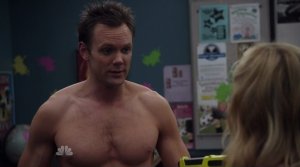
With The Office current flailing about in its attempts to establish a consistent post-Carrell identity, I have a new favorite sitcom and its name is Community.  Now in its third season, Community has truly hit its stride and Joel McHale is, of course, to die for.  So, naturally, Community has been yanked from the mid-season schedule while NBC continues to heavily promote shows like Whitney.  This is indeed the darkest timeline but I know that I will continue to tweet things like #savecommunity, #6seasonsandamovie, and #NBCSucks for as long as it takes.

8 ) A second season of Game of Thrones

With the current season of Dexter getting bogged down in its attempt to make a villain out of Colin Hanks and the Walking Dead remaining a flawed masterpiece, the 1st season of Game of Thrones is now the unquestionable highlight of an otherwise uninspired season in television drama.  I can’t wait to see what happens in season 2.

7) Higher Ground

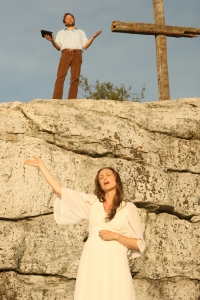
Vera Farmiga’s directorial debut is probably one of the best films that you’ve never seen. 

6) Black Swan is available on DVD and Blu-ray.

5) For that matter, so is the original, non-American, non-Hollywood, non-David Fincher, non-Daniel Craig, non-Rooney Mara Girl With The Dragon Tattoo trilogy.

4) Shame is rated NC-17.

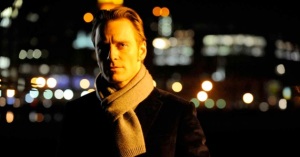
What does this mean?  It mean the Full Fassbender.

3) Hanna

This intriguing and criminally underappreciated postmodern fairy tale remains my favorite film of 2011. 

2) Oscar Isaac

Seriously.  Love him.  I still love to imagine him shouting, “And I declare him to be an OUTLAAAAAAAAWWWWWWW!” whenever I’m annoyed at being stuck in traffic.  You know what else I love?  Listening to him as he sang over the end credits of Sucker Punch.

1) And finally…

I am thankful that I have the greatest sister ever!  You may know her as Dazzling Erin and, if you’re on twitter, you can find her under the name TakeSumE.  However, for me, she will always simply be my best friend and my older (but only by 11 months) sister.  Yesterday was not only Thanksgiving but it was also her birthday!  Now, for those of you who don’t know, Erin is not only my sister but she’s also a talented photographer, a great cook, a wonderful roommate, and the greatest guardian angel that anyone could possibly ever hope to ask for!  And on top of all that, she’s hot too.  Happy birthday, Erin Nicole! 

It's Erin Nicole!

What Lisa Marie Watched Last Night: Betrayed at 17 (dir. by Doug Campbell)


It’s been too long since I did a What Lisa Marie Watched Last Night post so allow me to correct that by telling you about what I watched last night.  Last night, I turned on the Lifetime Movie Network and I watched a future classic — Doug Campbell’s Betrayed at 17.

Why was I watching It?

I was watching it for two reasons.  First off, I’m an unapologetic admirer of director Doug Campbell’s previous film, Accused at 17.  I’m hoping that Campbell will go the trilogy route and give us a Convicted at 17 at some point in the near future.  Secondly, this film was on the Lifetime Movie Network and I love LMN.

What Was It About?

Okay, there was a lot of plot to deal with here.  The film starts out with scummy high school football player Greg (Andy Fischer-Price) seducing insecure virgin Lexi (Amanda Bauer) and secret recording the encounter on his laptop because, apparently, that’s the type of terrible things that 17 year-old boys do.  Anyway, Greg’s got an ex-girlfriend named Carleigh (Katie Gill) and we know that Carleigh has some issues because she’s blonde, rich, drives a convertible, and says stuff to Lexi like: “I nearly ran your fat ass over.”  Well, Carleigh finds out about the sex tape and gets so upset that she uploads the video to YouTube and soon, the whole school is watching it and Lexi gets so upset that she runs out into the middle of the street and gets run over by a truck.

So far, we’ve got the makings of a typical anti-bullying polemic and the film seems to be going down that route as Lexi’s mom (Alexandra Paul) demands justice for her daughter.  However, then the film takes a sudden turn and just goes freaking crazy!  See, Greg is feeling guilty about his part in Lexi’s death so Carleigh shows up with a gun and kills him!  Then she steals Greg’s wallet and uses it to frame Lexi’s drug addict older brother (Shane Ross).  So, Lexi’s mom and Greg’s mom (Paula Trickey) team up to try to take Carleigh down.

By the way, did I mention that Carleigh’s Dad is apparently in the Mafia?  Well, I’m not sure if he actually is but he certainly acts like he is…

Seriously, this is a deceptively simple movie that’s really quite odd and compulsively watchable in the best Lifetime tradition.

What Worked?

In many ways, this film epitomized everything that I love about a good Lifetime film.  It took a serious issue (bullying, in this case) and then explored it in the most melodramatic, over-the-top, tawdry, and silly way possible. 

Just the title itself — Betrayed at 17 — is genius.  Seriously, when you’re 17, everything is such a drama!  Or at least it was for me.  And I can remember that everything — and I do mean everything — was framed through the lenses of nonstop, over-the-top melodrama.  Whether it was some other girl talking to “my man” or my best friend failing to answer her phone or any of the countless arguments that I had with my mom over things that seem so amazingly unimportant now, it was always all about being and feeling betrayed.

Finally, while this film is full of histrionic dialogue, there’s one scene that manages to perfectly capture the excruciating awkwardness of being in love when you’re in your teens.   Greg, while admiring Lexi’s legs, asks her about a scar.  “I cut myself shaving,” Lexi replies.  Now, believe it or not, I had almost the exact same conversation when I was 17 and this film got it right.

What Didn’t Work?

Well, originally this looked like it was going to be yet another mawkish, if well-intentioned anti-bullying polemic but once people started drawing guns on each other and desperately trying to take out security cameras, it all worked.  This was two hours of pure, silly Lifetime goodness.

“OMG!  Just like me!” Moment:

Oh my God, a few!  Listen, what 17 year-old girl didn’t get filmed having sex with a jock or accidentally end up shooting her ex-boyfriend?  Seriously, that’s just a part of growing up.

Lessons Learned:

1) Guns are dangerous.  So are videos of your ex having sex with some other girl.  Put them together and inevitably, someone’s going to end up dead.

2) Fortunately, it’s apparently very easy and simple to frame someone for murder.  So, if you haven’t done it yet, hurry up before things get complicated.

A possibly biased Greek Myth Buff’s Review of Immortals


My review of Tarsem Singh’s Immortals will be spoiler free. My love of Greek mythology may have biased me positively (I loved Ninja Assassin because I still want to be a ninja despite being 30 years old).

The Olympians were depicted as young (and attractive) people instead middle aged folks, especially since the ancient Greek culture was so fixated physical perfection forms. These gods showed their prowess in combat and got their hands dirty instead fighting by proxy (Poseidon’s tidal waves and sea monsters, Zeus’ lightning bolt, Apollo’s arrows, and Dionysus’ murderous band of drunk women) as in most media productions.

Luke Evans provided a fresh interpretation of Zeus. He wasn’t the typical rash and violence prone elderly king with the libido of a frat boy, he displayed the same level of fatherly compassion as Anthony Quinn’s Zeus (y’all remember Kevin Sorbo’s Hercules series). He generally cared about humanity and looked at them as something more than notches on his belt like the previous Zeus. He even showed compassion for his children (male and female) unlike the mythical Zeus who only seemed to care about his sons in varying levels.

Found several things interesting:

  1. Theseus’ demigod status and divine paternity was seemingly replaced by a more tragic upbringing.
  2. The bovine suit that Daedalus made for Pasiphaë was transformed into a cruel torture device.
  3. The suit was still linked to the result of Pasiphaë and Mino’s prized bull.
  4. The war between the Olympians and the Titans was similar to the war between the Aesir and Vanir of Norse mythology.
  5. The lack of Hades and the other major 12 Olympians.
  6. Apollo’s weapon of choice was changed from a bow to a hammer.
  7. The racial diversity of the background cast (there were only Caucasian actors and actresses in these types of film).
  8. The religious ideologies of a believer, an atheist and an agnostic played out in the film.
  9. The removal of mere mortals dying when they behold a god’s divinity.
  10. Zeus and Athena using disguises to interact with mortals.

Images courtesy of  IGN’s Immortals review

6 Trailers To Make You Go “Yay!” Or “Bleh!”


Hi out there.  As I sit here typing this, I am so freaking sick, it is not even funny!  Seriously.  I’m congested, I’m running a fever, and I’m taking way too many naps while everyone else in the world is having a lot of fun playing outside and going to the new Twilight film.  However, despite feeling all bleh, nothing will stop me from sharing another edition of Lisa Marie’s Favorite Grindhouse and Exploitation Film Trailers.  NOTHING!

1) A Nightmare On Elm Street (1984)

One of the classic “old school” horror trailers.  The bit with the stairs always freaks me out.

2) Alone in the Dark (1982)

Not to be confused with the later film from Uwe Boll.

3) Without Warning (1980)

Martin Landau was apparently busy in the early 80s.

4) Deadtime Stories (1986)

This film appears to be an alternative take on beloved bedtime stories and…wait.  Bedtime.  Deadtime.  Hey, I just got that!  Neat.

5) Hello Mary Lou: Prom Night 2 (1987)

Apparently, this film has next to nothing to do with the original Prom Night and you have to ask yourself: if there’s no elaborate disco dance-off, then what’s the point?  Still, I own this one on DVD and I’ll be watching it soon if I don’t start to feel better.

6) Pet Sematary 2 (1992)

I remember that I saw this movie on TV one late night when I was like ten or eleven and oh my God, it scared the Hell out of me!  I mean, literally everyone dies in it!  Even kids!  Trust me, that’s a really scary thing to see when you’re still just a kid yourself.  But anyway, I rewatched it last year and was mostly bored. 

Quick Film Review: Immortals (dir. by Tarsem Singh)


Perhaps I’m jaded and spoiled by movies like Jason and the Argonauts and games like God of War.

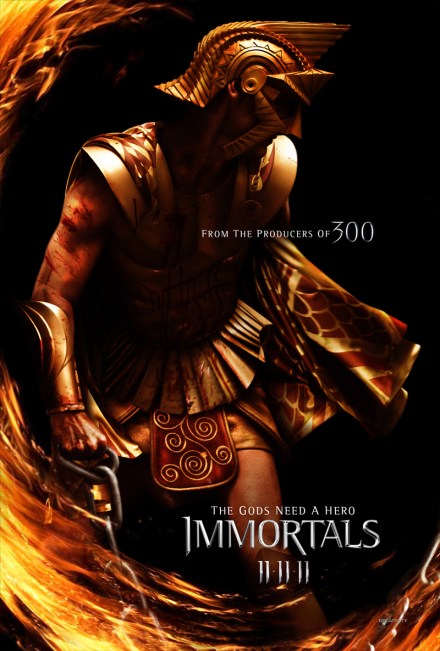
I’m pretty sure that in an alternate dimension somewhere, audiences are sitting in the theatre and loving the hell out of Immortals. Maybe in some ways it’s actually good, but I can’t see them. At best, the film acts a great demo reel for Henry Cavill, who audiences will see as Superman sometime next year. For that reason, and perhaps Mickey Rourke’s Hyperion, Immortals is worth a peek. Even then, you may want to have someone take you to the movie, rather than pay for it yourself. Let’s put it this way. I spent more time on my iPhone with the brightness dimmed during the movie than I did actually watching it, and that’s a rarity for me. You’re better off waiting for the Netflix Edition. Everything you see in the trailer is basically the film in a nutshell.

The only other thing it really does have going for it is the 3D, which actually happens to be pretty good for the half hour that you can see it (and perhaps that’s just me, because it feels like it fades over time). The film does feel as if it were primarily filmed in 3D, and boasts some awesome visuals, but the story is a little jumbled. I won’t deny that Tarsem Singh has a really fantastic eye for painting a scene from The Cell to this point, but without sharp writing there’s something lost in the translation. It’s like watching David Fincher when he was still partnered with Darius Khondji on Seven or Spielberg with Kaminski in Minority Report. You can make pretty pictures, but there has to be some kind of meat and potatoes to it for the audience. That’s just how I felt here.

Eons ago, you once had mortals and you had gods. Zeus, Poseidon, Athena, Apollo, Dionysus, Aphrodite, etc. In Immortals, the gods learned that they had the ability to kill one another and as a result, there were a number of wars.  Enter Hyperion, who loathes the gods and wants them destroyed. In order to do this, he has to unleash the Titans, who were once servants of the gods but were punished for their treachery and sealed away in a special cage that can only be unlocked with an item called the Epirius Bow (which was one of the elements I truly enjoyed).

Our hero, Theseus (Cavill) lives a quiet life with his family when Hyperion’s forces attack. In the process, he witnesses his mother’s death at the hands of Hyperion himself and swears vengeance. Captured and left for dead with a number of others, he meets a mystic named Phaedra (played by Freida Pinto, who seems like she may be playing the same role emotionally that she did in Rise of the Planet of the Apes). Phaedra provides him with visions that allow him to reach the Bow.

Lead by Zeus, the gods watch all of this from Olympus, but are unable to interfere in the affairs of mortals on pain of death. These sequences (when they do happen) are the ones that you’re seeing in the trailers for the most part. Oceans rise and bad guys are cut down so fast that the first hardly has a chance to fall before the ninth one is hit. It’s amazing to see, it really is, but it’s been done before in movies as old as Jet Li’s The One. The film doesn’t lack in action, and in that, there’s a plus. What I had personally hoped for was something akin to giants or mythical creatures. Even though it was geared for teens, last year’s Percy Jackson and the Olympians offered more of a mystical element than Immortals did for me. It wouldn’t have hurt to have undead warriors or harpies or something. For all the money spent in effects, everything in this film seemed to be grounded in human based actions.

All of this culminates into a huge 300 like battle, right down to the narrow passageway that is used as an arena of battle. Theseus rallies his troops that are ready to retreat with a speech that’s helped along with the banging of shields. It was nice, but again, it wasn’t anything terribly new – “They’re only human!!” *clack clack clack* “We can beat them!” *clack clack clack* “For the children!!” *clack clack clack*

“And a tighter script!” I wanted to yell with a raised fist. “And maybe a refund!”

As for the audience, they seemed okay with it. There is a love scene which I don’t think younger audiences are ready for, but it was done in such a way that the “fade to black / open to the following morning” shot doesn’t let things get too far, visually.

When it gets to video, I may see Immortals again (because it is visually beautiful), but you’re better off treating yourself curling up somewhere and reading Homer’s The Odyssey for a while and letting your imagination fill in the pieces. It’s a okay film if you don’t ask for more than what it’s giving you.

Film Reviews: The Skin I Live In (dir. by Pedro Almodovar) and Take Shelter (dir. by Jeff Nichols)


In terms of film, the horror genre has never gotten the respect that it undeniably deserves.  Afterall, some of the most effective trends in cinema (German expressionism, for instance) first had their start in the horror genre.  However, most critics seem to be more comfortable just dismissing most horror films as being a bunch of predictable tropes and easy shocks as opposes to admitting that the horror genre is one that is rich with history, subtext, and importance.  Right now, there are two horror films playing the art houses of America and they are both more than worth your time.  Those films: Pedro Almodovar’s The Skin I Live In and Jeff Nichols’s Take Shelter.

In The Skin I Live In, a weary-looking Antonio Banderas plays a world-renowned plastic surgeon who, unknown to all of his colleagues, has trapped a young woman in his sprawling estate.  With the help of his devoted servant Marilla (Marisa Paredes), he keeps the woman (played by Elena Anaya) a total prisoner while continually experimenting on her in his efforts to create a new type of skin that is immune to bug bites and being burned.  However, Anaya — who has been held prisoner for six years — is desperate to escape and is even willing to engage in self-mutilation in her effort to make things difficult for Banderas.  Finally, while Banderas is out, Marilla’s psychotic son (a terrifying Robert Alamo) shows up at the estate and, convinced that he knows the young woman, tries to kidnap her for his own.

In between the scenes involving the strange experiments going on at the estate, another story plays out as Antonio Banderas exacts a disturbing revenge on the young man (Jan Cornet) that Banderas holds responsible for the death of his daughter.  The film’s two stories eventually intersect in a surprising yet disturbingly logical way.

As a director, Almodovar often pays homage to other, similarly iconic filmmakers and The Skin I Live In feels like a combination of the over-the-top melodrama of Douglas Sirk (right down to the film’s “hero” being a doctor) and the unapologetic sordidness of Jesus Franco.  This is especially evident in the film’s big, surprise twist; a twist that manages to be both ludicrous and compelling at the same time.  (I should also note that, at the showing I went to, the twist inspired about a fourth of the people in the theater to leave.)  The end result is a creepily effective, thought-provoking horror film that is both deliberately absurd and touched with a strain of undeniable melancholy.

As opposed to the baroque The Skin I Live In, Take Shelter takes place in the deceptively mundane American midwest.  Michael Shannon plays Curtis, a soft-spoken construction worker who suddenly finds himself haunted with terrifying nightmares of an incoming apocalypse.  The nightmares always start with rain and, as the film unfolds, they grew progressively more and more disturbing.  Soon, he’s seeing shadowy figures wearing hospital gowns standing out in the rain, waiting to attack him and even worse, he starts to see visions of his friends and family waiting to attack him.  Is Curtis seeing the future or has he simply inherited his mother’s schizophrenia?

The genius of the film is that, up until the final scene, you’re not quite sure.  I’ve seen a lot of nightmares in a lot of horror films and I can usually spot them long before the inevitable scene of the film’s hero waking up in bed with a shout.  Take Shelter is full of nightmares and they all follow the same basic theme but they are so effortlessly woven into the film that they still take you by surprise long after they shouldn’t.  As a viewer, you find yourself relating to Curtis because, like him, you’re never quite sure what’s real and what’s just in his mind.  The film forces us to try to figure out whether Curtis is scared because he’s crazy or is he going crazy because he’s scared. 

The film’s apocalyptic visions reminded me a lot of Peter Weir’s somewhat similar film, The Last Wave.  However, both director Jeff Nichols and star Michael Shannon manage to make this story their own.  Shannon is in nearly every scene of the film and he gives a performance that’s both dramatic and subtle.  In the past, whenever Shannon’s played a mentally ill character (Revolutionary Road, The Runaways), I’ve always felt he’s come really close to caricature.  However, in this case, he gets it right and brings a real sense of reality and urgency to the film.  Also giving good performances: Kathy Baker (as Curtis’s mother) and Jessica Chastain (who plays Shannon’s wife).

The horror genre may never get the respect it deserves.  However, films like The Skin I Live In and Take Shelter are here to let us know that horror remains a vibrant genre that will not be ignored.

8 Quickies With Lisa Marie: 13 Assassins, Bunraku, The Double Hour, Jig, Meek’s Cutoff, Of Gods and Men, One Day, and There Be Dragons


As part of my continuing effort to offer up a review of every 2011 release that I’ve seen so far this year, here’s 8 more quickie reviews of some of the films that I’ve seen over the past year.

1) 13 Assassins (dir. by Takashi Miike)

The 13 Assassins are a group of samurai who are gathered together to assassinate a sociopathic nobleman in 19th Century Japan.  As directed by Takashi Miike, this is a visually stunning film full of nonstop, brutal action and Miike powerfully contrasts the old school honor of the 13 Assassins with the soulless evil of their target. 

2) Bunraku (dir. by Guy Moshe)

There are some films that simply have to be seen to believed and Bunraku is one of those films.  In the aftermath of a global war, guns have been outlawed but this attempt at social engineering has just resulted in greater societal collapse.  Nicola (Ron Perlman) is the most powerful man on the East Coast but he lives life in paranoid seclusion and instead sends out nine assassins to enforce his will (his main assassin being Killer No. 2, played by a super stylish Kevin McKidd).  Two strangers ( a drifter played by Josh Hartnett and a samurai played by Gackt) arrive in town and, with the help of a bartender played by Woody Harrelson, they team up to destroy the nine assassins and ultimately Nicola himself.  Bunraku, which comes complete with an ominous narrator and sets that look like they belong in a Lars Von Trier film, is a glorious and fast-paced triumph of style over substance, an exciting and fun celebration of the grindhouse films of the past.  With the exception of a miscast Demi Moore (playing Perlman’s mistress), the film is very well-acted but it’s completely stolen and dominated by Kevin McKidd, who can poke me with his sword any time he wants.

3) The Double Hour (dir. by Giuseppe Capotondi)

It took The Double Hour about two years to make it over here from Italy and when it did finally play in American arthouse theaters, it really didn’t get as much attention as it deserved.  That’s a shame because the Double Hour is a pretty entertaining mystery-thriller that’s full of twists and turns and which features an excellent performance by Kseniya Rappoport as an enigmatic hotel maid.  It hasn’t been released on region 1 DVD or blu-ray yet but apparently, there’s some interest in doing an American remake which will probably suck.

4) Jig (dir. by Sue Bourne)

Jig is a documentary that follows several competitors at the 40th Irish Dancing World Championships held in Glasgow in 2010.  I always try to be honest about my personal biases and I have to admit that one reason why I absolutely loved this film is because I not only love to dance but I love Irish stepdancing in specific and, as much as I love ballet, stepdance will always hold a special place in my heart.  I’m not quite sure how to put it into words other then to say that it just makes me incredibly happy as both a participant and a  watcher.  For me, Jig captured that joy as well as showing just how much dedication and sacrifice it takes to truly become proficient at it.  This film — much like Black Swan — made me dance.

5) Meek’s Cutoff (dir. by Kelly Reichardt)

I’ll never forget going to the Cinemark West Plano and seeing Meek’s Cutoff last May.  The theater was nearly deserted except for me, Jeff, an elderly couple, and two women who were, in their appearance and manner, almost stereotypically upper middle class suburban.  As the film’s frustratingly ambiguous conclusion played out on-screen and the end credits started to roll, one of the women angrily exclaimed, “WHAT!?  Well, that won’t win any Academy Awards!”  In many ways, Meek’s Cutoff is a frustrating film.  Based on a true story, it follows a group of 19th century settlers as they try to cross the Oregon Trail while following a guide (Bruce Greenwood) who might be totally incompetent.  Plotwise, not much happens: the settlers kidnap an Indian and demand that he lead them to water, Michelle Williams plays a settler who doubts that any of the men in the party know what they’re doing, and everyone continues to keep moving in search of … something.  The film is, at times, really frustrating and I think it’s been overrated by most critics but, at the same time, it remains an oddly fascinating meditation on life and fate.  Add to that, both Greenwood and Williams give good performances and the film’s cinematography is hauntingly beautiful and desolate at the same time.

6) Of Gods and Men(dir. by Xavier Beauvois)

Of Gods and Men is a quietly powerful and visually stunning French film that’s based on the true story of 7 Trappist monks who were kidnapped from their monastery and murdered by muslim rebels during the Algerian Civil War.  The film imagines the final days of the monks and attempts to answer the question of why they didn’t flee their monastery when they had the opportunity to do so, but instead remained and chose to accept their fate as martyrs.  This meditative film also features excellent performances from Lambert Wilson and Michael Lonsdale and avoids the trap of both easy idealization and easy villainy. 

7) One Day (dir. by Lone Scherfig)

This is another one of those films that was dismissed by almost every critic except for Roger Ebert and you know what?  For once, I’m going to agree with Roger.  I absolutely loved One Day and I think that all the haters out there need to take a chance on romance and stop coasting on the easy cynicism.  One Day follows the love affair of a writer (Anne Hathaway) and a TV personality (Jim Sturgess), visiting them repeatedly on the same day over the course of 20 years.  The film starts with them as college students having a wonderfully awkward one night stand and it ends with Sturgess and their son walking up a beautiful green hill and it made me cry and cry.  Hathaway and Sturgess have a wonderful chemistry together and the film also features some good supporting performances from Patricia Clarkson (as Sturgess’ dying mother) and Rafe Spall (bringing humanity to the thankless role of being the “other guy.”) This is one of the most deliriously romantic films that I’ve ever seen and I loved it.  So there.

8 ) There Be Dragons (dir. by Roland Joffe)

There Be Dragons came out in May and it didn’t get much respect from the critics.  I’ve also read that it was considered to be a box office failure, which is odd because I seem to remember that it was actually in theaters for quite some time.  Anyway, There Be Dragons is an oddly old-fashioned war epic that attempts to mix the fictional story of a Spanish revolutionary (played by Wes Bentley) with an admiring biopic of the founder of Orpus Dei, St. Josemarie Escriva (played by Charlie Cox).  The two stories never really seem mix and instead, they just coexist uncomfortably beside each other.  It doesn’t help that Wes Bentley gives one of the worst performance of 2011.  On the plus side, Charlie Cox gives a good and believable performance as Escriva and the film looks great.  The film is so sincere in its desire to make the world a better place that its hard not to regret that it doesn’t succeed.

Lisa Marie Does J. Edgar (dir. by Clint Eastwood)


On Friday, as I was watching the new Oscar contender from Clint Eastwood, J. Edgar, something rather odd happened.

Without giving out in spoilers, here’s what was happening on screen: Leonardo DiCaprio (playing J. Edgar Hoover, the first director of the F.B.I.) had just offered a job to Clyde (played by Armie Hammer).  Clyde — who we’ve been told has “no interest in women” — accepts on the condition that he and Edgar have lunch and dinner together everyday.  As soon as Clyde gave his condition, I heard it.

“UGGGGGGH!”

“EWWWWWW!”

“DAMN, UGGGGGGGGGGGGGGGGH!”

It was coming from several rows behind us so I glanced over my shoulder and, brushing a strand of my naturally red hair out of my eyes, I saw the source of all this commentary.  Two men, sitting on the top row.  Judging from their bull necks and the globby roundness of their bodies, they were former athletes-turned-movie-critics.  They both wore baseball caps and there was an empty seat between them which, as I know from years of observing the odd social rituals of the male species, probably meant that they had come to the film together but they were too scared of accidentally touching arms to actually sit next to each other.  (Seriously, what’s up with that?)  Anyway, I held my perfectly manicured middle finger to my lips, gave them a nice, long “shhhhhhhhhh!,” and then turned back to the movie.

A bit later into the film, Leonardo DiCaprio and Armie Hammer had a violent wrestling match which ended up with DiCaprio kissing Hammer.

And oh my God, you would have thought that the world was ending.

“EWWWWWWWWWW!” it started.

“GAWD, MAN!  GAWD!” it continued.

“UGGGGGGGGGGGHHHHHHHHHHHHHHHHH!”

“THAT’S SICK, MAN, SICK!  UGGGGHHHHHHHHHH!”

And it just kept going.  “EWWWWWWWWW!  GAWD, DISGUSTING!  EWWWWW!”

All of this from the same two idiots.  I again looked over my shoulder at them, gave them my little “shhhhh!” command but I doubt they noticed because one of them was staring at the ceiling while punching the chair in front of him while the other was staring at the floor, shaking his head and going, “DAMN, MAN!  DAMN!” 

And, I do not kid, this went on for like the next 15 minutes.

(Incidentally, this is only point in the film in which DiCaprio is seen to actually kiss anyone.)

Here’s a few random thoughts inspired by these two “gentlemen:”

1) Did the two gentleman not know which film they had bought tickets for?

2) Did they not know that J. Edgar is a biopic about J. Edgar Hoover, a man who most historians seem to agree was probably gay?

3) Were the two men illiterate or had they just not bothered to read any of the literally hundreds of reviews of J. Edgar, the majority of which mentioned that J. Edgar Hoover is assumed by many to have been gay?

4) Were these two guys — both of whom appeared to be a lot older than me — unaware that J. Edgar Hoover was gay?  Because, seriously, I knew he was gay before seeing the film and I’m a part of the notoriously ignorant Wikipedia generation that knows nothing and is proud of it.

5) Did not the fact that J. Edgar has been advertised as being “the latest film from the writer of Milk,” not clue them into the possibility that this film might feature at least one gay character?

6) Finally — is this not 2011?  I mean, did these two guys just wake up one day in pre-Project Runway America, found themselves a time machine, and then decided to transport themselves to 2011 just so they could see a movie? 

Seriously, guys, some people are gay.  Deal with it.

As for the movie itself, it’s definitely an improvement over Eastwood’s last film, the absolutely awful Hereafter.  It’s a long movie but it doesn’t drag and, even though it’s a bit too self-conscious in its attempts to be a “great film,” it still has its entertaining moments.  DiCaprio, Hammer, Judi Dench, Jeffrey Donovan and Naomi Watts all give excellent performances and DiCaprio’s “old age” makeup is actually a bit more effective than you’d guess from the trailer. 

That said, J. Edgar shares one major flaw with Hereafter and it’s a big one.  Both films attempt to use several different stories to paint one big picture and, in both cases, all of the different stories simply fail to come together.  The sequences in which J. Edgar is a young man searching for the Lindbergh Baby and railing against gangsters are exciting and consistently interesting.  However, the scenes in which Hoover — now an old, paranoid man — struggles to write his memoirs and attempts to blackmail Martin Luther King, are heavy-handed, predictable, and ultimately rather cartoonish. 

The end result is a film that is always watchable and frequently fascinating but also one that is also fatally uneven and ultimately frustrating.  It’s nowhere close to being the best film of the year but it is one of the more interesting.