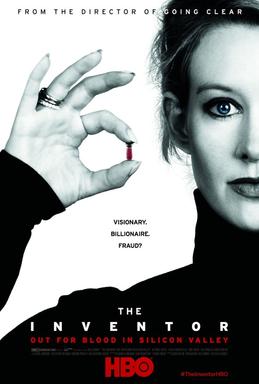
Film Review: The Inventor: Out For Blood In Silicon Valley (dir by Alex Gibney)


Oh my God, this was such a creepy documentary!

The Inventor tells the story of the rise and fall of Elizabeth Holmes, who, at one point, Forbes named the wealthiest self-made female billionaire in America, and who is currently facing criminal charges of defrauding not only her investors but also a countless number of doctors and patients.  After dropping out of college, Elizabeth Holmes founded Theranos, a Silicon Valley-based company that claimed it had devised a method that would revolutionize how blood was tested and which would lead to people leading longer and healthier lives.  (“No one will have to say an early goodbye,” as Elizabeth put it.)  It all had to do with a blood-testing device called the Edison, a device that Holmes designed, patented, and made a fortune by licensing.  That the Edison didn’t actually do what Holmes claimed that it did put lives at risk and ultimately led to her downfall.

So, what makes The Inventor such a creepy documentary?  A lot of it has to do with the fact that Elizabeth Holmes herself comes across as being so creepy.  With her endless supply of black turtlenecks and her rather monotonous (not to mention notably deep) voice, she comes across as being a cult leader in the making.  When we see archival footage of her being interviewed or of her giving a speech to her worshipful employees, she has the type of demented gleam in her eye that one would normally associate with a particularly enthusiastic Bond villain.  When her former employees talk about her, they not only mention her drive and her dedication but they also mention the fact that she rarely blinked.  In fact, she so rarely blinked that other people also felt as if they shouldn’t blink in her presence.  Theranos was a company full of people with thousand-yard stares.

Despite the fact that, as many people point out, Elizabeth Holmes had no experience in the medical field and that the majority of her lies were easily exposed, she still had little trouble getting wealthy and powerful men to invest in her company.  Among those who invested in Theranos and sat on its board of directors: two former secretaries of state, one former and one future secretary of defense, and several prominent businessmen.  Though the documentary doesn’t explore this angle as perhaps it should have, it’s interesting to note that the majority of Holmes’s backers and defenders were 1) elderly and 2) male.  The one female investor that Holmes tried to bring in easily saw through Holmes’s lies.  On the other hand, former Secretaries of State Henry Kissinger and George Shultz became enthusiastic backers of Holmes and her “vision.”  Meanwhile, attorney David Boies — who was best-known for being Al Gore’s personal attorney and who later was hired to head up Harvey Weinstein’s defense team — is on hand to intimidate any Theranos employees who might be on the verge of turning into a whistleblower.  Elizabeth Holmes may currently be an indicted pariah but, before that, she spent many years as a proud member of the American establishment.

In fact, several other members of the Establishment makes cameo appearances in The Inventor.  At one point, we see Holmes being interviewed by Bill Clinton.  At another point, Joe Biden stops by Theranos and praises the company.  We see pictures of Elizabeth Holmes in the Oval Office, visiting with Barack Obama.  Holmes is put on the covers of magazines.  Numerous publications declare her to be the next Steve Jobs.  She’s held up as the future of not just blood testing but also the future of business.  It’s only after one reporter has the courage to actually investigate her claims and two employees risk their futures to tell the truth about what they saw at Theranos that Elizabeth Holmes is revealed to be a fabulist and a con artist.  Was she ever sincere in her desire to make the world a better place or was that just another part of her carefully constructed persona?  The Inventor is full of people still struggling to answer that question for themselves.

The Inventor was directed by Alex Gibney.  Gibney previous directed the Going Clear, an expose of Scientology.  Watching The Inventor, it’s hard not to make comparisons between Scientology and the cults of Silicon Valley.  Watching Elizabeth Holmes give a speech to her employees is like watching that infamous video of Tom Cruise pay homage to L. Ron Hubbard.  And just as Scientology takes advantage of those with a need to believe in something bigger than them, Elizabeth Holmes did the same thing.  Everyone wanted the promises of Homes, Theranos, and the Edison machine to be true.  They wanted it to be true so much that they became blind to the reality that was right in front of them.

The Inventor is a fascinating documentary about power, wealth, fraud, and the prison of belief.  It can currently be seen on HBO.


Film Review: Captain Marvel (dir by Anna Bolden and Ryan Fleck)


Captain Marvel was …. well, it was okay.

I know that’s potentially a controversial opinion.  Since the movie was released last week, I’ve seen it described as being the greatest comic book movie ever made.  I’ve also seen it described as being, if not the worst film of all time, than certainly the worst chapter in the Marvel Cinematic Universe.  Really, it depends on who you ask and how they voted in 2016.  Myself, I would argue that both sides are incorrect.  Captain Marvel is neither the greatest nor the worst movie ever made.  Instead …. it’s okay.  It’s a middle of the road MCU film, one that has more in common with the first Thor, Ant-Man, and The Incredible Hulk than with Black Panther or Doctor Strange.  It has its moments but there’s a reason why everyone’s favorite character is a cat who only has about 15 minutes of screen time.

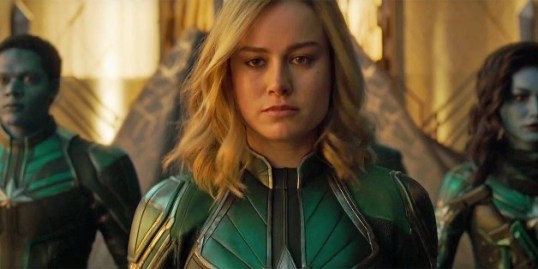
Brie Larson plays Vers, who is an elite warrior for the Kree Empire.  The Kree are an alien race.  We know they’re aliens because they have blue blood and their planet looks like a more cheerful version of Blade Runner.  The Kree are at war with another group of aliens, the Skrulls.  The Skrulls are green shape-shifters and, for some reason, they have Australian accents.

Anyways, Vers can’t remember anything about her past but she’s haunted by nightmares that suggest that she might not be a Kree at all.  Instead, she might be an Earthling!  Vers gets a chance to investigate that possibility when, while escaping the forces of the Skrull general Talos (Ben Mendelsohn), Vers plummets to Earth and ends up crashing into a Blockbuster Video.  Working with a youngish Nick Fury (Samuel L. Jackson), Vers sets out to discover the truth about her past.

Ever since this film was first announced, Brie Larson has been the target of a lot of unfair criticism.  A lot of it has centered around the fact that Larson rarely smiles in the film but you know what?  Brie Larson’s resting bitch face is the most empowering thing about Captain Marvel.  Vers is a warrior and she’s on a mission.  She has no reason to smile and giggle and jump around like some sort of manic pixie dream girl.  When Vers responded to a man telling her to smile by stealing his motorcycle, I wanted to jump up and cheer.  I mean, hell yeah!  Not only did she refuse to be pushed around but she also got a sweet ride out of it!  Seriously, the next guy who tells me that I need to smile more is losing his car.

Actually, regardless of what some people on twitter seem to believe, Vers does smile in the film.  She smiles when she’s talking to her best friend, Maria Rambeau (Lashanna Lynch).  She smiles when she’s talking to Maria’s daughter, Monica (Akira Akbar).  She smiles when there aren’t any men — or Skrulls — around, demanding all of the attention.  Both Maria and Vers are smiling because, finally, they can both be themselves.  It’s a scene that, like Vers stealing that motorcycle, feels far more honest and empowering than some of the film’s other more obvious and on-the-nose girl power moments.  Maria is a rather underused character, which is a shame because the brief scenes between Maria and Vers are some of the best scenes in the film.

That said, I still had mixed feelings about Brie Larson’s overall performance.  As good as Larson has been in so many other films, she often comes across as rather wooden and awkward here.  Larson delivers almost all of her lines in a rather flat monotone and she’s not helped by some painfully clunky dialogue.  Larson’s awkwardness is painfully obvious whenever she shares a scene with more experienced co-stars like Jackson, Mendelsohn, Jude Law, or Annette Bening.  Bening practically steals the entire film, to the extent that I would have preferred the film has been about her rather than Vers.

(Again, it’s easy to compare this film to the first Thor.  Just as it took the MCU a while to figure out what to do with Thor, one gets the feeling that they’re still not quite sure who Captain Marvel is supposed to be.)

The film’s main weakness is that, when compared to the more recent MCU films. there’s no sense of wonder to Captain Marvel.  Compare the blandness of the Kree homeworld to the vivid worlds of Guardians of the Galaxy or Thor: Ragnarok.  Ben Mendelsohn brings a little bit of depth to General Talos but, beyond the shape-shifting, there’s not much to the Skrulls, either.  When Captain Marvel flies into space, there’s nothing transcendent about the moment.  It’s actually kind of boring.  Whereas previous MCU films made space feel alive, the universe feels flat in Captain Marvel.

To cite just one example, one of the film’s biggest battle scenes is over the possession of a lunchbox.  The villains think that there’s something important in the lunchbox.  However, what they don’t know is that Vers has already emptied the lunchbox and is just using it to distract them.  For some reason, directors Ryan Fleck and Anna Bolden show Captain Marvel emptying the lunchbox before the big battle.  As a result, there’s no stakes to the battle and, from the start, we know that it doesn’t matter who wins.  When, after a lengthy fight, the lunchbox is revealed to be empty, Brie Larson mutters a weak one liner that has no impact because there was never any suspense to begin with.  This is pretty basic stuff and it’s somewhat shocking that this film manages to screw it up.

Despite those flaws, Captain Marvel is occasionally diverting.  Samuel L. Jackson brings flair to even the lamest of lines and Clark Gregg has a welcome cameo as Phil Coulson.  Annette Bening plays two different roles and she kicks major ass in both of them.  (One of her characters is named Intelligence, which leads to this hilariously awkward exchange of dialogue between Larson and Bening: “Vers.”  “Intelligence.”)  Despite being buried under a ton of makeup and prosthetics, Ben Mendelsohn does a good job and Jude Law is amusingly arrogant as Vers’s mentor.  Hopefully, Lashawn Lynch will get a bigger role in a future MCU film.

And then there’s the cat.

The cat is named Goose and …, well, look, I won’t spoil it.  Let’s just say that he’s a very special cat and he steals every scene.  In this film, we discover that Nick Fury loves cats, as well he should!

Anyway, Captain Marvel is okay.  There’s a few good scenes and there’s a few clunky ones and finally, there’s Goose and that stolen motorcycle.  One gets the feeling that the most remembered scenes will probably be the ones that were inserted during the end credits.  Captain Marvel will return in Avengers: Endgame and I hope that she doesn’t smile once.


Triple Frontier, Review By Case Wright


5c90294e802b2.image

The heist movie or treasure hunt movie is always the same and always pretty fun.  It’s not supposed to be Shakespeare; it’s supposed to pull you in and be a thrill ride.  This iteration is all about the down and out Iraq and Afghanistan Veterans who decide to seek their fortune the old fashioned way: ripping off a drug kingpin!  In true heist genre fashion, everything works out great!

The characters came across as real Veterans to me.  After some research, the writer- Mark Boal was embedded with a platoon in Iraq and he also wrote The Hurt Locker.  The characters in Triple Frontier were like the men I knew: strong, divorced, and liked to joke.  Ben Affleck’s character Tom struck me as especially realistic.  He loved his daughter, but there was a distance because he was just not suited for civilian life.  She wanted him home, but he always wanted to be away.  You could see on her face that she knew the moment his buddies came calling that he was already gone.

Oscar Isaac plays Pope who has a gig doing private security/law enforcement in South America.  He is in pursuit of Lorea, a drug boss, who is causing all kinds of problems. Yada Yada Yada.  Pope finds the location of Lorea’s hideout which has hundreds of millions of dollars stashed inside, but he needs a team to kill Lorea, Lorea’s men, get the cash, and get out of the country.  He turns to his former squad to pull off the heist.  They need a little cajoling, but they come around. There isn’t a lot of dialogue after they agree to the heist, which makes sense.  They committed and now transitioned to soldier-mode.  The heist starts off with success in sight, but it’s not long before everything goes wrong and they are in a fight for their lives.

The film is shot really beautifully and has some high-priced songs for a Netflix program. Everything seemed very real.  Even the way the characters carried themselves and flowed through Lorea’s hideout was seamless.   They moved the way we are trained to move through rooms.  I am always looking for that in action films.  Are they not having muzzle-awareness (pointing there weapon accidentally at a friendly)?  Are they holding the rifle close to their face? Are they aiming right?  The answers to those questions were yes.   J.C. Chandor should be really proud of himself for the realism.

What kept pulling me into the story wasn’t the action (which was excellent BTW); it was that these men were like the ones I knew.  The team itself was representative of who does our killing for us: salt of the earth…men.   I like seeing women in action films and I am already excited about Black Widow, but the infantry in real life is male.  They are regular guys who are asked to do terrible terrible things.  When those terrible things are done, we cast the men aside.  The story concludes a lot like the war itself did with a lot of loss and not a lot to show for it.  This film has a political statement between the explosions and it’s worth listening to it. 

* I included Mary Pop Poppins by the True Loves in my review.  The song embodies the heist genre like no other.  Also, they are Seattleites!!!!

Insomnia File #39: Disclosure (dir by Barry Levinson)


What’s an Insomnia File? You know how some times you just can’t get any sleep and, at about three in the morning, you’ll find yourself watching whatever you can find on cable? This feature is all about those insomnia-inspired discoveries!

On Tuesday, if you were having trouble getting to sleep around one in the morning, you could have turned over to Cinemax and watched the 1994 film, Disclosure.

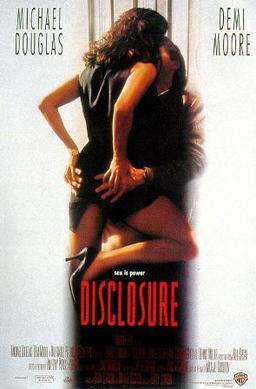
The majority of Disclosure takes place at DigiCorp, which is some sort of technology company that Bob Garvin (Donald Sutherland) founded because, as the movie explains it, he only has $100 million dollars but still dreams of being a billionaire someday.  With a huge merger approaching, Garvin announces that he will be promoting Meredith Johnson (Demi Moore) to run the new CD-ROM division.  This shocks a lot of people, as everyone was expecting the promotion to go to Tom Sanders (Michael Douglas).  However, Garvin explains that, ever since his daughter died, he’s wanted to promote a woman.

(Presumably, if a male relative had died, Tom would have gotten the promotion.  I have to admit that I kept waiting for the film to get back to the subject of Garvin’s dead daughter but, apparently, that was just an odd throw-away line.)

Tom and Meredith have a history.  They were once lovers, though Tom is now happily married to Susan (Caroline Goodall) and has a family.  Meredith takes one look at a picture of Susan and says that Tom must miss being able to take his lover from behind whenever he felt like it.  Tom says, “Mrs. Robinson,  you’re trying to seduce me.”  No, actually, he says, “No, no, no, no, no, no…..”  It all ends with Tom fleeing Meredith’s office while Meredith, in her bra, chases after him, shouting threats all the way.  The only witness to this is a cleaning lady who sadly shakes her head before returning to her dusting.

Tom is so traumatized by the experience that he has a bizarre nightmare in which Donald Sutherland says that he likes his suit and then attempts to lick his face.  Tom’s trauma continues when he goes to work the next day and discovers that Meredith has accused him of sexual harassment!  Tom responds by suing the company and it’s time for an epic courtroom battle, one that will deal with one of the most important issues of our time….

….except that never happens.  Here’s what is weird.  For all the talk about abuse of power and all the scenes of a remorseful Tom apologizing to both his wife and his secretary for his past behavior, the whole sexual harassment plot turns out to be a red herring.

Instead, the film turns into this weird techno thriller, one that involves Tom trying to figure out how to make a better CD-ROM.  That may have been a big deal back in 1994 but today, you watch the film and you think, “Who cares?”  (Even better is a scene where Garvin brags about how his company is on the cutting edge of fax technology.)  Once Tom realizes that Meredith only accused him of sexual harassment to keep him from building the perfect CD-ROM, we get a scene of him using a virtual reality headset to search through the companies files.  At one point, he spots a bot with Demi Moore’s face destroying files and he shouts out, “She’s in the system!”  It’s just strange.

The film’s plot is often incoherent but the cast keeps things amusing.  Michael Douglas spends the first half of the movie looking either annoyed or terrified.  Things pick up for him in the 2nd half of the movie.  Whenever he gets good news from his lawyer, he jumps up in the air and goes, “Yessssssss!” and it’s so dorky that it’s kind of endearing.  Meanwhile, Demi Moore doesn’t even try to make Meredith into a credible character, which is actually just the right approach to take to this material.  There’s no room for subtlety in a film as melodramatic as this.  Finally, Donald Sutherland is his usual avuncular self, smirking at all the right moments and suggesting that he finds the movie to be just as amusing as we do.  For all of its plot holes and problematic subtext, Disclosure is an entertainingly stupid film.  A lot of the credit for the entertaining part has to go to the cast.

As I said, Disclosure is just strange..  As with most films from the 90s, its sexual politics are all over the place.  On the one hand, Tom learns that even inadvertent sexism can make the women who wok with him feel unsafe.  On the other hand, the only woman with any hint of a personality is portrayed as being pure evil.  In no way, shape, or form is this a movie to be taken seriously.  Instead, this is just a weird film that cries out, “1994!”

Previous Insomnia Files:

  1. Story of Mankind
  2. Stag
  3. Love Is A Gun
  4. Nina Takes A Lover
  5. Black Ice
  6. Frogs For Snakes
  7. Fair Game
  8. From The Hip
  9. Born Killers
  10. Eye For An Eye
  11. Summer Catch
  12. Beyond the Law
  13. Spring Broke
  14. Promise
  15. George Wallace
  16. Kill The Messenger
  17. The Suburbans
  18. Only The Strong
  19. Great Expectations
  20. Casual Sex?
  21. Truth
  22. Insomina
  23. Death Do Us Part
  24. A Star is Born
  25. The Winning Season
  26. Rabbit Run
  27. Remember My Name
  28. The Arrangement
  29. Day of the Animals
  30. Still of The Night
  31. Arsenal
  32. Smooth Talk
  33. The Comedian
  34. The Minus Man
  35. Donnie Brasco
  36. Punchline
  37. Evita
  38. Six: The Mark Unleashed

Spring Breakdown #7: FYRE: The Greatest Party That Never Happened (dir by Chris Smith)


So, last night, I finally watched FYRE: The Greatest Party That Never Happened, the Netflix documentary about the infamous Fyre Festial.

As you may remember, the Fyre Festival was supposed to be the greatest party of 2017.  Influencers played it up on Instagram.  A commercial for it, one that featured the world’s top models on a beautiful island, was pretty much inescapable on Facebook.  It was going to be the greatest musical festival of all time, with luxury villas and yachts and private chefs and …. Blink-182?  Even before the entire festival was revealed to be a massive fraud, I have to admit that I was kind of like, “All this for Blink-182?”

Anyway, the festival did turn out to be a disaster.  A lot of people paid a lot of money to end up on the beach, staying in rain-soaked FEMA tents and eating pre-packaged sandwiches.  The bands cancelled so there wasn’t even any music.  After the festival was officially canceled, several people found themselves stranded on the island.  Those of us who weren’t there followed the drama on twitter.  We joked about the Lord of the of Flies.  One of my favorite tweets about the whole mess compared it to an episode of It’s Always Sunny In Philadelphia.  “The Gang Puts On A Music Festival.”

At the time, very few people had much sympathy for anyone involved in the Fyre Festival.  Not only did the organizers seem to be a group of insufferable douchebags but so did the people who paid thousands for dollars for a FEMA tent, a cheese sandwich, and Blink-182.  Having now watched the Netflix documentary …. well, I still don’t have much sympathy for the organizers or the participants.

I do have sympathy for the people who actually lived in the island.  They were taken advantage of and most of them received no financial compensation for the work that they put into the festival.  While we were all laughing on twitter, one poor restaurant owner lost a fortune feeding all of the people who were stranded in the Bahamas.  While we were making jokes, the people who actually did all the work went unpaid.

The documentary starts with festival organizer Billy McFarland and celebrity co-sponsor Ja Rule annoying Bella Hadid, Emily Ratajowski, and Hailey Baldwin on an island that once belonged to drug lord Pablo Escobar and it ends with McFarland heading for federal prison.  Billy McFarland emerges as a professional con man who built his success by exploiting people’s desire to be a part of an “exclusive” club.  Before Fyre, McFarland ran a credit card company.  Even after the disaster of the Fyre Festival, McFarland continued to use the Fyre e-mail list to try to sell VIP access that he couldn’t actually provide.  Even when under indictment, McFarland allows himself to be filmed while he brags about “hustling.”  He really can’t help himself.

Ultimately, this documentary works best as a portrait of the power of fame.  From the start, it’s obvious that the festival is going to be a disaster.  Everyone who is interviewed states that, at no point, did they think Fyre would be a success.  (One person explains that it takes at least a year to set up a successful music festival.  Fyre tried to do it in a matter of weeks.)  But, because Billy McFarland paid Kendall Jenner and a bunch of other social media superstars to promote the festival, people who should have known better paid a lot of money for a tent and a stale sandwich.  McFarland may not have known how to put on a music festival but he definitely knew how to exploit our celebrity-obsessed culture.

During the documentary, one of the festival’s organizers — Andy — tells a story about how he was prepared to give a customs official oral sex in order to get him to release a delivery of Evian water.  Reportedly, due to the success of the documentary and the popularity of that anecdote, Andy will be getting his own reality show.  That seems like a fitting coda for the whole thing.

A Wee Bit O’Blarney with Cagney & O’Brien: BOY MEETS GIRL (Warner Brothers 1938)


gary loggins's avatarcracked rear viewer

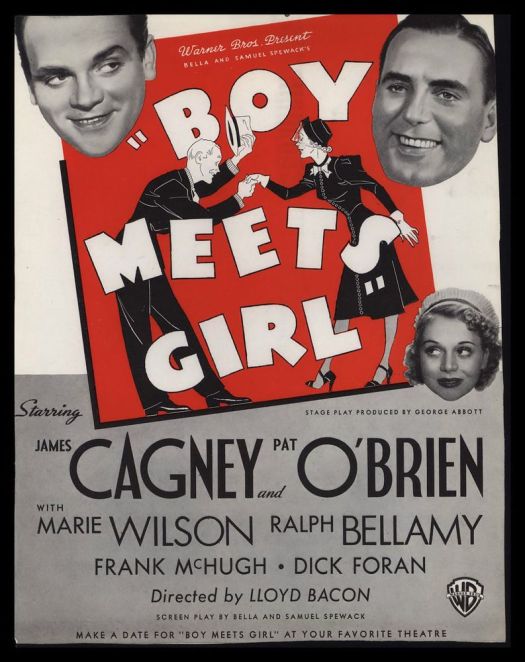
Tomorrow’s the day when everybody’s Irish, and America celebrates St. Patrick’s Day! The green beer will flow and copious amounts of Jameson will be consumed,  the corned beef and cabbage will be piled high, and “Danny Boy” will be sung by drunks in every pub across the land. Come Monday, offices everywhere will be unproductive, as all you amateur Irishmen will be nursing hangovers of Emerald Isle proportions. They say laughter is the best medicine, so my suggestion is to start your workday watching an underrated screwball comedy called BOY MEETS GIRL, starring James Cagney and Pat O’Brien, both members in good standing of “Hollywood’s Irish Mafia”!

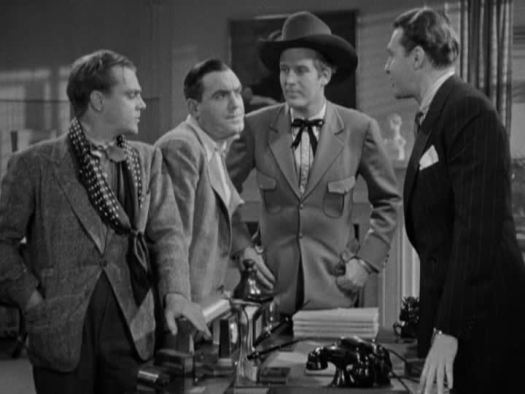
Jimmy and Pat play a pair of wacky screenwriters working for Royal Studios on a vehicle for fading cowboy star Dick Foran. Pretentious producer Ralph Bellamy has enough problems without these two jokers, as rumor has it Royal is about to be sold…

View original post 493 more words

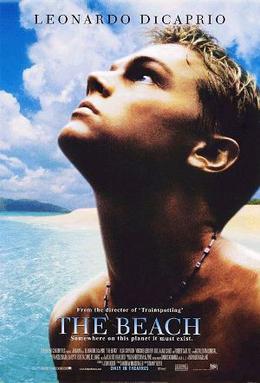
Spring Breakdown #6: The Beach (dir by Danny Boyle)


Here’s a lesson for any and all aspiring film bloggers:

Even if you’ve seen the movie before, always rewatch a film before you write about it.  This is especially true if it’s been a while since you last saw the film.  Often the pressure to say whether a film was bad or good can lead to your memory playing tricks on you.

That was certainly the case with me and the 2000 film, The Beach.  For the longest time, I remembered The Beach as being a gorgeously shot but rather shallow film, one that featured one of Leonardo DiCaprio’s least impressive performances.  Whenever I had to explain my theory that DiCaprio didn’t become a consistently good actor until 2003, The Beach was inevitably one of the film’s that I would cite as proof that, early on in his career, DiCaprio had a tendency to overact.

In short, if I hadn’t rewatched the film on Saturday morning, you would currently be reading a really negative review of The Beach.  However, I did rewatch The Beach and I discovered that both the film and DiCaprio’s performance were a lot better than I initially remembered.  Now, don’t get me wrong.  The Beach is still a frustratingly uneven film and the voice over narration (which DiCaprio recites in a rather overwrought style) still makes me cringe.  But still, it’s hardly the disaster that I initially remembered it being.

DiCaprio plays Richard, a privileged American who finds himself in Bangkok, searching for adventure.  When he meets the appropriately named Daffy (Robert Carlyle), a bemused Richard listens as Daffy talks about an uncharted island in the Gulf of Thailand.  Daffy swears that it’s a paradise that is populated by other travelers.  When Richard smirks and asks Daffy if he’s “fucked in the head,” Daffy responds by drawing Richard a map and then promptly committing suicide.  Richard and his two French friends, Françoise (Virginie Leydon) and Étienne (Guillaume Canet), go searching for the island.

And they find it!  It turns out that Daffy knew what he was talking about.  On the island, they discover a small but thriving commune.  Soon, Richard is killing sharks, having affairs, and becoming close to the leader of the commune, Sal (Tilda Swinton).  Unfortunately, Richard is also starting to lose his mind.  He grows to love paradise so much that he chooses ignore the dangers all around.  When a member of the commune is attacked by a shark, he’s left out in the middle of the jungle because no one wants to deal with the reality of his suffering.  Even more dangerous are the neighboring marijuana farmers, who allow Sal and her followers to live only under the condition that they keep the island a secret.  The problem is that Richard’s not good at keeping secrets.  Before he even knew if the island was real, Richard showed the map to a group of American surfers.  And now, the surfers are coming….

The Beach was directed by Danny Boyle, so it’s not a surprise that the film looks great and that it has an absolutely brilliant soundtrack.  (The film makes great use of both Moby’s Porcelain and Out of Control by the Chemical Brothers.)  At the same time, Boyle is too much of a subversive to fully buy into his film’s vision of paradise.  From the minute that Richard and his friends reach the island, Boyle is offering up hints that utopia isn’t as wonderful as people assume.  When Sal asks for a volunteer to accompany her to the mainland on a supply run, Boyle practically delights in showing everyone freaking out at the idea of having to indulge in responsibility.  Boyle often contrasts Richard’s pretentious narration (which, at times, sounds like it could have been lifted from a Beto O’Rourke medium post) with the rather mundane details of living on the island.  Though it may not be obvious from the start, The Beach works best when viewed as being a satire of middle and upper class ennui.

As for DiCaprio’s performance as Richard ….. well, let’s just say that he spends a lot of time yelling.  During the early part of his career — essentially the pre-Scorsese years — DiCaprio had a tendency to overact.  For all of his obvious talent, it took DiCaprio a while to really get to a point where he seemed as comfortable underplaying as he was just going totally overboard.  The Beach has its moments where DiCaprio gets awkwardly shrill.  (The scene where Richard talks about killing a shark always makes me cringe.)  But, at the same time, DiCaprio’s performance gets better as the film progresses.  (The scenes where DiCaprio is running around the jungle and trying to act like an animal are actually quite good.)  If DiCaprio’s performance sometimes seems shallow or histrionic, that’s because that’s who Richard is meant to be as a character.  (In one scene, Françoise even calls Richard out for being shallow and pretentious.)  Just because Richard’s narrating and is played by the star of the film, that doesn’t meant that we’re necessarily meant to like him.

These are all things that I didn’t really understand until I rewatched the film.  Maybe I was too immature the first time I saw the movie to understand what Boyle was really going for.  Maybe I was just having an off night the first time that I watched The Beach.  Or maybe my memory was just faulty.  For whatever reason, I’m glad that I rewatched this often uneven but still rather interesting film.  For all of its flaws. it was definitely better than I remembered.

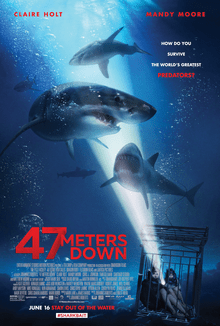
Spring Breakdown #5: 47 Meters Down (dir by Johannes Roberts)


One of the surprise box office hits of 2017, 47 Meters Down tells the story of two sisters.

Kate (Claire Holt) is free-spirited, glamorous, and always up for a new adventure.  Her older sister, Lisa (Mandy Moore) is more serious and responsible.  If Kate craves constant stimulation, Lisa seeks stability.  When we first meet them, they’re on vacation in Mexico.  Lisa has just admitted to Kate that her boyfriend has dumped her because he feels that she’s too safe and that she doesn’t take enough risks.  What is Kate’s solution to all of Lisa’s problems?  How about going on a cage dive and seeing the sharks!?

Now, I should stop right here to point out the main strengths of 47 Meters Down.  The main character is named Lisa.  For me, this made her instantly sympathetic and I was able to relate to her, even though I’ve always been more like Kate.  I can’t even begin to tell you how many movies could have been improved by renaming their main character Lisa.

Anyway, Lisa and Kate find a group of slightly seedy sailors who own a boat and a cage and soon, they’re off to see the sharks.  Before getting into the water, both Lisa and Kate are warned about all the bad things that can happen during a dive.  You can run out of oxygen.  You can get eaten by a shark.  You can resurface too quickly and get “the bends.”  We here a lot about “the bends” over the course of the film.  That’s when you get nitrogen bubbles in your brain and it can cause you to get delirious and hallucinate.  It’s a pretty serious thing but I have to admit that I kept giggling whenever anyone said, “Be careful, you’ll get the bends!” because ….. listen, it just sounds silly, okay?  I get that the bends are a real thing and that they’re really dangerous and that they should be taken seriously but “the bends’ just sounds like a punchline to a vulgar joke.  Whenever I heard anyone in the film use the term, I was just like, “Wasn’t that Beto O’Rourke’s college band?”

Lisa is nervous about going in the water.  Kate isn’t.  It turns out that maybe Lisa had the right idea because, almost immediately after Lisa and Kate are submerged, the cables holding the cage snap and suddenly, the two sisters find themselves trapped 47 meters down.  If they leave the cage and attempt to swim back up to the surface, they might very well get eaten by a shark.  And if the sharks don’t get them, there’s always …. the bends!  The men on the boat swear that they’re going to rescue the two sisters but who knows if they can be trusted.  Meanwhile, the oxygen tanks will soon be empty….

47 Meters Down may have been a surprise box office success when it was released in 2017 but the critics absolutely hated it.  Watching the film, it’s easy to see why.  The critics who complained that the film was predictable had a point.  However, the audiences who didn’t care what the critics thought had a point as well.  Silly as the film may occasionally be, it works.  When that cage sinks down into the murky darkness of the ocean, the film captures some very primal fears.  When Lisa and Kate argue about what to do next, it’s a scene to which anyone who has a sibling should be able to relate.  The relationship between Lisa and Kate felt authentic, which made the film’s final twist far more powerful than it had any right to be.

47 Meters Down is somewhat silly but it’s still an effectively entertaining look at sisters, divers, and the sharks that like to eat them.

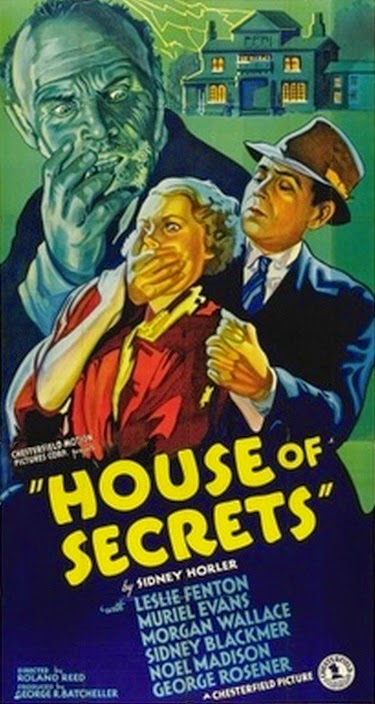
‘B’-ware, My Love: HOUSE OF SECRETS (Chesterfield 1936)


gary loggins's avatarcracked rear viewer


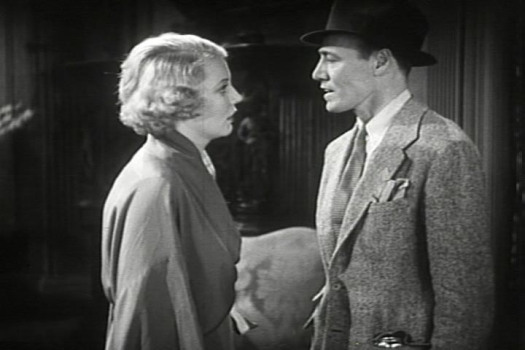
Do you like movies with gloomy old mansions, secret passageways, clutching hands behind curtains, bloodcurdling screams, and the like? How about we throw in some Chicago gangsters and a hidden pirate treasure? Then you may like HOUSE OF SECRETS, a ‘B’ mystery originally sold to audiences as a horror thriller. It’s no classic, to be sure, but it is an enjoyable little low-budget film produced by tiny independent Chesterfield Pictures, who specialized in this sort of thing, and featuring a better than average cast of Familiar Faces.

Aboard a ship bound for London, a young American woman is accosted by a cad who swears he saw her leaving a drug palace in Paris. Globetrotting but near penniless Barry Wilding defends her honor, but the mysterious blonde won’t reveal her name. Barry runs into his old friend Tom while in Jolly Olde England, a detective on the trail of a murderer…

View original post 388 more words

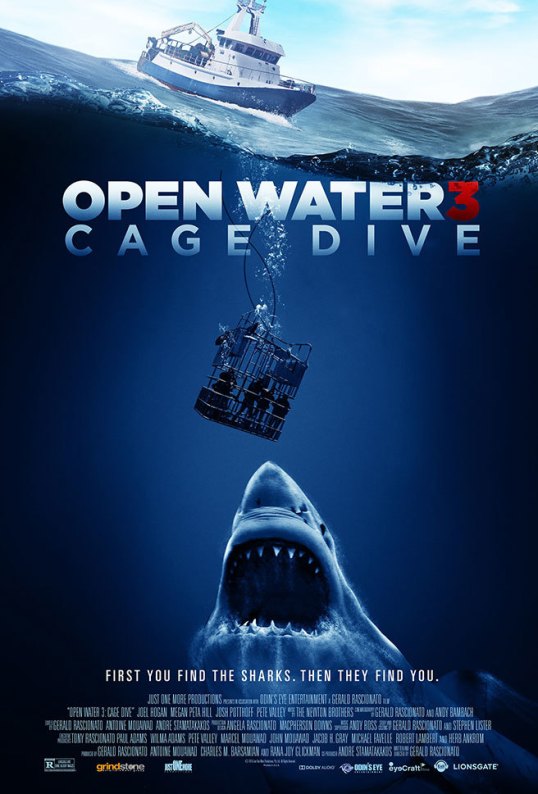
Spring Breakdown #4: Open Water 3: Cage Dive (dir by Gerald Rascionato)


Released in 2017, Cage Dive is the third installment in the Open Water franchise.  Once again, a group of friends are floating out in the middle of the ocean.  Once again, there are sharks.  There’s interpersonal conflict.  There’s death and chattering teeth and plenty of debate about who deserves the  blame and whether or not it’s a good idea to try to swim after a passing boat.  Again, it’s hard not to feel that the whole situation could have been avoided with just a little common sense.

However, there is one big difference.  This time, the story is told through …. found footage!

That’s right!  Not only are Jeff (Joel Hogan), his brother Josh (Josh Potthoff), and his girlfriend Megan (Megan Peta Hill) floating out in the middle of the ocean but Josh is determined to film the whole thing.  “Turn off the camera!” Megan shouts.  “Guys, we said we were going to film the whole thing!” Josh shouts back.  Meanwhile, the sharks are amazed at just how easy their hunt has gotten lately.

Why is Josh filming?  Josh is obsessed with getting on a reality show and he’s making an audition tape.  In order to prove that the three of them are wild and fun enough to get on television, he comes up with the idea of flying to Australia and going on a cage dive.  (A cage dive is when you get in an underwater cage and dare a bunch of sharks to eat you.)  Unfortunately, a sudden tidal wave causes the boat to capsize and …. well, you can guess the rest.

Sharks aren’t the only problem that Jeff, Josh, and Megan have to deal with.  First off, Jeff has a heart condition and he hasn’t been taking his medication.  Secondly, Josh and Megan have been having an affair.  How long can they float in the ocean before all the secrets come out?

Usually, I can’t stand found footage films and the first half of Open Water 3 features everything that drives me crazy about the genre.  There’s way too many scenes of people saying, “Are you filming?” and “Are you getting this?”  It’s hard not to notice that the camera somehow always seems to be in exactly the right location to catch Megan undressing or Jeff’s mother asking him if he’s remembered to take his medication.  With the exception of one clever scene where Josh attempts to keep Jeff from seeing footage of Megan cheating on him, it all feels rather awkward and it seems like it takes forever to actually get them into the water….

However, once they actually get into the water, the film picks up.  It’s not that Jeff, Josh, and Megan somehow become any more likable.  However, director Gerald Rascionato makes good use of the shaky aesthetic of the found footage genre to keep us just as off-balance and confused as the people in the water.  Like them, we find ourselves struggling to figure out where the sharks are coming from.  The film ends with a nice homage to The Blair Witch Project, with the witch replaced by a shark.  It works far better than you might expect.

Even the film’s biggest flaw becomes a strength.  Yes, the three main characters may not be likable and they may not be very smart.  From the minute you hear Josh telling Megan to be careful with a flare, you know that we’re eventually going to get an exploding life raft.  But their stupidity is disturbingly relatable.  I hope I’m never stranded at sea because I’d probably accidentally set off a flair as well.  More importantly, you don’t really regret the fact that none of these people are probably going to survive.  If anyone in the film was likable, Open Water 3 would be unbearably depressing.  Since they’re not, you’re free to root for the sharks.

And believe me, you will.