What Lisa Watched Last Night #198: Psycho Stripper (dir by Jake Helgren)


Last night, I watched the latest Lifetime premiere, Psycho Stripper!Why Was I Watching It?
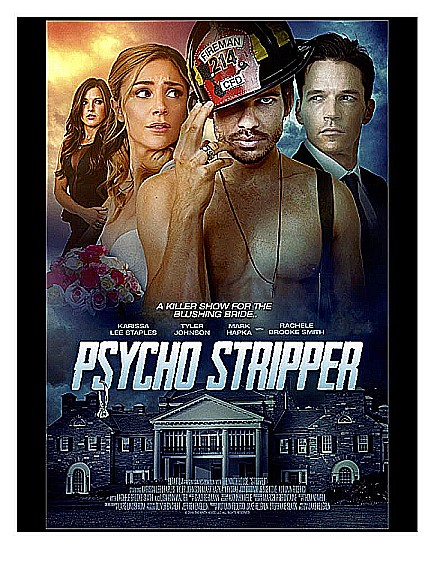
Why was I watching it?  Seriously, with a name like Psycho Stripper, how couldn’t I watch it!?  There’s an art to coming up with a good title and whoever came up with Psycho Stripper has obviously perfected that art.  The title was so great that I even abandoned the neighborhood Cinco De Mayo party early, just so I could watch the movie in the comfort of my own home.  That’s the power of a perfect title!

Also, I have to give some credit to Lifetime, here.  Before they showed Psycho Stripper, they showed Magic Mike.  So, on Sunday night, viewers got a chance to see two separate versions of the life of a male stripper, the yellow-tinted Steven Soderbergh version (seriously, I like Magic Mike but, whenever I watch it, I worry all that yellow is going to burn my retinas) and the wonderfully over-the-top Lifetime version!

What Was It About?

Amber (Karissa Lee Staples) owns her own dance studio, has a lot of friends, and is about to get married to the wealthy (if kinda wimpy) Owen (Mark Hapka).

Hunter (Tyler Johnson) is a handsome and charming male stripper who dresses up like a fireman, can change a flat tire, and who happens to be really good with an ax.

Together, they solve crimes!

No, not really.  Instead, Hunter shows up at Amber’s bachelorette party.  He’s supposed to just be a part of the night’s entertainment but, instead, Hunter keeps showing up wherever Amber happens to be.  First, he just wants dance lessons.  Then, he’s kind of dating Amber’s best friend, Taryn (Rachele Brooke Smith).  Then, he’s bringing Amber a gift to thank her for the lessons.  Suddenly, he’s asking Amber if she wants to get lunch!  Amber doesn’t think that it’s a good idea for her to have lunch with Hunter, especially since Owen seems to have a hang-up about her hanging out with a mysterious man who has a great body.

Then again, Owen has issues of his own.  For instance, he doesn’t seem to have quite gotten over his previous girlfriend, the one who died mysteriously….

What Worked?

Okay, so I absolutely loved this movie.  I mean, how couldn’t I?  It combined two of my favorite things: over-the-top, in-your-face melodrama and dancing!  This movie was a lot of fun and Tyler Johnson really threw himself into playing the role of the psycho stripper.

The film also had a bit of a subversive side, as well.  Hunter may be a psycho but you still kind of find yourself on his side, if just because everyone else in the movie is so judgmental of him and how he makes his living.  Owen’s family is extremely wealthy and all of his friends are extremely privileged.  When they start giving Hunter a hard time about being a stripper (with one of them even throwing a dollar bill at him), you can’t help but feel a little bit bad for him.  (Of course, then he starts killing people and you’re like, “Okay, never mind….”)

My favorite character was Taryn, who was not only a good dancer but also the greatest best friends that one could possibly hope for.  She got all the best lines.  My personal favorite was, “We’re going to get in this car and plow his ass down!”

What Didn’t Work?

It all worked.  This was Lifetime at its best.

“Oh my God!  Just like me!” Moments

A Lifetime film set in a dance studio?  To be honest, almost the entire film was an “Oh my God!  Just like me!” moment.  I related to Taryn.  I’d like to think that, if there was a psycho wandering around outside, I too would be smart enough to grab a knife before going outside.

The last Bachelorette Party that I went to had a stripping fireman, just like this movie.  However, I don’t think he ever killed anyone.  Actually, rumor has it that he was a real fireman who had too much to drink that night.  Who knows?  Life is indeed a crazy tapestry.

Lessons Learned

Beware of strippers bearing gifts.

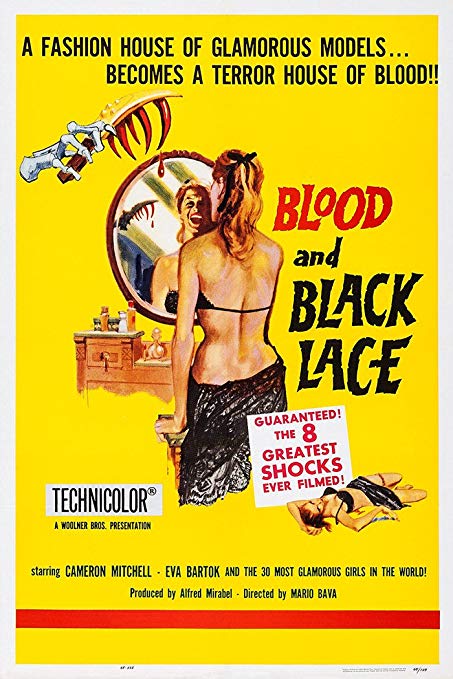
Sex And Drugs And BLOOD AND BLACK LACE (Allied Artists/Woolner Brothers 1964)


gary loggins's avatarcracked rear viewer


Welcome to the weirdly wonderful world of giallo, pioneered by the late Italian maestroMario Bava . Though Bava’s THE GIRL WHO KNEW TOO MUCH (released stateside as EVIL EYE) is considered by connoisseurs the first, it was BLOOD AND BLACK LACE that defined the genre, with its comingling of crime drama, murder mystery, and horror elements coalescing into something truly unique. I hadn’t seen this film in decades before a recent rewatch, and was again dazzled by Bava’s technique. The film has proved to be highly influential in the decades-later slasher genre, yet has its roots set firmly in the past.

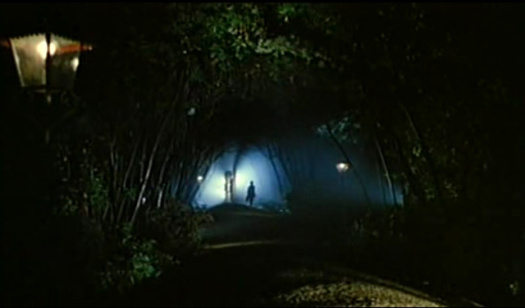
The opening sequence is a stunner, as we see the beautiful model Isabelle walking through a woodsy pathway on a dark and stormy night, stalked and then brutally murdered by a faceless, trenchcoated killer. From there, we’re introduced to the remaining cast, members of the haute couture fashion…

View original post 464 more words

Film Review: Extremely Wicked, Shockingly Evil, and Vile (dir by Joe Berlinger)


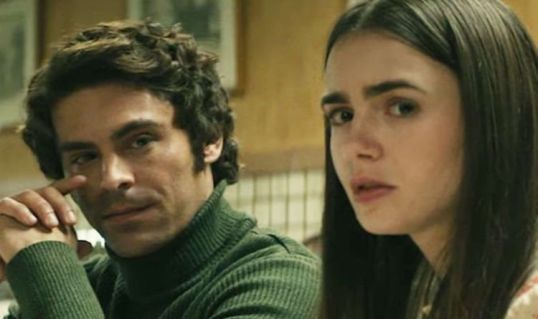
Early on in the new Netflix film, Extremely Wicked, Shockingly Evil, and Vile, there’s a scene in which Liz Kendall (Lily Collins) and her sister, Joanna (Angela Sarafyan) go to a bar.  Through some rather heavy-handed dialogue, we learn that Liz has just broken up with her boyfriend, that she has next to zero self-confidence, and that she’s a single mother.  She doesn’t think that there’s a man anywhere who would be interested in her.  Joanna responds by pointing out that there’s one man who appears to be very interested.  In fact, he hasn’t taken his eyes off of Liz since they entered the bar.

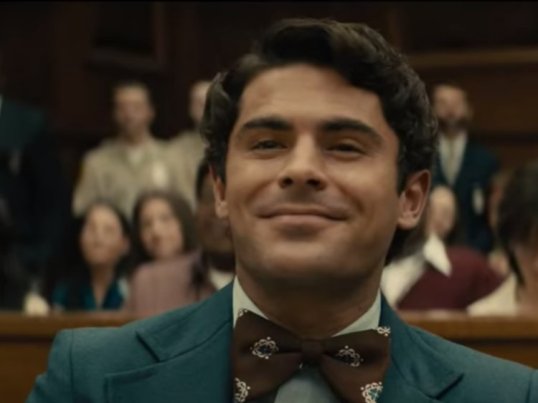
That man’s name is Ted (Zac Efron) and, at first, he seems like he’s too good to be true.  He’s charming.  He’s a law student.  He appears to love spending time with Liz’s daughter.  He looks like Zac Efron.  Perfect, right?

Of course, we know something that Liz doesn’t.  We know that Ted is Ted Bundy and that, eventually, he’s going to become one of America’s notorious serial killers, a symbol of evil so potent that, more than 30 years after he was executed by the state of Florida, he continues to get movies made about him.

Because we know who and what Ted is, we spend the first fourth of the movie cringing at everything that makes Liz happy.  For instance, Liz is shocked to discover that Ted apparently loves her daughter but we’re just like, “Oh my God, that’s Ted Bundy!  GET YOUR DAUGHTER AWAY FROM TED BUNDY!”  Liz thinks it’s romantic when Ted makes breakfast for her but we’re just staring at the big kitchen knife in his hand.  When Liz and Ted make love, only we notice the blank look on Ted’s face as he looks down at Liz and we find ourselves wondering what’s happening in his mind.

The film is told largely through Liz’s eyes and, with one exception, we never see Bundy actually committing any of his crimes.  (That’s a good thing, by the way.  We already know who Ted Bundy was and what he did.  There’s no need to sensationalize the very real pain that he caused.)  Like Liz, we find out about Bundy’s crimes through news reports and arrest records.  For instance, when Bundy is arrested for attempted kidnapping in Utah, Liz doesn’t find out about it until a story appears in the local Seattle newspaper.  When Liz demands to know why he didn’t tell her what was happening, Bundy gives her a bullshit story about how he’s being framed and how his lawyer is going to get the case thrown out.  We know that Ted’s lying but Liz believes him because …. what else is she going to do?  Is she going to believe that this perfect man who seems to love both her and her daughter is actually a sociopathic monster?

The film follows Bundy from one trial to another, as he’s charged with crimes across country.  It shows how this superficially charming law student became something of a media celebrity.  (When a reporter asks him if he’s guilty, Bundy grins and asks if the reporter is referring to a comic book that he stole when he was in the fifth grade.)  Bundy escapes.  Bundy is arrested.  Bundy escapes again.  Bundy eventually ends up being tried in Florida, where he revels in the attention.  When Liz loses faith in him, Bundy replaces her with an unstable woman named Carole Ann (Kayla Scodelario).  However, even while Carole Ann is dutifully delivering statements from Bundy to the press, Bundy is still calling Liz and begging her to believe that he’s innocent and he’ll soon be freed from prison.

Why is it so important to Bundy that Liz believe in him?  Is he just entertaining himself by manipulating her or, in his relationship with her, does he see the type of normalcy that he desires but knows he’s incapable of ever achieving?  Towards the end of the film, Liz comes close to asking Bundy if he was planning on killing her the first night that they met.  She doesn’t and it’s doubtful that Bundy would have given an honest answer but it’s still a question that hangs over every minute of this film (as does Liz’s physical resemblance to the majority of Bundy’s victims).

Though the film may be told from Liz’s point of view, she’s often comes across as just being a meek bystander, watching as the darkness of Ted Bundy envelops her world.  The film itself seems to be far more interested in Ted Bundy and his twisted celebrity.  Zac Efron plays Bundy as someone who knows how to be charming and who is good enough at imitating human emotions that he’s managed to keep the world from noticing that he’s essentially hollow on the inside.  Bundy has gotten so used to acting out a role that, even when he’s on trial for his life, he can’t resist the temptation to turn the courtroom into his own stage.  He demands to defend himself and, though he initially proves himself to be a good lawyer, his demands and his questions become progressively more flamboyant and self-destructive.  It’s as if he’s gotten so caught up in playing his role that he’s incapable of recognizing the reality of his situation.  He performs for the jury, the judge, and the television audience, treating the whole thing as if he’s just a character in a movie.  It’s only when he has no choice but to accept that he’s been caught and he’s never going to escape that Bundy finally shows some human emotion.  He cries but his tears are only for himself.  It’s a chilling performance and Zac Efron deserves every bit of praise that he’s received.

Unfortunately, the film itself doesn’t really tell us anything that we didn’t already know.  Director Joe Berlinger is best-known as a documentarian and he talks a “just the facts” approach to the story.  We don’t really get any insight into how a monster like Ted Bundy could come to exist.  Outside of Efron’s revelatory performance, there’s not much here that couldn’t be found in any of the other films that have been made about Ted Bundy.

(Interestingly enough, as I watched the film, it occurred to me that Ted Bundy was a monster who could have only thrived in a pre-Internet age.  For all the books and movies that portray him as being some sort of cunning genius, Bundy actually wasn’t that smart.  He approached two of early his victims in a public place and introduce himself as being “Ted,” usually within earshot of a handful of witnesses.  He was so brazen that the police even ended up with a sketch that pretty much looked exactly like him.  In all probability, the only way that Ted Bundy avoided getting arrested in Seattle was that he moved to Utah, where his crimes were unknown and the sketch wasn’t readily available.  Today, of course, that sketch and Ted’s name would be on Twitter and Facebook as soon as they were released by the police.  My friend Holly would probably retweet the sketch and say, “Do your thing, twitter!”  He would have been identified and arrested in just a matter of time.  Instead, Bundy committed his crimes at a time when news traveled slower and law enforcement agencies were not in constant communication with each other.)

The good news is that Extremely Wicked is not, as some feared, a glorification of Ted Bundy.  He’s a monster throughout the entire film.  Zac Efron proves himself to be a far better actor than anyone’s ever really given him credit for being.  It’s a flawed film but, at the very least, it’s also a disturbing reminder that sometimes, darkness hides behind the greatest charm.


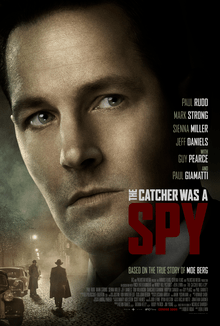
Film Review: The Catcher Was A Spy (dir by Ben Lewin)


I was so impressed with Paul Rudd’s performance in Avengers: Endgame that, last night, I decided to watch another Paul Rudd film, 2018’s The Catcher Was A Spy.

Based on a true story, The Catcher Was A Spy tells the tale of Moe Berg (Paul Rudd).  When we first meet Moe, it’s towards the end of World War II and Moe has been sent behind enemy lines to investigate just how close the Nazis are to building an atomic bomb.  Intelligence suggests that physicist Werner Heisenberg (Mark Strong) is leading the Nazi effort and, if the intelligence turns out to be true, Moe has been ordered to assassinate Heisenberg.  As Moe considers whether or not he’s actually capable of killing a man, we get flashbacks to how Moe eventually ended up working as a spy.

What we learn is that, in the 1930s, Moe Berg was a major league baseball player.  He was a catcher and, though he was never a great player, he was famous for being far more educated than the average professional athlete.  At a time when open anti-Semitism was socially acceptable among America’s upper classes, Moe Berg managed to get an Ivy League education.  Not only does he keep up with current events but he can also speak several languages.  The other players aren’t quite sure what to make of Moe, nor does Moe ever seem to make much of an effort to open up to anyone, including his girlfriend, Estella (Sienna Miller, playing yet another girlfriend in yet another biopic).

Because he can speak Japanese, Moe is selected to be a part of a delegation of players who will be sent to Japan.  While the rest of the players hang out around the hotel, Moe hangs out with an intellectual named Kawabata (Hiroyuki Sanada), discusses inevitably of war, and — for reasons that the film deliberately leaves unclear — decides to shoot a film of Tokyo Harbor.

Five years later, with the United States now at war with the Axis powers, it’s that film that leads to Moe getting a meeting with the head of the Office of Strategic Services, Bill Donovan (Jeff Daniels).  No longer a baseball player and apparently bored with coaching, Moe wants to become a spy.  Donovan notes that Moe has never married and asks him flat out if he’s gay.  Moe smiles slightly and says, “I’m good at keeping secrets.”

And indeed, he is!  Unfortunately, Moe is so good at keeping secrets that we never quite get into his head.  It’s hard not to compare this film to the superficially similar The Imitation Game.  But whereas that film made you feel as if you were seeing the world through Alan Turing’s eyes, The Catcher Was A Spy always seems to be standing outside of Moe Berg.  In the film’s final title cards, it refers to Moe as being an “enigma” and that’s pretty much the way he is throughout the entire film.  We like him because he’s played by Paul Rudd but we never really feel like we know him.  The closest the film comes to suggesting what’s going on inside the head of its main character is when Moe — who has described himself as non-religious — attends a Kol Nidrel service at a Zurich synagogue and, for a few minutes, Moe lets his guard down.  But, for the majority of the film, Moe remains unknowable.

With the exception of one battle scene, it’s also a rather low-key spy film, one that’s more in the style of Tinker, Tailor, Soldier, Spy than SPECTRE.  Again, that may be true to the actual story but, considering that it’s a film about a possibly gay Jew working to take down a homophobic, anti-Semitic war machine, it’s still hard not to regret the film’s lack of big “stand up and cheer” moments.  Clocking in at a rather brisk 97 minutes, it’s hard not to feel that there’s some big pieces missing from the film’s story.

Here’s the good news: Paul Rudd proves himself to be a thoroughly charismatic leading man in this film, showing that he can hold the audience’s attention even without special effects or a punch line.  Rudd does an excellent job playing a character who, to be honest, has very little in common with what we may think of as being a typical Paul Rudd role.  Rudd is always watchable, even while Moe Berg remains an enigma.  Hopefully, Rudd will get more opportunities in the future to show us what he’s truly capable of doing as an actor.

Film Review: A Dog’s Way Home (dir by Charles Martin Smith)


I’ll admit it right now.  I’ve never really been a dog person.

That’s the way it’s been my entire life.  According to my sisters, I was bitten by a dog when I was two years old.  Needless to say, I don’t remember that happening but that still might explain why, when I was growing up, I was scared to death of dogs.  Seriously, if I was outside and I heard a dog barking or if I saw a dog running around loose (or even on a leash), I would immediately start shaking.  It didn’t help that, for some reason, I always seemed to run into the big dogs that wanted to jump and slobber all over me.  (“Don’t be scared,” one dog owner shouted at 10 year-old me, “that’ll just make him more wild,” as if it was somehow my responsibility to keep his dog under control.)

As I grew up, I become less scared of dogs but they still definitely make me nervous.  I still cringe when listening to the barking and I still reflexively step back whenever I see a big dog anywhere near me.  Now that I know more about dogs, I have to admit that I feel a little bit guilty about not liking them more.  Knowing that dogs actually blame themselves for me not liking them is kind of heart-breaking and I have been making more of an effort to be, if nothing else, at least polite to the canines who lives in the neighborhood.  That said, I’m a cat person and I’ll always be cat person.  Cats don’t care if you like them or not nor do they blame themselves if you’re in a bad mood, which is lot less of an emotional responsibility to deal with.

With all that in mind, I have to say that I still enjoyed A Dog’s Way Home.  It’s a family film that was released last January, dealing with an adorable dog named Bella.  Bella (whose thoughts are heard courtesy of a Bryce Dallas Howard voice-over) is raised underneath an abandoned building by a cat.  (“Mother cat!” Bella shouts as the audiences goes, “Awwwwwww!”)  When the building is demolished by an unscrupulous businessman, Bella is adopted by Lucas (Jonah Hauer-King).  Lucas works at the VA and Bella is soon a hit with everyone from the patients to Lucas’s mom (Ashley Judd).  In fact, the only people who don’t love Bella are the corrupt animal control people.  They not only declare Bella to be a pit bull but they also say that it’s illegal for her to live in Denver.

In order to keep the city of Denver from putting Bella down, Lucas and his mom make plans to move to a suburb.  However, until they can move, they arrange for Bella to stay at friend’s house, 400 miles away.  Bella doesn’t understand what’s happening.  She just wants to get back home to Lucas.  And, when she hears someone utter the words “go home,” this leads to Bella attempting to do just that.  Escaping from her temporary home, Bella spends the next two years making her way to her real home.

Along the way, of course, Bella has adventures.  For instance, she discovers that humans really suck sometimes.  When a cougar is killed by hunters, Bella adopts and raises the cougar’s child.  (Bella calls her “Little Kitten” and then, after a few months pass, “Big Kitten.”)  She also discovers that sometimes, humans can be okay, like when she’s temporarily adopted by a couple who love her but who just aren’t Lucas.  And, when she’s temporarily the property of a homeless man, Bella learns about the comfort that a pet can bring to someone in need….

There’s nothing surprising about the film but it’s well-done and, like Bella itself, blessed with a genuinely sweet nature.  (I started crying about five minutes into the film and I teared up several times afterwards.)  Though the corrupt animal control officers seem like they stepped out of a bad Disney film from the 60s, the rest of the cast does a pretty good job of bringing some needed sincerity to even the most sentimental of scenes and it’s impossible not to be touched by Bella’s determination to return to Lucas.  It’s a sweet movie, one that can be enjoyed even by someone who isn’t much of a dog person.

Film Review: The Curse of La Llorona (dir by Michael Chaves)


The Curse of La Llorona is a boring film about a scary legend.

The legend of La Llorona is a well-known one in Mexico and the southwestern half of the United States.  It’s a story that I was told by both my mom and my aunts and, as a result, I never went off with a stranger while I was growing up.  Of course, I also had some pretty intense nightmares but that’s kind of the point.  If someone tells you the story of La Llorona and you don’t end up having a nightmare about being drowned by a weeping woman, they didn’t tell the story correctly.

La Llorona was originally named Maria.  She lived, in a rural village, with her family and she was famous for both her beauty and her virtue.  When a wealthy nobleman saw her and immediately proposed to her, Maria accepted.  However, the nobleman’s father was upset that his son was marrying into a poor family and he refused to accept Maria as his daughter-in-law.  Maria and her husband ended up having two sons and living in a house by the river.  Maria’s husband doted on their sons but he ignored her and eventually, Maria learned that he was having an affair.

In a fit of blind rage, Maria drowned her children in the river.  After realizing what she had done, Maria died of grief.  However, when she arrived at the gates of Heaven, she was asked why her children were not with her.  When Maria explained that she had lost them, she was told that she would not be allowed to enter Heaven until she found them.  Now, known as La Llorona (or “the weeping woman”), she wanders the Earth, crying and looking for her children.

Where does one find La Llorona?  It depends on who is telling the story.  Some stories say that you’ll only see her near a body of water.  My mom used to tell me that La Llorona could be anywhere, including under my bed or in the bedroom closet.  Regardless of where you might find her, La Llorona is always wearing her wedding dress and she’s always sobbing.  Approach her and she’ll grab you and either kidnap you or drown you, all the while begging for forgiveness.  Many have seen La Llorona but few have survived to tell the story.

“And that is why we do not talk to strangers,” my mother would say while I looked out the bedroom window, searching for the sight of La Llorona walking through the Texas night….

Unfortunately, The Curse of La Llorona never comes close to being as scary as the stories that I used to hear when I was growing up.  Instead, the film is a standard Conjuring-Insidious-Paranormal Activity type of film, with La Llorona continually popping up out of the shadows to frighten a social worker and widow named Anna Tate-Garcia (Linda Cardellini), and her two children.  The film has a few jump scenes but it never creates enough atmosphere to be consistently scary and, even worse, it reduces La Llorona to just being a typically malevolent spirit in a wedding dress.  In the end, the film itself doesn’t seem to really understand what La Llorona wants nor does it have a clear idea of what she can or cannot do.  As such, the whole movie has a slapdash feel to it that makes it difficult to really maintain any suspense.

Technically, The Curse of La Llorona is a part of the Conjuring Universe.  Not only does the film take place in the 70s (which was apparently the decade when all the ghosts and spirits went crazy) but there’s also very brief flashback featuring that ugly Annabelle doll.  However, neither Patrick Wilson nor Vera Farmiga puts in an appearance, which is a shame because The Conjuring films really only work because of their chemistry.  Instead, Raymond Cruz shows up as an exorcist named Rafael.  Cruz gives a likable performance but, again, one gets the feeling that the film wasn’t sure what exactly it wanted to do with him.

Anyway, The Curse of La Llorona is a disappointment.  Fortunately, there’s a lot of good and genuinely frightening Mexican horror films about La Llorona.  I recommend checking out 2006’s Kilometer 31.

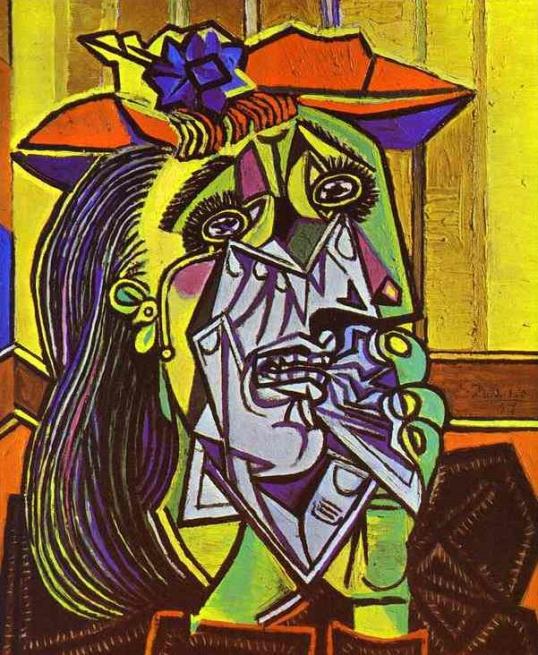
The Weeping Woman (1937, Pablo Picasso)

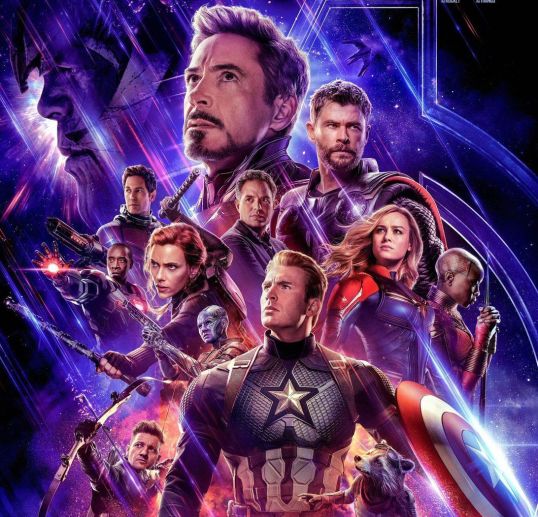
Film Review: Avengers: Endgame (dir by the Russo Brothers)


(Minor Spoilers Below!  Read at your own risk.)

So, how long does the no spoiler rule for Avengers: Endgame apply?  There’s so much that I want to say about this film but I know that I shouldn’t because, even though it had a monstrous opening weekend, there are still people out there who have not had a chance to see the film.  And while this review will have minor spoilers because, otherwise, it would be impossible to write, I’m not going to share any of the major twists or turns.

I will say this.  I saw Avengers: Endgame last night and it left me exhausted, angry, sad, exhilarated, and entertained.  It’s a gigantic film, with a plot that’s as messy and incident-filled as the cinematic universe in which it takes place.  More than just being a sequel or just the latest installment in one of the biggest franchises in cinematic history, Avengers: Endgame is a monument to the limitless depths of the human imagination.  It’s a pop cultural masterpiece, one that will make you laugh and make you cheer and, in the end, make you cry.  It’s a comic book film with unexpected emotional depth and an ending that will bring a tear to the eye of even the toughest cynic.  By all logic, Avengers: Endgame is the type of film that should collapse under its own weight but instead, it’s a film that thrives on its own epic scope.  It’s a three-hour film that’s never less than enthralling.  Even more importantly, it’s a gift to all of us who have spent the last ten years exploring the Marvel Cinematic Universe.

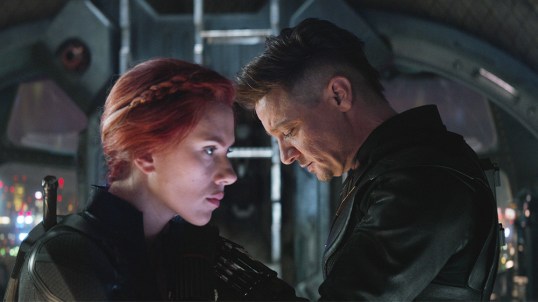
The film itself starts almost immediately after the “Snap” that ended Avengers: Infinity War and we watch as Clint Barton (Jeremy Renner, returning to the franchise after being absent in the previous film) finds himself powerless to keep his family from disintegrating.  After often being dismissed as the Avengers’s weak link, both Clint Barton and Jeremy Renner come into their own in the film.  As one of two members of the Avengers who does not have super powers, Clint serves as a everyperson character.  He’s a reminder that there’s more at stake in Endgame than just the wounded pride of a few super heroes.  When Thanos wiped out half the universe, he didn’t just wipe out Spider-Man, Doctor Strange, and Groot.  He also left very real wounds that will never be healed.

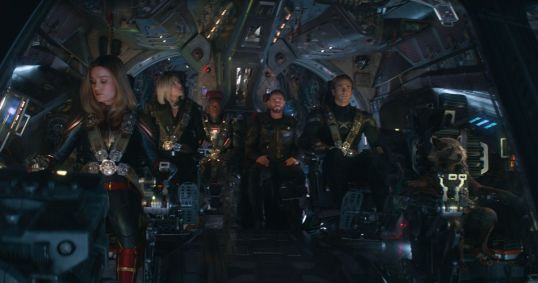
When the film jumps forward by five yeas, we discover that the world is now a much darker place.  When we see New York, the once vibrant city is now gray and deserted.  Our surviving heroes have all dealt with the Snap in their own way.  Clint is now a vigilante, killing anyone who he feels should have been wiped out by Thanos but wasn’t.  Thor (Chris Hemsworth) drinks and eats and feels sorry for himself.  Captain America (Chris Evans) attends support groups and, in one nicely done scene, listens as a man talks about his fear of entering into his first real relationship in the years since “the Snap.”  Tony Stark (Robert Downey, Jr.) is living as a recluse and is still blaming himself.  Hulk (Mark Ruffalo) is now an avuncular, huge, and very green scientist.  Only Natasha (Scarlett Johansson) remains convinced that the Snap can somehow be undone.  She’s right, of course.  But doing so will involve some unexpected sacrifices and a lot of time travel….

And that’s as much as I can tell you, other than to say that the film takes full advantage of both the time travel aspects (yes, there are plenty of Back to the Future jokes) and its high-powered cast.  With our heroes — which, along with the usual Avengers, also include Ant-Man (Paul Rudd) and Rocket Racoon (Bradley Cooper) — hopping through time and space, we get a chance to revisit several of the films that led up to Endgame and it’s a thousand times more effective than it has any right to be.  Yes, one could argue that the cameos from Robert Redford, Tom Hiddleston, Hayley Atwell, and others were essentially fan service but so what?  The fans have certainly earned it and the MCU has earned the chance to take a look back at what it once was and what it has since become.

Indeed, Avengers: Endgame would not work as well as it does if it hadn’t been preceded by 21 entertaining and memorable movies.  It’s not just that the MCU feels like a universe that it as alive as our own, one that is full of wonder, mystery, sadness, and love.  It’s also that we’ve spent ten years getting to know these characters and, as a result, many of them are much more than just “super heroes” to us.  When Tony Stark and Captain America argue over whether it’s even worth trying to undo the Snap, it’s an effective scene because we know the long and complicated history of their relationship.  When the Avengers mourn, we mourn with them because we know their pain.  We’ve shared their triumphs and their failures.  Tony Stark may be a guy in an iron suit but he’s also a man struggling with his own demons and guilt.  Steve Rogers may be a nearly 100 year-old super solider but he’s also every single person who has struggled to make the world a better place.  As strange as it may be to say about characters known as Iron Man, Captain America, and the Black Widow, we feel like we know each and every one of them.  We care about them.

Needless to say, the cast is huge and one of the great things about the film is that previously underused or underestimated performers — like Jeremy Renner, Scarlett Johansson, Paul Rudd, Don Cheadle, and Karen Gillan — all finally get a chance to shine.  As always, the heart of the film belongs to Chris Evans while Robert Downey, Jr. provides just enough cynicism to keep things from getting to superficially idealistic.  Chris Hemsworth and Mark Ruffalo get most of the film’s big laughs, each playing their borderline ludicrous characters with just the right combination of sincerity and humor.  Of course, Josh Brolin is back as well and he’s still perfectly evil and arrogant as Thanos.  But whereas Thanos was the focus of Infinity War, Endgame focuses on the heroes.  If Infinity War acknowledged that evil can triumph, Endgame celebrates the fact that good never surrenders.

As Endgame came to an end, I did find myself wondering what the future is going to hold for the MCU.  A part of me wonders how they’re going to top the past ten years or if it’s even possible to do so.  Several mainstays of the MCU say goodbye during Endgame and it’s hard to imagine the future films without their presence.  It’s been hinted that Captain Marvel is going to be one of the characters holding the next phase of the  MCU together and, fortunately, Brie Larson is a quite a bit better in Endgame than she was in her previous MCU film.  Hopefully, regardless of what happens in the future, Marvel and Disney will continue to entrust their characters to good directors, like the Russo Brothers, James Gunn, and Taika Waititi.  (Wisely, Disney reversed themselves and rehired James Gunn for the next Guardians of the Galaxy film.  Of course, Gunn never should have been fired in the first place….)

And that’s really all I can say about Avengers: Endgame right now, other than to recommend that you see it.  In fact, everyone in the world needs to hurry up and see it so we can finally start talking about the film without having to post spoiler warnings!

For now, I’ll just say that Avengers: Endgame is a powerful, emotional, and entertaining conclusion to one of the greatest cinematic sagas ever.

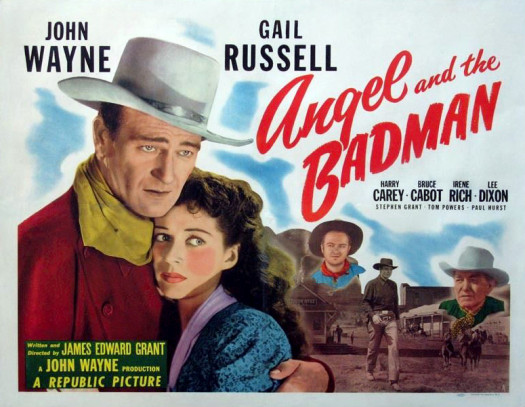
Redemption Song: John Wayne in ANGEL AND THE BADMAN (Republic 1947)


gary loggins's avatarcracked rear viewer

John Wayne  starred in some of the screen’s most iconic Westerns, but I’ve always had a soft spot in my heart for ANGEL AND THE BADMAN. Perhaps it’s because the film fell into Public Domain in the mid-70’s, and I’ve had the opportunity to view it so many times. Yet I wouldn’t keep coming back to it if it weren’t a really good movie. It’s Wayne’s first film as producer, and though it has plenty of that trademark John Wayne action and humor, it’s a bit different from your typical ‘Big Duke’ film.

Wayne plays Quirt Evans, an outlaw on the run. The wounded Quirt encounters a Quaker family, the Worths, who take him to file a land claim before the big guy finally passes out. They bring him back to their family farm to nurse him back to health, and pretty daughter Penny, unschooled in the ways of the…

View original post 762 more words

Cleaning Out the DVR Pt. 23: Spring Cleaning Edition


gary loggins's avatarcracked rear viewer


Continuing my quest to watch all these movies sitting in my DVR (so I can record more movies!), here are six more capsule reviews for you Dear Readers:

FIFTH AVENUE GIRL (RKO 1939; D: Gregory LaCava) – A minor but entertaining bit of screwball froth revolving around rich old Walter Connolly , who’s got  problems galore: his wife (the criminally underrated Veree Teasdale) is cheating on him, his son (Tim Holt in a rare comedy role) is a polo-playing twit, his daughter (Kathryn Adams) in love with the socialism-spouting chauffer (James Ellison ), and his business is facing bankruptcy because of labor union troubles. On top of all that, no one remembers his birthday! The downcast Connolly wanders around Central Park, where he meets jobless, penniless, and practically homeless Ginger Rogers, and soon life on 5th Avenue gets turned upside-down! Ellison’s in rare form as the proletariat Marxist driver, 

View original post 810 more words

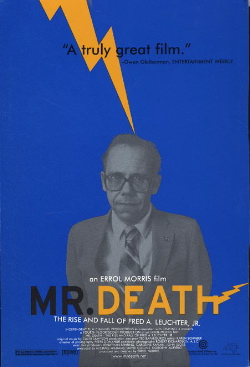
Film Review: Mr. Death: The Rise and Fall of Fred A. Leuchter, Jr. (dir by Errol Morris)


This 1999 documentary provides a disturbing portrait of an absolute moron.

Of course, when we first see and hear Fred Leuchter, Jr., he doesn’t seem like a moron.  He definitely comes across as being a bit eccentric and maybe just a little bit off but, at first sight, he’s actually kind of likable.  As he explains it, he grew up in the United States prison system.  His father worked in prison administration and one of Fred’s earliest memories was sitting in an electric chair.  Fred grew up to be an engineer and, concerned that America’s execution methods were cruel and potentially dangerous to even those who weren’t being executed, he decided to dedicate his life to redesigning electric chairs and gas chambers.  He even built his own lethal injection machine, all designed to make sure that the condemned felt as little pain as possible while dying.  As Fred explains it, he supports capital punishment but “I don’t support torture.”

Fred Leuchter soon came to be recognized as one of America’s leading experts on execution devices.  As he himself admits, that’s largely because he was American’s only expert on the way that people are legally executed.  Whereas most people deliberately went out of their way not to learn the specifics of what happens when someone is put to death, Fred made it his life’s purpose.  After redesigning an electric chair in Tennessee, Fred was soon being summoned to other states so that he could refurbish and, in many cases, redesign their execution machinery.  For the first 30 minutes of the documentary, Fred explains what it’s like to be an expert on executions and it’s hard not to like this nerdy, self-described “humanitarian.”  If anything, you spend the first part of this documentary considering the oddness of finding a humane way to execute the condemned.  America prides itself on both it’s rejection of cruel and unusual punishment and it’s willingness to put criminals to death.  It’s an odd combination and, briefly, Leuchter seems like the embodiment of those two contrasting positions.

This changes during the documentary’s second half.  That’s when we learn how, in 1988, Leuchter was hired by a German anti-Semite named Ernst Zundel.  Zundel was being tried in Canada, charged with publishing and shipping works of Holocaust denial.  For a fee of $30,000, Leuchter spent his honeymoon in Poland, went to Auschwitz, and personally “inspected” the gas chambers.  Because Leuchter brought a camera crew with him, his every action was recorded.

We watch as Leuchter and his assistants sneak into the gas chamber and proceed to clumsily start chipping away at the walls.  We listen as Leuchter goes on and on about how he doesn’t feel that the gas chamber was actually a gas chamber because it just seems too impractical to him.  If they wanted to executed a large group of people at once, why didn’t the Nazis use the gallows? Leuchter wonders.  (They did.)  Why didn’t the Nazis use firing squads?  Leuchter asks.  (They did.)  Even before Leuchter returns to America, he’s made it clear that his mind is made up.  He can’t understand why the Nazis would have done what they did and therefore, in his mind, that means they didn’t do it.  After all, Leuchter’s an expert.  He’s Mr. Death.

He’s also a moron and, by the time he starts cheerfully talking about all the effort that went into smuggling the wall chips out of Germany, whatever likability he once had has vanished.  Watching this film, I found myself wishing for a time machine so that I could go back in the past and throw something at him.  You just want him to shut up for a minute and realize that what he’s saying makes no sense.  Not that it would make any difference, of course.  Leuchter is too proud of himself for having discovered “the truth” to actually consider that he could be wrong.

When Leuchter’s samples are tested for trace amounts of poison gas, they come back negative.  Leuchter announces that this means that the Holocaust never happened and he writes up the infamous Leuchter Report, which is still regularly cited as evidence by Neo-Nazi groups and anti-Semitic historians like David Irving.  However, as Dutch historian Robert Jan van Pelt explains (and, as we’ve already seen in the video that Leuchter himself shot at Auschwitz), Leuchter not only did not take a big enough sample but he was so clumsy in the way that he transported it that he diluted the sample as well.  Even beyond all that, it would be very unusual for cyanide residue to still present after forty years of everyday wear and tear.

None of this matters, of course, to Fred Leuchter.  With the publication of the Leuchter Report, he becomes a fixture on the Holocaust denial circuit.  (We see an edition of the Leuchter Report that was published and distributed by the Aryan Nations.)  Suddenly, Leuchter has fans.  In his own sad and pathetic way, he’s become a celebrity and we see him beaming as he stands on the stage of a Neo-Nazi conference.  Meanwhile, his wife leaves him.  And prisons stop using him as a consultant, especially after they discover that he was never actually licensed to practice engineering.  Financially bereft, Leuchter even resorts to trying to sell one of his beloved “execution devices,” putting an ad in the classifieds.  (Needless to say, things don’t go well.)  Looking over the ruins of his life, who does Leuchter blame for his troubles?  “Jewish groups,” he says before then going on to assure us that some of his best friends were and are Jewish.  Was Leuchter always an anti-Semite or did he become one because he needed someone to blame for his own self-destruction?  That’s a question that the viewer will have to answer for themselves.

Mr. Death is a disturbing portrait of a rather sad and pathetic figure, a man who fell victim to his own arrogance and hubris and who, as opposed to seeking redemption, instead allied himself with the only people ignorant and hateful enough to still embrace him.  As is his style, documentarian Errol Morris interviews Leuchter’s critics but refrains from personally arguing with Leuchter, instead basically giving the self-described execution expert just enough rope to hang himself.  (Morris does, at one point, ask Leuchter if he’s ever considered that he might be wrong.  Not surprisingly, Leuchter claims that he has not and seems to be confused by the question.)  In the end, it’s impossible to feel sorry for Leuchter.  The nerdy humanitarian who opposed torture had been replaced by a self-pitying Holocaust denier.  By the end of the film, Fred A Leuchter, Jr. and his report have become a reminder of the damage that can be done by one dangerously ignorant man.