Guilty Pleasure No. 93: Porky’s (dir. by Bob Clark)


Porky’s is one of those movies that plays very differently depending on when you first see it. On the surface, it is a loud, lewd early‑’80s teen sex comedy about a bunch of high‑school boys in 1950s Florida trying to get laid and get even, but underneath the pranks and bare flesh there are streaks of surprisingly serious material about prejudice, masculinity, and power. That mix of dopey laughs and darker undercurrents is exactly what makes the film interesting to talk about, and also what makes it so divisive today.

Set in the 1950s and released in 1981, Porky’s follows a tight‑knit group of teenage boys whose main goals in life are sex, sports, and practical jokes. Their adventures eventually take them to Porky’s, a sleazy backwater strip club run by the hulking, corrupt Porky, who humiliates them and sets up the revenge plot that drives the back half of the film. Around that spine, the story wanders through locker‑room banter, elaborate pranks, and various attempts to sneak into the girls’ showers or otherwise spy on naked bodies. It is very much a “horny boys on the prowl” narrative, and the film never pretends to be anything else.

What keeps it from being just another disposable sex comedy is the way some of those side stories hit harder than expected. One of the kids is brutally abused by his father, and the film doesn’t treat it like a throwaway detail; those scenes have a rawness and anger that clash with the goofy tone elsewhere. There is also a thread about anti‑Semitism and racism in their community, with one character confronting his own bigoted upbringing as he befriends a Jewish classmate and pushes back against the prejudice around him. That material is handled in a pretty straightforward, earnest way, which is jarring given how crude the surrounding humor can be, but it does show that writer‑director Bob Clark had more on his mind than dirty jokes.

The humor, for better or worse, is what most people remember. Porky’s leans heavily on slapstick and sex‑obsessed gag setups: peeping through holes in shower walls, mistaken identities during sex, ridiculous anatomical bragging, prank phone calls, and elaborate schemes that escalate into full‑on chaos. Some of the set pieces are staged with real comic timing, and if you’re on its wavelength, these sequences can still land as big, cathartic laughs. Others feel juvenile in the worst way, stretching one joke way past its breaking point, or punching down at easy targets rather than punching up at the hypocritical adults the boys are constantly butting up against.

Viewed from today’s lens, a big chunk of that humor is undeniably uncomfortable. The movie is saturated with sexist, homophobic, and racist language, and a few of the “pranks” involving the girls are essentially sexual harassment played for laughs. At the time, it was sold as a gleefully politically incorrect romp; now, those same scenes read as mean‑spirited or creepy in a way that undercuts the supposed lighthearted tone. The film occasionally tries to complicate this by giving some of the female characters sharper edges or letting them turn the tables, but it never fully escapes the fact that the camera is mostly aligned with the boys and their fantasies.

That said, Porky’s is not entirely dismissive of its women. There are moments where adult women, in particular, are allowed to call out the boys’ behavior or assert their own sexuality in ways that undercut the usual “conquest” narrative. The movie also makes a point of ridiculing hypocritical authority figures—teachers, coaches, cops, and parents—whose prudish public morals don’t match their private behavior. When Porky’s is skewering bigotry, religious hypocrisy, and small‑town moral panics, it feels sharper and more progressive than its reputation as a dumb “tits‑and‑ass” comedy suggests. Those flashes of insight are part of why some viewers argue that, beneath the sleaze, the film is quietly critical of the very attitudes it seems to indulge.

Performance‑wise, the cast is made up largely of unknowns who sell the illusion that this is a real, scrappy group of friends rather than polished Hollywood teens. The camaraderie feels genuine; their constant ribbing, in‑jokes, and shifting alliances are believable enough that you can see why the movie became a touchstone for a certain generation of viewers. Bob Clark’s direction is surprisingly controlled for such an anarchic script. He keeps the story moving, balances multiple subplots, and stages the bigger comic payoffs in a way that feels almost like a live‑action cartoon. The downside is that this slickness can make the nastier gags pop more, for better and worse.

On a technical level, Porky’s is very much a product of its time, but not a cheap one. The period detail—cars, music, clothing, diners, and dingy roadside bars—helps sell the 1950s setting, giving the film a nostalgic sheen that softens some of its rougher edges. The soundtrack leans on era‑appropriate rock and roll, which adds energy to the locker‑room and party scenes. The film also doesn’t shy away from male nudity, which was less common in comedies of the time and adds to its reputation as equal‑opportunity when it comes to what it exposes, even if the gaze is still clearly tilted toward ogling women.

Where Porky’s can stumble is in tone. The shifts between broad farce and serious drama can be abrupt. One minute you are watching a drawn‑out gag about a teacher trying to identify a student by his anatomy; the next, you are plunged into a grim confrontation with an abusive parent. That whiplash can pull you out of the movie, because the emotional weight of the dramatic scenes doesn’t always get enough breathing room before the script lurches back to naughty antics. As a result, some viewers feel the darker elements trivialize real issues, while others think those same scenes give the film more substance than its imitators.

Even if someone has never seen Porky’s, they have probably felt its influence. The film was a massive box‑office hit relative to its budget and paved the way for a wave of raunchy teen comedies through the ’80s and ’90s, eventually echoing into movies like American Pie and beyond. Its success made it clear that there was a huge audience for R‑rated, adolescent sex comedies that mixed crude jokes with a veneer of coming‑of‑age sentiment. You can see its blueprint in later films: packs of horny friends, elaborate revenge schemes, school authority figures as comic foils, and a big, raucous set piece as the payoff.

Whether Porky’s “holds up” is going to depend a lot on your tolerance for outdated attitudes and offensive language. If you go in expecting a cozy nostalgia trip, you may be surprised by how sour some jokes taste now, and how casually the film treats behavior that would be framed very differently in a modern story. If you approach it as both a time capsule and the prototype of a genre, it becomes easier to see its strengths—the lively ensemble, the willingness to poke at racism and hypocrisy, the low‑budget ingenuity in its set pieces—alongside its very real flaws.

Porky’s is neither the hidden gem some defenders make it out to be nor the irredeemable trash its harshest critics describe. It is a messy, uneven, often funny, often cringeworthy movie that captures a particular moment in pop culture, both in what it laughs at and what it takes for granted. If you are curious about the roots of modern raunchy teen comedies and prepared for the rough, politically incorrect ride, it is still worth a look as a piece of film history and as an example of how comedy ages—for better and for worse.

Previous Guilty Pleasures

  1. Half-Baked
  2. Save The Last Dance
  3. Every Rose Has Its Thorns
  4. The Jeremy Kyle Show
  5. Invasion USA
  6. The Golden Child
  7. Final Destination 2
  8. Paparazzi
  9. The Principal
  10. The Substitute
  11. Terror In The Family
  12. Pandorum
  13. Lambada
  14. Fear
  15. Cocktail
  16. Keep Off The Grass
  17. Girls, Girls, Girls
  18. Class
  19. Tart
  20. King Kong vs. Godzilla
  21. Hawk the Slayer
  22. Battle Beyond the Stars
  23. Meridian
  24. Walk of Shame
  25. From Justin To Kelly
  26. Project Greenlight
  27. Sex Decoy: Love Stings
  28. Swimfan
  29. On the Line
  30. Wolfen
  31. Hail Caesar!
  32. It’s So Cold In The D
  33. In the Mix
  34. Healed By Grace
  35. Valley of the Dolls
  36. The Legend of Billie Jean
  37. Death Wish
  38. Shipping Wars
  39. Ghost Whisperer
  40. Parking Wars
  41. The Dead Are After Me
  42. Harper’s Island
  43. The Resurrection of Gavin Stone
  44. Paranormal State
  45. Utopia
  46. Bar Rescue
  47. The Powers of Matthew Star
  48. Spiker
  49. Heavenly Bodies
  50. Maid in Manhattan
  51. Rage and Honor
  52. Saved By The Bell 3. 21 “No Hope With Dope”
  53. Happy Gilmore
  54. Solarbabies
  55. The Dawn of Correction
  56. Once You Understand
  57. The Voyeurs 
  58. Robot Jox
  59. Teen Wolf
  60. The Running Man
  61. Double Dragon
  62. Backtrack
  63. Julie and Jack
  64. Karate Warrior
  65. Invaders From Mars
  66. Cloverfield
  67. Aerobicide 
  68. Blood Harvest
  69. Shocking Dark
  70. Face The Truth
  71. Submerged
  72. The Canyons
  73. Days of Thunder
  74. Van Helsing
  75. The Night Comes for Us
  76. Code of Silence
  77. Captain Ron
  78. Armageddon
  79. Kate’s Secret
  80. Point Break
  81. The Replacements
  82. The Shadow
  83. Meteor
  84. Last Action Hero
  85. Attack of the Killer Tomatoes
  86. The Horror at 37,000 Feet
  87. The ‘Burbs
  88. Lifeforce
  89. Highschool of the Dead
  90. Ice Station Zebra
  91. No One Lives
  92. Brewster’s Millions

Holidays On The Lens: An American Christmas Carol (dir by Eric Till)


On Christmas Eve, a miserly businessman is visited by a series of ghosts who help him understand the true meaning of Christmas, along with showing him a frightening vision of a possible future.

And that businessman was named …. Benedict Slade!

Yeah, the name’s have been changed and the action has been updated to Depression-era New England but this is basically the story of Scrooge.  Henry Winkler stars as the Scrooge character in the 1979 made-for-TV movie.  His old age make-up was done by none other than Rick Baker!

The Films of 2025: F1 (dir by Joseph Kosinski)


“Do they have the car?”

“We have the driver.”

Those two lines of dialogue, uttered towards the end of the film, pretty much sums up F1, a terrifically entertaining movie about Formula One racing.

Brad Pitt stars as Sonny Hayes, a former FI prodigy who, in the early 90s, suffered a traumatic crash at the Spanish Grand Prix.  The crash nearly killed him and it temporarily ended his career as an F1 driver.  Sonny has spent the past thirty years as a drifter, gambler, and as a race car driver for hire.  He lives in a van and is haunted by nightmares of his crash.  When he wakes up in the morning, he groans as he stretches his tattooed, beat-up, but still muscular body.  He dunks his face in a sink full of ice.  He’s aging but he hasn’t surrendered just yet.  The film opens with Sonny helping to win the 24 Hours of Daytona race.  After his victory, he’s approached by his former teammate, Ruben (Javier Bardem).  Ruben is in charge of the APEXGP F1 team.  He needs a driver to partner with the young and arrogant Joshua Pearce (Damson Idris).  Sonny agrees, though only after Ruben asks if Sonny wants a chance to show that he’s the best in the world.  Sonny may be one of the oldest guys on the track but he’s still got something to prove.

If F1 came out in 80s, the 90s, or even the Aughts, it would be viewed as a well-made but predictable racing film, one in which a fairly by-the-numbers script was held together by Brad Pitt’s overwhelming charisma and Joseph Kosiniski’s kinetic direction.  And that certainly is a legitimate way to view the film in 2025.  On the other hand, coming after both the scoldy Woke Era and the authoritarian COVID Era, a film that celebrates competing without guilt, that says that it’s more fun to win than to lose, and which doesn’t apologize for embracing a culture of driving fast and breaking the rules feels almost revolutionary.  Just as he did with Top Gun: Maverick, director Joseph Kosinski reminds the audience that it’s okay to be entertained.  Not everything has to be a struggle session.  Not everything has to be a rejection of the things that once made you happy.  F1 is a film that invites you to cheer without guilt or shame.

It’s a good film, one that is full of exciting racing scenes and gasp-inducing crashes.  After both this film and Top Gun: Maverick, there’s little doubt that director Joseph Kosinski knows how to harness the power of Hollywood’s few true movie stars.  That said, as good as Brad Pitt is, Damson Idris is equally impressive, playing Joshua, a young driver who learns that there’s more to being a great driver than just getting good press.  When we first meet Joshua, he’s young and cocky and arrogant and one thing that I respect about the film is that, even after Joshua learns the importance of teamwork and trust, he’s still more than a little cocky.  He never stops believing in himself.  He doesn’t sacrifice his confidence on the way to becoming the best.  Though the film is definitely on Sonny’s side when it comes to their early conflicts (one can practically here the film saying, “Put down your phone, you young whippersnapper!”), it’s smart enough to not make Joshua into a caricature.  Instead, he’s just a young man trying to balance celebrity and talent.  Kerry Condon also gives a good performance as APEX’s technical director, though her romance with Sonny does feel a bit tacked on.  (Far too often, whenever a female character says that she’s not looking for a relationship, movies refuse to take her word for it.)

When I first heard about F1, I have to admit that I wondered if Kosinski was deliberately following up the Top Gun sequel with a remake of Days of Thunder.It is true that F1 does have a lot in common with other racing films but, in the end, it doesn’t matter.  Brad Pitt’s star turn and Joseph Kosinski’s direction makes F1 into an absolutely thrill ride and one of the best of 2025.

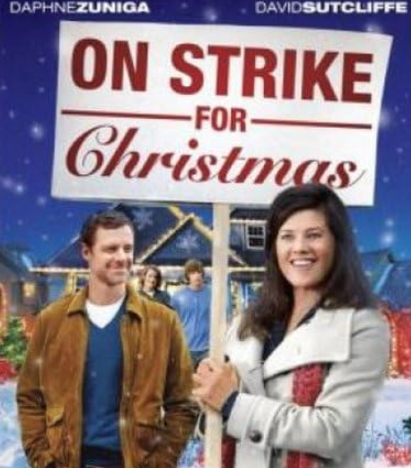
On Strike for Christmas (Dir Robert Iscove), Review by Case Wright


On Strike for Christmas was fun because I got to live tweet it with Lisa and that’s always a blast. The story is straight forward- Joy (Daphne Zuniga), a SAHM, is fed up with being unappreciated for her hard work in prepping for Christmas; so, she goes full-commie and strikes/organizes the other moms to fall into the perils of communism by unionizing the moms to stop all Christmas prep! Honestly, I could’ve reviewed this film for Horrorthon based upon the Marxist plot line!

I want to stay as positive as I can because it’s Christmastime but the film took a WEIRD left turn! First, the grandmother, the mom, the dad, AND the two sons were really close in age; so, you had serious teen mom vibe. Second, it was obvious that ALL of the actors had the hots for each other! It was like infamous Folgers ad (see below ).

If you are unfamiliar with the Folgers ad above, the plot is that a brother returns from Africa and the actors couldn’t help but show their attraction for one another. The same distracting event happened in this film too and not just once or twice – no no no – the sexual tension in this film was like Madmen season 1 levels and in nearly every scene.

There was one scene where the mom dressed up and the son gushed on how hot she was and it was very uncomfortable. I swear, find someone who looks at you like these actors looked at each other!!!

There were some funny parts to the film; such as, the obligatory trope that the boys and dad tried to make cookies and it’s a disaster. However, it really felt like the family had a lot of problems before this because the mom proceeded to not only go on strike, but to talk to journalists about all of her family were just POSs. I mean really if you’re already at the point where you feel comfortable going to the press about what garbage people your husband is and your son’s, the marriage is already over. And in her case, it certainly was awkward at Valentine’s Day when her dad and sons/boyfriends gave her chocolate all at the same time!!! I can only imagine what the hallmark card would look like!!!

Lisa noticed that the mom wasn’t just going on strike herself, but she proceeded to break up every family in the town. Joy needs to be stopped! I mean, it’s bad enough that she’s led all these poor people down the path of socialism and communism, which is just painful for me, but she’s also splitting up all these families!

Maybe that’s what happened in Russia? It was all just a big kerfuffle over cookies and icing and the next thing you know – nukes are pointed right at the good old US of A!!!

It should be noted that eventually the strike does end and the families try to pick up the pieces of their shattered lives. I think that was very insensitive of Joy because she always had her son/boyfriend’s number to fall back on during those cold winter nights!!!

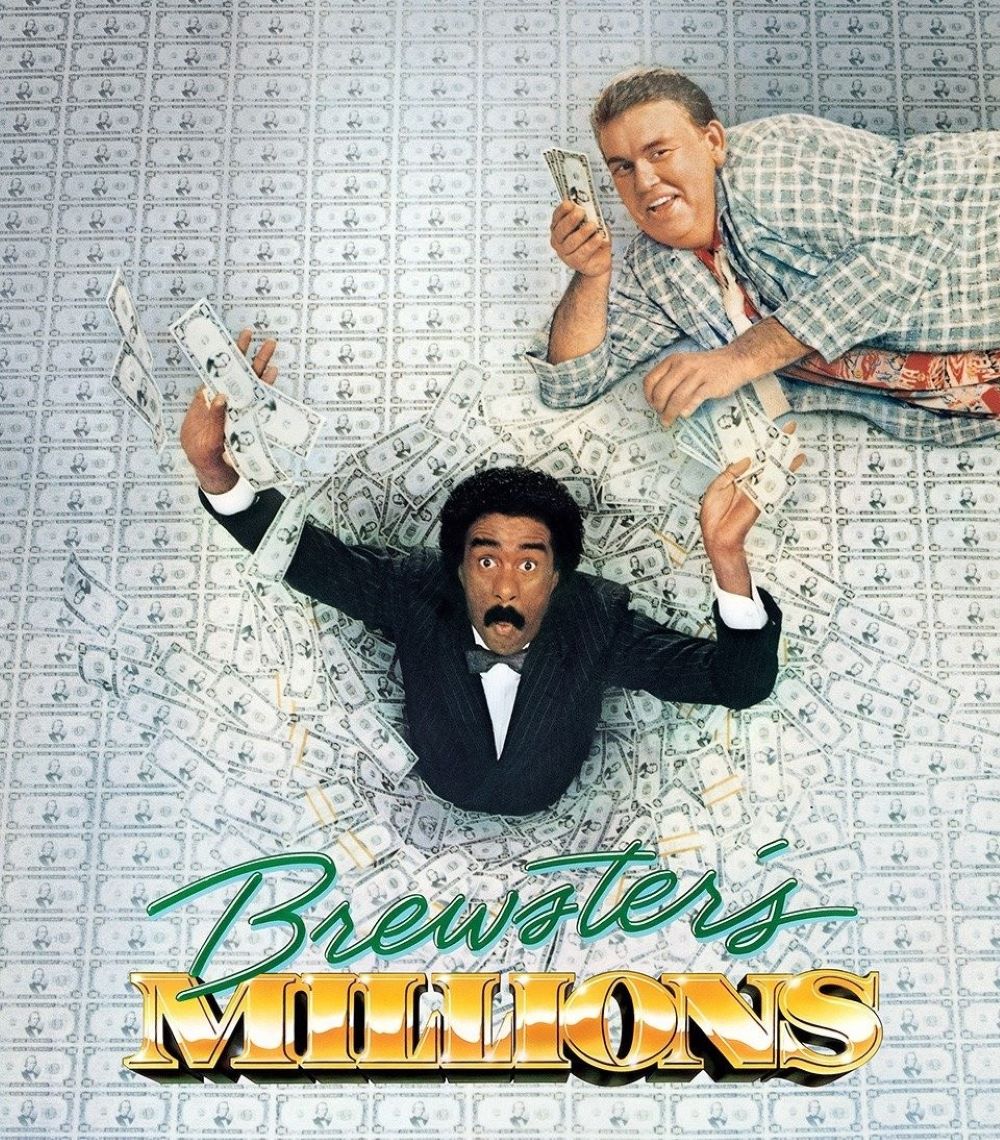
Guilty Pleasure No. 92: Brewster’s Millions (dir. by Walter Hill)


Walter Hill’s Brewster’s Millions (1985) isn’t a perfect movie by any stretch, but it’s the kind of film that sneaks up on you. It may not be sharp enough to qualify as great satire or consistent enough to hit every comedic note, but it has an undeniable charm that pulls you in regardless. It’s loud, uneven, and often ridiculous, yet few comedies from the 1980s are as weirdly entertaining when they’re firing on all cylinders. For many movie fans, it’s that quintessential “guilty pleasure”—a film you know has problems, but that somehow feels impossible to turn off once it starts. And in many ways, that’s exactly where Brewster’s Millions finds its lasting appeal.

The setup alone is too fun to resist. Richard Pryor stars as Montgomery Brewster, a minor league baseball pitcher who unexpectedly inherits the opportunity of a lifetime—to claim a $300 million fortune from a distant relative. The catch? Before he can get it, he has to spend $30 million in 30 days under a bizarre set of conditions that make financial ruin easier said than done. He can’t give the money away, can’t destroy it, can’t buy assets or investments that retain value, and can’t tell anyone why he’s doing it. Fail, and he gets nothing. Succeed, and he becomes one of the richest men alive. It’s the sort of gleefully absurd premise that could only have come from Hollywood in the 1980s, and it’s immediately clear that the film wants audiences to sit back, grab some popcorn, and watch Pryor tear through cash in increasingly funny and desperate ways.

Richard Pryor is, without doubt, the heart and soul of the movie. He imbues Montgomery Brewster with equal parts manic energy and human frustration, giving the character a real emotional arc beneath all the comic spectacle. Pryor’s talent for blending humor with exasperation makes Brewster’s predicament believable, even when it’s insane. Watching him scramble to lose money while the world keeps rewarding him is strangely satisfying. Pryor understood how to play ordinary men caught in extraordinary circumstances, and that quality grounds the film when it could have easily spiraled into total silliness. In scenes where he loses his patience with accountants, schemes wild spending sprees, or watches his good intentions backfire, Pryor’s comic timing keeps the chaos enjoyable.

John Candy adds another layer of charm as Brewster’s best friend and teammate, Spike Nolan. Candy brings warmth, loyalty, and that unmistakable good-heartedness that made him one of the decade’s most beloved comedic actors. The chemistry between Pryor and Candy keeps the film buoyant even through its weaker stretches. Their friendship defines the film’s tone—it’s loose, goofy, and full of bro-ish camaraderie. Without Candy’s infectious energy, the movie’s more hollow comedic beats might have hit the floor with a thud. Together, they create a dynamic that feels real, even inside a premise that’s totally absurd.

As a director, Walter Hill feels like an odd fit for this kind of broad comedy, but that’s part of what makes Brewster’s Millions interesting. Hill, better known for tough, kinetic action films like The Warriors and 48 Hrs., approaches this farce with a surprising amount of structure and visual precision. The film looks slicker and sharper than most comedies of its kind, which gives the excess on-screen an unintentionally epic flair. Hill’s direction keeps the story moving, and though he’s not naturally a comedic filmmaker, his grounded style adds a peculiar edge to all the craziness. It’s chaos with discipline—an aesthetic that somehow works in the movie’s favor.

Still, Brewster’s Millions can’t quite escape its shortcomings. The pacing is uneven, especially in the middle, where the film loses some steam as Brewster cycles through increasingly repetitive spending gimmicks. The story flirts with satire but rarely commits, brushing up against deeper commentary on wealth, politics, and capitalism before retreating to the comfort of broad comedy. The “Vote None of the Above” subplot, where Brewster’s money-wasting political campaign taps into voter cynicism, is one of the smartest parts of the film—but it’s introduced and resolved too quickly to leave a mark. And while the movie is full of lively energy, not every gag lands; a few supporting performances veer into caricature, and some jokes feel very much of their time.

Yet these flaws are partly what make Brewster’s Millions such a delightful guilty pleasure. It’s the cinematic equivalent of junk food—high on calories, low on nutritional value, but deeply enjoyable all the same. Pryor’s constant exasperation, the sheer absurdity of trying to “waste” money legally, and the exaggerated set pieces (like the overblown parties or his failed attempts to lose at gambling) make for irresistible entertainment. Even when the humor dips into predictable territory, the concept keeps pulling you back in. There’s a giddy satisfaction in watching Brewster try—and fail—to lose money, especially because the universe just won’t let him.

The romance subplot with Lonette McKee’s character, Angela Drake, adds just enough heart to balance the absurdity. McKee gives a grounded, intelligent performance that prevents the love story from feeling tacked on, even if it never fully takes center stage. Her presence keeps Brewster tethered to some kind of reality, and the moral through-line—learning that not everything valuable can be bought—lands gently rather than preachily. It’s not profound, but it fits the breezy tone perfectly.

As a comedy of excess, Brewster’s Millions is very much a product of its time. The slick suits, the gaudy parties, the blind faith in wealth, and the Reagan-era optimism about money’s moral neutrality all ooze from every frame. That time-capsule quality is part of its modern appeal. Watching it today, you can’t help but smile at how on-the-nose it feels—a movie from the “greed is good” decade that accidentally ends up mocking the very mindset it sprang from. It’s self-aware only in flashes, but those flashes are enough to make you recognize the movie’s satirical edge hiding beneath its loud surface.

In the end, that’s what makes Brewster’s Millions endure as a lovable guilty pleasure. It has flaws you can’t ignore—uneven pacing, scattershot tone, underdeveloped ideas—but none of them outweigh its charm. Pryor’s comic genius makes even the weakest joke land better than it should. Candy’s warmth keeps the film light. And Hill’s straightforward direction infuses the lunacy with just enough realism to make it believable. The result is a movie that’s too silly to take seriously but too fun to dismiss. You watch it, laugh at its audacity, shake your head at the logic gaps, and yet somehow come away smiling.

Brewster’s Millions may not be a comedy classic, but it’s easy to see why people keep revisiting it. It’s comfort food cinema—lighthearted, clumsy, and endlessly watchable. And like all the best guilty pleasures, it doesn’t need to be perfect to make you happy. Sometimes, seeing Richard Pryor outsmart the meaning of money for two hours is more than enough.

Previous Guilty Pleasures

  1. Half-Baked
  2. Save The Last Dance
  3. Every Rose Has Its Thorns
  4. The Jeremy Kyle Show
  5. Invasion USA
  6. The Golden Child
  7. Final Destination 2
  8. Paparazzi
  9. The Principal
  10. The Substitute
  11. Terror In The Family
  12. Pandorum
  13. Lambada
  14. Fear
  15. Cocktail
  16. Keep Off The Grass
  17. Girls, Girls, Girls
  18. Class
  19. Tart
  20. King Kong vs. Godzilla
  21. Hawk the Slayer
  22. Battle Beyond the Stars
  23. Meridian
  24. Walk of Shame
  25. From Justin To Kelly
  26. Project Greenlight
  27. Sex Decoy: Love Stings
  28. Swimfan
  29. On the Line
  30. Wolfen
  31. Hail Caesar!
  32. It’s So Cold In The D
  33. In the Mix
  34. Healed By Grace
  35. Valley of the Dolls
  36. The Legend of Billie Jean
  37. Death Wish
  38. Shipping Wars
  39. Ghost Whisperer
  40. Parking Wars
  41. The Dead Are After Me
  42. Harper’s Island
  43. The Resurrection of Gavin Stone
  44. Paranormal State
  45. Utopia
  46. Bar Rescue
  47. The Powers of Matthew Star
  48. Spiker
  49. Heavenly Bodies
  50. Maid in Manhattan
  51. Rage and Honor
  52. Saved By The Bell 3. 21 “No Hope With Dope”
  53. Happy Gilmore
  54. Solarbabies
  55. The Dawn of Correction
  56. Once You Understand
  57. The Voyeurs 
  58. Robot Jox
  59. Teen Wolf
  60. The Running Man
  61. Double Dragon
  62. Backtrack
  63. Julie and Jack
  64. Karate Warrior
  65. Invaders From Mars
  66. Cloverfield
  67. Aerobicide 
  68. Blood Harvest
  69. Shocking Dark
  70. Face The Truth
  71. Submerged
  72. The Canyons
  73. Days of Thunder
  74. Van Helsing
  75. The Night Comes for Us
  76. Code of Silence
  77. Captain Ron
  78. Armageddon
  79. Kate’s Secret
  80. Point Break
  81. The Replacements
  82. The Shadow
  83. Meteor
  84. Last Action Hero
  85. Attack of the Killer Tomatoes
  86. The Horror at 37,000 Feet
  87. The ‘Burbs
  88. Lifeforce
  89. Highschool of the Dead
  90. Ice Station Zebra
  91. No One Lives

Holidays On The Lens: Beyond Tomorrow (dir by A. Edward Sutherland)


After three eccentric businessman arrange for a young couple to get together right before the holidays, a plane crash kills the three men.  However, their ghosts remain on Earth to watch over the couple and to take care of some unexpected holiday business.  The film is a holiday film and a comedy and a romance and a musical and a ghost story and a melodrama and finally an oddly sincere meditation on life and death.

From 1940, here’s Beyond Tomorrow!

Brad reviews THE SHOP AROUND THE CORNER (1940), starring James Stewart and Margaret Sullavan!


Set in Budapest, Hungary, we meet Alfred Kralik (James Stewart), the dependable head clerk at a retail establishment named Matuschek and Company. In walks Klara Novak (Margaret Sullavan), an attractive young lady who’s desperately in need of a job, so Mr. Matuschek (Frank Morgan) hires her as a new salesgirl. Alfred and Klara immediately take a disliking to each other and give each other quite a hard time at work. As we get to know Alfred and Klara, we find out that each of them is involved in a treasured “pen-pal” relationship with a mysterious someone who truly seems to understand their heart and soul. Wouldn’t you know it, even though they get on each other’s last nerves at the shop, Alfred and Klara are each other’s secret pen-pal! While navigating unexpected drama at work, mainly involving Mr. Matuschek, his wife, and a duplicitous employee, Alfred eventually discovers that Klara is his mystery correspondent without her knowing it. As he tries to reconcile the actions of the lady he knows from work with the heart of the person who wrote those letters, Alfred decides to show Klara who he really is to see if they can fall in love in real life!

THE SHOP AROUND THE CORNER is one of my very favorite romantic comedies, and I’d guess the lead performance of James Stewart is probably the main reason. He’s just perfect in the role of Alfred Kralik… earnest, proud, awkward, vulnerable, and above all else, decent. Stewart’s ability to portray characters with believable decency separate him as one of the all-time greats and that quality is well on display here. Margaret Sullavan, as Klara Novak, matches him perfectly. Known to have a good relationship off screen as well, the chemistry between Stewart and Sullavan is off the charts and their scenes together are quite powerful. Mostly known by me for his performance as the Wizard of Oz, Frank Morgan is also incredible as Mr. Matuschek, at times jealous, volatile, and ultimately benevolent.

Director Ernst Lubitsch, known for his “Lubitsch touch,” has made a movie that has stood the test of time because of its core of emotional truth. Even though it was made well before the days of social media or online dating, THE SHOP AROUND THE CORNER understands just how differently we present ourselves when writing (or online, or on social media), compared to how we actually behave in person. Maybe it’s because THE SHOP AROUND THE CORNER was made in 1940, but I love the way its time-tested story idea is used for comedy and sweet romance, without becoming cynical. That lack of cynicism leaves room not only for comedy and romance but also a genuine compassion for its characters as they deal with the very real emotions of loneliness, pride, jealousy, and fear.

All in all, THE SHOP AROUND THE CORNER may be 85 years old, but its tender and romantic payoff set on Christmas Eve still gets me every time. As far as I’m concerned, this is about as close to perfect as a romantic comedy can get!  

(Author’s note: I’m also a fan of the 1998 remake, YOU’VE GOT MAIL, starring Tom Hanks and Meg Ryan, but I rate it below Lubitsch’s film.)

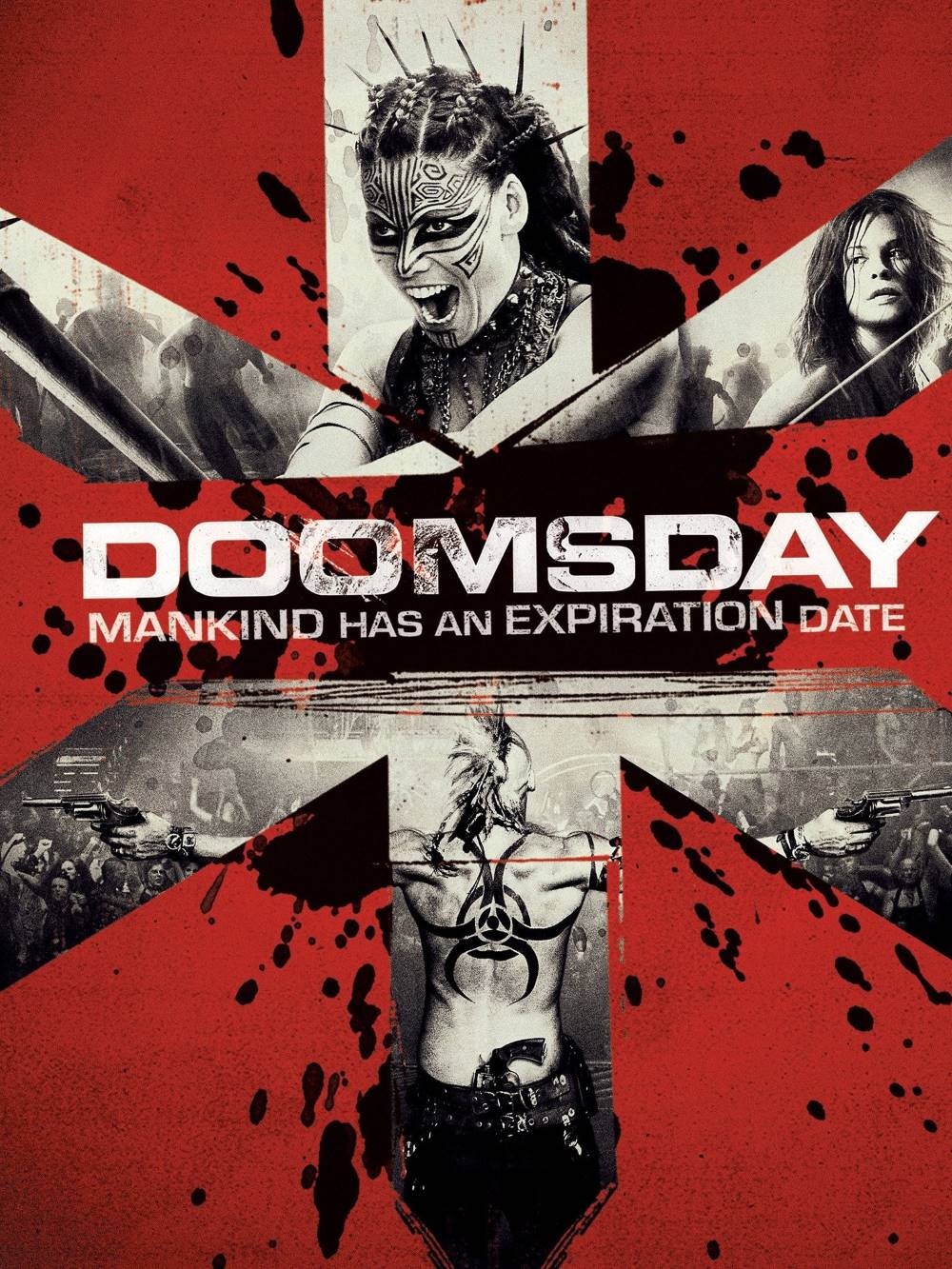
Review: Doomsday (dir. by Neil Marshall)


“Same shit, different era.” — Eden Sinclair

Doomsday tries to be a wild post-apocalyptic romp but ends up as such a profound disappointment, especially coming from Neil Marshall, whose previous two films, Dog Soldiers and The Descent, were much better entries in the horror genre where his attempts to inject new ideas landed the mark with precision and style. Here, Marshall shifts gears into a sprawling, uneven action-horror hybrid that feels like a highlight reel of better movies, bloated and unfocused where his earlier works thrived on tight scripting and fresh twists. While there are flashes of fun in the chaos, the film’s glaring flaws in plotting, tone, and originality outweigh any guilty-pleasure moments, leaving it as more of a curiosity than a recommendation.

The story kicks off with a decent hook: a deadly Reaper virus wipes out much of Scotland, prompting the government to seal it off behind a massive wall and leave the population to fend for itself. Years later, the virus resurfaces in London, and intel suggests survivors—and possibly a cure—lurk inside the quarantine zone. Major Eden Sinclair (Rhona Mitra) leads a ragtag military squad across the wall to hunt down a rogue scientist. It’s a setup that echoes classics like Escape from New York, but Doomsday quickly abandons any tension for a parade of borrowed set pieces that rarely gel, a far cry from the inventive werewolf siege of Dog Soldiers or the claustrophobic crawler terror in The Descent.

Once inside, the movie lurches from one aesthetic to the next without much logic or buildup. First comes a punk-anarchist wasteland with cannibals hosting gladiatorial freak shows amid flames and mohawks, then a sudden pivot to medieval knights in castles complete with jousts and sieges. These shifts feel arbitrary, like Marshall couldn’t decide on a vibe and just threw them all in—a scattershot approach that lacks the confident genre-blending of his prior successes. The worldbuilding is shallow—how did feudalism sprout up so neatly amid the apocalypse?—and the transitions are jarring, undermining any sense of immersion or stakes.

Rhona Mitra holds the center as Sinclair, a one-eyed badass who dispatches foes with grim efficiency, but even she can’t overcome the script’s limitations. Her character is a walking archetype: tough, quippy, and competent, with zero emotional depth or growth. The supporting players, including Malcolm McDowell as a scenery-chewing lord and Bob Hoskins as a gruff boss, are wasted on one-note roles. They’re recognizable enough to highlight how little the film does with its cast, turning potential strengths into reminders of squandered talent.

Visually, Doomsday has some grit thanks to practical effects and location shooting, especially in the grimy urban ruins and over-the-top chases that nod to Mad Max. The gore is plentiful and messy, which might appeal to splatter fans. But the action often devolves into incoherent shaky-cam slogs, and the pacing drags in spots despite the constant escalation. Worse, the film’s self-indulgent excess tips into silliness that undercuts its own grim premise, making it hard to buy the horror of the virus or the desperation of survival.

Tonally, Doomsday is all over the map, swinging from bleak quarantine dread to campy medieval farce without warning. This inconsistency is its biggest sin—serious moments clash with cartoon violence, and the humor lands flat or feels forced. Influences from 28 Days LaterThe Road Warrior, and even Excalibur are blatant, but Marshall doesn’t elevate them; he just remixes them into something louder yet less impactful. The result feels like fan fiction for genre nerds rather than a fresh take, missing the spark that made his earlier horrors stand out.

Thematically, there are glimmers of commentary on government abandonment, class divides, and viral panic, but they’re buried under the bombast and never explored. Instead of probing the ethics of walling off a nation, the film prioritizes spectacle, leaving those ideas as window dressing. It’s a missed opportunity that makes the whole endeavor feel hollow, especially when real-world parallels to pandemics could have added bite.

Doomsday struggles to stand on its own amid a crowded genre field, weighed down by narrative sloppiness and tonal whiplash that overshadow its few strengths. The positives—like visceral kills and Mitra’s presence—fail to overcome the disjointed plotting and lack of fresh ideas. Ultimately, it feels like a missed chance for something more cohesive, leaving little reason to revisit beyond a one-off curiosity.

In the end, Doomsday is a swing-and-a-miss for Neil Marshall, ambitious in scope but sloppy in execution, a letdown after the highs of Dog Soldiers and The Descent. The negatives dominate: uneven pacing, logical gaps, borrowed aesthetics without innovation, and a tone that alienates more than it entertains. If you’re in the mood for undemanding B-movie chaos on a slow night, it might scratch a minor itch. Otherwise, skip it for the films it rips off—they deliver the thrills without the frustration. At around 105 minutes, it’s not a huge time sink, but better options abound in the post-apoc genre.

Holidays On The Lens: Christmas At The Amish Bakery (dir by Jeff Hare)


In 2023’s Christmas At The Amish Bakery, book editor Sarah (Alexandra Harris) returns to her Amish roots, hoping to put together an Amish cookbook.  (“The Amish are famous for the baking!” Sarah’s boss says.)  But what happens when Sarah discovers love and the true meaning of the holidays?

You can probably guess.

This is like the ultimate Hallmark Amish Christmas movie.  If you know, you know.

The Films of 2025: The Lost Bus (dir by Paul Greengrass)


If you’re like me and you have not only asthma but also a huge phobia about getting caught in the middle of an out-of-control fire, you should definitely make sure you have your inhaler nearby while watching The Lost Bus.

Based on an actual California wildfire that killed over 80 people in 2018, The Lost Bus takes the viewer straight into the fire.  We watch as one power line falls off of a poorly maintained tower.  We see the sparks and then we see the fire that starts to burn almost immediately.  Soon, the fire is moving down the mountain and through the forest.  The camera zooms into the heart of the growing disaster and the viewer spends many horrifying minutes in the middle of the inferno, watching as trees burst into flames and the black smoke turns the sky dark as night.  We hear the wind blowing the fire closer and closer to civilization and we realize, even before the majority of the characters in the film, that there’s no way to stop it.  Tears came to my eyes as I watched the fire destroying everything that it touched and I did have to grab my inhaler at one point.  The film’s visualization of the wildfire overwhelms you, to the extent that you might actually feel the heat radiating off of the screen.

When the film shifts away from the fire, it’s focuses on Kevin (Matthew McConaughey), a directionless man who has recently returned to his hometown and who works as a school bus driver.  When he first realizes how bad the fire is, his first instinct is to rush back to his home but then he hears over the radio that there are over 20 children at an elementary school who need to be taken to safety.  Kevin’s bus is the only one in the area.  He picks up the children and their teacher, Mary (America Ferrara) and tries to drive them to another area so that they can be reunited with their parents.  While Kevin is just trying to get his bus and the kids to safety, the California Department of Forestry and Fire Protection fights a losing battle to try to contain the inferno.

Both Matthew McConaughey and America Ferrara are playing rather familiar characters.  Kevin is the perennial screw-up, the guy who is on the verge of losing his job but who ultimately proves himself to be the type of hero that no one expected him to be.  Mary is the dedicated teacher who tells the kids to walk in a straight line and who tries to keep them calm even when new fires are erupting around them.  Kevin never wanted to come back to his hometown while Mary never wants to leave it.  Though the characters may be familiar, McConaughey and Ferrara both give authentic and lived-in performances.  That said, the most compelling character remains the fire itself, a creation of pure out-of-control chaos and a reminder of the heart-breaking randomness of life.

This is another one of Paul Greengrass’s shaky cam docudramas.  As a filmmaker, Greengrass is one of the best when it comes to putting the viewer right in the middle of the action and, for once, not even Greengrass’s signature political posturing can stop the film’s momentum.  The Lost Bus is a film that ultimately celebrates not only community but also how one individual can make a difference in a time of crisis.  It’s a film that left me out-of-breath and with tears in my eyes.