When Georgia Hunt (Rachel Boston) was in high school, she was the queen of the school. She was a cheerleader, a member of the Glee Club, and a member of the Speech and Debate team. She was voted Most Likely To Succeed. Ten years later, Georgia is the unappreciated assistant to a haughty fashion designer and she feels like a failure. While visiting her mother (Marilu Henner), Georgia discovers that her class reunion is coming up. Georgia decides to go because she wants to win back her high school boyfriend, Craig (Jon Prescott).
I could tell that this movie was made back when Glee was still a big thing because there’s a whole subplot about the former members of the Glee Club getting back together and performing three numbers at the reunion. When Georgia wasn’t performing on stage, she was in the old practice hall and singing a song with her best friend from high school, Ben (Johnathan Bennett). The Glee Club stuff felt really tacked on but I was happy they went with the Glee stuff instead of having Georgia try to do something stupid and put on her old cheerleader uniform and lead everyone in a cheer. But then Georgia went ahead and did that anyways.
I had some issues with this movie. A major one was what school holds a class reunion a week before Christmas? What type of high school would still have ten year-old graffiti in its bathroom? Georgia somehow opens up her old locker and finds the key to the principal’s office that she hid in there during her senior year and we’re just supposed to accept that no one else has noticed that key in ten years time. (If I went to my former high school tonight and spent hours studying all the lockers, I would still never be able to remember which one used to be mine.) Also, there were a lot of flashback scenes to when everyone was supposed to be a teenager but there wasn’t much effort made to make anyone look younger. My biggest problem was that Craig treated Georgia like crap in high school and at the reunion but she still kept chasing after him even though Ben was obviously in love with her. I didn’t have much sympathy for Georgia. She just seemed pretty dumb about the whole thing.
Christmas Crush shows that you can’t go back to high school, no matter how much you might want to. It’s always better to live in the present.
It seems kind of strange in today’s world of non-stop streaming, but there was a time when you would purchase a blu-ray of a movie, and they’d give you a free “digital” copy of the movie. In 2009, I purchased the blu-ray for THE HANGOVER and added the digital copy of the movie to my laptop that I kept at my tax and accounting office. Every night during the 2010 tax season, I would go home around 5:00 for dinner, and then I’d go back to the office at 7:00 to continue my work. When I’d get back to the office, I would always play two copies of digital movies on my laptop… first, I’d play THE HANGOVER and next, I’d play ZOMBIELAND. When those two movies would end, usually by around 11:00, I’d head home. Needless to say, I got to know each of these movies very well and love them both.
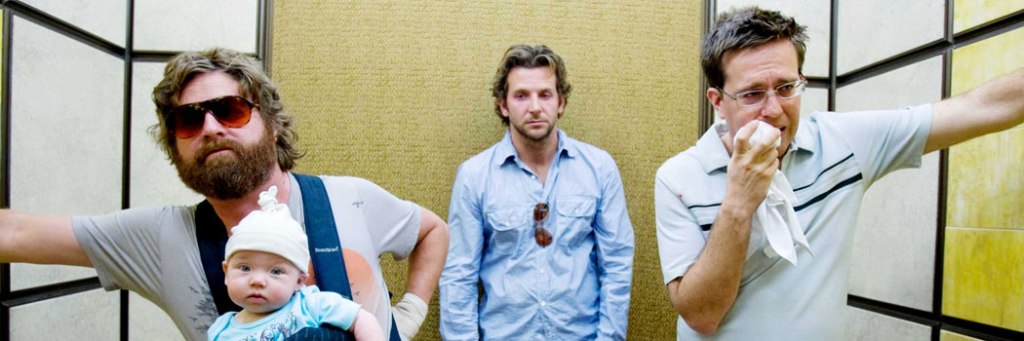
In director Todd Phillips’ THE HANGOVER, the night before his wedding, groom-to-be Doug (Justin Bartha), his two best friends, Phil and Stu (Bradley Cooper and Ed Helms), and his soon-to-be brother-in-law Alan (Zach Galifianakis), head to Las Vegas for a wild and exciting bachelor party. After taking some Jagermeister shots on the roof of Caesar’s Palace, the movie screen goes black, and soon we see Phil, Stu and Alan wake up in their hotel room with absolutely no memory of what happened the previous night. The room is trashed, there’s a tiger in the bathroom, a baby in the closet, Alan doesn’t have on any pants, Stu is missing his lateral incisor, and Doug is nowhere to be found! With the wedding just hours away, the three friends follow any clues they can find in a frantic search for Doug. The search leads to the surprise discovery of a new stripper wife for Stu, the naked and dangerous Asian gangster Chow (Ken Jeong), who jumps out of the trunk of their car and attacks Phil with a crowbar, and Alan being tasered in the face by a kid visiting the Vegas police station. Hell, at one point Alan even gets punched out by Mike Tyson! More importantly, though, will they find Doug alive and have time to get him back to Los Angeles for his wedding?!!
A massive box office hit in the summer of 2009, THE HANGOVER became the highest grossing R-rated comedy up to that time, with a worldwide gross of $469 million against a budget of $35 million. One of the keys to the film’s success is its clever and unique premise, comprised of a mystery-driven plot line where we follow the detective-like adventures of Phil, Stu, and Alan and discover what the hell happened the night before at the same times that they do. This allows for a series of outrageous, raunchy, surprising, and hilarious comedic moments that escalate in absurdity over the course of the film’s 100-minute running time, culminating with an almost unbelievable roll of pictures on Stu’s camera that fill in the crazy events from their wild night in Vegas. Most movies, even comedies, don’t result in me laughing out loud. I laughed out loud frequently that first time I watched THE HANGOVER back in 2009, and I still do. It’s also a movie that, since that 2010 tax season, I have quoted endlessly in my personal life, whether it be “Classic,” to “Thanks a lot, Bin Laden,” and even “It’s not a purse, it’s called a satchel. Indiana Jones wears one.” I never know exactly when something will happen in my personal life that reminds me of THE HANGOVER, but if the time is right for an “in the face,” I’m always ready!
Of course, the comedy in THE HANGOVER would not work without the great direction from Todd Phillips, as well as the exceptional performances and chemistry between Bradley Cooper, Ed Helms, and Zach Galifianakis. Phillips moves things along at a perfect pace, allowing for tons of laughs, while propelling the story forward to its conclusion. He also seems to capture the chaos and “what happens in” feeling of an out-of-control night in Vegas. And when I watched the film, I was reminded of people in my own life who share certain traits with some of the characters, especially those played by Cooper and Helms. As such, the interactions between the characters seems natural and familiar to me, which makes it even funnier. Luckily, I can’t think of any friends like Galifianakis’ eccentric character, but that’s probably a good thing for my real life. In the context of the movie, however, he steals the film with his deadpan delivery.
Ultimately, THE HANGOVER became a cultural phenomenon that launched a series of three films that grossed over $1.4 billion worldwide. It’s blend of clever writing, great casting and performances, and most importantly, great comedic moments, makes it one of my favorite comedies of the 21st century.
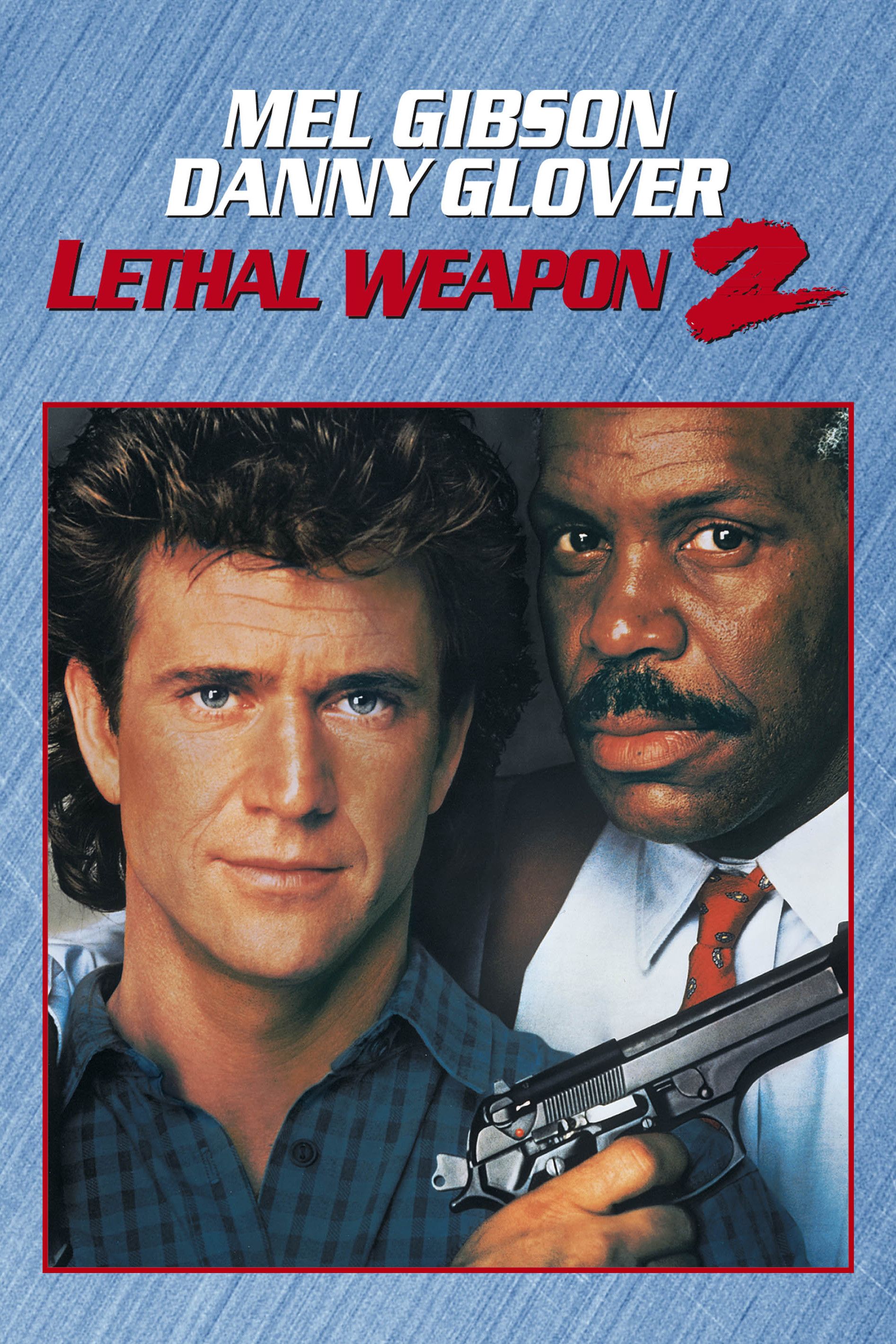
Lethal Weapon 2 is the kind of sequel that doesn’t really try to reinvent what worked the first time so much as crank the volume on everything: the action is bigger, the jokes come faster, and the chaos feels almost constant. Depending on what you loved about Lethal Weapon, that approach delivers more of the high-energy partnership in a flashier package. It’s a confident, very entertaining 80s action movie that knows it’s a sequel and leans into the spectacle that status allows.
Plot-wise, Lethal Weapon 2 wastes no time reminding you what this world feels like. It drops Riggs and Murtaugh into a wild car chase almost immediately, and from there the story locks onto a case involving South African diplomats hiding behind apartheid-era “diplomatic immunity” while running a massive drug and money-laundering operation. It’s a cleaner, more high-concept hook than the original’s murkier web of Vietnam vets and heroin smuggling, and the script makes the villains broad on purpose, almost cartoonishly arrogant, to give the audience someone very easy to hate. The trade-off is that the plot feels a bit more mechanical this time; you always know who the bad guys are and what the destination is, so the film’s real energy comes from the detours, jokes, and set-pieces rather than any mystery.
One of the big shifts from Lethal Weapon to Lethal Weapon 2 is tone. The first film balanced brutal violence and dark humor with a surprisingly heavy focus on Riggs’ suicidal grief and Murtaugh’s fear of getting too old for the job. The sequel keeps those elements in the background but leans harder into banter, slapstick timing, and outrageous gags like the now-famous exploding toilet sequence, with Richard Donner’s direction pushing the script toward action comedy. It’s still R-rated and not shy about blood or cruelty, but the emotional intensity is dialed down compared to the original’s raw edges.
Mel Gibson and Danny Glover remain the anchor, and their chemistry is as sharp as ever. Gibson’s Riggs is still reckless and unhinged, but there’s a looser, more playful side to him this time; he’s less haunted and more of a live-wire prankster until the story gives him something personal to latch onto. Glover’s Murtaugh continues to be the grounded center, constantly exasperated and always half a step away from just walking off the job, and the film has a lot of fun putting his straight-man persona through increasingly humiliating situations while still letting him be competent when it counts. Compared to the first film, where their partnership slowly thawed from suspicion to genuine trust, Lethal Weapon 2 starts from “these guys are already a team” and builds its best moments from how comfortably they now bounce off each other.
The biggest new ingredient is Joe Pesci as Leo Getz, a federal witness turned tagalong who basically functions as the franchise’s third stooge. Pesci leans into the motor-mouthed, paranoid, endlessly complaining energy that would become his signature, and his presence tips some scenes from gritty cop story into broad comedy. He undercuts tension at times, but he also gives the movie a different rhythm, especially in the quieter in-between beats where the first film might have lingered more on Riggs’ inner damage.
In terms of action, Donner clearly has more money and confidence to play with, and it shows. The chases are bigger, the shootouts are staged with a slicker sense of geography, and there’s a steady escalation in scale that makes the film feel like a genuine summer sequel rather than just another mid-budget cop movie. The original had a grimy, street-level intensity, with brutal fistfights and sudden bursts of violence; Lethal Weapon 2 is more interested in creative set-pieces, crowd-pleasing payoffs, and moments designed to make an audience cheer. It’s less intimate, but it is rarely dull.
Where the film lands in a more complicated space is its attempt to keep some emotional stakes alive while also going bigger and funnier. Riggs’ grief over the loss of his wife is still part of his character, and the story finds ways to poke at that wound again, including a new relationship that lets him imagine some kind of future beyond the constant death wish. Those beats are there to echo what worked so well in the first movie, but they have less room to breathe, often getting squeezed between an action scene and a joke instead of shaping the entire film’s tone. You can feel the push and pull between wanting to keep the darker emotional spine and delivering the kind of lighter, more easily marketable sequel a studio would understandably chase.
The villains themselves are effective in that pulpy 80s way: not nuanced, but very punchable. Arjen Rudd, with his smug talk of “diplomatic immunity,” is a villain designed to make audiences grind their teeth, and his main henchman adds a physically intimidating, quietly sadistic presence to the mix. Compared to the original’s more grounded ex-military antagonists, these guys feel one step closer to Bond territory, and that shift mirrors the film’s overall move toward heightened, almost comic-book stakes. What the sequel loses in plausibility, it gains in revenge-fantasy satisfaction.
When stacked directly against Lethal Weapon, the second film feels like a classic case of “if you liked hanging out with these characters once, here’s more time with them.” The original is tighter, more emotionally focused, and arguably more distinctive, with a stronger sense of danger and genuine unpredictability around Riggs’ mental state. Lethal Weapon 2 smooths some of those jagged edges and replaces them with quips, bigger set-pieces, and a more overtly crowd-pleasing structure, which makes it an easier, more consistently fun watch but also a slightly less resonant one. It is still a good film, but in many ways it is also the moment where the franchise shifts from a character-driven cop thriller with action to a full-on action-comedy machine.
As a fair, middle-of-the-road assessment, Lethal Weapon 2 works very well on its own terms and delivers exactly what most people want out of a late-80s buddy-cop sequel. The chemistry is intact, the action is energetic, and the film moves with the kind of confident pace that never really lets you get bored. At the same time, the tonal tilt toward broader humor and more cartoonish villains means it doesn’t quite have the same staying power or emotional punch as Lethal Weapon, especially if what hooked you the first time was how wounded and volatile it all felt. For fans of the original, it’s an enjoyable continuation—a louder, flashier second round that may not hit as hard, but still knows how to entertain.
Tis the season that hardworking New York reporters find themselves stranded in snowy middle America and end up falling in love while saving historic inns! In 2017’s Snowed Inn Christmas, the two reporters are played by Bethany Joy Lenz and Andrew W. Walker and the inn is located in Santa Claus, Indiana.
Yes, it’s predictable. Most of these films are. That’s actually a huge part of their appeal. They take place in a much more innocent world and they celebrate the holiday season without shame or snarkiness. The important thing is that Bethany Joy Lenz and Andrew W. Walker eventually make for a cute couple and the snowy scenery is really nice to look at.
In 2019’s A Karate Christmas Miracle, young Jesse Genesis (Mario Del Vecchio) believes that if he can become a black belt in four days, his father — who has been missing for a year — will return home. Jesse’s mother, Abby (Mila Milosevic) tries to get Jesse to understand that his father was abducted and probably murdered by a killer clown. Eventually, trying to understand what happened to her husband, Abby teams up with Elizabeth (Julie McCullough), a quirky law professor who is also psychic.
This is a strange film. Eric Roberts and Martin Kove are listed as co-starring in the film but actually, all of their footage appears to have been lifted from 2015’s Joker’s Poltergeist, a film that stylistically and thematically has next to nothing in common with A Karate Christmas Miracle. Scenes of Jesse practicing karate and trying to work his way up to black belt in just six days are mixed with scenes of Eric Roberts threatening to kill people and Martin Kove rambling about he wants to leave a movie theater to his daughter. The scenes just don’t mix but they do show that if Eric Roberts and Martin Kove aren’t available to do your bad movie, you can just lift scenes of them from an even worse movie.
Sitting through A Karate Christmas Miracle is a bit of a struggle. It’s only 81 minutes long but every scene still goes on for too long and the dialogue is full of overly quirky moments that probably sounded great in the writer’s head but which play out very awkwardly on film. This movie really made me appreciate films that are actually edited in a professional manner. We tend to take good editing for granted. This movie reminds us not to.
Now, to be honest, the story did have some potential. A child is so desperate for his father to return that he sets an impossible goal for himself. Seriously, in the right hands, this could have been a real tearjerker. But everything about A Karate Christmas Miracle just feels off. The film works itself towards an heartfelt ending that it really hasn’t earned.
Perhaps the best thing that can be said about this film is that it’s still better than Joker’s Poltergeist.
Previous Eric Roberts Films That We Have Reviewed:
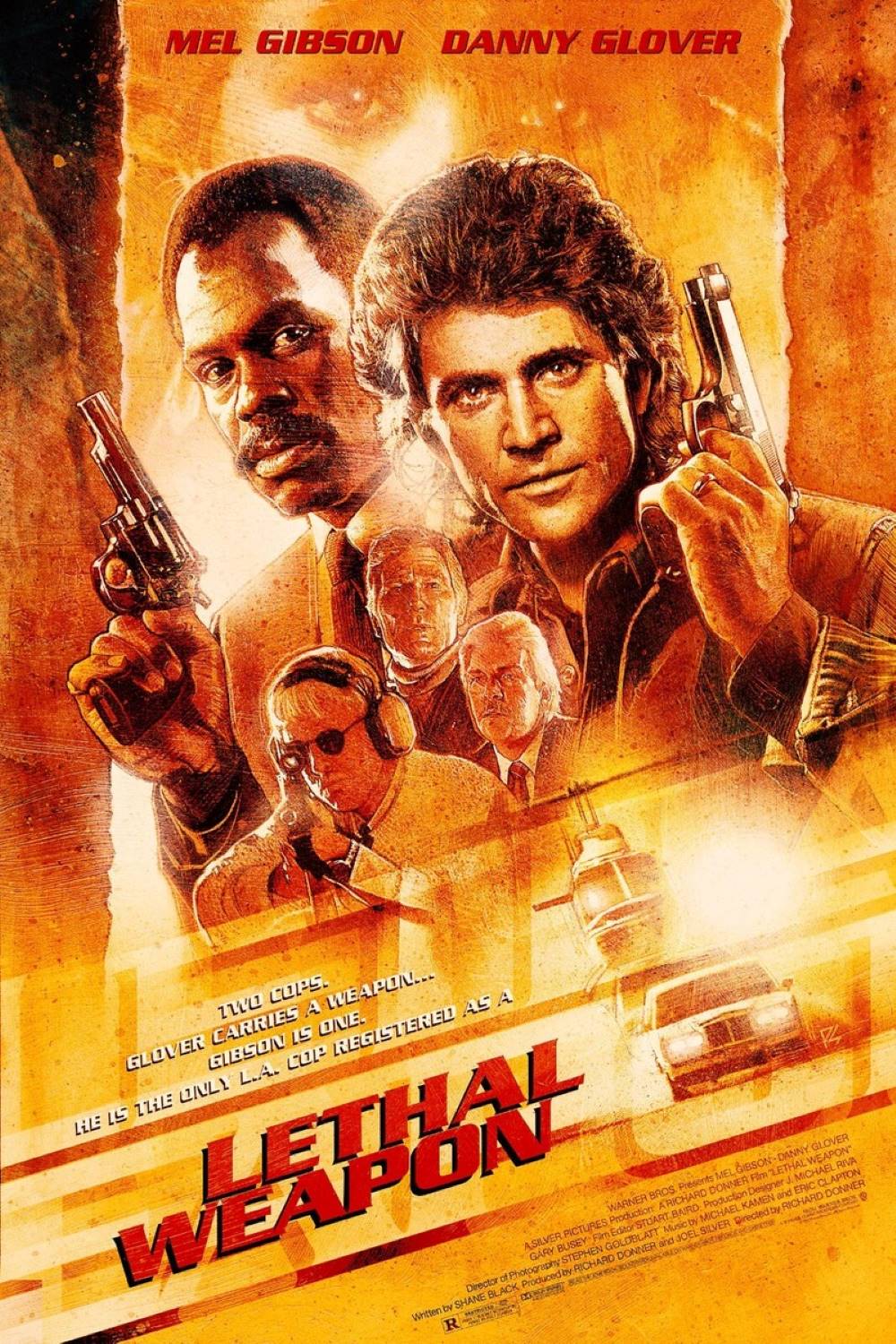
Lethal Weapon is one of those action movies that looks like pure genre formula on paper but somehow plays like lightning in a bottle on screen. From the opening moments, it feels like a film that knows exactly what kind of ride it wants to deliver and leans into that mission with confidence, attitude, and just enough heart to make the bullets and explosions actually matter.
The premise itself is as straightforward as they come, and that simplicity is part of the charm. Martin Riggs is the textbook “cop on the edge,” a former special forces sniper whose life has completely fallen apart after the death of his wife. He’s volatile, depressed, and teetering on the edge of suicidal, which gives everything he does an extra layer of danger. On the other side of the pairing is Roger Murtaugh, a seasoned detective staring down his 50th birthday, trying to balance a long career in homicide with the quiet, constant pull of his family at home. When these two are thrown together and assigned to a case involving drugs, dead bodies, and shady ex-military criminals, the story plays out across familiar beats: suspicious deaths, escalating confrontations, close calls, and a trail that leads them deeper into a dangerous operation. The crime plot is pulpy and direct rather than twisty, but the film uses it as a sturdy framework rather than the main point of interest, keeping the investigation moving while the characters come into focus. Much of that sharp setup and snappy progression comes from Shane Black’s script, which crackles with knowing genre savvy, pitch-perfect banter, and a keen eye for how personal pain fuels action-hero antics.
What really makes Lethal Weapon feel alive is how much time it spends letting Riggs and Murtaugh exist as people before they fully morph into the “classic duo” that pop culture remembers. The film doesn’t rush past the small stuff. Riggs is introduced living in a rundown trailer on the beach with his scruffy dog for company, drinking and stumbling through life with the casual recklessness of someone who genuinely doesn’t care if he sees tomorrow. Those early moments of him alone, flirting with self-destruction, give his later heroics a sense of tragic context: he’s not just fearless, he’s half-convinced he has nothing left to lose. Murtaugh’s introduction is a complete contrast: a crowded home, kids, a loving wife, and the kind of loud, chaotic domestic life that’s full of relatable irritation and warmth. Seeing him grumble through birthday milestones or awkwardly handle family situations does more for his character than any speech about his years on the force could. These slices of everyday life build a strong emotional foundation so that when the bullets start flying, there’s something at stake beyond catching bad guys. Black’s writing shines here, weaving those intimate details into the thriller beats without ever feeling forced or preachy.
The chemistry between Mel Gibson and Danny Glover is the film’s true secret weapon. Gibson plays Riggs as an unpredictable live wire, able to flip from goofy physical comedy to chilling seriousness in an instant. He sells the idea that this is a man barely keeping it together, yet still razor-sharp when it comes to the job. There’s a constant sense that his jokes and antics are a flimsy barrier over something very raw. Glover, by contrast, keeps Murtaugh grounded and human; his performance is packed with little sighs, muttered reactions, and weary facial expressions that speak volumes. He comes across as a guy who has seen too much, loves his family, and genuinely wants to do the right thing, but is exhausted by how hard that is in practice. Their initial friction hits the expected “mismatched partners” beats: Murtaugh thinks Riggs is unstable and dangerous, while Riggs treats Murtaugh like a fussy old man who doesn’t get it. Yet as they move through stakeouts, interrogations, and gunfights, their banter evolves from pure irritation into an easy rhythm filled with barbs, mutual respect, and eventually real affection. Shane Black’s dialogue is the glue for all of it—witty, profane, and laced with just enough vulnerability to make the laughs land harder and the tension feel real.
Richard Donner’s direction is a huge part of why all of this clicks as well as it does. He has a knack for blending big, commercial genre instincts with an eye for character detail, and Lethal Weapon is a textbook example of that balance. He stages action scenes with clear geography and rhythm, so even when things get loud and chaotic, you always know where you are and what everyone is trying to do. At the same time, he’s just as interested in the quiet beats: a pause on Riggs’ face after a joke lands flat, Murtaugh’s body language when he walks into his noisy home after a brutal day, the way a conversation in a car can shift from banter to confession in a couple of lines. Donner keeps the film moving at a brisk pace, but he knows when to let a shot linger or a silence hang long enough to tell you what the characters can’t quite say out loud. His tonal control—jumping from dark to funny to tense without completely losing the thread—is a big reason the movie doesn’t collapse under its own genre juggling, and it pairs beautifully with Black’s script that sets up those shifts so precisely.
Tonally, Lethal Weapon walks a tricky line, and that’s a big part of its identity. On one hand, this is a story with genuinely dark undercurrents. Riggs’ suicidal impulses are not a throwaway character quirk; the film gives time to scenes where he nearly acts on them and struggles in a very raw way with his grief and loneliness. The case they’re working breaks open into territory involving drugs, exploitation, and violence that’s sometimes nasty rather than cleanly heroic. On the other hand, the film is full of humor, ranging from quick one-liners to broad physical bits. The Murtaugh household provides a lot of that levity: awkward conversations with his kids, Riggs stumbling through family dynamics, and the contrast between domestic calm and the chaos of the streets. The movie often jumps from heavy emotional beats to comedic ones and back again, and while the transitions can be abrupt, that mixture is part of what keeps it from feeling like just another grim cop story. The laughter doesn’t erase the darker material, but it does give the movie a sense of momentum and charm that keeps it entertaining instead of oppressive. Black’s screenplay nails this push-pull, using humor as both release valve and revelation.
As an action film, Lethal Weapon delivers a steady run of sequences that are energetic, clear, and tactile. The action is built around physical stunts, dangerous-looking falls, and gunfights that feel chaotic without becoming incoherent. One memorable sequence has Riggs dealing with a jumper on a rooftop in a way that instantly tells you everything about his mentality and willingness to risk himself. Another set piece in a more open, exposed environment lets the film escalate tension step by step before violence finally erupts. Through it all, Donner keeps a strong sense of spatial clarity; you can track where the characters are, what they’re trying to do, and how each decision raises the stakes. The fights feel scrappy and painful rather than overly slick, and that slightly rough quality actually works in the movie’s favor, making each impact land harder. Riggs, especially, moves like a human weapon, hurling himself into situations with a recklessness that ties directly into his psychological state, all fueled by Black’s clever plotting that makes those risks feel personal.
Underneath the gunfire and explosions, there’s a surprisingly sturdy emotional core tying everything together. Riggs’ grief isn’t just window dressing; it’s the lens through which his every decision makes sense. The movie doesn’t lecture you about what he’s feeling, but it shows it—through quiet moments alone, through the anger that erupts at all the wrong times, and through the way he throws his body into danger almost as if daring the world to take him out. Murtaugh’s arc is more subtle but still strongly drawn. He’s at an age where he has to confront the reality that he can’t keep pace with younger, more reckless colleagues forever, and yet his sense of duty keeps pulling him into situations where his family might lose him. Throughout their investigation, Murtaugh’s protective instincts—toward his loved ones, toward Riggs, and toward innocent people caught in the crossfire—become as important as his skills as a detective.
The relationship that develops between Riggs and Murtaugh is the heart of the film and the main reason it sticks in the memory. At first, Murtaugh just wants to survive partnering with a man he genuinely believes might be unhinged, while Riggs seems to treat their pairing as just another chaotic twist in a life already off the rails. As they trade confessions, back each other up in tight spots, and slowly understand what the other is carrying, their bond shifts into something like brotherhood. Murtaugh becomes a kind of anchor for Riggs, offering not just backup in a fight but also a place at the table, both literally and figuratively. Riggs, in turn, forces Murtaugh out of his comfort zone, reminding him that he still has plenty of courage and fire left in him. The film doesn’t turn their connection into a sentimental soapbox, but it lets small moments—a shared laugh after a narrow escape, a quiet conversation after the chaos—do the emotional lifting, with Black’s words giving those scenes their understated power.
If there’s a clear weak spot, it’s that the villains are fairly thinly drawn, operating more as looming threats than fully realized characters. They are dangerous and organized, capable of serious brutality and clearly involved in serious criminal operations, but the movie doesn’t spend much time exploring their motivations or inner lives. They’re the kind of antagonists designed to be obstacles: formidable enough to make the heroes’ victories feel earned, but not so complex that they distract from the central duo. For a character-driven action film, that trade-off mostly works. When Lethal Weapon is firing on all cylinders, the tension doesn’t come from wondering what the bad guys will do next so much as from seeing how Riggs and Murtaugh will handle whatever gets thrown at them and what that reveals about who they are.
Structurally, the film keeps a tight pace, always nudging the story forward even when it pauses for character beats. Expository scenes rarely feel like dry info dumps; they’re often laced with jokes, personal jabs, or subtle shifts in how the two leads relate to each other. The downtime moments—a quiet drink, a shared meal, a conversation in a car between partners who would rather pretend they’re fine—are as important as the louder ones. By the time the case ramps up to its most intense passages, there’s been enough time with these characters to care less about the mechanics of the plot and more about whether these two damaged, stubborn men can come out the other side with something to hold onto.
What ultimately makes Lethal Weapon work so well is that it doesn’t settle for being just a checklist of genre requirements. Yes, it has gunfights, dark humor, car chases, and tough-guy posturing. But wrapped around all of that is a story about grief, aging, loyalty, and how unlikely partnerships can change the trajectory of a person’s life. Donner’s steady hand behind the camera, Shane Black’s razor-sharp script, and the powerhouse performances turn what could have been a forgettable cop thriller into something much more memorable. For anyone who enjoys action movies that care as much about the people pulling the triggers as the bullets they fire, Lethal Weapon stands out as a defining entry in the buddy-cop mold, powered by the messy, heartfelt dynamic at its center and the sure-footed craftsmanship that brings it all together.
The 2017 film, A Very Merry Toy Store, asks the age-old question: “Could any couple possibly be more adorable than Melissa Joan Hart and Mario Lopez?”
Melissa Joan Hart (Sabrina!) and Mario Lopez (Slater!) play rival toy store owners. (Their fathers once owned one big toy store but that didn’t work out.) Hart’s idealistic toy store is struggling. Lopez’s more commercial toy store is thriving. But they’re going to have to set aside their differences (and accept that they’re totally in love) because a big chain store is coming to town!
It’s a cute movie, one that works because the leads are so likable. (Brian Dennehy and Beth Broderick are both well-cast in supporting roles.) What can I say? I like this movie! Maybe I just always wanted to own a toy store.
(If I had a toy store, I would so a “Buy a Toy, Get A Free Book” promotion.)
“The real Santa was totally different. The Coca-Cola Santa is just a hoax.” — Pietari Kontio
Rare Exports: A Christmas Tale is a quirky Finnish film that turns the cheerful Santa story upside down, mixing horror, laughs, and holiday vibes in a bold way. Directed by Jalmari Helander in 2010, it builds on his earlier short films and unfolds in the bleak, snowy wilds of Lapland. Starting with a kid’s innocent curiosity, it dives into creature-filled madness, offering a fun alternative to typical Christmas movies. The film’s unique premise grabs you right away, promising something far removed from the sanitized holiday fare we’re all used to, and it delivers on that with a blend of folklore, tension, and unexpected twists that linger long after the credits roll.
The plot centers on young Pietari in a remote village where his dad and neighbors herd and slaughter reindeer for a living. An American-backed dig nearby uncovers something ancient and icy, sparking trouble like missing kids and odd thefts. Pietari reads from a book portraying Santa as a terrifying punisher rather than a gift-bringer, and soon the village captures a wild, elf-like creature to exploit, only to confront the bigger threat emerging from the frost. This setup masterfully builds suspense through everyday rural life clashing with supernatural intrusion, where the slow reveal of the mound’s secrets heightens the stakes. Pietari’s journey from wide-eyed boy to resourceful hero forms the emotional core, as he grapples with myths coming alive while the adults bumble through denial and desperation. The narrative weaves in economic pressures on the herders, adding a layer of realism to the fantastical elements, making the horror feel grounded in human struggle.
The movie’s mood captures that chilling isolation of deep winter, with vast snowscapes and biting winds making every sound feel ominous. Practical effects bring the skinny, feral beings—wild-eyed old men with fangs who move like beasts—to life in a raw, creepy style that avoids digital gloss for something viscerally unsettling. Pietari, played with earnest intensity by a young actor who nails the mix of fear and determination, anchors the emotion as he outsmarts the clueless grown-ups. It blends youthful adventure with sharp violence, from brutal bites and chases across frozen lakes to fiery clashes that punctuate the cold palette. Cinematography plays a huge role here, using long takes of barren landscapes to evoke vulnerability, while close-ups on the creatures’ grotesque features ramp up the dread without relying on jump scares. The film’s pacing ebbs and flows like a blizzard—calm buildup giving way to frantic bursts—keeping viewers on edge throughout its compact runtime.
Humor keeps things lighthearted, skewering Christmas clichés with glee, from red-suited abominations to the absurdity of weaponizing holiday icons against ancient evils. Burly locals stuffing their caught creature into a Santa outfit for a quick ransom scam leads to hilarious chaos, blending slapstick with dark undertones as plans unravel spectacularly. The short runtime flies by, blending Finnish authenticity—complete with subtitles that capture the dry wit—with brisk energy that never lets momentum sag. Deeper notes on faith, family bonds, and rural struggles hide under the fun, all tied to old pagan roots of the holiday myth, prompting thoughts on how modern traditions mask primal fears. These comedic beats provide relief without undercutting tension, creating a tonal tightrope walk that Helander navigates with confidence, much like his protagonists dodging fangs in the snow.
Still, it has rough edges holding it back from perfection. Some plot turns feel too convenient, like the hasty shift from fear to scheming among the villagers, which can pull you out of the immersion if you’re paying close attention. A few characters lack depth, especially the overconfident American outsider whose motivations come off as cartoonishly smug without much backstory to flesh them out. Women barely appear, relegated to minor roles or off-screen mentions, giving it an old-school, male-dominated feel that hasn’t aged as gracefully in modern viewing. The monsters, while initially shocking, grow predictable in their attacks after repeated encounters, diluting the novelty midway through. The wild finale, packed with explosive action and a cheeky resolution, might leave straight horror seekers cold—it’s more a playful genre mash-up than nonstop unrelenting terror, prioritizing fun over lingering nightmares.
The real locations sell the unforgiving outdoors, with Finland’s rugged terrain ramping up the ancient-evil vibe through authentic blizzards and icy caverns that no studio set could replicate. A clever soundtrack pairs eerie hums and dissonant strings with festive twinkles for ironic tension, underscoring scenes of quiet horror or frantic pursuits without overpowering the natural sounds of cracking ice and howling gales. Acting feels grounded across the board, with the dad character delivering tough warmth through gruff line delivery and physical comedy, while the ensemble of villagers comes across like real, weathered folks rather than polished performers. Helander expands his original shorts smartly, keeping the cheeky core intact while scaling up the stakes for feature-length thrills, showing a director comfortable with both intimate scares and big set pieces.
Beyond the surface-level scares and laughs, Rare Exports invites reflection on cultural myths and commercialization—how Santa’s image has been sanitized from something feral into a mall mascot, and what happens when the wild origins claw their way back. It’s a film that thrives on subverting expectations, starting as a kid’s adventure tale before morphing into a survival thriller with creature-feature flair. The practical makeup and prosthetics on the beasts deserve special mention for their handmade creepiness, evoking classic horror without the uncanny valley pitfalls of CGI. Editing keeps the energy taut, cutting between Pietari’s discoveries and the adults’ mishaps to build parallel dread.
As holiday counterprogramming, Rare Exports shines for fans of weird cult picks, great for group watches where reactions to the escalating weirdness become part of the fun. It holds up on repeats with hidden nods to its short-film origins, like recurring motifs and visual gags that reward eagle-eyed viewers. If you like folklore twists in films with adventure flair—think pseudo-documentaries hunting trolls or rural legends gone wrong—this delivers original entertainment despite its quirks. Ultimately, its charm lies in balancing the grotesque with the gleeful, crafting a Christmas tale that’s equal parts frightful and festive, proving that sometimes the best gifts come wrapped in fangs and fur.
As I scrolled through the “Recommended” movies on Tubi last night, I came across this one movie, CHRISTMAS CRASH, that intrigued me. It sounded sort of like a Hallmark movie, but it starred Michael Madsen, an actor I couldn’t possibly imagine in a Hallmark movie. Check out this description on Tubi…
“An unhappily married couple is presumed dead after their private plane crashes in the woods, but reconnects as their survival offers a second chance.”
All bad grammar aside, it was very late at night and I was looking for something that required zero functioning brain cells, and this seemed to fit the bill. Also, I had recently watched Madsen in the theatrical release of KILL BILL: THE WHOLE BLOODY AFFAIR, where he was so good, so I thought I’d check out his performance as the husband reconnecting with his wife, played here by Alexandra Paul (BAYWATCH).
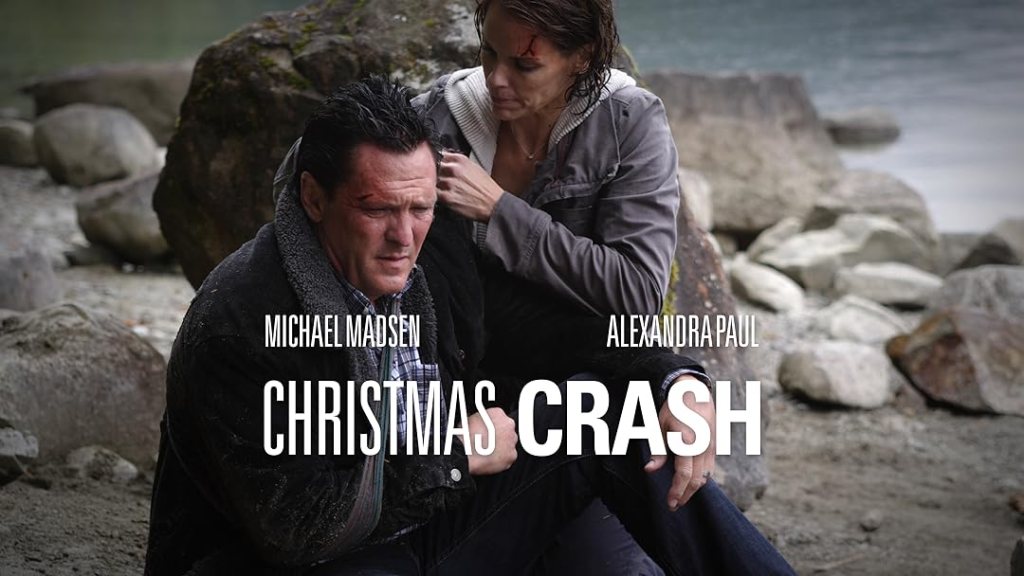
After watching CHRISTMAS CRASH, all I can say is that I still can’t imagine Michael Madsen in anything that resembles a Hallmark movie. To say that he was “miscast as the beleaguered husband attempting to reconnect with his wife while attempting to survive the trek back to civilization after the plane crash” just may be my understatement of the year. There was nothing about his performance that seemed remotely realistic from the very beginning to the very end. Still, his uncomfortable line delivery, whether it be in a tense board meeting, out in the middle of the woods, or at a Christmas party at the end of the movie, is my favorite part of the movie. It was oddly enjoyable in a way that I can’t quite explain. Alexandra Paul does come off a little better as she proves to have some determined survival instincts, but this will not be on anyone’s list of career highlights.
CHRISTMAS CRASH has some pretty Canadian scenery as the married couple fly their plane over some beautiful mountains before crash landing in a beautiful, frigid lake. Luckily for them though, they’re able to swim to the shore, start a small, but obviously very warm, fire and somehow not succumb to hypothermia. And the weather, at least based on the news reports their terrified daughters are seeing on TV, is so terrible that search and rescue efforts have to be suspended. The problem is we never see any of this bad weather. What we’re shown looks fine! I laughed out loud when I saw that weather report coupled with beautiful sunshine! I will admit that I was worried about the big gash on Madsen’s lower leg after the accident, especially since it looked so dirty. But after the initial application of a homemade tourniquet, it wasn’t really mentioned any further. After about thirty minutes of screen time with no grody scenes of leg re-dressing, I quit worrying about it. And then there are the wolves that attempt to make a snack of our couple. I’ve seen THE GREY with Liam Neeson and I’ve been to Yellowstone, so I know that wolves are very dangerous. Let’s just say that the wolves of CHRISTMAS CRASH are too easily fended off with a medium-sized stick to ever feel too dangerous. There was this one moment where it appeared a wolf might have been biting on Madsen’s injured character for a moment, but after they run off, it’s never mentioned or shown that he was injured in any way, so I guess that wolf didn’t have any teeth.
My initial thoughts on at least a superficial connection between CHRISTMAS CRASH and the Hallmark channel did prove perceptive, as the movie is directed by Terry Ingram. A quick review of Mr. Ingram’s directorial credits on IMDB reveal an extensive connection to Hallmark, with generic titles such as HATS OFF TO CHRISTMAS, ‘TIS THE SEASON FOR LOVE, and THE MISTLETOE SECRET. Despite the director’s apparent love of the season and the fact this movie is titled CHRISTMAS CRASH, it sure doesn’t feel very Christmassy. With extremely limited changes, this movie could be set in any season, so don’t expect any feelings of genuine Yuletide spirit.
Overall, I’d say the best thing about CHRISTMAS CRASH is that it’s a 90 minute movie that has potential value in a “so bad it’s funny” kind of way. I think it would be fun to watch with friends, or as a “Live Movie Tweet” on social media. I watched the whole movie, had a few unintentional laughs, and when it was over around 1:00 in the morning, I went to bed none the worse for the wear.
Mrs. Claus (Mira Sorvino) has left the North Pole and is living it up in Las Vegas!
Now, don’t panic. The plot of 2012’s Finding Mrs. Claus does not involve the Kringles going to divorce court. Can you imagine how traumatic that would be? It would ruin Christmas for everyone and I have a feeling that Santa probably wouldn’t put much effort into his job afterwards. Or, even worse, the court might award the Workshop to Mrs. Claus and she might let her new boyfriend, Tony the Gigolo, take over the business. If that ever happens, I hope everyone’s okay with their chimneys smelling like Axe body spray on Christmas morning.
Fortunately, Mrs. Claus and Kris (Will Sasso) are still very much in love. It’s just that Mrs. Claus gets upset when she sees how exhausted Kris is at the end of the day. When she comes across a letter from a little girl in Las Vegas who wants her mom to find a new husband for Christmas, Mrs. Claus decides to give her husband a break and take care of it herself. With the help of Calvin the Elf (Geoff Gustafson), she loses his white wig and her old German clothes and she is transformed into …. well, Mira Sorvino. Mrs. Claus heads to Las Vegas, intent on spreading Christmas cheer.
Kris, when he wakes up, is not happy to discover that his wife is missing. Grabbing Calvin, he heads down to Vegas to find her. (He loses the beard on the way to America.) If Kris can’t find Mrs. Claus before Christmas, there’s going to be a lot of disappointed children in the world. While Mrs. Claus tried to find a husband for Noelle (Laura Vandervoort), Kris tries to find his wife.
And yes, as you probably already guessed as soon as I mentioned that this movie takes place in Las Vegas, there is an Elvis impersonator sight gag. It happens quickly but seriously, it’s a Lifetime Christmas film that’s set in Vegas. There has to be an Elvis impersonator somewhere!
What’s that? Do I hear you being cynical out there? Well, stop it! It’s a cute movie! It’s a holiday movie that features Mira Sorvino being glamorous as Mrs. Claus and Will Sasso being cheerfully clueless as Santa. Both Sorvino and Sasso really throw themselves into their roles and the fact that both of them are so well-intentioned but yet so naive about life outside of the North Pole actually make their story a rather sweet one. While Mrs. Claus understood the importance of blending in with Las Vegas, Santa never seemed to get why anyone would doubt him when he explained what he did for a living.
In the end, this is the type of silly, sentimental, and earnest film that works nicely during the holidays. The holiday season is a good time to be reminded that not everything has to be dark and depressing. Towards the end of the film, a character spots a shooting star and makes a wish and it’s hard not to feel that it’s a moment that the film has earned.





 Through the Shattered Lens