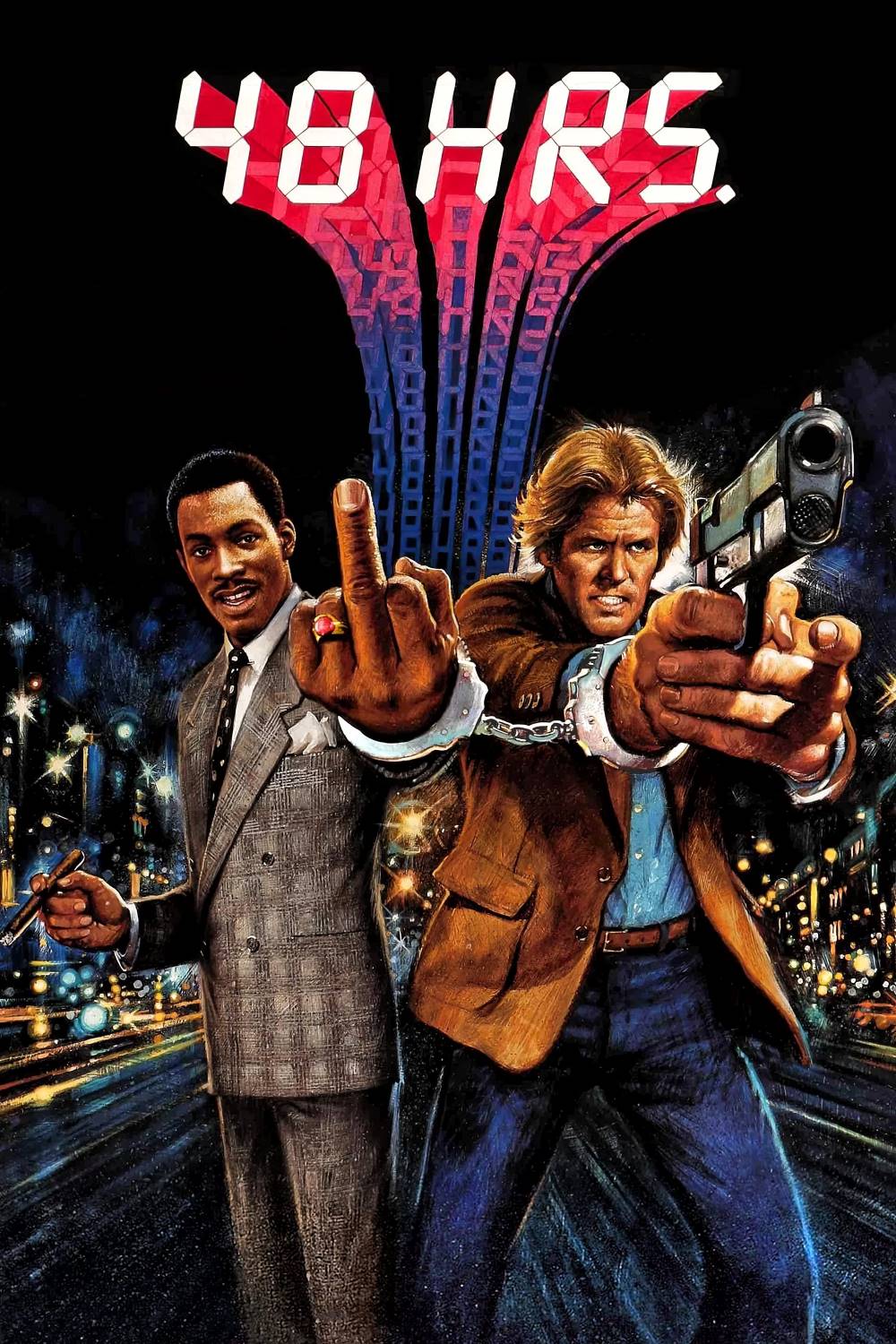
Review: 48 Hrs. (dir. by Walter Hill)


“This ain’t no god damn way to start a partnership.” – Reggie Hammond

48 Hrs. bursts onto the screen with a gritty prison breakout that sets the stage for chaos in the foggy streets of San Francisco, where a pair of ruthless killers slip away after gunning down a cop’s partner in cold blood. Jack Cates, the surviving detective, is left battered and furious, piecing together a case that points to a slick convict named Reggie Hammond holding the key to the crooks’ whereabouts—and a stash of stolen cash. With time ticking down, Jack pulls strings to get Reggie out on a 48-hour pass, thrusting these two polar opposites into a reluctant alliance that turns the city into their personal battlefield of bullets, banter, and bad blood.

From the jump, Jack comes across as the ultimate rough-around-the-edges cop, nursing a flask under his trench coat, snapping at colleagues, and charging headfirst into danger like a man who’s got nothing left to lose. His apartment is a mess of empty bottles and regret, and his rocky relationship with his girlfriend underscores how the job has chewed him up and spit him out, leaving him more beast than man. Reggie, by contrast, rolls in with street-honed swagger, his prison jumpsuit barely containing the energy of a guy who’s survived by being quicker on his feet and sharper with his mouth than anyone around him. He’s got a girlfriend waiting with that hidden money, and no intention of playing nice with a cop who’s eyeing him like fresh meat.

The beauty of their pairing lies in how the film lets their friction spark from the very first shared car ride, where Jack’s growled commands clash against Reggie’s nonstop ribbing, turning a simple stakeout into a verbal demolition derby. Picture them peeling out after a lead goes south, tires screeching through narrow alleys while Reggie gripes about the beat-up car and Jack slams the dash in frustration—it’s these raw, unscripted-feeling moments that make the movie breathe. As they hit up seedy bars, chase informants through strip joints, and dodge ambushes, the script peels back layers: Jack’s not just a bully, he’s haunted by close calls; Reggie’s bravado masks real fear of ending up dead or broke.

One standout sequence drops them into a hillbilly roadhouse packed with hostile locals, where Reggie grabs the mic for an impromptu takedown that flips the room from menace to mayhem, buying them time while Jack backs him up with sheer firepower. It’s tense, hilarious, and perfectly timed, showing how their skills complement each other—Jack’s brute force meeting Reggie’s silver tongue—in ways neither saw coming. The villains, led by a stone-cold Luther and his trigger-happy sidekick, keep the heat cranked high, popping up for savage hits that leave bodies in the gutter and force the duo to improvise on the fly, like hot-wiring rides or shaking down lowlifes for scraps of intel.

Walter Hill’s direction keeps it all taut and visceral, with handheld cameras capturing the sweat and grime of every punch thrown or shot fired, no glossy filters to soften the blows. The San Francisco backdrop shines through rain-slicked hills, neon-lit dives, and shadowy piers, giving the action a grounded, almost documentary edge that amps up the stakes. Sound design punches too—the roar of engines, the crack of gunfire, the thud of fists—layered over a pulsing ’80s score that shifts from funky grooves during chases to ominous drones in quieter beats, mirroring the push-pull between comedy and threat.

Diving deeper into the characters, Jack’s arc feels earned through small touches: a hesitant phone call to his ex, a flicker of respect when Reggie saves his skin, moments that humanize the hardass without forcing redemption. Reggie evolves too, his initial scam-artist vibe giving way to flashes of loyalty, like when he risks his neck to protect that cash not just for himself, but to build something real outside the walls. Supporting roles flesh out the world—the precinct captain barking orders, the sultry singer tangled with the bad guys, Reggie’s tough-as-nails woman who won’t take guff—but they never overshadow the core duo, serving as sparks for conflict or comic relief.

Pacing-wise, the film rarely pauses for breath, clocking in under two hours yet packing in a full meal of twists, from double-crosses at motels to a frantic foot chase across rooftops that leaves you winded. The 48-hour ticking clock adds urgency without gimmicks, every dead end ramping tension as dawn breaks on their deadline. Humor lands organically too, not from slapstick but from character-driven zingers—Reggie calling out Jack’s outdated tough-guy schtick, Jack grumbling about Reggie’s flashy clothes—keeping the tone light even as blood spills.

Of course, watching through modern eyes, the dialogue packs some era-specific punches, with raw language around race, cops, and crooks that reflects ’80s attitudes head-on, for better or worse. It’s unapologetic, mirroring the film’s macho pulse, but adds texture to the time capsule feel, making replays fascinating for how boldly it leaned into taboos. The women, while fierce in spots, often play second fiddle to the bromance brewing, a hallmark of the genre that 48 Hrs. helped cement before it evolved.

What elevates this beyond standard action fare is how it nails the buddy dynamic’s slow burn: no instant high-fives, just gradual thaw from shared survival, culminating in a dockside finale where alliances solidify amid explosions and last stands. The editing zips between high-octane set pieces and downtime breather scenes, like a roadside diner heart-to-heart that reveals backstories without halting momentum. Cinematography plays with shadows and neon to heighten paranoia, turning everyday spots into pressure cookers.

Influence-wise, you can trace lines straight to later hits—the grizzled vet and smooth-talking newbie formula got refined here, blending Lethal Weapon grit with Beverly Hills Cop wit years ahead of schedule. Performances anchor it all: the leads’ chemistry crackles, carrying weaker beats on sheer charisma, while Hill’s lean style ensures every frame earns its keep. Runtime flies because it’s efficient, no fat, just muscle.

Final stretch ramps to operatic violence on those windswept docks, bullets flying as personal scores settle, leaving our heroes bloodied but bonded in a way that feels hard-won. 48 Hrs. endures as a rowdy blueprint for the genre, blending laughs, thrills, and toughness into a package that’s addictive on first watch and rewarding on revisit. It’s got heart under the bruises, edge in the jokes, and a vibe that’s pure ’80s adrenaline—grab it for a night of no-holds-barred entertainment that still packs a wallop over four decades later.

Holidays on the Lens: It’s Christmas, Carol! (dir by Michael M. Scott)


In 2012’s It’s Christmas, Carol, Emmanuelle Vaugier plays Carol, a publishing executive who has lost sight of what the holidays should be all about.  The ghost of her former boss (played by Carrie Fisher) appears to her and takes her on a journey through her past, present, and future….

Does this sound familiar?

Tis the season for a hundred variations on the classic Charles Dickens tale!  This one’s cute, though.  Carrie Fisher gives a good performance as the ghost who has to do the job of three because of “budget cutbacks.”

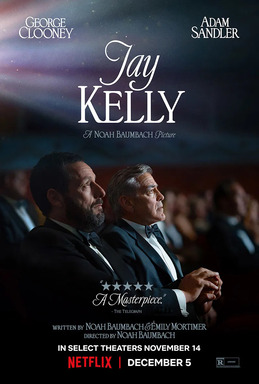
The Films of 2025: Jay Kelly (dir by Noah Baumbach)


Jay Kelly features George Clooney at both his best and his worst.

Clooney plays the film’s title character, an actor who has just hit 60 and who is having an existential crisis as he realizes everything that he’s lost as a result of being rich and famous.  Clooney’s best moments are when he plays Jay as being essentially a prick, a guy who might be well-meaning but who lacks the self-awareness necessary to understand just how condescending and fake he tends to come across to the people who know him.  This is the Jay who insists on having a drink with Tim (Billy Crudup), a former actor who lost a key role to Jay and who has never forgiven him for it.  (It starts out as a friendly drink but it eventually becomes a fight after Tim reveals that he hates Jay and Jay responds by being smug.)  This is the Jay who has alienated both of his daughters (Riley Keough and Grace Edwards) and who doesn’t seem to understand that the rest of the world doesn’t travel with an entourage.

Jay is gloriously unaware in those scenes and they give Clooney a chance to show that he’s still capable of giving a sharp comedic performance.  Watching him in those scenes, I was reminded of the gloriously dumb characters that he played for the Coen Brothers, in both Burn After Reading and Hail, Caesar.  For that matter, I was also reminded of his burned-out hatchet man from Up In the Air, who was not a dumb character but still was someone who, like Jay Kelly, always seemed to be performing.

Unfortunately, as the film progresses, Jay himself starts to wander into flashbacks of himself as a young actor and, even worse, he starts to talk to himself about everything that he’s lost due to his fame and suddenly, he transforms into the insufferably smug Clooney who spent the earlier part of this year in greasepaint, lecturing us all about Edward R. Murrow.  The flashbacks to Jay Kelly’s past often feel like stand-ins for flashbacks to George Clooney’s past (and it’s probably not a coincidence that both Kelly and Clooney are from Kentucky) but they don’t really add up to much.  Jay Kelly is a character who becomes less compelling the more that one learns about him.

The characters around Jay Kelly are far more interesting than Jay himself, though I have my doubts whether that was intentional on the part of director Noah Baumbach.  (An overly long and indulgent sequence on a train would seem to suggest that Jay Kelly was envisioned as being a more fascinating character than he turned out to be.)  Just as he did in Baumbach’s The Meyerowitz Stories, Adam Sandler gives the film its heart, playing the role of Jay’s loyal but unappreciated manager.  Sandler and Laura Dern have a few showy scenes together but Sandler’s best moments come opposite Patrick Wilson as a client who feels that he’s being neglected in favor of Jay Kelly.  (For that matter, Wilson is so good in those scenes that I almost wish he had switched roles with Clooney.)  One might not expect the star of Jack and Jill and That’s My Boy to emerge as one of Hollywood’s best sad-eyed character actors but that’s what has happened in the case of Adam Sandler.

With all that in mind, I have to admit that I enjoyed Jay Kelly more than I thought I would.  Some of that has to do with expectations.  Jay Kelly is currently getting so roasted on social media that I was expecting the film to be a self-indulgent disaster.  While the film is definitely self-indulgent and about 30 minutes too long, it’s not a disaster.  When Clooney’s performance works, it really works.  (Unfortunately, the inverse is also true.)  Adam Sandler, Billy Crudup, Riley Keough, and Stacy Keach all give performances that elevate the occasionally shallow script.  Cinematographer Linus Sandgren captures some beautiful shots, especially towards the end of the film.  Visually, Jay Kelly is a marked improvement on the bland imagery of Marriage Story.  Like its title character, Jay Kelly is imperfect and occasionally annoying but it does hold your attention.

As for the film’s Oscar chances, the reviews are mixed but it’s a film about how tough it is to be an actor and one should not forget that the Actor’s Branch is the biggest branch of the Academy and the majority of the voters are people who are probably going to watch Jay Kelly and say, at the very least, “Hey, I know that guy!”  (Few will admit, “I am that guy,” but that will still definitely be a factor in how they react to the film.)  Regardless of how social media feels about the film, I imagine Jay Kelly will be remembered when the nominations are announced.

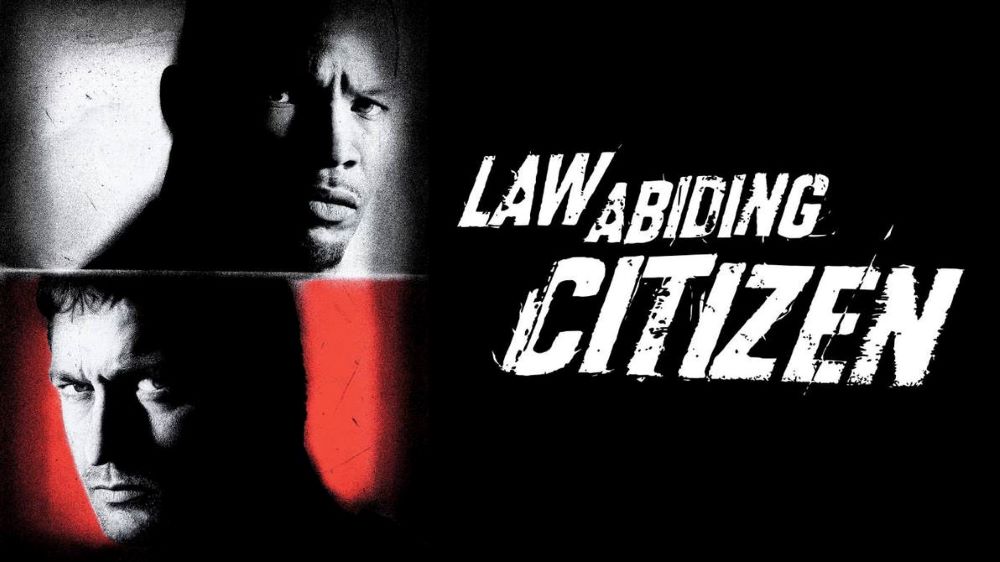
Review: Law Abiding Citizen (dir. by F. Gary Gray)


“Christ! Whatever happened to right and wrong!? Whatever happened to the people!? Whatever happened to justice!?” — Clyde Shelton

Law Abiding Citizen is one of those thrillers that grabs you right from the start and refuses to let go, even as it spirals into moral chaos. Directed by F. Gary Gray and released in 2009, the film pits two central performances—Gerard Butler as Clyde Shelton and Jamie Foxx as Nick Rice—against each other in a brutal chess match of justice, revenge, and control. On the surface, it’s a revenge thriller about a man wronged by a broken justice system. But dig a little deeper, and it becomes a dark commentary on the limits of law, the manipulation of morality, and the ethics of punishment. It’s not perfect—it veers toward implausibility at times—but it’s undeniably gripping, stylishly cold, and lingers in your mind long after the credits roll.

The film begins with a horrifying scene that immediately sets the tone for what’s to come. Clyde Shelton, an inventor and family man, watches helplessly as his wife and young daughter are brutally murdered in their home. When the killers are caught, Assistant District Attorney Nick Rice cuts a deal that lets one murderer go free in exchange for testifying against his partner. The decision, made in the name of efficiency and legal pragmatism, destroys Clyde’s faith in the justice system. Ten years later, when the murderer is executed under mysterious and gruesome circumstances, Clyde resurfaces—not as a grieving victim but as a brilliant, calculated force determined to expose the system’s corruption in the most explosive way imaginable.

What makes Law Abiding Citizen so effective early on is its sympathy play. The audience initially feels the same fury Clyde does. We understand his pain and disillusionment, and for a brief moment, we want him to succeed in making the system accountable. Butler captures that emotional transition perfectly—from quiet devastation to methodical vengeance. The scene where Clyde calmly watches his first victim die, having orchestrated the man’s death with near-surgical precision, is shocking yet disturbingly satisfying. This is where the film hooks its audience: it asks whether revenge can ever be justified when justice fails.

But as the killings pile up and Clyde’s plan grows more elaborate, that empathy begins to slip. The real tension of the film lies in that moral gray space—where Clyde’s righteous anger turns monstrous. His war isn’t just against the criminals but against the entire justice system, targeting judges, lawyers, and anyone he sees as complicit. Nick Rice, on the other hand, becomes the face of that system. He’s young, successful, and smug—a prosecutor obsessed with his win-loss record. Jamie Foxx’s performance gives Rice an icy veneer of confidence that slowly cracks as Clyde’s campaign escalates. The interplay between these two men—the avenger and the pragmatist—is the film’s heartbeat. It’s less about who will win and more about whether either man can still claim moral authority when the dust settles.

From a narrative standpoint, Law Abiding Citizen is structured like a dark puzzle. Each scene unveils another layer of Clyde’s intelligence and ruthlessness. The tension comes not from knowing who’s doing it—we know—but from wondering how he’s doing it. The film’s most audacious twist is that Clyde continues orchestrating murders even while locked in a high-security prison cell. This push toward psychological warfare turns the story into a cat-and-mouse game with shades of Seven and The Silence of the Lambs. However, where those films maintained a clear thematic direction, Law Abiding Citizen sometimes stumbles under the weight of its ambition. The logic of Clyde’s omnipotence starts to stretch believability, and the film sacrifices realism for spectacle. Still, it’s hard to look away when the spectacle is this sharp and aggressive.

Visually, F. Gary Gray directs with a crisp, metallic style. The cinematography uses muted tones and sharp contrasts to reflect the film’s moral ambiguity. The more the story dives into Clyde’s schemes, the colder and more sterile the visuals become, echoing his detachment from human empathy. The editing is snappy and kinetic, especially during the interrogation scenes and courtroom exchanges. Brian Tyler’s score underscores the tension with brooding, pulsing beats that heighten the sense of dread. Every technical element supports the emotional core—revenge as obsession, intelligence as a weapon.

Gerard Butler, best known for roles that highlight his physicality, delivers one of his most controlled performances here. His portrayal of Clyde is chilling because of how calm it is. He doesn’t yell or flail; his menace is intellectual. Even in scenes where the dialogue leans toward theatrical monologues about justice and morality, Butler maintains focus, grounding the performance in conviction rather than chaos. Jamie Foxx, meanwhile, brings subtlety to Nick Rice. His transformation from ambitious lawyer to shaken moralist is gradual. By the final act, Nick’s self-assurance has eroded into doubt—about the system, his choices, and his own complicity. Foxx and Butler’s dynamic never feels forced; it’s built on escalating tension, mutual respect, and bitter irony.

Where Law Abiding Citizen truly provokes is in its ethical questioning. What does justice mean when the system serves convenience instead of truth? Is it right to play by the rules if those rules protect the guilty? Clyde’s crusade, as twisted as it becomes, emerges from a very real frustration—one viewers can sympathize with, especially in a world full of technicalities that favor the powerful. But the film also serves as a warning. In trying to dismantle corruption, Clyde becomes its reflection. His vigilante justice ultimately mirrors the same indifference he condemns. By the time the film reaches its explosive climax, viewers are left torn—not cheering for Clyde’s punishment, but not wanting him to win either. This ambiguity gives the film an edge that lingers long after the credits roll.

That said, the story’s final act is where opinions tend to divide. Once strategy gives way to spectacle, the film trades nuance for action. The ending, while satisfying in terms of closure, feels somewhat abrupt and simplified compared to the build-up. The moral complexity that defined the first two acts begins to blur into a conventional revenge-thriller showdown. Still, even in its imperfections, the film sustains a dark fascination. It never feels lazy or hollow—it’s just that its ideas might have deserved a slightly more refined execution.

Despite its narrative stretches, Law Abiding Citizen remains a standout in the late-2000s thriller landscape. It’s unapologetically intense, dramatically charged, and philosophical enough to make its explosions feel earned rather than gratuitous. The film thrives on its contradictions: it condemns violence while indulging in it, critiques the system while sensationalizing its collapse. For all its over-the-top plotting, the emotional truth stays intact—when justice becomes negotiable, vengeance becomes inevitable. And whether viewers side with Clyde or Nick, the uneasy feeling the film leaves behind is its greatest triumph.

At its core, Law Abiding Citizen is less about revenge and more about control—who wields it, who loses it, and how the pursuit of it can consume both sides. F. Gary Gray’s direction, backed by two commanding performances, turns what could’ve been a formulaic thriller into something more charged and psychological. It’s a film that asks uncomfortable questions about morality, justice, and the price of vengeance, even if its answers are messy. And maybe that’s the point—justice, like humanity, rarely fits into a clean equation.

Holidays on the Lens: Santa Claus (dir by Rene Cardona)


Today’s holiday movie is …. well, it’s a little bit odd.

Santa Claus is a 1959 Mexican film that reminds us that before he became an advertising icon, Nicholas Claus was a Catholic saint.  According to this film, St. Nick also apparently lives in outer space with a bunch of singing children.  His best friend is Merlin and he apparently gets along with Vulcan, the Roman God of fire, as well.

Perhaps angered by the way that Santa is beloved by children of all races and figures of all mythologies, Lucifer orders a little demon named Pitch to go to Earth and turn the children against Santa.

So yeah, Santa Claus is really weird.  However, if you’ve ever wanted to see a movie where Santa is revealed to be a God-like action hero who holds the fate of the world in his hands, this is the film for you!

Brad’s thoughts on KILL BILL: THE WHOLE BLOODY AFFAIR!


Anything new from Quentin Tarantino is a big deal at my house. When you consider that it’s been over six years since the auteur released his most recent film, ONCE UPON A TIME IN HOLLYWOOD (2019), I was understandably excited when I saw that the full “extended cut” version of the KILL BILL films, dubbed “The Whole Bloody Affair” was being released to theaters. Then, after seeing the trailer, I became really curious about the new scenes that were added, as well as the different presentations of the previous material. When I originally watched the separate volumes at the movie theater in 2003 and 2004, I enjoyed the first movie slightly more than the second based on the fact that it had more action. Now, I wanted to see how the two volumes flowed as one single film. My wife was working this weekend, so I had some time on my hands and decided to spend about four hours of that time watching KILL BILL: THE WHOLE BLOODY AFFAIR.

First, a quick summary of the film… on the eve of her wedding, a pregnant bride-to-be (Uma Thurman) and her entire wedding party is gunned down by the Deadly Viper Assassination Squad, commanded by her former lover, Bill (David Carradine). Somehow surviving the rehearsal massacre, the Bride, who was once a member of the same assassination squad, sets her sights for revenge on each of the members, beginning with O’Ren Ishii (Lucy Liu), and then moving on to Vernita Green (Vivica A. Fox), Budd (Michael Madsen), Elle Driver (Daryl Hannah), and finally Bill himself. It’s a simple premise, but Tarantino uses that premise as a springboard to share his love of kung fu movies, samurai cinema, spaghetti westerns and grind house fare and create something truly special. I loved the KILL BILL films when they were originally released, and the four hours seemed to go by very quickly today as I had a blast watching this definitive version with a relatively full theater of fans.

After watching KILL BILL: THE WHOLE BLOODY AFFAIR, my first thought is that it wouldn’t be that different if the theater just showed Volume One, had a 15-minute intermission, and then showed Volume Two. This isn’t putting down the new version in any way, but there are not a large number of changes that enhance the overall quality of the film itself, and screening the original volumes back-to-back would provide the context for the “big picture” of the story that was lacking when the movies were released in the separate years of 2003 and 2004. With that said, watching the film in this new version was a lot of fun for me, and it should become the norm moving forward as it is truly Tarantino’s vision. It does flow better, mainly by eliminating the unnecessary, late cliffhanger reveal of the daughter in Volume One, as well as the Bride’s “direct to the camera” update at the beginning of Volume Two.

For those who want to go see this new version, I did want to point out the significant differences I noticed while viewing KILL BILL: THE WHOLE BLOODY AFFAIR. The first sequence where I noticed obvious additions to the film occurred in the anime sequence that introduces the background of O’Ren Ishii. This extended version adds additional footage of the Yakuza assassin Pretty Riki to the sequence, and once O’Ren is a slightly older schoolgirl, we get to see her execute a plan of vengeance against him. I would guess somewhere between five and ten minutes of action was added to the sequence. I enjoyed it in Volume One, and I also enjoyed the extended anime sequence in this new version. Does the sequence really add to the overall quality of the film, though? Even though I enjoyed the new material and am glad it was added, I would say no. The next significant difference I noticed with this version concerns the addition of color to the fight sequence between the Bride and the crazy 88’s in the House of Blue Leaves, as compared to the sequence in Volume One that was shown largely in black and white. As a person who doesn’t enjoy a lot of gore in my movies, it never bothered me that the scene switched from color to black and white once the limbs and heads started getting lopped off. With that said, it was kind of fun watching all those limbs hacked off in glorious color this time around. Finally, there is a post-credits animated sequence called “The Lost Chapter: Yuki’s Revenge” where Gogo Yubari’s twin sister tries to get revenge on the Bride. It lasts about ten minutes or so, but honestly, it didn’t add much to the overall experience for me, and I doubt I’ll ever watch it again. As a completist though, I am glad that I stuck around and watched it. These are the only big changes I noticed while watching THE WHOLE BLOODY AFFAIR. I’m sure there had to be some more changes, but I don’t think they were significant. 

I did want to share some final thoughts I had while watching KILL BILL: THE WHOLE BLOODY AFFAIR this afternoon. I noticed on the opening title card that the movie is dedicated to the great Japanese director Kinji Fukasaku, and you can definitely see his influence all over this film. It also affected me more watching Michael Madsen’s excellent performance as Bill’s brother Budd. Tarantino just knows how to get the best out of Madsen, and considering that he passed away a few months ago, I just really appreciated his work while watching the film. I also enjoyed the multiple shoutouts to my movie hero Charles Bronson in the film. First, there’s a MR. MAJESTYK poster hanging on the wall in Budd’s trailer that is featured often throughout the various shenanigans and fights that take place in the trailer. Second, Charles Bronson passed away in 2003, the year that Volume One of KILL BILL was released. In the final credits of the film, Bronson receives an RIP credit. I’ve always loved the fact that Tarantino loves Charles Bronson, and that’s on full display in KILL BILL: THE WHOLE BLOODY AFFAIR. I would have given anything if Bronson had been in better health as Tarantino was coming into his own as a filmmaker. I have no doubt that he would have been offered a chance to appear in one of the director’s films.

At the end of the day, I had a great time watching KILL BILL: THE WHOLE BLOODY AFFAIR. The four hours flew by, and I truly appreciated seeing Tarantino’s full vision realized on screen. While I do think this should be the definitive version moving forward, I loved the KILL BILL films before today. THE WHOLE BLOODY AFFAIR improves the overall flow of the film and adds some fun new stuff, but my love for the film didn’t really change that much today… it just runs a tad bit deeper.

Holidays on the Lens: Christmas Reservations (dir by Deanne Foley)


Melissa Joan Hart — Sabrina! — plays the events coordinator at a ski lodge in this 2019 Christmas movie.  It’s the holiday season and the everyone wants to go skiing …. including her ex-boyfriend!

I like this film.  It has nice scenery, it has holiday cheer, it has Ted McGinley, and it has Melissa Joan Hart.  It has all the necessary ingredients for a fun Lifetime holiday film.

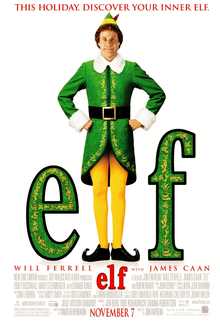
Why I Love Elf (2003, Dir. by Jon Favreau)


I love Elf!

I’m an adult and I learned the truth about Santa Claus a long time ago but I still put up the tree the day after Thanksgiving, still hang stockings with the names of my sisters on them, and I still get excited when I see the Christmas lights going up across the neighborhood.  I am unapologetically, deliriously in love with Christmas. And every single year, without fail, I curl up with the same worn-out blanket, the same bowl of freshly-popped popcorn, and I watch Elf.  I don’t watch it because it’s cool or ironic.  I watch it because it’s as unabashedly in love with Christmas as I am.

The older you get, the more cynical the world wants you to be about everything.  Elf doesn’t have time for cynicism.  Will Ferrell plays Buddy, a human who was raised by Santa’s elves and who goes to New York City to find his real father (James Caan) and who never loses his innocence and Christmas spirit, no matter what the world throws at him.  Buddy isn’t dumb, not really.  He’s someone who still believes in giving and celebration and love.  When he tells the fake Santa that he sits on a throne of lies, he’s not trying to make trouble.  Buddy knows the real Santa and he’s not going to let some fake in a beard steal the credit for his work.  (Especially when he’s played by Artie Lange!) Buddy is ridiculous. He’s too tall, too loud, too earnest, too everything. He puts maple syrup on spaghetti and calls it gourmet. He spins in revolving doors until he’s dizzy with joy.  Everyone should be as lucky as Buddy.  Everyone should be as filled with joy and wonder as Buddy.  Buddy doesn’t let the world get him down but, even more importantly, he never loses his belief.  Just as Linus will always wait for the Great Pumpkin, Buddy will always believe that Santa is coming.

This is my favorite Will Ferrell performance.  The way he throws himself into every moment makes me smile every time.  But I like everyone in this film, from Bob Newhart as Buddy’s adopted father to James Caan as his real father to Ed Asner as Santa.  When Zooey Deschanel starts singing Santa Claus Is Coming To Town, I feel it in my heart because I believe it.  Elf believes it too, without apology.  That’s what makes Elf a great movie.

I’m an adult.  I’ve been an adult for a while.  I still love Elf and I always will!

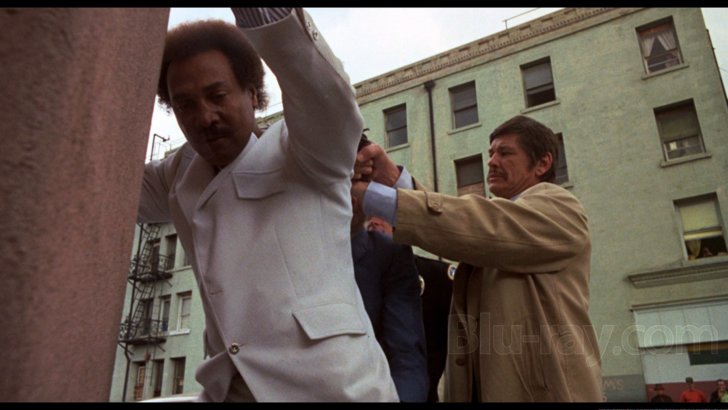
Brad reviews THE STONE KILLER (1973), starring Charles Bronson!


THE STONE KILLER opens in Spanish Harlem with detective Lou Torrey (Charles Bronson) following a young man, who had just shot a cop, into an abandoned building. When the young man refuses to turn himself in, and even tries to shoot Torrey, he gets blown away. In trouble with his superiors on the force, and being dragged in the press for the shooting, Torrey decides to change locations and continue his law enforcement career under his friend Les Daniels (Norman Fell) in Los Angeles. Soon after he arrives in Los Angeles, Torrey and his partner Mathews (Ralph Waite) are working a case against a drug dealer, when they arrest “Bootlace” Armitage (Eddie Firestone), a drug addict, but also a well-known hitman from New York. Torrey is delivering the “mechanic” back to New York for outstanding warrants when Armitage says that he is willing to give up some big information on “Wexton” in exchange for a reduced sentence. When Armitage is gunned down in what is obviously a professional hit, it’s clear that there is something going on that involves the name Wexton. We soon learn more as we meet mafia leader Al Vescari (Martin Balsam). As Vescari walks through a cemetery, he tells the leader of his operation, Lawrence (Stuart Margolin), of his plans to get revenge for a string of mafia killings that occurred 42 years earlier by using “stone killers,” in this case, former military men with no connection to the mob. As the film moves forward, Detective Lou Torrey and his fellow cops will eventually put the pieces together and find themselves taking on these “stone killers” and the mob! 

I’ll just go ahead and say up front that I’m a big fan of THE STONE KILLER these days, but that’s because the movie has grown on me over the years with repeat viewings. When I first watched the film as a teenager in the 1980’s, I enjoyed it as a tough cop film, but it wasn’t one of my favorites. I think that part of the reason I didn’t appreciate it as much back then is the more convoluted plot of the film. Most Bronson films have simple and easy to follow plot lines, but THE STONE KILLER includes a somewhat complicated mafia assassination plan, and it also sends the cops on wild goose chases that have nothing to do with the actual story. Watching the film as an adult, I appreciate Director Michael Winner taking us with him on some of those 1970’s flavored tangents that include getting to hang out with some hippies at an ashram, as well as some unjustly accused black militants. 

Even though the plot is more complicated than the average Charles Bronson film, director Michael Winner gives us some of the best action sequences of Charles Bronson’s career. There are two sequences in particular that stand out to me. After the impressive opening scenes where Torrey blows away the gun wielding young man in Spanish Harlem, it takes a while to get to the next extended action sequence, but it’s definitely worth the wait. The scene involves Detective Torrey in a car chase where he’s after one of the stone killers, Albert Langley (Paul Koslo), who’s on a motorcycle. In an era of great car chases, this is a doozy that features many amazing and dangerous stunts. The late 60’s and early 70’s are an embarrassment of riches for cinematic car chases and this one stands the test of time. The next great action sequence occurs later in the film when Detective Torrey and the cops bust the home and facility where the killers have trained for the planned massacre. Bronson is still in his physical prime in 1973, and his athletic prowess is clearly on display as he slides across floors, jumps on tables, and does anything else that is required to take down the bad guys. The film is not wall to wall action, but what’s here is as badass as it gets. 

Detective Lou Torrey is a really good role for Charles Bronson. In his best roles, Bronson is tough, but you can also tell that he cares about other people. That’s definitely the case here as he consistently shows empathy for some of the people he’s after. For example, at the beginning of the film, he has to shoot the young man in Spanish Harlem in self-defense, but he later explains to his sister that he didn’t want to do it, even expressing some understanding of how the young man may have found himself in that situation. A little later while arresting a drug dealer with his partner Mathews, Torrey is clearly disgusted when his partner uses racial slurs during the arrest. Torrey then talks to the man with respect and gets the needed information to arrest the man buying the drugs. There are further examples later in the film as he deals with other drug addicts and militants. I say none of this to insinuate that Bronson’s character is weak in any way. Rather, he seems to want to do his job and arrest criminals in a professional manner. He’s also a complex character in some ways as he will bend the rules to get what he needs if he has to. He does end up punching the car thief, Jumper (Jack Colvin), a couple of times during an interview. While this is definitely not legal, in the context of this film, it’s required in order to get to the facts of the case. Bronson is actually quite great in the film. 

Besides international superstar Charles Bronson, Michael Winner put together an amazing cast for THE STONE KILLER. Martin Balsam had won an Oscar a few years earlier, and he’s good here as the mafia boss with four decades worth of patience for revenge. Ralph Waite is also excellent as Bronson’s incompetent, racist partner Mathews. It’s hard to believe the guy would go on to play Papa Walton based on the ignorance he shows in both this film and in the Bronson/Winner collaboration CHATO’S LAND from the prior year. It’s fun watching both Norman Fell and John Ritter work together in this film, especially knowing that they would be making television history a few years later on the classic TV sitcom “Three’s Company.” The last two actors I want to mention are Stuart Margolin as the leader of the stone killers, Lawrence, and Paul Koslo as the bi-sexual badass musician Albert Langley. Both actors, especially Koslo, are good here and would have important roles with Bronson the next year as well. Margolin was an important character in DEATH WISH, and Koslo may have even outdone his work here the next year as a particularly slimy weasel in MR. MAJESTYK. Oh yeah, be sure to look for a short, uncredited cameo from B-movie queen Roberta Collins! I also want to shout out the musical score from Roy Budd, who also did the score for GET CARTER (1971). Thanks to Budd’s work, the opening credits are very cool and memorable. 

THE STONE KILLER was marketed as Charles Bronson’s “Dirty Harry” and meant to be his breakout hit in America. Unfortunately, while the film was an international hit, the actual grosses in the United States were respectable but not as much as the filmmakers had hoped for. As such, we didn’t get any more entries in the case log of Detective Lou Torrey and Bronson would have to wait another year for his American box office breakout with DEATH WISH. But that’s okay because THE STONE KILLER has stood the test of time as an excellent 1970’s cop film, emerging in my personal rankings as a major feather in the cap of Charles Bronson’s career. 

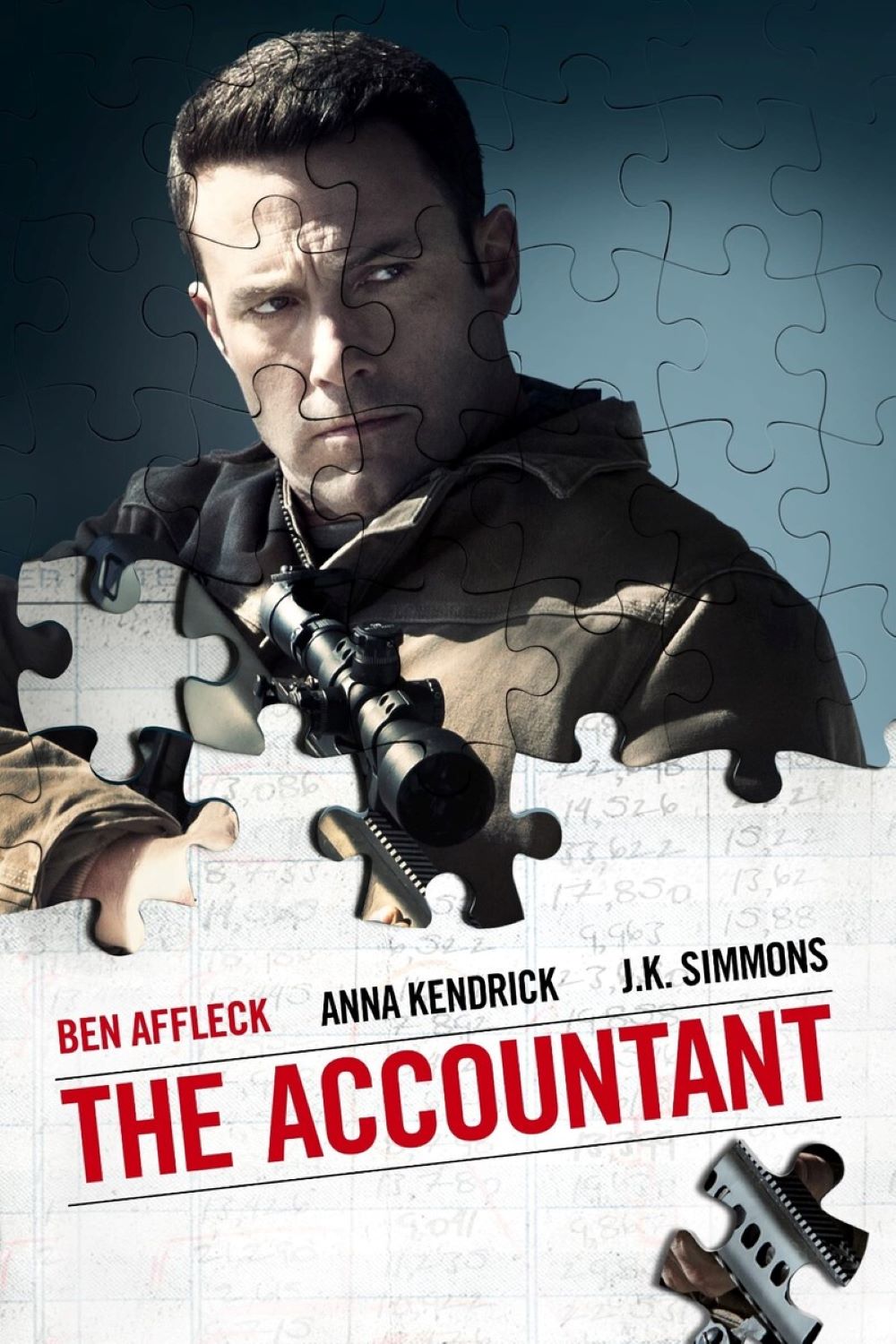
Review: The Accountant (dir. by Gavin O’Connor)


“What I do is not against the law. What I don’t do… is.” — Christian Wolff

The Accountant is a 2016 action thriller that mixes elements of character drama, crime mystery, and family dynamics into a unique storyline. The movie follows Christian Wolff, a man with autism and exceptional math and accounting skills, who works as a freelance accountant for criminal organizations. Raised by a strict military father who pushed him to develop precision and discipline, Christian has a rigid moral code that guides his actions. As Christian unravels financial fraud within a robotics company, he finds himself hunted by a Treasury agent. The film blends intellectual mystery with high-stakes action, presenting a different take on the typical thriller formula.

Ben Affleck leads as Christian Wolff, bringing a quiet intensity that captures the character’s inner complexities and unique worldview. Anna Kendrick plays Dana Cummings, the robotics company accountant whose discovery of financial irregularities kicks off the central conflict, offering a relatable and warm counterpoint. J.K. Simmons portrays Raymond King, the sharp Treasury agent on Christian’s trail, adding layers of tension and moral ambiguity. Jon Bernthal embodies Braxton Wolff, Christian’s estranged brother and a rugged former military operative, whose presence heightens the family drama. The brothers’ strict and demanding father is portrayed by Rob Treveiler, who appears mainly in flashbacks that showcase the rigorous military-style training and discipline shaping Christian’s development. These performances ground the film’s ambitious mix of genres, making the characters feel lived-in and believable.

Christian Wolff stands out as a well-rounded character whose autism shapes his personality without becoming a mere plot device. The film shows his struggles alongside his strengths, like sensory sensitivities, social awkwardness, and laser focus on details. He relies on strict routines and coping tools to handle his surroundings, mirroring real experiences on the autism spectrum. Affleck’s portrayal draws from this backstory—those intense father-son training montages with Treveiler—to explain Christian’s discipline and guarded emotions, giving audiences a clear window into what drives him.

At the movie’s core sits Christian’s personal moral compass. He might balance the books for shady clients, but he draws a hard line at true ethical breaches, stepping in with his own form of justice. This anti-hero vibe keeps things gray and intriguing. His bond with Dana, played by Kendrick, offers rare moments of connection amid the chaos, though it stays somewhat surface-level and misses chances for deeper emotional pull.

The plot tracks Christian’s dive into massive fraud at the robotics firm, all while dodging Simmons’ relentless agent. The accounting scenes impress with their detail—Christian pores over ledgers, spotting irregularities that expose embezzlement on a grand scale. This cerebral side contrasts sharply with the brutal action, like the raw fights between Affleck’s Christian and Bernthal’s Braxton, which mix physical showdowns with buried family pain. Those brotherly clashes tie back to their shared traumatic past, ramping up the stakes beyond just numbers and guns.

The Accountant handles autism with real care, steering clear of clichés. It spotlights Christian’s sensitivities, routine needs, and social hurdles while celebrating his smarts and toughness. Affleck makes these traits feel authentic, turning what could be quirky into profoundly human. This approach avoids stereotypes, letting viewers connect with Christian on a deeper level and appreciate how his mind works in high-pressure situations.

The film has room for refinement in a few spots. It crams in crime plots, sibling secrets, and shadowy ops, which can jumble the pace as it bounces from fights to feels to financial deep dives. Relationships like Christian and Dana’s, or the Wolff brothers’, might hit harder with extra screen time to build that emotional core and make the risks feel more intimate.

Tonally, The Accountant strikes a balance—serious stakes lightened by Christian’s offbeat interactions and fresh outlook. Autism never turns into a joke; instead, it builds empathy. The ethical murk in his world—cooking books for crooks one day, punishing them the next—flips hero tropes on their head, keeping you guessing.

Overall, The Accountant shines by fusing brainpower and brawn in its lead and narrative, transcending standard shoot-’em-ups as a thoughtful character piece that honors its hero’s nuances. It probes unconventional strengths and ethics in a murky reality while illustrating thriving with distinct abilities and hurdles in a harsh landscape, all while clinging to personal principles—delivering thrills with substance on neurodiversity and payback. Fans of smart action will dig this blend of suspense, puzzles, and character depth, even if the threads tangle at times, making it a solid pick for thriller seekers wanting more than explosions.