A Blast From The Past: Why Study Speech? (dir by Herk Harvey)


Director Herk Harvey

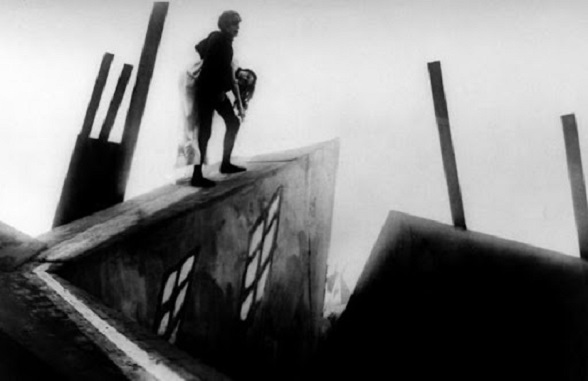
98 years ago today, director Herk Harvey was born in Lawrence, Kansas.  Today, Harvey is best-remembered for his only feature film, 1962’s Carnival of Souls.  Carnival of Souls is a Halloween favorite here at the Shattered Lens and it’s a film that has been cited as being an influence on everyone from Sam Raimi to Martin Scorsese to David Lynch.

However, before and after he directed that ground-breaking film, Herk Harvey made his lesson directing educational short films.  Today, in honor of what would have been his birthday, the Shattered Lens presents Why Study Speech?  This 1954 short film explains why all high school seniors should study speech when they get to college.  It opens with a somewhat quirky montage that, if nothing else, serves to remind us that we’re watching a short film from the man who, just 8 years later, would direct Carnival of Souls.

And now …. WHY STUDY SPEECH?

A Blast From The Past: How Do You Know It’s Love (dir by Ted Peshak)


Jack: “I love you.  Do you love me?”

Nora: “I’ll have to think about it.”

OUCH!  That had to hurt, though I’m totally on Nora’s side here.  Jack is coming on way too strong.  I mean, they were having a perfectly pleasant time and then suddenly Jack has to bring “love” into it all.  They’ve only been dating a few weeks!

Jack and Nora are the two “teenagers” at the heart of How Do You Know It’s Love?, an educational film from 1950.  After Nora’s mother informs her that she’s too young and immature to understand anything about love and after Jack’s brother taunts him for falling in love with a new girl every week, Jack and Nora decide to go on a double date so that they can see what mature love is all about.  The main message of the film is that one shouldn’t mistake attraction for love and that teenagers should date a lot of people before settling down.  It’s not a bad message but it’s one that will probably be missed by many viewers due to the fact that Jack and Nora are both kind of goofy.

Believe it or not, this film was not directed by Herk Harvey.  Instead, this one of the 33 educational films that former journalist Ted Peshak directed in the 1950s for Coronet films.  Though Peshak made a lot of films for Coronet, he was never paid more than $190 a week and, perhaps understandably, he abandoned the educational film game in the 60s and instead went to work in real estate.  I don’t blame him.

Anyway, here’s the film.  Watch and ask yourself the big questions.

Liberty & Bash (1989, directed by Myrl A. Schreibman)


Liberty (Miles “How much Keeffe is in this film?” O’Keeffe) and Bash (Lou Ferrigno) served together in Nam and then came back to Los Angeles to clean up the streets.  Liberty is a parole officer who doesn’t take no for an answer.  Bash owns a gym and runs a Guardian Angels type of operation.  Their friend and fellow vet, Jesse (Richard Eden), has a mullet and wears acid-washed mom jeans.  Jesse lives with his sister, Melissa (Cheryl Paris), who never wears pants.  When Jesse is murdered by a drug lord who spends almost all of his time soaking in the tub, Liberty and Bash eventually get around to seeking revenge.

The movie is called Liberty & Bash but Bash is actually only in a few minutes of the movie and Lou Ferrigno’s voice is dubbed by another actor.  This was probably done because Ferrigno is partially deaf and, as a hard-of-hearing person who happens to be a big Lou Ferrigno fan, that really bothered me.  Of the many storylines that floated through Liberty & Bash, Lou Ferrigno leading a Guardian Angels chapter was probably the one with the most potential but Liberty & Bash doesn’t do much with that.  When Bash wasn’t around, the other characters should have been saying, “Hey, where’s Bash?”

Instead, the movie is all about Liberty.  Even though Liberty is trying to bring the drug lord to justice and prove that Jesse didn’t commit suicide, the majority of the film is taken up with scenes of Liberty arguing with his girlfriend, a social worker named Sarah (Mitzi Kapture).  Sarah is pregnant but she’s considering getting an abortion.  Liberty spends almost the entire movie trying to talk her out of getting an abortion.  Sarah and Liberty even argue about it during the film’s climatic action scene.  I’m not kidding.  This is the first action film that I’ve ever seen where the action was regularly interrupted by the abortion debate.  The movie is obviously on Liberty’s side but Liberty is so obnoxious about it that the audience will be on Sarah’s side.  Sarah can’t make up her mind until one of the bad guys points a gun at her belly and she says, “My baby!”  

It’s a weird movie and doesn’t add up to the much.  If not for a little profanity and some brief nudity, Liberty & Bash could have passed as the pilot for syndicated, Stephen J. Cannell cop show.  Mr. B (Charles Dierkop) is Los Angeles’s least intimidating drug lord.  Mitzi Kapture is sexy, elegant, and displays the patience of a saint as Sarah.  Miles O’Keeffe is usually the coolest cat this side of Michael Pare but in this movie, he’s surly and won’t stop yelling at his girlfriend. Cheryl Paris spends almost the entire movie in her underwear, showing that the filmmakers at least knew who their target audience was.  Those who like to keep an eye out for mullets and off-the-shoulder t-shirts will find the film to be a feast.  The movie had miles of Keeffe but it needed more Bash.

Cleaning Out The DVR: Breezy (dir by Clint Eastwood)


1973’s Breezy tells the story of two seemingly different people.

Breezy (Kay Lenz) is a teenage girl who moves to California after she graduates high school.  Breezy is intelligent and free-spirited.  She’s also practically homeless, moving from bed to bed and never getting tied down to anyone.  Many people assume that Breezy is a runaway but her parents died a long time ago and her aunt approves of Breezy pursuing her own happiness.  Many people also assume that Breezy is a hippie but Breezy doesn’t consider herself to be one and doesn’t even smoke weed.  She may hang out with hippies and runaways but, for the most part, Breezy just wants to be herself, free of all of society’s labels and hang-ups.

Frank Harmon (William Holden) is a fifty-something real estate agent.  He drives a nice car.  He owns a lovely home.  He has money but he’s also freshly divorced and obviously in love with his best friend, Betty (Marj Dusay).  Most people would consider Frank to be a part of the establishment, though it soon becomes clear that he’s as disillusioned as any long-haired protestor.  Frank has reached the point of his life where he looks at everything that he has and he asks, “Is this all there is?”

Together …. they solve crimes!

No, actually, they fall in love.  Breezy ends up outside of Frank’s house after escaping a creepy man who had earlier offered her a ride.  When she sees that Frank is getting into his car and driving into the city, she decides that Frank can give her a ride too.  She also decides to keep hanging out near Frank’s house.  Though Frank is initially annoyed by Breezy’s presumptuousness, he still allows her to spend the night when a sudden storm comes up.  Frank and Breezy become unlikely friends and eventually, even more.  But Frank continues to worry about the difference in their ages, especially when his friends find out that Breezy is living with him.

Really, Breezy is a film that should not work and it does run the risk of turning into a typical midlife crisis fantasy, with Breezy having no concerns beyond keeping Frank happy.  That the film does work is largely a testament to the performances of William Holden and Kay Lenz and the sensitive and nonexploitive direction of Clint Eastwood.  When screenwriter Jo Heims first wrote the script for Breezy, she envisioned Eastwood in the role of Frank.  Reading the script, Eastwood said that he could relate to Frank’s disillusionment but that he felt he was too young for the role.  Instead, Eastwood directed the film and he cast William Holden as Frank.  Breezy was Eastwood’s third film as a director and the first in which he didn’t star.  It was also nobody’s idea of what a Clint Eastwood film would be and it struggled at the box office.  That said, it’s a film that has a legion of devoted fans.  Paul Thomas Anderson is one of those fans and even worked a few references to the film into Licorice Pizza.

Holden and Lenz both give excellent performances, with Lenz playing Breezy as being free-spirited but not foolish.  Holden, meanwhile, captures Frank’s boredom without giving a boring performance.  (It helped that, while Holden was the right age of the role, he still retained enough of his good looks and his movie star swagger that it was believable that Breezy would find him attractive.)  Wisely, the film doesn’t make the mistake of idealizing either Frank or Breezy.  They’re both complex characters, with their own individual flaws and strengths.  At the end of the film, one can be forgiven for having doubts about whether or not they’ll still be together in a year or two but one does definitely wish them the best, no matter what happens.

Though politically conservative, Breezy reveals that Clint Eastwood had some sympathy for the counter-culture.  Eastwood has always straddled the line between being a member of establishment and being a rebel.  Like Breezy and Frank, he belongs to both worlds.

Film Review: Escape From Alcatraz (dir by Don Siegel)


The 1979 film, Escape from Alcatraz, opens with Clint Eastwood and a group of policeman taking a barge across San Francisco Bay, heading towards Alcatraz Island.  As any fan of Eastwood’s 1970s film work can tell attest, this is hardly the first time that Eastwood has gone across the bay to Alcatraz.  In The Enforcer, Eastwood went to Alcatraz to kill a bunch of hippies and save the Mayor of San Francisco.  It wasn’t easy but, fortunately, Clint found a rocket launcher.

However, in Escape from Alcatraz, it’s hard not to notice that Clint is wearing handcuffs.  And the cops beat him up while traveling to the island.  And once they reach the prison …. oh my God, they’re making Clint Eastwood walk down a prison hallway naked and shoving him into a cell!  Is this some early form of 60 Days In or could it be that Clint Eastwood is playing a convict?  After starting the 70s in the role of Dirty Harry Callahan, Clint Eastwood ended the 70s playing one of the people who Callahan would have arrested.  (Or, if we’re going to be totally honest, shot.)

Specifically, Clint Eastwood is playing Frank Morris.  The real-life Morris was a career criminal.  He had a genius IQ but he loved to steal and he spent most of his known life in prison.  He was specifically sent to Alcatraz because he had a history of escaping from other prisons.  Because Alcatraz was sitting on an island in the middle of the difficult-to-cross San Francisco Bay, it had a reputation for being inescapable and, indeed, every previous escape attempt had failed and led to someone getting gunned down by the guards.  Morris, of course, immediately started to plot his escape.  Working with three other prisoners, Morris managed to tunnel his way out of the prison.  (Famously, Morris and his accomplices also managed to create papier-mâché dummy heads, which were left in their beds and kept the guards from realizing that they had escaped from their cells.)  No one knows whether Morris and his accomplices managed to cross the bay, though I think most people would prefer to think that they made it to freedom.  Our natural tendency is to root for the underdog, even if they are a group of car thieves fleeing from a federal prison.

For the most part, Escape from Alcatraz sticks to the facts of Morris’s escape.  Of course, because Frank Morris is played by Clint Eastwood, there’s never really much doubt as to whether or not he’s going to figure out a way to get out of the prison.  There’s not a prison in the world that could hold 70s-era Clint Eastwood! 

The casting of Eastwood, however, adds another layer to the story because Eastwood, especially at the time that Escape from Alcatraz was made, was the ideal representation of individualism.  From the minute the smug warden (played by Patrick McGoohan) tells Morris that it will be impossible to escape from Alcatraz, it becomes obvious why Morris has no other option but to escape.  The warden thinks that he can tell the prisoners what to do, when to talk, and what to think.  The warden expects his prisoners to live and act like monks who have taken a vow of silence but, instead of offering the hope of salvation, the warden is more concerned with exercising his own power.  The warden doesn’t flinch at taking away the rights of the prisoners, even after his actions lead to an otherwise harmless prisoner having a mental breakdown and chopping off his own fingers.  As such, Escape from Alctraz is not just another mid-budget, 70s action movie.  Instead, it’s the story of the State (represented by McGoohan) vs the Individual (represented by Eastwood).  It’s a film that says that yes, Frank Morris may be a criminal but he still has a right to his humanity.  Society may want to forget about the prisoners in Alcatraz but Frank Morris has no intention of being forgotten,

Escape from Alcatraz was Eastwood’s final collaboration with the director Don Siegel.  Siegel instinctively understood how to best use Eastwood’s laconic presence.  Siegel previously directed Eastwood in Dirty Harry, another film that featured a conflict between the State and the Individual.  Perhaps even more importantly, Siegel directed the original Invasion of the Body Snatchers, another film in which one man struggles to maintain his humanity and his sense of self.  In many ways, both Alcatraz’s warden and the alien body snatchers are portrayed as having the same goal.  They both want to eliminate free will and human emotion.  In the end, the viewer doesn’t just want Morris to escape because he’s Clint Eastwood.  Instead, the viewer knows that Morris has to escape before he’s robbed of his soul.

(Sadly, Siegel and Eastwood had a bit of a falling out during the direction of Escape from Alcatraz, with Siegel apparently buying the rights to the story before Eastwood could purchase them in order to make sure that Siegel and not Eastwood would be credited as the film’s producer.  This led to a rift between the two men, one that was wasn’t healed before Siegel’s death in 1991.  However, even after their rift, Eastwood continued to say that everything he knew about directing, he learned from watching Sergio Leone and Don Siegel.  Unforgiven was dedicated to both of them.)

Escape from Alcatraz is an enjoyable and entertainingly tense action film, one that convinces us that prison is Hell and which also features one of Eastwood’s best performances.  (Like many actors, Eastwood seems to have more fun playing a rule-breaking rebel as opposed to an upholder of law and order.)  The supporting cast is also great, with McGoohan turning the warden into a truly hissable villain.  Fred Ward, Jack Thibeau, and Larry Hankin all make good impressions as Morris’s accomplices while Roberts Blossom will break your heart as a prisoner who just wants to be allowed to paint.

Personally, I don’t know if Frank Morris survived his escape attempt but I know that Clint Eastwood definitely did.

The TSL’s Grindhouse: The Incredible Melting Man (dir by William Sachs)


What goes up must come down
What goes ’round must come ’round
What’s been lost must be found

As the song says, what goes up must go down.  The 1977 film, The Incredible Melting Man, is about a man who went up and then came back down and …. AGCK!  What a mess!

The Incredible Melting Man opens with the launch of the first manned spaceflight to Saturn.  That’s right, Saturn.  The film takes place in the 70s, when mankind was still lucky to just be able to make it to the Moon and back.  But somehow, this rocket and its three passengers are going to fly all the way to Saturn, land, and then return to Earth.  And speaking of landing, how exactly do you land on a planet that doesn’t have a solid surface?  And, even more importantly, why do all of the shots of Saturn look like the sun?  How come there aren’t any rings?  WHAT IS GOING ON!?  Could it be that the rocket went off track and went to the sun instead?  It’s possible, I suppose.  Mistakes cannot be avoided, much like a spinning wheel turning around.

Anyway, the rocket eventually returns from Saturn or the sun or wherever it went.  Unfortunately, most of the crew is dead.  The only survivor is Steve West (played by Alex Rebar).  Apparently, West was so physically strong that he was able to survive whatever killed the other astronauts.  Unfortunately, West was still infected with Saturn microbes and now he’s slowly melting.  Steve doesn’t react well to that news so he escapes from the hospital and goes on a poorly-defined rampage.  He kills a nurse.  He rips the head off a fisherman.  He kills two old people who were trying to steal oranges.  Steve loses an eye.  His arm falls off.  He leaves behind a trail a radioactive goo.  Apparently, Steve has to consume human flesh to slow down the melting process but make no mistake, there’s no way he’s not going to end a puddle of goo.

Steve’s friend, Dr. Ted Nelson (Burr DeBenning), decides to try to track down Steve so that he can get Steve to stop eating people and just melt away in peace.  Ted can’t even tell the local authorities what he’s doing because that information is classified and Ted’s boss is like a total jerk.  Ted does tell his wife, Judy (Anne Sweeny).  Judy and Ted then get into an argument because Judy forgot to buy crackers the last time she went to the grocery store.  Some may scoff that the lengthy and not very relevant cracker discussion was included just to pad this film’s running time but I think it adds a level of reality to the proceedings.  People like crackers, even when they’re looking for a friend who is melting.

Anyway, The Incredible Melting Man is a weird little movie but I always kind of enjoy it.  As played by Burr DeBenning, Dr. Ted Nelson is one of the least likable heroes to ever show up in a movie.  He always seems to be annoyed about everything.  Even when Steve West is killing people, Ted mostly just seems to be annoyed by the fact that he’s having to go outside to deal with it.  Fortunately, Ted’s unlikability makes it fun to watch as absolutely nothing goes right for him over the course of the film.  Ted is beyond surly and Steve is beyond melty.  As bad as most of the dialogue and the acting may be, the melting man makeup is actually really effective and Alex Rebar does about as good a job as anyone cast as a melting man could.  Let’s give this one two and a half star and wonder how many people in 1977 saw it on a double bill with Saturday Night Fever.

Insomnia File No. 54: Jud (dir by Gunther Collins)


What’s an Insomnia File? You know how some times you just can’t get any sleep and, at about three in the morning, you’ll find yourself watching whatever you can find on cable or Netflix? This feature is all about those insomnia-inspired discoveries!

If you were having trouble getting to sleep last night, you could have gone over to YouTube and you could have watched the the 1971 film, Jud.

In fact, looking the film up on YouTube might very well be the only way that you could have watched JudJud is one of those obscure, 70s indie films that has apparently never gotten a proper video release in the United States.  The version that’s been uploaded to YouTube was taken from a Chinese VHS tape.  It had Chinese subtitles and the image was pretty grainy.  There was a point where, for three minutes, the image froze and only the audio could be heard.  In other words, it’s not the ideal way to watch any movie but, with Jud, that’s probably the best that anyone could hope for.

As for what Jud is about, it’s about a man named …. well, Jud.  Played by an appealing actor named Joseph Kaufmann, Jud has just returned to the United States from serving in Vietnam.  His uncle arranges for Jud to live at a rooming house, one that is full of the usual indie film eccentrics.  Jud doesn’t want to talk about what he saw in Vietnam and no one seems to want to talk to him about it.  But perhaps someone should because Jud is still haunted by flashbacks and nightmares, making this one of the first films to attempt to sympathetically deal with PTSD.  Jud just wants to get on with his life but, after everything he’s seen, he feels out of place in the civilian world.  A one night stand with a friendly hippy (played by future B-movie queen Claudia Jennings) leads to nowhere.  A fight in a diner leads to a police chase.  The only person who is interested in Jud’s story is Bill (played, quite well, by Robert Denman), whose status as a closeted gay man in the early 70s has taught him something about alienation.

Jud is an uneven film.  There are moments of real insight but there also moments where the film itself gets a bit too heavy-handed for its own good.  A lengthy scene where the viewer is subjected to close-ups of Jud’s roommates eating seems to go on forever.  (Anti-war films of the 70s always seemed to feature close-ups of old people eating for some reason.  I guess it was meant to be a commentary on American gluttony but it always feels more like lazy symbolism.)  Especially when compared to other films of the period, Jud deserves credit for portraying Bill sympathetically but it’s still hard not to feel that the character’s ultimate fate is a cliché.

That said, Joseph Kaufmann gives a good performance as Jud and wisely underplays the scenes that would lead a lesser actor to overact.  (Sadly, Kaufmann died in a plane crash, just two years after the release of Jud, at the age of 29.)  Despite featuring a bit more folk music that I would normally listen to, the film has a great soundtrack and, even more importantly, the songs fit well with the action.  (If nothing else, the lyrics help to share what Jud is feeling but can’t quite articulate.)  Finally, for a history nerd like me, Jud is interesting because it serves as a time capsule.  This low-budget, indie film was shot on the streets of L.A. in the early 70s and it has a bit of documentary feel to it.  Until someone invents a time machine and people get the ability to visit the past in person, films like Jud will do.

Previous Insomnia Files:

  1. Story of Mankind
  2. Stag
  3. Love Is A Gun
  4. Nina Takes A Lover
  5. Black Ice
  6. Frogs For Snakes
  7. Fair Game
  8. From The Hip
  9. Born Killers
  10. Eye For An Eye
  11. Summer Catch
  12. Beyond the Law
  13. Spring Broke
  14. Promise
  15. George Wallace
  16. Kill The Messenger
  17. The Suburbans
  18. Only The Strong
  19. Great Expectations
  20. Casual Sex?
  21. Truth
  22. Insomina
  23. Death Do Us Part
  24. A Star is Born
  25. The Winning Season
  26. Rabbit Run
  27. Remember My Name
  28. The Arrangement
  29. Day of the Animals
  30. Still of The Night
  31. Arsenal
  32. Smooth Talk
  33. The Comedian
  34. The Minus Man
  35. Donnie Brasco
  36. Punchline
  37. Evita
  38. Six: The Mark Unleashed
  39. Disclosure
  40. The Spanish Prisoner
  41. Elektra
  42. Revenge
  43. Legend
  44. Cat Run
  45. The Pyramid
  46. Enter the Ninja
  47. Downhill
  48. Malice
  49. Mystery Date
  50. Zola
  51. Ira & Abby
  52. The Next Karate Kid
  53. A Nightmare on Drug Street

Film Review: Top Gun: Maverick (dir. by Joseph Kosinski)


From the moment it was announced, I had low expectations for Top Gun: Maverick. I figured it was just Tom Cruise milking his other franchise for what it’s worth. I mean, I adore the Mission: Impossible movies, but was there ever really a need to return to the Top Gun Universe? I didn’t believe so, particularly with Joseph Kosinski being involved. I enjoyed Oblivion and I’ll die on the hill that is Tron: Legacy, but also recognize that Tron: Legacy could have been a better film if the writers just didn’t paste the original film and wipe it down with a new coat of paint. I think I may have incorrectly put that on Kosinski, rather than the writers.

Top Gun: Maverick does pretty much the same thing here. If you’ve seen the original Top Gun, you already have the blueprint for the sequel in your head. You could play both films side by side, and not counting for the pacing between them, align each scene with the sequel’s counterpart. Does that even make for a sequel? Did we learn nothing from Star Wars: The Force Awakens?

I don’t know. I didn’t hate Top Gun: Maverick at all. It’s just that odd feeling at having seen it all before and almost completely guessing what’s going to happen next. If you can get past that, it’s a good film. By the end of the movie, I wanted to buy a computer, a Thrustmaster HOTAS set and a copy of DCS to fly with.

Top Gun: Maverick continues the story of ace fighter pilot Pete “Maverick” Mitchell, once the 2nd Best at Top Gun. Now testing special aircraft, he lands himself into trouble again with the Navy, only to be sent back to Top Gun. Yes, he was an instructor there and this new film references this. However, Maverick’s return has him training a team of elite pilots on a special bombing mission requiring some unorthodox maneuvers. In training the pilots, the best will be declared the mission leader. When Maverick discovers that one of pilots is Brad Bradshaw (Miles Teller, Whiplash), son of his deceased Radar Intercept Officer (RIO) Goose, tensions erupt. Can Maverick get the team to improve and be ready for the mission?

Writing wise, Top Gun: Maverick isn’t bad. It gets in, does the job and gets right back out. No scene is drawn out too far, no storyline angle seems to be mulled on. With two main writers and three screenplay writers (including Mission: Impossible‘s Christopher McQuarrie), it’s pretty tight. Again, there’s the problem of using the same story map as the original. There doesn’t appear to be many obstacles for them to hurdle, storywise. Like Underwater, having so many familiar sites and scenes helps. What I did like was that it didn’t point many fingers at any one place. The opposing fighters are “5th Gen” craft, but you don’t really get any kind of feeling of where they’re from. Were they Russian? Serbian? Chinese? Canadian? Unless I missed something in the watch, I didn’t catch who the enemy was. They were just men in planes with missiles and guns.

I liked the cast here. Jon Hamm (Tag)makes for a good opponent to Cruise, and they have good scenes together. There’s also something of a love story to the film, though it’s light. While it would have been cool to have Kelly McGinnis back, Jennifer Connelly (Alita: Battle Angel) made for a good replacement and her character’s okay. For the young pilots, I particularly liked Lewis Pullman’s (Bad Times at the El Royale) Bob and Monica Barbero (NBCs Chicago Justice) Phoenix, along with Glen Powell’s (Everybody Wants Some!) Hangman. Each one brought some style and attitude to the mix.

By far the best entry here is Val Kilmer’s return as Tom “Iceman” Kazansky. The story was written in a way to include his issues with speech, given his cancer diagnosis. He honestly has one of most memorable moments in the film, and I loved how they tied his character back to Maverick’s. I have to give some kudos to Cruise, Kilmer and company for that. If there’s any other reason to see the film other than the planes, that was it.

Oh, the flight and fight scenes! Goodness, what a treat! I usually sit in the front row, where no one ever sits. Since the Regal RPX screen is huge (but not Lincoln Center IMAX beastly), that first row is some distance away. The sense of speed was cool and there were some fantastic shots both in cockpit and out, which had me leaning in my seat with the action with every hard left and right. While I’ve always been more of a fan of the F-14 Tomcat used in the original, there is a legitimate reason for the team to have to use the F-18 Hornet. While the main mission feels a lot like the trench run from Star Wars: A New Hope, it’s a great sequence overall. Watching Maverick make a plane dance is a sight to behold, and there is at least one scene in the film that contained an awesome thrust vectoring moment. Think of thrust vectoring like drifting a plane in midair the way you would drift a car in a turn. It’s hard to describe, but beautiful when seen.

Musically, I don’t have much to say. While Lorne Balfe (Mission: Impossible – Fallout), Hans Zimmer (Dune), Harold Faltermeyer (Top Gun) and Lady Gaga (House of Gucci) all worked on this, I can’t say that any tune other than the original Top Gun Anthem really stood out for me. Not a terrible thing at all, just not extremely memorable. At least with Fallout, I was humming the 2nd half of “Stairs and Rooftops” until I bought the album. Gaga’s “Hold My Hand” is a great piece and ties in pretty well to where it’s used.

Overall, Top Gun: Maverick is a treat, and was better than I expected. It gets a little heavy handed at following the same path of the original, the but the new story is enjoyable enough to have it stand out on it own.

A Blast From The Past: Vincent (dir by Tim Burton)


Today is Vincent Price’s birthday!

Price was born 111 years ago, in St. Louis, Missouri.  When he first began his film career in the 1930s, he was promoted as a leading man and he was even tested for the role of Ashley Wilkes in Gone With The Wind.  (Imagine that!)  However, Price would find his greatest fame as a horror icon. 

Among the fans of Price’s horror films was a young animator named Tim Burton.  In 1982, Price and Burton would work together for the first time, with Price providing the narration for a short, stop motion film that Burton had written and directed.  Called Vincent, the film was about a seven year-old boy named Vincent who wanted to be — can you guess? — Vincent Price!  The six-minute film follows Vincent as he gets involved in all sorts of macabre activities.  Of course, as Vincent’s mom points out, Vincent isn’t actually a monster or mad scientist.  He’s just a creative child with an overactive imagination.  (To say the short feels autobiographical on Burton’s part would be an understatement.)  The animation is outstanding and full of wit but it really is Vincent Price’s wonderful narration that makes this short film a classic.

Both Price and Burton would later call making this film one of the most creatively rewarding collaborations of their respective careers.

On Vincent Price’s birthday, enjoy Vincent!

The TSL’s Grindhouse: Fast Company (dir by David Cronenberg)


Released in 1979, Fast Company is a Canadian film about fast cars and the fast-living people who drive them.  Lonnie Johnson (William Smith) is a veteran drag racer who is so good at his job that his nickname is “Lucky Man.”  He rarely loses a race.  He’s never without an adoring fan or two, though he always remains loyal to his girlfriend, Sammy (Claudia Jennings).  Lonnie is so lucky that, even when one of his cars explodes, he walks away without even a scratch.

Lonnie and his protégé, Billy (Nicholas Campbell), are being sponsored by Fast Company, an international oil consortium.  The money is okay but Lonnie is getting old and he would like to step back and spend some more quality time with Sammy.  Unfortunately, the team boss is Phil Adamson (John Saxon) and the viewers knows that Phil is a bad guy because he’s played by John Saxon and, instead of driving to the races, he pilots his own private plane.  When Lonnie starts to rebel against Phil’s management, Phil schemes to not only replace him and Billy with rival driver Gary Black (Cedric Smith) but he also plots to repossess Lonnie’s prized car!

Okay, so it’s kind of a silly and predictable film.  In fact, there’s really only two reasons why Fast Company is remembered today.  

One is because it was the last film to feature B-movie star Claudia Jennings before her death in a traffic accident. Jennings was nicknamed the “Queen of the B movies” and, over the course of her brief career, appeared in a lot of films about fast cars.  She gives a likable performance as Sammy, even if the film’s script doesn’t really give her much to do.

Secondly, this film was directed by David Cronenberg.  This was Cronenberg’s first time to direct a film that he hadn’t written.  This was his first job as a “director for hire” but, interestingly enough, it was while directing this film that Cronenberg first worked with some of his most important future collaborators, including cinematographer Mark Irwin and actor Nicholas Campbell.  Cronenberg directed Fast Company in between Rabid and The Brood and Fast Company might as well take place in a different universe from either of those films.  To be honest, there’s not much about this film that would lead anyone to suspect that it had been directed by Cronenberg if they hadn’t already seen his name in the credits.  Cronenberg’s signature style is really only evident when the camera lingers over the scenes of the mechanics working on the cars.  In those scenes, there’s a hint of the Cronenberg that everyone knows, the Cronenberg who is fascinated by both the relationship between man and machine and how things work inside the body of both the driver and the car.

For the most part, Fast Company is a typical 70s racing film, one that was made for drive-in audiences and which makes no apologies for that fact.  (Nor should it.)  There’s a lot of shots of denim-clad Canadians cheering as their favorite driver crosses the finish line.  William Smith brings a world-weary dignity to the role of Lonnie Johnson but, while John Saxon is always fun to watch, Phil Adamson is so evil that he threatens to throw the tone of the film out of whack.  The light-hearted scenes of Lonnie, Billy, and head mechanic Elder (Don Francks) don’t always seem to belong in the same movie with scenes of John Saxon scheming to cheat and risk the lives of his drivers.  

In the end, though, the important thing is that the cars are fast and so is this quickly paced movie.  I’m enough of a country girl that I have to admit that I have a weakness for fast cars that leave a cloud of dust behind them.  On that level, I enjoyed the film and really, that’s the only level that matters when it comes to a film like Fast Company.