Today’s horror film is a true classic of its kind, the 1953 science fiction epic Robot Monster.
Now, I should admit that this is not the first time that I’ve shared Robot Monster in October. I share it every year and, every year, YouTube seems to pull the video down in November. That sucks because Robot Monster is one of those weird films that everyone should see. So, I’m going to share it again. And, hopefully, YouTube will let the video stay up for a while.
As for what Robot Monster is about…
What happens with the Earth is attacked by aliens? Well, first off, dinosaurs come back to life. All of humanity is killed, except for one annoying family. Finally, the fearsome Ro-Man is sent down to the planet to make sure that it’s ready for colonization. (Or something like that. To be honest, Ro-Man’s exact goal remains a bit vague.)
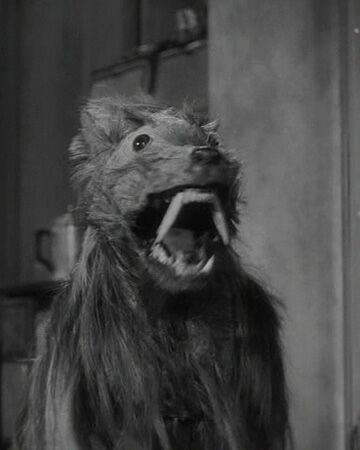
Why is Ro-Man so fearsome? Well, he lives in a cave for one thing. He also owns a bubble machine. And finally, perhaps most horrifically, he’s a gorilla wearing a diver’s helmet. However, Ro-Man is not just a one-dimensional bad guy. No, he actually gets to have a monologue about halfway through the film in which he considers the existential issues inherent in being a gorilla wearing a diver’s helmet.
Can humanity defeat Ro-Man? Will Ro-Man ever get his intergalactic supervisor to appreciate him? And finally, why are the dinosaurs there?
Despite the film’s reputation for being borderline incoherent, most of those above questions actually are answered if you pay attention to the first few scenes of Robot Monster. In fact, one could even argue that Robot Monster is maybe a little bit more clever than it’s often given credit for. Of course, it’s still a zero-budget mess of a film but it’s also undeniably fun and, in some sections, unexpectedly dark. If you’ve never seen it before, you owe it to yourself to set aside an hour and two minutes in order to watch it. You’ve never see anything like it before.
Finally, I should note that Robot Monster’s hero was played by George Nader, who actually did go on to appear in several mainstream films. Despite his good looks and talent (which may not be obvious in this film but which he did have), George Nader struggled to get starring roles in Hollywood, where he was often dismissed as just being a member of Rock Hudson’s entourage. (It’s been theorized that Nader struggled because the studios feared that giving him too big of a role would lead to the gossip magazines writing about Nader’s relationship with Hudson, though the two were just friends. Nader was in a relationship with Hudson’s private secretary, Mark Miller, from 1947 until Nader’s death in 2001.) Nader finally left Hollywood and went on to have a pretty successful career in Europe. He was perhaps best known for playing secret agent Jerry Cotton in a series of films in the 60s.
This 1995 film takes place on a college campus that is ruled over by the worst possible people …. THE PHILOSOPHY CLUB!
Okay, that might be an exaggeration. It’s a big campus and undoubtedly, most of the students are just doing their own thing and don’t particularly care about any of the clubs or any of the Greek organizations or any of that stuff. That said, it does seem like a surprisingly large amount of people are interested in the weekly Philosophy Club debates, despite the fact that the Philosophy Club itself seems to only have three members.
After seeing his religious friend get totally trampled while trying to debate the existence of God, Scott (Brad Heller) decides that it’s time to take a stand. Scott used to be a wild frat boy and he even lost his license due to a DUI. But now, he’s super Christian and he’s totally excited because he found a 50 year-old thesis about when the Bible says the world is going to end. Scott challenges the Philosophy Club to a debate and soon, flyers are being put up all over campus.
The only problem is that Scott isn’t ready for the debate. The Philosophy Club has uncovered the secrets of Scott’s dark past and, after they harass him on campus and start calling his ex-girlfriends, Scott starts to feel that he won’t be able to make his case. He begs Matt (David A.R. White) for help but Matt says that it’s pointless to try to debate anything in front of the Philosophy Club. The Philosophy Club doesn’t care about anything but Marx and Nietzsche. Matt not only thinks that the debate will be a waste of time but he also thinks that it will actually drive people away from religion.
Of course, Matt has another reasons for not wanting to talk about the end of the world. He’s been having odd dreams, in which he’s standing in a wheat field and watching an old farmer using a scythe to bring in the last harvest….
There have been several faith-base films that have been set on campus and they all have the same basic plot. A religious person goes to college and has their faith tested by people who were raised differently and who insist that science or philosophy can serve as a substitute for religion. It always seems to lead to a classroom debate and the religious student usually wins because all of the arguments have been slanted to their side. Of course, it’s not just Christian films that do this. If there’s one thing that Christians and atheists share in common, it’s an almost total ignorance about how the other side views the world and the questions of existence. Anti-Christian films always fall back on the stereotype of the fanatical parents who refuse to allow their children to leave the house. Christian films, on the other hand, always seem to feature an atheist who is angry at God. End of the Harvest doesn’t go quite as far into those stereotypes as some other Christian films do but it’s still hard not to notice that the bizarrely smug members of the Philosophy Club are left speechless by some pretty basic arguments. It’s the fantasy that both atheists and Christians tend to indulge in, the one where you come up with the pithy one-liner that no one can refute. Christians always want to know how you can be angry at a God you don’t believe in. Atheists always want to know, if God created everything, who created God. In the real world, both arguments can be easily refuted but, in the movies, they’re always game changers.
End of the Harvest is a fairly standard religion-on-campus film. It’s not going to convert anyone. That said, the scenes of Matt standing in that wheat field have a nicely surreal feel to them. In those scenes, it really does feel like the end is coming.
I do love a good short film. I love a good comedy horror and loathe the ones that are terrible like this garbage trash “Origin” that I reviewed last year: https://unobtainium13.com/2021/10/06/origin-film-review-by-case-wright/ I’m not saying that the person who unleashed “Origin” or any terrible Short Film should be imprisoned forever, but I’m not saying that they shouldn’t either- Listen, I’ll back your play.
Waffle was ….. not bad. There were some stunners last year. I mean true artworks and please if you have the ability to hire these actors, writers, and directors – please call them. I’ll spot your month’s IMDB Pro dues if you do. *winks with sexy Italian eyebrows, makes click sound – Sup?*
Kate Marovitch and Kerry Barker created Waffle and they hit a number of good points. It’s a self-contained story. They were on a budget, but made the film look awfully slick. There’s a clear plot and narrative thread. I put this short-film in the good category, which I don’t give out lightly. Shorts are a unique storytelling artform- Every word matters and every second matters. I wouldn’t mind seeing another one of their shorts; however, I’d like to see what they could create for a series.
The short takes our phone induced isolation to another level. In this world, you rent friendship and love with a finger swipe, but Katie uses the evil Tinder to find her victims. Yes, this plot is straight-forward, but it had some funny lines and a heart. They are tapping into the interpersonal relationship version of there are “ten-thousand channels and nothing’s on.”
I don’t want to spoil the ending and would recommend this ten-minutes for you. Yes, you!
Quite possibly one of the most boring film ever made, 1975’s The Astrologer tells the story of …. well, I’m not really sure what the point of it all is.
Basically, an astrologer named Alexi Abarnel (Bob Byrd) has figured how to combine the zodiac with 70s technology and, as a result, everyone’s potential for good and evil can be determined simply by typing their birthdate into a computer. The U.S. government funds his agency, which is known as Interzod. And let’s be honest, that does sound like the type of dumbass thing that the government would fund, especially when the Democrats are in power.
According to the stars, the second coming of Christ is only a few days away. Alexi is convinced that he has married the woman who is destined to give birth to the Savior. Because of this, he refuses to consummate his marriage because it’s very important that she remain a virgin. However, he hasn’t bothered to inform her of any of this so poor Kate (Monica Tidwell) spends all of her time wondering why her husband hasn’t touched her in five years of marriage and why it’s also so important to him that she never tell anyone the actual date of her birth.
Meanwhile, a group of gypsies are traveling the country and, under the leadership of Kajerste (Mark Buntzman), they are both murdering people and also compelling people to commit suicide. Interzod is concerned about Kajerste because of his “zodiacal” potential but Alexei is also concerned that he doesn’t have Kajerste’s exact birthdate. But the fact that Kajerste is commanding his followers to kill people should be enough to clue Interzod into the fact that Kajerste is bad guy, regardless of whether he’s a Capricorn or an Aquarius. Fortunately, Interzod has come up with a plan on how to kill Kajerste, one that involves implanting thoughts in his head via electrodes and tranquilizer dots. A young congressman (Al Narcisse) wants to help because he’s so interested in Interzod’s work. However, it turns out that the ludicrously complicated plan to take out Kajerste is …. well, ludicrously complicated. If my tax money is going to fund Interzod, I would hope they would make better use of it.
The film’s plot definitely has the potential to be interesting but, unfortunately, The Astrologer is a very, very talky film. It only has a 78-minute running time and the majority of the film is made up people having very long and very dry conversations about how Interzod works and why its work is important. The problem is that there’s not really any need to convince the viewers that Interzod is important or to show us how it works. No watching this film is going to be interested in an in-depth examination of a fictional government agency. Everyone knows that this isn’t 60 Minutes and it’s not like the NSA has hand-picked the correspondent who is going to be reporting on them. This is a film about spies, astrology, and a killer cult. It should be a lot of fun but instead it’s incredibly boring.
That’s not to say that it’s a total waste. This was James Glickenhaus’s first film as a director. Glickenhaus went to direct some well-regarded action films in the 80s and there are a handful of isolated moments in The Astrologer where it is obvious that the film was made by someone who had a good visual eye. A cult ceremony scene that is almost totally made up of freeze frames is nicely done. And, as always, it’s hard not to admire the ambition of someone trying to make a metaphysical thriller and tackle the big questions of existence on a budget.
In the end, though, the most interesting thing about The Astrologer is its insistence on having its characters frequently use the term “zodiacal.” Take a drink every time that you hear someone say, “zodiacal” but don’t drive afterwards.
When an out-of-control general was on the verge of destroying the world, Col. Jack Slater (Vincent Spano) did what he had to do and he killed him. Now, Slater is in a military prison and separated from his family. However, he’s offered an opportunity to win his freedom. All he has to do is reassemble his old crew of military/scientist specialists and deactivate an underground computer. The problem is that a mad scientist named LaGrange (Zdenek Maryska) is threatening to use the computer to destroy the world and the underground chambers are patrolled by a killer cyborg that has melded with LaGrange’s mind. Meanwhile, above ground, General Devlin (Paul Koslo) is willing to sacrifice Jack and his team if it means covering up what’s happening underground. If the cyborg doesn’t kill them, the super computer will. If the super computer can’t get the job done, the government cover-up will do what has to be done. If the government can’t do it, the earthquake will have to suffice. Either way, it seems unlikely that Jack and his people are going to escape that underground chamber with their lives.
“Game over, man!”
No one shouted that in Downdraft but they could have because the scenes of the team searching the underground chamber will be familiar to anyone who remembers the space marines exploring the destroyed colony in Aliens.
“I’ll be back.”
No one says that in Downdraft but someone could have because the computer turning on the humans that created it will be familiar to anyone who remembers what John Connor told Sarah in The Terminator.
“Thank you and have a nice day.”
Again, no one says it in Downdraft but they could have because the killer cyborg might as well be named Robocop.
Downdraft takes elements from all of those films and then adds in the type of corrupt general who would send John Rambo to Vietnam and then abandon him there once it became obvious that Rambo had found evidence of American POWs. There’s not much about Downdraft that feels original but I will give Downdraft credit for including a little bit of everything. Not only is there a killer robot and a super computer and an untrustworthy general and a government coverup and a team of quirky nerds who know how to fight but there’s also a race against time to defuse a hydrogen bomb and several scenes of people having to climb rickety ladders and cross over chasms on unstable bridges. The action is impossible to follow but when there’s so much of it, it almost doesn’t matter. The main message of the movie is that humanity shouldn’t become reliant on supercomputers to run the world. It’s a good thing we all learned that lesson, right?
Vincent Spano was a good actor, even in this. Whatever happened to him? While he’s saving the world, he also finds time to fall in love with a Russian scientist played by Kate Vernon, who went from playing a key supporting role in Malcom X to starring in this. Everyone has bills to pay. That was as true in 1996 as it is today.
Welcome to Retro Television Reviews, a feature where we review some of our favorite and least favorite shows of the past! On Sundays, I will be reviewing the made-for-television movies that used to be a primetime mainstay. Today’s film is 1971’s A Little Game. It can be viewed on YouTube!
Twelve year-old Robert Mueller (played by 13 year-old Mark Gruner, who would later go on to play one of Chief Brody’s kids in Jaws) just hasn’t been the same since his father died. Robert idolized his father, who was an architect who built bridges and reportedly pushed his workers to take a lot of dangerous risks to get the job done. Perhaps that explains why Robert is not getting along with his new stepfather, Paul Hamilton (Ed Nelson). Robert’s mother, Elaine (Diane Baker), is convinced that Robert will eventually come to accept Paul but Paul isn’t so sure.
Robert is a student at a private military academy. When he comes home for the holidays, he brings his “best friend” with him. Stu Parker (Christopher Shea) is friendly and polite but he’s also easily led and has a difficult time standing up for himself. Paul immediately sees that Robert is bullying Stu. Elaine, however, thinks that Paul is being too critical. That’s just the way boys are!
In his diary, Robert has written that he killed someone and that he’s sure that he got away with it. When Paul comes across the entry, he worries that Robert might be telling the truth. Paul goes as far as to hire a private detective (Howard Duff) to investigate whether there’s been any mysterious deaths at Robert’s school. Stu, meanwhile, explains that he and Robert sometimes play “a little game” where they imagine that best way to murder someone and get away with it. But Stu assures Paul that it’s just a game. They don’t actually kill anyone.
Is Stu telling the truth or is Robert just as dangerous as his deceased father, a man who Paul claims was a psychopath? Or is Paul himself the one who has become delusional with jealousy of his stepson?
The answer to those questions is pretty obvious from the minute that Robert and Stu show up at the house. In fact, it’s so obvious that it kind of leaves the viewer wondering how everyone else in the film could be so clueless. On the one hand, it’s understandable that Elaine would not want to admit that there is something seriously wrong with her son. On the other hand, how many times can anyone close their eyes to a very obvious truth? From the minute that Robert shows up, wearing his uniform and curtly ordering around the family’s maid (played by High Noon‘s Katy Jurado, who deserved a better role), he might as well have psychopath tattooed on his forehead.
That said, evil children movies are always somewhat effective, even the ones that are a bit too obvious in their approach. Psychologically, we’ve been conditioned to always associate children with innocence, optimism, and hope. Children are the future, so the saying goes. As such, it does carry some impact when they’re portrayed as being a force of danger. As I watched this film, I did find myself wondering if there was any hope for Robert. With all that he had done, could someone still reach him and turn him around? Or was he destined to go from being an evil child to an evil adult? It really does get to the question of whether evil is a real, almost supernatural force or if it’s something that’s created by a combination of environment and social taboos. Was Robert born evil or did he become evil? A Little Game doesn’t answer that question but I doubt that anyone could. Some questions are destined to be forever unanswered.
Produced in Italy and first released in 1985, Enzo G. Castellari’s Light Blast is a hybrid of several different genres. There’s a lot of action, there’s a bit of horror, and there’s also some sci-fi. Like the majority of Italian exploitation films that came out during the 80s, it’s designed to have a little something for everyone.
Erik Estrada plays Ronn Warren, a detective with the San Francisco Police Department. (Though the film was filmed on location and it did star American television star Erik Estrada, it’s still very much an Italian production, complete with badly dubbed dialogue and clumsy attempts to capture the peculiarities of American culture.) When we first see Ronn, he’s in his underwear and he’s carrying a turkey. Two inbred criminals are trapped in a bank and they’ve taken hostages. They’ve demanded that the police provide them with dinner and that the food be delivered by someone “not wearing a stitch of clothing.” Ronn is happy to oblige, though he doesn’t go completely naked because Ronn is one of those police detectives who has trouble following orders. Of course, as soon as he gets inside the bank, Ronn proves that he doesn’t need to be fully dressed to stop the bad guys. He just needs for the bad guys to be stupid enough to continually let their guard down and fall for extremely obvious tricks.
While Ronn is showing off his physique, Dr. Yuri Svoboda (played by Enio Girolami, who is credited as Thomas Moore in this film) is planning on terrorizing the city of San Francisco. He’s developed a giant laser gun that he transports on top of a van. Whenever he shoots the laser at any digital clock, it causes people to melt and buildings to explode. His first victims are a teenage boy and girl who are having sex in an abandoned railroad car. His next victims are the innocent spectators of a stock car race. What does Dr. Svoboda want!?
It turns out that he wants a lot of money. Now, if Dr. Svoboda tried this today, I imagine the city would quickly pay up and Dr. Svoboda would be given a police escort to the airport. But this film was made in the 20th Century, back when people were still willing to fight back against mad scientists with lethal death rays! Soon, Ronn Warren is running around San Francisco, battling Dr. Svoboda’s henchmen while trying not to get melted himself. And, of course, it would not be a movie about San Francisco if there wasn’t at least Bullitt-inspired car chase. For this chase, Ronn steals a stock car and chases the bad guys throughout the city. Whenever anyone gets in Ronn’s way, he and the car just jump over them while the film’s synth-heavy musical score goes appropriately crazy.
What to say about Light Blast? It’s a bit of a dumb movie but, to its credit, it doesn’t take itself too seriously. The melting effects are both so grotesque and so obviously fake that you won’t know whether to laugh or to scream. Castellari keeps the action moving quickly and Estrada delivers all of his lines through gritted teeth, an indication that both of them knew better than to worry about things like logic or motivation. Why Dr. Svoboda melting people? Because he wants to. How can he somehow get away with driving around in a van that has a very obvious laser gun on top of it? There wouldn’t be a film otherwise. That’s just the way Light Blast is. It’s stupid but it’s so unapologetic in its stupidity that it’s hard not to be entertained.
Last night, when I watched The Gabby Petito Story on Lifetime, my inital reaction was to think that it was a bit gauche just how quickly Lifetime had turned the story of Petito’s murder into a movie.
“Wow, I thought, this only happened a few months ago and they’ve already turned it into a movie?”
However, I then took a look at Gabby’s Wikipedia page and I discovered that it has actually been over a year since Gabby Petito disappeared while driving across the country with her fiancée Brian Laundrie. It has been over a year since her family frantically asked that anyone with information come forward. It has been over a year since the release of the footage of the police talking to a distraught Gabby Petito while Brian laughed about the situation on the other side of their van. It has been over a year since Brian himself vanished. It has been over a year since Gabby’s remains were found and the coroner confirmed that she had indeed been choked to death. And it’s been over a year since Laundrie’s skeletal remains were found, along with a note in which he confessed to killing Gabby.
It’s been over a year but it seems like it was just yesterday. That’s how invested many of us became in the search for Gabby Petito and that’s how fresh our anger over what happened remains. Why did Gabby Petito’s disappearance capture the public imagination in a way that so many other disappearances haven’t? Some claim that it’s because Gabby was young, pretty, and white and that might be the case with some people. But, for many of us, the reason why Gabby’s disappearance captured our imagination is because every woman has known at least one man like Brian Laundrie, the self-declared nice guy who is actually controlling, manipulative, and mentally (and often physically) abusive. We watched the footage of Gabby telling the police that Brian’s anger was all her fault because “I just get so OCD” and we realized that the same thing could have just as easily happened to us. Brian hit Gabby because she asked him to not track dirt and mud into the van in which they were going to spend the next few months living. And, when the police showed up to ask what was going on, she blamed herself. No one was there to save Gabby and we all felt that if we had found ourselves in the same situation that there would not have been anyone there to save us either.
The Gabby Petito Story stars Skyler Samuels as Gabby and Evan Hall as Brian Laundrie. It follows them from the moment that their relationship began and we watch as Brian goes from being endearingly awkward to being an out-of-control monster, one who hides behind his anxiety disorder and his nerdy persona. It’s not always easy to watch, as the film does a good job of showing how an abusive relationship develops and also how it will inevitably end. It’s difficult to be comfortable with any show that uses a true life tragedy to generate ratings (and knowing that Lifetime was probably started planning the film even while Gabby was still missing doesn’t help) but The Gabby Petito Story is well-acted by Samuels and Hall and it’s well-directed by Thora Birch, who also plays Gabby’s mother. If nothing else, it shows why so many of us became obsessed with Gabby’s disappearance and why her tragic fate continues to haunt us a year later.
First released in 1986, The Texas Chainsaw Massacre Part 2 opens with two idiots driving down an isolated highway in Texas. They’re heading down to Dallas for the Red River Showdown, the annual football game between Oklahoma U. and the University of Texas at Austin. They’re drunk, of course. And, being rich kids in the mid-80s, they’ve got a car phone. They place a call to a local radio DJ named Stretch (Caroline Williams, giving a great performance) and they force her to listen as they harass the driver of a passing truck. Of course, when a chainsaw-wielding Leatherface (Bill Johnson) emerges from the truck and kills both of them, Stretch hears that as well.
Yes, Leatherface and the entire family are back. When last seen at the end of 1974’s The Texas Chainsaw Massacre, Leatherface was dancing with his chainsaw while the morning sun shined down on the Texas countryside. Now, he and the family have moved to North Texas and the eldest brother, Drayton Sawyer (Jim Siedow), has become a bit of a local celebrity due to his chili. (Everyone loves Drayton’s chili but that’s mostly because they don’t know who the main ingredient is.) Though one of the brothers was killed at the end of the original film, he’s been replaced by the manic Chop-Top (Bill Moseley), who has a metal plate in his head. Of course, Grandpa (Ken Evert) is still alive. He’s well over a hundred years old but he still enjoys trying to wield a hammer.
The family is being pursued by Lefty Enright (Dennis Hopper), a crazed Texas ranger who is also the uncle of Sally and Franklin Hardesty, who were both victimized in the first film. (Sally, we’re told, is in a mental institution. As for Franklin, a skeleton in a wheelchair does make an appearance at one point.) Lefty approaches Stretch to get a copy of the tape of the two drunk idiots being killed by Leatherface. Unfortunately, the family also discovers that Stretch has the tape and they soon come after her as well….
The Texas Chainsaw Massacre Part 2 is not as universally beloved as the first film but I like it. It helps, of course, to know something about Texas-OU weekend. Imagine Mardi Gras without the nudity or the beads but with a lot more beer and a lot more frat boys and you have a pretty good idea of what Texas-OU weekend is like in Dallas. The entire city goes crazy as it’s invaded by football fans from Oklahoma and Austin. Why are they playing football in Dallas as opposed to their own cities? Dallas is considered to be neutral ground and the fact that they need neutral ground to play a football game should tell you just how invested people get in that one game. Texas-OU weekend is all about excess and the same could be said about The Texas Chainsaw Massacre Part 2.
With the original film, Tobe Hooper fooled audiences into thinking that they were seeing more gore than they actually were. The first Texas Chainsaw Massacre is nearly bloodless. Hooper takes the opposite approach to the sequel, filling the screen with blood and viscera. For that reason, Part 2 is still controversial among fans of the original Texas Chainsaw Massacre films but I think Hooper made the right decision. Attempting to duplicate the original’s atmosphere would have been impossible. Instead of just remaking the original film, Hooper did something different. As well, as opposed to the more subtle social satire of the first Texas Chainsaw Massacre, the humor in Texas Chainsaw Massacre Part 2 is far broader and a bit more hit-and-miss. But again, it all links back to Texas-OU weekend. There may not be much that’s subtle about The Texas Chainsaw Massacre Part 2 but the same can be said of the Red River showdown and Texas-OU Weekend. For that matter, the same can be said for much of Texas in general and Dallas in specific. Like me, Tobe Hopper was a Texan. True Texans know what makes our state great but we also know what makes our state totally batshit insane. Tobe Hooper got Texas in a way that all the filmmakers from up North never will.
That’s not to say that The Texas Chainsaw Massacre Part 2 is a perfect film, of course. The film’s second half, which takes place almost entirely in the underground caverns in which the Sawyers have made their home, is considerably less compelling than the first. The scene where the Sawyers attempt to get Grandpa to bludgeon Stretch with a hammer goes on forever and it’s far less effective than when they tried to get Grandpa to do the same thing to Sally in the first film. As well, it’s hard not to be disappointed with Drayton’s transformation from being ambiguously friendly in the first film to being a flat-out villain in the second. The first film showed that Jim Siedow was a far better actor than one might guess from the sequel.
But here’s what does work. Bill Moseley’s performance as Chop Top is completely manic and over-the-top and, at times, a little bit annoying. But he’s also so completely unhinged and Moseley is so uninhibited in the role that it’s impossible to look away whenever he’s onscreen. Dennis Hopper, who was just starting to make his Hollywood comeback when he appeared in this film, plays Lefty as being so obsessive that sometimes, he seems like he might be just as dangerous as the people that he’s pursuing. Hopper makes the character sympathetic, though. There’s a gleam of madness in his eyes but the viewer never doubts his love for his family. It takes a special actor to pull off the scene where Lefty discovers Franklin’s remains and Hopper was exactly that actor. And finally, there’s Caroline Williams, giving a strong and inspiring performance as Stretch and never allowing the character to become a helpless victim. Stretch may scream (because who wouldn’t in that situation) but she never stop fighting. The scene where she “charms” Leatherface is the epitome of The Texas Chainsaw Massacre Part 2. It’s over the top, excessive, borderline offensive, sickly funny, and yet somehow very effective. If nothing else, The Texas Chainsaw Massacre Part 2 is one of the few of the 80 slasher films to acknowledge what’s really going on with those boys and their chainsaws, machetes, and knives.
Though it may not be as good as the original, The Texas Chainsaw Massacre Part 2 holds up well on its own. It’s an effective mix of satire and horror, featuring a strong heroine and a great performance from Caroline Williams. Hell, I think I’m going to be Stretch for Halloween this year!
For today’s Horror on the Lens we have the 1975 classic, The Giant Spider Invasion!
Directed by Wisconsin’s own Bill Rebane, The Giant Spider Invasion works specifically because it delivers exactly what the title promises. The title says that you’re going to see giant spiders invading the Earth and that’s exactly what happens! And, as someone who cannot stand spiders, I can only say, “AGCK!”
This is a fun movie. Sadly, I don’t think it would be as entertaining if it were made today. The budget would be too high. The actors wouldn’t be in on the joke. The whole production would be more concerned with creating the perfect CGI spider than just having fun with the concept. For a film like this to work, you need someone who is willing to work with a low budget and you need someone willing to fully embrace the the idea of spiders invading the farmlands of Wisconsin and wrecking havoc, regardless of how silly it might seem. You need a director like Mr. Bill Rebane.