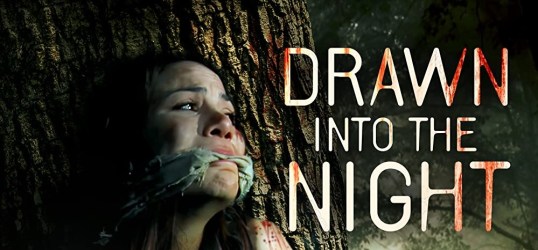
What Lisa Marie Watched Last Night #221: Drawn Into the Night (dir by Bill McAdams, Jr.)


Last night, Erin and I started to watch a film called Drawn Into The Night on Tubi.  Erin abandoned the film after 10 minutes but I stayed for the whole thing!
Why Was I Watching It?

According to the film’s description on Tubi, the film was about a cop who goes undercover in a high school in order to investigate the disappearance of three cheerleaders.  I love film about undercover high school cops and I figured that Erin would enjoy critiquing whether or not the film was an accurate representation of the high school cheerleader experience.  Anyway, Erin stopped watching after 10 minutes but I stuck with the film because I feel guilty whenever I stop watching a movie before the end credits start.

After the film was finished, I did a little research and I discovered that Drawn Into The Night (which Tubi claimed was a 2022 release) was actually a heavily edited version of a 2010 film called A Lure: Teenage Fight Club.   Teenage Fight Club was a little over 90 minutes long.  Drawn Into The Night had a running time of 67 minutes.  Just judging from the reviews that I read of Teenage Fight Club, it would appear that a lot of nudity and excessive violence was edited out of the film that became Drawn Into The Night.  That’s fine by me.  I love a good thriller but I’ve grown a little bored with violence for the sake of violence.

What Was It About?

After three high school cheerleaders mysteriously disappear, a detective named Maggie (Jessica Sonneborn) goes undercover as a high school student.  She joins the school’s field hockey team and makes a quick frenemy out of spoiled Brittany (Augie Duke).  An invitation to a rave turns out to instead be an invitation to be forced to take part in a teenage fight club, where the fights are to the death!

What Worked?

The film was short.  That may sound like a back-handed compliment but, after sitting through countless films that rua over two hours despite not having enough story for 30 minutes, it was kind of nice to see a film that wrapped everything up in 67 minutes.  Of course, some of that is because this was a heavily edited version of a longer film but no matter.  It still worked!

The film had some nicely atmospheric shots of people running through the night, often being pursued by an inbred hillbilly.  Some of those scenes had a dream-like intensity to them.

Augie Duke gave a good performance as the hilariously self-centered Brittany.

What Did Not Work?

Because of the way the film was edited, there were several continuity errors.  One character, in particular, is seen in one location just to be show up in a totally different location one jump cut later.  I’m going to guess the original version of the film included a scene of her arriving at the different location.  In the edited version, she just appears to teleport from place to place.

Maggie going undercover would have been more interesting if not for the fact that all of the high school students already appeared to be in their 20s.  Despite the fact that three cheerleaders had mysteriously vanished just a few days previously, none of the other students at the school seemed to be the concerned about it.  At my high school, if someone popular was kidnapped, people definitely would have been talking about it.

The identity of the main villain seemed to come out of nowhere but I am, once again, going to assume that’s because of how this version of the film were edited down from the original version.

“Oh my God!  Just like me!” Moments

One character has asthma and you better believe that I was cringing when she was trying to catch her breath while running away.

I did sneak out to a few all-night parties when I was in high school and I usually did ruthlessly critique the type of car my older friends drove so I could definitely relate to Brittany.  But I’m happy to say that I was never forced to take part in a teenage fight club.

Lessons Learned

When there’s a kidnapping spree going on, don’t accept invitations to parties in the middle of nowhere.

Film Review: A Day To Die (dir by Wes Miller)


A Day To Die is a low-budget action film with a ludicrously complicated plot.

The film opens with an elite SWAT team reacting to a terrorist incident in a small town.  A group of white supremacists have taken over a hundred hostages in a high school.  An elite SWAT team, led by Brice Mason (Frank Grillo) and Connor Connolly (Kevin Dillon), attempt to rescue the hostages but a mistake leads to the school blowing up and many of the hostages dying.  Corrupt police chief Alston (Bruce Willis) breaks up the SWAT team.  Some of the members become auto mechanics.  Some of them become drug addicts.  Connor becomes a …. parole officer.

A year or so later, Connor is forced to kill one of the henchmen of the local drug lord, Pettis (Leon).  Pettis is upset because, by his estimation, the dead man would have brought in over two million dollars over the course of his career.  Pettis orders Connor to steal two million to pay off his “debt.”  Pettis gives Connor 12 hours to find the money and, just for good measure, he kidnaps Connor’s pregnant wife (Brooke Butler).

Pettis suggests that Connor get the money by robbing a rival’s drug house.  With no other choice, Connor puts in a call to Brice and soon, the old SWAT team has gathered in a garage.  Quicker than you can say Fast and Furious, the team is talking about how they’re family.  If Connor needs them to rob a bunch of drug dealers, that’s what they’re going to do.  However, they’re also going to take down Pettis in the process.  Of course, what they don’t realize is that Pettis has a connection of his own with Chief Alston.

Probably the best thing that can be said about A Day To Die is that Bruce Willis seems to be remarkably steady on his feet.  This was one of the batch of films that Willis made before his family announced that he was retiring from acting.  Knowing what we now know about not only his health but also the allegations that Willis wasn’t always sure what type of films he was being singed up for, it’s always a bit awkward to watch his last few films.  But, in A Day To Die, Willis actually gives a credible performance as the corrupt police chief.  Though there’s not much of evidence of the swaggering wise guy charisma that made Willis a star, Willis still delivers his lines convincingly and he seems to be invested in the character.  While I’m faintly praising the film, I should also mention that Leon appears to be having fun with the role of the sharply-dressed drug dealer and Frank Grillo is his usual rugged self.  They’re all good enough to keep you watching.

Unfortunately, Kevin Dillon uses the same facial expression that he used when he played Johnny Drama on Entourage and, as a result, it’s a bit difficult to take him seriously as an action hero.  (If anything A Day To Die seems like the type of film that everyone would laugh at Johnny for doing while Vince was appearing in Martin Scorsese’s Gatsby.)  Ultimately, the film is done in by an overcomplicated plot that really doesn’t hold up to close scrutiny.  As entertaining as Leon is, Pettis’s actions never really make sense.  In the end, A Day To Die is better than American Siege but nowhere close to Gasoline Alley.

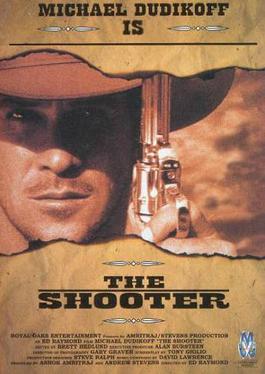
The Shooter (1997, directed by Fred Olen Ray)


While riding his horse through the old, Michael Atherton (Michael Dudikoff) discovers a group of thuggish ranch hands attacking a prostitute named Wendy (Valerie Wildman).  Because Michael is known as being the Shooter, he has no problem coolly gunning the men down and saving Wendy’s life.  Unfortunately, for Michael, one of the dead men is the son of a fearsome rancher named Jerry Krants (William Smith) and Jerry has his own reasons for wanting Wendy dead.  Michael may be the Shooter but Jerry Krants is William Smith so you automatically know that it is not a good idea to mess with him.

In the grand spaghetti western tradition, Krants has his men kidnap Michael, beat him up, and crucify him outside of town.  The men leave Michael for dead but, after they’ve left, Wendy repays Michael’s kindness by untying him from the cross, nursing him back to health, and saving his life.  (The same thing used to happen to Clint Eastwood, except he usually had to nurse himself back to health without anyone else’s help.)  With everyone else believing him to be dead, Michael rides into town to get his violent revenge against Krants and his men.  With all of the townspeople convinced that Michael has returned as a ghost, only the town’s power-hungry sheriff, Kyle Tapert (Randy Travis), understands what has actually happened.  Tapert makes plans to use Michael’s return for his own advantage.  While it wouldn’t look good for Tapert to openly murder all of his opponents, what if he killed them and then framed Michael?  And then what if he made himself a hero by being the one to end Michael’s reign of terror?

Directed by Fred Olen Ray, The Shooter is a low-budget western that turned out to be far better than I was expecting.  Ray is obviously a fan of the western genre and, with The Shooter, he’s made a respectful and, by his standards, restrained homage to the classic spaghetti westerns of old.  He even shows some undeniable skill when it comes to building up the suspense before the climatic showdown.  Ray indulges in every western cliché imaginable but he does so with the respect of a true fan.

With his less than grizzled screen presence, Michael Dudikoff is slightly miscast as a Clint Eastwood-style gunslinger but the rest of the cast is made up of genre veterans who give it their best.  In particular, William Smith shows why he was one of the busiest “bad guys” working in the movies.  To me, the most surprising part of the film was that the casting of Randy Travis as a villain actually worked.  Fred Olen Ray made good use of Travis’s natural amiability, making Kyle into a villain who will give you friendly smile right before he opens fire.  Also be sure to keep an eye out for Andrew Stevens, playing the man who records Michael’s story.  It wouldn’t be a Fed Olen Ray movie without Andrew Stevens playing at least a small role.

Low-budget, undemanding, and made with obvious care, The Shooter is film that will be appreciated by western fans everywhere.

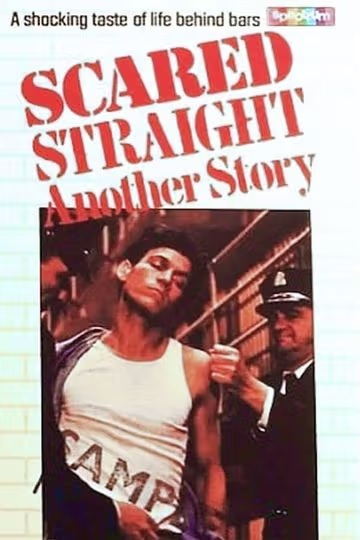
Cleaning Out the DVR: Scared Straight! Another Story (dir by Richard Michaels)


Who is ready to be scared straight … again!?

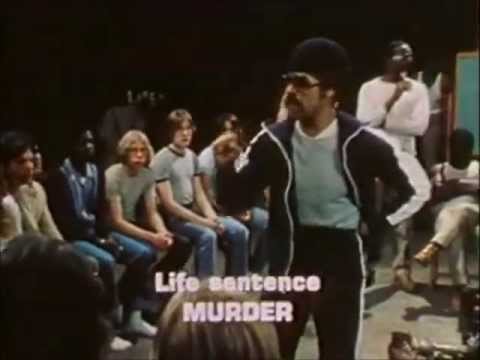
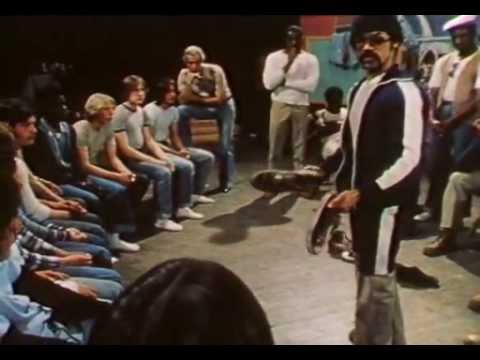
Scared Straight!  Another Story is a made-for-television movie from 1980.  As you can tell by the name, the movie was inspired by the documentary Scared Straight! and the addition of Another Story to the title would lead one to suspect that this was actually a follow-up or continuation to that documentary and I guess it kind of is.  A group of teenagers, all of whom have been in trouble with the law, are sent to a prison where they are finger-printed, forced to stay in a cell, and then yelled at by a bunch of prisoners who assure them that they don’t have what it takes to survive in prison.  Then, just as in the documentary, the teenagers leave the prison.  Some of them continue to get in trouble and some of them are scared straight.  As for the prisoners, they remain imprisoned.

The main difference is that, instead of featuring real prisoners and real delinquents, Scared Straight! Another Story is a dramatization.  As a result, the prisoners are saying the same thing that they said in the first Scared Straight! but now the prisoners themselves are played by actors who will be familiar to anyone who has watched enough old TV shows.  The prisoners may be yelling about how much life sucks but the viewer knows that they are all actors and, as a result, Scared Straight!  Another Story lacks the rough authenticity of the first film.  (It also doesn’t help that most of the profanity from the original documentary has been replaced with softer expressions of disgust.)  The film again makes the argument that the Scared Straight program can turn someone’s life around but it’s not as effective because, again, the troubled teens are all actors.  The viewer knows that they’re actors.  Their lives have already been turned around.

Surprisingly, the scenes of the prisoners yelling are the least effective parts of this film.  Instead, Scared Straight!  Another Story works best when it is exploring everyone’s life before and after the trip to the prison.  Stan Shaw, in particular, is effective as a prisoner who is inspired to take part in the program after he comes across the body of an inmate who has been driven to suicide.  Also well-cast is Terri Nunn, playing Lucy, the girlfriend of a small-time drug dealer.  Both she and her boyfriend are scared straight but it turns out to be too little too late as her boyfriend is eventually sent to jail for the crimes that he committed before the program.  (There’s an interesting scene, one that I wish had been explored in greater detail, where Lucy’s father observes the scared straight program and, instead of understanding that prison is a terrible place to send a kid, reacts by saying that the prisoners are all getting what they deserve.)  Finally, Cliff De Young, who has played a lot of corrupt government agents and out-of-touch teachers over the course of his career, gets a sympathetic role as Paul, the idealistic juvenile probation officer who sends three of his clients to the program.  The program works for two of them while the other eventually ends up joining the inmates who previously tried to warn him.  If nothing else, the film deserves some credit for admitting that the Scared Straight program isn’t going to magically reform everyone who attends.

Despite some good performances, Scared Straight! Another Story lacks the rough edged authenticity of the documentary.  It’s just not as effective when you know that everyone, including the prisoners, could go home at the end of the day.  Today, this is one of those films that is mostly interesting as a historical artifact.  Apparently, there really was a time when anything could inspire a TV movie.

Film Review: Scared Straight! and Scared Straight! 20 Years Later (dir by Arnold Shapiro)


Remember Beyond Scared Straight?

Beyond Scared Straight used to air on A&E.  It was a reality show, one where teenagers would be taken into a prison and harassed by the guards and eventually the prisoners.  The teenagers were usually guilty of things like skipping school, shoplifting, and either smoking weed or underage drinking.  Oddly, I can remember one episode where all of the teens had to wear signs that announced what their crime was.  One of them was wearing a sign that simply read, “I disrespect my parents.”  I mean, that may be bad manners but is it really a crime for which you can be sent to jail?

Beyond Scared Straight was best known for the segments in which prisoners would yell at the teens and tell them about life in prison and say stuff like, “You don’t belong here!  This is not for you!”  What is often forgotten today is that the prisoners were usually only a small part of each episode of Beyond Scared Straight.  Usually, more time was spent on the guards.  Beyond Scared Straight visited a lot of towns and a lot of jails but the guards always seemed to remain the same.  The male guards were always bulked up and bald and would try to yell like a drill sergeant.  The female guards would always scream at anyone who didn’t stand up straight.  “Kids today,” one of them said during one particular episode, “do not respect authority the way they should.”  Considering what we’ve seen of authority over the past few years, that lack of respect is perhaps understandable.  In fact, there’s a lot of evidence that suggests that the Scared Straight program does more harm than good.  Whenever I watched Beyond Scared Straight, it always seemed like the program was more about humiliating the teens than actually trying to help them or to understand why they were doing the things that they were doing.  It reminded me a bit of something that I read about the psychology behind spanking.  It’s more about the anger of the adults than the behavior of the children and it usually leads to a lot of resentment down the line.  There’s only so many times that anyone can be spanked or yelled at before they strike back.

I have to admit that, whenever I watched Beyond Scared Straight, I always enjoyed it whenever one of the “bad teens” would smirk at some screaming guard.  There were a few episodes where a teen would actually take a swing at a guard and those were my favorite episodes.  (I guess I have issues with authority, too.)  If I had a difficult time taking Beyond Scared Straight seriously, it was because it hard for me to watch it without thinking of Steve Carell’s performance as Prison Mike on The Office.

Far more effective than Beyond Scared Straight was the documentary that inspired it, 1978’s Scared Straight!  Scared Straight! followed a group of juvenile delinquents who were taken to a prison in New Jersey.  The film didn’t waste any time with the guards and indeed, the documentary emphasized the fact that the convicts ran the prison and not the guards.  (That’s the sort of thing that Beyond Scared Straight, with all of its “respect my authority” rhetoric, would never have the guts to admit.)  In fact, the documentary really didn’t even reveal much about the teenagers being yelled at, beyond the fact that they all thought that they were tough (or, at least, they did before going into prison) and that all the boys had really thin, barely-there mustaches.

Instead, it’s the prisoners who dominated this documentary.  The majority of them were serving life sentences.  A few of them were murderers.  They were angry, they were loud, and they made it clear that they didn’t like the people listening to them, filming them, or watching them.  They left the audience with no doubt that the prisoners would hate them just as much as they hated the teens in the program.  The prisoners stole everyone’s shoes.  They knocked a stack of cards out of one teen’s hands.  They regularly threatened to break one kid’s neck.  They talked about what it was like to be raped in prison.  They talked about what the teens would have to do in order to survive in prison.  Scared Straight! was narrated by Peter Falk who, early on, informed the audience that they would be hearing some “rough language.”  Falk wasn’t lying.  The prisoners in this film were frightening in a way that their later television counterparts never could be.  One doesn’t have to be a believer in the Scared Straight! program (and you’ve probably noticed by now that I’m not) to find the prisoners to be both compelling and disturbing at the same time.  All of the prisoners were obviously intelligent but, just as obviously, prison had left physical, mental, and emotional scars that would never heal.

Scared Straight! was a huge success, winning both an Oscar and an Emmy.  It led to various follow-up documentary, which explored whether or not the teens had actually been scared straight.  After I watched the original Scared Straight!, I watched Scared Straight: 20 Years Later.  Released in 1999, this documentary was narrated by Danny Glover and featured interviews with the surviving prisoners and program participants.  At the time the documentary was released, almost all of the prisoners had been paroled.  Three of them had died, one from a drug overdose, one from AIDS, and another from a sudden heart attack.  A few of the parolees had been re-arrested and were now back in prison and, just as importantly, a few others had stayed out of trouble.  As for the teens, one had died of AIDS and one was in prison but the rest of the surviving teens claimed that they had all learned from the program.  At least two were involved in the ministry.  The others all had families and steady jobs.  None of them seemed to be particularly well-off financially but, at the same time, the majority of them seemed to be happy.

Of course, Scared Straight: 20 Years Later was filmed over 20 years ago.  Things change.  One of the graduates of the original program, Angelo Speziale, appeared in 20 Years Later, playing with his children and talking about how he had a few minor run-ins with the law immediately after the program.  At the time, Speziale said that was all behind him and he was now just focused on being the best father that he could be.  As I watched Angelo Speziale talk about how perfect his life was, I couldn’t help but think that there was something slightly off about him.  He seemed to be trying too hard to come across as just a regular suburban dad.  In 2011, long after he was interviewed for 20 Years After, Angelo Speziale was arrested and charged with raping and murdering one of his neighbors in 1982, four years after he took part in the Scared Straight program.  Angelo Speziale is now serving a life sentence at the same prison where the original Scared Straight! was filmed.  As for the rest of the participants, who knows?  Hopefully, they’re doing well.

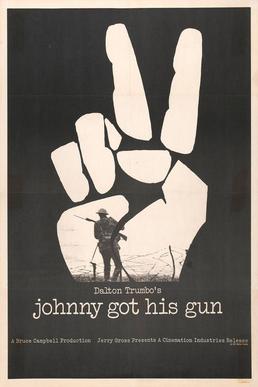
The Unnominated: Johnny Got His Gun (dir by Dalton Trumbo)


Though the Academy of Motion Picture Arts and Sciences claim that the Oscars honor the best of the year, we all know that there are always worthy films and performances that end up getting overlooked.  Sometimes, it’s because the competition too fierce.  Sometimes, it’s because the film itself was too controversial.  Often, it’s just a case of a film’s quality not being fully recognized until years after its initial released.  This series of reviews takes a look at the films and performances that should have been nominated but were, for whatever reason, overlooked.  These are the Unnominated.

The 1971 anti-war film, Johnny Got His Gun, tells the story of Joe Bonham (played by Timothy Bottoms).  When America enters World War I, Joe enlists in the Army.  He leaves behind his small-town life.  He leaves behind his patriotic father (Jason Robards) and his loving girlfriend (Kathy Fields).  As he leaves, everyone tells him that he is doing the right thing to protect democracy.  Joe’s a hero!

Joe expects war to be a glorious affair, one that will make a true man out of him.  Instead, he’s hit by an artillery shell while huddled in a muddy trench.  Though he survives the explosion, he loses his arms and his legs.  He loses his face.  He’s taken to a field hospital, where the doctors say that, though he’s alive, he’s incapable of feeling or thinking.  He’s left alone in a room and is occasionally checked on by a sympathetic nurse (Diane Varsi).

The doctors are wrong.  Joe can think.  Even if he can’t see where he is now, he can still remember the life that he once had and the events that led him to the hospital.  The film switches back and forth, from the black-and-white imagery of the hospital to the vivid color of Joe’s memories and fantasies.  In his mind, Joe remembers his father, who encouraged him to go to war and perhaps was not the all-knowing figure that Joe originally assumed him to be.  (The film makes good use of Jason Robards’s natural gravitas.  Like Joe, the viewer initially assumes that Robards is correct about everything.) Joe also imagines several conversations with Jesus (a stoned-looking Donald Sutherland), who turns out to be surprisingly mellow and not always particularly helpful.  Jesus suggest that Joe may just be naturally unlucky and he also suggests that Joe perhaps keep his distance from him because, sometimes, bad luck can rub off.  Joe, meanwhile, wonders if he could be used as a traveling exhibit to portray the futility of war.  When Joe finally realizes that a nurse has been checking on him, he tries to figure out a way to send a message to both her and the military that is keeping him alive in his captive state.  S.O.S. …. help me….

Johnny Got His Gun is based on a novel by Dalton Trumbo.  The novel was first published in 1939, at a time when the debate over whether the the U.S. should get involved in another war in Europe was running high.  At the time, Trumbo was a Stalinist who opposed getting involved because Germany and Russia had signed a non-aggression pact.  After the Germans invaded Russia in 1941, Trumbo and his publishers suspended reprinting of the book until the war was over with.  Needless to say, this was all brought up in the 50s, when Trumbo was one of the more prominent writers to be blacklisted during the Red Scare.  On the one hand, Dalton Trumbo does sound like he was more than a bit of a useful idiot for the Stalinists.  On the other hand, if you’re going to suspend the printing of your anti-war polemic, it should definitely be because you want to help defeat the Nazis.  In the end, what really matters is that Johnny Got His Gun is an undeniably well-written and effective book, one that works because it eschews the vapid sloganeering that one finds in so many works of left-wing literature and instead focuses on the emotions and thoughts of one human being.

The book was later rediscovered by the anti-war protestors of the 60s, which led to Dalton Trumbo directing a film adaptation.  The film is a bit uneven.  Dalton Trumbo was 65 years old when he directed the film and there are a few moments, especially in the scenes with Sutherland as Jesus, where he seems like he’s trying a bit too hard to duplicate the younger directors who were a part of the anti-war moment.  However, the scenes in the military hospital are undeniably moving.  The hospital scenes are shot in a noirish black-and-white and they effectively capture the stark horror of Joe’s situation.  Left alone in his dark and shadowy room, Joe becomes the perfect symbol for all the war-related horrors that people choose to ignore.  He becomes the embodiment of what war does to those who are scarred, both physically and mentally, by it.  The scenes where Diane Varsi realizes that Joe is aware of what’s happened to him and that he can still feel are powerful and emotional.  In fact, they work so well that it’s hard not to wish that the film could have done away with the fantasies and the flashbacks, despite the fact that Timothy Bottoms gives an appealing performance as the young and idealistic Joe.

Johnny Got His Gun didn’t receive any Oscar nominations.  Should it have?  The 1971 Best Picture line-up was a strong one, with the exception of Nicholas and AlexandraJohnny Got His Gun was definitely superior to Nicholas and Alexandra.  However, Dirty Harry is definitely superior to Johnny Got His Gun.  (For that matter, Two-Lane Blacktop also came out in 1971 as well.)  But, even if Johnny Got His Gun didn’t deserve to be one of the five Best Picture nominees, it did deserve some consideration for its cinematography and Diane Varsi’s performance.  If the flashbacks and the fantasies were handled a bit more effectively, I would suggest that Jason Robards and Timothy Bottoms were worthy of consideration as well.

In conclusion, I should note that 1971 was a good year for Timothy Bottoms.  Not only did he star in this film but he was also the star of The Last Picture Show.

Previous entries in The Unnominated:

  1. Auto Focus 
  2. Star 80
  3. Monty Python and The Holy Grail

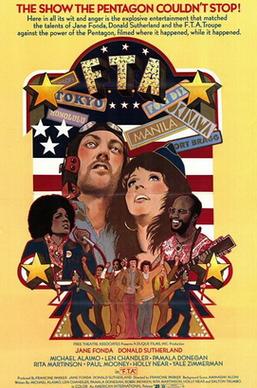
Insomnia File No. 55: FTA (dir by Francine Parker)


What’s an Insomnia File? You know how some times you just can’t get any sleep and, at about three in the morning, you’ll find yourself watching whatever you can find on cable or Netflix? This feature is all about those insomnia-inspired discoveries!

If you were having some trouble getting too sleep last night, you could have taken some sleeping pills and allowed them to knock you out for a day or two.  Or you could have logged into Netflix and watched the 1972 anti-war documentary, F.T.A.

The year was 1971 and the United States was bogged down in a deeply unpopular war in Vietnam.  While protests continued in North America, the soldiers who were actually serving in Asia started to become increasingly outspoken about their own doubts about whether there was any good reason for the U.S. to be in Vietnam.  Often at the risk of being court-martialed, these soldiers started to make their voice heard through underground newspapers and by hanging out at coffeehouses that anti-war protestors had started near military bases.  “F.T.A.” became a rallying cry for these anti-war soldiers.  A play on the army’s then-slogan of “Fun, Travel, and Adventure,” F.T.A. was also said to stand for, “Fuck the Army.”

F.T.A. also stood for Free Theater Associates, an anti-war vaudeville-style troupe that spent 1971 performing at G.I. Coffeehouses.  The show was specifically set up as a parody of Bob Hope’s USO Shows.  Each performance featured music, skits, and a reading from Dalton Trumbo’s anti-war novel, Johnny Got His Gun.  Headlining the FTA show were actors Donald Sutherland Jane Fonda, comedians Michael Alaimo and Paul Mooney, and musicians Swamp Dogg and Holly Near.

F.T.A. is really two documentaries in one.  One documentary features the F.T.A. performances and follows the troupe as they travel to military bases in Hawaii, The Philippines, Okinawa, and Japan.  The other documentary features interviews with the anti-war soldiers who came to see the show.  They discuss how they feel about the prospect of dying in a war that none of them support and few of them understand.  They discuss how clueless the officers are.  Black G.I.s discuss the racism within the ranks and wonder why they should die for a country that discriminates against them.

For the most part, the celebrities come across as being dilettantes.  With the exception of Swamp Dogg (who is obviously sincere in his concerns for the people that he’s performing for), the F.T.A. performers come across as being a bit too enamored with themselves and a lot of what we see of the F.T.A. Show seems to be more about impressing the activists back home than entertaining the G.I.s.  (Many of the skits reminded me of the worst of the Freedom School scenes from Billy Jack.)  However, the soldiers themselves are fascinating.  The soldiers discuss their anger, fears, and experiences with an honesty and an authenticity that is never less than compelling.  If nothing else, this documentary highlights the difference between people who are anti-war because they’ve experienced it firsthand and people who are anti-war because it’s the latest thing to be.

As I’ve mentioned in the past, I’m a history nerd.  Seen today, F.T.A. is an interesting historical document, one that’s all the more fascinating because it’s a Vietnam documentary that was filmed while the war was still being fought.  As such, there’s no hindsight or attempts to mold the material into something designed to appeal to those looking back with either nostalgia or disdain.  Instead, it’s a time capsule, one that takes you back to a tumultuous time and allows you to experience it for yourself.  On that level, it’s a history nerd’s dream.

Previous Insomnia Files:

  1. Story of Mankind
  2. Stag
  3. Love Is A Gun
  4. Nina Takes A Lover
  5. Black Ice
  6. Frogs For Snakes
  7. Fair Game
  8. From The Hip
  9. Born Killers
  10. Eye For An Eye
  11. Summer Catch
  12. Beyond the Law
  13. Spring Broke
  14. Promise
  15. George Wallace
  16. Kill The Messenger
  17. The Suburbans
  18. Only The Strong
  19. Great Expectations
  20. Casual Sex?
  21. Truth
  22. Insomina
  23. Death Do Us Part
  24. A Star is Born
  25. The Winning Season
  26. Rabbit Run
  27. Remember My Name
  28. The Arrangement
  29. Day of the Animals
  30. Still of The Night
  31. Arsenal
  32. Smooth Talk
  33. The Comedian
  34. The Minus Man
  35. Donnie Brasco
  36. Punchline
  37. Evita
  38. Six: The Mark Unleashed
  39. Disclosure
  40. The Spanish Prisoner
  41. Elektra
  42. Revenge
  43. Legend
  44. Cat Run
  45. The Pyramid
  46. Enter the Ninja
  47. Downhill
  48. Malice
  49. Mystery Date
  50. Zola
  51. Ira & Abby
  52. The Next Karate Kid
  53. A Nightmare on Drug Street
  54. Jud

Body Slam (1987, directed by Hal Needham)


Music promoter M. Harry Smilac (Dirk Benedict) used to be a big deal in Los Angeles but lately, his ability to create stars appears to have left him.  He still has his Porsche and his car phone but he is also several thousand dollars in debt and he only has one client, a garage hair band called Kick.  No one wants to book Kick because no one wants to work with a known screw-up like Harry.

Desperate for money, Harry agrees to serve as the entertainment chairman for a stuffy candidate for governor.  It’s while looking for potential acts to headline a fundraiser that Harry meets Quick Rick Roberts (Roddy Piper).  When Harry sees Rick getting ripped off by a promoter, Harry assumes that Rick is a musical act and quickly offers to be Rick’s agent.  It’s only after Rick has agreed that Harry discovers that Rick doesn’t play an instrument and can’t sing a note.  Instead, Rick is a professional wrestler and, by singing him, Harry has now made an enemy of Rick’s former manager, Captain Lou Munaro (played by, you guessed it, Captain Lou Albano).

Now, Harry has to find a way to pay his creditors, make stars out of both Kick and Rick, and win the hand of Candace VanVargen (Tanya Roberts), the daughter of a wealthy political benefactor.  What if there was some way to combine rock and roll with wrestling?

Dirk Benedict, Tanya Roberts, Roddy Pipper, and Captain Lou Albana, all appearing in a movie directed by Hal Needham?  Body Slam is one of the most 80s films ever made.  It’s not really a bad film.  In typical Needham fashion, it’s a loose mix of broad comedy and scenes designed to appeal to teenage boys and their fathers.  There’s a lot wrestling.  There’s a lot of spandex.  The movie opens with Harry ogling a woman in a bikini.  Body Slam knew who its audience would be.  Dirk Benedict gives a surprisingly nimble comedic performance and even Tanya Roberts has some deliberately funny moments.  Roddy Piper is likable as the steady and fair-minded Rick.  There’s nothing subtle about Captain Lou Albano’s performance but what else would you expect from a man wearing that many rubber bands?  As was typical of Needham’s films, some of the director’s friends show up in cameos.  John Astin plays a car salesman.  Charles Nelson Reilly plays a talk show host.  Billy Barty gets into an argument with Captain Lou.  Burt Reynolds is nowhere to be seen.

Unfortunately, not many people got to see Body Slam when it was originally released.  Body Slam was going to be Hal Needham’s big comeback film after the disappointing Megaforce but the film’s producers didn’t care much for the changes that Needham made to their script and they sued to keep the film from being released.  As a result, the film never got a theatrical release and it was instead sent straight to VHS, with very little fanfare.  It has since developed a cult following amongst old school wrestling fans.

Body Slam is a typically amiable Hal Needham film.  It’s nothing special but it’s enjoyable if you’re in the mood for it.

Blast From The Past: Engagement Party (dir by William Thiele)


Green Stamps were a little bit before my time but they sound like they were fun.  From what I’ve been able to pick up, apparently you could get green stamps at any store and then you could exchange them for various goods at the Green Stamps distribution center.  Apparently, the more you spent, the more green stamps you received.  At least, that’s how I think they worked.  As I said at the start of this paragraph, they were a bit before my time.

In fact, just about everything I know about Green Stamps comes from watching Engagement Party, a 30-minute film from 1956, on TCM.  In Engagement Party, Carl Landis (Craig Hill) is the son of the owner of Landis Department Store.  Soon, Carl will be taking over the family business.  Unfortunately, the family business isn’t doing so well and, until Carl can figure out how to turn things around, Carl is reluctant to marry his girlfriend, Ellen (Gloria Talbott).

When Carl first meets Elliott Winston (Leon Ames), a friend of Ellen’s family, he rolls his eyes when Elliott mentions that he works for the people behind Green Stamps.  Carl is a frequent eye roller, largely because Carl is a jerk.  Carl explains that he considers Green Stamps to be a scam and there’s no way that he would allow them to be distributed in his store.  Elliott takes it upon himself to show Carl the error of his ways.

Basically, this is just a 30-minute commercial for Green Stamps but, from a historical point of view, it’s an interesting little time capsule of the world of 1956.  To me, the most interesting thing about this short film is the fact that Carl really is just a totally self-righteous jerk.  Why would Ellen want to marry someone who simply will not stop talking about how much he hates Green Stamps?  Get a life, Carl.  To his credit, Elliott Winston can barely seem to hide his intense loathing for Carl.  Even when Elliott’s being friendly, you can tell that he just wants to take a swing at him.

For your education and your enjoyment, here is a Blast From The Past….

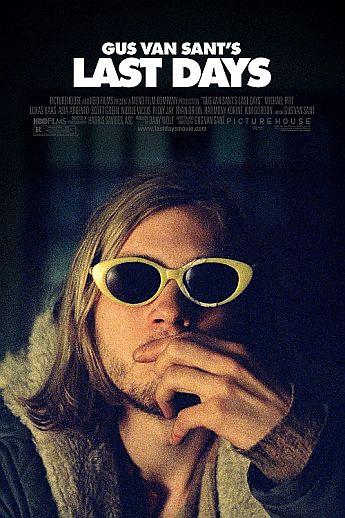
Icarus File No. 7: Last Days (dir by Gus Van Sant)


From 2002 to 2005, director Gus Van Sant offered audiences what he called his “Death Trilogy.”  2002’s Gerry followed two friends as they got lost in the desert and it featured what appeared to be a mercy killing.  2003’s Elephant was a mediation on the Columbine High School massacre and it featured several murders.  Finally, with 2005’s Last Days, Van Sant ended the trilogy with a film about a suicide.

Michael Pitt plays a world-famous musician who is suffering from depression.  Though the character is named Blake, no attempt is made to disguise the fact that he is meant to be Kurt Cobain.  When we first see Blake, he has just escaped from a rehab clinic and is walking through a forest.  There are no other human beings around and, perhaps not coincidentally, this is the only moment in the film in which Blake seems to be happy.  He even sings Home on the Range, shouting the lyrics like a little kid.

When he reaches his home, Blake’s demeanor changes.  He walks around the house with a rifle and pretends to shoot the four other people — Luke (Lukas Haas), Scott (Scott Patrick Green), Asia (Asia Argento), and Nicole (Nicole Vicius) — who are sleeping in his house.  Later, when those people wake up and attempt to speak to him, Blake is largely unresponsive.  When a detective comes to the door and asks if anyone has seen Blake, Blake hides.  When a record company exec calls to tell Blake that it’s time for him to tour again and that he’ll be letting down both his band and the label if he doesn’t, Blake hangs up on her.

Who are the people staying in Blake’s house?  Luke and Scott are both musicians but apparently neither one of them are in Blake’s band.  When Luke asks Blake to help him finish a song, Blake can only mutter a few vague words of encouragement.  Scott, meanwhile, appears to be more interested in Blake’s money.  Everyone in the film wants something from Blake but Blake wants to be alone.  In the one moment when Blake actually gets to work on his own music, his talent is obvious but so is his frustration.  With everyone demanding something from him, when will he ever have time to create?  With everyone telling him that it is now his job to be a rock star, how will he ever again feel the joy that came from performing just to perform?   

As one would expect from a Van Sant film, Last Days is often visually striking, especially in the early forest scenes.  In many ways, it feels like a combination of Gerry and Elephant.  Like those previous two films, it is fixated on death but stubbornly refuses to provide any answers to any larger, metaphysical  questions.  Like Elephant, it uses a jumbled timeline to tell its story and scenes are often repeated from a different perspective.  However, it eschews Elephant‘s use of an amateur cast and instead, Last Days follows Gerry’s lead of featuring familiar actors like Michael Pitt, Lukas Haas, and Asia Argento.  Unfortunately, though, Last Days doesn’t work as well as either one of the two previous entries in the Death Trilogy.

Last Days runs into the same problem that afflicts many films about pop cultural icons.  Kurt Cobain has become such a larger-than-life figure and his suicide is viewed as being such a momentous cultural moment that any attempt to portray it on film is going to feel inadequate.  No recreation can live up to the mythology.  The film itself feels as if it is somewhat intimidated by the task of doing justice to the near religious reverence that many have for Cobain.  As enigmatic as Gerry and Elephant were, one could still tell that Van Sant knew where he wanted to take those films.  He knew what he wanted to say and he had confidence that at least a few members of the audience would understand as well.  With Last Days, Van Sant himself seems to be a bit lost when it comes to whatever it may be that he’s trying to say about Cobain.  This leads to a rather embarrassing scene in which Blake’s ghost is seen literally climbing its way towards what I guess would be the immortality of being an icon.  One might wonder how Cobain himself would feel about such a sentimental coda to his suicide.

Last Days is a film that I respect, even if I don’t think it really works.  It does do a good job of capturing the ennui of depression and one cannot fault Van Sant for his ambition or his willingness to run the risk of alienating the audience by allowing the story to play out at its own slow and deliberate pace.  But ultimately, the film cannot compete with the mythology that has sprung up around its subject.

Previous Icarus Files:

  1. Cloud Atlas
  2. Maximum Overdrive
  3. Glass
  4. Captive State
  5. Mother!
  6. The Man Who Killed Don Quixote