A Blast From The Past: Stoned (dir by John Herzfeld)


In 1980’s Stoned, Scott Baio plays Jack Melon, a teenager with a problem.

Jack is shy, awkward, and can’t escape the shadow of his older brother, Mike (Vincent Bufano).  Mike is champion swimmer.  Jack is someone who can barely walk down a hallway without walking into a wall.  But then Teddy (Jack Finch) gets Teddy hooked on marijuana, the so-called weed with roots in Hell!  Soon, Jack is acting weird, making strange jokes, and getting all of the attention in the world.  Unfortunately, Jack is also alienating those closest to him and his newfound habit leads to a near-tragedy.

Stoned was aired as an ABC Afterschool Special and, while it’s not quite Reefer Madness, it does adhere to the general anti-drug formula.  In record time, Jack goes from being shy and dorky to being goofy and potentially dangerous.  We get all the expected scenes of Jack devouring ice cream, Jack wandering around in a daze, Jack realizing that the girl he likes what’s nothing to do with the new Jack, Jack’s well-meaning teacher (played by the show’s writer and director, John Herzfeld) confronting his students about their drug use, and Jack accidentally hitting his brother with an oar.  Jack thinks that marijuana is opening his brain because, while stoned, he suddenly realizes that a tree looks like “Old Man Eber.”  Stoned goes on to show Jack ruining his life but I have to admit that I spent most of the running time wondering who Old Man Eber was.  (Seriously, Old Man Eber sounds like some sort of Lovecraftian ghoul, waiting in the shadows to drag one to an Arkham cemetery.)  Of course, someone nearly dies as a result of Jack’s marijuana use.  What’s interesting is Jack is able to save the person’s life, even though he’s stoned.  Would non-stoned Jack have been able to do it?

From the fashion choices to the cast to the message that marijuana is the most dangerous thing on the planet, Stoned is one of those TV specials that epitomizes its time.  This was a film that was made at a time when it was inconceivable that there would some day be commercials for edible gummies and it shows.  Watching Stoned is like stepping into a time machine.

Today, of course, Scott Baio is better known for his politics than his acting.  Whenever I see a headline that reads, “This veteran Hollywood star is calling out his industry for not understanding America,” I know the story is inevitably going to be about Scott Baio complaining about his taxes.  That said, Scott Baio is convincing when he’s playing Jack as being awkward and insecure but he definitely goes a bit overboard once Jack starts smoking.  While that probably dilutes the effectiveness of the film’s message (because, let’s be honest, real stoners are going to watch this and easily recognize the fact that Jack is trying way too hard to convince everyone that he’s stoned), it does give this film a certain entertainment value.

Here is Stoned, complete with the commercials that aired when the show was original broadcast on November 12th, 1980:
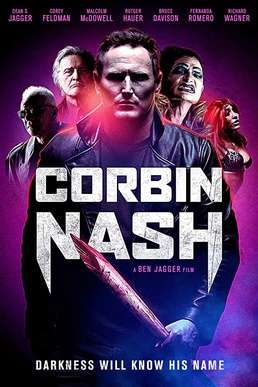
Corbin Nash (2018, directed by Ben Jagger)


Corbin Nash (Dean S. Jagger) is a New York cop who has been suspended for shooting a rapist.  While he and his stepfather (Bruce Davison, making a cameo appearance) sit in a bar and talk about how much the world sucks, they are approached by a mysterious man (Rutger Hauer, also making a cameo appearance) who explains that Corbin’s father was not just a minor league baseball player but he was also a demon hunter who was murdered by his enemies in Los Angeles.  Jack confirms that what the stranger says is true.

Corbin does what anyone would do.  He moves to Los Angeles, joins the LAPD, and starts to investigate cases of missing children.  This leads to Corbin being captured and held prisoner by two vampires, a drag queen named Queeny (Corey Feldman, camping it up to a cringe-worthy degree) and Queeny’s lover, Vince (Richard Wagner).  Queeny and Vince force their prisoners to participate in cage matches until finally feeding on them.  Corbin escapes but, as the Blind Prophet (Malcolm McDowell, collecting a paycheck) reveals, Corbin is now a vampire.  Like a less memorable version of Blade, vampire Corbin sets out to battle evil.

The film’s overall tone is grim and serious, which makes Corey Feldman’s mincing performance as Queeny feel all the more out-of-place.  Watching him in films like this, it can be easy to forget that Feldman was actually a fairly good actor before his career went off the rails in the 90s.  As a child, he appeared in some classic films and, as a teenager, he often redeemed otherwise subpar material.  But he never made the transition into adult roles.  Being one of “The Two Coreys” didn’t help and he had the misfortune of struggling with drugs before Robert Downey, Jr. made rehab cool.  Well into his 20s, he was still playing high school students and, even today when he’s in his 50s, Corey Feldman still comes across as being the world’s oldest teenager.  That’s certainly the impression that I got from Corbin Nash, where Feldman seems like a high school theater student who is more interested in showing off than actually acting.

Of course, Feldman’s self-indulgence is still more interesting than the rest of the film, which feels like an origin story for a super hero who never really took off.  There are a few interesting idea to be found in the film but mostly, it just feels like a cut-rate version of Blade and a dozen other recent vampire films.  Corbin Nash never creates an identity of its own.

October True Crime: Deranged (dir by Jeff Gillen and Alan Ormsby)


First released in 1974, Deranged tells the story of Ezra Cobb (Roberts Blossom).

In the 1950s, Ezra is a shy and withdrawn farmer who lives in Wisconsin with his elderly mother (Cosette Lee).  Ezra’s mother has raised Ezra to view all other women as being evil and to view sex as being sinful.  The end result is that the middle-aged Ezra is absolutely devoted to his mother but he also has no idea what to do with himself after she dies and is buried in the nearby cemetery.  After a year of being alone in the farm house, Ezra starts to hear voices telling him to dig up his mother.  Ezra does so but, disappointed to see how much her body has decayed over the past few months, he decides that he should start digging up fresher bodies so that he can “rebuild” his mother.

Eeeek!

Yes, it’s a creepy story and it’s all the more creepy for being true.  Ezra Cobb is based on Ed Gein, the farmer, grave robber, and serial killer whose actions not only shocked the town of Plainfield but which also inspired Robert Bloch to create the character of Norman Bates.  Psycho was based on Ed Gein’s crimes.  So was The Texas Chainsaw Massacre, with the bone-strewn home and Leatherface’s habit of wearing other people’s faces lifted directly from some of the more sordid details of what was found at Gein’s home.  By the time the police discovered what had been happening at the farm, Ed Gein had moved on from grave robbing to committing murders.  It’s known that Ed Gein killed at least three people.  It’s suspected that he was responsible for more.  Interestingly enough, Ed Gein was described as being very friendly and helpful after he was captured.  He spent the rest of his life in various mental hospitals, where he was described as being a model patient.

A low-budget Canadian production, Deranged plays out in a documentary fashion, featuring enough gore that the film was actually banned in some countries.  That said, as bloody as certain scenes are, there’s a strong strain of dark humor running through Deranged.  As played by character actor Roberts Blossom, the dazed but always polite Ezra never makes much of an attempt to hide his activities.  When Ezra’s friend, Harlan (Robert Warner), reads aloud an article about a missing barmaid, Ezra replies that the barmaid is over at his place.  Harlan has a good laugh at the idea and Ezra responds with a somewhat shy smile.  No one in town suspects Ezra, largely because he doesn’t hunt and he always seem to be so quiet and mild-mannered.  Even when Ezra points a rifle at a store clerk, she laughs and asks, “What are you doing, Ez?” and, given that Ezra looks so harmless, it’s easy to understand why.  Ezra?  Why, he wouldn’t hurt a fly!  Interestingly enough, everyone around Ezra is far more openly violent and misogynistic than Ezra.  Harlan brags about his ability as a hunter.  A man in a bar makes misogynistic comments about the bar maid who has become Ezra’s latest obsession.  Though Ezra is the one who acts on his impulses, the film suggests that Ezra isn’t that different from the other men in town.

In a rare starring role, Roberts Blossom gives a strong performance as Ezra, playing him as someone who is so far divorced from reality that he actually seems to be genuinely offended when one of his victims tries to escape from the barn.  Blossom plays Ezra as someone who alternates between being a violent madman and someone who has an almost childlike need for approval.

Ed Gein was one of the first serial killers to become national news and Deranged acknowledges this by featuring a newsman (Leslie Carlson) who not only serves as the film’s narrator but who also occasionally shows up in Gein’s farmhouse, speaking directly to the camera and explaining what was going on in Gein’s life at the time.  It’s actually an effective technique, one that acknowledges the media obsession with the crimes of men like Ed Gein.  That obsession, of course, led to movies, including Deranged.  In many ways, Deranged’s use of the newsman is prophetic.  It predicted a future in which the media would play their part into turning serial killers into almost mythological figures, sneaking their way through the more shadowy parts of American history.

Deranged is an effective film.  For a long time, it was also believed to be a lost film.  After the film’s 1974 run, all prints of the film disappeared.  Fortunately, in the mid-90s, a copy was found in Florida and both the film and Roberts Blossoms’s performances got the reevaluation and appreciation that they deserved.

Horror Film Review: The Killer Must Kill Again (dir by Luigi Cozzi)


In this twisty Italian thriller from 1975, George Hilton plays one of his signature roles.  Hilton is cast as Giorgio Mainardi, a handsome and superficially charming man who is actually a soulless cad.  Giorgio is a womanizer who is unhappily married to Norma (Tere Valazquez).  Giorgio doesn’t love Norma but he does love her money and he’s eager to get his hands on it.

One night, after an argument with Norma, Giorgio goes for a late night drive so that he can call his mistress from an isolated phone booth.  While Giorgio is making the call, he witnesses another man pushing his car into the nearby harbor.  The man, who is simply identified as the Killer (Antoine Saint-John), is a serial rapist and murderer whose latest victim was in the car.  Giorgio approaches the man and the two strike up an unlikely partnership.  Giorgio agrees not to go to the police about what he saw if the Killer agrees to kill Norma for him.

A few days later, while Giorgio is at a party, the Killer drives out to Giorgio and Norma’s house.  He breaks into the house and strangles Norma.  He then places the body in the trunk of his car.  The Killer goes back in the house to make sure that he hasn’t left anything behind.  When he comes back outside, his car is gone.  Realizing that his car has been stolen, with Norma’s body in the trunk, The Killer steals someone else’s car.  Of course, in doing so, he sets off a car alarm and the police are called.  By the time Giorgio returns home, both the Killer and the car are gone but the police are waiting for him with the news that Norma has apparently become the latest victim of Rome’s kidnapping epidemic!

(At the time this movie was made, Italy’s terroristic Red Brigades were regularly kidnapping anyone who was considered to be wealthy.)

The Killer’s car has been stolen by Luca (Alessio Orano) and his girlfriend, Laura (Cristina Galbo), who are driving to the beach.  Of course, what they don’t know is that there’s a dead body in the trunk and that the Killer is tracking their every move.  When they reach the beach, Laura soon finds herself fighting for her life when the Killer manages to track her and Luca down.

The Killer Must Kill Again starts out as a Hitchcock-inspired giallo, with the super-sleazy Giorgio hiring the Killer to kill his wife and apparently assuming that he’ll be able to outsmart anyone who investigates the case.  However, once the Killer starts following Luca and Laura, it becomes a thriller with the Killer stalking the two clueless car thieves.  Fortunately, director Luigi Cozzi is able to pull off the massive shift in tone without the story falling apart.  Cozzi delivers a genuinely suspenseful film, one that will keep you guessing until the final moment.  In much the same way that Brian De Palma was often criticized for his obvious love of Hitchcock, Cozzi has often been unfairly dismissed as just being an disciple of Dario Argento’s.  But, with The Killer Must Kill Again, Cozzi brings his own unique spin to the giallo genre and shows himself to be a much stronger director than he was often given credit for being.

One final note: The Killer Must Kill Again features one of the scariest psycho killers that you’re ever likely to see.  Antoine Saint-John is chilling as the nameless Killer.  Later, he would give another excellent performance when he played the doomed painter in Lucio Fulci’s The Beyond.


Horror Film Review: The Mummy’s Curse (dir by Leslie Goodwins)


When last we checked in with Kharis the Mummy, he was running into a swamp in Massachusetts, carrying the reincarnation of Princess Ananka with him.  Chasing after him were the standard towns people with torches and guns.  It’s not a Universal horror film without angry villagers, even if the movie itself is taking place in Mapleton, Massachusetts.

Upon entering the swamp, both Kharis and Ananka sunk under the water, traumatizing Ananka’s boyfriend but apparently bringing Kharis’s reign of terror to an end.

Well, not so fast!

The 1944 film, The Mummy’s Curse, opens with the townspeople talking about how Kharis continues to haunt the old swamp, so much so that most of the locals refuse to work in the swamp.  Oddly enough, though, the townspeople are suddenly a mix of Cajuns and gypsies.  (The film even opens with a gypsy woman singing a song in a bar.)  The swamp has now become a bayou.  We are repeatedly told that the film is taking place in the same location as the previous Mummy films but suddenly, that location has changed from Massachusetts to Louisiana.

As for the plot of The Mummy’s Curse, it all centers around the swamp.  The Southern Engineering Company (and that really doesn’t sound like a Massachusetts company) is draining the swamp.  The locals are worried that draining the swamp will bring back the curse of the mummy.  Two representatives from the Scripps Museum show up and announce that they want to search the drained swamp for the remains of the mummies.  Dr. James Halsey (Dennis Moore) is typical of the archeologists who tend to show up in these Mummy films.  Meanwhile, his associate is Dr. Ilzor Zandeeb (Peter Coe) who — surprise! — is that latest Egyptian high priest to come to America to try to recover the bodies of Kharis and Princess Ananka.

Ananka (Virginia Christie) is the first to emerge from the swamp, though she has no memory of who she is.  When she is discovered on the side of the road by Prof. Halsey and his love interest, Betty (Kay Harding), they allow her to stay at their camp on the edge of the swamp.  Everyone is really impressed by the fact that this amnesiac knows so much about ancient Egypt.  Eventually, Kharis (Lon Chaney, Jr., again tightly wrapped in bandages) eventually emerges from the swamp as well, determined to protect Ananka.

The Mummy’s Curse was the final film to feature Lon Chaney, Jr. as Kharis.  Unfortunately, it’s pretty forgettable and certainly not a satisfying conclusion to the story of one of Universal’s original monsters.  A good deal of the film’s 60-minute running time is taking up with flashbacks to previous Mummy films and it seems like it takes forever for Kharis to actually get around to spreading the usual mummy mayhem.  Though it may be too much to ask for too much continuity from these films, the sudden switch from Massachusetts to Lousiana is distracting for those of us who have actually invested the time to watch the previous Mummy films.  One gets the feeling that, by the time this film went into production, no one involved really cared that much about poor Kharis and his never-ending mission to protect his princess.

Previous Universal Horror Reviews:

  1. Dracula (1931)
  2. Dracula (Spanish Language Version) (1931)
  3. Frankenstein (1931)
  4. Island of Lost Souls (1932)
  5. The Mummy (1932)
  6. The Invisible Man (1933)
  7. The Bride of Frankenstein (1935)
  8. Dracula’s Daughter (1936)
  9. Son of Frankenstein (1939)
  10. Black Friday (1940)
  11. The Invisible Man Returns (1940)
  12. The Mummy’s Hand (1940)
  13. The Wolf Man (1941)
  14. Ghost of Frankenstein (1942)
  15. Invisible Agent (1942)
  16. The Mummy’s Tomb (1942)
  17. Frankenstein Meets The Wolf Man (1943)
  18. Son of Dracula (1943)
  19. House of Frankenstein (1944)
  20. The Invisible Man’s Revenge (1944)
  21. The Mummy’s Ghost (1944)
  22. House of Dracula (1945) 
  23. Creature From The Black Lagoon (1954)

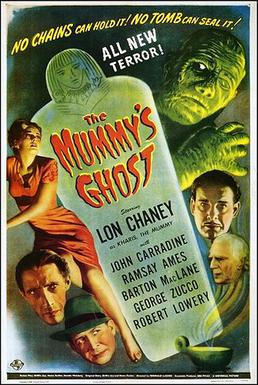
Horror Film Review: The Mummy’s Ghost (dir by Reginald Le Borg)


When we last checked in with Kharis the Mummy, he was trapped in the middle of an inferno in Massachusetts.  Having come to America to kill the members of the expedition that discovered the Tomb of Ananka and who brought Princess Ananka’s body to the United States, Kharis (Lon Chaney, Jr.) was trapped by the citizens of the town of Mapleton who, in the best tradition of Universal horror, cornered Kharis in a house and then set the place on fire.

1944’s The Mummy’s Ghost begins with the revelation that Kharis did not die in that inferno.  Somehow, he managed to escape and, rather improbably, he’s spent the last few years wandering around town without anyone ever noticing him.  The film presents Kharis as being largely a nocturnal creature but, even if he is only coming out at night, it still seems strange that no one would notice a mummy wandering around, especially since the entire town was traumatized by Kharis’s previous reign of terror.  As well, it’s also been established that Kharis owes his eternal life to an ancient Egyptian plant.  One reason why Kharis has always needed a “minder” is because Kharis needed someone who could keep him supplied with the plant.  So, if Kharis has been wandering around Massachusetts for the past few years, from where has he been getting the plant?

The Mummy’s Ghost also established that, in Egypt, High Priest Andoheb (Georg Zucco) is still alive.  This is somewhat surprising, considering that Andoheb died in both The Mummy’s Hand and The Mummy’s Tomb.  But no matter!  Andoheb is apparently still alive.  He’s really old and his hands shake but he’s still alive and he’s still determined to bring both Kharis and Princess Ananka back to Egypt.  This time, he sends Yousef Bey (John Carradine) to Massachusetts.

Yusef Bey takes over managing Kharis and he’s even able to supply Kharis with more of the special plant the keeps him alive.  However, Kharis grows upset when it discovers that Bey has tracked down the reincarnation of Ananka in the person of Amina (Ramsay Ames) and that, rather than return her safely to Egypt, Bey wants to give her eternal life with the help of the plant and then marry her.  This leads to Kharis going on a rampage and carrying Amina into a nearby swamp while Amina’s boyfriend, Tom Hervey (Robert Lowery), chases after them.

Full of plot holes and inconsistencies, The Mummy’s Ghost is about as silly as a mummy film can be.  If the previous films about Kharis managed to create a feeling of tragic inevitability as Kharis tracked down all of the people who had entered Ananka’s tomb, The Mummy’s Ghost presents Kharis as being something more akin to Frankenstein’s Monster, an inarticulate and easily frustrated creature who does things with little rhyme or reason.  That said, the film does make good use of Lon Chaney Jr’s hulking physicality as Kharis.  He’s still an intimidating figure when he goes after someone.  And John Carradine’s pained expression as Yousef Bey is memorable as a reminder of how much Carradine disliked most of the Universal monster films in which he found himself.  Otherwise, The Mummy’s Ghost is fairly forgettable.

Previous Universal Horror Reviews:

  1. Dracula (1931)
  2. Dracula (Spanish Language Version) (1931)
  3. Frankenstein (1931)
  4. Island of Lost Souls (1932)
  5. The Mummy (1932)
  6. The Invisible Man (1933)
  7. The Bride of Frankenstein (1935)
  8. Dracula’s Daughter (1936)
  9. Son of Frankenstein (1939)
  10. Black Friday (1940)
  11. The Invisible Man Returns (1940)
  12. The Mummy’s Hand (1940)
  13. The Wolf Man (1941)
  14. Ghost of Frankenstein (1942)
  15. Invisible Agent (1942)
  16. The Mummy’s Tomb (1942)
  17. Frankenstein Meets The Wolf Man (1943)
  18. Son of Dracula (1943)
  19. House of Frankenstein (1944)
  20. The Invisible Man’s Revenge (1944)
  21. House of Dracula (1945) 
  22. Creature From The Black Lagoon (1954)

Horror on the Lens: Bride of the Monster (dir by Edward D. Wood, Jr.)


Bride of The Monster (1955, dir by Ed Wood)

Today’s horror film on the lens is Edward D. Wood’s 1955 epic, Bride of the Monster.

(Much like Plan 9 From Outer Space, around here, it is a tradition to watch Bride of the Monster in October.)

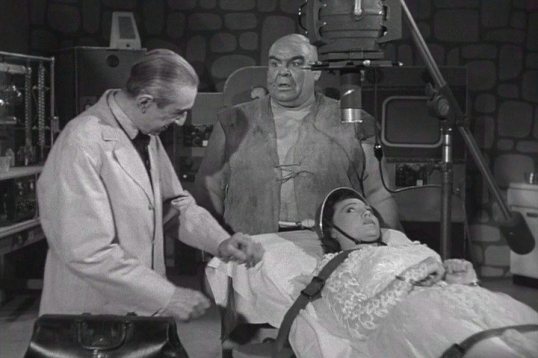
The film itself doesn’t feature a bride but it does feature a monster, a giant octopus who guards the mansion of the mysterious Dr. Vornoff (Bela Lugosi).  Vornoff and his hulking henchman Lobo (Tor Johnson) have been kidnapping men and using nuclear power to try to create a race of super soldiers.  Or something like that.  The plot has a make-it-up-as-you-go-along feel to it.  That’s actually a huge part of the film’s appeal.

Bride of the Monster is regularly described as being one of the worst films ever made but I think that’s rather unfair.   Appearing in his last speaking role, Lugosi actually gives a pretty good performance, bringing a wounded dignity to the role of Vornoff.  If judged solely against other movies directed by Ed Wood, this is actually one of the best films ever made.

(For a longer review, click here!)

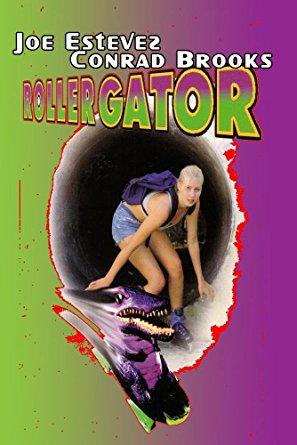
Horrific Insomnia File #62: Rollergator (dir by Donald G. Jackson)


What’s an Insomnia File? You know how some times you just can’t get any sleep and, at about three in the morning, you’ll find yourself watching whatever you can find on cable or streaming? This feature is all about those insomnia-inspired discoveries!

Last night, if you were having trouble getting to sleep, you could have logged onto Tubi and watched the 1996 film, Rollergator!  Of course, you would have had to watch the Rifftraxx version but, trust me, that would have been for the best.  There are some films that demand a certain amount of snarkiness in order to be survived and that’s certainly the case with Rollergator.

P.J. (Sandra Shuker) is a teenage girl who has just moved to Los Angeles.  There’s not much to do so P.J. spends her time either hanging out at a local carnival or relaxing on the beach.  It’s while she’s on the beach that she hears a voice calling out to her from a nearby cave.  Of course, she enters the cave to see who is calling for her because, when you’re otherwise alone and only wearing a bikini, it would only make sense to wander into a strange and dangerous location just because a totally unfamiliar voice asks you to.

Anyway, the voice belongs to a purple alligator who is kind of obnoxious.  The alligator can talk.  He says that he’s just escaped from the carnival and now Chico Dennis (Joe Estevez) has sent out a mysterious ninja (Lisa Kaake) to bring him back.  The alligator just wants to be reunited with his former owner, The Swamp Farmer (played by Conrad Brooks, who was a member of the Ed Wood stock company back in the 50s and the 60s).  After giving the alligator a hard time about always being rude and sarcastic, PJ tosses him in her backpack and takes him to …. THE CARNIVAL!  The alligator has a great time at the carnival until he and PJ run into Chico and the alligator realizes that they’re at the same carnival from which he previously escaped!  How many carnivals are in Los Angeles?

Anyway, the majority of the movie is PJ rollerblading around Los Angeles with a talking alligator puppet in her backpack.  The Dark Ninja pursues them on a skateboard but fortunately, a karate instructor (Bobbie Blackford) and a runaway named Slingshot (Jenette Lynne Hawkins) decide to help out PJ and the alligator.  Occasionally, the alligator puppet raps but he’s not very good at it.  Still, everyone loves the talking alligator.  Oddly, no one ever questions the fact that the alligator can talk.  Then again, no one manages to deliver their lines with the least bit of emotion, suggesting that everyone in Los Angeles is fairly blasé when it comes to talking alligators and skateboarding ninjas.

Rollergator is perhaps the only movie ever made about a rapping alligator and, watching it, it was kind of easy to see why there haven’t been any other movies featuring rapping alligators.  This is one of those films that features an alligator puppet for the kids and a lead actress who spends the entire movie in either a bikini or a sports bra for the adult males watching the movie with the kids but what about the women — the underpaid babysitters and the extremely helpful aunts and the exhausted mothers — who would have, if the film had been successful, been forced to watch Rollergator over the years?  The only thing we get is Joe Estevez, bulging his eyes and looking like Martin Sheen on meth.  It doesn’t seem quite fair!

Anyway, did I mention that you could watch this if you were having trouble getting to sleep?  Well, you definitely can but be warned, you may have Rollergator-inspired dreams as a result.  Those are the risks you take.

Previous Insomnia Files:

  1. Story of Mankind
  2. Stag
  3. Love Is A Gun
  4. Nina Takes A Lover
  5. Black Ice
  6. Frogs For Snakes
  7. Fair Game
  8. From The Hip
  9. Born Killers
  10. Eye For An Eye
  11. Summer Catch
  12. Beyond the Law
  13. Spring Broke
  14. Promise
  15. George Wallace
  16. Kill The Messenger
  17. The Suburbans
  18. Only The Strong
  19. Great Expectations
  20. Casual Sex?
  21. Truth
  22. Insomina
  23. Death Do Us Part
  24. A Star is Born
  25. The Winning Season
  26. Rabbit Run
  27. Remember My Name
  28. The Arrangement
  29. Day of the Animals
  30. Still of The Night
  31. Arsenal
  32. Smooth Talk
  33. The Comedian
  34. The Minus Man
  35. Donnie Brasco
  36. Punchline
  37. Evita
  38. Six: The Mark Unleashed
  39. Disclosure
  40. The Spanish Prisoner
  41. Elektra
  42. Revenge
  43. Legend
  44. Cat Run
  45. The Pyramid
  46. Enter the Ninja
  47. Downhill
  48. Malice
  49. Mystery Date
  50. Zola
  51. Ira & Abby
  52. The Next Karate Kid
  53. A Nightmare on Drug Street
  54. Jud
  55. FTA
  56. Exterminators of the Year 3000
  57. Boris Karloff: The Man Behind The Monster
  58. The Haunting of Helen Walker
  59. True Spirit
  60. Project Kill
  61. Replica

Cleaning Out The DVR: The Serial Killer Seduced Me (dir by Dylan Vox)


The Lifetime film, The Serial Killer Seduced Me, tells the story of Chloe (Tess Cline).

Chloe is currently working as a nurse at an assisted living facility but what she truly wants is to be recognized as an artist.  One of her patients, Lillian (Kris Ann Russell), is always encouraging Chloe to pursue her artistic dreams.  In fact, Lillian has quite a collection of art herself.  She gives Chloe the key to her house so that Chloe can get some of her paintings.  When Chloe goes to the house, she finds a painting of a young woman.  What we know but what Chloe doesn’t know is that someone murdered the woman after she posed for the painting.

Speaking of murder, someone smothers Lillian in her sleep.  Chloe is so upset over Lillian’s death that she barely pays attention when her agent, Chase (Allen Williamson), tells her that he needs some of her paintings.  Chloe signs a contract that Chase pushes in front of her.  Later, while Chloe is still in shock over Lillian’s death, she gets a call from Chase informing her that he’s set up a show for her at a local gallery.

Excited, Chloe goes to the gallery and discovers that not only has Chase hung several of her paintings in the gallery but that everyone also seems to like them.  However, the painting that everyone loves appears to be the painting of the woman that Chloe found at Lillian’s house.  Chloe is stunned, especially after a man approaches her and claims to be the husband of the woman in the painting.  The man shouts that the woman was murdered and then he goes outside and promptly gets run over by a car that ignores a stop sign.

Chloe doesn’t know what to do.  She doesn’t want to take credit for the painting but she signed a contract with Chase and Chase, when he finds out that Chloe didn’t actually paint the painting, proceeds to blackmail her.  Chase says that he needs more paintings and that they need to be like the one that everyone liked, the one that Chloe didn’t actually paint.  A trip back to Lillian’s place leads to the discovery of the paintings of several women.  Chloe notices that the paintings are numbered and she deduces that all the women in the paintings have been murdered.

Chase doesn’t care.  He’s got paintings to sell and he want Chloe to sit down for an interview with a journalist named Ariadne (Kristi Murdock).  Chloe, however, is now more concerned with Luke (Ali Zahiri), who is Lillian’s son and who is quite a fan of her art.  Chloe knows that there’s a good chance that Luke might be the murderer but she’s also feeling attracted to him.

Uh-oh!

I enjoyed the Lifetime film, largely because it thoroughly embraced the melodrama in the way that the best Lifetime films often do.  I enjoyed the film’s satiric look at the art world and, even more importantly, Chloe’s outfits were all to die for.  From the minute she showed up with her thigh high boots and her portfolio of pretentious paintings, I knew Chloe was going to be a character to whom I could relate.  The solution to the film’s mystery didn’t really make much sense but …. eh.  I wasn’t expecting it to make any sense so it didn’t really matter.

This film was originally entitled Picture Her Dead, which personally I think was a better and more appropriate title than The Serial Killer Seduced Me.


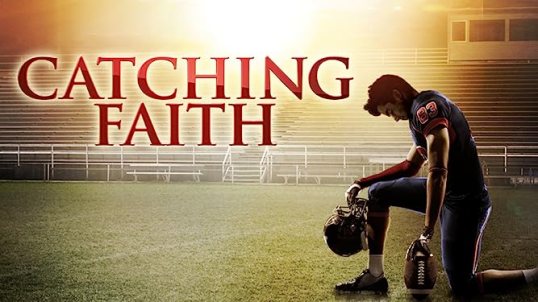
October Positivity: Catching Faith (dir by John K.D. Graham)


The 2015 film, Catching Faith, presents us with the following scenario.

You are the mother of a 17 year-old football star.  Your son is the reason why his school’s team is going to make the playoffs.  As a result, he’s the most popular kid in school.  In fact, he’s the most popular kid in the state.  Everyone loves him and you know what?  He’s actually handling it all pretty well.  He still works hard.  He still goes to practice.  He looks after his sister.  He treats you and your husband with respect.  Are his grades great?  Not really but is he passing and he’s certainly doing well enough that he’ll probably be able to get a football scholarship.

But then, you find out that your 17 year-old son went to a party after a game.  And he had a few beers, just as everyone else on the team did.  The police showed up but your son was allowed to leave.  In other words, he didn’t get caught.  He was also smart enough not to try to drive himself home in his intoxicated condition.  When, after a good deal of hesitation on your part, you ask him if he was drinking that night, he doesn’t lie to you.  He admits that he was drinking, as was everyone else on the team.

Do you sit down and have a talk with him, one in which you encourage him not to drink (especially since he’s not 21) while also making it clear that he can still call you if he ever does find himself in a situation where he has had too much?  Do you maybe ground him for a week or two, just so he understands that there are consequences for breaking the rules?

Or….

Do you whip out the rules and regulations book that he was given at the start of the semester and announce that if he doesn’t turn himself into the coach, you’ll do it yourself?  Keep in mind that, by doing this, you’ll be guaranteeing that your son doesn’t play in another regular game for the rest of the season.  You’ll be ruining his chance to impress the college scouts.  The football team will lose its best player and probably won’t win anymore games, which means that the other members of the team will probably lose whatever chance they had to get a football scholarship.  And, of course, your son will become a pariah at the time in his life when it’s really important to have friends?

If you are Alexa (Lorena Seguara York) and John Taylor (Dariush Moslemi), you go with the second option.  You explain that, as Christians, you’re not allowed to lie and you force your son, Beau (Garrett Westton), to confess to his coach (comedian Bill Engvall) that he had one or two beers at a party.  And then, of course, if your Alexa and John, you spend the rest of the school year wondering the entire town now hates you.

Of course, Beau is not the only member of the Taylor family who has to make a choice about being honest.  Alexa is torn over whether or not to tell John that she exchanged the necklace that he gave her for a better one.  Meanwhile, daughter Ravyn (Bethany Peterson) has to decide whether or not to cheat on her Latin exam so that she can be valedictorian and go to MIT.

Seriously, this is a dilemma?  Look, the world’s not going to end if you cheat on a Latin exam.  Who would pick their integrity over attending MIT?  And, for that matter, men are clueless when it comes to jewelry.  I kind of doubt John would have ever noticed that Alexa’s necklace was different from the one that he gave her.

I guess my point here is that this family is obsessed with creating drama where there really doesn’t need to be any.  Just be glad that your son didn’t go to jail and that he’s going to get a football scholarship.  (Seriously, do you want to pay for his college?)  And be happy your daughter is going to MIT.  And be happy with the pretty new necklace!

I wasn’t surprised to discover that it was set in Wisconsin because I can tell you right now that none of this would have ever happened in Texas.  A high school football player getting caught drinking?  That’s just a typical weeknight down here.  This was a deeply silly movie.  Parents, please don’t humiliate your 17 year-olds like this.