Some Things I Liked In 2018


Since I don’t feel comfortable doing a traditional top ten list, I’m just going to list a few things that I liked in 2018.

When it comes to last year’s movies, my two favorite films were both comic book adaptations.  Black Panther and Spider-Man: Into The Spider-Verse both redefined what we traditionally expect from the comic book genre and they worked as both entertainment and as something a little bit deeper.

Among the other films I liked this year, Mission Impossible — Fallout reminded us of just how exciting a good action film can be while Game Night was hands down the best comedy of the year.  Deadpool 2 proved itself to be a worthy sequel while Won’t You Be My Neighbor?, Three Identical Strangers, Free Solo, and Shirkers made this a great year for documentaries.

David Peisner’s Homey Don’t Play That was a fascinating book about the history of In Living Color, examining both the show’s tumultuous history and how it continues to be relevant today.  Also worth reading: Thanks A Lot, Mr. Kibblewhite by Roger Daltrey and Cult City by Daniel J. Flynn.

In a year that seemed to be dominated by adaptations of comic books, it seems appropriate that one of the best comics was about the history of the medium.  Written by Fred Van Lente and illustrated by Ryan Dunlavey and Adam Guzowski, Comics For All was the second installment in their Comic Book History of Comics.  No matter how much you think you may know about comic history, you’ll learn something new from Comics For All.

When it comes to the year’s video games, I’m torn.  Red Dead Redemption II is a totally immersive gaming experience that challenges much of what we’ve come to expect from video games.  On the other hand, Marvel’s Spider-Man is one of the most purely enjoyable games that I’ve ever played.  If I had to pick a best, I’d go with Red Dead Redemption but Spider-Man is the game that I’ll probably end up replaying a month from now.

On television, I continued to enjoy and occasionally be baffled by HBO’s Westworld.  I also enjoyed playing around with Netflix’s Black Mirror: Bandersnatch, an interactive program that introduces you to a likable game designer and then give you the chance to totally mess up his life.

In the States, BBC America televised the the animated restoration of the “lost” Doctor Who serial, Shada.  As an episode of Tom Baker-era Doctor Who, Shada was just as disappointing as many have warned that it would be, an overextended mix of inside jokes about Cambridge.  However, as a piece of Doctor Who history, it was priceless.

Finally, as far as the year in music is concerned, I recommend The Who’s fifth studio album, Who’s Next.  I know Who’s Next came out in 1971 but good music is timeless.

Book Review: Thanks A Lot Mr. Kibblewhite: My Story by Roger Daltrey


On March 1st, 1959, a 15 year-old student at Acton County Grammar School brought an air gun to school.  Years later, the student would write about how he and a friend were “in the changing room, mucking about after football,” when someone fired the gun.  The pellet ricocheted off a wall and struck another student in the eye.

The student who brought the air gun was taken down to see Mr. Kibblewhite, the headmaster.  Mr. Kibblewhite announced, “We can’t control you, Daltrey.  You’re out.”  As the now-expelled student left the office, Mr. Kibblewhite added, “You’ll never make anything out of your life, Daltrey.”

Roger Daltrey, of course, went on to become the lead singer of The Who and is considered to be the epitome of a charismatic rock and roll frontman.  As for Mr. Kibblewhite, he went on to lend his name to the title of Daltrey’s autobiography.

As befits someone who, has a reputation for being one of the most down-to-Earth people in rock and roll, Thanks A Lot, Mr. Kibblewhite is a short and straight-forward account of Roger Daltrey’s life, from his youth in war-scarred London to his time as the frontman for one of the loudest bands in rock and roll to his current life as one of rock’s elder statesmen.  If it’s not as salacious as some other rock-and-roll tell-alls, that’s because Daltrey never gave into the excessive behavior that proved to be the downfall of many of his contemporaries (including, of course, his former Who bandmates, Keith Moon and Jon Entwistle).  As Daltrey tells it, he avoided hard drugs to such an extent that he was briefly kicked out of the band for flushing Moon’s stash of pills.

As is true with The Who’s best albums, the heart of Thanks A Lot, Mr. Kibblewhite is found in Daltrey’s close but often difficult collaboration with Pete Townshend.  Even after performing with Townshend for over fifty years, Daltrey still seems to be struggling with how he feels about his legendary bandmate.  Daltrey’s admiration for Townshend’s talent is obvious but he also writes that Townshend could be like “a scorpion with a good heart.”  Daltrey recounts not only the numerous times that Townshend was dismissive of the rest of the band in the press but he also tells the full story of the infamous fist fight in which Daltrey knocked Townshend out with one punch.  And yet, when Townshend is falsely accused of downloading child pornography, Daltrey is just as passionate about explaining how he knew his bandmate was innocent.

Daltrey also writes extensively about Keith Moon.  In Daltrey’s telling, Moon comes across as a unique, one-of-a-kind talent who was ultimately destroyed by his need to keep up with his own wild reputation.  Daltrey is open about often becoming exasperated with Moon but he also writes that, for him, The Who ceased to be The Who after Moon died.  Without Moon, Daltrey writes that The Who’s anthems were “now just songs.”

Thanks A Lot, Mr. Kibblewhite is a short book and Daltrey is such a straight-forward and no frills storyteller that it makes for good airport and airplane reading.  For fans of The Who, this book is essential.

Horror Book Review: Night of the Living Dead: Behind The Scenes of the Most Terrifying Zombie Movie Ever


Where would modern horror be without George Romero’s 1968 masterpiece, Night of the Living Dead?

Well, it’s hard to say.  Perhaps another film would have come along and influenced thousands of future directors and writers.  Maybe another film would have popularized zombies or mixed social commentary with horror.  Perhaps another film would have popularized the concept of body horror.  You never know.

Still, it’s hard not to think that modern horror would be a lot different if not for Romero’s low-budget, independent film.  So many movies have been influenced by Romero’s Dead films that it’s difficult to keep track of them all.  Even if you could discount the influence of Romero, what about the Living Dead films that were later made by John Russo?  Even if they don’t get as much attention as Romero’s films, their combination of comedy and horror continues to be influential to this day.

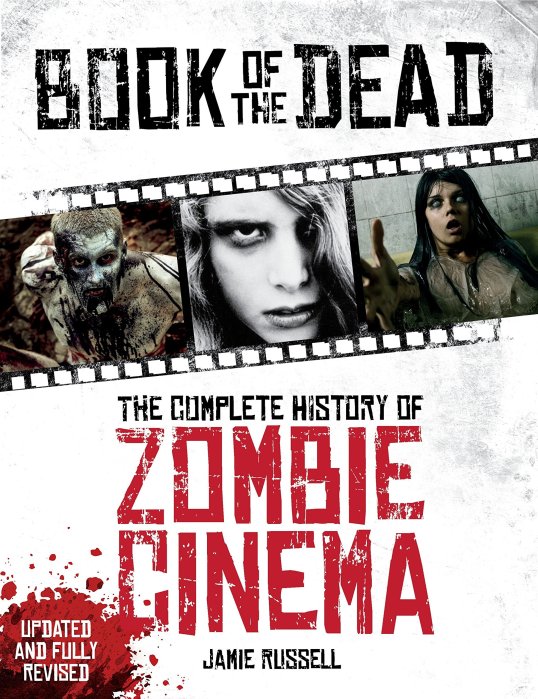
The 2010 book, Night of the Living Dead: Behind The Scenes Of The Most Terrifying Zombie Movie Ever, not only tells the behind-the-scenes story of Night of the Living Dead but it also examines the film’s lasting influence.  While the majority of the book is taken up with the production and reception of Night, it also discusses Romero’s subsequent Dead films, Russo’s Living Dead films, and all of the unofficial sequels and remakes as well.  Author Joe Kane interviews not only several of the people who worked on Romero’s film but also filmmakers like Danny Boyle, who discuss how Romero’s vision influenced their own.

Finally, the book also contains the original script of Night of the Living Dead!  Written by John Russo, the script makes for an interesting read.  Night of the Living Dead is often described as being some sort of “accidental” masterpiece but the script reveals that many of the film’s themes were there from the beginning.  At the same time, it also makes you appreciate not only the directorial skill of George Romero but also the performances of Judith O’Dea, Duane C. Jones, and even Karl Hardmann.  (If you thought Harry was bad in Night, reading the script will show you just how much Hardmann actually humanized an inherently unlikable character.)

This book is must have for horror fans like you and me.

Book Review: Room to Dream by David Lynch and Kristine McKenna


It’s been a few months since I read Room to Dream and I’m still thinking about it.  It’s definitely one of the most fascinating and frustrating Hollywood memoirs that I’ve ever read.

It’s fascinating because the book is not only about David Lynch but it’s also by him.  Lynch, in his own words, tells us about his childhood, his time as an art student, his struggle to complete Eraserhead, and all the rest.  He tells us about directing some of the greatest British thespians of all time in The Elephant Man and also shares with us the frustrations of directing Dune.  He tells us about Twin Peaks and how Mulholland Drive went from being a rejected pilot to being an award-winning film.

All of the familiar stories are here.  He tells us about the time when he was a child and he saw a naked and bloodied woman stumbling down the street.  (This image would later reappear in Blue Velvet.)  We hear about how he was essentially homeless while directing Eraserhead and how, during the casting of Blue Velvet, Dennis Hopper called him up and announced that he was Frank Booth.  Not surprisingly, Lynch writes extensively about the importance of meditation in both his life and his art.

At the same time, there’s also a lot of new stuff in this book.  Did you ever want to know who Lynch believes to have been behind the Kennedy assassination?  Well, it’s right there in the first chapter.  Want to know how Lynch actually feels about using drugs as a creative aide?  It’s in there.  Did you know that among the films that David Lynch has been offered (and turned down) were Return of the Jedi, American Beauty, Tender Mercies, and The Ring?  You do now.  He writes about his occasionally difficult but very real friendship with actor Jack Nance.  He writes about some of the legendary actors and producers that he’s met and what’s interesting is that he rarely has a bad word to say about anyone.  Even when he writes about how difficult Anthony Hopkins was on the set of the The Elephant Man, Lynch still allows that Hopkins may have just been dealing with stuff in his own life.  Lynch comes across as being as generous, artistic, and eccentric as you would hope that he would.

Clocking in at over 600 pages, the book has an interesting format.  The book is divided into sections, each one dealing with a different period of Lynch’s life.  Each section opens with Kristine McKenna discussing what was happening in Lynch’s life at the time and interviewing Lynch’s friends and collaborators.  It’s only after McKenna has given us the facts of what was going on in Lynch’s life that Lynch then gives us his interpretation and recollections of the facts.  It makes for a challenging but often interesting read.  One thing that immediately becomes clear is that Lynch is far more comfortable talking about his art than talking about his relationships with other people.  Lynch comes across as being the epitome of the artist who spend almost of all of his time in his own head.  Room to Dream gives us a chance to see the world through Lynch’s eyes and he tends to remember most of the events of his life as if they were just another atmospheric scene in one of his movies.

Lynch discusses his work with such enthusiasm that it’s impossible not to get carried away with him.  At that same time, this is not the book to read if you’re expecting Lynch to explain what’s going on underneath the surface of some of his more surrealistic films.  If you’re expecting Lynch to explain why Bill Pullman turns into Balthazar Getty in Lost Highway, you’ll be disappointed.  If you’re expecting Lynch to explain what’s real and what isn’t in Eraserhead, Mulholland Drive, and Inland Empire, it’s not going to happen.  And if you’re expecting to understand the finale of Twin Peaks: The Return after reading Room to Dream, you’re out of luck.  If anything, Lynch seems like even more of an enigma, albeit an incredibly likable enigma, after you read Room To Dream than before.

And yes, it can be frustrating but you know what?  That’s okay.  In fact, it seems appropriate.  The brilliance of David Lynch lies in the mystery.  When I first heard about Room to Dream, I feared that Lynch would reveal too much and the mystery would be lost.  Instead, it’s even more fascinating than ever.

Halloween Havoc! Book Extra: DARK DETECTIVES (Edited by Stephen Jones; Titan Books paperback 2015)


gary loggins's avatarcracked rear viewer


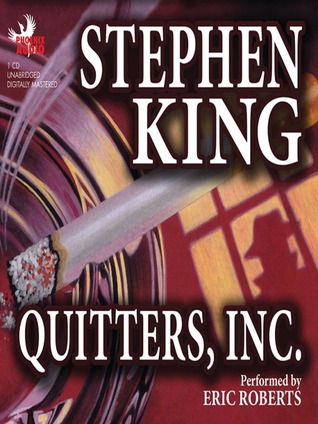
Back in September, I was browsing at the local Barnes & Noble (as I frequently do, given the lack of independent bookstores around here) looking for something to review this Halloween season. I’d just finished with Stephen King’s REVIVAL (Pocket Books paperback, 2017), and while it’s good, everybody does King this time of year, and I wanted something different. I wandered through the fantasy section, and waaaay up on the top shelf I spotted a title that caught my interest. DARK DETECTIVES: An Anthology of Supernatural Mysteries, combining two of my favorite genres, horror and detective fiction! Curiosity piqued, I grabbed the book and bought it (along with the great James Lee Burke’s latest novel, ROBICHEAUX).

DARK DETECTIVES, first published as a limited edition in 1999, features ten short stories, some old, some written especially for the anthology, by authors I’m familiar with (and I assume you are too, if…

View original post 412 more words

Book Review: Eaten Alive, edited by Jay Slater


If you were to ask me to recommend one book to someone who is looking for an introduction to the world of Italian horror, Eaten Alive is the book that I would recommend.

That’s largely because this book was my introduction.  Way back in 2006, I came across a copy at Recycled Books in Denton, Texas and I bought it.  I bought it because, at the time, I was already into horror movies.  However, after reading the reviews and the essays in this book, I discovered that I wanted to learn much more about Italian horror.  Outside of Suspiria and a few giallos like Blade in The Dark, the first Italian horror movies that I specifically tracked down and watched were the movies that I read about in this book.  If not for Eaten Alive, I would never have seen the wonderfully macabre and disturbing Beyond the Darkness.  This was book was also my first real exposure to Lucio Fulci.  If not for this book, I never would have seen Zombi 2.  I never would have discovered the Beyond trilogy.

In fact, considering that Arleigh and I first bonded over Italian horror, it’s doubtful that I would be writing for this site if I had not made that decision to buy Eaten Alive.

As for the book itself, it’s a comprehensive overview of Italian cannibal and zombie cinema.  Along with containing information about every Italian cannibal and zombie film released in the 20th Century, it also features interviews with stars like Ian McCullough, Catriona MacColl, and GIovanni Lombardo Radice.  (Radice even reviews one of the films himself.)  The majority of the films are reviewed by Jay Slater but there are also contributions from writers like Ramsey Campbell and Lloyd Kaufman.  (In fact, Kaufman writes a rather stirring defense of one of the more controversial films to be found in Eaten Alive, Cannibal Holocaust.  Campbell, meanwhile, thoroughly destroys Nights of Terror.)

Seriously, if you’re interested in learning more about Italian horror or if you’re already a fan, this book is a must!

Book Review: The Beast Within by Edward Levy


Way back at the end of August, in anticipation of the TSL’s Horrorthon, I went down to my local Half-Price Books and I explored their collection of old horror paperbacks.  Among the books that I pulled off the shelf was the 1981 horror novel, The Beast Within by Edward Levy.

The book opens, in the 1920s, on the Arkansas farm of Henry Scruggs.  Henry is a cruel religious fanatic, one who views fornication as being such a sin that he refuses to even have sex with much younger wife, Sarah.  (Sarah, for her part, was practically sold to Henry by her father.)  One day, an Englishman named Connors shows up at the farm.  He’s a traveling bible salesman who specializes in seducing farm girls.  When he attempts to do just that to Sarah, they both end up getting caught by Henry.  Henry sets his wife on fire and then chains up Connors in the basement.  That’s where Connors spends the next 20 years, while Henry prays for his soul.

By the time Henry dies and Connors manages to escape, Connors is no longer human.  He’s been turned into a savage beast, who lives in the woods and eats anything that he comes across.  The beast eventually attempts to catch a snake and ends up getting a poisonous bite as a result.  However, before it dies, the Beast rapes Carolyn McCleary.

When Carolyn subsequently gives birth to a son named Michael, both she and her husband, Eli, convince themselves that Michael is Eli’s child, even though there’s no physical resemblance.  As a child, Michael has a terrible temper and is sometimes violent.  He has terrible dreams and sometimes wakes up covered in the blood of other animals.  After Eli and Carolyn are forced to resort to extreme measures to control Michael’s impulses, it seems as if Michael has recovered.  He grows up to be a relatively normal boy.

But then puberty hits….

The Beast Within is a grim, dark, and occasionally depressing little book.  It’s also compulsively readable.  Though many of the scenes between Henry, Sarah, and Conners verge a bit too much towards the cartoonish side, the book picks up once Henry’s out of the way and the focus shifts to the McClearys.  You find yourself hoping the best for Eli, Carolyn, and Michael, even though you know it’s doubtful that this story is going to have a happy ending.  The Best Within is short, sordid, pulpy as can be, and undeniably effective.

Night Surf, Review By Case Wright


NS

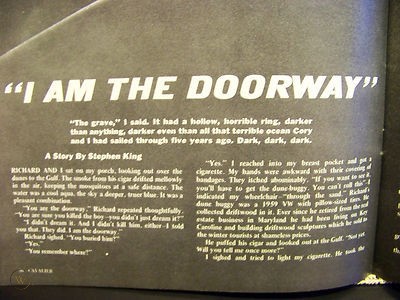
Where do stories come from? Not important or interesting.  Why are some stories shot out like a cannonball from an artist’s brain in a matter of days like Kerouac’s “On The Road” and even written on a scroll; whereas, some stories take a decade or more of developing until they are born like Stephen King’s The Stand?  Very Important and Very Interesting!  I will not be discussing King’s opus The Stand, but rather how it evolved from Night Surf.

Night Surf was written for the University of Maine literary magazine in 1969 when King was twenty-two.   Night Surf introduces us to the plague that kills off mankind and how people can be pulled to darkness when no one is looking. The disease is even called “A6” just as it was called in The Stand, but The Stand didn’t get published until 1978.  Why did it take so long for The Stand to incubate and his other stories seem to shoot from him like they are on a sluice?

I see this dichotomy in my own writing.  For some stories, I’ll get pieces of dialogue and scenes in my head that kick around for years, but I don’t know how they fit together like a jigsaw puzzle with too many smooth edges.  I can’t speak for Stephen King, but for me the longer developing stories occur when I’m picking at something personal like an emotional wound that’s been puffed out by pus, but not yet ready to drain.  I guess I just want to hold onto the pain; maybe, King does too?

Night Surf takes place on the New England coastline when summer’s ending, but it’s not just the leaves dying on the trees; humanity is blowing out from a massive viral extinction event.  The disease is called A6- a superflu.  In The Stand, he refers to the virus also as Tube Neck and Captain Trips.  The world is not quite dead yet, but it’s getting there.  The story is narrated by Bernie who is spending humanity’s last days at a beach town.  At first, the group believes that they are immune from the disease and demonstrate their superior immunity with the most primitive act of all: Human Sacrifice.  A man who’s dying from the flu comes to their town and, instead of caring for him and helping him die, they burn him to death in a bonfire.

Why burn him?  They describe it almost like a sacrifice to the beach itself.  The act seemed to me to be more like a line in the stand between the dying world and themselves.  The mere mortals are simply cord wood and can be used for fuel.  Their perception as the kings of humanity is vindicated by their health because they are immune and the rest of humanity perished.  It harkens to the idea of the Puritans where the Select were touched by God and were guaranteed success in life and VIP treatment on the ethereal plane.  Of course, the Puritans would balk at using lesser people as a duraflame.

Soon after burning the flu victim alive, Bernie realizes that one of his comrades has A6 symptoms and will soon die, indicating all of them might expire soon.  The story forces us to look at what allows us to be moral.  Are we only good because society will punish us if we are bad?  It could be argued that they looked at the immolation as a last hurrah, but I think that is wrong because at the time in the story, they believed they were immune.  If their friend had developed symptoms before the unlucky traveler arrived, would they see him as their brother or would they have burned them both to adamantly declare their superiority?

The theme of people being seduced to darkness is throughout The Stand, but in this story, they don’t get the devil made me do it excuse; the group murdered because they could and felt like doing it.  After the immolation, we return to Bernie’s backstory, humanizing him even more.  It seems King is saying that this horrendous act was just another act in a number of countless acts that Bernie did from birth to his upcoming demise.  Maybe doing evil is just as common as getting the paper? I hope not, but as the great philosopher Bobby Dylan said, It’s not dark yet, but it’s getting there.

This story is more relevant to me today than when I first read it years ago.  What makes it more difficult for me is that the people in the story are just so normal.  I hope none of my readers will ever have to do this, but I’ve looked right into the face of evil once and the man looked like he could have been a cousin.  When I remember the encounter, it still chills me to the bone.  I met a Bernie once; maybe, you have too, but you didn’t know it.

The Lawnmower Man, Review by Case Wright


LMW

The “Lawnmower Man” by Stephen King really makes me understand the power of peyote.  Stephen King has is very open about his drug and alcohol addiction and in the 1970s even regular folks were dabbling in the Yayo.  In fact, he has said that he doesn’t remember writing The Shining.  In those days, he would use cotton balls up his nose from the constant nose bleeds from his cocaine use.  The Lawnmower Man  has to be seen in this context.

Harold Parkette is a typical suburban man.  He’s lawn obsessed and needs to make it purdy.

Sidenote: This story takes me back to me youth.  In my football and track days, I would mow lawns and split wood to make extra cash.  I would never wear a shirt because I would get hot.  I never understood until later why only the wives would call me to do the yard work, would make really odd excuses to give me extra lemonade, and cash. A lot of times they’d just sit on their porch, watch, and occasionally wave. 

The Lawnmower Man is not that kind of story.  Harold gets an odd landscaper who starts working and then Harold takes a nap.  When Harold wakes, he sees that the lawnmower is moving on its own and the lawnmower man is eating the clippings.  The image that stuck with me the most is that grass was growing on the lawnmower man’s teeth- yuck. The Lawnmower Man reveals himself to be the Greek God Pan and proceeds to eat Harold.

This story is just plain weird.  Pan was into wine and sex, not landscaping.  Also, I get the economy can be tough, but if you’re a god wouldn’t you do better than a solo landscaping biz? All around, I’m very confused.

Book Review: Crystal Lake Memories: The Complete History of Friday the 13th by Peter M. Bracke


A few years ago, when I reviewed the entire Friday the 13th film franchise for this site, one of the main resources that I used in my research was the 2006 book, Crystal Lake Memories: The Complete History of Friday the 13th.

As you can probably guess from the title, the book is a nearly complete history of the Friday the 13th franchise.  (I say nearly complete because the book was published to coincide with the release of Freddy vs. Jason so there’s no information about the later reboot.  That’s okay, though, because the reboot sucks and deserves to be forgotten.)  What sets this book apart is that it’s an oral history so you’re learning about the history of the Friday the 13th films from the people who were actually involved.

It makes for compelling and interesting reading, providing a portrait not just of the franchise but also of what it was like to be involved in the world of low-budget, genre film making.  Friday the 13th may have started out as an independent American giallo just to then become a studio slasher franchise but the one thing that remained consistent was that, no matter how much money the films made, they weren’t ever given much respect.  One of the recurring themes in the book is that the actors who were cast in the films were often happy for the work but it was rare that getting killed in a Friday the 13th film ever led to stardom.  (Kevin Bacon, of course, is the exception to that rule.  Though Bacon isn’t interviewed in the book, everyone who worked on the first film seems to agree that he was fun to work with.)  Some of the actors interviewed are just happy to have been a part of an iconic franchise.  Some of them display a commendable sense of humor while other seem rather annoyed to know that they’ll be forever associated with Friday the 13th.  Some, like New Beginning‘s Jerry Pavlon, worry about the franchise’s subtext while actress Barbara Howard jokes that she calls her annual Final Chapter residual check her “blood money.”

Another recurring theme in Crystal Lake Memories is that of the bitter screenwriter.  For the most part, the people assigned to write the scripts for these films come across as being a uniformly bitter lot.  It’s actually understandable, as the majority of them attempted to add a new twist to the franchise just to be told that the studio just wanted more scenes of Jason killing camp counselors.  That gets at a larger frustration shared by almost everyone interviewed.  How do you add your own personal touch to a set of films that are specifically designed to be as impersonal as possible?  That’s the question that everyone involved with the franchise had to answer for themselves and it makes for an interesting and relatable read.

Perhaps the most interesting part of the book deals with the lengthy development of the Freddy vs. Jason film.  We’re told that one of the executives involved with the film believed that, if she added an environmental subtext to the story, Freddy vs. Jason would be the first slasher film to win an Academy Award.  As for the films themselves, it sounds like Friday The 13th: A New Beginning had the most out-of-control set while Friday the 13th Part 2 was the fun set.  The set I would have wanted to avoid would have been Friday the 13th 3D, where everyone was apparently too stressed out over the special effects to actually have any fun.

This book is a must not just for Friday the 13th fans but for movie lovers in general.