Marvel is already making big waves on the first day of the San Diego Comic Con. Building on the successes of Daredevil and Jessica Jones, the company revealed some new series in their current deal with Netflix.
New York has yet another hero as Luke Cage gets a show of his own. Introduced into the Marvel Cinematic Universe by way of Jessica Jones, Cage (Mike Coulter) appears to be up against quite a bit, though from the trailer, it’s nothing a car door can’t handle. It also looks like Mahershala Ali (House of Cards) is on board, possibly as a villain.
Though I only know of him through the Ultimate Spider-Man animated series, long time Marvel fans will be pleased to see Iron Fist in the line up. Having finished his run in Game of Thrones, actor Finn Jones has moved on to play Danny Rand, a man who discovers the power of Kung Fu and awesome Chi control. Marvel historians will also note that Iron Fist and Luke Cage have often worked together, which brings us to the biggest news of the day.
Marvel’s The Defenders brings together Iron Fist, Luke Cage, Jessica Jones and Daredevil (who will undoubtedly have Season 3 on the way) in their own team up. I’m curious to see how this turns out, and how much of their combined tale filters into their individual stories (or vice versa). It feels similar to the Avengers, though on a smaller scale.
Day 2 of the San Diego Comic Con continues today. As new information pours in, we’ll be sure to share. Enjoy.
A guilty pleasure is a film that we might enjoy, but isn’t as loved by others overall. It’s the kind of film that you can watch on any given day, but to speak of it may cause raised eyebrows among your peers. Everyone has at least one film or two that they treasure in this way.
My Guilty Pleasure pick is 1981’s Wolfen, directed by Michael Wadleigh. Loosely based off the novel by Whitley Strieber, the film focuses on two homicide investigators who learn that the case they’re working may actually be caused by animal attacks. Often mistaken as a werewolf film, I really wouldn’t group Wolfen into that category. It’s supernatural in some ways, yes, but you won’t find any serious werewolf activity in it. Surprisingly enough, Wolfen was released in the theatre just a few months after Joe Dante’s The Howling. This makes me wonder how audiences took to Wolfen after seeing all of the make-up effects in Dante’s work. From an effects standpoint, Wolfen’s big claim to fame is the negative photography used to showcase the animals’ point of view. I can’t imagine it was incredibly amazing when comparing the two, but on it’s own, it’s not bad. It’s one of the few movies I’d like to see get a remake, if only to have the story match Strieber’s book better.
When a millionaire land developer and his wife are found brutally murdered in Battery Park, Detective Dewey Wilson is brought on to investigate. Albert Finney (Miller’s Crossing, The Bourne Ultimatum, Skyfall) easily carries the film as Wilson, feeling a lot like the owner of your favorite corner deli. Wilson’s detective work is subtle in the film, and Finney plays to that with a relaxed alertness. He comes across as calm, questioning, but you get the sense that if it came to blows, he’d be ready to react. I suppose most detectives are that way. When the murder is believed to be a possible terrorist attack, a Security Agency brings in a psychological expert named Rebecca Neff, played by Diane Venora (Heat, William Shakespeare’s Romeo + Juliet). Wolfen was Venora’s first film and she’s good in this, though the screenplay is written in a way where it’s more Dewey’s tale to tell. The book did Neff’s character more justice than the movie, overall. Rounding out the casting is Gregory Hines (Running Scared, The Cotton Club – also with Venora) as a forensics expert, Edward James Olmos (Miami Vice, Battlestar Galactica) as a Native American worker who may know more than he says and Tom Noonan (Manhunter, The Last Action Hero, F/X – once again, with Diane Venora) as a Zoo Worker who’s just a little to into wolves in general. That’s just my opinion, though Noonan’s been known to play creepy very well. The performances here are all pretty good. No one is really out of place here, as far as I could tell.
If Wolfen suffers from any major problem, it’s in the writing. In adapting the novel, they had the chance to really bring the terror from the novel on screen. In the book, we’re given an understanding of what the Wolfen are – creatures older, faster and more terrifying than your typical canine. They came complete with their own way of communicating with one another, and Strieber’s novel even referenced his other story about Vampires, The Hunger. The final standoff of the book was a fight similar to From Dusk Till Dawn, with the hope that our heroes could maybe hold off what was coming. The movie decided to go a different route. Not terrible in any way, but it could have been really good if they stayed on track.
I could be off here, but I believe the film elected to try to make the story more relevant for its time by circling the murder around terrorism and using the Security Agency. The Security Agency has so little to do with the film outside of bringing Neff on the case, it’s incredible. About every 20 minutes, the film cuts back to this crew of personnel at their computers, watching footage of attacks (that have little to do with the original victim) in an attempt to piece together why this death happened. Meanwhile, Wilson walks into bar and gets the whole solution handed to him in a short story over a beer. I wonder if Wadleigh (who co-wrote the script) was trying to say that with all the technology at their disposal, all it really took to solve a crime was just regular legwork. To quote Olmos’ character “It’s the 20th Century. We got it all figured out.” That’s just my speculation on that.
From a Cinematography viewpoint, Wolfen has some impressive scenes, particularly those of the Manhattan landscape. For a city that doesn’t sleep, the streets as they’re filmed here are barren, with lots of shadows. One scene in particular has Finney and Olmos’ characters talking on top of a bridge, and I have to wonder not only how they were able to get that shot, but how the actors maintained their composure. One wrong slip and either of them could have fell. I also love seeing New York City in the early 80’s, where most of the Bronx and Brooklyn looked like warzones. Both Wolfen and Nighthawks (also released in the same year) are great examples of how bad the city really was during that time.
Wolfen was also one of James Horner’s first scores. Listening to it, you can hear elements of what you’d find in Aliens, Star Trek II: The Wrath of Khan and his other pieces.
Overall, Wolfen is a good film if you find yourself running into it late at night and there’s nothing else to catch. I watch it on purpose, but that’s just me. We all have our tastes. If at all possible, consider reading the novel as well.
Without giving away the film, I haven’t much to say about Disney’s The Jungle Book other than I enjoyed it. Granted, it’s one that’s been done a number of times.
When the trailer for Disney’s The Jungle Book was released, I was happy for it. It was good to see Jon Favreau back to directing bigger productions. After the misstep of Cowboys & Aliens and the success of Chef , it seems like he’s really back on track in a big way. That was my reason for seeing the film this past weekend.
Note that I’ve never seen the Disney Animated Version of The Jungle Book. I can’t really make any comparisons, other than the music, having listened to songs as a kid.
The Jungle Book is the story of Mowgli (newcomer Neel Sethi), a young boy who lives in the jungle and is raised by both a pack of wolves (lead by Lupita Nyong’o and Giancarlo Esposito) & a Panther named Bagheera (Sir Ben Kingsley). Evil rears its ugly head in the form of a Tiger named Shere Khan (Idris Elba), who wishes to have Mowgli killed because he knows how dangerous he can become once grown. Can the pack protect him, or will have have to find a way to save himself? That is pretty much what you need to know about the plot. I felt the movie had a number of comparisons to the Lion King (and even one reference to Return of the Jedi). Still, it manages to move at a good pace. Unlike Batman v. Superman: Dawn of Justice, I didn’t find myself rolling my eyes or counting the minutes until a bathroom break appeared.
Casting in the Jungle Book is pretty good. There’s hardly a cast member out of place, though not everyone is given a great deal of screen time. It is Mowgli’s story, after all. Idris Elba is menacing as Shere Khan. Scarlett Johannson (Chef, Iron Man 2)plays Kaa the Snake and has a song on the score. Bill Murray’s Baloo is cute and cuddly, but the biggest casting surprise has to be Christopher Walken as Big Louie. The film even manages to contain a few musical numbers, though I don’t know if it could be classified as a musical. Those moments are few and far between.
Visually, The Jungle Book is downright beautiful. The animals are rendered so well (in some cases) that one might suspect they had actual animals on hand for a reference or at least some on set. It’s still early, but this is a movie I’d tuck away until the next awards season, at least where the Visual Effects are concerned. The 3-D version of the film has some great moments, but I wouldn’t consider it a requirement to actually see it in this format.
Some elements early in the film may be frightening for the youngest of viewers. Tigers are meant to be scary, so Shere Khan definitely worked for me. The same goes with Kaa and with Louie. Overall, The Jungle Book is set to be a major hit and it’s nice to see Favreau with a directorial win.
Having become the Dragon Warrior and the Champion of the Valley of Peace on many occasions, Po (Jack Black) has reached a point where its time for him to train others. All of this becomes complicated when Kai (J.K. Simmons), a former enemy of Master Oogway (Randall Duk Kim) returns to the Valley to capture the Chi of the new Dragon Warrior and anyone else that stands in his way.
The Legend of Korra geek in me hears the character of Tenzin whenever Simmons speaks in this film, only it’s Evil Tenzin vs. The Dragon Warrior. That alone was awesome.
Picking right up from Kung Fu Panda 2, Po is reunited with his birth father (Bryan Cranston), and discovers there are also other Pandas in the world. This, of course, causes a bit of tension for Po’s Goose Dad (James Hong) who raised him up until now. Can Po find a way to stop Kai? The theme of this film seems to be dealing with self discovery (as did the other films), but this focuses more on what we consider our Identity. Are we the role we take on from day to day at work or the role we have at home, or even a little of both? There’s also a nice family element to it as Po discovers what Panda life is like and deals with his Dads. Really young audiences may not exactly catch on to the theme, but there’s enough action and playful moments to keep them occupied.
On a visual level, the animation is beautiful. If you get a chance to see it in 3D, the Spirit Realm is a treat, with rocks and buildings floating around. The action scenes also move in a comic strip format, with the screen split in different ways to catch different elements. If you’re quick enough, you can catch it all. It can be jarring to anyone not used to it, I’d imagine. The Furious Five don’t have too much screen time in this one, save for Angelina Jolie’s Tigress, though it’s cute when you realize that some of the panda children in the village are played by the Jolie-Pitt kids. That was a nice discovery in the credits.
Musically, just like The Dark Knight Rises, Hans Zimmer takes what was a dual scoring effort (at least in the 2nd film) and makes it his. Though he’s assisted by Lorne Balfe (13 Hours: The Secret Soldiers of Benghazi), and drummer Sheila E. (Who worked with him on the Man of Steel score), it’s all Zimmer, really. Kai is given a nice theme to work with, one I can only describe as “Jazz Badass with Kung-Fu Swagger” and I enjoyed the music for the Panda village.
The only problem I had with Kung Fu Panda 3 was that it didn’t feel particularly epic in scope for me. In the first film, Tai Lung wanted to harness the power of the Dragon Scroll. In the second, the Peacock Shen brought cannons to decimate the Valley. This one was more personal and I enjoyed that, but it also felt like it could have been one of the Legends of Awesomeness episodes on Nickelodeon. It moved that quickly. Though it clocks in at an hour and 35 minutes — the same as the other films — it really whizzed by. It’s not a terrible thing at all, really, but I think I wanted something a little more.
Overall, Kung Fu Panda is a fun treat for the kids. While I didn’t go blind out of exposure to sheer awesomeness this time around, it gave me some inner peace and smiles.
Though three years had passed since A New Hope’s release, it was never truly gone. In the time between A New Hope and The Empire Strikes Back, there was a huge jump in Science Fiction. Films like Alien, Star Trek: The Motion Picture andThe Black Hole jumped on the sci-fi wave and kept audiences busy. If you didn’t want to go to the movies, you could always watch the original Battlestar Galactica.
My father was always a stickler for presentation when it came to movies. It had to be the biggest screen and the best sound available, if possible. My parents took my brother and I on what felt like one of the longest road trips to see the movie. Like Close Encounters of the Third Kind, some films were presented in a 70MM format. In the early 80’s, saying “Panavision” was like saying “IMAX” today. The only problem with this was that Dad decided we should sit like 3 rows from the screen. It remains one of my favorite Star Wars related experiences.
There was a bit of a scare before the film was made. Sometime before production, Mark Hamill was involved in a car accident that broke his nose and part of his cheek. The reconstructive surgery required part of his ear to fix his nose, and anyone watching the film could tell that he looked pretty different from A New Hope. It was like watching Nicole Kidman in Moulin Rouge and then following that with The Stepford Wives. Still, the accident didn’t get in the way of production and it’s believed that Hamill’s damaged look may have actually helped add some authenticity to the Wampa scene, where he’s attacked by a Yeti-looking creature.
If A New Hope was the feel good movie of the year, with heroes winning the day, then The Empire Strikes Back was a downer of a film. Everyone you rooted for in the first film is made to face a challenge that completely knocks them down a peg. It’s almost a perfect middle part to any trilogy. There’s an improvement in nearly every part of the process in the movie, despite the fact that George Lucas didn’t have the directorial duties. It’s as if most of the money earned from A New Hope was moved to ILM’s R&D department. The sound and visual effects have improved, thanks to better blue screen work and recording equipment and the rotoscoping for the lightsabers is sharper. John Williams was brought back to score the film, which features a new theme both for the Empire, Yoda and Han & Leia’s love story.
From a writing standpoint, The Empire Strikes Back serves as the best example of Lucas getting out of the way. Though the story is his, the screenplay was written by both Leigh Brackett and Lawrence Kasdan. Between the two of them and director Irwin Kershner’s input, Empire has the tightest characterization of all the films (in my opinion). We’re given a love story that’s both subtle and believable, a villain worth hating without being overly campy, and a hero who discovers that as good as he believes himself to be, he still has much to learn. There’s also an element of comedy peppered throughout, with James Earl Jones and Harrison Ford getting some of the best lines and/or moments. New characters are introduced in the form of Jedi Master Yoda (Frank Oz), Lando Calrissian (Billy Dee Williams), Emperor Palpatine (Ian McDiarmid) and Boba Fett (Played by Jeremy Bulloch and voiced by Jason Wingreen. On a trivia side note, Frank Oz and George Lucas would reunite some years later in Jim Henson’s Labyrinth, produced by Lucas.
The film opens with the Empire sending out probes to locate the rebel forces. There a focus on the Rebellion, stationed on the icy planet of Hoth. The audience is allowed to catch up on our heroes. Luke Skywalker is slowly learning the ways of the Force and is coming into his own. Han Solo and Chewbacca remain his friends and have stayed behind, rather than choosing to leave. Both gentlemen have an awkward approach towards Princess Leia, who continues to lead the Alliance. When Han and Chewie stumble on one of the Empire’s droids, it’s clear they’re going to have to be ready for battle.
The audience is brought back to the Empire’s viewpoint with a grand introduction to former henchman turned major villian, Lord Darth Vader. Seeing as he survived the attack on the first death star (and no one challenged him) he saw fit to give himself a promotion. With the promotion came some perks, including a super Star Destroyer complete with his own little pod chamber. Vader begins a relentless assault on the rebel troops in his search for Luke, who he’s recognized as having some Force abilities. This turns out to be Vader’s one big mistake. While his attentions are focused on the Millenium Falcon, Luke travels to the planet Dagobah to see out Master Yoda. As this was some time before CGI, the original Yoda was more or less a Muppet. Mind you, this was probably a shock to a many viewers. Obi-Wan was good, but this little green fellow was a Jedi? How did that even happen? Still, he was awesome. Through Yoda, Luke gains more skill with the force, but he leaves before he can finish.
The battle itself is an air to ground one, with giant walking tanks (AT-AT’s) on the Empire’s side and Snowspeeders for the rebels. While it’s a great fight, the Rebels are forced to escape their home, looking more like the Quarian Migrant Fleet in Mass Effect by the end of the film. The scene is a great example of how the technology in the Star Wars universe has grown. New ships such as the Tie Bomber also made an appearance. For each film in the series, you’re introduced to some new vehicle and/or weapon. One can only hope that with The Force Awakens, we’ll see more than just Tie Fighters and X-Wings.
Vader eventually catches up with Solo and the Princess by way of Boba Fett, a Mandalorian Bounty Hunter working for Jabba the Hutt. Cinema audiences still wouldn’t see Jabba until 1983’s Return of the Jedi, but it was a good foreshadowing. Under the impression they’ve escaped the Empire, Han & Leia head over to the Cloud City at Bespin, where Han is reunited with his old friend Lando Calrissian. Here we gain a bit of backstory on how Solo acquired the Falcon. It all seems a little too perfect and safe until we all discover that the bad guys (yet again) have the drop on our heroes.
Solo is tortured, along with the rest of the friends in an effort to lure Luke to Bespin. The Empire uses the Cloud City’s carbonite system on Solo as a test (considering that the process could kill him) for when Skywalker arrives. This results in one of the best one liners in the original trilogy, as well as one of the saddest scenes. Five year old me cried so much, this film was just depressing at every turn.
With the stage set for the showdown between Luke and Vader, the Lightsaber battle was cut between the escape of Leia, Chewie and Lando, who takes the place of Han as the Millenium Falcon’s pilot. The fight is slow compared to the prequels, but Vader is his best here, easily besting Luke with one hand at the start while trying to seduce him to the Dark Side of the Force. It’s a beautifully lit sequence by cinematographer Peter Suschitzky that would end with a revelation that would leave audiences questioning the film for the 3 years leading up to Return of the Jedi. Luke is able to escape Vader, but given the knowledge that he could be his father, everything changes for him from a character standpoint. Why did Obi-Wan lie to him about it? Can he, knowing Vader is his father, kill him? Should he, even? Granted, as anyone who’s seen Pitch Perfect knows (or anyone who’s studied basic German), Vader means Father in German. How he didn’t see that coming is beyond me. Then again, when I first saw the film it was news to me, too.
So, there you have The Empire Strikes Back, easily the best film in the entire Star Wars saga. It’s proof that a Star Wars film can be made without Lucas controlling every aspect of it – though it should be noted that as Executive Producer, he was on hand in just about every other scene. We’ll around out our Star Wars coverage on the Eve of The Force Awakens’ release with Return of the Jedi.
Before I start, a quick apology. This isn’t a great review by any means. One, I rushed it. Two, In writing about a film that everyone knows, I found I had problem figuring out exactly what to say. What you’re getting here is a stream of consciousness. The Empire Strikes Back review will be better.
In anticipation of The Force Awakens, the Shattered Lens are taking on the other films in the Star Wars Saga. It’s next to impossible for anyone to avoid seeing anything related to the new film as the fever grows and we reach the December 18th release date.
There are a few movies where I wish I could’ve been there during their theatrical release. How great would it be to see audiences squirm during Ridley Scott’s Alien, Steven Spielberg’s Jaws or William Friedkin’s The Exorcist? I was a little too young to see the original Star Wars when it premiered in May of 1977, but I can’t imagine it wasn’t amazing. I wouldn’t be familiar with the films until 1980’s The Empire Strikes Back. That was the film I saw first. Then Star Wars on VHS and finally Return of the Jedi in the cinema when I was 9.
Still, I grew up knowing what Star Wars was before I could really read. Thanks to an older brother who was enthralled with the film at 7, there were Star Wars curtains in our room and Star Wars bedsheets/blankets. We had action figures and models to play with. Since LED’s in toys weren’t the norm, our lightsabers consisted of whiffle-bat plastic rods with cuts in them. Swing the sword a bit and you’d hear the “hum” of the blade. It was an awesome time.
Years later, when my little brother was born in the mid-1980’s, we kept him occupied with movies. Once he learned what Star Wars was, it was almost always the film he’d pick out to watch. I took him with me to catch all three of the Prequels during late night runs. We’d spend the wait with our own lightsabers, re-enacting Episode I fights or just talking about what we hoped we’d see. Earlier this year, during my last visit to my friends in Oregon, I was able to introduce a new generation to the magic of it all.
All of that is me, gushing over one of my favorite set of films. You have my sympathies.
So, how did a little sci-fi film in the late 70s manage to become such a pop culture beacon today? Was it the special effects, so ground breaking that we still use its techniques (such as the Green Screen)? Was it the sound design? The cast, perhaps, made up of a mix of relative unknowns and seasoned film veterans?
I’d argue that the film’s biggest success is the overall impact in the Motion Picture industry. Lucas and the production team were forced to make some innovations to get the vision they wanted. To that end, Industrial Light & Magic was created, and the effects studio pioneered special effects for years to come. Pixar wouldn’t have happened without Star Wars and ILM, since they were just a branch of the company that Lucas couldn’t quite find a use for, supposedly. The best comparison I can make for anyone unfamiliar with ILM is Weta Digital and the Lord of the Rings Trilogy. You know when you watched those three films, you were seeing effects that everyone would want to use down the road. That’s just my view. The ties to classic myths were also strong, as Lucas was heavily influenced by Joseph Campbell. Campbell’s Hero Journey is basically the template used for A New Hope (and for The Matrix by the Wachowski’s, if you watch them side by side). Ben Burtt would go on to win a special award for Sound Effects in the film. His work would eventually end up being the backbone of Skywalker Sound.
From a casting standpoint, most of the principals were relative unknowns at the time. Lucas worked with Harrison Ford on American Graffiti some years before. Mark Hamill was brought on board after auditioning at the behest of his friend, Robert Englund (which I found out during writing this). Carrie Fisher loved the script and was also cast as Princess Leia. For some added weight, Lucas managed to cast both Sir Alec Guinness and Peter Cushing. I’m still not entirely certain of how he pulled that off.
Star Wars (or A New Hope as I’ll refer to it) takes place 30 years after the events of Revenge of the Sith. The Galactic Empire is in control over everything, the Jedi are no more. It’s a near complete victory, save for the fact that the plans for the Empire’s greatest weapon were stolen. When a Star Destroyer intercepts a Rebel Cruiser with Princess Leia Organa (Carrie Fisher) on board, she’s captured for interrogation. This is, of course, after she sneaks the plans for the Death Star in her trust R2 Unit, R2-D2 (Kenny Baker). R2, along with his companion C-3PO (Anthony Daniels) manage to escape the Star Destroyer and land on the desert planet of Tatooine.
The Droids are discovered by Jawas and are then sold to Owen Lars, his wife Beru and their nephew, Luke Skywalker. Luke wants to join up with the Alliance and become a starfighter, but the family needs him on the farm. After stumbling on to the message the Princess hid in R2-D2, he looks for his old friend, Ben Kenobi (Alec Guinness), who turns out to be more than what he seems.
In order to get to the Princess, they need someone to get them there. This is where the coolest character in the entire series appears. For a price, Han Solo (Harrison Ford) and his buddy Chewbacca (Peter Mayhew) take Ben and Luke in their spaceship, the Millenium Falcon to search for her. They get captured by the Empire, practically stumble upon the princess and she rescues them by way of a garbage chute. They get the plans, escape the Death Star and collaborate on a rebel assault to destroy it before it can do more harm. That’s the bulk of it, though admittedly, I’m leaving a lot out. It’s a simple tale, but an effective one as well.
Overall, A New Hope is still the template for a lot of Sci-Fi films. Battles in space, a little bit of swashbuckling, and some humor here and there are all elements borrowed by many films and games since it was released. Some handle Sci-Fi better (Mass Effect, Dune) and others fail in comparison (Jupiter Ascending, anyone?), but most modern works pay some homage to Star Wars in a way.
Tomorrow, we take a look at The Empire Strikes Back, arguably the best story in the Star Wars saga.
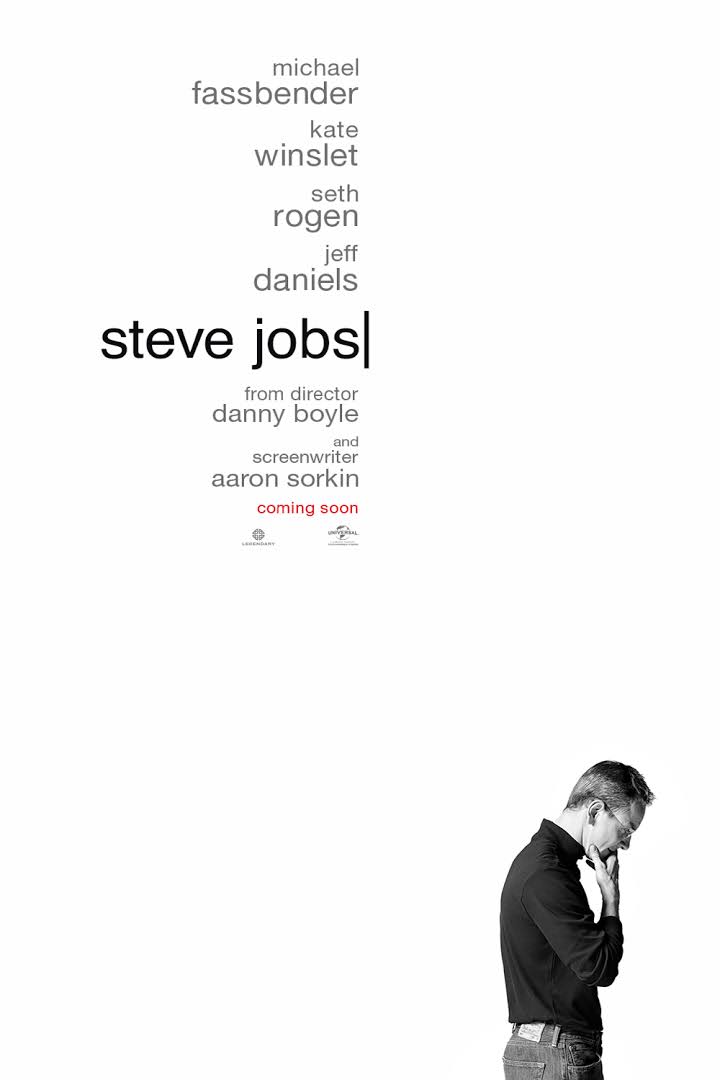
I don’t have much to say about Steve Jobs, which has been playing here in New York in a limited release. This is how I know I didn’t care for it.
When you look at the list of people who came together to make the new movie about Steve Jobs, it’s almost impossible to think that the end result could be bad. You’ve got Academy Award Winner Danny Boyle, whose work I’ve enjoyed since Trainspotting. With a track record like 28 Days Later, The Beach, Sunshine, and Slumdog Millionaire, he’s having a wonderful run. You also have Academy Award Winner Aaron Sorkin, fresh off both The Social Network, Moneyball and The Newsroom working the screenplay. With actors like Michael Fassbender (12 Years a Slave, Slow West) and Kate Winslet (Divergent, A Little Chaos) on board , it’s almost like having the stars align.
And yet, I almost walked out on Steve Jobs. It just wasn’t for me. Maybe I was just tired.
The film focuses on three places in the Steve’s life:
– The launch of the original Macintosh just after the “1984” Super Bowl commercial.
– The launch of the NeXt system, which Jobs created after being fired by Apple.
– The launch of the first iMac, just after Jobs returned to Apple as the interim CEO.
The entire first part was really good, with arguments going back and forth over the ability to get the on stage Mac to say “Hello”. Steve also argues with Chrisann Brennan over the financial support for her daughter, Lisa Nicole. Steve simply won’t admit she is his. When asked about the name of his first computer, Jobs goes to great lengths to explain that the acronym (Local Integrated System Architecture) is just a coincidence. When Lisa amazes him with her computer usage, he decides to support her mom with a check.
Every segment after that felt like a repeat of the first one to me, almost like Run Lola Run. In the beginning, it feels fresh, witty, nice. By the end, I was fighting to simply stay awake and care. What I hoped to see was more interaction with Steve and Lisa. If they were so distanced then, and grew close later in life, what was the catalyst? Was it the cancer diagnosis Steve had in the early 2000’s? We’ll never know, because the movie stops just before that time period. Did he suddenly realize that his heart wasn’t as small as the Grinch? What about Jonny Ive, who was responsible for much of Apple’s design after Job’s return? Nope, not even so much a mention. And I think this is the overall problem I have with the film. Yes, Steve Jobs by himself was a visionary, and as the story points out, he conducts the Orchestra, but there’s no reverence whatsoever to any of the other people that helped get Apple where it is. It doesn’t make the movie terrible for not covering these angles, but there are a number of missed opportunities as a result of using such a narrow range.
Fassbender was wonderful to watch onscreen, as well as Winslet. One of the odd things is that from a performance standpoint, everyone in Steve Jobs is effective. I wouldn’t be surprised to see Fassbender get some kind of recognition come awards season. Even Seth Rogen did a good job, though his version of Wozniak was limited to constantly arguing for credit like Morrie in Goodfellas looking for his cut of the Luftansa Heist. There are points, however, where the banter just becomes a little too much.
Mind you, I loved The Social Network. I enjoyed The Newsroom. A Few Good Men is one of my favorite films. I’ve even seen the man in person once. He knows what he’s doing when it comes to having people talk. Here, it just seemed like Sorkin said…”What if I created a play about how Steve Jobs could be.” and rolled with it. Supposedly, he acknowledged that much of the writing here isn’t entirely accurate. I can accept that, but I think the structure of the film damaged it all for me. I would have preferred more of a straight A-B narrative than what I received. Is that too long to put to screen? Perhaps.
Here at the Shattered Lens, Lisa Marie and I have gone head to head regarding Aaron Sorkin, sometimes yelling from our respective offices. She’s not a fan, but I’ve liked his work. The argument is that for all of his abilities when it comes to writing, he doesn’t really handle women well. It’s true. Women haven’t always fared well in Sorkin’s world, and watching Winslet, I was almost sure I could come back here and say in his defense…”Hey, Sorkin wrote a good girl that doesn’t just exist to help the male hero to succeed or as a target for males to pick on. This isn’t Demi Moore in A Few Good Men. Aha!!” I wanted to say that. I really did…but I can’t. As good as Winslet is here, her character is almost Emily Mortimer’s from The Newsroom. She does have some great lines, and her screen time with Fassbender is nice.
I did enjoy Danny Boyle’s direction here. The approach with using the different film styles (old style camera work for the 1984 Macintosh launch, conventional film for the NeXt Launch, and HD optics for the iMac release) was interesting, and I liked how he used the environment to tell the story. I have little to complain about there.
Note that the audience did applaud the film. There were moments where a phrase or two yielded some laughs. In that sense, maybe the film accomplished something. You’ll have to see it and come to your own conclusions on how it works for you.
It just wasn’t for me, and I was really looking forward to it.
Fox has released the trailer for Marvel’s Deadpool, which comes out next year. This is the same trailer that was shown at the San Diego Comic Con earlier this year, and is in crystal clear HD. For those who aren’t aware, Deadpool is the tale of Wade Wilson (no relation to me, mind you), who is dying of cancer and elects to join a program similar to the Weapon X one that created Wolverine. When he’s given the same healing factor as Wolverine, Wilson takes his new-found abilities and becomes Deadpool, the Merc With a Mouth, weapon-wielding extraordinaire. The movie has the potential to be great or maybe not, considering how hard they’re trying to appease their target audience. It hits just about every mark, with it’s breaking of the fourth wall and comic elements. It’s also great to not only see Ryan Reynolds reprising the mishandled role from X-Men Origins: Wolverine, but finally having it done in a way that at least comes close to the comic origins.
Why is this a Fox production and not a Disney/Marvel one? Well, for one, Fox already had the character. Two, I don’t think Deadpool fits into the wholesome do-gooder world that most of the Marvel Heroes and Heroines inhabit. He’s more like Stitch in comparison to the other Disney Characters.
Deadpool also stars Morena Baccarin, Gina Carano and T.J. Miller. Enjoy.
Sometime around 8am in London, the 2nd trailer for Sam Mendes “Spectre” was released. The 24th film in the Bond Franchise, this one is a little similar to the Skyfall trailer in that Bond (Daniel Craig) is perhaps on the run again or is at least trying to cover his tracks. So far, it’s looking good.
Here are some of the things I’ve noticed:
1.) It’s a Snow Movie – With the exception of The World is Not Enough, most of the Bond films that take place in cold climates seem to fair better than the desert ones. As long as none of the girls aren’t named after a Holiday, this might work. Of course, that’s just my opinion there, others may of course disagree.
2.) Bond and M (Ralph Fiennes) already have issues – From the start Bond and M are at odds. That was quick. Nice to get it all out of the way.
3.) The Return of Mr. White. – One of the men responsible for the death of Vesper Lynd and member of Quantum (whatever that was), Mr. White (Jesper Christiansen) makes another appearance here. Maybe he has something important to share?
4.) Use of the theme from On Her Majesty’s Secret Service – that was great to hear. Hope it’s incorporated into the film somehow. I believe that Thomas Newman (Mendes’ long time musical companion) is on board here, so maybe it’ll be used?
5.) Dave Bautista as an evil henchman. Not sure what Mr. Hinx will be doing, but there seems to be a close quarters fight in a train, reminiscent of From Russia With Love.
6.) That sweet, curvy and shiny Aston Martin DB10. Just look at it. In this movie, it goes head to head with a Jaguar CX75. As just about everyone knows, Jaguar is the Official Vehicle of Villains everywhere. Should be interesting to see how that turns out.
7.) Q finally gets a Q Branch worthy of the title. It looks like there a few things he’s working on in the background on some of the shots. One of which appears to be a flamethrower maybe, for the new car.
Enjoy! Spectre is set to release on November 5th (which as a side note of no particular importance nor relation, was the day Marty McFly arrived in Hill Valley, back in 1955). Additionally, here’s a featurette on the cars in the film.
*** Wait a minute! Before checking this out, be sure to read TrashFilmGuru’s thoughts on Ant-Man and then if you like, double back here. Two opinions are better than one! ***
I walked into Ant Man with a bias.
As a fan of Edgar Wright, his departure on the film due to creative differences left me wondering if it was worth seeing. Mix that with the idea that Marvel diverged from the character’s comic book origins for a better fit into the Marvel Cinematic Universe, and it all seemed like a recipe for failure. This was going to be the Cars 2 of the MCU, I was sure of it.
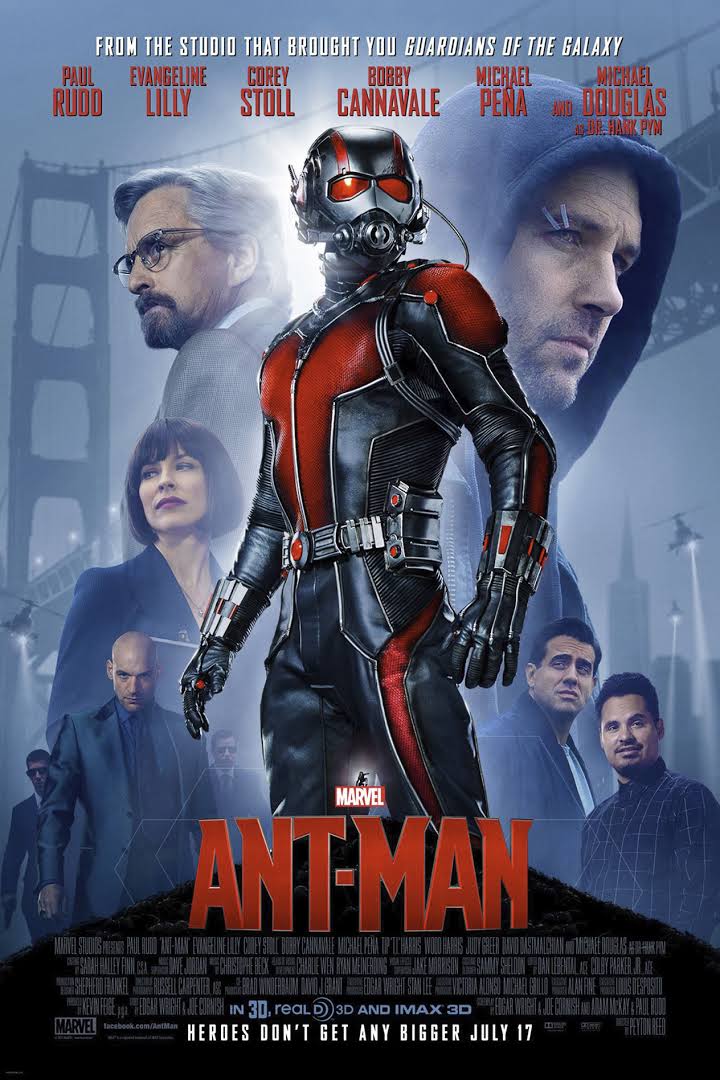
Ant-Man isn’t as large a tale as Captain America: The First Avenger or as star spanning as Guardians of the Galaxy. At times, it feels like it the story would be better suited for an extended Agents of S.H.I.E.L.D. Crossover or a Netflix one shot instead of a big screen event. It actually reminded me of Jon Favreau’s Iron Man in many ways, back when all of this was so small that audiences weren’t searching for tie-ins to next film in the line up or homages to The Story So Far. Ant-Man comes with the MCU connections (and comic book ones too), but if you walk in expecting revelations as big as Captain America: The Winter Soldier, the film may be a disappointment. It’s just a hero, and idea that even small actions can have big effects. It’s easily the film’s greatest strength, that it’s so personal. The film’s best components are it’s casting (particularly in House of Cards & The Strain’s Corey Stoll and Fury’s Michael Pena), and the effects themselves. It’s a movie that’s well worth the 3D treatment, if you can catch it that way.
Ant-Man focuses on Scott Lang (Paul Rudd), a former thief who is just trying to spend more time with his daughter, or at least be a hero in her eyes. Scott ends up meeting with Dr. Hank Pym (Michael Douglas) and his daughter Hope (Evangeline Lilly) who brings him on board for a job that just happens to cover his particular skill set. The job comes with a special suit that allows Lang to shrink down to about the size of an Ant, while at the same time allowing him to be much stronger. When Pym’s protege and rival Cross (Stoll) discovers another way to possibly make the shrink ability work, it’s up to Lang to try to stop the progress.
The film had 4 writers during it’s creation. It had Edgar Wright, who many moviegoers know from the Cornetto Trilogy (Shaun of the Dead, Hot Fuzz, The World’s End) and Scott Pilgrim vs. The World. Adam McKay worked with Rudd in the past on the Anchorman films, and was responsible for Talladega Nights & Step Brothers. Both McKay and Rudd had a hand in writing Ant-Man. Finally, Attack the Block’s Joe Cornish was on board. The end result of all this is a film with a great deal of comedy influences in it, though not all of them hit the mark. I felt there were at least 2 moments in the film where Rudd’s character had a one liner that just didn’t hit the mark, or elicit a response from the audience. This isn’t a terrible thing, at most it’s just nitpicking. Overall, you could consider Ant-Man a comic caper with superhero moments.
Additionally, the writers had to also figure out how to make the character of Dr. Hank Pym useful in a storyline where one of his biggest arcs in the comics – creating Ultron – was already handled in a previous story. I like to think this was handled pretty well, as comic readers will already recognize Scott Lang as being the 2nd Ant-Man – or least this is what I learned from the Marvel Encyclopedia. They’ve managed to keep familiar storylines in place while still anchoring it to the larger tale at hand.
The performances in Ant-Man are good, though it’s the co-stars that potentially steal the film from the leads. Lang’s heist buddies, played by David Dastmalchian (The Dark Knight), Cliff “T.I.” Harris (Takers), and Michael Pena (Fury) were indeed funny in this. Pena in particular stood out as someone who gets ahold of information through some pretty wild sources. Michael Douglas was a strange pick for me when I first heard about it, but he’s actually a fantastic fit for the whole story. Evangeline Lilly looked like she had a lot of fun with this, though her character served as a second mentor for Lang. I wanted to see her do a bit more in the film, actually. Bobby Canavale (Chef, Third Watch) and Judy Greer (Jurassic World) both have nice supporting roles in this.
Corey Stoll has played an ass so much on-screen that I’m not entirely sure he isn’t that way off camera. Between Non-Stop, House of Cards, Midnight in Paris and now Ant-Man, he’s plays the kind of characters that were historically set aside for character actors like Jeff Kober or Michael Ironside. Honestly, they couldn’t have made a better choice here. Cross comes off like a variant of Iron Man’s Odebiah Stane, resentful, evil, and maybe a little crazed. Rudd, on the other hand, handles the Hero’s Journey with ease, bringing his own sense of comedy that works almost as well as it did for Chris Pratt in Guardians of the Galaxy. It’s not perfect, but the character’s lighthearted nature is a good contrast from the serious gloom and doom that most of the Avengers are going through these days, and I feel Rudd did well here.
That’s another aspect of Ant-Man that needs to be recognized. The story in this may have a larger impact in things to come, but it felt really compact. Since the focus on the story involves Lang getting back to his daughter and stopping this one small thing, it takes a step back from the escalation we’ve been getting in previous MCU films. To me, since Phase Two started, every film’s been a stepping stone with at least one huge revelation somewhere that shows this is all much bigger than any one hero can take on. Discovery of the Infinity Stones, the big reveal of S.H.I.E.L.D. In the Winter Soldier and the events in Age of Ultron cover a large area. Maybe it’s better to say that they have an impact that’s covers a wide distance. With Ant-Man being the first film of Phase Three, it feels almost as if a step back it taken to something more personal. It’s not bad, but it’s different. It has the potential to leave viewers with a bad taste in their mouths if they were expecting something grand.
The effects in Ant-Man are good, really, really sweet. Quite honestly, it may be one of the first times where I haven’t found myself annoyed by what I call “The Zoic Effect” – that technique used in almost every film these days where you’re watching something and the director decides “Hey, let’s do a maximum level quick zoom on that target right there!”, because there’s a chance the audience might not see the subject. I believe Zoic Studios were the first to do that with Firefly and Battlestar Galactica, though I could be wrong. In Ant-Man, that rapid intense zoom is almost a welcome requirement when watching a little figure run and leap up and over objects. Add a 3D effect to all that, and I found myself enjoying that on the big screen. From a directing standpoint, it’s all very straightforward and you get an idea of the influences from all of the writers involved. Still, Peyton Reed (Down With Love) keeps from the film from straying too far away from it’s intended focus. Additionally, though the help of CGI, Disney/Marvel was able to digitize a younger Michael Douglas, and the look of this was even better than what they accomplished with Jeff Bridges in Tron: Legacy.
Overall, Ant-Man is a great addition to the MCU and on it’s own, it’s strong. I suppose Thor will still have to stay as the Cars 2 of that movie library. Note to viewers: If you’re planning to see this, be sure to stay until after the end credits. There’s a mid scene during the credits and one at the very end.
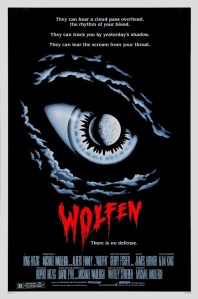 A guilty pleasure is a film that we might enjoy, but isn’t as loved by others overall. It’s the kind of film that you can watch on any given day, but to speak of it may cause raised eyebrows among your peers. Everyone has at least one film or two that they treasure in this way.
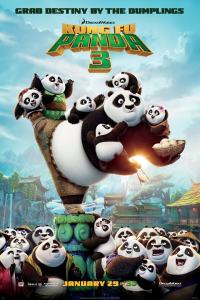 Having become the Dragon Warrior and the Champion of the Valley of Peace on many occasions, Po (Jack Black) has reached a point where its time for him to train others. All of this becomes complicated when Kai (J.K. Simmons), a former enemy of Master Oogway (Randall Duk Kim) returns to the Valley to capture the Chi of the new Dragon Warrior and anyone else that stands in his way.
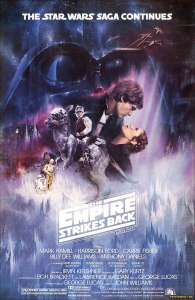 The Year was 1980.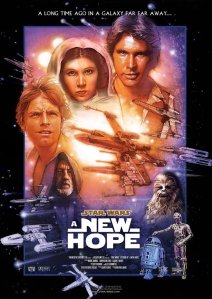


 Through the Shattered Lens