The Eric Roberts Collection: Runaway Train (dir by Andrei Konchalovsky)


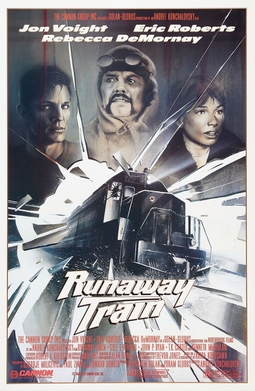
In 1985’s Runaway Train, Eric Roberts plays Buck McGeehy, a prisoner at Stonehaven Maximum Security Prison in Alaska.

Like the majority of the prisoners, Buck looks up to Manny (Jon Voight), a bank robber who has just been released from spending three years in solitary confinement.  Manny is a tough guy who refuses to allow the prison system to beat him down.  Warden Ranken (John P. Ryan) views Manny as being a threat to his authority and he’s especially angry that it was the courts that ordered that Manny finally be released from solitary.  When Ranken tries to arrange for Manny to be assassinated at a prison boxing match, it’s Buck who saves Manny’s life.  When Manny later manages to escape from the prison, Buck tags along.

Manny and Buck are a study in contrasts.  Manny is as cold as the Alaskan landscape.  He’s ruthless and doesn’t allow himself to get too close to anyone but, at the same time, he does live by a definite code.  Buck is simple-minded, an earnest guy who talks too much and who probably wouldn’t have survived a day in prison if it wasn’t for his skill as a boxer.  Buck and Manny manage to make their way across the frozen wilderness but, when they hop on a train, they soon find themselves trapped on the out-of-control locomotive, along with a railroad engineer named Sara (Rebecca De Mornay).  The three of them have to find a way to either escape from or stop the train.  At the same time, the obsessed Warden Ranken is determined to recapture Manny and, if that means flying a helicopter over the train so that Ranken can lower himself onto it, so be it.

Runway Train, which was based on a script by Akira Kurosawa, was one of the few Cannon films to find success with not just critics but also audiences and the industry.  The Golden Globes nominated it for Best Film.  The Academy didn’t go quite that far but they did nominate the film for Best Editing, along with also nominating Jon Voight for Best Actor and Eric Roberts for Best Supporting Actor.  While Voight is a multiple-Oscar nominee (and one-time winner for Coming Home), Runaway Train is, so far, the only film for which Eric Roberts has been nominated.  (He should have been nominated for Star 80 but his character in that film was a bit too realistically sleazy for the Academy to honor.)  Roberts has described Runaway Train as being one of his favorite films and he even used the title for his autobiography.  It was on this film that he met Danny Trejo, who not only trained Roberts for the boxing scenes but also helped Roberts kick his addiction to cocaine.

And Roberts has every reason to be proud.  Runaway Train is a fast-moving, visually stunning thrill ride, a masterpiece of the pulp imagination.  Yes, the symbolism of the runaway train is a bit obvious.  Yes, the philosophical edge of the film’s dialogue can sometimes feel a bit out-of-place.  Who cares?  John Voight and Eric Roberts sell their characters with such skill that you don’t care that they’re both criminals who have done terrible things.  From the minute we see that frozen jail and the prisoners tossing burning pieces of paper at the guards, we know why both Manny and Buck have to escape.  John P. Ryan turns the warden into everyone’s worst nightmare of a small, pretty man with power, an authoritarian who uses the system to control the lives of others and who resents anyone who does not bow down before him.  Even though her role is largely limited to reacting to what everyone else does around her, Rebecca de Mornay still turns Sara into a compelling character and never allows her to become merely a damsel in distress.  Runaway Train is a heart-pounding action film and one that still holds up today.
Previous Eric Roberts Films That We Have Reviewed:

  1. Star 80 (1983)
  2. Blood Red (1989)
  3. The Ambulance (1990)
  4. The Lost Capone (1990)
  5. Love, Cheat, & Steal (1993)
  6. Voyage (1993)
  7. Love Is A Gun (1994)
  8. Sensation (1994)
  9. Dark Angel (1996)
  10. Doctor Who (1996)
  11. Most Wanted (1997)
  12. Mercy Streets (2000)
  13. Wolves of Wall Street (2002)
  14. Mr. Brightside (2004)
  15. Six: The Mark Unleased (2004)
  16. Hey You (2006)
  17. Amazing Race (2009)
  18. In The Blink of an Eye (2009)
  19. Enemies Among Us (2010)
  20. The Expendables (2010) 
  21. Sharktopus (2010)
  22. The Dead Want Women (2012)
  23. Deadline (2012)
  24. The Mark (2012)
  25. Miss Atomic Bomb (2012)
  26. Bonnie And Clyde: Justified (2013)
  27. Lovelace (2013)
  28. The Mark: Redemption (2013)
  29. Self-Storage (2013)
  30. A Talking Cat!?! (2013)
  31. This Is Our Time (2013)
  32. Inherent Vice (2014)
  33. Road to the Open (2014)
  34. Rumors of War (2014)
  35. Amityville Death House (2015)
  36. A Fatal Obsession (2015)
  37. Stalked By My Doctor (2015)
  38. Enemy Within (2016)
  39. Joker’s Poltergeist (2016)
  40. Prayer Never Fails (2016)
  41. Stalked By My Doctor: The Return (2016)
  42. The Wrong Roommate (2016)
  43. Dark Image (2017)
  44. Black Wake (2018)
  45. Frank and Ava (2018)
  46. Stalked By My Doctor: Patient’s Revenge (2018)
  47. Clinton Island (2019)
  48. Monster Island (2019)
  49. The Savant (2019)
  50. Seven Deadly Sins (2019)
  51. Stalked By My Doctor: A Sleepwalker’s Nightmare (2019)
  52. The Wrong Mommy (2019)
  53. Exodus of a Prodigal Son (2020)
  54. Free Lunch Express (2020)
  55. Her Deadly Groom (2020)
  56. Top Gunner (2020)
  57. Deadly Nightshade (2021)
  58. The Elevator (2021)
  59. Just What The Doctor Ordered (2021)
  60. Killer Advice (2021)
  61. The Poltergeist Diaries (2021)
  62. The Rebels of PT-218 (2021)
  63. A Town Called Parable (2021)
  64. Bleach (2022)
  65. My Dinner With Eric (2022)
  66. Aftermath (2024)
  67. The Wrong Life Coach (2024)

Retro Television Review: The Love Boat 5.22 and 5.23 “Pride of the Pacific/The Viking’s Son/Separate Vacations/The Experiment/Getting to Know You”


Welcome to Retro Television Reviews, a feature where we review some of our favorite and least favorite shows of the past!  On Wednesdays, I will be reviewing the original Love Boat, which aired on ABC from 1977 to 1986!  The series can be streamed on Paramount Plus!

This week, a special two-hour Love Boat sets sail for Alaska and adventure!

Episode 5.22 and 5.23 “Pride of the Pacific/The Viking’s Son/Separate Vacations/The Experiment/Getting to Know You”

(Dir by Roger Duchowny, Originally aired on March 6th, 1982)

The Pacific Princess is sailing to Alaska!

The Sea Princess, commanded by the strict and haughty Gunner Nordquist (Ted Knight), is also sailing to Alaska.  Steve Bloom (Sonny Bono) of the Cruise Ship Association has arranged for a series competitions between the crews of the two ships.  At each stop, the rival crews will compete in races, tree-sawing, tug-of-war, and wrestling.  The crew that wins the most competitions will receive a trophy.  All of the passengers are really excited about it, though I’m not sure why.  I would not want to spend my vacation watching a bunch of strangers take part in a competition that has nothing to do with me.

Gunner is determined to win.  Stubing is determined to have fun.  Or, at least, he is until his crew is absolutely humiliated during the second competition.  When he learns that Gunner has brought in a bunch of ringers, Stubing becomes determined to win at all costs.  Only the tears of Vicki can reveal to Stubing that he’s becoming a monster.  Stubing realizes that he’s been pushing too hard and he apologizes to his crew.  At the final stop, Stubing suggests a dog sled race between him and Gunner.  Gunner agrees.  Steve Bloom says it’s okay.  The crowd is excited for some reason.  In the end, Gunner wins the dog sled race and the competition but only because Stubing kindly refuses to take advantage of an accident that occurs during the race.  Gunner announces that the trophy properly belongs to Stubing and his crew.  Gunner also says that it’s okay if his son (Woody Brown) wants to become a cruise director instead of a navigator.  I’m glad that all worked out….

Actually, this whole storyline made no sense to me.  Beyond the fact that the passengers were oddly excited about the whole thing, I really didn’t see the point of making the members of the crew compete in stuff like tug-of-war and wrestling.  Wouldn’t it have made more sense to compete to see who could be the first to reach the next port?  I appreciated that at least some of this episode was shot on location.  The Alaskan scenery was lovely but the whole competition storyline was just weird.

There were other storylines, of course.  A couple played Charles Nelson Reilly and Charlotte Rae spent the entire cruise in their cabin, getting to know each other because they fell in love at first sight and they wanted to make sure they can handle marriage.  (I can think of one big reason why Charlotte Rae marrying Charles Nelson Reilly might not work out but, this being The Love Boat, it never comes up.)  Two Harvard researchers (John James and Mary Crosby) tried to come up with a pill that would make shy Dave (Douglas Barr) irresistible to women.  Both of those stories were pretty boring.  John James was handsome so the show had that going for it.

Slightly more interesting was the story of Harry Meacham (Tom Bosley) and his wife, Dorothy (Michele Lee).  As they’re in the process of divorcing, Harry sails on The Sea Princess while Dorothy board the Pacific Princess.  Of course, Doc makes his move as soon he realizes the Dorothy will soon be single.  While Dorothy has a chaste fling Doc, Harry has a chaste fling with massage therapist Britta (Priscilla Barnes).  Eventually, Harry and Dorothy realize they still love each other.  Awwww!  Yay!  This story was sweet.

Otherwise, this was not the most memorable cruise to Alaska that the Love Boat has ever taken.  Next week, let’s hope for no musicals and no athletic competitions.  Come on, Love Boat, we all know why we’re here!

An Offer You Can’t Refuse: Dragnet (dir by Jack Webb)


1954’s Dragnet opens with a gangland slaying.  We watch as a man is brutally gunned down in a field in Los Angeles.  The rest of the film deals with the efforts of the LAPD to track down and arrest the killers.

Based on the televisions show that gave birth to the whole “cop show” format, Dragnet features Jack Webb as Sgt. Joe Friday, calmly and efficiently investigating the slaying.  Working with Friday is Officer Frank Smith (Ben Alexander) but the film (just like the show) is ultimately about how the whole criminal justice system works together as a machine designed to protect the citizenry and to punish crime.

Or, at least, that’s the way it’s supposed to work.  Especially if you’re only familiar with Dragnet from its late 60s incarnation and the countless parodies that followed, the 1954 Dragnet can seem surprisingly cynical and rough-edged.  The killings are violent, the criminals are ruthless, and the cops are often frustrated in their attempts to solve crimes.  In this film, at least, justice is not guaranteed.

The shooting victim is identified as a low-level gangster named Miller Starkie and Friday and Smith immediately suspect that he was killed on the orders of West Coast mob boss Max Troy (Stacy Harris).  Friday and Smith know that Troy is guilty and they even figure out who worked with Troy to kill Starkie.  But, throughout the film, they struggle to get any sort of concrete evidence tying Max to the crime.  Dragnet is a police procedural that follows every bit of the investigation, including the attempts to convince a grand jury to indict Max.  One of the more interesting moments in the film is when Friday gives his grand jury testimony and it becomes obvious that the district attorney was right to be skeptical about trying to bring charges.  Friday really doesn’t have enough evidence to justify arresting Max for the crime that everyone knows he committed.  To the film’s credit, it doesn’t attack the grand jury system or suggest that the system is unfairly rigged for the criminals.  Friday may be frustrated but he understands that the system has to protect the rights accused first.  One has to be presumed innocent until proven guilty even when everyone knows that person is guilty.

That said, Friday and Smith and the entire LAPD end up harassing Max Troy in a way that would probably not fly if the film were made today.  At one point, a line of police cars park in front of Max’s house and then all shine their lights into his windows.  Friday and Smith end up following Max everywhere that they he goes, stopping him and randomly frisking him before ordering him to empty his pockets.  Today, I imagine this would lead to lawsuit.  Even in the film, it doesn’t exactly pay off.

What does pay off is sending a police woman (played by Ann Robinson) into Max’s nightclub undercover, with a recording device.  This whole sequence is interesting because it’s apparent that the idea of a tiny recording devices — something that we take for granted nowadays — was apparently a new and exciting concept in 1954.  (Indeed, the one used in this film actually looks a bit bulky.)  For a few minutes, the action stops so Dragnet can show off the LAPD’s latest toy.

I liked Dragnet.  It’s an nicely-paced time capsule and, despite its docudrama style and television origins, director Jack Webb manages to come up with a few memorable visuals.  As someone who has binged the late 60s version of Dragnet, it was interesting to see a tougher and much more cynical version of the series.  While Webb was hardly an expressive actor, his dour demeanor serves him well as Joe Friday and Stacy Harris is appropriately sleazy as the crime boss.  Despite all of Friday’s frustrations, the case eventually comes to a conclusion in the 1954 film, even if it’s not the one that Friday and his bosses wanted.  Max may be able to escape the police but he can’t escape his own health.  Friday and Smith move on to investigate the next case.  As always, the names will be changed to protect the innocent.

Scene That I Love: Jack Webb Sets The Hippies Straight


Today’s scene that I love comes from a 1968 episode of the iconic cop show, Dragnet.  A group of hippies want to leave the United States and start their own country.  Joe Friday (Jack Webb) and Bill Gannon (Harry Morgan) set them straight!

It’s always kind of easy to laugh a little at these episodes of Dragnet because it’s obvious that Webb had never actually met or dealt with any real hippies.  But I don’t know.  This episode, entitled The Big Departure, and this speech still feels relevant, even if I doubt it actually changed the mind of anyone planning on starting their own nation.


A Blast From The Past: A Force In Readiness (dir by Col. William L. Hendricks)


105 years ago today, Jack Webb was born.

Webb appeared in a handful of films but he’s probably best remembered for developing, directing, and starring in America’s first cop show, Dragnet.  As Sgt. Joe Friday, Webb dealt with crimes both big and small.  In the late 60s, he dealt with hippies and other anti-American forces.  A few years ago, I binged the 60s version of Dragnet and I have to admit I got totally addicted to it.  It was somehow both effective and totally camp at the same timeThat takes skill!

Webb is the narrator of today’s Blast From The Past.  1961’s A Force In Readiness is a 30-minute short film about the Marines.  Seen today, it seems like a lengthy commercial but, when it was first released, the director was awarded a special Oscar “for his outstanding patriotic service in the conception, writing and production of the Marine Corps film, A Force in Readiness, which has brought honor to the Academy and the motion picture industry.”

Webb provides the narration in his trademark style.  If the Greatest Generation could all speak in one voice, that voice would probably sound a lot like Jack Webb’s.

Film Review: The Doors (dir by Oliver Stone)


I like The Doors.

That can be a dangerous thing to admit, about both the band and Oliver Stone’s 1991 film.  Yes, both the band and the film could be a bit pretentious.  They both tended to go on for a bit longer than necessary.  They were both centered around a guy who wrote the type of poetry that I used to love back in my emo days.  It’s all true.

But, with The Doors as a band, I find that I can’t stop listening to them once I start.  Even if I might roll my eyes at some of the lyrics or if I might privately question whether any blues song really needs an organ solo, I can’t help but love the band.  They had a sound that was uniquely their own, a psychedelic carnival that brought to mind images of people dancing joyfully while the world burned around them.  And say what you will about Jim Morrison as a poet or even a thinker, he had a good voice.  He had the perfect voice for The Doors and their rather portentous style.  From the clips that I’ve seen of him performing, Morrison definitely had a stage presence.  Morrison died young.  He was only 27 and, in the popular imagination, he will always look like he’s 27.  Unlike his contemporaries who managed to survive the 60s, Morrison will always eternally be long-haired and full of life.

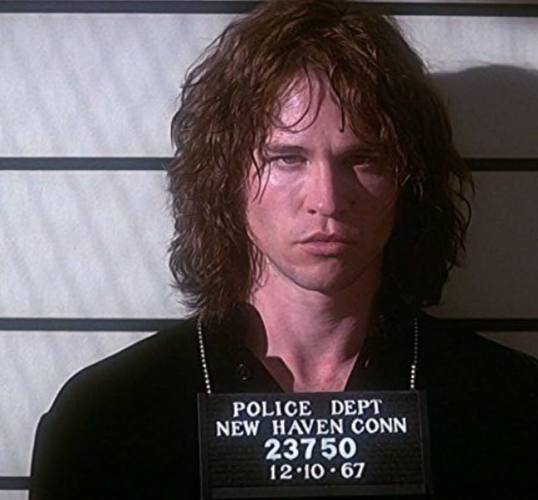
As for The Doors as a movie, it’s definitely an Oliver Stone film.  It’s big.  It’s colorful.  It’s deliberately messy.  Moments of genuinely clever filmmaking and breath-taking visuals are mixed with scenes that are so heavy-handed that you’ll be inspired to roll your eyes as dramatically as you’ve ever rolled them.  Stone loved the music and that love comes through in every performance scene.  Stone also loves using Native Americans as symbols and that can feel a bit cringey at times.  Why would Jim Morrison, whose was of Scottish and Irish ancestry, even have a Native American spirit guide?  At its best The Doors captures the chaos of a world that it’s the middle of being rebuilt.  The 60s were a turbulent time and The Doors is a turbulent movie.  I’ve read many reviews that criticized The Doors for the scene in which Morrison gets involved in a black magic ceremony with a journalist played by Kathleen Quinlan.  I have no idea whether or not that scene happened in real life but the movie is so full of energy and wild imagery that the scene feels like it belongs, regardless of whether it’s true or not.  Stone turns Jim Morrison into the warrior-artist-priest that Morrison apparently believed himself to be and the fact that the film actually succeeds has far more to do with Oliver Stone’s  enthusiastic, no-holds-barred direction and Val Kilmer’s charismatic lead performance than it does with Jim Morrison himself.

The Doors spent several years in development and there were several actors who, at one time or another, wanted to play Morrison.  Everyone from Tom Cruise to John Travolta to Richard Gere to Bono was considered for the role.  (Bono as Jim Morrison, what fresh Hell would that have been?)  Ultimately, Oliver Stone went with Val Kilmer for the role and Kilmer gives a larger-than-life performance as Morrison, capturing the charisma of a rock star but also the troubled and self-destructive soul of someone convinced that he was destined to die young.  Kilmer has so much charisma that you’re willing to put up with all the talk about opening the doors of perception and achieving a higher consciousness.  Kilmer was also smart enough to find the little moments to let the viewer know that Morrison, for all of his flamboyance, was ultimately a human being.  When Kilmer-as-Morrison winks while singing one particularly portentous lyric, it’s a moment of self-awareness that the film very much needs.

(When the news of Kilmer’s death was announced last night, many people online immediately started talking about Tombstone, Top Gun, and Top Secret.  For his part, Kilmer often said he was proudest of his performance as Jim Morrison.)

In the end, The Doors is less about the reality of the 60s and Jim Morrison and more about the way that we like to imagine the 60s and Jim Morrison as being.  It’s a nonstop carnival, full of familiar faces like Kyle MacLachlan, Michael Madsen, Crispin Glover (as Andy Warhol), Frank Whaley, Kevin Dillon, and a seriously miscast Meg Ryan.  It’s a big and sprawling film, one that is sometimes a bit too big for its own good but which is held together by both Stone’s shameless visuals and Val Kilmer’s charisma.  If you didn’t like the band before you watched this movie, you probably still won’t like them.  But, much like the band itself, The Doors is hard to ignore.

The Unnominated #12: Tombstone (dir by George Pan Cosmatos)


Though the Academy of Motion Picture Arts and Sciences claim that the Oscars honor the best of the year, we all know that there are always worthy films and performances that end up getting overlooked.  Sometimes, it’s because the competition too fierce.  Sometimes, it’s because the film itself was too controversial.  Often, it’s just a case of a film’s quality not being fully recognized until years after its initial released.  This series of reviews takes a look at the films and performances that should have been nominated but were, for whatever reason, overlooked.  These are the Unnominated.

I have come around on Tombstone.

The first time I watched this 1993 film, I was a bit confused as to why so many of my friends (especially my male friends) worshipped the film.  To me, it was a bit too messy for its own good, an overlong film that told a familiar story and which featured so many characters that it was difficult for me to keep track of them all.  Perhaps because everyone I knew loved the film so much, I felt the need to play contrarian and pick out every flaw I could find.

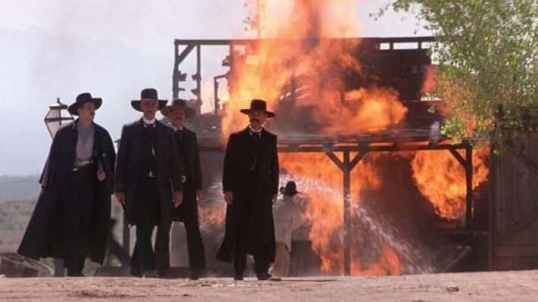
And I still think those flaws are there.  The film had a troubled production, with original director Kevin Jarre falling behind in shooting and getting replaced by George Pan Cosmatos, a director who didn’t have any real interest in the material and whose all-business approach rubbed many members of the cast the wrong way.  Kurt Russell took over production of the film, directing the actors and reportedly paring down the sprawling script to emphasize the relationship between Russell’s Wyatt Earp and Val Kilmer’s Doc Holliday.  On the one hand, this led to a lot of characters who really didn’t seem to have much to do in the finished film.  Jason Priestley’s bookish deputy comes to mind.  On the other hand, Russell was right.

The film’s heart really is found in the friendship between Wyatt and Doc.  It doesn’t matter that, in real life, Wyatt Earp was hardly as upstanding as portrayed by Kurt Russell.  It also doesn’t matter that the real-life Doc Holliday was perhaps not as poetic as portrayed by Val Kilmer.  Today, if you ask someone to picture Wyatt Earp, they’re probably going to picture Kurt Russell with a mustache, a cowboy hat, and a rifle.  And if you ask them to picture Doc Holliday, they’re going to picture Val Kilmer, sweating due to tuberculosis but still managing to enjoy life.  Did Doc Holliday every say, “I’ll be your huckleberry,” before gunning someone down?  He might as well have.  That’s how he’s remembered in the popular imagination.  And it’s due to the performances of Russell and Kilmer that I’ve come around to eventually liking this big and flawed western. With each subsequent viewing, I’ve come to appreciate how Russell and Kilmer managed to create fully realized characters while still remaining true to the Western genre.  If Wyatt Earp initially fought for the law, Doc Holliday fought for friendship.  Kilmer is not only believable as a confident gunslinger who has no fear of walking into a dangerous situation.  He’s also believable as someone who puts his personal loyalty above all else.  He’s the type of friend that everyone would want to have.

That said, I do have to mention that there are a lot of talented people in the cast, many of whom are no longer with us but who will live forever as a result their appearance here.  When Powers Boothe delivered the line, “Well …. bye,” he had no way of knowing that he would eventually become a meme.  Boothe is no longer with us, I’m sad to say.  But he’ll live forever as long as people need a pithy way to respond to someone announcing that they’re leaving social media forever.  Charlton Heston appears briefly as a rancher and he links this 90s western with the westerns of the past.  Robert Mitchum provides the narration and it just feels right.  The large ensemble cast can be difficult to keep track of and even a little distracting but there’s no way I can’t appreciate a film that manages to bring together not just Russell, Kilmer, Boothe, Heston, and Mitchum but also Sam Elliott, Bill Paxton, Michael Biehn, Michael Rooker, Billy Bob Thornton, Frank Stallone, Terry O’Quinn, and even Billy Zane!  The female roles are a bit underwritten.  Dana Delaney is miscast but Joanna Pacula feels exactly right as Doc Holliday’s lover.

But ultimately, this film really does belong to Val Kilmer.  When I heard the sad news that he had passed away last night, I thought of two films.  I thought of Top Gun and then I thought of Tombstone.  Iceman probably wouldn’t have had much use for Doc Holliday.  And Doc Holliday would have resented Iceman’s attitude.  But Val Kilmer — that brilliant actor who was so underappreciated until he fell ill — brought both of them to brilliant life.  In the documentary Val, Kilmer attends a showing of Tombstone and you can say he much he loves the sound of audience cheering whenever Doc Holliday showed up onscreen.

Tombstone was a flawed film and 1993 was a strong year.  But it’s a shame that Val Kilmer was never once nominated for an Oscar.  Tombstone may not have been a Best Picture contender but, in a year when Tommy Lee Jones won the Oscar for Best Supporting Actor for his role in the similarly flawed The Fugitive, it seems a shame that Kilmer’s Doc Holliday was overlooked.

Tombstone (1993, dir by George Pan Cosmatos (and Kurt Russell), DP: William Fraker)

Previous entries in The Unnominated:

  1. Auto Focus 
  2. Star 80
  3. Monty Python and The Holy Grail
  4. Johnny Got His Gun
  5. Saint Jack
  6. Office Space
  7. Play Misty For Me
  8. The Long Riders
  9. Mean Streets
  10. The Long Goodbye
  11. The General

4 Shots From 4 Films: Special 1946 Edition


4 Shots From 4 Films is just what it says it is, 4 shots from 4 of our favorite films. As opposed to the reviews and recaps that we usually post, 4 Shots From 4 Films lets the visuals do the talking!

Today, we pay tribute to the year 1946.  It’s time for….

4 Shots From 4 1946 Films

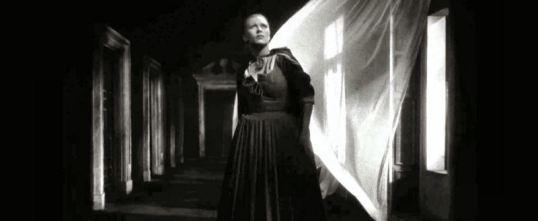
Beauty and the Beast (1946, dir by Jean Cocteau, DP: Henri Arinal)

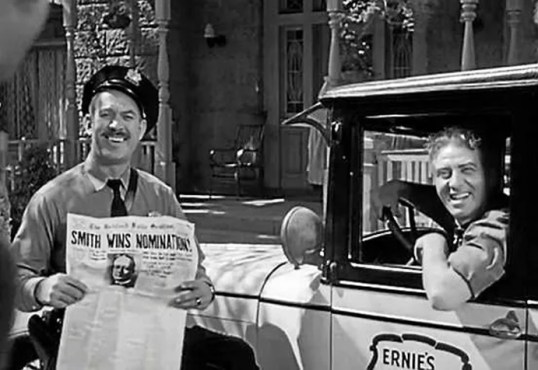
It’s A Wonderful Life (1946, dir by Frank Capra, DP: Joseph Walker and Joseph Biroc)

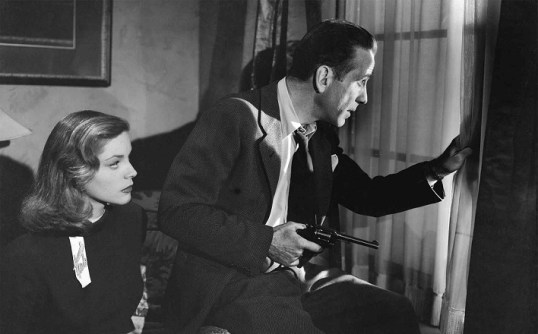
The Big Sleep (1946, dir by Howard Hawks, DP: Sidney Hickox)

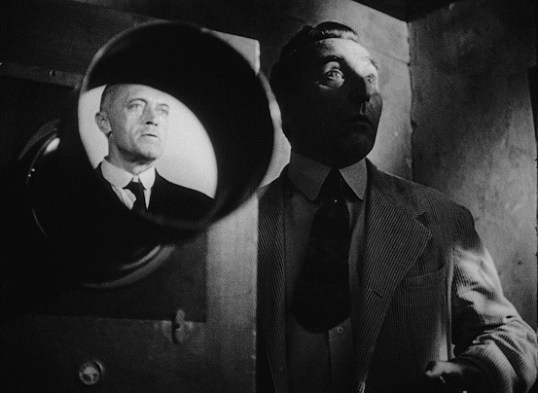
The Stranger (1946, dir by Orson Welles, DP: Russell Metty)

Music Video of the Day: Too Much Pressure by The Selecter (2017, dir by ????)


Too much pressure!

I hope that’s not a case where you are today.  If it is, calm down.  Take a walk.  Take a few deep breaths.  Count backwards from 100.  Listen to this song.  You’re going to be okay!

Enjoy!

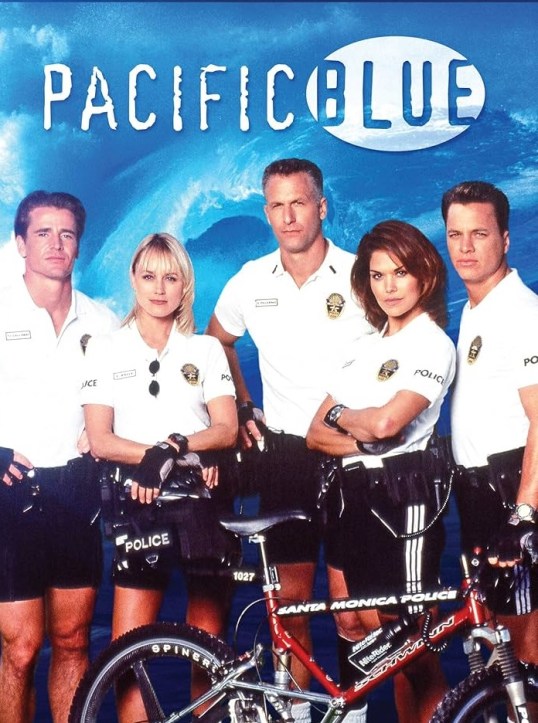
Late Night Retro Television Review: Pacific Blue 1.11 “The Phoenix”


Welcome to Late Night Retro Television Reviews, a feature where we review some of our favorite and least favorite shows of the past! On Tuesdays, I will be reviewing Pacific Blue, a cop show that aired from 1996 to 2000 on the USA Network!  It’s currently streaming everywhere, though I’m watching it on Tubi.

A serial arsonist is setting Malibu on fire so, of course, the bike patrol is called in.

Episode 1.11 “The Phoenix”

(Dir by Charles Siebert, originally aired on May 11th, 1996)

Fires are breaking out all over Malibu.  Whoever the arsonist is, he seems to be targeting a shady businessman named Curtis Bilson (Michael Cavanaugh).  TC and Chris decide to start investigating the arsons themselves, even though neither one of them is in the arson division.  “Bike patrol?” the arson detective asks, when he first meets them.  However, because everyone respects Lt. Palermo, TC and Chris are allowed to investigate.  Chris, being a former jet pilot, is naturally an expert on accelerants.  “Smells like jet fuel.”  Wow, really?

(Basically, this is the equivalent of allowing a school crossing guard to head up the search for a serial killer.)

A surfer named Suicide (Sam Hennings) insists that he saw the fire being set by The Phoenix, a legendary arsonist who the police consider to be dead.  His real name was Willoughby (Tim DeZarn) and the official story is that he got caught in one of his own fires and his body was reduced to ash and that’s why he disappeared without leaving a trace behind.  That seems awfully convenient and really doesn’t make much sense when you think about it but, then again, Malibu has their bike patrol investigating a serial arsonist.  We’re through the looking glass here.

(Myself, I’m concerned by the fact that no one seems to find it weird that their source is nicknamed “Suicide.”  I’m going to guess that’s a surfer thing but still, I cringed every time TC said, “My friend, Suicide….”)

TC and Chris’s investigation leads them to Dr. Anton (Dennis Christopher), an arsonist who is currently in a mental hospital.  They try to do a Lecter/Clarice thing between Anton and Chris.  Dennis Christopher is a good actor and it appears that he was having fun playing a thoroughly demented character.  Jim Davidson and Darlene Vogel were very bad actors and it seems almost unfair to force them to share a scene like Dennis Christopher.  It’s like giving me a chance to play tennis on national television and then telling me, right when the cameras start rolling, that I’m going to be playing against the Williams sisters.  It’s just adding insult to injury.

Anyway, it turns out Willoughby is still alive and he’s targeting the businessman and he also kidnaps Lt. Palermo for some reason.  Chris and TC are able to save Palermo and the crooked guy from the inferno and Willoughby once again vanishes.  Because, of course, he does….

Meanwhile, Cory tries to catch a man who keeps bringing a snake to the boardwalk.  At one point, she accidentally gets doused in a wet t-shirt contest.  She’s win the trophy and then come back to the station without bothering to change shirts, which kind of goes against everything we’ve seen about Cory’s personality up until this point.  For some reason, Palermo also puts Cory in charge of catch a mouse that’s running around the station.  The snake, once captured, eats the mouse but then gets lost in the station.  That made me laugh just because I like it whenever its acknowledged that the bike patrol is totally incompetent.

Next week …. Chris has a new boyfriend!  Dr. Anton, maybe?  We’ll find out!