This is the music video for the first single off of the Maria’s debut album, Cinema. It has a sort sci-fi, apocalyptic, dystopian future feel to it, which is something that I always apprecaite.
Enjoy!
This is the music video for the first single off of the Maria’s debut album, Cinema. It has a sort sci-fi, apocalyptic, dystopian future feel to it, which is something that I always apprecaite.
Enjoy!
This is one documentary that I’m truly looking forward to seeing. Val Kilmer is an intriguing figure, about who much has been written. His talent is legendary. So is his reputation for being a bit …. well, I guess eccentric would be a good way to put it.
I’m looking forward to hearing Val’s side of the story.
Here’s the trailer!
This is going to be a busy and chaotic day so why not celebrate love and music a bit with the latest music video from Dillion Francis? Dillon not only co-stars in this video (along with Danielle King) but he also did all of his own stunts!
Enjoy!
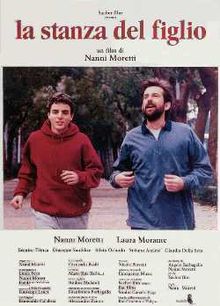
With the 2021 Cannes Film Festival underway in France, I thought this would be a good opportunity to spend the next few days looking at some of the films that have won the Palme d’Or in the past. As of this writing, 100 films have won either the Palme d’Or or an earlier version of the award like the Grand Prix du Festival International du Film. Some of those films — like Parasite, The Tree of Life, The Piano, Pulp Fiction — went on to American box office success and Oscar renown. Others, like 2001’s The Son’s Room, may have been snubbed by the Oscars but they went on to great success in their home country. The Son’s Room, for instance, won Italy’s David Di Donatello award for the best film of 2001.
The Son’s Room is a film about a family trying to deal with an unimaginable tragedy. Andrea (Giuseppe Sanfelice) is the 17 year-old son of therapist Giovanni (Nanni Moretti, who also directed) and Paola (Laura Morante). Andrea, it is quickly established, is an almost ideal teenager. He doesn’t resent his parents. He doesn’t get into any sort of major trouble, beyond stealing a valuable fossil as a part of a prank that goes wrong. His parents know that he occasionally gets high but they also understand that it’s no big deal. It’s just a part of being a teenager.
One day, when Giovanni and Andrea have made plans to go jogging, Giovanni gets a call from a patient who has received some troubling news and who needs to see him immediately. Giovanni has to cancel their plans. Andrea instead goes diving with a friend and, in a freak accident, drowns. Giovanni, Paola, and and their daughter Irene (Jasmine Trinca) are left to mourn and to try to find some sort of meaning in Andrea’s death.
The Son’s Room is hardly the first film to be made about the untimely death of a family member. In 1980, Ordinary People won the Oscar for Best Picture for telling a story about a similarly upper class family trying to come to emotional teams with the loss of a brother and a son. What sets The Son’s Room apart from Ordinary People and other similar films is what doesn’t happen. As opposed to what happens in so many other films about families dealing with loss, the death of Andrea does not reveal that his family was secretly dysfunctional. His family doesn’t discover that Andrea was deeply depressed or that his death wasn’t a random accident. Instead, the point of the film is that, even though the family was strong and even though Andrea was happy and had everything to look forward to it, he still died because sometimes, happy people die in freak accidents. It’s not just dysfunctional families that suffer. Even a strong family struggles to deal with grief.
The film follows the family through the stages of grief. At first, the family members fixate on imagining what life would be like if Andrea hadn’t gone swimming that day. They resent Giovanni’s patient, even though the patient couldn’t have known what was going to happen. They try to find someone to blame for Andrea drowning, just to discover that everyone did everything that they were supposed to do. Andrea’s death was random, as death so often is. Then, they’re contacted by a casual acquaintance of Giovanni, a girl named Arianna (Sofia Vigilar) and they’re finally given a chance to find some sort of meaning in what happened.
The Son’s Room is a deeply affecting movie, one that works because it largely eschews the type of melodrama that we’ve come to expect from films like this. The film’s refusal to idealize, blame, or demonize any of its characters makes it a film to which anyone can relate. It’s an honest look at grief but it’s also a film that earns the right to suggest that there’s no need to feel guilty about eventually moving on from sadness. It’s a film that acknowledges that life can be random and scary but it can be pretty wonderful as well.
It’s an effective film, one that was reportedly a popular winner at the 2001 Cannes Film Festival, where its competition included Shrek, The Man Who Wasn’t There, The Piano Teacher, and Mulholland Drive. (Fear not, Mulholland Drive still won the directing award for David Lynch.) 20 years after it was initially released, The Son’s Room holds up well as a look at both grief and the love of a strong family.
Sorry for posting this late, everyone! It’s been a long week and last night, I just passed out. But to make up for it, here’s Samantha Fish!
Enjoy!
All you need to know about this enjoyably trippy, apocalyptic video can be found in the title.
Enjoy!
With the 2021 Cannes Film Festival underway in France, I thought this would be a good opportunity to spend the next few days looking at some of the films that have won the Palme d’Or in the past. As of this writing, 100 films have won either the Palme d’Or or an earlier version of the award like the Grand Prix du Festival International du Film. Some of those films — like Parasite, The Tree of Life, The Piano, Pulp Fiction — went on to huge box office success and Oscar renown. Others, like 1973’s Scarecrow, did not.
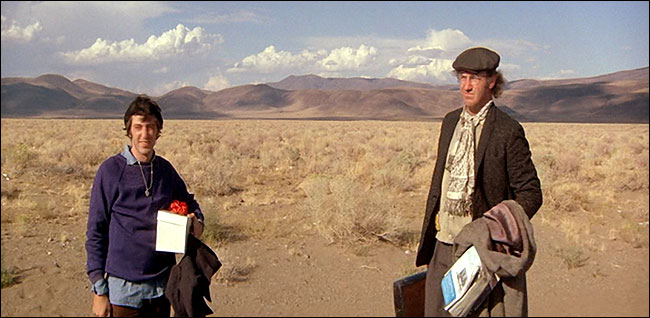
Scarecrow is an example of a type of film that was very popular in the 70s. It’s a road film, one in which two or more people take a journey across the country and discover something about themselves and, depending upon how ambitious the film was, perhaps something about America as well. Scarecrow centers on two drifters, who just happen to meet on a dusty road while they’re trying to hitch a ride. Max (Gene Hackman, fresh off of winning an Oscar for The French Connection) is an ex-convict with a bad temper and a huge chip on his shoulder. Lion (a young Al Pacino, fresh off of The Godfather) is an ex-sailor who views the world with optimism and who appears to be sweet-natured but simple-minded. To be honest, it’s a little bit hard to believe that the perpetually resentful Max and the always hopeful Lion would ever become friends but they do. They travel around the country, talking about their dreams of opening a car wash together. They meet up with ex-girlfriends and ex-wives. Eventually, they even end up in a prison farm together, where Lion, temporarily estranged from Max, is taken advantage of by a sadistic prisoner named Riley (Richard Lynch).
Scarecrow is an episodic film, one that moves at its own deliberate pace. (If that sounds like a polite way of saying that the film is slow-moving …. well, it is.) Director Jerry Schatzberg was a photographer-turned-director and, as a result, there’s several striking shots of Max and Lion standing against the countryside, waiting for someone to pick them up and give them a ride. Whenever Max and Lion end up in a bar, the scene is always lit perfectly. At the same time, Schatzberg also attempts to give the film a spontaneous, naturalistic feel by letting scenes run longer than one would normally expect. There’s several scenes of Hackman and Pacino just talking while walking down a country road or a city street. On the one hand, you have to appreciate Schatzberg’s attempt to convince us that Max and Lion are just two guys with big dreams, as opposed to two Oscar-nominated actors pretending to be societal drop-outs. On the other hand, Schatzberg’s approach also leads to an interminably long scene of Gene Hackman eating a piece of chicken and if you think that Gene Hackman was the type of actor who wasn’t going to act the Hell out of gnawing on and gesturing with a chicken bone, you obviously haven’t seen many Gene Hackman films.
The main appeal of the film, for most people, will probably be to see Gene Hackman and Al Pacino, two of the top actors of the 70s, acting opposite of each other. Reportedly, both Hackman and Pacino went full method for the film and spent their prep time on the streets of San Francisco, begging for spare change. The end result is a mixed bag. There are a few scenes — like when they first meet or when they’re in prison — in which Hackman and Pacino are believable in their roles and you buy them as two lost souls who were lucky enough to find each other. There are other scenes where they both seem to be competing to see who can chew up the most scenery. Sometimes, Pacino and Hackman are compelling acting opposite each other. Other times, it feels like we’re just watching an Actors’ Studio improv class that someone happened to film. Too often, Hackman and Pacino seem to be so occupied with showing off their technique that the film’s reality seems to get lost under all of the method showiness. In the end, neither one of the film’s stars makes as much of an impression as Richard Lynch, who is genuinely frightening in his small but key role.
Scarecrow is an uneven film, one that is occasionally effective but also a bit too studied for its own good. It wears it influences — Of Mice and Men, Midnight Cowboy, Five Easy Pieces — on its sleeve but it also fails to exceed or match any of those previous works. That said, the film does have its fans. (Schatzberg has been working on a sequel for a while.) Certainly, the 1973 Cannes Jury (headed by none other than Ingrid Bergman) liked it enough to give it the Palme.
Enjoy this atmospheric (and some would say, rather furry) music video!
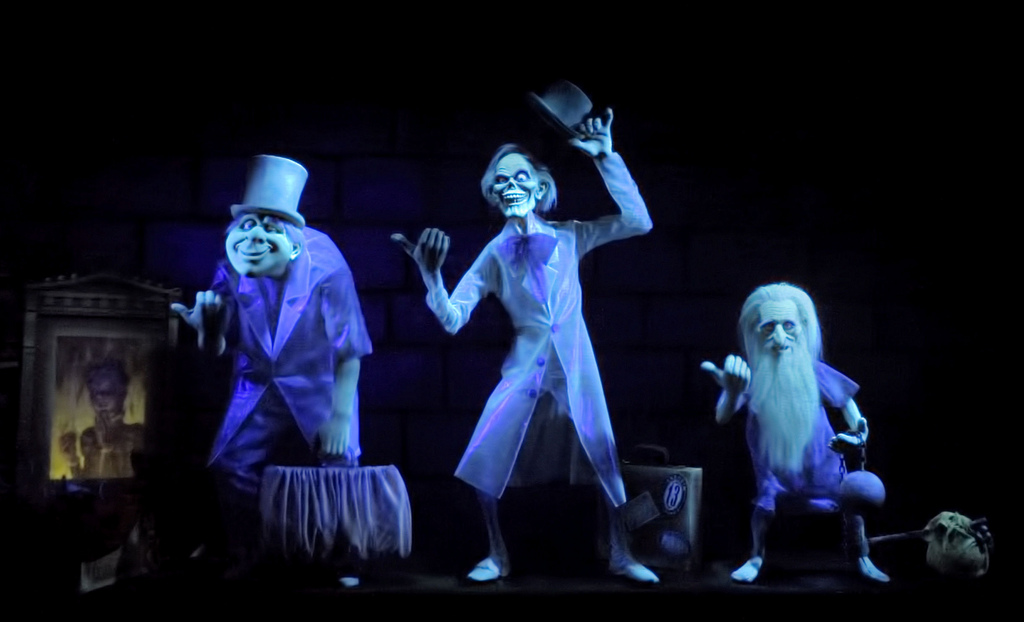
Jungle Cruise looks like it’s going to kind of dumb but it might be fun as well. I always enjoyed the Jungle Cruise, though my favorite Disneyland ride will always be the Haunted Mansion.
I hope these three guys get a cameo in Jungle Cruise!
It’s been a while since I shared music video from Adi Ulmansky so I decided that today would be a good day to correct that!
Enjoy!

