The Challenger (2015, directed by Kent Moran)


Jaden Miller (Kent Moran, who also directed) is a former honor student who threw away his scholarship to a private school when he got into a fight while defending another student.  Having dropped out of high school, Jaden now works as an auto mechanic in the Bronx.  When he and his mother (S. Epatha Merkerson) are evicted from their crummy townhouse, Jaden tries to make extra money by becoming a professional boxer.  As the “Bronx Boy,” he becomes a local hero and eventually, he wins the chance to challenge the light heavyweight champion of the world (Justin Hartley).

A by-the-numbers boxing movie, The Challenger was the final film of Michael Clarke Duncan and he’s the best thing about the movie.  Duncan plays Duane Taylor, the former boxing trainer who dropped out of the spotlight after one of his boxer threw a fight.  Duane agrees to train Jaden because he has a secret connection to both Jaden and his adoptive mother.  Clarke, with his powerful voice and his infectious laugh, is close-to-perfect in the role and he keeps things interesting, even when the movie sinks into an ocean of cliches.  The Challenger was released thee years after Duncan’s tragic death and the end credits feature behind-the-scenes footage of a friendly Duncan smiling and laughing with the film’s crew.  The movie may be imperfect but it serves as a tribute to a talented actor who passed away too young.

The Great White Hope (1970, directed by Martin Ritt)


The year is 1910 and the sports world is in a panic.  For the first time, a black man has won the title of the heavyweight champion of the world.  Jack Jefferson (James Earl Jones) had to go to Australia because no American city would agree to host the fight but he came out of it victorious.  The proud and outspoken Jefferson finds himself targeted by both the white establishment and black activists who claim that Jefferson has not done enough for his community.

It’s not just Jefferson’s success as a boxer that people find scandalous.  It’s also that the married Jefferson has a white mistress, a socialite named Eleanor Brachman (Jane Alexander, in her film debut).  While boxing promoters search for a “great white hope” who can take the title from Jefferson, the legal authorities attempt to arrest Jefferson for violating the Mann Act by supposedly taking Eleanor across state lines for “immoral purposes.”  Jefferson and Eleanor end up fleeing abroad but even then, their relationship is as doomed as Jefferson’s reign as the heavyweight champ.

Based on a Pulitzer-winning stage play by Howard Sackler, The Great White Hope features Jones and Alexander recreating the roles for which they both won Tonys.  Both Jones and Alexander would go on to receive Oscar nominations for their work in the film version.  It was the first nomination for Alexander and, amazingly, it was the only nomination that Jones would receive over the course of his career.  (It surprises me that he wasn’t even nominated for his work in Field Of Dreams.)  Both Jones and Alexander give powerful performances, with Jones dominating every scene as the proud, defiant, and often very funny Jack Jefferson.  Jones may not have had a boxer’s physique but he captured the attitude of a man who knew he was the best and who mistakenly believed that would be enough to overcome a racist culture.  (Speaking of racist, legendary recluse Howard Hughes reportedly caught the film on television and was so offended by the sight of Jones kissing Alexander that he thought about buying NBC to make sure that the movie would never be aired again.)  Hal Holbrook, Chester Morris, Moses Gunn, Marcel Dalio, and R.G. Armstrong all do good work in small roles.

Unfortunately, The Great White Hope still feels like a filmed stage play, despite the attempts made to open up the action.  Martin Ritt was a good director of actors but the boxing scenes are never feel authentic and the middle section of the film drags.  Jones and Alexander keep the film watchable but The Great White Hope is never packs as strong of a punch as its main character.

Game Review: Re-Election Campaign (2024, by Orange)


Re-Election Campaign is a Choose Your Own Adventure-style work of Interactive Fiction.  You are Jesse Jordan, the mayor of Cougar Valley, Washington.  You have been mayor for the last four years and you’re planning on being mayor for the next four and for a long time after that.

But first, can you win reelection?  Getting more votes than your friend Bob shouldn’t be a problem.  But what about Marie Eckles, the wealthy reform candidate who keeps highlighting what a terrible mayor you’ve been?  Do you do what you have to do to raise the money to out-advertise her?  Or do you just challenge her to a duel?  Or do you do something that is potentially even worse to secure your victory?

I don’t want to spoil the game but Re-Election Campaign has so many options and so many different outcomes that its one that you really do have to play over and over again to get the full story.  You can either play this quickly for fun (and I enjoyed seeing what would happen whenever I made an obviously bad decision) or you can do a deep dive and discover just how crazy things can get when politics and power are concerned.  I really enjoyed discovering a new aspect of the story every time that I played.  It takes more than a few run-throughs to really discover who Jesse Jordan really is.  Nothing is what it initially seems and I actually was taken by surprise when the truth was eventually revealed.  Well-written and frequently very funny, Re-Election Campaign is one of the best IF games that I’ve played in a while.

Click here to play Re-Election Campaign.

Chip of the Flying U (1939, directed by Ralph Staub)


In this B-western, Johnny Mack Brown plays Chip Bennett, the foreman of the Flying U Ranch.  The ranch is owned by J.G. Whitmore (Forrest Taylor) and his daughter (Doris Weston), who has just returned from college and who has eyes for Dusty (Bob Baker), a singing ranchhand.

Ed Duncan (Anthony Warde) and his gang are in the arms smuggling business.  To make their business a success, they need access to the ranch, which sits on the shore of a lake.  Knowing that Chip would never let them take over, Duncan tries to frame Chip for a bank robbery and murder.  Chip responds by kidnapping two of Duncan’s men, leading to a final and explosive shootout.

Chip of the Flying U is a western that doesn’t seem to know what era it’s supposed to be taking place in.  Chip, Duncan, and all of the other ranch hands dress like they’re in the late 1800s.  Doris Weston dresses like she’s just stepped out of a 1930s photoshoot.  Duncan is trying to smuggle hand grenades, which were invented in 1908 but not commonly used until World War I.  The movie’s time period is all over the place but that was frequently the case with the B-westerns of the 30s.  Shot on studio backlots and for a very low budget, these films were not concerned with historical accuracy.  Instead, they were about shootouts and a few songs.  Chip of the Flying U offers up both, along with Fuzzy Knight as the comedic sidekick who turns out to be very good with a rifle.

With lots of horse chases and bloodless shoot-outs and not too much romance, this movie may seem creaky by today’s standards but probably thrilled the kids who caught while spending an afternoon at the movies in 1939.  Today, the appeal of movies like this is that the good guys are unquestionably good and the bad guys are unquestionably bad.  They remind us of a simpler time that may have never existed but we all hope it did.

Scalplock (1966, directed by James Goldstone)


In this comedic western, gambler Benjamin Calhoun (Dale Robertson) wins big in a poker game.  Not only does he walk away with several thousand dollars but he also now owns his own railroad, the BP;S&D.  Calhoun celebrates the biggest win of his career by tossing ten dollar bills at the townspeople, recruiting a worshipful young assistant (Bob Random), and commandeering a private railcar that belongs to wealthy Burton Standish (John Anderson).  In the car, he finds Marta Grenier (Diana Hyland), a “working woman,” who has been hired to provide company for Standish.

Calhoun and Marta ride off to check out Calhoun’s new railroad.  What he discovers is that the railroad that he won is not only not completed but the workers are striking because they haven’t been paid in two weeks.  The quick-thinking Calhoun offers to make all of the workers part-owners of the railroad.  With construction once again starting, Calhoun tries to figure out how to keep his new business open.  He also meets a strong-headed storekeeper named Joanna Royce (Sandra Smith).

When Standish finally shows up, it turns out that he was originally planning on buying the BP;S&D.  Will Calhoun hold onto the railroad and honor the promise he made to the workers or will he sell out to Standish?

For all the talk about completing the railroad, Scalplock ends with most of the work undone.  That’s because Scalplock was a pilot for The Iron Horse, a television series that lasted for two seasons in the 60s.  Scalplock (and The Iron Horse) is mostly a showcase for Dale Robertson, a low-key but always convincing actor who specialized in westerns.  Usually, Robertson was cast as an upstanding citizen and law enforcement agent.  In Scalplock, he’s playing the type of genial rogue that James Garner played on Maverick and later in The Rockford Files.  Robertson is likable in Scalplock and even convinces us that Calhoun would choose his workers over a quick payday.  Fan of the genre will enjoy Scalplock, as long as they don’t get too invested in witnessing that last track of rail laid into the ground.

Dale Robertson, who started his career in the 40s, continued to act through the 90s, though usually as a guest star instead of a series lead.  Robertson eventually retired to Oklahoma where he owned a ranch that was home to over 200 horses.  He passed away in 2013 at the age of 89.

Night Shift (1982, directed by Ron Howard)


Chuck Lumley (Henry Winkler) was a Wall Street wizard until the stress of the job started to give him ulcers.  He dropped out of the rat race, got a less stressful job as an attendant at a New York City morgue, and eventually met and became engaged to Charlotte (Gina Hecht).  When Chuck’s supervisor decides to give Chuck’s day shift to his new guy, Chuck is promoted to the night shift.  “He has the same last name as you,” Chuck says when he learns the about the new employee.  “Yeah, I think he’s my nephew or something,” his supervisor replies.

Chuck finds himself working nights with “Billy Blaze” Blazejowski (Michael Keaton), a hyperactive “idea man,” who has so many brilliant plans that he has to carry around a tape recorder so he doesn’t forget them.  A typical Billy Blaze idea is to battle litter by creating edible paper.  Another one is to rent out the hearse as a limo and give rides to teenagers.  Chuck may not be happy about his new shift or coworker but he is happy that he shares his new work schedule with his upstairs neighbor, Belinda Keaton (Shelley Long).  Belinda is a high-class prostitute who first meets Chuck when she comes by the morgue to identify the body of her pimp.  When Chuck discovers that Belinda needs a new pimp, he and Billy take on the job themselves, which brings them into conflict with not only the vice cops but also with Pig (Richard Belzer) and Mustafa (Grand L. Bush).

Raunchy but good-hearted, Night Shift has always been one of my favorite comedies.  Along with being Ron Howard’s first movie for grown-ups, it also featured Michael Keaton in his first lead role.  Keaton is both funny and surprisingly poignant as Billy.  He’s hyperactive and impulsive and doesn’t think things through but his friendship with Chuck is real and later on in the movie, he reveals himself to have more depth than he lets on.  Also giving good performances are Henry Winkler and Shelley Long, two performers better-known for their television work than their film roles.  With his role here, Winkler proved that he was capable of playing more than just the Fonz.  Shelley Long has probably never been better (or sexier) than she was in this film.  The scene where she makes breakfast for Chuck is unforgettable.  Even though she’s playing a stock character, the prostitute with a heart of gold, Shelley Long brings her own unique charm to the role and makes Belinda seem like a real person.

Night Shift starts out strong but falters slightly during its second hour, when Chuck and Billy seem to magically go from being nerdy morgue attendants to successful pimps overnight.  Some of the violence feels out-of-place in what is essentially a buddy comedy with a dash of romance.  It’s still a funny movie that is full of memorable one liners and good performances.  As you might expect from Ron Howard, Night Shift is a surprisingly good-hearted look at the business of sex.  Ron Howard has directed a lot of films since but few of them are as much fun as Night Shift.

Great Moments In Television History #35: The 33rd NFL Championship Game Is Broadcast In Color


60 years ago today, the Cleveland Browns and the Green Bay Packers met in the 33rd Championship Game of the National Football League.  The Packers were led by Vince Lombardi while the returning champions, the Browns, were coached by Blanton Collier and had all-star fullback Jim Brown on its offensive roster.  The game was played at Lambeau Field in Wisconsin, in the middle of a snowstorm that soon turned the field into a mud pit.  50,777 fans showed up for the game, braving freezing weather and paying ten dollars per ticket.  The Packers defeated the Browns, 23-12.

This game was significant for many reasons.  It was the last NFL Championship Game to be played before the Super Bowl era.  With the exception of that year’s Probowl, it was Jim Brown’s final game before he retired to concentrate on his acting career.  It was Lombardi’s 3rd NFL Championship.  (The next year, he would catch the Packers to victory at the first Super Bowl.)

It was also the first NFL title game to be broadcast in color.  Airing on CBS and announced by Ray Scott, Ken Coleman, and Frank Gifford, the game was broadcast into American household in full, glorious color.  It was both a worthy send-off to the Championship Game era and a welcome to the future of the NFL.

Previous Moments In Television History:

  1. Planet of the Apes The TV Series
  2. Lonely Water
  3. Ghostwatch Traumatizes The UK
  4. Frasier Meets The Candidate
  5. The Autons Terrify The UK
  6. Freedom’s Last Stand
  7. Bing Crosby and David Bowie Share A Duet
  8. Apaches Traumatizes the UK
  9. Doctor Who Begins Its 100th Serial
  10. First Night 2013 With Jamie Kennedy
  11. Elvis Sings With Sinatra
  12. NBC Airs Their First Football Game
  13. The A-Team Premieres
  14. The Birth of Dr. Johnny Fever
  15. The Second NFL Pro Bowl Is Broadcast
  16. Maude Flanders Gets Hit By A T-Shirt Cannon
  17. Charles Rocket Nearly Ends SNL
  18. Frank Sinatra Wins An Oscar
  19. CHiPs Skates With The Stars
  20. Eisenhower In Color
  21. The Origin of Spider-Man
  22. Steve Martin’s Saturday Night Live Holiday Wish List
  23. Barnabas Collins Is Freed From His Coffin
  24. Siskel and Ebert Recommend Horror Films
  25. Vincent Price Meets The Muppets
  26. Siskel and Ebert Discuss Horror
  27. The Final Scene of Dark Shadows
  28. The WKRP Turkey Drop
  29. Barney Pops On National TV
  30. The Greatest American Hero Premieres
  31. Rodney Dangerfield On The Tonight Show
  32. The Doors Are Open
  33. The Thighmaster Commercial Premieres
  34. The Hosts of Real People Say “Get High On Yourself”

Great Moments In Comic Book History #37: MAD Magazine Plays Both Sides


In January of 1961, Mad Magazine taught a nation of young readers how to cover their bets.  With the magazine due to go to press before the results of the 1960 presidential election would be known, Mad Magazine #60 was published with a double cover.

25 cents was not only a cheap price to pay for Mad’s trademark humor and satire but it was also the price of an invaluable political lesson.  Thank you, Mad Magazine!

Previous Great Moments In Comic Book History:

  1. Winchester Before Winchester: Swamp Thing Vol. 2 #45 “Ghost Dance” 
  2. The Avengers Appear on David Letterman
  3. Crisis on Campus
  4. “Even in Death”
  5. The Debut of Man-Wolf in Amazing Spider-Man
  6. Spider-Man Meets The Monster Maker
  7. Conan The Barbarian Visits Times Square
  8. Dracula Joins The Marvel Universe
  9. The Death of Dr. Druid
  10. To All A Good Night
  11. Zombie!
  12. The First Appearance of Ghost Rider
  13. The First Appearance of Werewolf By Night
  14. Captain America Punches Hitler
  15. Spider-Man No More!
  16. Alex Ross Captures Galactus
  17. Spider-Man And The Dallas Cowboys Battle The Circus of Crime
  18. Goliath Towers Over New York
  19. NFL SuperPro is Here!
  20. Kickers Inc. Comes To The World Outside Your Window
  21. Captain America For President
  22. Alex Ross Captures Spider-Man
  23. J. Jonah Jameson Is Elected Mayor of New York City
  24. Captain America Quits
  25. Spider-Man Meets The Fantastic Four
  26. Spider-Man Teams Up With Batman For The Last Time
  27. The Skrulls Are Here
  28. Iron Man Meets Thanos and Drax The Destroyer
  29. A Vampire Stalks The Night
  30. Swamp Thing Makes His First Cover Appearance
  31. Tomb of Dracula #43
  32. The Hulk Makes His Debut
  33. Iron Man #182
  34. Tawky Tawny Makes His First Appearance
  35. Tomb of Dracula #49
  36. Marvel Publishes Star Wars #1

Airplane II: The Sequel (1982, directed by Ken Finkleman)


It isn’t the past.  It isn’t the present.  It’s the future.

The moon has been colonized and, on Earth, the Mayflower II is preparing for its first international flight.  It will be carrying passengers from Houston to the lunar station.  Test pilot Ted Striker (Robert Hays) claims that the Mayflower II is not ready to make the trip but he’s been in the Ronald Reagan Hospital For The Mentally Ill ever since he had a nervous breakdown after losing his squadron during “the war.”

Aboard the Mayflower II is Ted’s ex-wife, Elaine (Julie Haggerty), and her new boyfriend, Simon (Chad Everett).  Simon says the Mayflower II is in perfect shape but he also turns into jelly whenever things get too rough.  Piloting the Mayflower II is Captain Clarence Oveur (Peter Graves) and waiting on the Moon is Commander Buck Murdock (William Shatner).  The crew of the Mayflower II is going to have a tough flight ahead of them.  Not only is the shipboard computer making plans of its own but one of the passengers (Sonny Bono) has a bomb in his briefcase.  Also, Ted has broken out of the hospital and is on the flight, boring people with his long stories.

Every successful film gets a sequel and when Airplane! was a surprise hit in 1980, it was inevitable that there would be an Airplane II.  Robert Hays, Julie Haggerty, Lloyd Bridges, Peter Graves, and Stephen Stucker all returned.  Unfortunately, Jim Abrahams, the Zucker brothers, Robert Stack, Kareem Abdul-Jabbar, and Leslie Nielsen did not.  (The directors and Nielsen were all working on Police Squad and their absence is strong felt.)  Airplane II recreates many of the same jokes as the first Airplane! but without the first film’s good nature or genuine affection for the disaster genre.  Airplane! was made for the love of comedy.  Airplane II was made for the love of money and, while there are more than a few amusing moments, the difference is obvious and there for all to see.

Not surprisingly, Airplane II is at its funniest whenever William Shatner is on screen.  In the role of Bud Murdock, Shatner pokes fun at his own image and shows himself to be a good sport.  He’s still not as funny as Leslie Nielsen or Robert Stack in the first film but that’s because, unlike Stack and Nielsen in their pre-Airplane! days, there had always been a hint of self-parody to Shatner, even in his most dramatic roles.  If Stack and Nielsen shocked people by showing that they could do deadpan comedy, Shatner’s performance just confirmed what most suspected, that he had always been in on the joke.  Still, he’s the funniest thing in Airplane II and, whenever I rewatch this movie, I am happy he was there.

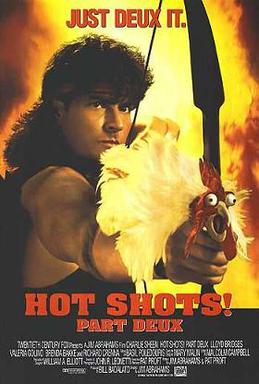
Airplane II was a box office failure, which is why the world never got an Airplane III.  Fortunately, the world did get Hot Shots and The Naked Gun.

Airplane! (1980, directed by David Zucker, Jim Abrahams, and Jerry Zucker)


Airplane!, which may be the funniest movie ever made, has made me laugh every time that I’ve watched it.  And I’ve watched it a lot!

Whenever I’m getting ready to travel for my day job, I watch Airplane!  Whenever I’m going to Baltimore or West Virginia for the holidays, I watch Airplane!  Whenever I’m in a bad mood and I need something lighten me up, I watch Airplane!  Whenever I’m in a good mood and I want to be in an even better mood, I watch Airplane!

I can’t remember how old I was when I first saw Airplane! but I know I wasn’t yet ten.  While a lot of the humor went over my head at that young age, it did not matter because I laughed at all the sight gags, like the heart hopping around on the doctor’s desk and the line of passengers waiting to “calm down” the hysterical woman.  I laughed when Ted Stryker (Robert Hays) and Elaine (Julie Haggerty) got covered in seaweed while making out on the beach.  I laughed at the people dying while listening to Ted’s story, even though I didn’t fully understand that it was because of Ted boring them to death.  I loved it when Kareem Abdul-Jabbar got annoyed with the kid in the cockpit, even though young me really didn’t know who Kareem was other than he was a basketball player.  Otto the autopilot was the coolest character around.  Stephen Stucker’s Johnny made me laugh with his nonstop energy.  “Excuse me, stewardess, I speak Jive.”  “And don’t call me Shirley.”  “It looks like I picked the wrong time to stop sniffing glue.”  Every time I heard them, I laughed at all of those lines.  I didn’t have to understand why Lloyd Bridges was suddenly upside down.  I just knew it was funny.

As I got older and rewatched the film, I started to pick up on the humor that earlier went over my head.  I traveled to Turkey when I was twelve and our tour guide spent an hour telling us that Midnight Express was not a fair representation of her country.  After that, I suddenly understood why Captain Oveur (Peter Graves) wanted to know if Joey had ever been to a Turkish prison.  I came to appreciate Julie Hagerty and Lorna Patterson as the two flight attendants.  Airplane! still made me laugh but I came to understand that it was also a love story.  What adolescent boy watching Airplane! didn’t want to be Robert Hays, not only landing the plane but also getting kiss Julie Hagerty at the end of the movie?

And then, as I learned more about the movies, I realized that Airplane! was a pitch perfect parody of the disaster genre and I came to understand the brilliance of casting actors like Lloyd Bridges, Robert Stack, Peter Graves, and especially Leslie Nielsen in this film.  From the first time I saw the movie, Nielsen always made me laugh because he had the best lines and he delivered them with deadpan perfection.  But, as I got older, I came to understand that Nielsen was doing more than just saying funny things.  He was sending up his entire career.  I’m a part of the generation who grew up laughing at Leslie Nielsen the comedy superstar and it’s always strange for me to see him in one of his older, serious roles.  I have Airplane! to thank for that.

There’s so much to say about Airplane!  I could write a thousand words just talking about my favorite jokes and one-liners or how much I enjoyed Stryker’s flashbacks.  It’s my favorite movie and one that still makes me laugh even though I know all of the jokes by heart.  (I’ve always thought Howard Jarvis waiting for Stryker to return to the taxi was one of the best, though underrated, jokes in the movie.)  Airplane! is close to 50 years old and it’s still just as funny today as when I first saw it.

In fact, I think I’ll go watch it right now!