Neal Adams, Rest In Peace


I was sorry to hear that Neal Adams, the great comic book artist who revitalized Batman and who was a tireless advocate for creator’s rights, passed away yesterday at the age of 80.

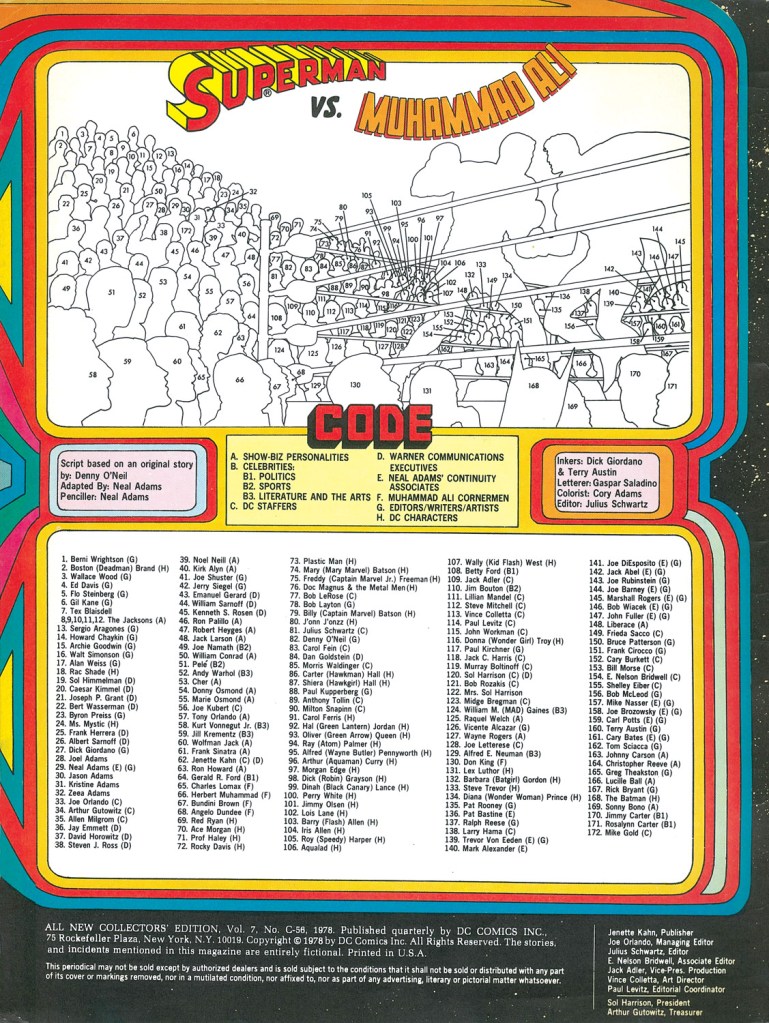
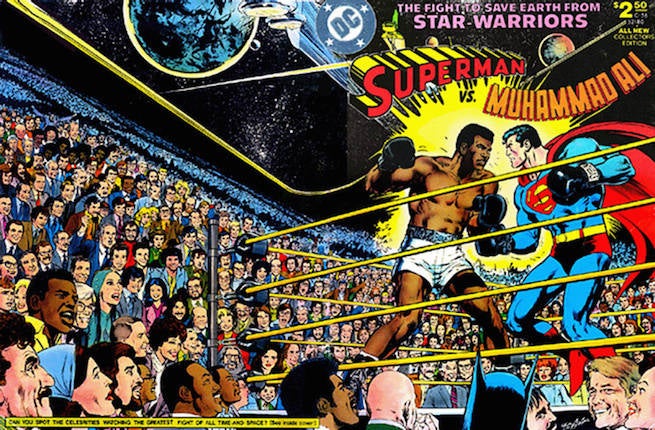
This is my favorite Neal Adams cover and I know I’m not alone. From 1978, here is Superman vs. Muhammad Ali.

Though Superman vs Ali is the main attraction, the cover features everyone from Batman to Telly Savalas to Sonny Bono to Jackie Onassis to just about everyone else was somebody in the 1970s.

Neal Adams, RIP.

Music Video of the Day: Can’t Help Falling In Love by UB40 (1993, directed by Neil Abramson)


For much of 1993, this song and music video was inescapable on MTV.  Director Neil Abramson also directed videos for Belinda Carlisle, Enigma, Siouxsie and the Banshees, and Dwight Yoakam.  Soiuxsie and the Banshees and Dwight Yoakam?  The music business makes for some interesting connections.

Enjoy!

Music Video of the Day: Patience by Guns N’ Roses (1989, directed by Nigel Dick)


Maybe it’s the whistling at the start but I’ve always thought of this as being a Guns N’ Roses country song.

The video was directed by Nigel Dick, who has directed music videos for anybody who is anyone in music.  The scenes of the band performing were filmed at The Record Plant, a legendary Los Angeles recording studio,  The scenes in the hotel were filmed at the Ambassador, which is the same hotel where Robert F. Kennedy was assassinated in 1968 shortly after winning California’s Democratic presidential primary.  At the time the video was shot, the Ambassador had been closed down and was scheduled to be demolished.  (It would be another 17 years before the hotel actually was torn down.)

This was the final Guns N’ Roses video to feature drummer Steve Adler, who was fired from the band after the video was shot.  Most people who have seen this video will probably agree that the snake is the true star of the production.

Enjoy!

Music Video of the Day: Bad Day by Carmel (1983, directed by Dee Trattmann)


Today will not be that bad if I can introduce just one person to Carmel, one of the best bands that has never really gotten its due.  Carmel was formed in 1981 and they’re still performing, touring, and recording new music.  Their latest album came out in February of this year.

This video was directed by Dee Trattmann, who also directed several videos for Cliff Richard.  I think every British music video director of a certain age did a video or two for Cliff.

Enjoy!

Music Video of the Day: Spirit of 76 by The Alarm (1985, directed by Nick Morris)


Today, we give a shoutout to Wales with the music video for Spirit of 76, which was written and performed by the Welsh band, The Alarm.  In the 80s, The Alarm earned an international fanbase by opening for U2 and, later, Bob Dylan.  Just as U2 will always be associated with Ireland, The Alarm will always be associated with Wales.  The band is still together and still proudly Wlesh.

This video was directed by Nick Morris, who was one of the busiest music directors of the 80s and the 90s.  He also did music videos for Cinderalla, Toto, The Rainmakers, Jennifer Rush, Europe, Eddie Money, Cliff Richard, Warren, and Radiohead among others.

Enjoy!

Music Video of the Day: Perry Mason by Ozzy Osbourne (1995, directed by Ralph Ziman)


How did Ozzy Osbourne come to sing a song about television’s most famous lawyer?

Apparently, it came from a session of guitarist Zakk Wylde and keyboardist John Sinclair just improvising.  Wylde liked what they came up with and when he shared the music with Osbourne, Osbourne made up the lyrics on the spot.  No one seems to know why Ozzy Osbourne had Perry Mason on his mind that particular day.  Maybe he had been watching TV.

The music video features a young girl walking through what appears to be death row and spotting Osbourne performing the song in a cell.  It was directed by Ralph Ziman, a South African director who, along with doing anti-Apartheid feature films, had also directed the video for the Ozzy Osbourne’s previous hit, No More Tears.  It only made sense to bring him back for Perry Mason.

Enjoy!

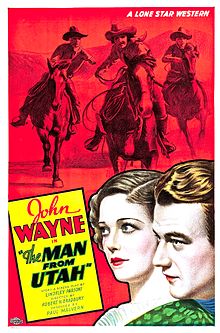
The Man From Utah (1934, directed by Robert N. Bradbury)


John Wayne is John Weston, the man from Utah.  He’s a singing  cowboy, the type who rides from town to town and sings to his horse while they’re crossing the range.  John Wayne started his career in singing cowboy movies and he often complained that he wasn’t allowed to actually sing.  Instead, his singing voice was always dubbed and it rarely matched his speaking voice.  Audiences in 1934 may not have noticed but, for audiences today, there’s no way to hear John Weston sing and think, “That’s John Wayne.”

John Weston rides into town and guns down three bank robbers.  The Marshal (George “Gabby” Hayes) is so impressed that he hires Weston and then sends him undercover into the local rodeo.  The Marshal thinks the rodeo is corrupt because any rodeo rider who comes close to winning the prize money mysteriously dies of snakebite.  That does seem suspicious.  Weston discovers that Spike Barton (Edward Peil, Sr.) is murdering the riders and is planning on stealing the prize money for himself.  Can the Man from Utah stop him without getting snakebit?

The Man From Utah features John Wayne in an early starring role, playing the type of character that he would later become famous for, the no-nonsense westerner who will do whatever he has to do to make sure justice is served.  Though it would be another five years before Stagecoach made him a certifiable movie star, Wayne is already a confident hero in The Man From Utah.  He only seems uncertain when he has to pretend to sing and it’s a good thing that John Ford helped him to leave the singing cowboy genre behind.  If Wayne had entered Stagecoach singing a song to his horse, it would have been a much different movie.

The Man From Utah is also full of actual rodeo stock footage, most of which is exciting if you’re into that type of thing.  The only problem is that most of the people at the rodeo are wearing modern clothing, making them seem out-of-place in a movie about the old west!  Overall, though, The Man From Utah is a good and simple Western programmer and will be appreciated by fans of the genre.

Music Video of the Day: Sweet Child O’ Mine by Guns N’ Roses (1988, directed by Nigel Dick)


You can thank Thor for today’s music video of the day.

This video was shot in the Mendiola’s Ballroom at Huntington Park, California.  All of the band’s then-girlfriends are featured in the clip.  Erin Everly was dating Axl Rose at the time and he wrote the lyrics with her specifically in mind.  Sally McLaughlin was dating Slash.  Steven Adler was dating Cheryl Swiderski while Duff McKagan was going out with Mandy Brx and Izzy Stradlin was seeing Angela Nicoletti.  Unfortunately, I don’t think any of those people are still together but the song still rocks.

The video was directed by Nigel Dick, which is not surprising.  From the 80s to the present day, being a star means that Nigel Dick will eventually end up directing a music video for you.  Along with doing several other videos for Guns N’ Roses, he’s also done videos for Nickelback, Il Divo, R.E.M., Barry Manilow, Britney Spears, Madness, Iron Maiden, and pretty much every other band that’s ever had a major recording contract.  Did his work with Iron Maiden and Guns N’ Roses prepare him to work with Barry Manilow?  We may never know.

Enjoy!

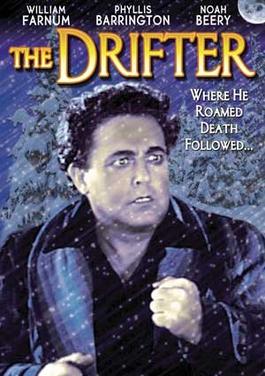
The Drifter (1932, directed by William A. O’Connor)


“This town ain’t big enough for the both of us.”

This line, which has been recycled in so many western parodies, is actually used seriously in The Drifter, a forgotten western from the pre-code era.  The line is delivered by Montana (Russell Hopton) and he’s speaking to a mysterious character known only as The Drifter (William Farnum).

The Drifter is a French-Canadian who has spent decades searching for his lost-lost brother but who is now ready to go into town, get work as a logger, and hopefully find a woman to marry.  Along with a mysterious man who is named Whitey and who is played by Charles Sellon, The Drifter is hired to work for local lumber magnate, John McNary (Noah Beery).  The Drifter impresses everyone with his good hearted ways and he falls in love with McNary’s daughter, Bonnie (Phyllis Barrington).  Unfortunately, Phyllis is already dating Paul LaTour (Bruce Warren), who is her father’s main business rival.  But before The Drifter can concentrate on winning Phyllis away from LaTour and also solving the mystery of his own missing family, he has to deal with the most dangerous man in town, Montana.  As Montana puts it, the town’s not big enough for both him and The Drifter.

The Drifter‘s story is potentially interesting but the low-budget, the shoddy production values, and a slow pace all conspire to do the film in.  This was one of the countless western programmers that was produced in the early 30s.  Like many of the other poverty row productions of the era, it starred an actor who had been huge during the silent era but who struggled to find work during the early years of the sound era.  William Farnum started as a stage actor and as a protegee to Edwin Booth, who was largely considered to be America’s finest stage actor even if he was forever tainted by being the brother of presidential assassin John Wilkes Booth.  Farnum’s very theatrical style of acting made him perfect for both Broadway and for the silent film era, a time when actors had to use big movements and dramatic facial expressions in order to convey their emotions.  When the sound era came along, Farnum’s style was suddenly no longer in vogue and, unfortunately, it took him a while to adjust to working with sound.  Even in a sound film like The Drifter where he had dialogue, Farnum gives the type of overly theatrical performance that was more common during the silent era.  What’s interesting is that Farnum’s performance actually works for the character of The Drifter, who is meant to be an outsider who struggles to communicate with other people.  Despite some implausible twists at the end, the rest of The Drifter isn’t as interesting.

Farnum eventually did adjust to the sound era and he became a respected character actor, playing many captains and many judges.  In 1953, when he died at the age of 76, Hollywood turned out to pay their respects.  Cecil B. DeMille and Paramount Picture co-founder Jesse B. Lasky served as pallbearers.
Music Video of the Day: Anthem For The Year 2000 (1999, directed by Gavin Bowden)


Does anyone remember Silverchair?

They were the band from Australia who got a lot of attention because they were all teenagers who weren’t even old enough to drink when they were big in America.  From the minute that Silverchair showed up on MTV in the 90s, it has been fashionable to dismiss them as being overly derivative of the other bands that were popular at the time.  That’s a valid complaint and the lead singer always tried too hard to be angsty but Silverchair did get better towards the end of their run and, if they were derivative, they were never as cynically blatant about it as band like Bush was.

Anthem For The Year 2000 is one of their better songs.  To understand both the song and the video, you have to think back to what the world was like in 1999, when everyone was worried that Y2K would lead to computer systems shutting down across the world.  It was also a time when people were very worried about “the new world order,” as seen by the video’s robot politician.  Actually, I guess 1999 isn’t that different from 2022.

Enjoy!