Film Review: Inherent Vice (dir by Paul Thomas Anderson)


Inherent-Vice-poster

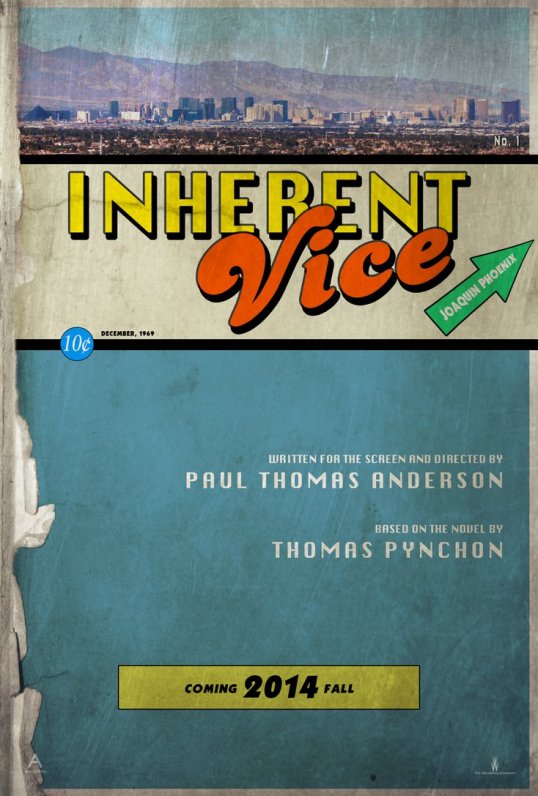
One of the best things about Paul Thomas Anderson’s latest film, Inherent Vice, is that Doc Sportello, the private detective played by Joaquin Phoenix, is a real stoner.  He’s not one of those weekend smokers, who gets high on Saturday, brags about it on Sunday, and then spends the rest of the week interning at Vox.  For the entire 2 hour and 20 minute running time of Inherent Vice, Doc is stoned.  From the minute we first meet him to the end of the film, there is never one moment where Doc is not stoned.  Most stoner comedies feature a scene where the main character shocks everyone by turning down a hit because he’s dealing with something so important that he has to “keep his mind straight.”

Not so with Doc!

And, in Doc’s case, it definitely helps him out.  Inherent Vice tells a story that is so full of paranoia, conspiracy, and random connections that only a true stoner could follow it.  Much like Doc, the film often seems to be moving in a haze but occasionally, out of nowhere, it will come up with a scene or a line of dialogue or a detail that is so sharp and precise that it will force you to reconsider everything that you had previously assumed.

To be honest, if you are one of the people who watched Inherent Vice this weekend and could actually follow the film’s plot, then you’ve got a leg up on me.  (That said, I’ve still got pretty good legs so it all evens out.)  But, that’s not necessarily a complaint.  As befits a film based on a novel by Thomas Pynchon and directed by one of the most idiosyncratic filmmakers around, the twists and turns of Inherent Vice are deliberately meant to be obscure and confusing.  Characters appear and then vanish.  Clues are discovered and then forgotten.  Connections are hinted at but then never confirmed.  Inherent Vice ultimately serves a tribute to stoner’s paranoia and, as a result, the plot’s incoherence leads to a certain contact high.

The film takes place in California in the 1970s.  Doc is both a hippie and a private detective. His current girlfriend (Reese Witherspoon) works for the district attorney’s office and doesn’t seem to like him much.  His ex-girlfriend, Shasta (Katherine Waterston), reenters his life and asks him to help protect her new boyfriend, real estate developer Mickey Wolfman (Eric Roberts).  Mickey has disappeared.  Shasta disappears.  As Doc investigates, he wanders through a psychedelic Los Angeles and deals with an ever growing collection of eccentrics.

For instance, there’s Hope Harlingen (Jena Malone), a former heroin addict who now runs a group that aims to promote “responsible drug use” among children.  She believes that her husband, Coy (Owen Wilson), is dead but actually Coy is a government informant who keeps popping up in the strangest places.

There’s Rudy Blatnoyd (Martin Short), a decadent dentist who may or may not be responsible for all of the heroin entering California.

There’s Sauncho Smilax (Benicio Del Toro), Doc’s lawyer who specializes in maritime law.

There are Nazi bikers, new age doctors, a formerly blacklisted actor turned right-wing spokesman, a black revolutionary whose best friend was a member of the Aryan brotherhood, three FBI agents who keep picking their noses, the decadent rich, and, of course, the endlessly clean-cut and bullying officers of the LAPD.

And then there’s Detective “Big Foot” Bjornsen (Josh Brolin), a celebrity cop and occasional television extra who seems to admire Doc, except for when he’s trying to frame Doc for everything from murder to drug smuggling.  Bjornsen is probably the most interesting character in the entire film and Brolin plays the character perfectly.  His scenes with Phoenix crackle with a comedic energy that bring the film to life.

As for the movie itself, it’s not for everyone.  A lot of very smart people are going to dislike it, much as many of them did with The Master.  In some ways, Inherent Vice truly is an endurance test.  Speaking as someone who enjoyed the film, even I occasionally found myself saying, “Okay, does everyone have to have a silly name?”  Inherent Vice is a long, rambling, and occasionally frustrating film but, for me, it still worked because of the strong cast and Anderson’s attention to detail.

Unbroken is a film that seems to take place in an entirely different world from Inherent Vice but these two films do have one big thing in common.  Both of them have been victims of the expectation game.  Many of the same people who thought Unbroken would be a surefire Oscar nominee also assumed, sight unseen, that Inherent Vice would be right there with it.  Much as how Unbroken has suffered for merely being good as opposed to great, Inherent Vice is also suffering for failing to live up to the expectations that were thrust upon it.  Inherent Vice is not an awards movie.  Instead, it’s a fascinatingly idiosyncratic film that was made by a director who has never shown much concern with playing up to the audience.  While Unbroken is enough of a crowd pleaser to still have a shot at some Oscar glory, Inherent Vice is the type of film that will probably never get nominated.  (I do have some hope that Brolin will get a supporting actor nomination but, even there, it appears likely that Brolin’s spot will be given to The Judge‘s Robert Duvall.)

Well, no matter!  Flaws and all, Inherent Vice will be a film that people will still be debating and watching years from now.

Icarus Files No. 1: Cloud Atlas (dir. by The Wachowskis and Tom Tykwer)


CloudAtlas

“My life amounts to no more than one drop in a limitless ocean. Yet, what is any ocean, but a multitude of drops?” — David Mitchell

Let me tell you about Icarus. He took flight with wings of feather and wax. Warned not to fly too low so as not to have the sea’s dampness clog his wings or to climb too high to have the sun melt the wax. Icarus heeded not the latter and tried to fly as close to the sun. Just as his father had warned him the wax in his wings melted as he flew too close to the sun and soon fell back to earth and into the sea.

A tale from Greek mythology that taught has taught us about ambition reaching so high that it’s bound to fail. One such ambitious failure of recent times has been the epic science fiction film Cloud Atlas directed by The Wachowskis and Tom Tykwer.

The film was adapted from the novel of the same name by author David Mitchell which looked to take six stories set in 19th-century South Pacific and right up to a distant, post-apocalyptic future. Each story’s characters and actions would connect with each other through the six different time and space. The film attempts to do what Mitchell’s novel did through several hundred dense and detailed pages.

CLOUD ATLAS

Just like Icarus The Wachowski and Tom Tykwer’s attempt to connect the lives and actions of all six stories amounts for what admirers and detractors can only agree on as an admirable and ambitious failure.

The film boasts a large ensemble cast led by Tom Hanks, Halle Berry, Jim Broadbent, Hugh Grant and Hugo Weaving. More than one of the actors in the cast would perform characters in each and every six interconnecting stories in the film which added a sense of rhythmic continuity to the whole affair, but also made for some very awkward and uncomfortable scenes of what could only amount to as “yellowface”. This was most evident in the story set in 22nd-century Neo Seoul, South Korea where actors such as James D’Arcy, Jim Sturgess, Keith David and Hugo Weaving have been heavily made-up to look Asian.

Cloud Atlas was and is a sprawling film that attempts to explore the theme that everything and everyone is connected through time and space. It’s how the action of one could ripple through time to have a profound effect on others which in turn would create more ripples going forward through time. The film both succeeds and fails in portraying this theme.

cloud_atlas_hd_movie_trailer_stills_cinemavine_144.png.scaled1000

It’s the film’s narrative style to tell the six stories not in a linear fashion from 19th-century to the post-apocalyptic future, but instead allow all six tales to weave in and out of each other. At times this weaving style and how it would seamlessly go from one time location to another without missing a beat made for some very powerful and emotional moments. But then it would also make these transitions in such a clunky manner that it brings one out of the very magical tale the three directors were attempting to weave and tell.

Yet, even through some of it’s many faults and failings the film does succeed in some way due to the performances of the ensemble cast. Even despite the awkwardness of the “yellowface” of the Neo Seoul sequence the actors in the scenes perform their roles such admirable fashion. One would think that someone like Tom Hanks who has become such a recognizable presence in every film he appears in wouldn’t be able to blend into each tale being shown and told, but he does so in Cloud Atlas and so does everyone else.

It helps that the film was held up from a very hard landing after reaching so high with an exquisite and beautiful symphonic score composed by Tom Tykwer, Reinhold Heil and Johnny Klimek. It’s a score that manages to accentuate the film’s exploration of emotions and actions rippling through time without ever becoming too maudlin and pandering to the audiences emotions.

o0800045112460141324

Cloud Atlas was hyped as the next epic science fiction film from The Wachowskis and Tom Tykwer leading up to it’s release. This hype was further built-up with thundering standing ovation during it’s screening at the 37th Toronto International Film Festival. But once the film finally was released and more critics and the general public were able to see it for themselves the reaction have been divisive. This was a film that brooked no middle-ground. One either loved it flaws and all or hated it despite what it did succeed in accomplishing amongst the failures.

Just like Icarus, Cloud Atlas and it’s three directors had high ambitions for the film. It was a goal that not many filmmakers seem to want to put themselves out on the limb for nowadays because of how monumental the failure can be if their ambitions are just too high. It’s been the reputation of The Wachowskis since they burst into the scene with their Matrix trilogy. Their eclectic and, somewhat esoteric, storytelling style have made all their films an exercise in high-risk, high reward affairs that makes no apologies whether they succeed or fail. Each of their films have a unique vision that they want to share with the world and they make no compromises in how this vision is achieved.

One could call Cloud Atlas an ambitious failure. It could also be pop, New Age psychobabble wrapped up in so-called high-art. Yet, what the two siblings and Tom Tykwer were able to achieve with the film has been nothing less by brave and daring. If more filmmakers were willing to allow their inner Icarus to fly then complaints of Hollywood and the film industry not having anymore fresh new ideas would fade.

Trailer: Jurassic City


Now, I know that a lot of people are really excited about seeing Jurassic World later this year.  However, if you can’t wait until June to get your dinosaur action, why not check out Jurassic City, which is due to be released on February 3rd!

If nothing else, Jurassic City deserves credit for using “This ain’t no walk in the park…” as a tag line.


Here’s The Latest Teaser For The Walking Dead!


As we all know, the zombie apocalypse is set to continue on February 8th!  That’s when The Walking Dead returns to television.

Earlier today, AMC released the latest Walking Dead teaser and it is a celebration of survival, unity, Andrew Lincoln’s facial hair, and guns!

Trailer: Chappie (2nd Official)


Chappie

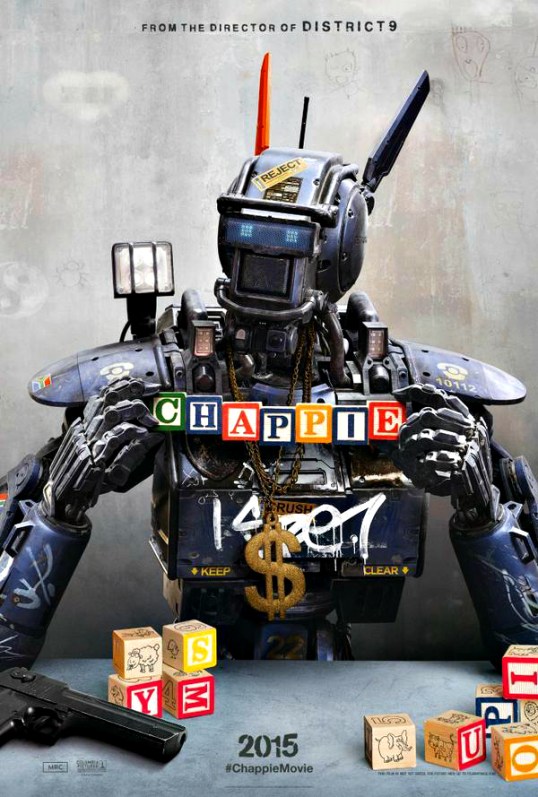
Chappie will be the third film from Neill Blomkamp and with the release of it’s second trailer there already seems to be a sort of negative buzz surrounding the film. The first trailer made Chappie look like a modern remake of the 80’s “robot come to life” film Short Circuit. For many this is not a good comparison.

This second trailer pulls back on the cutesy Chappie robot stuff and takes a much more ominous and serious tone. The film seems like it’s all about the danger of artificial intelligence and how Chappie may be the key behind what can make A.I. work or fail.

Yet, despite taking a much more action direct approach the negative buzz is still there. Maybe people are not as quick to embrace Chappie after the underwhelming (some say heavy-handed) result of Blomkamp’s follow-up to District 9 with Elysium. It’s an understandable reaction considering how high Blomkamp reached and succeeded with his very first feature film.

Chappie (and Neil Blomkamp) has between now and March 6, 2015 to convince people that it will not be another Icarus-like release.

Trailer: Plan 9 and The Voices


PCAS

So the upcoming film Plan 9 is apparently meant to be a remake of Ed Wood’s Plan 9 From Outer Space.  That sounds like a terrible idea, doesn’t it?

Perhaps The Voices will be better.  This one features Ryan Reynolds, Anna Kendrick, and a talking cat!

The Things You Find On Netflix: The Scorpion King 4: Quest For Power (dir by Mike Elliott)


Believe it or not, The Scorpion King 4: Quest For Power is a historical footnote.  It is the first 2015 release to be available for viewing on Netflix streaming!  That’s because The Scorpion King 4 was a straight-to-video release and Universal Pictures doesn’t seem to have much faith in the film’s commercial prospects.  In fact, if not for my love of historical footnotes, I probably would never have even watched the film.

But I did watch it, mostly because I didn’t like the idea of The Woman In Black 2 being the only 2015 films that I had seen up to that point.

And you know what?

The Scorpion King 4 is cheap, silly, and often times impossible to follow.  But, when taken on its own terms, it’s also a lot of fun.  At the very least, it’s more entertaining than The Woman In Black 2.

Scorpion-King-4

As for what the film is about … well, that’s a good question.  To be honest, I’ve never seen any of the previous Scorpion King films.  I know from Wikipedia that the character was spun-off from Brendan Fraser’s old Mummy film and, while I’ve seen bits and pieces of it on cable over the years, I’ve never actually sat through that entire movie.  However, I do know that the Mummy was Egyptian and apparently, so was the Scorpion King.

So, you would assume that Scorpion King 4 would take place in ancient Egypt.  And indeed, the opening scene is set in the desert and involves the Scorpion King, also known as Mathayus (Victor Webster), and his partner Drazen (Will Kemp) storming a fortress that feels vaguely Egyptian.  After a lengthy battle, Mathayus and Drazen steal an urn that is covered with hieroglyphics.  However, Drazen double crosses Mathayus and takes the urn for himself.

Okay, I thought, we’re obviously in Egypt.

Except, of course, in the very next scene, Mathayus meets with his employer, King Zakour (Rutger Hauer).  King Zakour explains that Drazen is the son of a rival king (played by Michael Biehn, who makes little effort to hide his Southern accent).  Zakour also explains that the urn hides mystical secrets that, if deciphered, could allow Drazen to conquer the world.  Zakour sends Mathays to the rival kingdom, ordering him to deliver a peace treaty.

And, while Zakour delivers all of this exposition, it’s hard not to notice that he appears to live in an ancient Roman villa and he has a rather cheap-looking crown perched on his head.

Okay, I thought, the film has moved to the Roman Empire but at least I know we’re still in ancient times…

Except then Mathayus rides his camel into the rival kingdom and it turns out to look a like the set from a community theater production of Spamalot.  As soon as Mathayus arrives, he is captured by Drazen’s men and ends up in a jail cell next to Valina (Ellen Holman), a revolutionary who is wearing a green, prison bikini top.  After Mathays is framed for the king’s death, he and Valina escape from the prison and run into the wilderness, where Valina changes into a battle-worthy bikini top.

They reach the house of Valina’s father (Barry Bostwick) and it turns out to be a Dutch windmill!  So, within the first 30 minutes of the film, we’ve gone from ancient Egypt to the Roman Empire to a medieval village in England to Renaissance Netherlands.  Eventually, our characters will end up in another village, one that happens to feature a temple that looks a lot like a left over set from Hercules in the Haunted World…

What’s surprising is that the film’s refusal to settle on a definite setting or time period is actually oddly charming.  As soon as that windmill showed up and a feather-covered Barry Bostwick flew across screen (Bostwick is an inventor who has filled the windmill with blueprints for cars and airplanes), I knew that this was a film that was at peace with being a mess.  And you had to respect the film’s no apologies attitude towards being incoherent.

Trying to keep up with the plot is exhausting so I suggest that, if you should find yourself watching The Scorpion King 4, you ignore the plot.  The best thing about The Scorpion King 4 is that it doesn’t take itself all that seriously.  All of the dialogue is either intentionally melodramatic or anachronistically humorous and all of the actors seem to be having fun going over the top.  Some of the fight scenes are exciting, some of the scenery is pretty, and some parts of the film are better than others.

In the end, The Scorpion King 4 is pretty forgettable.  But it’s still better than The Woman In Black 2.

Scorpion King, The Lost Throne

Here’s The Latest In Precursor News: The USC Scripter and the Makeup and Hairstyling Guild Nominations!


Nightcrawler

Awards season continues!  The Makeup and Hairstyling Guild announced their nominees for the best of 2014 today!

FEATURE LENGTH MOTION PICTURE (FEATURE FILMS)
BEST CONTEMPORARY MAKE-UP

Captain America: The Winter Soldier

Gone Girl

Guardians of the Galaxy

Interstellar

Nightcrawler

FEATURE LENGTH MOTION PICTURE (FEATURE FILMS)
BEST PERIOD AND/OR CHARACTER MAKE-UP

Hunger Games: Mockingjay – Part 1

Into the Woods

The Grand Budapest Hotel

The Theory of Everything

Unbroken

FEATURE LENGTH MOTION PICTURE (FEATURE FILMS)
BEST SPECIAL MAKE-UP EFFECTS

Foxcatcher

Guardians of the Galaxy

Into the Woods

Maleficent

The Hobbit: The Battle of the Five Armies

FEATURE LENGTH MOTION PICTURE (FEATURE FILMS)
BEST CONTEMPORARY HAIR STYLING

Birdman

Guardians of the Galaxy

Interstellar

St. Vincent

Winter’s Tale

FEATURE LENGTH MOTION PICTURE (FEATURE FILMS)
BEST PERIOD AND/OR CHARACTER HAIR STYLING

Get on Up

Into the Woods

Selma

The Grand Budapest Hotel

The Theory of Everything

theory-of-everything-new

And here are the nominees for the 27th Annual USC Scripter Awards!  The Scripter Award specifically recognizes screenplays that were adapted from other works.

Gone Girl

The Imitation Game

Inherent Vice

The Theory of Everything

Wild

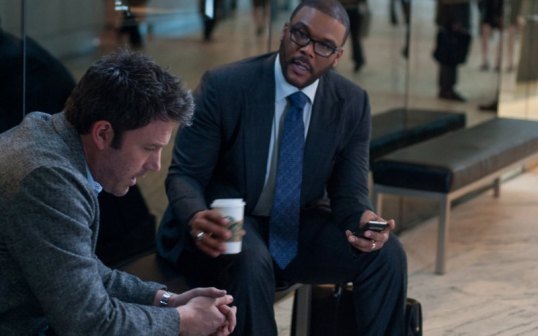
Tyler Perry in Gone Girl


2014 in Review: Lisa Marie’s 26 Favorite Films of 2014


Well, here we are!  This is my favorite part of the TSL’s look back at the previous year!  Below, you’ll find my picks for the 26 best films of 2014!

(Why 26?  Because Lisa doesn’t do odd numbers.)

Guardians-of-the-Galaxy-gang

Before looking at the list, there are two things that I would ask you to keep in mind.  First off, these are my picks and my picks alone.  There are 12 writers here at the TSL and we are all very opinionated individuals.  Needless to say, we don’t always agree.  Just because I love a film doesn’t mean that Arleigh, Leonard, Ryan, or anybody else here agree or disagrees.  (Even my own sister occasionally disagrees with me…)  When the other writers get around to posting their picks, I imagine that some of the films below will appear on those lists. And some of them most definitely will not.  Vive la difference!

Also, it should be understood that, unlike some film critics, I only list movies that I’ve actually seen.  Unfortunately, since I live in the middle of the country, that means that there are a few 2014 films that have yet to be released in my part of the world.  Over the upcoming two weeks, I plan to see Inherent Vice, Selma, American Sniper, A Most Violent Year, and The Imitation Game.  Any one of these films could potentially end up in my top 26, in which case I will update this post to reflect that.

(1/10/15 Update — I have updated the list to include Inherent Vice.  And, since I don’t do odd numbers, I also added Blue Ruin so that the list is currently an even 28 films.)

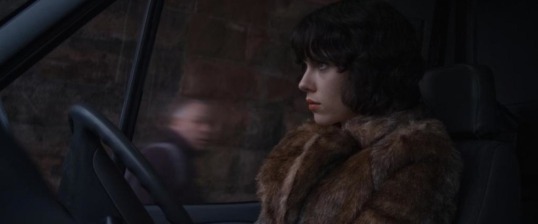
Under the Skin

As for my list, as I look over it, I have to admit that I’m a little bit surprised by some of the films that made the biggest impression on me this year.  Whereas in previous years, my favorite films were far outside of the mainstream, my favorite film of 2014 was the epitome of blockbuster entertainment.  The list is an interesting combination of spectacle and existential dread, featuring everything from the latest entries in the Marvel Cinematic Universe to a few neglected masterpieces of ennui.

(If you’d like to see my picks for 2010, 2011, 2012, and 2013, click on the links!)

reese-witherspoon-wild-slice

And without further ado, here’s the list!

  1. Guardians of the Galaxy
  2. Wild
  3. Boyhood
  4. Under the Skin
  5. The LEGO Movie
  6. Nightcrawler
  7. The Fault In Our Stars
  8. Foxcatcher
  9. Palo Alto
  10. The Grand Budapest Hotel
  11. Captain America: The Winter Soldier
  12. Joe
  13. Birdman
  14. Venus in Fur
  15. A Field in England
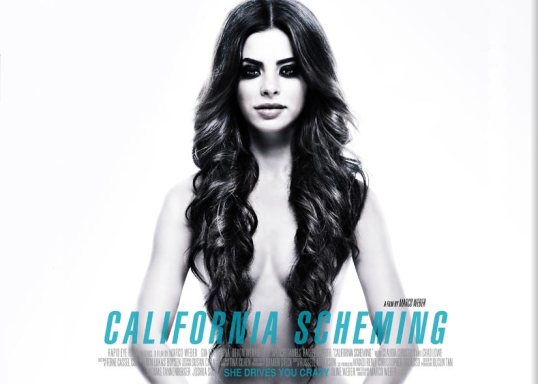
  16. California Scheming
  17. Gone Girl
  18. Chef
  19. Snowpiercer
  20. Cold In July
  21. Jodorowsky’s Dune
  22. Whiplash
  23. Inherent Vice
  24. Begin Again
  25. The Purge: Anarchy
  26. Devil’s Due
  27. Only Lovers Left Alive
  28. Blue Ruin

Agree?  Disagree?  Let me know in the comments below!

CaliforniaScheming

Previous Entries In TSL’s Look Back At 2014

  1. 2014 In Review: Things Dork Geekus Dug In 2014 Off The Top Of His Head
  2. 2014 In Review: The Best Of Lifetime and SyFy
  3. 2014 In Review: Lisa’s Picks For The 16 Worst Films Of 2014
  4. 2014 In Review: 14 Of Lisa’s Favorite Songs Of 2014
  5. 2014 In Review: Necromoonyeti’s Top 10 Metal Albums of 2014
  6. 2014 In Review: 20 Good Things Lisa Saw On TV In 2014
  7. 2014 In Review: Pantsukudasai56’s Pick For The Best Anime of 2014
  8. 2014 in Reivew: Lisa’s 20 Favorite Novels of 2014
  9. 2014 In Review: Lisa’s Top 10 Non-Fiction Books of 2014

A Few Very Late Thoughts On Wes Anderson’s The Grand Budapest Hotel


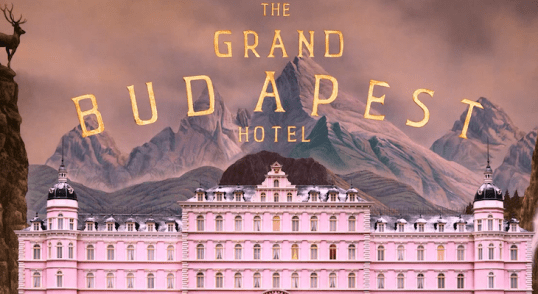
grand-budapest-hotel

It took me a while to come around to appreciating The Grand Budapest Hotel.

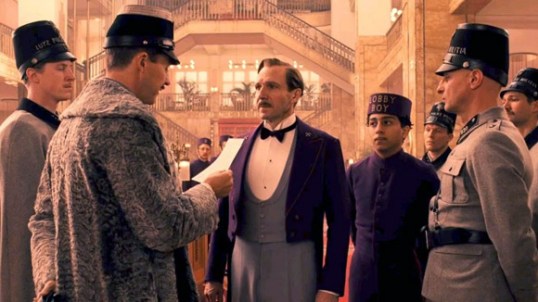
When I first saw Wes Anderson’s latest film, way back in March, I have to admit that I was somehow both impressed and disappointed.  The film’s virtues were obvious.  Ralph Fiennes gave a brilliant lead performance as Gustave, the courtly and womanizing concierge of the Grand Budapest Hotel.  As played by Fiennes, Gustave came to represent a certain type of old world elegance that, I’m assuming, died out long before I was born.  As is typical of Anderson’s film, The Grand Budapest Hotel was visual delight.  Even when the film’s convoluted storyline occasionally grew self-indulgent, The Grand Budapest Hotel was always interesting and fun to watch.

At the same time, I had some issues with The Grand Budapest Hotel.

One of the major ones — and I will admit right now that this will seem minor to some of you — is that halfway through the film, a cat is killed.  The evil Dimitri Desgoffe von Taxis (Adrien Brody) is attempting to intimidate a nervous lawyer, Kovacs (Jeff Goldblum).  Kovacs’s owns a cat and, at one point, Dimitri’s henchman, Jopling (Willem DaFoe), tosses the cat out of a window.  Kovacs runs to window and sees his dead cat splattered on the sidewalk below…

And this is when the audience in the theater laughed and I got very angry.

To me, there was nothing funny about killing that man’s cat.  But the more I’ve thought about it, the more that I’ve come to realize that my reaction had more to do with the audience than the film.  The film was not saying that the cat’s death was funny.  The film was saying that Dimitri and Jopling were evil and dangerous, as their actions throughout the film would demonstrate.  It was the audience that decided, since Grand Budapest Hotel is full of funny moments and has the off-center style that one has come to expect from Wes Anderson, that meant every scene in the film was meant to be played strictly for laughs.  The fact of the matter is that a typical Wes Anderson film will always attract a certain type of hipster douchebag.  They were the ones who loudly laughed, mostly because they had spent the entire movie laughing loudly in order to make sure that everyone around them understood that they were in on the joke.

But that’s not the fault of the film.  Despite what you may have heard and what the Golden Globes would have you believe, The Grand Budapest Hotel is not a comedy.  For all the deliberately funny and quirky moments, The Grand Budapest Hotel is actually a very serious film.  For all of the slapstick and for all of Ralph Fiennes’s snarky line readings, The Grand Budapest Hotel ultimately ends on a note of deep melancholy.

When I first saw The Grand Budapest Hotel, it seemed like it was almost too quirky for its own good.  And, to be honest, I could still have done without some of Anderson’s more self-indulgent touches.  The sequence at the end, where Gustave, who has been framed for murder, gets help from a series of his fellow hotel concierges started out funny but, as everyone from Bill Murray to Owen Wilson put in an appearance, it started to feel less like the story of Gustave and more like the story of all of Wes Anderson’s famous friends.

However, the more I’ve thought about it (and The Grand Budapest Hotel is a film that I’ve thought about a lot over the past year), the more I’ve realized that the quirkiness is only a problem if you made the mistake of thinking that the film is meant to be taken literally.

The more I thought about it, the more obvious it became that the most important scenes in The Grand Budapest Hotel were to be found at the beginning and the end of the film.

The film opens with a teenage girl sitting in front of the grave of a great author.  She opens a book and starts to read.

As soon as the girl starts to read, we flashback 29 years to 1985 where the author (Tom Wilkinson) sits behind his office desk and starts to talk about the time that he visited the Grand Budapest Hotel.  

We flashback again to 1969, where we see how the author (now played by Jude Law) met the owner of the Grand Budapest Hotel, a man named Zero (played by F. Murray Abraham).  Over dinner, Zero tells the author the story of how he first came to the Grand Budapest and how he eventually came to own the hotel.

And again, we go back in time, this time to 1932.  We see how the young Zero (Tony Revolori) first met and came to be the protegé of Gustave (Ralph Fiennes).  We see how Gustave taught Zero how to be the perfect concierge.  Eventually, Gustave would be framed for murdering a guest, Zero would meet and fall in love with Agatha (Saoirse Ronan), and then Zubrowska (the fictional Eastern European country in which this all takes place) would be taken over by fascists who would eventually claim the hotel as their own.

After the story of Gustave, Zero, and Agatha has been told, we suddenly flash forward to the author talking to Zero and then to the old author telling the story to his grandson and then finally back to the teenage reader sitting in the cemetery.

In other words, the Grand Budapest Hotel may be the story of Zero but we’re experiencing it through the memories of the author as visualized by the reader.  Gustave, Zero, and the entire Grand Budapest Hotel are not just parts of a story.  Instead, they become symbols of an old way of life that, though it may have been lost, still exists in the memories of old travelers like the author and the imaginations of young readers like the girl in the cemetery.

As I said at the start of this, I was vaguely disappointed with The Grand Budapest Hotel when I first saw it but, perhaps more than any other movie that I saw last year, this has been a film that I haven’t been able to get out of my mind.  Having recently rewatched the film on HBO, I can also attest that both The Grand Budapest Hotel and Ralph Fiennes’s performance not only hold up on a second viewing but improve as well.

I still stand by some of my original criticisms of The Grand Budapest Hotel.  I still wish that cat had not been thrown out the window, even though I now understand that Anderson’s main intent was to show the evil of Dimitri and Jopling.  And I still find some of the cameos to be jarring, precisely because they take us out of the world of the film.

But you know what?

Despite those flaws, The Grand Budapest Hotel is still a unique and intriguing film.  When I sat down tonight and made out my list of my top 26 films of 2014, I was not surprised that Grand Budapest Hotel made the list.  But I was a little bit surprised at how high I ended up ranking it.

But then I thought about it and it all made sense.

The-Grand-Budapest-Hotel-580