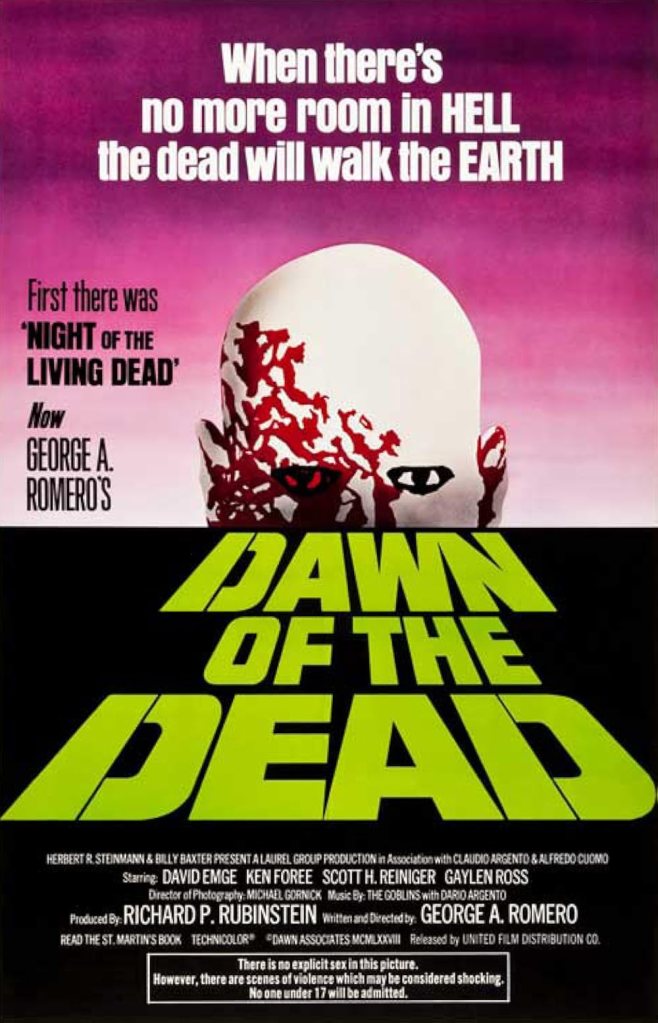
Horror Review: Dawn of the Dead (dir. by George A. Romero)


“When the dead walk, señores, we must stop the killing… or lose the war.”

In 1968, horror cinema was irrevocably changed by the emergence of George A. Romero’s vision, signaling the beginning of a transformative era for the genre. Romero, who had spent much of his early career making industrial and educational films, shifted gears dramatically by crafting Night of the Living Dead, an independent film that did more than just scare audiences—it shattered the conventions of horror. This was a film that rejected the glossy, Gothic monsters of studios like Universal and Hammer, replacing them with raw, unvarnished depictions of human decay and social collapse. The fear Romero invoked was no longer supernatural; it was born from human frailty and social upheaval.

Night of the Living Dead introduced audiences to an entirely new kind of monster: the zombie, not as a mystical or alien infection, but as the reanimated corpse of an ordinary person. This change was more than cosmetic. It shifted the source of horror from “the other” to a reflection of ourselves. Death itself had become weaponized, turning friend into foe in the most visceral way imaginable. The infection was no longer a far-off fantasy but an internal threat. Although the word “zombie” was scarcely spoken in Romero’s first three Dead films, the concept solidified into the cultural lexicon, haunting audiences with the idea that anyone—even the people closest to us—could become the enemy.

Despite the landmark impact of Night of the Living Dead, it would take a decade before Romero was able to produce its sequel. The first film’s shocking violence and disturbing social commentary made Hollywood studios wary of financing a continuation. However, a breakthrough came when Italian horror maestro Dario Argento learned of Romero’s plans and offered to co-finance Dawn of the Dead under the condition that he would receive European distribution rights and be allowed to edit a version for his audience. This international collaboration proved pivotal, allowing Romero to create what many consider not just a sequel but a towering masterpiece of horror cinema.

Released in 1978, Dawn of the Dead solidified Romero’s reputation as a visionary filmmaker willing to confront uncomfortable truths. The Motion Picture Association of America refused the film an R-rating due to its graphic content, and Romero opted to release it unrated to avoid association with the X-rating, which was then primarily linked to pornography. While this restricted the number of theaters willing to show the film, it did not hinder its success. The movie drew large audiences hungry for a horror story that dared to depict society’s unraveling with brutal honesty.

From its opening, Dawn of the Dead confronts viewers with the chaos midst societal collapse rather than building toward it. Traditional authority figures—news anchors, government officials, police—are portrayed as overwhelmed, often ineffective, and sometimes themselves sources of danger. The film’s opening sequence, set inside a frenzied television newsroom, captures this chaos vividly; reporters and producers struggle to maintain composure while the world outside falls apart. This scene encapsulates one of Romero’s central themes: the erosion of trust in institutions during extreme crisis. As media credibility falters, survivors are left in an informational vacuum, further imperiling their ability to cooperate or find sanctuary. This mistrust resonates strongly today, echoing recent real-world crises where institutional failure has worsened public panic and political division.

A critical early sequence—the tenement raid—brilliantly illustrates the film’s social complexity. The conflict here stems not only from the undead but from a clash of cultures: the low-income inhabitants hold tightly to their traditions, especially the respect and mourning of their dead, while the government, scientists, and law enforcement—detached “outsiders”—seek to destroy the infected bodies coldly as threats. This refusal to recognize the residents’ humanity and cultural practices sparks a brutal firefight, symbolizing the broader breakdown of social cohesion. Romero uses this conflict to show that the apocalypse is fueled as much by misunderstandings and institutional coldness as by the undead threat itself.

Within this crumbling world, the film centers on four survivors who become our guides through Romero’s apocalyptic landscape: Roger (Scott Reiniger) and Peter (Ken Foree), two disillusioned Philadelphia SWAT officers who desert after that violent raid; Stephen (David Emge), a helicopter pilot; and Fran (Gaylen Ross), a television producer. These characters represent the fractured remnants of a society that once clung to institutions but is now adrift. Their escape from Philadelphia aboard a stolen news helicopter is less a triumphant flight than a retreat into uncertainty.

Their destination is a suburban shopping mall near Monroeville, Pennsylvania. The mall, abandoned but intact, quickly becomes their fortress. Clearing out the zombies inside and barricading the doors seems like a triumph—an oasis amid apocalypse. The survivors revel in a surreal form of luxury that stands in stark contrast to the danger outside. For a time, they indulge in consumer comforts previously unattainable: fine clothes, gourmet food, and even jewelry. This phase is both a coping mechanism and a critique. Romero uses the mall setting as a dark mirror to American consumer culture. The shoppers turned zombies wander these halls as if drawn by habit, herding toward the very symbols of consumption that once defined the pre-apocalyptic world.

Romero’s critique extends beyond consumerism run amok; he exposes consumerism itself as a new religion for America. In the 1970s, as economic and social uncertainties shook the nation, megamalls emerged as the new temples of worship where consumer habits became ritualistic acts of devotion. The film’s setting drives home this analogy—the mall is not simply a marketplace but a sacred space where the rituals of buying and consuming provide meaning and identity. The zombies’ relentless, automatic wandering through the mall’s stores reflects a zombified devotion to these rituals, implying that consumerism has replaced spiritual and community values, offering hollow salvation in its place.

This portrayal is not accidental but deliberately satirical. The mall is a gilded cage, symbolizing consumerism’s dominance over American identity. Even in the apocalypse, the survivors replicate the rituals of capitalism, clinging to items of superficial value and meaning. The zombies’ mindless shuffling through stores like Woolworth’s and the food court underscores this grotesque cycle. Romero’s message is sharp: consumerism is a kind of death, a trance that distracts from and perhaps accelerates societal decay. The film implies that in America, the line between life and death blurs within the walls of the shopping mall because it is there that life’s priorities have long been warped.

While consumerism forms a visible backdrop, Dawn of the Dead probes deeper, exposing a darker undercurrent: humanity’s inherent violent nature as the real engine of destruction. The undead are monstrous and fearful, but they lack the complexity and self-destructiveness of the living. Throughout the film, Romero presents violence not as a rare failing but as a baseline condition of human behavior. The survivors themselves struggle to suppress impulses of aggression, paranoia, and selfishness that grow more toxic over time.

Roger’s reckless bravado during their clearing of the mall leads to a fatal bite from a zombie, making his death a metaphor for the cost of unchecked aggression. The living kill as readily as the dead, but with purpose and calculation that is often more destructive. The raiding biker gang that ultimately invades the mall appears as a harsh symbol of this self-inflicted violence. Unlike the zombies, whose threat is instinctive, the bikers wield cruelty consciously, plundering and destroying the survivors’ fragile sanctuary. Their incursion shatters any illusion of security and exposes the futility of individualistic survival strategies when cooperation is absent.

The unraveling of the survivors’ cohesion over the course of the film underscores one of Romero’s most bleak insights: humanity’s greatest enemy is itself. Even small groups that depend on trust and unity quickly fragment amid fear and scarcity. Despite the severity of their predicament, the four protagonists are often consumed by petty grievances, distrust, and self-preservation. Romero suggests that unless cooperation becomes a collective imperative, survival is impossible. The dead multiply endlessly, but it is the living who ensure society’s demise by turning against each other first.

Romero’s Dawn of the Dead also marks the cinematic arrival of Tom Savini, whose pioneering make-up effects would forever transform horror filmmaking. Savini and members of his team not only crafted many of the film’s grisly effects but also played some of the biker gang antagonists, blending artistry and performance. While the gore in Dawn can appear somewhat garish or cartoony on film, largely due to lighting effects and the practical limits of makeup technology at the time, Savini’s work set the standard for modern horror effects. His techniques and vision became the bedrock of the gore genre, influencing decades of horror cinema thereafter. His legacy continued as he later directed the 1990 remake of Night of the Living Dead, bringing Romero’s seminal vision to a new generation with his signature effects sensibility.

Ken Foree’s portrayal of Peter anchors the film emotionally; his performance balances toughness with vulnerability, capturing a man grappling with the collapse of law and societal norms while striving to retain his humanity. Scott Reiniger’s Roger provides a volatile contrast—impulsive, reckless, and ultimately tragic—as his aggression leads directly to his downfall. David Emge’s Stephen and Gaylen Ross’ Fran round out the core survivors, expressing pragmatism, grief, and the desperate need for connection as their world crumbles. Their dynamic interactions highlight Romero’s warning: human connection in times of extremity is fragile and fraught, undermined by fear and mistrust.

Romero’s expert use of sound and music further elevates the film. The eerie muzak playing through the mall’s PA system contrasts sharply with the groans of the undead and sudden bursts of violence, creating a haunting dissonance between normalcy and chaos. This effective sound design emphasizes the thematic conflict between consumerist detachment and encroaching apocalypse.

Beyond its horror, Dawn of the Dead serves as a time capsule of late-1970s American socio-political anxieties. America was reeling from the disillusionment of Vietnam, shaken by the Watergate scandal, and grappling with urban decay and economic malaise. The film vividly captures this zeitgeist: a society where institutions are distrusted, violence is normalized, and consumerism both numbs and destroys. Romero’s criticism extends to Cold War paranoia, reflected in his depiction of apocalypse not as a sudden cataclysmic event but a slow, grinding decline fueled by human self-destruction.

Romero’s directing style—unpolished at times but unflinching—adds authenticity to the film’s grim message. His use of long takes, handheld camera work, and naturalistic performances grounds the supernatural in the everyday, making the horror tangible. The bleak humor sprinkled throughout, such as the zombies’ fascination with the mall’s siren and muzak, darkens the tragedy with satirical bite.

Dawn of the Dead does not offer easy hope. Its ending—marked by betrayal, destruction, and resignation—echoes Romero’s worldview: humanity’s baser instincts, left unchecked, will always undermine salvation. Yet, in this stark vision lies an ironic beauty: survival is not only about killing or hiding but the recognition of our shared flaws and the possibility, however slim, of striving beyond them.

In conclusion, Dawn of the Dead remains a masterpiece of horror, combining groundbreaking practical effects, compelling performances, and incisive social commentary to create a film that is as relevant today as it was nearly fifty years ago. Romero’s work challenges viewers to confront the monsters within us all and questions whether human nature’s violent and consumerist impulses might prove more lethal than any undead army. Its enduring legacy lies not just in its scares but in its profound understanding of societal collapse and the fragile bonds that sustain civilization.
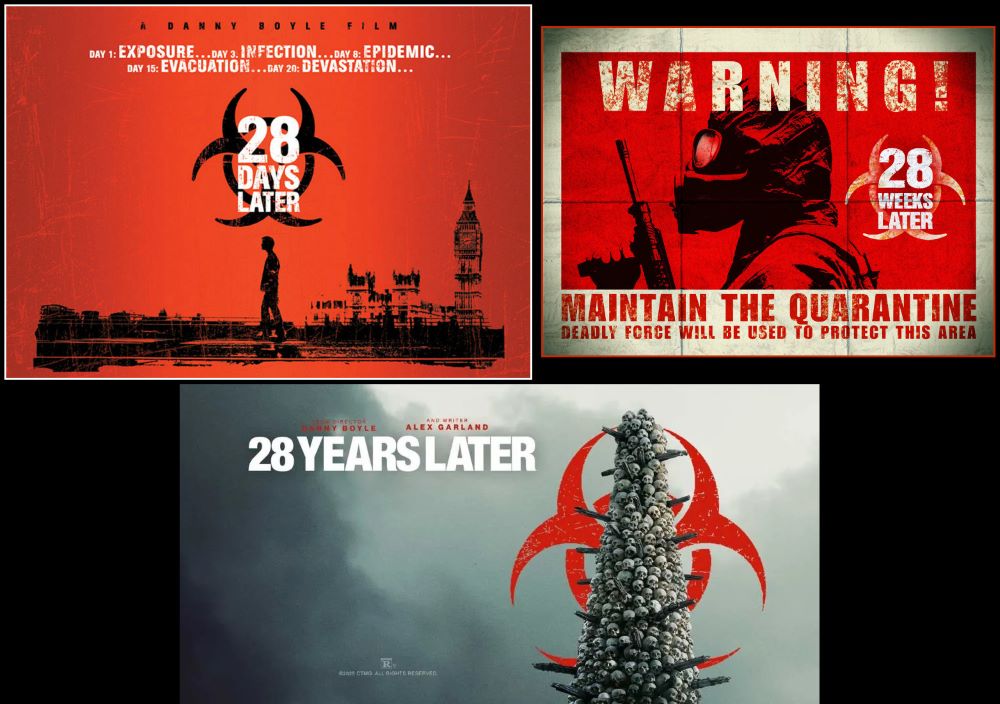
Rage, Ruin, and Redemption: The Evolving Horror of the “28 Days Later” Series


Raw Urgency and Psychological Horror in 28 Days Later

The original 28 Days Later broke new ground in horror filmmaking with its raw depiction of societal collapse fueled by a bioengineered rage virus. Danny Boyle and cinematographer Anthony Dod Mantle’s decision to shoot on early digital video cameras gave the film a distinct grainy, handheld aesthetic that enhanced the feeling of immediacy and disorientation. This style was pivotal in immersing the audience in the eerie emptiness of a London ravaged by infection and abandonment. The stark realism allowed viewers to viscerally experience the isolation and relentless threat surrounding the protagonists.

Unlike traditional zombie films that relied on the supernatural or undead creatures, 28 Days Later introduced infected humans whose fast, uncontrollable aggression metaphorically represented not just a physical virus but the eruption of primal rage and societal breakdown. The tension escalates beyond the infected themselves, focusing sharply on human nature’s darker side through the militarized faction led by Major West, whose corruption and moral decay pose threats as dangerous as the virus itself. This potent blend of external horror and ethical decay elevated the film into a profound exploration of survival, despair, and moral ambiguity in post-apocalyptic conditions. The film resonated deeply with early 21st-century anxieties about sudden disaster and social breakdown, marking a revitalization of horror that has influenced countless works since.

Expansion and Escalation in 28 Weeks Later: A Cinematic Allegory of Its Time

Five years later, 28 Weeks Later expanded the series’ scope significantly. Director Juan Carlos Fresnadillo shifted the narrative from personal survival to the complexity of institutional attempts at restoring order. The film’s polished 35mm cinematography reflected its larger budget and ambition, with expansive urban destruction, dynamic action sequences, and a broader focus on systemic chaos. The narrative unfolds against the backdrop of a militarized “Green Zone” in London, an unmistakable cinematic parallel to the fortified American-controlled zone in Baghdad during the Iraq War.

This allegory extends beyond setting: it captures the tangled failures and ethical dilemmas inherent in the military occupations of Iraq and Afghanistan. The film’s military forces struggle to differentiate friend from foe, ally from insurgent, mirroring the real-world complexities and frequent tragic mistakes of those conflicts. The virus and subsequent resurgence symbolize not only physical contagion but institutional and social rot—highlighting how the rage of war, betrayal, and corruption can infect governance and community trust. The film’s grim depiction of fractured family relationships echoes a society strained by war and occupation, portraying how betrayal and mistrust pervade all levels of social interaction. Through this lens, 28 Weeks Later critiques the hubris of militarized control and the illusion of security, underscoring the fragile, often illusory nature of civilization under stress.

The film’s slicker, high-production-value style distances the viewer somewhat from the intimate immediacy of 28 Days Later but serves its themes by creating a sensation of broad and relentless turmoil. Thematically, this sequel embraces a darker cynicism by portraying militaristic and bureaucratic responses to crisis as part of the problem rather than the solution, intensifying the series’ meditation on rage to encompass political and social failure as well as personal violence.

Reflection and Maturation in 28 Years Later: Evolution of Horror, Philosophy, and a Pandemic Mirror

Returning to the director’s chair decades after the original, Danny Boyle’s 28 Years Later marks a tonal and stylistic evolution that reflects not only the temporal distance from the initial crisis but also a deepening philosophical introspection. The film depicts a Britain still struggling under the long shadow of trauma left by the rage virus. Its infected are no longer iconic red-eyed figures vomiting blood but more mutated, less defined threats, symbolic of how trauma itself can evolve into something less visible but more pervasive.

Cinematographically, 28 Years Later blends moody, shadowy aesthetics with intimate, often handheld shots. Notably, the production’s use of modern digital technology, including iPhone cameras, allowed the film to maintain an intimate feel despite technological shifts. This stylistic choice reflects the thematic focus on memory, decay, and fragile attempts at normalcy. The film’s visual language speaks to a world where the horrors of the past persist beneath the surface, influencing human behavior and societal structures.

Importantly, 28 Years Later serves as a cinematic allegory to the global COVID-19 pandemic and its aftermath. In interviews, both Boyle and Garland acknowledged how the experience of living through the COVID crisis deeply informed the film’s narrative and tone. The pandemic effectively turned empty urban landscapes and daily precautions—once confined to dystopian fiction like 28 Days Later—into real shared experience. The film’s story of a society struggling to live with the virus, navigating quarantine zones and adapting to endemic conditions, echoes how the world has contended with COVID-19’s ongoing impact. Themes of risk, resilience, and generational divide are foregrounded: characters grapple with what it means to live “28 years later,” taking long-term risks even as uncertainties remain. This mirror between fiction and reality deepens the film’s resonance, showing how past speculative fears have become present-day lived realities.

The tonal shift to a more contemplative and somber horror reflects how the pandemic shifted global consciousness from immediate crisis to endurance and adaptation. The film acknowledges grief, loss, and the cultural memory of lives disrupted and taken. Notably, a character’s act of creating memorials to victims reflects real-world efforts to remember those lost to COVID-19, underscoring cinema’s role in processing collective trauma. While this evolution away from pure terror to introspection divides audiences—some missing previous visceral scares—it represents a mature reckoning with the lasting scars pandemics imprint on humanity.

Pandemic Parallels: The Trilogy as a Cinematic Allegory for COVID-19 and Endemic Realities

While each film in the 28 Days Later trilogy originally reflected the anxieties and socio-political contexts of its own era, together they now resonate profoundly as a prophetic allegory of the global COVID-19 pandemic and humanity’s ongoing struggle to live with viral threats as part of everyday life. The trilogy’s trajectory—from sudden catastrophic outbreak to institutional collapse to long-term trauma and adaptation—mirrors the historical arc the world has experienced with COVID-19, offering viewers insight into the psychological, societal, and cultural impacts of pandemics.

28 Days Later anticipated much of the early pandemic experience—fear of rapid contagion, empty cityscapes, social disintegration, and the terrifying vulnerability of individuals isolated amid a global crisis. Jim’s awakening into an eerily deserted London strikingly parallels the empty streets during COVID lockdowns around the world, turning what was once dystopian fantasy into frightening reality. The film’s exploration of panic, isolation, and distrust toward institutions echoes widespread experiences of confusion, fear, and uncertainty during the first months of the pandemic when COVID-19 was unfamiliar, unpredictable, and devastating.

28 Weeks Later deepens this pandemic allegory by portraying the consequences of failed institutional responses and attempts at control. The militarized “Green Zone” concept eerily parallels the real-world challenges of creating “safe zones” amid outbreaks, with tensions between enforcement, mistrust, and community survival. The film’s depiction of fractured families and systemic collapse reflects how social solidarity frays under the pressure of prolonged crisis, political distrust, and ethical quandaries surrounding public health measures experienced globally during COVID waves. The allegory isn’t just about physical infection but social contagion—fear, misinformation, and political polarization as viral threats themselves.

With 28 Years Later, the trilogy fully embraces its role as a cultural mirror to COVID-19’s enduring legacy. Danny Boyle and Alex Garland have openly discussed how the realities of the pandemic shaped the film’s narrative and tone, with characters navigating life decades after the outbreak under quarantine and endemic conditions. The film presents a world where viral infection is an ongoing condition to be managed rather than eradicated, reflecting how many experts now view COVID-19’s transition from acute pandemic to endemic presence. This shift from immediate horror to long-term social and psychological adaptation speaks to the global experience of living alongside risk and uncertainty, balancing caution with the human drive to reconnect and rebuild.

Visual motifs such as quarantine zones, memorial walls, and generational divides throughout the film underscore real-world pandemic realities about loss, resilience, and the passing of collective trauma. The story’s focus on a new generation born into post-virus society echoes global concerns about children’s—educational, emotional, and social—impacts during and after COVID. The film’s meditative tone reflects the world’s evolving understanding that recovery from a pandemic is neither swift nor purely scientific but deeply human, requiring reckoning with grief, memory, and ethical questions about care and sacrifice.

Together, the trilogy transcends traditional horror storytelling to become a cinematic meditation on humanity’s confrontation with biological catastrophe—capturing the terror of sudden collapse, the anguish of institutional failure, and the fragile hope of enduring and adapting to an altered world. In doing so, the 28 Days Later series offers both a chilling warning and a compassionate reflection on survival in an age defined by viral uncertainty.

Stylistic Evolution: From Gritty Realism to Reflective Sophistication

The trilogy’s visual evolution is a testament to the shifting thematic priorities and growing artistic ambition of the filmmakers. 28 Days Later’s raw digital aesthetic—with grainy textures and handheld immediacy—rooted the audience in the chaos of sudden societal collapse, pioneering an immersive and tangible horror. The decision to film real, unpopulated London streets added an authentic eeriness that fueled the film’s power.

With 28 Weeks Later, the move to 35mm film signaled a turn toward cinematic polish, spectacle, and scope. The expansive shots, precise lighting, and dynamic action sequences reflect the film’s thematic scale, portraying systemic collapse and institutional failure with cinematic authority. The surveillance-like camerawork amplifies feelings of observation and control that echo its allegorical engagement with military occupation themes.

28 Years Later rebalances styles, fusing intimate handheld shots with shadowy, atmospheric imagery, aided by modern digital filmmaking tools including smartphone cameras. This blend cultivates mood and emotional depth over traditional jump scares, visually representing a society haunted by trauma and in cautious recovery. The stylistic shift underscores the trilogy’s journey from immediate survival panic to measured reflection on long-term consequences.

Thematic Progression and the Metaphor of Rage

Rage is the fundamental metaphor animating the trilogy, but its form and focus evolve significantly. In 28 Days Later, rage manifests as an explosive primal force embodied in the infected—visible, aggressive, and terrifying, stripping away thin veneers of civilization to reveal instinctual violence.

28 Weeks Later expands rage to include institutional rot, betrayal, and the failure of governance. The infected remain threats but rage’s more insidious expressions appear in military violence, political cynicism, and fracturing communities. Rage becomes a societal contagion undermining cohesion as thoroughly as any virus.

28 Years Later shifts to a metaphor of inherited trauma and enduring wounds. Rage here is less overt but deeper—passed through generations in memory, ethics, and societal dysfunction. The virus and its mutated infected echo how psychological and cultural trauma evolve and persist, questioning humanity’s capacity for healing or self-destruction.

Characters and Emotional Depth: From Intimate Survival to Generational Reckoning

Character arcs reflect this thematic evolution. 28 Days Later centers on individual survival and fragile relationships formed amid chaos. Jim’s transformation from bewildered victim to protector provides audiences emotional grounding in a shattered world.

28 Weeks Later explores family ruptures wrought by betrayal and trauma, mirroring broader social breakdowns. Characters’ struggle with trust and loss enriches the narrative with psychological realism.

28 Years Later depicts survivors burdened by collective memory and ethical dilemmas, often across generations. Its characters wrestle not only with the immediate horrors but with legacies of violence and the search for reconciliation, offering psychological and moral complexity rare in horror narratives.

Cultural Impact and Legacy

28 Days Later transformed horror by replacing slow, supernatural zombies with fast, rage-fueled infected who symbolize contemporary fears about sudden collapse and human savagery. It revitalized a moribund genre and influenced popular culture globally.

28 Weeks Later expanded on this foundation with action spectacle and socio-political allegory, polarizing audiences but enriching thematic depth, especially with its projection of military occupation anxieties.

28 Years Later confronts the real-world pandemic experience directly, integrating cultural trauma into its narrative and style. It challenges genre boundaries by emphasizing reflection and resilience over instant terror, heralding a new phase for horror cinema aware of global trauma.

The Future of the “28 Days Later” Series: Continuing the Journey

Building on the foundation of its groundbreaking predecessors, the “28 Days Later” series is set to continue with two more films that promise to expand its intricate narrative and thematic depth. 28 Years Later: The Bone Temple, directed by Nia DaCosta and scripted by Alex Garland, is scheduled for release in January 2026. This film, shot back-to-back with 28 Years Later (2025), will deepen the post-apocalyptic exploration with returning characters and new threats, continuing the saga of trauma, survival, and societal collapse.

Additionally, a fifth film in the series is currently in development, though its title and release date remain unannounced. With Danny Boyle and Alex Garland involved in these projects, audiences can expect a thoughtful continuation that balances horror with reflective inquiry into humanity’s resilience. The return of Cillian Murphy as Jim further ties the new films to the series’ emotional origins, ensuring that the evolving mythology stays grounded in personal stakes.

As these future films approach, the 28 Days Later series remains ripe for ongoing critical and cultural re-examination, especially given its enduring power to mirror contemporary fears—from early 2000s anxieties to the global experience of the COVID-19 pandemic and beyond. The series stands as a dynamic, evolving reflection on rage, ruin, and the hope for redemption in an uncertain world.

Horror Review: 28 Years Later (dir. by Danny Boyle)


Danny Boyle waited nearly two decades to return to the world he helped redefine with his groundbreaking 2002 film 28 Days Later, which reshaped the zombie subgenre by replacing the traditional, slow-moving undead with fast, feral infected that embody contagion, panic, and societal collapse. While purists continue to debate whether the creatures are technically zombies or infected, Boyle’s vision fundamentally changed how audiences engage with themes of epidemic, survival, and the breakdown of order on screen. The 2007 follow-up, 28 Weeks Later, directed by Juan Carlos Fresnadillo, expanded the Rage virus mythology and landscape but lacked the original’s haunting intimacy and innovation, leaving the franchise in a state of uncertainty until Boyle and writer Alex Garland reunited for 28 Years Later, a film that feels less like a conventional sequel and more like an elegy for a deeply changed world.

The film opens with a short, brutal prologue: young Jimmy Crystal’s family is consumed by the Rage virus while watching Teletubbies, and the boy flees to find safety only to discover his minister father welcoming the infected as a sign of apocalyptic judgment. This early scene deftly establishes the film’s unease, blending visceral horror with spiritual inquiry and foreshadowing a narrative caught between faith, grief, and chaos. Boyle reasserts his command of visceral set pieces while signaling that this film is more concerned with memory and ritual than with relentless terror.

Decades later, the British Isles have been sealed off; NATO forces enforce a quarantine and blockade, isolating the mainland as a toxic exclusion zone. On the tidal island of Lindisfarne, a small community clings to a fragile existence, protected by a causeway that floods at high tide—a detail that metaphorically underscores themes of isolation and dangerous connection. It is here that the emotional core emerges in Jamie and his son Spike, played by Aaron Taylor-Johnson and the remarkable newcomer Alfie Williams. Their spare, heartfelt relationship grounds what otherwise wanders into meditative and often surreal territory.

Alfie Williams emerges as one of the year’s most impressive new talents. His portrayal of Spike avoids the usual survivor archetype; instead, he presents a boy deeply shaped by inherited trauma and cautious curiosity. Boyle’s camera lingers on Williams’ face, capturing silent shifts of fear, wonder, and resilience, making his quiet moments as powerful as the film’s larger set pieces. Williams shines particularly in a sequence where Spike and his mother, portrayed with subtle grace by Jodie Comer, navigate a moss-covered village reclaimed by nature; Williams embodies awe and terror with a single glance. His encounters with the evolved infected—some sedentary and tree-like, others organized into predator packs—are charged with terrifying authenticity and emotional depth. Early reviews label Williams a breakout star, praising his ability to hold the screen alongside veteran actors.

Visually, Boyle and cinematographer Anthony Dod Mantle experiment with a striking mix of techniques, blending the use of iPhone 15 Pro Max cameras and drones with traditional film methods to create a language that oscillates between intimate human moments and sweeping, documentary-style landscapes. The Britain depicted is no longer a lifeless wasteland but an ecologically regrown terrain—lush, eerie, and indifferent. This verdant backdrop reflects the Rage virus’s own evolution. The infected have adapted in ways both terrifying and fascinating: some feed off the earth and fungus, becoming near-plantlike and sedentary, while others form packs ruled by alpha mutants, suggesting emergent social structures even after humanity’s collapse. This biological and ecological evolution amplifies the film’s central theme: survival transcending humanity.

Anchoring the film’s philosophical inquiry is Ralph Fiennes’s performance as Dr. Ian Kelson, a former general practitioner who has exiled himself to live among the infected. Fiennes crafts Kelson with haunting solemnity and layered ambiguity—part caregiver, part fanatic, part recluse—who has created the eponymous “Bone Temple,” a shrine assembled from bones and memories to honor the dead and the changed world they inhabit. The role requires quiet intensity, and Fiennes delivers; his interactions with Spike are charged with both menace and melancholy. Kelson’s reverence for the infected and his willingness to coexist with them challenge traditional survivalist narratives, injecting the film with a solemn meditation on loss, acceptance, and the possibility of new forms of life.

28 Years Later opts for a deliberately slower, more contemplative pace than its predecessors. Boyle and Garland invest their energy in exploring grief, adaptation, and collective memory. The infected become symbolic forces of transformation rather than mere antagonists, while survivors seek meaning through ritual and remembrance as a bulwark against despair. This approach has divided fans: some lament the absence of the unrelenting terror and pace that characterized the earlier films, while others welcome the franchise’s intellectual maturity and thematic depth.

Certain scenes—such as the stranded NATO patrol subplot and glimpses of emerging cult-like human factions—hint at a larger, more complex world but never overshadow the film’s intimate father‑son narrative. Jodie Comer complements Williams with a nuanced portrayal of Spike’s mother, and Taylor‑Johnson brings grounded emotional weight to Jamie, embodying a parent wrestling with how to protect the next generation in a broken world and dealing with his own inner demons.

The interplay between Williams and Fiennes forms the film’s core dynamic, uniting youthful vulnerability with somber reflection. Kelson’s philosophical acceptance of the apocalypse contrasts with Spike’s struggle for identity and belonging, producing compelling, often unsettling exchanges that elevate the narrative’s moral complexity.

Toward the film’s conclusion, a jarring tonal shift occurs with the sudden arrival of a grown-up Jimmy Crystal, whose unsettling presence and cult leadership drastically change the mood. The moment is so discordant that viewers are left questioning whether it is literal or a fevered hallucination—an ambiguity that effectively sets the stage for the sequel.

The upcoming follow-up, 28 Years Later: The Bone Temple, is set for release in January 2026 and will be directed by Nia DaCosta, with Alex Garland returning as screenwriter. This sequel is expected to explore the role of Kelson’s Bone Temple more deeply and develop the cult gathering led by Jack O’Connell’s Jimmy Crystal, expanding on the fractured post-apocalyptic world and the characters introduced in the current film.

Ultimately, 28 Years Later is a film about evolution—of species, storytelling, and filmmaking itself. It balances raw dread with haunting visuals and somber themes, anchored by Alfie Williams’s quietly compelling Spike and Ralph Fiennes’s enigmatic Dr. Ian Kelson. Boyle has not merely revived the franchise; he has transformed it into an unsettling, elegiac meditation on rage, loss, and the fragile hope that survives beyond apocalypse.

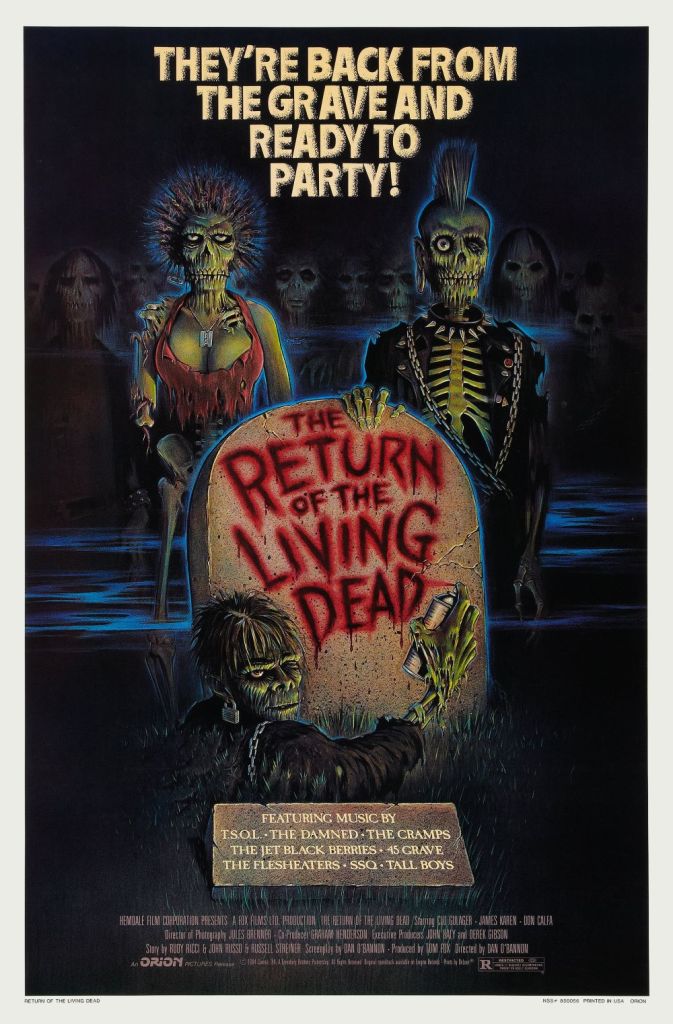
Brains, Laughs, and Decline: The Uneven Legacy of Return of the Living Dead


Subverting the Zombie Canon: Satire, Genre-Bending, and Decay in the Return of the Living Dead Series

When talking about cult horror films, the Return of the Living Dead series holds a special place—not only as a spin-off from George A. Romero’s seminal Night of the Living Dead, but as a unique creative force in its own right. Thanks to a legal split between Romero and co-writer John Russo over rights to the “Living Dead” name, Russo and director Dan O’Bannon got to imagine a parallel zombie universe. This franchise quickly carved out its own identity, mixing horror, black comedy, and punk spirit in a way that both paid tribute to and upended zombie tropes.

Reinventing Zombie Lore with a Wink

The original Return of the Living Dead (1985) starts with a clever “what if” twist: what if Romero’s Night wasn’t just a movie, but a dramatized cover-up of a real government disaster? This meta idea instantly frames the film as self-referential and playful, setting a tone unlike anything out at the time.

Central to the film’s identity is the invention of 2-4-5 Trioxin, a fictional military chemical designed to clear marijuana crops which instead raises the dead—zombies with surprising new abilities. Unlike the slow, drooling zombies Romero popularized, these ghouls sprint, talk, and set traps. Their hunger is peculiar as well: they crave brains exclusively, as it eases the pain of being undead. And the old rules of zombie combat? Forget shooting them in the head. These zombies resist it, raising the stakes and scare factor.

This refreshing rewrite of zombie rules allowed the movie to be both frightening and fun. The zombies were smart but still monstrous, turning classic horror expectations on their head in a way that invited both laughter and fear—a tricky balance that few horror comedies manage.

Playing with Comedy, Panic, and Punk Rock

One of the greatest strengths of the original film is how it embraces horror-comedy so naturally. It doesn’t shy away from being funny while still delivering tension. James Karen and Thom Mathews excel as the main pair—Karen’s frantic, over-the-top panicked man paired with Mathews’ straight, slowly succumbing counterpart create a perfect comedic rhythm. Their slow transformation into zombies adds a tragic dimension to what could have been simple slapstick. Meanwhile, Don Calfa’s mortician character and Clu Gulager’s warehouse owner provide a grounded center amidst chaos.

The punk subculture flavor adds another unique texture. Linnea Quigley’s famous graveyard striptease encapsulates the 1980s’ blend of irreverence, sexuality, and horror obsession. The scene is shocking, hilarious, and iconic—one of those moments that encapsulates everything this film is about: having fun with taboos while not losing the darker undercurrents of mortality and decay.

Beyond laughs, there’s biting satire here. The film skewers the government and military’s hubris—scientists create a superweapon they can’t control, leading to chaos and destruction. This reflects 1980s American anxieties about bioweapons, government cover-ups, and nuclear fears. Horror and comedy collide to reflect cultural distrust and paranoia.

The Problem of the Sequel: Part II’s Familiar Ground

When Return of the Living Dead Part II came out in 1988, it felt like the franchise was stuck in a loop. With much of the original cast returning in near-identical roles, and lines and situations seemingly recycled, the film circles back to the same story. This self-copying invites a mix of amusement and disappointment: it seems the filmmakers didn’t believe they could improve on the original and decided to replicate it instead.

While it has its moments—good practical effects and a rollicking tone reminiscent of the first film—it leans harder into comedy, sometimes at the expense of the horror. The suburban setting and clearer military lockdown raise the action stakes, but the humor feels broader and less sharp, which can make the movie seem a bit cartoonish.

In a way, Part II comments on the pitfalls of horror franchises: once you’ve struck gold with an unexpected idea, sequels often struggle to regain that freshness. This installment is entertaining, but signals the beginning of the franchise’s creative plateau.

Much Darker Territory: Part III’s Horror and Romance

With Return of the Living Dead 3 in 1993, things take a major tonal shift. Brian Yuzna’s direction removes much of the comedy and replaces it with body horror, gore, and a genuinely tragic romance. The story centers on Curt and Julie, two teenagers tragically pulled into the military’s secret zombie experiments. After Julie is accidentally killed and resurrected, she becomes a zombie who feeds on brains but manages her hunger through extreme self-inflicted pain.

This grim take pushes the franchise into more serious, intense horror territory, with heavy themes of love, loss, and bodily autonomy threaded throughout. Julie’s tortured transformation is both tragic and unsettling, symbolizing not only the loss of life but also the torment of trying to hold onto humanity while losing it from within.

Yuzna’s effects are grisly in the finest tradition of ‘90s practical SFX. The film revives the franchise’s sense of danger and stakes by mixing romance with horror, delivering something emotionally resonant and viscerally impactful. While it diverges sharply from the earlier comedic tone, Part III proves the series’ flexibility and capacity for reinvention.

Creative Collapse: Parts IV and V’s Direct-to-Cable Downfall

Sadly, the wheels come off with Return of the Living Dead 4: Necropolis and 5: Rave to the Grave, both made in 2005 and directed by Ellory Elkayem. Shot back-to-back and released direct-to-cable, these films are pale shadows of the earlier entries.

They ditch the original’s clever mix of horror and humor entirely. Instead, we get generic corporate conspiracies, confusing Eastern European settings, weak scripts, and inconsistent zombie characterizations. The zombies lose their unique “brains only” horror and instead act like run-of-the-mill undead. Even the acting is amateurish, with only Peter Coyote standing out briefly as a sinister scientist.

Part 5 further muddies continuity by introducing Trioxin as a rave drug, leading to a chaotic rave/zombie apocalypse scenario that is both baffling and poorly paced. The low-budget effects and uneven pacing betray the exhaustion and lack of passion behind these entries.

These final two films underscore a common fate for franchises that outlive their creative spark—once inventive mythology becomes shallow cliché, and attempts to cash in feel uninspired. Instead of honoring their roots, they become muddled and forgettable.

Why the Series Matters

Despite its uneven legacy, Return of the Living Dead remains important for what it dared to do in horror cinema. The first film’s originality influenced countless horror comedies and redefined how zombies could be portrayed. Its self-awareness and invention paved the way for postmodern horror, where genre is as much about commentary as it is fear.

The third film’s daring shift to tragic body horror further demonstrated the potential for zombie films to explore complex emotional and societal themes beyond gore or giggles.

While the later sequels falter, their failure serves as a cautionary tale about the dangers of diluting distinct voices and creative risks in franchise filmmaking.

Ultimately, Return of the Living Dead survives in cultural memory as a zombie series that captured the spirit of its time—punk rebellion, Cold War paranoia, and genre self-mockery—with flashes of brilliance that continue to entertain and inspire.

Horror Review: All Souls Day (dir. by Jeremy Kasten)


AllSoulsDay

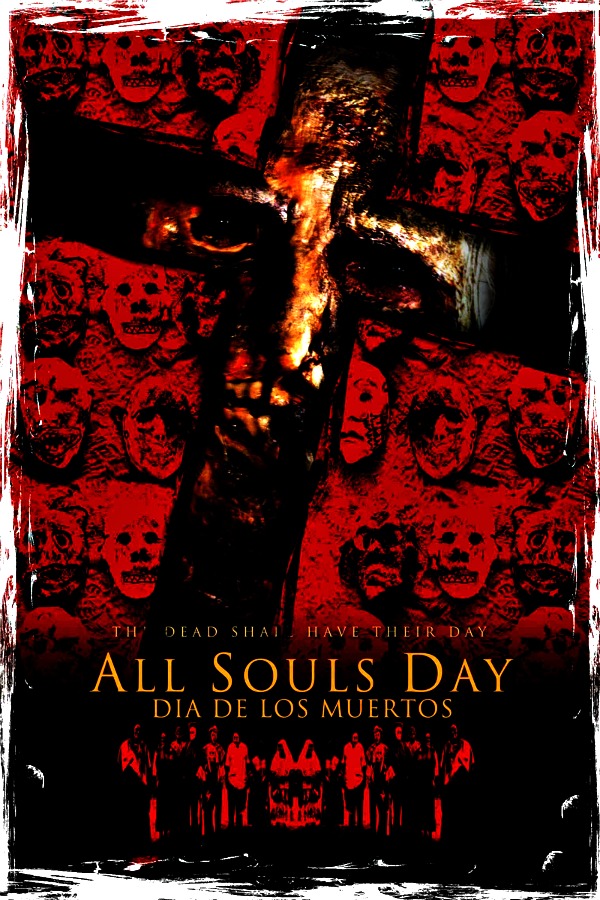
All Souls Day was part of the wave of zombie films that continues to flood the direct-to-video (and at times straight to cable) market. This particular zombie movie was written by Mark A. Altman who also wrote the campy and very B-movie-like House of the Dead 2. This was a  zombie flick which actually improved on Uwe Boll’s own House of the Dead that doesn’t really come as a surprise. All Souls Day was Altman’s second try at another zombie movie and while this second attempt wasn’t as fun as his previous one it still managed to be a watchable and interesting zombie movie.

The film’s set in a dusty Mexican town that hides a dark secret from its past. A young couple (played by Marisa Ramirez and Travis Wester) happen upon what seems like an abandoned town. They soon come across a funeral procession and when they inadvertently interrupt the ritual all hell literally breaks loose. It doesn’t help the couple that the only person who seems to be real in this town was the sheriff whose own past ties in with the secret of the town. It was very good to see genre veteran David Keith in the role of the town sheriff. His limited time in the movie was pretty good.

When the town’s people (who by now have shown themselves to be zombies) begin to lay siege on the young couple in the town’s only hotel the rest of the movie gradually shows more of what made this particular Mexican town a death trap for any passerby who happen to come across it on All Souls Day. Soon enough help comes in the form of the young couple’s two friends who arrive in town only to get themselves stuck in the same dire situation the original couple find themselves in.

The resolution of the movie was handled well and it brought a nice supernatural origin and reason as to why the town’s population has turned into flesh-eating zombies. The performances in the film could be seen as being mixed. The more veteran performers like Jeffrey Combs, David Keith, Danny Trejo (as the town’s manipulative patriarch) and Laura Herring perform their roles well without being too over-the-top. The actors playing the pair of young couples on the other hand go from very good to awful in the span of moments in some of the scenes. It’s really this mixed bag in the cast’s performance which keeps All Souls Day from turning into one of those hidden gems in a hill of crap that most zombie flicks turn out to be.

The gore effects in this film was pretty good in the small amount of sequences where the zombies end up doing what they do best once they get a hold of someone. While I was hoping for more of the grue in this particular zombie movie I wasn’t too surprised why it didn’t have more. Other than the pair of young couple there really wasn’t much living people for these zombies to munch on. The film itself show’s it’s low-budget origins in that it looks like something one would see premiere on a random Saturday night on the SyFy Channel. The film actually did premiere on that channel when it was still called SciFi. It’s a look that says TV instead of film, but despite that little nitpick it doesn’t distract much from the experience.

Now, most zombie films of the low-budget variety tend to just have badly done make-up effects. With All Souls Day the filmmakers seem to have done an end-around that budgetary problem by taking a page out of the classic Italian zombie flicks of the 1980’s by making these undead dry, decayed creatures. It’s something that worked well for the Fulci zombies and here it works as well.

All Souls Day was not a great zombie film by any stretch of the imagination, but it had enough entertaining moments and some genuine scary sequences to make it an enjoyable hour and a half of horror viewing on any October night.

Horror Trailer: Dead Snow: Red vs. Dead


dod-sno-dead-snow-21

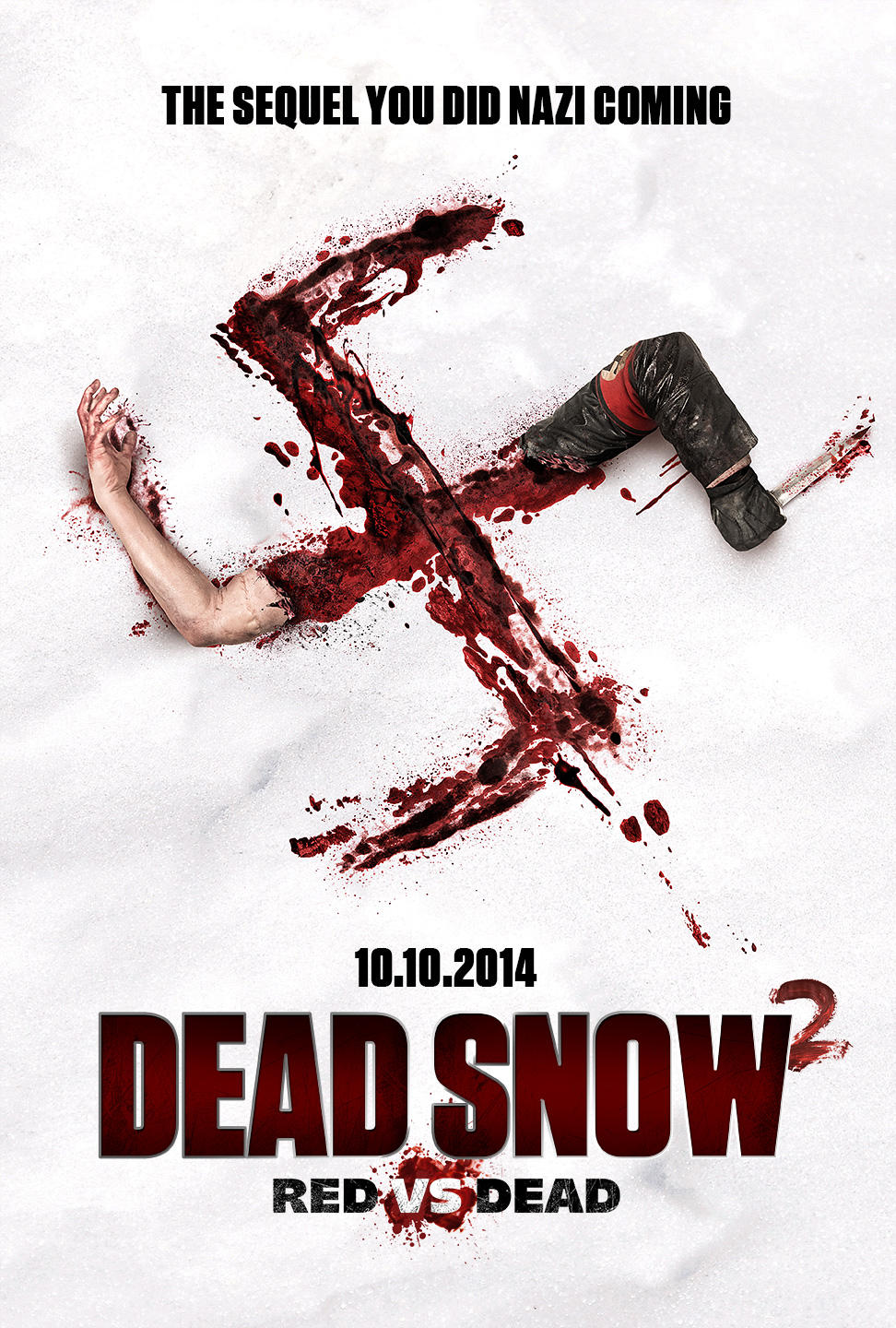
Yes, this was a sequel that we did not see coming. The original film was a good enough piece of zombie horror that brought back some nostalgic feelings of that very obscure zombie subgenre called Nazi zombies. Dead Snow helped put Tommy Wirkola, it’s director, on the map since it earned him the gig to direct the highly-unappreciated Hansel & Gretel: Witch Hunters. The kinetic, gory action from Dead Snow was highly evident in his first Hollywood offering.

Now, it looks like his time with the Nazi zombies (or are they zombie Nazis) wasn’t over as we now have the sequel that’s begun to play in the film festival circuit since the start of 2014. From the trailer shown it looks like Wirkola has turned the gory action past 10 and into 11 for this follow-up.

The comedy looks to be more in the forefront this time around as he introduces a trio of would-be America zombie hunters. What’s a European action horror-comedy be if it didn’t include bumbling, stereotypical Americans. I almost require that they be included in such films.

Dead Snow: Red vs. Dead still hasn’t been given a U.S. theatrical release. It may bypass the theaters in the U.S. altogether and just head straight for home video. Either way be on the look out for Nazi zombies in Tiger I tanks.

Trailer: World War Z (2nd Official)


WorldWarZ

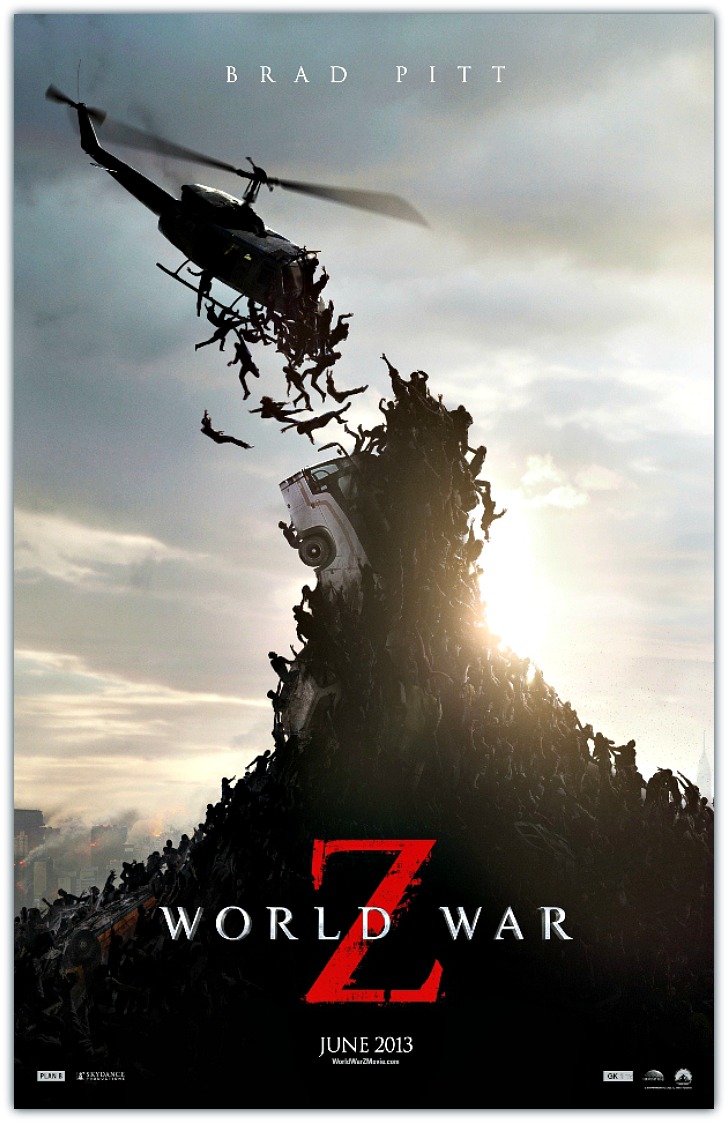
We see the release of a new trailer for this summer’s epic zombie film based on the equally epic novel of the same name by Max Brooks.

World War Z is already the most expensive zombie film ever made with a budget rumored to be between 125-200 million dollars. Some of this has been due to the delays in filming and most of it seems to stem from a massive rewrite of the third act. Damon Lindelof was first hired to rewrite but due to prior commitments the job went to Drew Goddard. Such a rewrite also meant reshoots had to be done which took another seven weeks of shooting.

All in all, World War Z is one troubled film before it even gets to the general public.

Yet, it is also one of the more anticipated films for this summer. Some from fans of the genre who just can’t get enough of zombie films. Some from people wanting to see just what sort of zombie film ends up with a budget around 200 million dollars. From the trailer we’ve seen some of that money seem to have gone on some massive special effects sequences which includes swarming zombies of the Rage-infected kind. Then again we don’t really see the zombies close-up which tend to make them look like swarming ants from afar. Maybe the look of the zombies themselves have been saved for the release of the film.

This latest trailer actually gives a bit more of the plot of the film which puts Brad Pitt’s UN employee character to travel the world in search for the cause of the worldwide zombie pandemic. The speed by which things happen seems to have compressed all the events in the novel into a film of two hours. This, I’m sure will be a major contention with fans of the novel, but it looks like a decision by filmmaker to try and create a single narrative from a novel that was mostly single-hand accounts of the zombie war from survivors who have no connection with each other whatsoever.

We’ll find out in just under 3 months if this film will be a major flop or succeed despite all the stumbling blocks and problems throughout its production.

World War Z is set for a June 21, 2013 release date.

Trailer: World War Z (Super Bowl Exclusive)


One of the films that was to have it’s day in the Super Bowl ad campaign rush was Paramount Pictures’ troubled epic zombie apocalypse film, World War Z.

Starring Brad Pitt and directed by Marc Forster, the film is an adaptation (very loosely adapted from the novel) of the novel of the same name written by Max Brooks. Anyone who is even remotely interested in the topic of zombie fiction (or that they’re real like certain awesome people) have read this novel and have been highly anticipating the film. When the first trailer was released several months ago the reaction to the changes made from book to film was a resounding “Huh” to “WTF?!” from fans.

Time will not be changing some of these reactions, but from the sudden release of the Super Bowl ad TV spot that the film will show during Sunday’s Big Game it looks like the film will take the basic premise of the novel and go it’s own way. The zombies being CGI when seen from a distance and moving like ravenous army ants (siafu as the Japanese call them which is also what the zombies were called in the novel).

The film seems to want to see the zombie apocalypse first-hand as it occurs and sped things up to bring more action to the proceedings. This is not a bad thing if the film had been titled other than World War Z, but since it needed to use that name the complaints by fans of the novel will continue. Just based on the trailer and this teaser spot alone it looks like there’s something interesting going on in this film that people will either love or hate. I’m hoping I’ll be of the former than the latter.

World War Z is set for a June 21, 2013 release date.

WorldWarZ

Horror Scenes I Love: La Horde


[spoilers]

I know, I know. Another zombie-related post. Well, if you’ve been visiting the site enough these past three years or so then you’d realize by now that this site loves it’s zombies. Well, not love in that way, but in the “what would I do if put in the middle of the zombie apocalypse” type deal. Call it the American trait of self-reliance and stubbornness in the face of overwhelming odds. Also, this love for the zombie apocalypse seem to stem for the fact that as a society we Americans seem to be very apocalypse-obsessed.

Well, enough of that and time to get on the latest horror-themed “Scenes I Love” entry. This time around it comes courtesy of the very awesome French zombie film La Horde from 2008. This particular scene arrives very close to the end of the film so it’s going to be spoiler-heavy. So, being warned now to either watch the clip and be spoiled by the fate of a certain character or watch the film first and relive just how awesome this scene is the second time around.

The scene is just something that we as fans of the zombie apocalypse hope to go out doing if the end is near. No crying in the corner pleading at something that has no emotions. No cowardly act killing oneself before the shambling (or in the case of this film they’re sprinting like Usain Bolt) gets to them. This is the scene that shouts to the Gods in their heavenly thrones to watch how a true warrior dies. Not with a cry and whimper but with a shout of defiance and scream of bloodlust and frenzy to rival those trying to kill you.

As the video’s title succinctly proclaims: “Going out like a BOSS!”