As some of our regular readers undoubtedly know, I am involved in a few weekly live tweets on twitter. I host #FridayNightFlix every Friday, I co-host #ScarySocial on Saturday, and I am one of the five hosts of #MondayActionMovie! Every week, we get together. We watch a movie. We tweet our way through it.
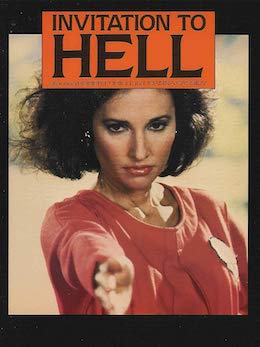
Tonight, for #ScarySocial, I will be hosting Wes Craven’s Invitation to Hell, starring Susan Lucci and Robert Urich!
If you want to join us on Saturday night, just hop onto twitter, start the film at 9 pm et, and use the #ScarySocial hashtag! The film is available on Prime! I’ll be there co-hosting and I imagine some other members of the TSL Crew will be there as well. It’s a friendly group and welcoming of newcomers so don’t be shy!
There’s one rule in life that should never be forgotten.
Any movie that opens with Susan Lucci casting a hex that causes a man’s head to explode is going to be worth watching.
That’s certainly the case with Invitation to Hell, a 1984 made-for-TV movie that was directed by Wes Craven and which casts Lucci as Jessica Jones, an insurance agent who lives and works in an upper class suburb in Southern California. Jessica not only sells insurance but she also runs the ultra-exclusive Steaming Springs Country Club! Anyone who is anyone in town is a member of Steaming Springs! That include Matt Winslow (Robert Urich) and his family. Matt soon comes to suspect that something strange might be happening at the club. Fortunately, Matt’s spacesuit comes with a flame thrower, a laser, and a built-in computer that can determine whether or not someone is actually a human being. (Wearing the space helmet means viewing the world like you’re the Terminator.) Soon, it’s science vs. magic as Matt dons the suit and tries to rescue his family from country club living!
Totally ludicrous and a lot of fun, this is a film that has a little bit for everyone — familiar television actors, flamethrowers, space suits, demonic possession, exploding cars, and even a little bit of social satire as the film suggests that living in the suburbs is a terror even without weird country clubs and chic spell casters.
Today’s horror on the lens is a 1978 made-for-TV movie that was directed by Wes Craven. Originally entitled Stranger In Our House, it was retitled Summer of Fear when it was released into theaters in Europe. Personally, I think Summer of Fear is a better title. It has a fun R.L. Stine feel to it.
As for the film itself, it tells the story of what happens when the recently orphaned Julia (Lee Purcell) moves in with her distant relations in California. At first, Julia fits right in with her new family but, slowly and surely, her cousin Rachel (Linda Blair) comes to suspect that Julia might be a witch. And hey, who can’t relate to that? Seriously, everyone has that one cousin…
This October, I’m going to be doing something a little bit different with my contribution to 4 Shots From 4 Films. I’m going to be taking a little chronological tour of the history of horror cinema, moving from decade to decade.
Today, we continue the 90s!
4 Shots From 4 Horror Films
Dellamorte Dellamore (1994, dir by Michele Soavi)
In the Mouth of Madness (1994, dir by John Carpenter)
Scream (1996, dir by Wes Craven)
From Dusk Till Dawn (1996. dir by Robert Rodriguez)
In a base hidden away in the desert, a group of government scientists reanimate the corpse of a recent suicide victim with radiation. They bring Thor (Dan Blom) back to life but it turns out that Thor just wants to kill all of them.
Mind-numbingly dull, MindRipper is the same as a hundred other horror films with the same plot. Lance Henriksen plays the lead scientist and it’s always a pleasure to see him in even the worst movies but Mind Ripper underutilizes him in favor of Giovanni Ribisi, of all people.
Mind Ripper was executive produced by Wes Craven and sold in some markets as Wes Craven Presents Mind Ripper. Wes’s son, Jonathan Craven, did write the script and the movie was originally planned as being the third Hills Have Eyes movie. Wes Craven’s name undoubtedly helped this film get into production but the thing to remember is that Craven may have been the executive producer and his son may have written but Wes Craven did not direct the movie and that makes all the difference. Maybe Wes Craven could have done something with the limp story and the uninteresting characters. My guess is that Wes Craven was smart enough not to even try.
Don’t let this movie rip your mind. It’s not worth it.
This October, I’m going to be doing something a little bit different with my contribution to 4 Shots From 4 Films. I’m going to be taking a little chronological tour of the history of horror cinema, moving from decade to decade.
This October, I’m going to be doing something a little bit different with my contribution to 4 Shots From 4 Films. I’m going to be taking a little chronological tour of the history of horror cinema, moving from decade to decade.
Today, we start the savage 70s!
4 Shots From 4 Horror Films
The Shiver of the Vampires (1970, dir by Jean Rollin)
The Abominable Dr. Phibes (1971, dir by Robert Fuest)
The Last House On The Left (1972, dir by Wes Craven)
“Violence is a language written in blood; it tells the story of those who refuse to be silenced.”
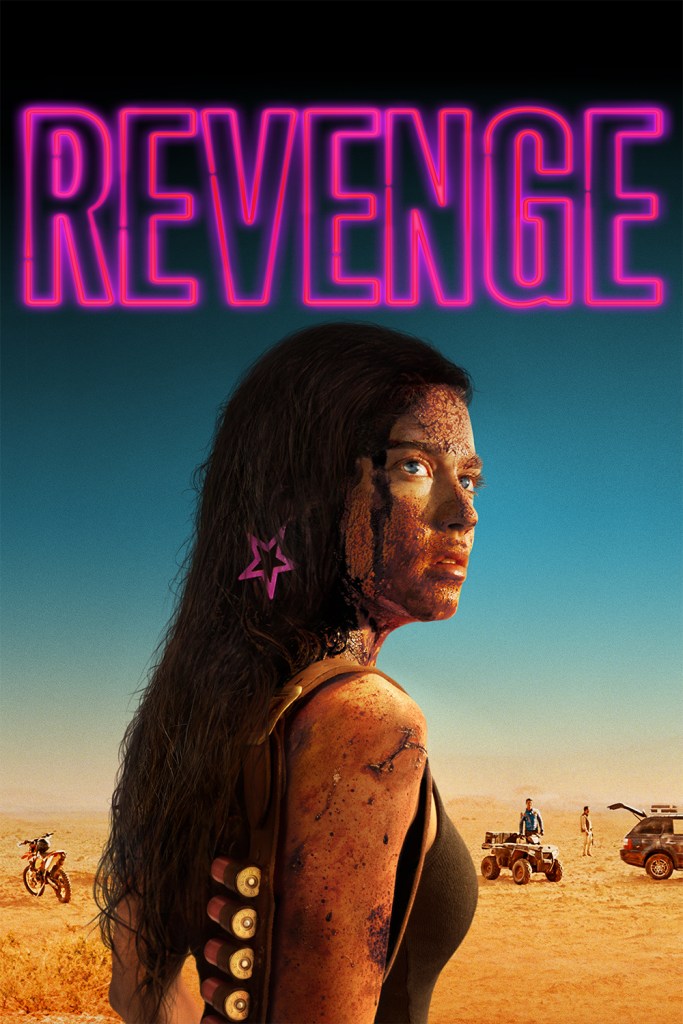
Coralie Fargeat’s 2017 film Revenge is an intense and striking blend of horror and thriller that refreshes the rape-revenge genre with a strong emphasis on female empowerment and resistance. At its core, the film follows Jen, a young woman who is brutally assaulted and left for dead in a desert. Against all odds, she survives and seeks brutal revenge on her attackers. What makes Revenge stand out is its blend of graphic, realistic violence and a striking, highly stylized visual approach, resulting in a film that is both visceral and symbolic.
Revenge sits within a long tradition of rape-revenge films that includes both grindhouse exploitation and serious art films. One of the earliest and most influential films in this tradition is Ingmar Bergman’s The Virgin Spring (1960), a somber and moral exploration of a father’s response to his daughter’s rape and murder in medieval Sweden. Bergman’s film inspired many later works, including Wes Craven’s famously brutal The Last House on the Left (1972), which reinterprets the same story through the lens of exploitation horror. Other notorious examples include I Spit on Your Grave (1978), known for its graphic depiction of sexual violence and violent retaliation. More recent films like Jennifer Kent’s The Nightingale (2018) revisit these narrative themes with psychological and political depth. Fargeat’s Revenge draws on this history, combining symbolic storytelling and thematic depth with the raw brutality and energy of grindhouse exploitation.
The narrative structure of Revenge is familiar: Jen, introduced as the mistress of a wealthy man, is assaulted by his friends. Her lover Richard tries to silence her by pushing her off a cliff, but Jen survives, severely injured and impaled on a tree. Her journey is one of intense physical suffering, but also resurrection and fierce empowerment. The film’s use of bright, vivid colors such as hot pinks and blues shifts the story into a surreal, symbolic space where gender roles are exaggerated and the desert becomes a mythic battleground where Jen fights to reclaim control.
Fargeat depicts Jen’s trauma and physical recovery through graphic and detailed body horror—not simply for shock, but as a visual metaphor for reclaiming agency. For example, Jen’s self-treatment of her impalement wound with a hot beer can brands her skin and symbolizes her rebirth and determination. These elements mark a clear departure from earlier rape-revenge films that sensationalized female suffering, shifting the focus to the survivor’s power and autonomy.
Cinematographer Robrecht Heyvaert’s work enhances this dynamic, contrasting the bright, harsh desert landscape with the cold, sterile luxury of Richard’s home. This contrast symbolizes the clash between raw survival and social control. The violence throughout the film is explicit and often hard to watch, but it is deeply rooted in the reality of trauma rather than fantasy.
Matilda Lutz’s performance as Jen is a key strength of the film. She transforms from a vulnerable, objectified figure into a fierce, focused avenger. The male antagonists are less developed, serving as archetypes of toxic male dominance—entitlement, violence, and cowardice—and their downfall reflects the collapse of that social order.
While Revenge maintains the fast pace and suspense of a thriller, its focus on graphic body horror and trauma places it firmly within the horror genre, aligning with the French Extremity movement known for its intense depictions of suffering and transgression. The source of horror here is not supernatural but very much rooted in the physical and psychological impact of violence.
The film has been praised for its technical skill and its focus on female resistance and empowerment. Instead of exploiting female suffering, it forces audiences to confront violence and trauma in a way that centers strength and rage. This is a clear reimagining of the revenge narrative through a modern lens that highlights resilience.
Revenge stands as both a tribute and a reinvention within its genre. It nods respectfully to the moral complexity of Bergman’s The Virgin Spring, the shock tactics of grindhouse staples like The Last House on the Left and I Spit on Your Grave, and the psychological depth of The Nightingale. Yet it simultaneously reinterprets these influences, making a statement that is both timely and provocative.
Coralie Fargeat’s Revenge is a powerful and contemporary entry into the rape-revenge genre, blending horror and thriller conventions with a focus on survival and agency. The film explores the physical and emotional effects of trauma and the possibility of reclaiming power through violence. Its vivid visuals, symbolism, and intense violence challenge audiences to rethink assumptions about gender, justice, and survival. It is a film that provokes strong reactions while delivering a deeply felt story of empowerment and resilience.
I always assumed that this song was specifically written for one of the Nightmare on Elm Street movies but actually, the Fat Boys were just fans of the movies and they decided to put a song about them on one of their albums. The song was included in The Freddy Krueger Special, which aired on CBS in 1988.
This video, which features several of Freddy’s victims and Robert Englund himself, was written by Wes Craven and directed by Harvey Keith. Keith directed a few films, including 1988’s Mondo New York and 1990’s Jezebel’s Kiss.
Today, the Shattered Lens wishes a happy birthday to actress Neve Campbell!
This horror scene that I love comes from 1996’s Scream. In this scene, Sidney Prescott (Neve Campbell) explains to Ghostface why she doesn’t like horror movies. Unfortunately, when you’re trapped in the middle of one, it really doesn’t matter whether you enjoy the genre or not.