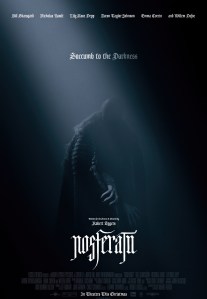
Film Review: Nosferatu (dir. by Robert Eggers)


I stepped out of the doors of the Regal Times Square yesterday, feeling giddy as a schoolkid. In my hands were a custom popcorn bucket and an Orlock Funko-Pop. I thoroughly enjoyed Robert Eggers Nosferatu and Christmas Morning was a delight. It was Film Euphoria. It was as if Halloween had one last gift to give, one final end of film zinger, and give it did.

At my early morning showing for Robert Eggers Nosferatu, we had at least one fellow who fell asleep and snored through the bulk of the film. Not loud enough to be disruptive, but it almost mimicked the strange purring sounds of the film’s antagonist. Granted, I understand. My showing was around 10a.m. on Christmas Morning and perhaps they partied hard the night before. Anything’s possible. Still, part of me likes to think that a person walking into a Robert Eggers film may have some expectations. With only three films under his belt – The Witch, The Lighthouse, and The Northman, regular audiences know that he has a taste for the macabre (perhaps even the unhinged), usually employs a slow burn when it comes to pacing and works with a great deal of light and shadow. If either of his previous films worked for you, Nosferatu‘s a near perfect fit for his style. If you’re not a fan of Eggers work, nor a fan of the previous renditions of Nosferatu, there’s little here that will make you change your mind (save for just a little more gore, perhaps). It’s a little hard to spoil a story that’s more than a century old, but Eggers makes enough changes to keep the film from being the exact note for note story as before. Is it scary? Yes. Is there blood? Sure, but none of it is in the ‘jumpscare every other second’ variety. If that’s what you’re looking or hoping for, none of the Nosferatu’s (including this one) will deliver that and you will be quite disappointed. This is a prime cut of wagyu beef, not your everyday sirloin.

As most know, Nosferatu was essentially stolen from Bram Stoker’s Dracula. The original – Nosferatu: A Symphony of Horror was a silent film released back in 1922 by F. W. Murnau. Although the story was written and changed to fit German audiences, elements were still very close to Stoker’s and the Stoker Family tried to get rid of it. Copies were burned, but like that Jumanji box, it managed to slither through the years, gaining popularity to the point of Canonization. If Film History is your thing, I highly recommend watching the 1922 film, if you haven’t already. It amazes me how most of what they did was accomplished (my favorite scene being Orlok prepping his coffins for his trip). At the time of this writing, the movie is currently available on Amazon Prime. For me, I love the 1979 update by Werner Herzog, Nosferatu The Vampyre. There are a few minor changes in the plot, but it’s just as powerful.

Thomas Hutter (Nicholas Hoult, Mad Max: Fury Road) is married to his lovely wife Ellen (Lily-Rose Depp, The King) in the town of Wisborg. Ellen suffers from fits of melancholia, which cause her to either spurt morbid tales or put her in convulsive fits. He’s looking for a way to improve his financial station with his bride while keeping her problems hushed, and has found a great opportunity from his boss, Herr Knock (Simon Burney, Mission Impossible: Rogue Nation). It appears a wealthy old man wishes to move to Wisborg and purchase an estate there. The only stipulation is that he is infirm and cannot make the journey. Thomas is charged with traveling to the Carpathian mountains, where he is to visit Count Orlock at his home with the deeds and contracts. During his trip, Thomas is warned of the dangers ahead, but proceeds full on, meeting the Count and his strange ways. Upon learning of Ellen and her beauty, the Count sets off a chain of events that will put all of Wisborg at risk. Can the Count be stopped in time?

There’s so much love in this production, it seems. It certainly has the atmosphere down. Cinematographer Jarin Blaschke, who worked on all of Eggers previous films, weaves some magic with light that in some scenes rival Alejandro Amenabar’s The Others. Lanterns and candles are blinding, while at the same time, you might find yourself squinting to see the figure in the shadows. I had a few “look around the screen” moments while watching it. There’s absolutely nothing to complain about from a visual standpoint, it’s just beautiful. It’s also quite dark in nature. We’re dealing with vampires, possession and the occult, which Eggers takes in a few extremes (particularly through Skarsgard, Depp and Burney). Ancient tomes? Check. Romani banishing the darkness with Garlic? Check. Consecrating the soil? Done. The sound design in the film is nice, particularly with the breathing and talking for Orlok, which felt like it travelled through the audience. Blood squelches, screams are crisp. There’s little more I can say there, really. I was entertained and transported.

The cast is wonderful. The only thing I’ve ever watched Lily-Rose Deep do was Yoga Hosers, and she’s come a long way from that. Ellen is a tortured character, and Deep rides this through – fits, convulsions and all – to a point where you may wonder if she was really okay on set. We follow Nicholas Hoult’s Thomas as he moves from quiet reservation to curious disbelief and then ultimately, just full on terrified. Even the smaller roles work. Simon Burney’s character becomes repulsive. Emma Corrin, who had a fun turn earlier this year in Deadpool & Wolverine has good moments, along with Aaron Taylor-Johnson (Kraven the Hunter). Then there’s Dafoe. It never hurts to have Willem Dafoe in your lineup. This is his third film with Eggers and he’s come something of a lucky charm as Prof. Ebenhart von Franz. As the Van Helsing of the story, Dafoe is a treat to watch on screen, especially when paired with Ralph Ineson from The Witch. I could watch the two of them as detectives solving Gothic/Victorian X-Files in their own series or movies.

As Orlock, Bill Skarsgard (John Wick 4) really melts into the role, giving the character a low near constant purr and a voice that enunciates every word. Perhaps it was just me, but I did have a bit of a problem figuring out what Orlock was saying at some points. It improved as the story went on, though. Orlock’s look does veer from the traditional, through. That’s a jolt in itself. While he looks more like the Draugr in Skyrim or in Eggers own The Northman, I found myself thinking of “Taserface” in Guardians of the Galaxy, Vol. 2. If you can get past that feeling, it still works. It’s a creepy character and Skarsgard does it justice, I felt.

Clocking in at about 2 hours and 12 minutes, it’s considered the longest Nosferatu film. I found this odd because were a number of sequences the original and remake had that Eggers missed (like the loading of the coffins). The film is cut pretty well, for what it’s worth, though I’m not sure what they could have removed to trim scenes down.

If the film has any faults, any problems, there was one. The one weird misstep in all of this is a sex scene that seemed just a little out of place. I understand why it happened, and how it was supposed to fuel the story, but it comes on so fast and fierce that I sat there in the audience whispering…”Wait…what’s happening…Whoa…now? Here? Why?” Mind you, this is coming from someone who watched Shame more than once when it was first released. That, if anything, might freak a few people out if they’re not ready for it. Either that, or I’m becoming prudish in my old age.

Overall, I loved Nosferatu. If it weren’t so expensive to get out to a theatre, I’d make another run at it. As a remake, it easily stands toe to toe with John Carpenter’s The Thing and Chuck Russell’s The Blob as one you can sit on the shelf next to those who came before it. It’s a worthy adaptation, with moments of sheer dread and some that may push a boundary or two.

Horror Scenes That I Love: The Danse Macabre in Werner Herzog’s Nosferatu


Since today’s horror on the lens was the original Nosferatu, it feels appropriate that today’s scene of the day should come from Werner Herzog’s 1979 remake.  In this scene, Lucy (Isabella Adjani) observes firsthand the madness that has come to the town of Wismar, along with the vampire and ship full of  plague-carrying rats.  While the people of the town have a last supper and celebrate their impending doom, Lucy tries to figure out a way to save them from Klaus Kinski’s Dracula.

This scene is a perfect example of how the director of a remake can both pay respectful homage to his source material while also bringing his own concerns to the story.

The Films of 2024: Orion and the Dark (dir by Sean Charmatz)


In 1995, an 11 year-old boy named Orion (voiced by Jacob Tremblay) lives in Philadelphia.

He has two loving parents.  He lives in a nice house.  He has his fist crush, on his classmate Sally (voiced by Shino Nakamichi).  He has a bully (voiced by Jack Fisher) who enjoys giving him a hard time and he has several notebooks full of his thoughts and drawings.  He also has a lot of fears.

Indeed, it’s his fears that largely define Orion.  Some of his fears are understandable.  I don’t like wasps or murder clowns either.  Some of his other fears are a bit more elaborate.  He’s scared of his bully but he’s even more scared of fighting his bully because he might accidentally break the bully’s nose and drive a piece of bone into the bully’s brain, therefore killing him.  His biggest fear, however, is his fear of the Dark.

In fact, Orion spends so much time talking about how much he hates the dark and how scared he is of the dark that Dark (Paul Walter Hauser) appears to him in human form and explain that he’s getting tired of Orion blaming him for anything.  Dark takes Orion with him as he travels across the world, bringing darkness to various countries and overseeing various other elements, like Sweet Dreams (Angela Bassett), Unexplained Noises (Golda Rosheuvel), Insomnia (Nat Faxon), Quiet (Aparna Nancherla), and Sleep (Natasia Demetriou).  Dark shows Orion that there’s no need to scared of the dark and that everyone involved is just doing their job.  Orion comes to understand and appreciate Dark but, when he makes the mistake of saying that he still kind of likes Light (voice by Ike Barinholtz) better, it leads to a lot of hurt feelings and resignations….

If this sounds a bit weird, one should keep in mind that the story is being told by the adult Orion (voiced by Colin Hanks) to his daughter, Hypathia (Mia Akemi Brown).  Adult Orion is telling the story to help Hypathia deal with her own fears and it soon becomes obvious that he’s making it up as he goes along.  Hypathia is aware of this and has no hesitation about calling out the stuff that doesn’t make any sense.  And when Orion proves incapable of coming up with a satisfactory ending for his story, Hypathia jumps into the story herself in an attempt to bring it all to a proper conclusion.  But once she’s in the story, can she get back out?

Orion and the Dark may sound like a standard “conquer your fears and believe in yourself” animated film but the script was written by Charlie Kaufman and, in typical Kaufman fashion, the story is full of twists and turns and more than a few moments of commentary on the whole act of storytelling itself.  There’s actually a lot going on in Orion and the Dark, with the film ultimately becoming a tribute to the power of imagination and to all of the parents-turned-storytellers in the world.

I’m a bit notorious for crying while watching animated films and I will say that Orion and the Dark brought tears to my eyes more than a few times.  It’s an incredibly sweet movie, one that can be appreciated by both children and adults.  It’s a movie about not just conquering fears but also using those fears to make oneself stronger.  The final message is that light cannot exist without the dark and vice versa but that’s okay.  There’s much to love in the light but the dark can be lovable too.  Fear is a part of life but it’s not the only part of life.

Creatively-animated and featuring a strong cast of voice actors, Orion and the Dark is definitely one to check out.

Horror Scenes That I Love: Klaus Kinski in Nosferatu


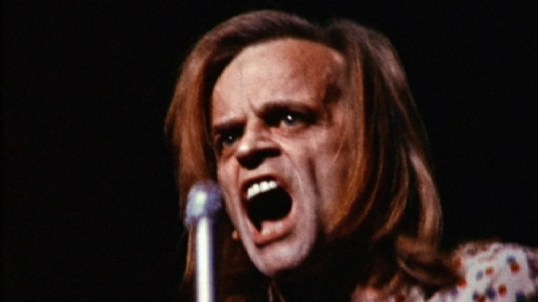
From the 1960s until his death in the early 90s, German actor Klaus Kinski was known for being the enfant terrible of world cinema.  Kinski was a volatile talent, an often angry and occasionally violent performer who specialized in playing extreme characters and who reportedly took pride in his ability to drive directors crazy.  Kinski appeared in good films and bad films and, in every one of them, he gave the type of unique performance that only he was cable of giving.

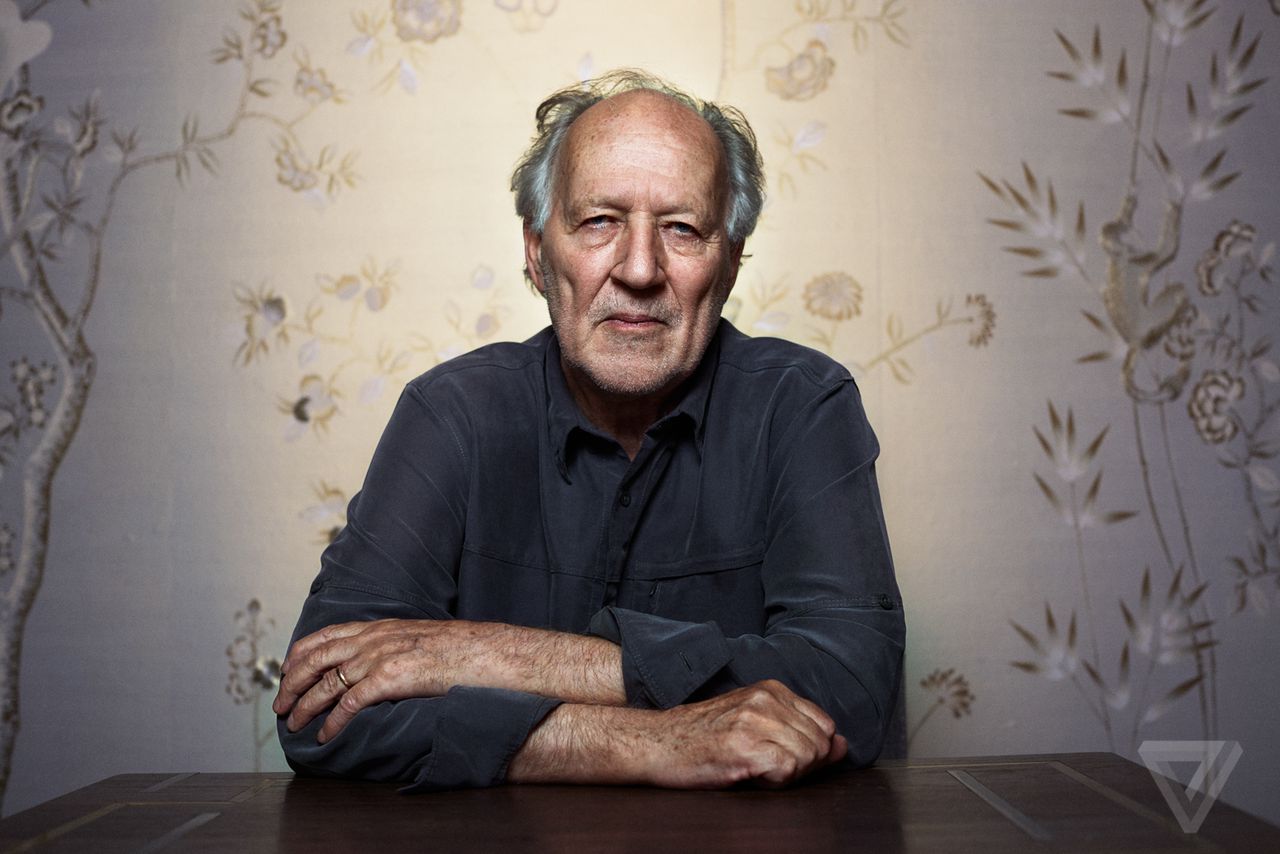
Kinski is best-remembered for his work with his frenemy, Werner Herzog.  When Herzog and Kinski weren’t making films together, they were often criticizing each other in the press and sending one another death threats.  In the documentary My Best Fiend, Herzog documented his partnership with Kinski.  Even while Herzog talked about the time that he went to Kinski’s home with the intent of killing him, Herzog’s affection for his frequent star was obvious.  Klaus Kinski was one of a kind.

In Werner Herzog’s 1980 film, Nosferatu, Kinski played the role of Dracula.  In this scene, she comes to visit Isabelle Adjani’s Lucy.

Scenes That I Love: Aguirre Declares Himself To Be The Wrath of God


In honor of Werner Herzog’s birthday, today’s scene that I love comes from one of his best films.  1972’s Aguirre, The Wrath of God not only established Herzog as a major filmmaker but it also showed that he was the director who could get the best out of the notoriously difficult Klaus Kinski.

In this scene, Kinski plays the mad conquistador, Aguirre.  Lost with his men in the Amazon, Aguirre establishes control over the dwindling expedition.

4 Shots From 4 Films: Special Werner Herzog Edition


4 Or More Shots From 4 Or More Films is just what it says it is, 4 shots from 4 of our favorite films. As opposed to the reviews and recaps that we usually post, 4 Shots From 4 Films lets the visuals do the talking!

Today, the Shattered Lens wishes a happy birthday to one our favorite directors, the great Werner Herzog!  It’s time for….

4 Shots From 4 Werner Herzog Films

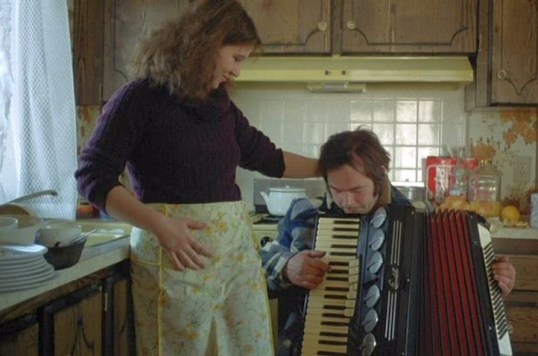
The Enigma of Kaspar Hauser (1974, dir by Werner Herzog, DP: Jörg Schmidt-Reitwein)

Stroszek (1977, dir by Werner Herzog, DP: Thomas Mauch)

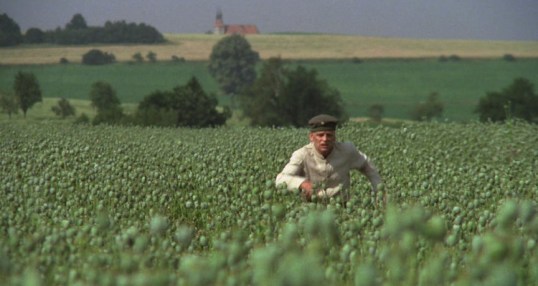
Woyzeck (1979, dir by Werner Herzog, DP: Jorg Schmidt-Reitwein)

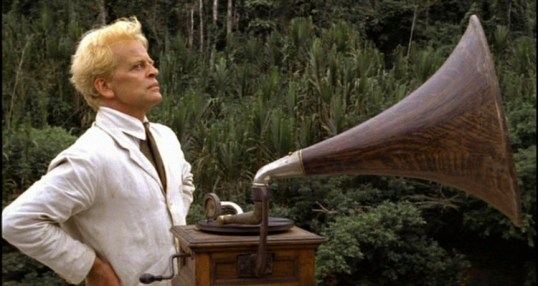
Fitzcarraldo (1982, dir by Werner Herzog, DP: Thomas Mauch)

6 Shots From 6 Horror Films: 1979


4 Or More Shots From 4 Or More Films is just what it says it is, 4 shots from 4 of our favorite films. As opposed to the reviews and recaps that we usually post, 4 Shots From 4 Films lets the visuals do the talking!

This October, I’m going to be doing something a little bit different with my contribution to 4 (or more) Shots From 4 (or more) Films.  I’m going to be taking a little chronological tour of the history of horror cinema, moving from decade to decade.

Today, we take a look at a very important year: 1979.

6 Shots From 6 Horror Films: 1979

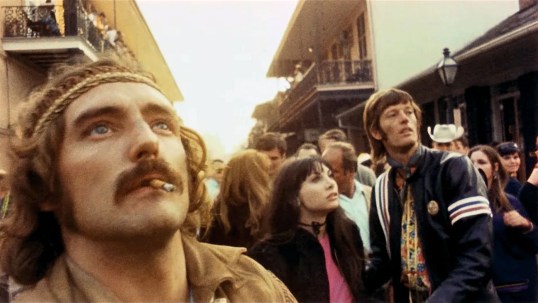
Fascination (1979, dir by Jean Rollin)

The Brood (1979, dir by David Cronenberg, DP: Mark Irwin)

Alien (1979, dir by Ridley Scott, DP: Derek Vanlint)

Beyond the Darkness (1979, dir by Joe D’Amato, DP: Joe D’Amato)

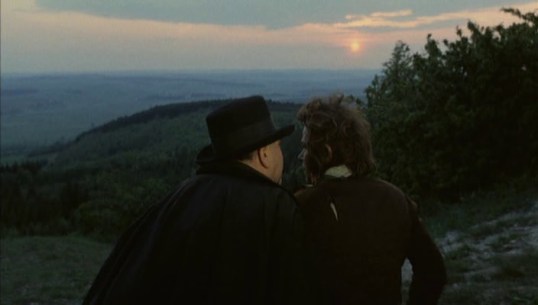
Nosferatu The Vampyre (1979, dir by Werner Herzog, DP: Jörg Schmidt-Reitwein)

Zombi 2 (1979, dir. Lucio Fulci, DP: Sergio Salvati)

8 Shots From 8 Films: Special Werner Herzog Edition


4 Or More Shots From 4 Or More Films is just what it says it is, 4 shots from 4 of our favorite films. As opposed to the reviews and recaps that we usually post, 4 Shots From 4 Films lets the visuals do the talking!

Today, the Shattered Lens wishes a happy birthday to one our favorite directors, the great Werner Herzog!  It’s time for….

8 Shots From 8 Werner Herzog Films

Fata Morgana (1971, dir by Werner Herzog, DP: Jörg Schmidt-Reitwein)

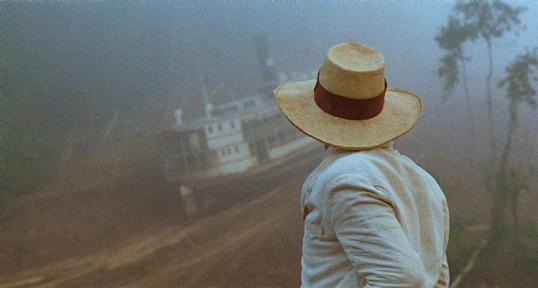
Aguirre The Wrath of God (1972, dir by Werner Herzog. DP: Thomas Mauch)

The Enigma of Kaspar Hauser (1974, dir by Werner Herzog, DP: Jörg Schmidt-Reitwein)

Heart of Glass (1976, dir by Werner Herzog, DP: Jörg Schmidt-Reitwein)

Stroszek (1977, dir by Werner Herzog, DP: Thomas Mauch)

Nosferatu The Vampyre (1979, dir by Werner Herzog, DP: Jörg Schmidt-Reitwein)

Fitzcarraldo (1982, dir by Werner Herzog, DP: Thomas Mauch)

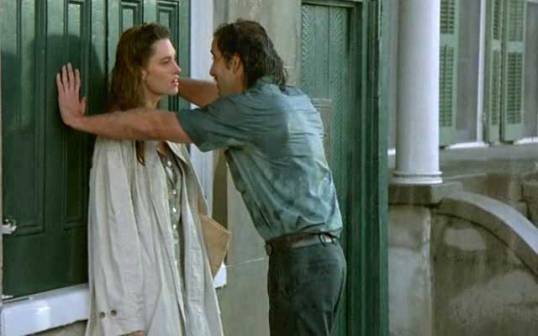
Bad Lieutenant: Port of Call New Orleans (2009, dir by Werner Herzog, DP: Peter Zeitlinger)

4 Shots From 4 Klaus Kinski Films


4 Shots From 4 Films is just what it says it is, 4 shots from 4 of our favorite films. As opposed to the reviews and recaps that we usually post, 4 Shots From 4 Films lets the visuals do the talking!

95 years ago today, Klaus Kinski was born in Poland.  Kinski was a brilliant actor who, by all accounts, was an absolute monster in his private life.  Werner Herzog worked with him on several films and reportedly considered murdering him on more than a few occasions.  Herzog, himself, wrote about the time that he had spent in a mental asylum and the time that was diagnosed as being a psychopath.  Because of his talent, he appeared in many great films.  Because of his reputation for being a literal madman, he also missed out on a lot of great roles and spent much of his career appearing in low-budget exploitation flicks.  Many of those films were in the horror genre.

Today, on the anniversary of Kinski’s birth, TSL presents….

4 Shots From 4 Klaus Kinski Films

Count Dracula (1970, dir by Jess Franco, DPs: Manuel Merino and Luciano Trasatti)

Jack the RIpper (1976, dir by Jess Franco, DPs: Peter Baumgartner and Peter Spoerri)

Nosferatu The Vampyre (1979, dir by Werner Herzog, DP: Jörg Schmidt-Reitwein)

Venom (1981, dir by Piers Haggard, DPs: Denys Coop and Gilbert Taylor)


Horror Scenes I Love: Klaus Kinski and Bruno Ganz have dinner in Nosferatu


Nosferatu (1979, dir by Werner Herzog)

Since today is Klaus Kinksi’s birthday, it makes sense that he should be featured in today’s scene of the day.  In this scene from Werner Herzog’s 1979 film, Nosferatu, Klaus Kinski and Bruno Ganz have dinner.  Of course, in this scenario, Bruno Ganz is Jonathan Harker while Kinski is Dracula.

(In the original, silent Nosferatu, Harker’s name was changed to Thomas Hutter while Dracula was called Count Orlok.  By the time Herzog shot his version, the characters were in the public domain and there was no longer any need to pretend that Nosferatu wasn’t an adaptation of Bram Stoker’s novel.)

Enjoy!