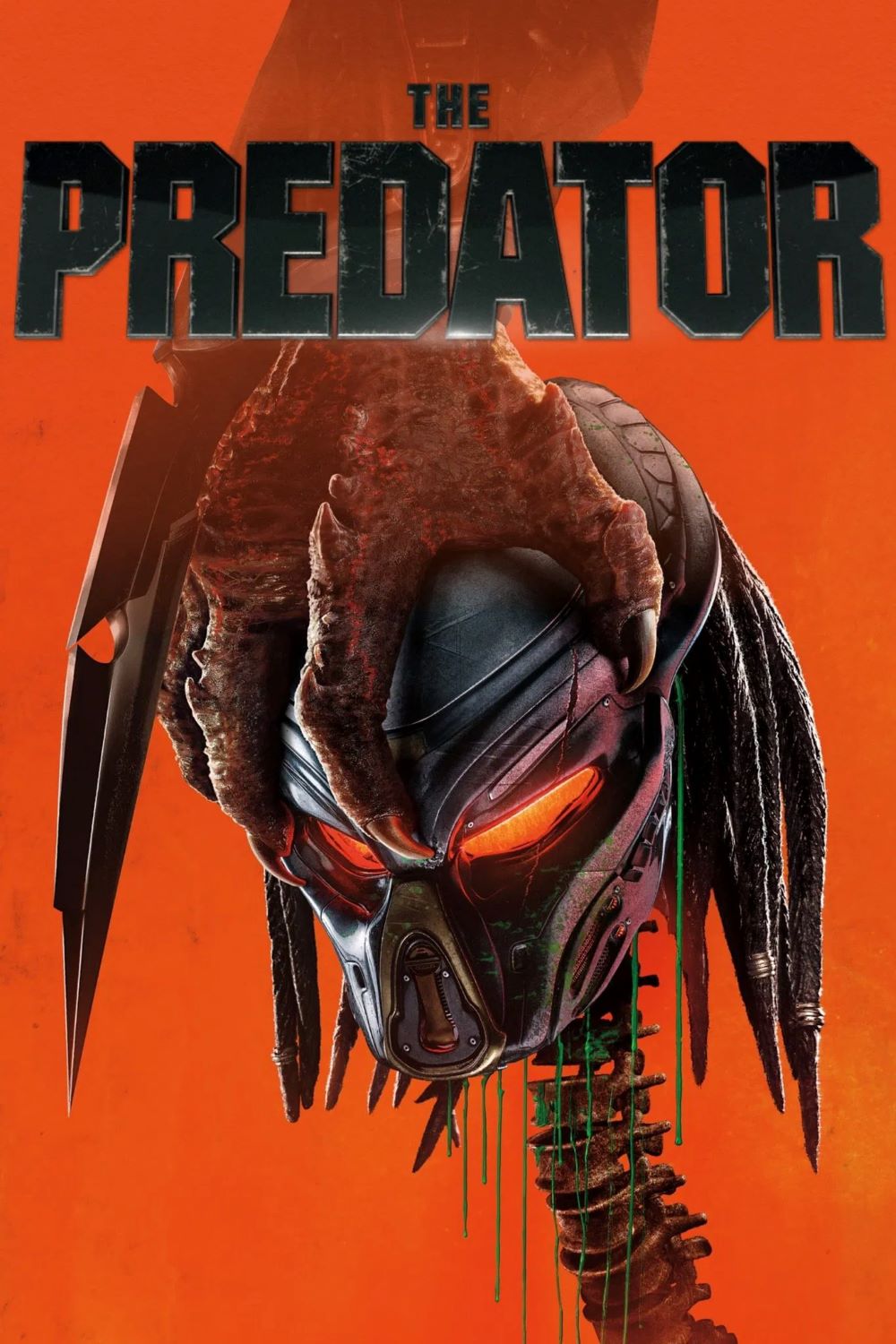
Review: The Predator (dir. by Shane Black)


“Gentlemen, remember… they’re large, they’re fast, and fucking you up is their idea of tourism.” — Traeger

Shane Black’s The Predator (2018) lands with a bang, offering a spectacle heavy on action, gore, and the signature snarky humor Black is known for. If you come looking for a suspenseful, tightly wound survival story in the tradition of the original 1987 film, you’re in for something very different—a gonzo mashup of nostalgia, R-rated slapstick carnage, and creature-feature excess that leans gleefully into genre absurdity.

The plot barrels forward with almost reckless energy. Boyd Holbrook stars as Quinn McKenna, a sniper whose mission goes haywire when a Predator spaceship crashes to Earth. Through a sequence of provocatively silly events, McKenna’s autistic son, Rory (Jacob Tremblay), ends up with the alien’s high-tech gear, unwittingly drawing attention from both the government and the technologically advanced Predators themselves. McKenna teams up with a ragtag bunch of soldiers, each with their own collection of quirks and psychological scars, plus Olivia Munn’s biologist Casey Bracket. This time, the hunt spills out of the jungle and into suburbia, with the chaos quickly escalating as a souped-up, genetically upgraded Predator enters the mix.

Where the 1987 original thrived on tension and jungle-stalking suspense, Black’s take is more about velocity, bloody spectacle, and loud, rapid-fire banter. The tone is set early, never letting up: The jokes fly thick and fast, the action is relentless, and there’s barely a lull for actual character development. The chemistry among “the Loonies,” McKenna’s loose-cannon squad, is the highlight—Keegan-Michael Key and Thomas Jane, in particular, deliver a mix of comic relief and bruised pathos that provides Black with fertile ground for his trademark dialogue. Sterling K. Brown chews the scenery as Traeger, the government antagonist, with a kind of joyous villainy that’s hard not to enjoy, even when the narrative slides into pure chaos. Olivia Munn starts strong as a scientist thrown into the deep end but is ultimately brushed aside by the film’s mayhem-heavy set pieces.

The film’s comedic pulse is strong, sometimes to its own detriment. Shane Black fills out every moment with his specific brand of irreverence, which works best in the banter between the Loonies but can undercut the menace of the Predators themselves. The violence is over-the-top, with practical splatter and digital effects combining for set pieces that are more monstrous brawls than hunting sequences. The movie rarely worries about internal logic—kids instantly deciphering alien technology and scientists surviving actions that would doom most is par for the course here. For fans of the previous films, there are enthusiastic callbacks and plenty of Easter eggs, though these are delivered more as punchlines than as foundations for new franchise mythology.

One of the film’s major issues is its kitchen-sink approach: it tries to be a throwback action movie, a gory sci-fi thriller, and a self-aware parody all at once. The result is a film constantly threatening to come apart at the seams—some viewers will find the tonal whiplash exhausting, with jokes about mental illness and disability that are more dated than daring. The narrative bounces between subplots and characters so quickly that plot armor and convenient twists abound, while the stakes themselves grow ever more implausible. If you’re looking for slow-burn tension or the primal fear that powered John McTiernan’s or even Stephen Hopkins’ installments, you’ll find yourself unmoored by the gleeful chaos and genre self-parody that Black serves up.

Still, for all its messiness, The Predator is never boring. It’s an action movie that refuses to slow down, boldly swapping iconic mud-soaked hunting for suburban street battles, and musclebound brawn for damaged, wise-cracking outcasts. It is, in its own profane, ADD-addled way, a love letter to the kind of big, dumb, fun genre movies that Black himself helped define in the late ’80s and ’90s.

Ultimately, The Predator isn’t a triumphant reinvention of the franchise nor a true return to the original’s nerve-shredding simplicity. Fans looking to see a return to the franchise’s glory days will be sorely disappointed. However, taken on its own merits and not dragged down by the expectations brought by the franchise, the film does entertain with its wild, unruly, blood-spattered romp that wears its flaws on its sleeve and dares the audience to laugh along with the carnage. If you’re in it for straight-up monster mayhem, creative kills, and a barrage of one-liners, you’ll have a blast. If you’re looking for restraint, genre evolution, or old-school suspense, you’ll probably end up shaking your head—grinning, maybe, but shaking it all the same.
The Films of 2024: Mea Culpa (dir by Tyler Perry)


It’s another year and that means it’s time for another bad melodrama from Tyler Perry.

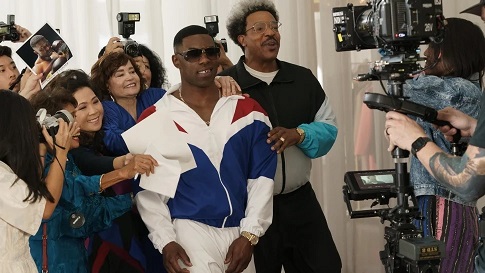
In Mea Culpa, Kelly Rowland plays Mea Harper, an Atlanta defense attorney who is hired to defend Zyair Malloy (Trevante Rhodes, delivering his lines with all of the passion of a first generation chatbot) against the charge that he murdered one of his many girlfriend.  Zyair is an artist, so he lives in a loft with an open elevator and a lot of mood lighting.  He’s been accused of not only murdering his ex but also using her blood and teeth in one of his paintings.  Protestors gather outside of a gallery showing his work and chant, “We hate Zyair!  We hate Zyair!”

Mea just happens to be the sister-in-law of Ray (Nick Sagar), the assistant district attorney who feels that prosecuting Zyair Malloy will be his ticket to the mayor’s office.  Mea’s entire family tells her that she needs to drop Zyair as a client and support her brother-in-law’s ambitions.  However, Mea doesn’t like her family.  Her cancer-stricken mother-in-law (Kerry O’Malley) is always talking how she wishes her youngest son had married someone else.  Mea’s husband, Kal (Sean Sagar), is a total wimp who doesn’t even have the guts to tell everyone that he lost his job and had to go to drug rehab.

Soon Zyair is hitting on Mea and trying to get her into his bed so that he can paint her.  Mea tries to resist but when she finds evidence that Kal has been going to a hotel with Ray’s wife, she gives in.  Except — uh oh! — it appears that there was a perfectly innocent explanation for the visit to the hotel!

Much like A Fall From Grace, Mea Culpa tries to be enjoyably sordid but it’s actually just dull.  You would think that, after 13 films, Perry would have finally learned something about both pacing and how to direct actors but Mea Culpa moves at a snail’s pace and it features some of the worst acting that I’ve ever seen.  The final third of the film features a few surprise twists but the plot also features so many unbelievable coincidences that even a crazy twist can’t save the film from being forgettable.

Tyler Perry is an interesting figure on the American pop culture landscape.  On the one hand, he’s a talented character actor.  One need only rewatch Gone Girl to see how good an actor Tyler Perry can be when he’s not directing himself.  And, as tempting as it may be, one should not discount the fact that his films and his television series have made a lot of money.  Despite what the critics might say, Tyler Perry does have an audience and apparently, he understands what they want.  Tyler Perry has also provided jobs and opportunities for blacks behind and in front of the camera.  Perry makes films featuring blacks playing something more than just the comedic relief or the best friend of a white person and, again, the importance of that should not be discounted.

On the other hand, Tyler Perry is a not-particularly imaginative director and a heavy-handed writer and Mea Culpa is more evidence of that.  As much as one might want to find something praiseworthy about him as a cinematic artist, the fact of the matter is that even Tyler Perry’s “good” films, like A Jazzman’s Blues, aren’t so much good as they’re just not quite as bad as usual.  Given his success and the struggle that blacks have faced trying to move up in the American film industry, I think that everyone would like for Tyler Perry to be a good director but he’s not.  He’s a good actor and a good businessman but as a director, Mea Culpa is all too typical of his output.

Here Are The Independent Spirt Nominations!


The nomination for the Independent Spirit Awards were announced earlier today.

Making a very good showing were Tar, Women Talking, and Everything Everywhere All At Once.  Not showing up at all was Darren Aronofsky’s The Whale, which failed to even pick up a lead performance nomination for Brendan Fraser.  Seeing as how Fraser has been viewed as being the Oscar front runner for a few months now, his lack of a nomination definitely took observers by surprise.

Anyway, here are all the nominees!

FILM CATEGORIES

Best Feature
“Bones and All” (MGM/United Artists Releasing)
“Everything Everywhere All at Once” (A24)
“Our Father, the Devil” (Resolve Media)
“Tár” (Focus Features)
“Women Talking” (MGM/United Artists Releasing)

Best Director
Todd Field – “Tár” (Focus Features)
Kogonada – “After Yang” (A24)
Daniel Kwan, Daniel Scheinert – “Everything Everywhere All at Once” (A24)
Sarah Polley – “Women Talking” (MGM/United Artists Releasing)
Halina Reijn – “Bodies Bodies Bodies” (A24)

Best Lead Performance

Cate Blanchett – “Tár” (Focus Features)
Dale Dickey – “A Love Song” (Bleecker Street)
Mia Goth – “Pearl” (A24)
Regina Hall – “Honk for Jesus. Save Your Soul.” (Focus Features)
Paul Mescal – “Aftersun” (A24)
Aubrey Plaza – “Emily the Criminal” (Roadside Attractions)
Jeremy Pope – “The Inspection” (A24)
Taylor Russell – “Bones and All” (MGM/United Artists Releasing)
Andrea Riseborough – “To Leslie” (Momentum Pictures)
Michelle Yeoh – “Everything Everywhere All at Once” (A24)

Best Supporting Performance

Jamie Lee Curtis – “Everything Everywhere All at Once” (A24)
Brian Tyree Henry – “Causeway” (A24/Apple Original Films)
Nina Hoss – “Tár” (Focus Features)
Brian D’Arcy James – “The Cathedral” (Mubi)
Ke Huy Quan – “Everything Everywhere All at Once” (A24)
Trevante Rhodes – “Bruiser” (Onyx Collective)
Theo Rossi – “Emily the Criminal” (Roadside Attractions)
Mark Rylance – “Bones and All” (MGM/United Artists Releasing)
Jonathan Tucker – “Palm Trees and Power Lines” (Momentum Pictures)
Gabrielle Union – “The Inspection” (A24)

Best Breakthrough Performance
Frankie Corio – “Aftersun” (A24)
Garcija Filipovic – “Murina” (Kino Lorber)
Stephanie Hsu – “Everything Everywhere All at Once” (A24)
Lily McInerny – “Palm Trees and Power Lines” (Momentum Pictures)
Daniel Zolghardi – “Funny Pages” (A24)

Best Screenplay
“After Yang” (A24) – Kogonada
“Catherine Called Birdy” (Amazon Studios) – Lena Dunham
“Everything Everywhere All at Once” (A24) – Daniel Kwan, Daniel Scheinert
“Tár” (Focus Features) – Todd Field
“Women Talking” (MGM/United Artists Releasing) – Sarah Polley

Best First Screenplay
“Bodies Bodies Bodies” (A24) – Sarah DeLappe, Kristen Roupenian
“Emergency” (Amazon Studios) – K.D. Dávila
“Emily the Criminal” (Roadside Attractions) – John Patton Ford
“Fire Island” (Searchlight Pictures) – Joel Kim Booster
“Palm Trees and Power Lines” (Momentum Pictures) – Jamie Dack, Audrey Findlay

Best First Feature
“Aftersun” (A24) – Charlotte Wells (director), Mark Ceryak, Amy Jackson, Barry Jenkins, Adele Romanski (producers)
“Emily the Criminal” (Roadside Attractions) – John Patton Ford (director), Tyler Davidson, Aubrey Plaza, Drew Sykes (producers)
“The Inspection” (A24) – Elegance Bratton (director), Effie T. Brown, Chester Algernal Gordon (producers)
“Murina” (Kino Lorber) – Antoneta Alamat Kusijanović (director), Danijel Pek, Rodrigo Teixeira (producers)
“Palm Trees and Power Lines” (Momentum Pictures) – Jamie Dack (director), Leah Chen Baker (producer)

John Cassavetes Award (Given to the best feature made for under $1,000,000)
“The African Desperate” (Mubi) – Martine Syms (writer, director, producer), Rocket Caleshu (writer, producer), Vic Brooks (producer)
“A Love Song” (Bleecker Street) – Max Walker-Silverman (writer, director, producer), Jesse Hope, Dan Janvey (producers)
“The Cathedral” (Mubi) – Ricky D’Ambrose (writer, director), Graham Swon (producer)
“Holy Emy” (Utopie Films) – Araceli Lemos (writer, director), Giulia Caruso (writer, producer), Mathieu Bompoint, Ki Jin Kim, Konstantinos Vassilaros (producers)
“Something in the Dirt” (XYZ Films) – Justin Benson (writer, director, producer), Aaron Moorhead (director, producer), David Lawson Jr. (producer)

Best Cinematography
“Aftersun” (A24) – Gregory Oke
“Murina” (Kino Lorber) – Hélène Louvart
“Neptune Frost” (Kino Lorber) – Anisia Uzeyman
“Pearl” (A24) – Eliot Rockett
“Tár” (Focus Features) – Florian Hoffmeister

Best Documentary
“A House Made of Splinters” (Madman Entertainment) – Simon Lereng Wilmont (director), Monica Hellström (producer)
“All that Breathes” (HBO) – Shaunak Sen (director, producer), Teddy Leifer, Aman Mann (producers)
“All the Beauty and the Bloodshed” (Neon) – Laura Poitras (director, producer), Howard Gertler, Nan Goldin, Yoni Golijov, John Lyons (producers)
“Midwives” (POV) – Snow Hnin Ei Hlaing (director, producer), Mila Aung-Thwin, Ulla Lehmann, Bob Moore (producers)
“Riotsville, U.S.A.” (IFC Films) – Sierra Pettengill (director), Sara Archambault, Jamila Wignot (producer)

Best Editing
“Aftersun” (A24) – Blair McClendon
“The Cathedral” (Mubi) – Ricky D’Ambrose
“Everything Everywhere All at Once” (A24) – Paul Rogers
“Marcel the Shell with Shoes On” (A24) – Dean Fleischer Camp, Nick Paley
“Tár” (Focus Features) – Monika Willi

Robert Altman Award (Given to one film’s director, casting director and ensemble cast)

“Women Talking” (MGM/United Artists Releasing) – Sarah Polley (director), John Buchan, Jason Knight (casting directors), Shayla Brown, Jessie Buckley, Claire Foy, Kira Guloien, Kate Hallett, Judith Ivey, Rooney Mara, Sheila McCarthy, Frances McDormand, Michelle McLeod, Liv McNeil, Ben Whishaw, August Winter (ensemble cast)

Best International Film
“Corsage” (Austria/Luxembourg/France/Belgium/Italy/England) – dir. Marie Kreutzer
“Joyland” (Pakistan/USA) – dir. Saim Sadiq
“Leonor Will Never Die” (Philippines) – dir. Martika Ramirez Escobar
“Return to Seoul” (South Korea/France/Belgium/Romania) – dir. Davy Chou
“Saint Omer” (France) – dir. Alice Diop

Producers Award (presented by Bulleit Frontier Whiskey  – The Producers Award, now in its 26th year, honors emerging producers who, despite highly limited resources, demonstrate the creativity, tenacity and vision required to produce quality independent films.)
Liz Cardenas
Tory Lenosky
David Grove Churchill Viste

Someone to Watch Award (The Someone to Watch Award, now in its 29th year, recognizes a talented filmmaker of singular vision who has not yet received appropriate recognition)
Adamma Ebo – “Honk for Jesus. Save Your Soul”
Nikyatu Jusu – “Nanny”
Araceli Lemos – “Holy Emy”

“The Truer Than Fiction Award” (The Truer Than Fiction Award, now in its 28th year, is presented to an emerging director of non-fiction features who has not yet received significant recognition)
Isabel Castro – “Mija”
Reid Davenport – “I Didn’t See You There”
Rebeca Huntt – “Beba”

Miniseries Review: Mike (dir by Craig Gillespie, Tiffany Johnson, and Director X)


“Who is Mike Tyson?” is question that’s asked by the new Hulu miniseries, Mike.

The answer to that question is that he’s a boring guy who did some interesting things.

For instance, he became a boxer and was briefly the world champion before he was brought down by his own hubris.  That’s interesting, largely because it’s something that seems to happen to quite a few people who suddenly find themselves on top of the world but don’t have the maturity necessary to handle it.  However, that, in itself, does not Mike Tyson an interesting human being.  It just makes him an example of how history repeats itself.

He bit off an opponent’s ear during a boxing match.  That’s interesting because it was such a savage act and it scandalized people who otherwise have no problem watching two men beat each other until one loses consciousness.  Causing brain damage is okay but God forbid you bite off a piece of someone’s ear.  But the fact that Mike bit off the guy’s ear does not, in itself, make Mike Tyson interesting.  It just makes him a jerk.

Mike Tyson has a facial tattoo that doesn’t really mean anything.  A lot of people have stupid tattoos.

Mike Tyson has a distinctive way of speaking.  So do a lot of other people.

Mike Tyson spent three years in prison after being convicted of raping a contestant in a beauty pageant.  Tyson was and is certainly more famous than the typical convict and, somehow, that conviction has not prevented him from becoming a beloved cultural institution in the United States.  The hypocrisy is interesting.  Mike Tyson is not.

At least, that’s the impression that I got from this 8-episode miniseries.  Seven of the episodes feature Tyson (played by Trevante Rhodes) performing a one-man show in front of an audience in Indiana.  Believe it or not, this is based on fact.  Apparently, Mike Tyson did have a one-man show, in which he would discuss his career and his life.  (Jeff even wrote a review of it for this very site!)  We watch flashbacks as the show’s version of Tyson provides a self-serving narration and, to be honest, it seems like it would be the most boring one-man show ever.  Tyson talks about growing up poor and with a mother who alternated between hating and loving him.  He talks about his first trainer (played by Harvey Keitel, who often seems to be channeling Jonathan Banks) and his first marriage.  Mostly he talks about how he feels that almost everyone in his life betrayed him.  The first two episodes, which deal with Tyson’s youth, are effective because they examine how a childhood of mental and physical abuse can set the course of someone’s entire life.  However, once adult Tyson shows up, Mike becomes far less compelling.  It’s hard not to get tired of listening to him blame everyone else for his own increasingly poor decisions.

The one exception to the show’s format is episode 5, which is told from the point of view of Desiree Washington (Li Eubanks), the woman who Tyson was convicted of raping.  This is a powerful stand-alone episode, both because of Eubanks’s performance and because it’s the only episode to not be seen through Tyson’s eyes.  It’s the episode that allows the viewer to see Tyson the way the rest of the world saw Tyson.  And yet it’s difficult to feel that, when viewed in the context of the entire miniseries, this episode is a bit of a cop-out.  It’s the only episode to focus on someone who was hurt by Tyson but it’s surrounded by episodes that once again portray Tyson as being a victim of his managers, his fans, and society at large.  Desiree is given one episode and then disappears from the narrative whereas the show’s version of Tyson is given seven episodes to justify himself.  One gets the feeling that the show’s producers knew that they had to include Desiree but they also knew that revealing Tyson’s version of the events would have also meant revealing that he continues to insist that he was the victim and that would have totally messed up the show’s final redemption arc.  And so, the narrative burden is temporarily placed on Desiree and Tyson only returns once it is time to discuss what it was like being in prison.

Mike was produced by Craig Gillespie, who also directed I, Tonya.  Like I, Tonya, Mike features characters frequently breaking the fourth wall and talking directly to the audience.  In fact, it happens so frequently that it gets to be kind of annoying.  Breaking the fourth wall really wasn’t even that original when it happened in I, Tonya.  In Mike, it becomes a trick that’s used to try to make Mike Tyson into a more interesting character than he is.  But it feels empty, largely because it doesn’t tell us anything that we don’t already know or couldn’t have guessed on our own.

The miniseries itself was made without the participation of the real-life Mike Tyson.  Tyson condemned the show as being an attempt to make money off of his life and he actually does have a point.  Unfortunately, the miniseries itself doesn’t have anything new to add to the story of Tyson.  It’s an 8 episode Wikipedia entry.  At some point, the streaming services may need to realize that not every celeb needs to be the subject of a miniseries.  Simply being famous does not always make for a compelling story.

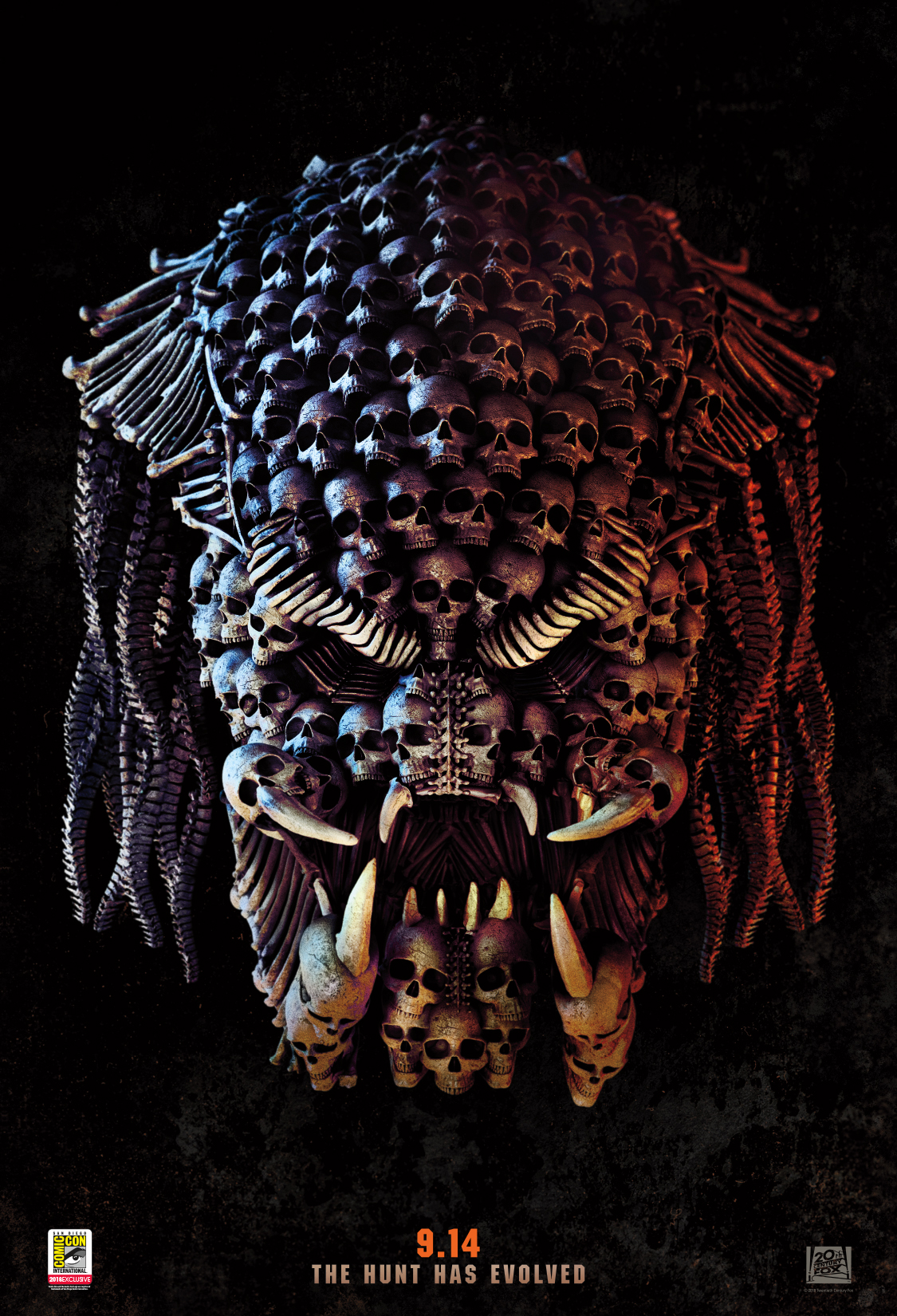
The Predator (Final Trailer)


The Predator

The teaser trailer for this Shane Black production didn’t wow me, at all. Then the first trailer came out and a red band one at that. That one was an upgrade but I was still on the fence. They’ve released more teasers, international trailers and tv spot and, once again, I was still not fully sold on the film.

Today 20th Century Fox drops the final trailer for The Predator just two weeks from it’s release date of September 14. This just days after the studio confirmed that the film will be a very hard R-rating raised my interest level.

It is this final trailer (again another red band trailer) is what finally sold me on this film as a must-see. We still know only bits and pieces of what the film will be about but the trademark Shane Black quips and smartass attitude shows up much more clearly with this last trailer.

I actually enjoyed the last Predator film and I hope this one continues the trend and just entertains it’s audience.

Film Review: 12 Strong (dir by Nicolai Fuglsig)


12 Strong begins with a montage of terror.

The World Trade Center is bombed in 1993.  Planes are bombed.  Ships are attacked.  Bill Clinton gives a speech in which he impotently condemns Al-Qaeda.  Finally, we reach September 11th, 2001.  Captain Mitch Nelson (Chris Hemsworth) is playing with his daughter when she suddenly looks up at the TV behind him.  “Look, Daddy,” she says.  Nelson turns around and sees The World Trade Center on fire.

Even though he’s recently announced his intention to retire, Nelson reports for duty.  Despite the skepticism of his commanding officer (Rob Riggle), Nelson and 11 others are sent into Afghanistan.  Their mission is to meet up with a warlord named Abdul Rashid Dostum (Navid Negahban) and to capture territory from the Taliban.  Nelson is initially given 6 weeks to complete this task.  Nelson replies that he’ll get it done in three, before the harsh Afghan winter makes it impossible to move through the mountains.

Among the actors who make up Nelson’s team: Michael Shannon, Trevante Rhodes, Austin Stowell, and Geoff Stults.  Fortunately, the cast is made up of familiar faces.  Even though you might not learn everyone’s name, you still feel as if you know them because you’ve seen all of them playing similar roles in other movies.  (After his performance in Moonlight, it’s a bit disappointing to see Trevante Rhodes playing such a minor supporting role in his follow-up but still, he’s a charismatic actor and he has enough screen presence that he definitely makes an impression.)  Somewhat inevitably, Michael Pena plays the funny member of the team.  It’s not a 21st century action film without Michael Pena providing comedic relief.

(That’s actually a little unfair to Michael Pena, who is a good actor and who gives a pretty good performance in 12 Strong.  It’s just that he’s played this role so many times that it’s almost become a cliché that every action movie will feature Micheal Pena making jokes.)

When the team first meets up with Dostum, there’s immediate tension between the supposed allies.  As Dostum puts it, the United States only cares about getting rid of the Taliban but they don’t care about what will happen afterward.  When Dostum looks at Nelson, he immediately announces that Nelson does not have killer eyes.  Everyone else on the team has killer eyes but not Nelson.  Dostum and his men are even less impressed when they see the Americans struggling to ride the horses that are required to get through the mountains.  Will Nelson win Dostum’s respect?  Will he develop the eyes of a killer?

You probably already know the answer to that.  There’s really not a single moment in 12 Strong that you won’t see coming.  As soon as Dostum says that Nelson needs to prove himself in battle, you know that he’ll get a chance to do just that.  As soon as another soldier talks about home, you know that he’s going to be seriously wounded.  When you first spot the child soldiers among Dostum’s forces and you see one of them give Nelson a nervous smile, you know that child’s probably going to be one of the first casualties of the attack.

12 Strong is a predictable movie but that doesn’t necessarily mean that it’s a bad one.  It’s a well-made film, with the cast all giving strong performances and director Nicolai Fuglsig doing a good job with the battle scenes.  My heart was racing during the film’s final battle.  New Mexico doubled for Afghanistan and the film features some truly stunning shots of the mountainous landscape.  The film even makes a point about why, after 17 years, there still doesn’t appear to be any end in sight to the War in Afghanistan.

Clocking in at 2 hours and 9 minutes, 12 Strong is probably about thirty minutes too long.  It’s a predictable movie but it’s well-made and the fact that it’s based on a true story does make it a bit more poignant than it would be otherwise.  It’s not a bad war film, particularly for January.

Film Review: Moonlight (dir by Barry Jenkins)


moonlight

I’m going to start this review of Moonlight by affirming something that you’ve either heard or, if you’ve seen the film, that you already know.

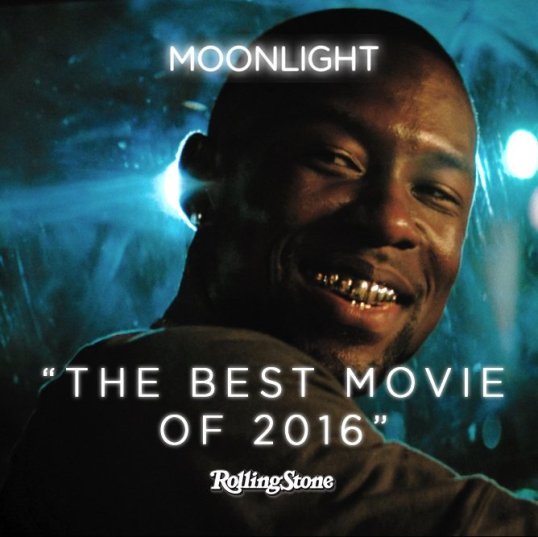
Moonlight is one of the best films of 2016.  Many critics have declared it to be the best.  When the Academy Award nominations are announced next month, Moonlight will receive several of them.  Barry Jenkins will not only be the fourth black filmmaker to be nominated for best director but he may very well be the first to win.  Personally, I would rate Arrival and Kubo and the Two Strings higher than Moonlight but I certainly won’t complain if Moonlight wins every Oscar that it’s nominated for.  It’s a powerful and personal film, one that might make you cry and will definitely make you think.  It sticks with you, from the brilliant opening to the powerful closing shot.  In a weak year for films, Moonlight stands one of the few legitimately great releases of 2016.

Moonlight is a film in three parts, all dealing with the life of Chiron.  Though he rarely speaks and often keeps his feelings hidden behind a wall of pain and deception, Chiron is one of the most fascinating characters that you’ll ever get to know.  Growing up in Miami, he seems to be destined to be forever on the outside.  In a country that protects whiteness and celebrates wealth, he’s black and he’s poor.  In a social environment that values being hard and demands an almost cartoonish masculinity, Chiron is sensitive and gay.

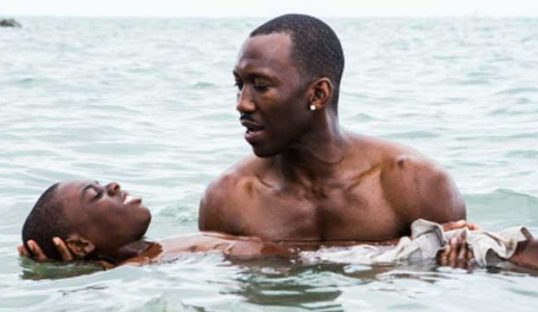
When we first meet Chiron, he’s a child nicknamed Little and he’s played by Alex Hibbert.  When we first see him, he’s fleeing both school bullies and a homelife that’s dominated by his abusive, crack-addicted mother, Paula (Naomie Harris, giving a brave and raw performance that reminds you of just how wasted she was in the role of Moneypenny in SPECTRE).  The only positive influence in Chiron’s life is a Cuban drug dealer named Juan (Mahershala Ali, who gives a performance of amazingly subtle power) and Juan’s girlfriend, Teresa (Janelle Monae).  Juan is the one who teaches Chiron how to swim.  He’s the one who tells Chiron that he can be more than he realizes.  Juan is the one who encourages Chiron to be himself, regardless of what the rest of the world demands that he be.  And yet, Juan is also the one who sells the drugs that are destroying Chiron’s mom.

We also see Chiron as an awkward and withdrawn teenager and this time, he’s played by Ashton Sanders.  Chiron struggles with his attraction to his best friend, Kevin (Jharrel Jerome) and does his best to avoid a terrifying bully named Terrel (Patrick Decile).

And finally, we meet Chiron as a muscular and sometimes menacing adult and he’s now played by Trevante Rhodes.  It’s when we meet the adult Chiron that we suddenly understand why the film was structured the way that it was.  As intimidating and noncommunicative as adult Chiron may be, we know who he really is.  We know that he’s still the same kid who we first saw hiding inside an abandoned apartment.  When Chiron received an unexpected phone call from Kevin (now played, quite poignantly, by Andre Holland), he’s forced to confront who he truly is.  It leads to … well, I don’t know how to tell you what it leads to without spoiling the film for you.  I will say that the film ends with a haunting image, one that will stick with you long after the film ends.

Moonlight is a heartfelt and incredibly moving film, one that will challenge all of your preconceived notions and one that will stick with you long after you see it.  Brilliantly directed and acted, Moonlight is a film full of beautiful, haunting, and often dream-like images.  (Cinematographer James Laxton is almost as important to the film’s success as director/screenwriter Barry Jenkins.)  And you definitely should see it if you haven’t.

It’s one of the best of 2016.

moonlight-620x360

The Austin Film Critics Association Has Announced Their Nominations!


moonlightThe Austin Film Critics Association announced their nominees for the best of 2016 earlier today!  So, let’s see what my fellow Texans selected:

Best Film:

Best Director:

Best Actor:

  • Casey Affleck, Manchester by the Sea
  • Colin Farrell, The Lobster
  • Denzel Washington, Fences
  • Joel Edgerton, Loving
  • Ryan Gosling, La La Land

Best Actress:

  • Amy Adams, Arrival
  • Annette Bening, 20th Century Women
  • Isabelle Huppert, Elle
  • Natalie Portman, Jackie
  • Ruth Negga, Loving

Best Supporting Actor:

Best Supporting Actress:

  • Greta Gerwig, 20th Century Women
  • Michelle Williams, Manchester by the Sea
  • Min-hee Kim, The Handmaiden
  • Naomie Harris, Moonlight
  • Viola Davis, Fences

Best Original Screenplay:

Best Adapted Screenplay:

  • Eric Heisserer, Arrival
  • Luke Davies, Lion
  • Park Chan-wook, Jeong Seo-kyeong, The Handmaiden
  • Tom Ford, Nocturnal Animals
  • Whit Stillman, Love & Friendship

Best Cinematography:

Best Score:

Best Foreign-Language Film:

  • The Brand New Testament
  • Elle
  • The Handmaiden
  • Things to Come
  • Toni Erdmann

Best Documentary:

  • 13th
  • I Am Not Your Negro
  • O.J.: Made in America
  • Tower
  • Weiner

Best Animated Film:

Best First Film:

  • The Birth of a Nation
  • The Edge of Seventeen
  • Krisha
  • Swiss Army Man
  • The Witch

The Robert R. “Bobby” McCurdy Memorial Breakthrough Artist Award:

Best Austin Film:

  • Loving (dir. Jeff Nichols)
  • Midnight Special (dir. Jeff Nichols)
  • Slash (dir. Clay Liford)
  • Tower (dir. Keith Maitland)
  • Transpecos (dir. Greg Kwedar)

la-la-land-full-poster-image-691x1024

Here Are The Nominees of the Detroit Film Critics Society!


hell-or-high-water

The winners will be announced on the 19th!

BEST PICTURE

BEST DIRECTOR

BEST ACTOR

  • CASEY AFFLECK – MANCHESTER BY THE SEA
  • JOEL EDGERTON – LOVING
  • ANDREW GARFIELD – HACKSAW RIDGE
  • RYAN GOSLING – LA LA LAND
  • DENZEL WASHINGTON – FENCES

BEST ACTRESS

  • AMY ADAMS – ARRIVAL
  • ANNETTE BENING – 20TH CENTURY WOMEN
  • REBECCA HALL – CHRISTINE
  • RUTH NEGGA – LOVING
  • NATALIE PORTMAN – JACKIE
  • EMMA STONE – LA LA LAND

BEST SUPPORTING ACTOR

BEST SUPPORTING ACTRESS

  • VIOLA DAVIS – FENCES
  • ELLE FANNING – 20TH CENTURY WOMEN
  • GRETA GERWIG – 20TH CENTURY WOMEN
  • FELICITY JONES – A MONSTER CALLS
  • MICHELLE WILLIAMS – MANCHESTER BY THE SEA

BEST ENSEMBLE

BEST BREAKTHROUGH

  • MAHERSHALA ALI – MOONLIGHT, HIDDEN FIGURES – ACTOR
  • KELLY FREMON CRAIG – EDGE OF SEVENTEEN – DIRECTOR/WRITER
  • LUCAS HEDGES – MANCHESTER BY THE SEA – ACTOR
  • BARRY JENKINS – MOONLIGHT – DIRECTOR/WRITER
  • TREVANTE RHODES – MOONLIGHT – ACTOR
  • TREY EDWARD SHULTS – KRISHA – DIRECTOR/WRITER

BEST SCREENPLAY

  BEST DOCUMENTARY

  • 13TH
  • GLEASON
  • LIFE, ANIMATED
  • O.J.: MADE IN AMERICA
  • TICKLED
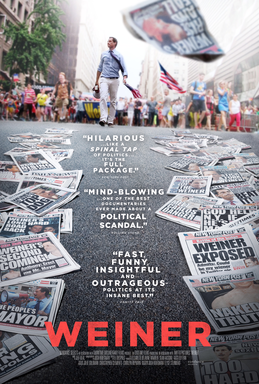
  • WEINER

Weiner_(film)

Here Are the 48th Annual NAACP Image Award Nominations!


moonlight

You can see the film nomination below.  For a full list of all the Image nominations, including the television nominees, click here.

Outstanding Motion Picture
•    “Fences” (Paramount Pictures)
•    “Hidden Figures” (20th Century Fox)
•    “Loving” (Focus Features/Big Beach)
•    “Moonlight” (A24)
•    “The Birth of a Nation” (Fox Searchlight Pictures)

Outstanding Directing in a Motion Picture – (Film)
•    Anthony Russo, Joe Russo – “Captain America: Civil War” (Marvel Studios)
•    Barry Jenkins – “Moonlight” (A24)
•    Garth Davis – “Lion” (See-Saw Films)
•    Mira Nair – “Queen of Katwe” (Walt Disney Studios)
•    Nate Parker – “The Birth of a Nation” (Fox Searchlight Pictures)

Outstanding Writing in a Motion Picture (Film)
•    Adam Mansbach “Barry” (Black Bear Pictures and Cinetic Media)
•    Barry Jenkins “Moonlight” (A24)
•    Jeff Nichols “Loving” (Focus Features/Big Beach)
•    Nate Parker “The Birth of a Nation” (Fox Searchlight Pictures)
•    Richard Tanne “Southside With You” (Roadside Attractions)

Outstanding Actor in a Motion Picture
•    Denzel Washington – “Fences” (Paramount Pictures)
•    Don Cheadle – “Miles Ahead” (Sony Pictures Classics)
•    Nate Parker – “The Birth of a Nation” (Fox Searchlight Pictures)
•    Stephan James – “Race” (Focus Features/The Luminary Group A Solofilms/Trinidad/Trinity/Trinity Race Production)
•    Will Smith – “Collateral Beauty” (Warner Bros. Pictures/New Line Cinema)

Outstanding Actress in a Motion Picture
•    Angela Bassett – “London Has Fallen” (Focus Features/Millennium Films/G-Base Production)
•    Madina Nalwanga – “Queen of Katwe” (Walt Disney Studios)
•    Ruth Negga – “Loving” (Focus Features/Big Beach)
•    Taraji P. Henson – “Hidden Figures” (20th Century Fox)
•    Tika Sumpter – “Southside With You” (Roadside Attractions)

Outstanding Supporting Actor in a Motion Picture
•    Alano Miller – “Loving” (Focus Features/Big Beach)
•    Chadwick Boseman – “Captain America: Civil War” (Marvel Studios)
•    David Oyelowo – “Queen of Katwe” (Walt Disney Studios)
•    Mahershala Ali – “Moonlight” (A24)
•    Trevante Rhodes – “Moonlight” (A24)

Outstanding Supporting Actress in a Motion Picture
•    Aja Naomi King – “The Birth of a Nation” (Fox Searchlight Pictures)
•    Lupita Nyong’o – “Queen of Katwe” (Walt Disney Studios)
•    Mo’ Nique – “Almost Christmas” (Universal Pictures)
•    Octavia Spencer – “Hidden Figures” (20th Century Fox)
•    Viola Davis – “Fences” (Paramount Pictures)

Outstanding Independent Motion Picture
•    “Lion” (See-Saw Films)
•    “Loving” (Focus Features/Big Beach)
•    “Miles Ahead” (Sony Pictures Classics)
•    “Moonlight” (A24)
•    “The Birth of a Nation” (Fox Searchlight Pictures)

Outstanding Documentary – (Film)
•    “13th” (Netflix)
•    “I Am Not Your Negro” (Velvet Film)
•    “Maya Angelou: And Still I Rise” (The People’s Poet LLC)
•    “Miss Sharon Jones!” (Cabin Creek Films)
•    “Olympic Pride, American Prejudice” (Coffee Bluff Pictures)