With today’s music video of the day, we wish a happy birthday to the one and only Tom Hanks!
Enjoy!
With today’s music video of the day, we wish a happy birthday to the one and only Tom Hanks!
Enjoy!
Today, we wish a happy birthday to Ron Howard with this classic Howard-directed scene from 1995’s Apollo 13!
As some of our regular readers undoubtedly know, I am involved in a few weekly live tweets on Twitter and Mastodon. I host #FridayNightFlix every Friday, I co-host #ScarySocial on Saturday, and I am one of the five hosts of #MondayActionMovie! Every week, we get together. We watch a movie. We tweet our way through it.
Tonight, at 10 pm et, #FridayNightFlix presents 1989’s The Burbs, starring Tom Hanks!
If you want to join us this Friday, just hop onto twitter, start the movie at 10 pm et, and use the #FridayNightFlix hashtag! It’s a friendly group and welcoming of newcomers so don’t be shy.
The Burbs is available on Prime! See you there!
The trailer for Robert Zemeckis’s latest technical experiment, Here, dropped today. The film follows Tom Hanks and Robin Wright over the course of many decades and it uses de-aging technology to make them look younger. The reaction online seems to be mixed, with some saying that Hanks and Wright look like wax figures of themselves.
Personally, I would have cast Hanks and Wright’s respective children as the younger versions of themselves but de-aging is the hot thing right now.
Here’s the trailer. Judge for yourself.

Today, the Shattered Lens wishes a happy birthday to director Ron Howard!
Ron Howard has been in the film business for his entire life, first as an actor and then as a director. He is perhaps the epitome of the mainstream, Hollywood film director and, as such, he doesn’t always get the credit that he deserves. He’ll never be considered an auteur but no matter! Ron Howard makes efficient and often entertaining films and, in this age of bloated budgets and self-indulgence, there’s something to be said for his professional approach.
Plus, he gave us this absolutely beautiful scene from 1995’s Apollo 13. In this scene, Jim Lovell (Tom Hanks) takes a look at the moon and, for a minute, thinks about what could have been. Though Lovell may dream of walking on the moon, he knows it won’t happen and that his only concern now is getting both himself and his crew back home. He’s a professional, much like Ron Howard himself.
Welcome to Retro Television Reviews, a feature where we review some of our favorite and least favorite shows of the past! On Wednesdays, I will be reviewing the original Love Boat, which aired on ABC from 1977 to 1986! The series can be streamed on Paramount Plus!
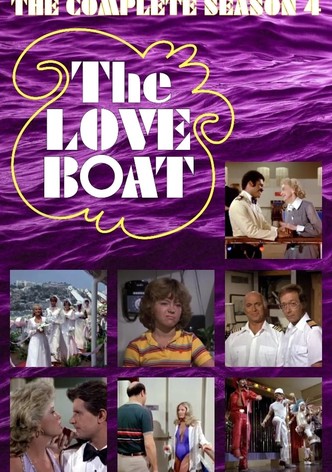
This week, come aboard for season 4!
Episode 4.1 “Sergeant Bull/Friends and Lovers/Miss Mother”
(Dir by Roger Duchowny, originally aired on October 25th, 1980)
Well, it’s time for the fourth season of The Love Boat and let’s see who is going to be taking a cruise this week….
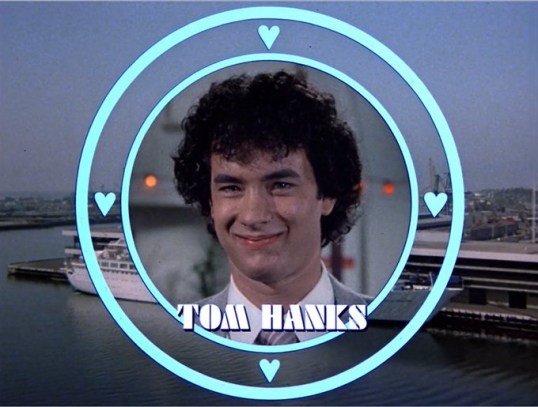
Hey, we know that guy!
Yes, it’s a young Tom Hanks, making one of his first television appearances on The Love Boat. Tom had a sitcom coming out so ABC decided to promote the then-unknown actor by giving him a guest role on one of their most popular series.
Who does Tom play? He plays a complete a total douchebag named Rick Martin, a former fraternity brother of Gopher’s who enjoys giving Gopher a hard time about his reputation for being “Strike-Out Smith.” Rick makes Gopher feel so uncomfortable that Gopher impulsively claims that Julie is his girlfriend. Julie plays along with Gopher. This not only leads to sleazy Rick trying to steal Julie away from Gopher but it also causes Julie and Gopher to have real feelings for each other.
Yes, it is interesting to watch Tom Hanks play a sleaze but what is even more interesting, for longtime watchers of the show, is that Julie and Gopher make a surprisingly credible couple. They actually do have a very likable chemistry together and it never seems improbable that they might end up together. Of course, in the end, they decide to just stay friends because anything else would have upset the balance of the show.
Tom’s presence overshadows the rest of the show but there are two other stories to deal with. Vic Tayback plays a former dill sergeant who reunites with his former recruits (Nipsey Russell, Harvey Lembeck, and Jack Somack) and who turns out to still be such a hardass that they bribe their cabin stewardess (Doris Roberts) to pursue a romance with him. Of course, the two of them fall in love for real. This was all a bit silly and Tayback’s drill sergeant was a bit annoying but it was nice to see him drop his guard around Doris Roberts and admit that he was only acting like a drill sergeant because that was all he had ever been.
Finally, Gwen Hutchins (Shelley Smith) boards the boat and tells Doc Bricker that she is two-months pregnant.
“Your husband must be very proud!” Doc replies, without missing a beat.
No, Gwen explains, she’s not married. Once again, we are reminded that Doc is a walking HR nightmare.
Anyway, Gwen falls for a guy named Dennis (Dennis Cole) but she worries how Dennis will react to learning that she’s pregnant. At first, Dennis does not react well, even asking her if she considered getting an abortion. (She explains that she doesn’t support abortion, which definitely would not fly if this episode were made today.) It all works out in the end but, seriously, I think she deserves better than Dennis. Dennis Cole is an actor who I have seen in quite a few of these shows and he always seem kind of lost. That was certainly the vibe that he gave off here.
This was an entertaining-enough episode, though almost all of the credit for that goes to the presence of Tom Hanks and the likable chemistry between Fred Grandy and Lauren Tewes. It was definitely a good way to start off the fourth season.
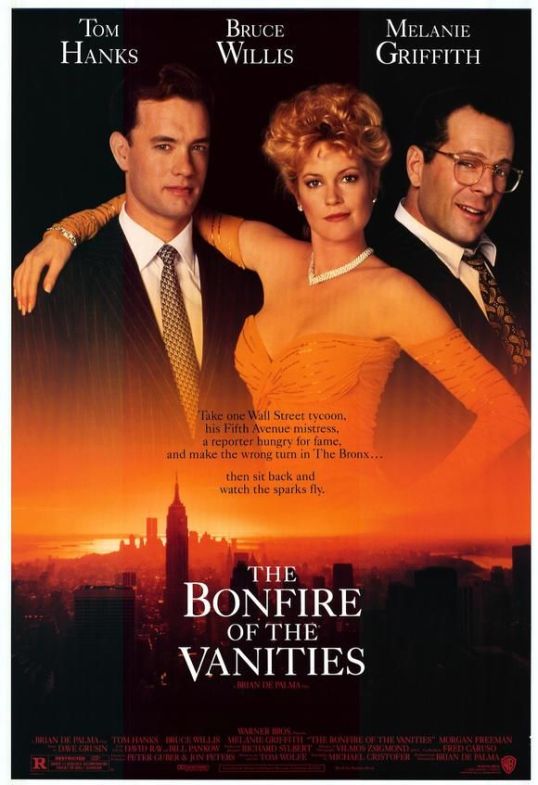
In 2021, I finally saw the infamous film, The Bonfire of the Vanities.
I saw it when it premiered on TCM. Now, I have to say that there were quite a few TCM fans who were not happy about The Bonfire of the Vanities showing up on TCM, feeling that the film had no place on a station that was supposed to be devoted to classic films. While it’s true that TCM has shown “bad” films before, they were usually films that, at the very least, had a cult reputation. And it is also true that TCM has frequently shown films that originally failed with audiences or critics or both. However, those films had almost all been subsequently rediscovered by new audiences and often reevaluated by new critics. The Bonfire of the Vanities is not a cult film. It’s not a film about which one can claim that it’s “so bad that it’s good.” As for the film being reevaluated, I’ll just say that there is no one more willing than me to embrace a film that was rejected by mainstream critics. But, as I watched The Bonfire of the Vanities, I saw that everything negative that I had previously read about the film was true.
Released in 1990 and based on a novel by Tom Wolfe, Bonfire of the Vanities stars Tom Hanks as Sherman McCoy, a superficial Wall Street trader who has the perfect penthouse and a painfully thin, status-obsessed wife (Kim Cattrall). Sherman also has a greedy mistress named Maria (Melanie Griffith). It’s while driving with Maria that Sherman takes a wrong turn and ends up in the South Bronx. When Sherman gets out of the car to move a tire that’s in the middle of the street, two black teenagers approach him. Maria panics and, after Sherman jumps back in the car, she runs over one of the teens. Maria talks Sherman into not calling the police. The police, however, figure out that Sherman’s car was the one who ran over the teen. Sherman is arrested and finds himself being prosecuted by a power-hungry district attorney (F. Murray Abraham). The trial becomes the center of all of New York City’s racial and economic strife, with Sherman becoming “the great white defendant,” upon whom blame for all of New York’s problems can be placed. Bruce Willis plays an alcoholic journalist who was British in the novel. Morgan Freeman plays the judge, who was Jewish in the novel. As well, in the novel, the judge was very much a New York character, profanely keeping order in the court and spitting at a criminal who spit at him first. In the movie, the judge delivers a speech ordering everyone to “be decent to each other” like their mothers taught them to be.
Having read Wolfe’s very novel before watching the film, I knew that there was no way that the adaptation would be able to remain a 100% faithful to Wolfe’s lacerating satire. Because the main character of Wolfe’s book was New York City, he was free to make almost all of the human characters as unlikable as possible. In the book, Peter Fallow is a perpetually soused opportunist who doesn’t worry about who he hurts with his inflammatory articles. Sherman McCoy is a haughty and out-of-touch WASP who never loses his elitist attitude. In the film, Bruce Willis smirks in his wiseguy manner and mocks the other reporters for being so eager to destroy Sherman. Hanks, meanwhile, attempts to play Sherman as an everyman who just happens to live in a luxury penthouse and spend his days on Wall Street. Hanks is so miscast and so clueless as how to play a character like this that Sherman actually comes across as if he’s suffering from some sort of brain damage. He feels less like a stockbroker and more like Forrest Gump without the Southern accent. There’s a scene, written specifically for the film, in which Fallow and Sherman ride the subway together and it literally feels like a parody of one of those sentimental buddy films where a cynic ends up having to take a road trip with someone who has been left innocent and naïve as result of spending the first half of their life locked in basement or a bomb shelter. It’s one thing to present Sherman as being wealthy and uncomfortable among those who are poor. It’s another thing to leave us wondering how he’s ever been able to successfully cross a street in New York City without getting run over by an angry cab driver.
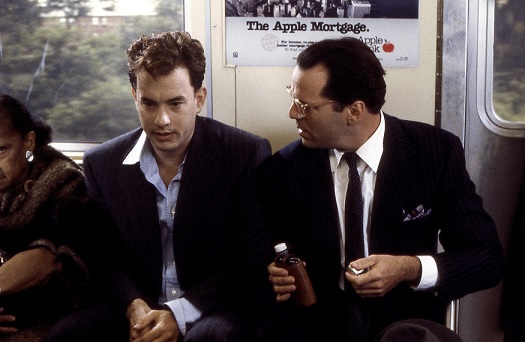
Because the film can’t duplicate Wolfe’s unique prose, it instead resorts to mixing cartoonish comedy and overwrought melodrama. It doesn’t add up too much. At one point, Sherman ends a dinner party by firing a rifle in his apartment but, after it happens, the incident is never mentioned again. I mean, surely someone else in the apartment would have called the cops about someone firing a rifle in the building. Someone in the press would undoubtedly want to write a story about Sherman McCoy, the center of the city’s trial of the century, firing a rifle in his own apartment. If the novel ended with Sherman resigned to the fact that his legal problems are never going to end, the film ends with Sherman getting revenge on everyone who has persecuted him and he does so with a smirk that does not at all feel earned. After two hours of being an idiot, Sherman suddenly outthinks everyone else. Why? Because the film needed the happy ending that the book refused to offer up.
Of course, the film’s biggest sin is that it’s just boring. It’s a dull film, full of good actors who don’t really seem to care about the dialogue that they are reciting. Director Brian De Palma tries to give the film a certain visual flair, resorting to his usual collection of odd camera angles and split screens, none of which feel at all necessary to the story. In the end, De Palma is not at all the right director for the material. Perhaps Sidney Lumet could have done something with it, though he would have still had to deal with the less than impressive script. De Palma’s over-the-top, set piece-obsessed sensibilities just add to the film’s cartoonish feel.
The film flopped at the box office. De Palma’s career never recovered. Tom Hanks’s career as a leading man was momentarily derailed. Bruce Willis would have to wait a few more years to establish himself as a serious actor. Even the normally magnanimous Morgan Freeman has openly talked about how much he hated being involved with The Bonfire of the Vanities. That said, the film lives on because De Palma allowed journalist Julie Salomon to hang out on the set and the book she wrote about the production, The Devil’s Candy, is a classic of Hollywood non-fiction. (TCM adapted the book into a podcast, which is how The Bonfire of the Vanities came to be featured on the station.) Thanks to Salomon’s book, The Bonfire of the Vanities has gone to become the epitome of a certain type of flop, the literary adaptation that is fatally compromised by executives who don’t read.
Previous Icarus Files:
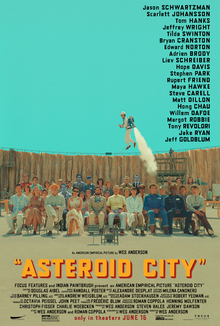
Asteroid City opens with black-and-white footage of Bryan Cranston, wearing a suit and speaking in the authoritative tones of someone who has made his living on television. Cranston informs us that we are about to see a televised production of a play by the famed but enigmatic playwright named Conrad Earp (Edward Norton).
The play, which is seen in stylized color, opens with Augie Steeback (Jason Schwartzman) driving his family through the desert. He is taking his son, Woodrow (Jake Ryan), to a Junior Stargazers convention that is being held at Asteroid City, a tiny town that is best-known for being the location of an impact crater. Along for the ride are Augie’s three daughters, who are all pretending to be witches. What Augie hasn’t told his children is that their mother has died, her cremated remains are in a Tupperware container, and that they will be moving in with their wealthy grandfather (Tom Hanks).
There’s not much to the town of Asteroid City. There’s a motel that’s managed by a man (Steve Carell) who sells land deeds out of a refurbished Coke machine. There’s a diner. There’s a group of helpful cowboys, led by the polite and helpful Montana (Rupert Friend). There’s a mechanic (Matt Dillon) who is called into duty when Augie’s car breaks down. The Junior Stargazer convention is the event of the year for Asteroid City. Young geniuses from all around the country have descended on the town and have brought their parents. One of them, Dinah (Grace Edwards), is the daughter of actress, Midge Campbell (Scarlett Johansson). When an alien (played, at one point in the film, by Jeff Goldblum) shows up and steals the town’s meteorite, General Gibson (Jeffrey Wright) declares a quarantine. Some people handle the lockdowns better than others. Augie takes pictures and thinks about his wife. Midge rehearses for her next role, one that is centered around her character dying. The genius children play a memory game that they realize will never end because they’re all geniuses. A teacher (Maya Hawke) tries to teach her students about the Milky Way, just to discover that the kids only want to talk about the alien. One of the fathers (Liev Schreiber) ends up with a useless plot of desert land and the death ray that his son recently invented.
Throughout it all, Bryan Cranston appears in black-and-white footage that gives us a look into what went on behind the scenes during the production of Asteroid City. The director (Adrien Brody) was a lech. The actor playing Augie struggled to understand what the play was about and who his character was meant to be while the actress (Margot Robie) hired to play his wife ended up in another play after her scenes were cut from Asteroid City. Only once does Bryan Cranston’s host appear in the color sections of Asteroid City, just to sheepishly admit that he’s not supposed to be there before ducking off camera.
Even if his name wasn’t in the opening credits, the viewer could probably easily guess that this is a Wes Anderson film. It features all of Anderson’s trademarks, all of the things that viewers will automatically love or hate depending on how they feel about Anderson’s quirky aesthetic. It’s a visually impressive, pop art-flavored, all-star comedy with an undercurrent of profound melancholy, one in which the fanciful strangeness of the alien’s “invasion” is compared and contrasted with the very real-life strangeness of how humans deal with life, loss, death, and uncertainty. Scenes of clever wordplay are mixed with scenes in which we see Augie still very much struggling to come to terms with the death of his wife and the actor Augie very much struggling to understand what is actually going on in his character’s head. As far as recent Anderson films go, Asteroid City is not quite as humanistic as Rushmore or Grand Budapest Hotel but, at the same time, it’s still more accessible than The French Dispatch.
If you’re not a fan of Anderson’s style, this film won’t convert you. That said, I am a fan of Anderson’s style and I absolutely loved Asteroid City. As with so many of Anderson’s films, the main focus is on how we try to deal with the uncertainties of life by trying to maintain an illusion of control over every aspect of our lives. Playwright Conrad Earp writes because that way he can have a world that follows his own rules. The actors follow a script that tells them how to react to everything that happens around them. In the play, the Junior Stargazers fall back on science while Augie’s father-in-law falls back on religion and Augie’s daughter convince themselves that spells will bring back or, at least, protect their mother. Even General Gibson falls back on his belief in the government and the military to deal with the sudden appearance by the alien. The alien is the unknowable and his arrival reminds everyone that life is unpredictable, regardless of how much you try to control your own story. Indeed, while the film takes place in the 50s and is full of comments about the Red Scare and atomic bomb testing, it’s hard not to see Asteroid City as being a commentary on the recent COVID lockdowns and the debate over whether people could ever go back to living the way that they did before the pandemic. Much as with the Coen Brothers’s similarly stylized A Serious Man, the ultimate message seems to be that the only way to deal with the unpredictability of life is to embrace it.
It’s also a very funny film, one that is full of small details that reward repeat viewing. If one focuses on the background characters, it quickly becomes apparent that there are actually several stories unfolding in the film and, much as with life, the viewer just has to be willing to look for them. (I particularly enjoyed the romance between The Teacher and Montana.) Jason Schwartzman is compelling as both Augie and the actor playing Augie and Scarlett Johansson plays both Midge and the actress playing Midge with the perfect amount of cool detachment. To the film’s credit, none of the character’s become caricatures. They remain individuals, regardless of how bizarre the film’s story may sometimes seem. Everyone gets a moment to reveal a little depth, from Jeffrey Wright’s sincere (if misplaced) faith in the lockdown policy to the moment when Tom Hanks’s previously unsympathetic father-in-law reveals that he’s as much in mourning as Augie. The all-star cast also includes Tilda Swinton, Liev Schrieber, Stephen Park, Willem DaFoe, Hong Chau, and Margot Robbie and all of them add to the film’s portrait of quirky but ultimately relatable humanity.
Again, with this film, it undoubtedly helps to already be familiar with and to like Wes Anderson’s way of doing things. If you’re not a fan of his film, this one probably won’t change your mind. That said, for those of us who do enjoy his style, this is Anderson at his best.

And now, we reach the present day! A lot has changed over the past few decades but one thing has remained consistent. No matter how hard the Academy tries, some good movies and performances are always going to get snubbed. Here are ten snubs from the previous decade.
2011: Shame Is Totally Ignored
Despite being critically acclaimed and receiving nominations from other groups, Steve McQueen’s Shame was totally ignored by the Academy. My theory is a lot of people looked at Michael Fassbender playing an emotionally detached, self-destructive sex addict and they basically saw aspects of themselves that they didn’t want to acknowledge. Shame caused too much shame amongst the voters.
2012: The Master Is Not Nominates For Best Picture
When The Master was first released, a lot of people didn’t really know what to make of Paul Thomas Anderson’s barely disguised portrait of Scientology. The film received only three nominations, for Joaquin Phoenix, Philip Seymour Hoffman, and Amy Adams. It deserved quite a bit more but, in 2012, I imagine the film’s portrait of a charismatic cult leader taking advantage of his wealthy followers seemed a bit too familiar to some voters.
2013: Tom Hanks Is Not Nominated For Best Actor For Captain Phillips
Looking over today’s list of snubs, a recurring theme seems to be actors who were not nominated because the Academy took them and their talent for granted. That’s the only possible reason that I can come up with for the Academy to have not nominated Tom Hanks for his outstanding lead performance in Captain Phillips. Just consider the scene at the end of the film, when the shellshocked and exhausted Captain Phillips is examined by a nurse and he can’t stop talking about the blood on his clothes. It’s a devastating scene, largely because the audience doesn’t feel as if they’re watching Tom Hanks give a performance. At that moment, they feel that they are watching a man who has just been through the worst experience of his life and who, even though he is now safe, will be forever haunted by what he has witnessed.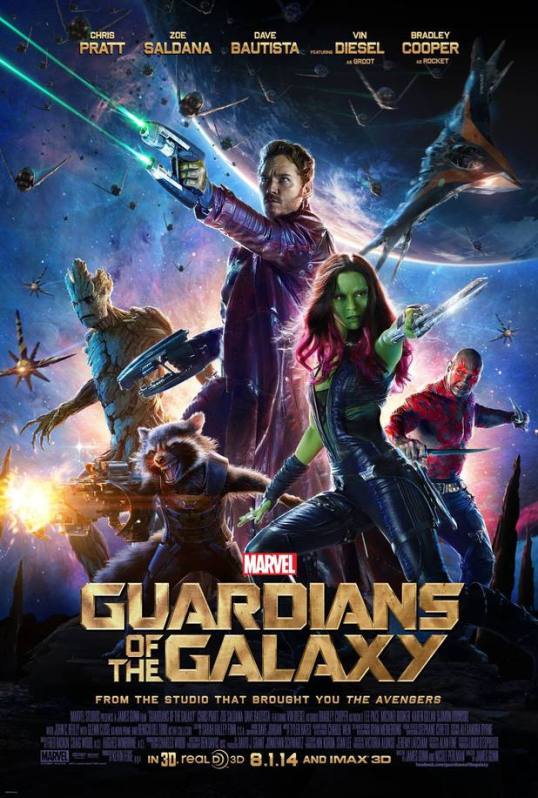
2014: Guardians of the Galaxy Is Not Nominated For Best Picture
Seriously, if any MCU film deserved to be nominated for Best Picture, it was Guardians of the Galaxy. It was a fun movie with a charismatic cast and, despite what some critics claimed, it actually did have something to say about the importance of tolerance and individual freedom. It even holds up well to repeat viewings, which is not exactly something that you can say about a few of the other MCU film.
2016: Amy Adams Is Not Nominated For Best Actress For Arrival
Much as they did with Tom Hanks and his performance in Captain Phillips, the Academy took Amy Adams for granted and failed to nominate her for Arrival, despite the fact that it was her best performance to date. At this point, if I’m Amy Adams, I would be wondering just what it is that I’m going to have to do to finally get my Oscar.
2017: Ethan Hawke Is Not Nominates For Best Actor For First Reformed
This is another snub that I can’t get my head around. Ethan Hawke has been nominated in the past. The Academy is obviously not resistant to honoring Ethan Hawke. So how was it that one of his best performances went unnominated? For that matter, how is it that First Reformed itself only received one Oscar nomination?
2019: The Souvenir Is Ignored
Despite being one of the best films of the past ten years, The Souvenir was ignored by Academy. The things that made the film work, like its low-key but honest performances and its refusal to pass easy judgment on its characters, are probably the same things that caused the Academy to overlook it.
2020: The Assistant Is Ignored
This was a powerful film and it featured an award-worthy performance from Julia Garner. It was also about Harvey Weinstein so I guess I shouldn’t be too shocked that the Academy snubbed it. The Assistant is a film that probably hit too close to home for many members of the Academy.
2021: Val Is Not Nominated For Best Documentary Feature
Val is one of the most affecting documentaries that I’ve ever seen but the Documentary Branch failed to even give it a nomination. Maybe, like The Assistant, Val just hit too close to home for some of the voters.
2021: Mass Is Ignored
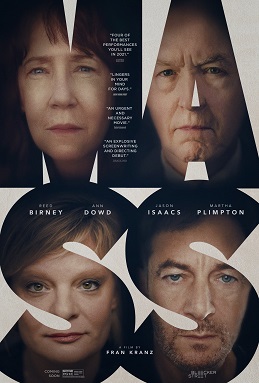
Again, I will never understand how the Academy can fail to give even one nomination to a film as good as Mass. As with The Souvenir, I can only guess that the Academy did not know how to react to Mass’s honest approach to its subject matter. Mass worked because it avoided easy judgments and solutions. That’s probably the same thing that led to the Academy ignoring both the film and its outstanding cast.
Agree? Disagree? Do you have any bigger Oscar snub that you’d like to mention? Let us know in the comments!
And now, get ready to enjoy the show! And, if you don’t care about the Oscars, fear not! My review of The Black Godfather will be posting in an hour.
Welcome to the aughts. The new century started out with the terror of 9-11 and it ended with the collapse of the world’s economy. In between, a lot of films were released. Some of them were really good. A few of them were nominated for Best Picture. Most of them were not. As always, there were snubs aplenty.
2000: Michael Douglas Is Not Nominated For Wonder Boys
I recently saw someone online bemoaning the fact that Michael Douglas appears to be fated to end his career as a supporting character in the MCU as opposed to playing the type of “mature” roles with which he made his reputation. And I actually think that person had a good point. Michael Douglas, whose performances once epitomized the last few decades of the 20th Century, does seem a bit out of place surrounded by CGI and responding to the overly quippy dialogue of the MCU. If you want to see a truly good Michael Douglas performance that doesn’t involve anyone shrinking, check him out in Curtis Hanson’s Wonder Boys. Though Wonder Boys won the Oscar for Best Original Song and picked up nominations for Editing and Adapted Screenplay, Michael Douglas’s wonderful lead performance was overlooked.
2001: Mulholland Drive Is Almost Totally Ignored
Considering the reverence with which it is now viewed, it’s interesting to note that Mulholland Drive only received one Oscar nomination, for David Lynch’s direction. The film was not nominated for Best Picture. Naomi Watts and Laura Harring both went unnominated. At the time, I imagine the film was too strange for Academy voters and its origin as a television pilot probably worked against it. Today, it is regularly cited as one of the best films ever made.
2002: Leonardo DiCaprio and Tom Hanks Are Not Nominated For Catch Me If You Can
Catch Me If You Can was that rarest of movies, an underrated Steven Spielberg production. Christopher Walken was nominated for Best Supporting Actor and the film’s score was nominated as well. But both Leonard DiCaprio and Tom Hanks went unnominated, despite doing some of the best work of their careers.
2002: Robin Williams Is Not Nominated For One Hour Photo
One Hour Photo featured what I consider to be Robin Williams’s best and most poignant performance. It was also perhaps his most frightening performance, which probably explains why the Academy shied away from honoring it.
2003: Scarlet Johansson Is Not Nominated For Best Actress For Lost In Translation
Though Bill Murray got most of the awards attention, Scarlet Johansson’s performance was just as important to the success of Lost In Translation.
2004: Eternal Sunshine of the Spotless Mind Is Not Nominated For Best Picture or Best Actor
Even before he decided to present himself as being an expert on vaccines and modern art, I wasn’t a huge fan of Jim Carrey’s. That said, even I have to admit that he deserved a nomination for Eternal Sunshine of the Spotless Mind. The film itself was only nominated for two Oscars. Kate Winslet was nominated for Best Actress and Charlie Kaufman won the Oscar for Original Screenplay. The film deserved quite a bit more.
2007: Once Is Not Nominated For Best Picture
This is one snub that I haven’t quite gotten over. Once, a beautiful independent film from Ireland, deserved far more love than it received from the Academy. That said, it did win the Oscar for Best Original Song and Glen Hansard gave one of the best acceptance speeches in Oscar history. So, there is a little justice.
2008: The Dark Knight Is Not Nominated For Best Picture
If ever there was a comic book movie that deserved to be nominated for Best Picture, it was this one. To me, I think the main reason why The Dark Knight is superior to so many other comic book movies is because, even with Batman and the Joker running around, it still feels as if it’s taking place in the real world. The smartest decision that Christopher Nolan made was to use a real city for Gotham instead of constructing a phony-looking set. The fact that The Dark Knight received 8 nominations without also receiving a nomination for Best Picture leaves little doubt that the film’s lack of a nomination was due to its origins as a comic book movie. There was such an uproar about The Dark Knight failing to pick up a Best Picture nomination that the Academy increased the number of Best Picture nominees to ten. (Of course, that’s didn’t do much to help anything.)
2008: Robert Downey, Jr. Is Not Nominated For Best Actor For Iron Man
The MCU is now so big that it’s easy to forget that, if Robert Downey, Jr. hadn’t been a convincing Tony Stark in 2008, the whole thing would have never happened. Going back and watching the early MCU films, before they got bogged down in their own formula, can be an eye-opening experience. Downey’s performance in the first Iron Man holds up extremely well. He goes from being an irresponsible businessman to being a hero and he’s convincing at every turn. He gave such a good performance that it convinced even those of us who weren’t comic book readers to stick around and see what was coming up next in the Marvel Cinematic Universe.
2009: George Wyner Is Not Nominated For Best Supporting Actor For A Serious Man
Not all snubs involve big stars or famous actors. Some of them involve talented character actors like George Wyner who totally knock their one scene out of the park but who still don’t get the recognition that they deserve. In A Serious Man, Wyner plays the rabbi who tells Larry Gopnik (Michael Stuhlbarg) the parable of the dentist who found Hebrew phrases on the teeth of one of his patients. It’s a mesmerizing scene, thanks to George Wyner’s skill as a storyteller.
Agree? Disagree? Have a snub of your own that you’d like to mention? Let us know in the comments!
Coming up next, we go from the 2010s to the present day!
 Through the Shattered Lens