4 Shots From 4 Films is just what it says it is, 4 shots from 4 of our favorite films. As opposed to the reviews and recaps that we usually post, 4 Shots From 4 Films lets the visuals do the talking!
Today, on what would have been his 83rd birthday, the Shattered Lens pays tribute to Texas’s own, Tobe Hooper!
The Austin hippie who redefined horror and left thousands of yankees terrified of driving through South Texas, Tobe Hooper often struggled to duplicate both the critical and the box office success of The Texas Chainsaw Massacre. It’s only been in the years since his death that many critics and viewers have come to truly appreciate his unique and subversive vision.
Down here, in Texas, we always believed in him.
It’s time for….
4 Shots From 4 Tobe Hooper Films
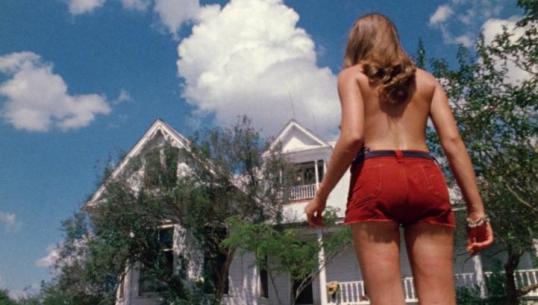
The Texas Chainsaw Massacre (1974, dir by Tobe Hooper, DP: Daniel Pearl)
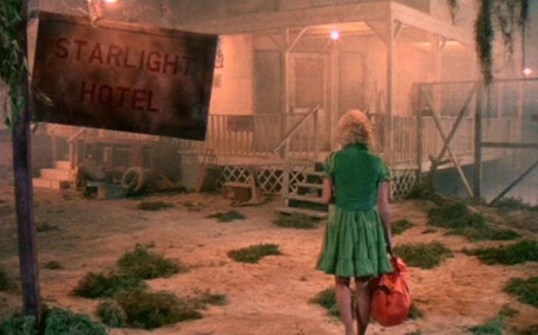
Eaten Alive (1976, dir by Tobe Hooper. DP: Robert Caramico)
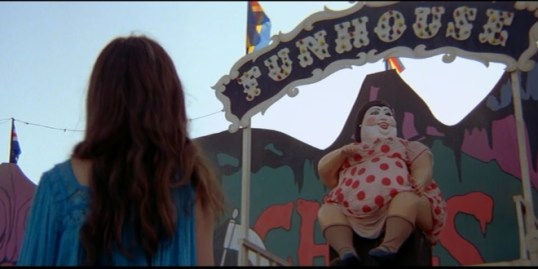
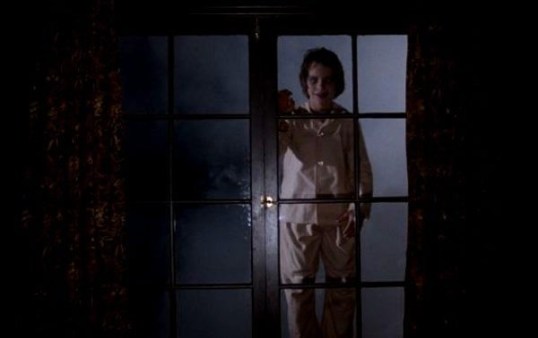
The Funhouse (1981, dir by Tobe Hooper. DP: Andrew Laszlo)
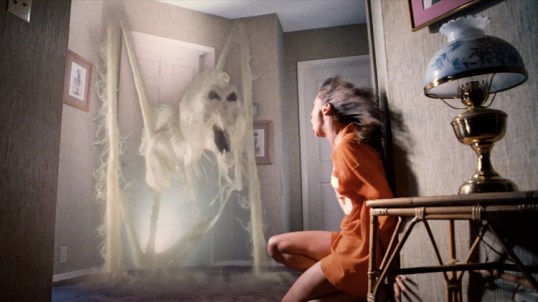
Poltergeist (1982, dir by Tobe Hooper, DP: Matthew Leonetti)
Hey, hey, wait just one second. Lifeforce is a movie everyone treasures. Here’s Arleigh’s take on the film. Check that out first and then double back here if you like.
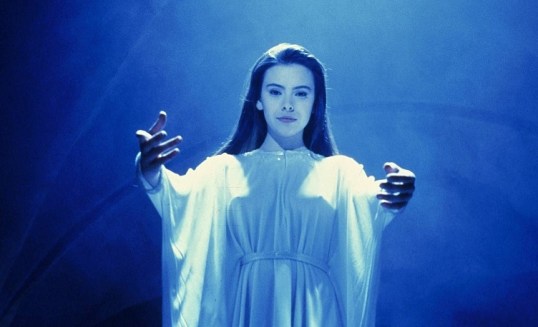
Lifeforce (1985, dir by Tobe Hooper)
Tobe Hooper’s Lifeforce is one of those films that had a lot of play in my Grandmother’s house, primarily because of my younger Aunt, Puddin. Puddin was the other movie lover on my Dad’s side of the family, the youngest of his generation. While she couldn’t fully make the connections between actors or directors the way my father could, she loved films all the same. With films like Marnie, West Side Story, Conan the Barbarbian, she spent most of her free time immersed in movies. If you wanted to see her swoon, mention Sean Connery, Tyrone Power or Arnold Schwarzenegger in her presence. She had a habit of using movies she watched often as white noise when cleaning around the house. As a result, we saw Lifeforce a lot growing up. She adored the film mainly because the two heroes in it barely made any mistakes, but most importantly for Henry Mancini’s score. Besides, It’s a Cannon film. You know it’s good.
Lifeforce is the story of one of the greatest buddy pairings in of the 1980s. Yeah, Beck and Gallagher did awesome stuff in The Hidden. Riggs and Murtaugh solved the cases no matter how thin the leads were, and even with all his technology, Alex Murphy still needed Lewis for backup. These all pale in comparison to Lifeforce‘s Colonel Carlsen (Steve Railsback, Helter Skelter) and Colonel Caine (Peter Firth, The Hunt for Red October). The two characters’ laser focus and quick thinking help to keep the film moving, despite how crazy things can and do get. They also manage to have each other’s back in nearly every situation. They aren’t without troubles, however. Poor Carlsen is plagued with nightmares of making out with naked space vampires.
Halley’s Comet returns close to Earth. With it comes an incredibly large umbrella shaped ship that is discovered by the crew of the Churchill. Col. Carlsen, along with the other astronauts, find a series of sleeping humanoid bodies inside and bring 3 (two males and one female) on board. When the Churchill’s signal is lost, the Columbia is sent out to retrieve them. The crew is lost, Carlsen is missing, but the 3 alien bodies are brought back home to Earth for study. This goes about as well as one would hope, with the Space Girl (Mathilda May, Becoming Collette) waking up and causing havoc throughout the local Space Institute before walking away naked, into the night. Anyone she comes into contact with and kisses becomes an energy vampire, requiring a transfusion, else they shrivel and turn into dust.
Since we’re dealing with space vampires, I should inform you now that there’s quite a bit of nudity and maybe just a wee bit of sexual tension in Lifeforce. The lines between Rabid and Showgirls comes kind of close in all this. When Carlsen forces a possible suspect to divulge the location of the Space Girl, slapping her up a bit, he tells Caine he should leave. Caine’s response is that he’s “a natural voyeur”. Does much of it make sense? No. Was it entertaining? Sure. The third act of Lifeforce is the best part, with all of London just a mess. Despite all this, Carlsen & Caine split up to save the day.
The cast for the film is nice. In addition to Railsback and Firth, we’ve got a Dune crossover with both Freddie Jones and Patrick Stewart on hand. We also have a small cameo with Dragonslayer’s John Hallam as a nurse. The best role other than the leads go to Frank Finlay and to Mathilda May. Finley’s Doctor Fallada is kind of a Van Helsing like character, piecing together all of the clues so our heroes can take the proper action. May, though she’s not given a lot to say (or to wear, for that matter) makes for an impressive villain that talks with her eyes.
The effects for Lifeforce came by way of John Dykstra, who worked on Firefox and The Empire Strikes Back. He’d later go on to work on Invaders From Mars for Hooper. Musically, Henry Mancini’s score helps to carry the film along. Honestly, I’ve only ever known him from the Pink Panther scores, so I quite enjoyed it. I always let the end credits play through for the music. Overall, Lifeforce is a great watch if vampires are your thing and nudity isn’t too much of a problem. In my mind, The Adventures of Carlsen & Caine would rival some of the best supernatural tales.
In examining this, I also found that there are some connections between this and Hammer Films’ Five Million Years to Earth (a.k.a. Quatermass and the Pit). I’m still on the look out for that one.
In Tobe Hooper’s Lifeforce, Col. Carlsen & Col. Caine aren’t playing around.
This October, I’m going to be doing something a little bit different with my contribution to 4 Shots From 4 Films. I’m going to be taking a little chronological tour of the history of horror cinema, moving from decade to decade.
This October, I’m going to be doing something a little bit different with my contribution to 4 Shots From 4 Films. I’m going to be taking a little chronological tour of the history of horror cinema, moving from decade to decade.
4 Shots From 4 Films is just what it says it is, 4 shots from 4 of our favorite films. As opposed to the reviews and recaps that we usually post, 4 Shots From 4 Films is all about letting the visuals do the talking.
Let’s hop in the cinematic time machine and take a trip to the distant past with these 4 shots from 4 independent films!
4 Or More Shots From 4 Or More Films is just what it says it is, 4 shots from 4 of our favorite films. As opposed to the reviews and recaps that we usually post, 4 Shots From 4 Films lets the visuals do the talking!
Today, we pay tribute to the year 1978! It’s time for….
4 Shots From 4 1978 Films
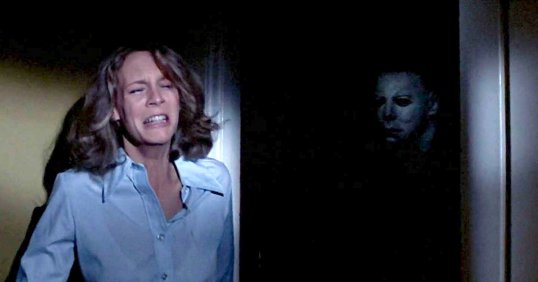
Halloween (1978, dir by John Carpenter, DP: Dean Cudney)
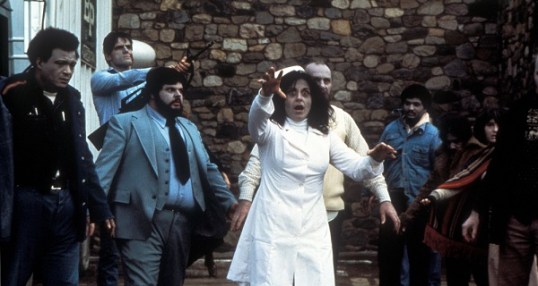
Dawn of the Dead (1978, dir by George Romero, DP: Michael Gornick)
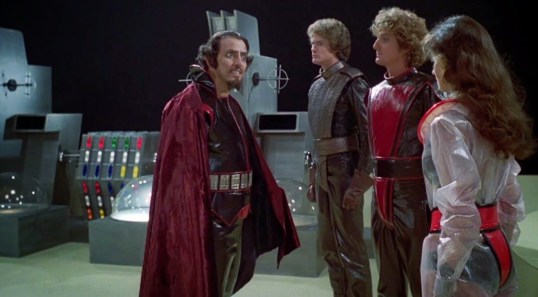
Starcrash (1978, dir by Luigi Cozzi, DP: Paul Beeson and Roberto D’Ettorre Piazzoli)
Salem’s Lot (1978, dir by Tobe Hooper, DP: Jules Bremmer)
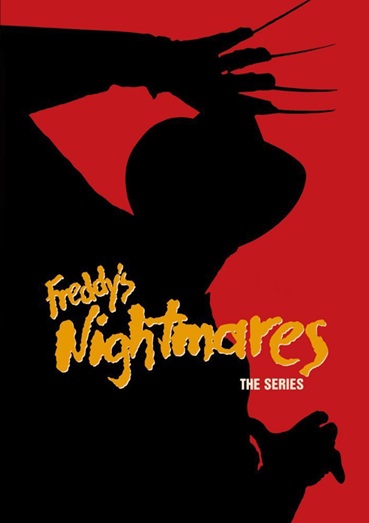
Welcome to Late Night Retro Television Reviews, a feature where we review some of our favorite and least favorite shows of the past! On Fridays, I will be reviewing Freddy’s Nightmares, a horror anthology show which ran in syndication from 1988 to 1990. The entire series can be found on Plex!
Having finished up Friday the 13th, I’m not going to take a look at another syndicated horror show that aired around the same time. Freddy’sNightmares was an anthology show hosted by Robert Englund, in character as Freddy Krueger. Each story would take place in Freddy’s hometown of Springwood, Ohio. Would the show be a dream or a nightmare? Let’s find out!
Episode 1.1 “No More Mr. Nice Guy”
(Dir by Tobe Hooper, originally aired on October 9th, 1988)
Freddy Krueger has become such a familiar and popular figure that I think it’s sometimes forgotten that, when he first appeared, he was truly a horrifying character. He was a child molester and a serial killer, one who escaped legal justice only because someone forgot to read him his rights when he was arrested. He was killed by the citizens of Springwood, Ohio, set on fire in the same boiler room where he killed his victims. Yes, he was brutally murdered and yes, the respectable people who murdered him covered up their crime. At the same time, what would you do if a monster like Freddy was loose in your town and stalking your children? “I’m burning in Hell,” Freddy says and that’s exactly what he deserved.
How did Freddy Krueger then become an oddly beloved pop cultural icon? Some of that was undoubtedly due to his one-liners, which tended to be a slightly better than the typical slasher film banter. If Freddy was pure evil in the first three NightmareonElmStreet films, he became more a homicidal prankster as the series continued. I think another reason why Freddy became popular is because the actor who first played him, Robert Englund, himself always comes across as being such a nice guy. Unlike the personable but physically intimidating Kane Hodder, who looked like he could kill you even when he wasn’t playing Jason Voorhees, Englund always comes across as being slightly nerdy and very friendly. He’s the neighbor who you would trust to get your mail while you’re on vacation. If Englund hadn’t been cast as Freddy Krueger in 1984, he probably would have spent the 90s playing quirky programmers and hackers in tech thrillers. The thing with Robert Englund is that seems to have a good sense of humor, he’s at peace with his place in pop culture, and he always seem to be having fun. (In his autobiography, he even jokes about something that fans had been laughing about for years, the fact that the female lead in A Nightmare In Elm Street 2 looked almost exactly like Meryl Street.) Those are qualities that bled over into Freddy.
As a result, Freddy became popular enough to host his own horror anthology. The premiere episode of Freddy’sNightmares open with Englund, in full Freddy makeup, telling us that we’re not about to see one of our nightmares. Instead, we’re going to see his nightmare. The episode gives us Freddy’s origin story, starting with Freddy getting off on a murder charge on a technicality and ending with Freddy getting bloody revenge of the police chief (played by Ian Patrick Williams) who set him on fire.
By almost any standard, it’s a disturbing story. We open with Freddy on trial and we hear details about an 8 year-old boy that he left in a dumpster. After the charges against Freddy are dismissed (damn those Carter judges!), Freddy happily gets into an ice cream truck and later, the police chief has a vision of the same truck coming straight at him. After getting set on fire, Freddy doesn’t waste any time coming back and using his razor-blade gloves to slash his way to vengeance. I think what’s particularly disturbing about this episode is that the police chief is not a bad guy. He arrested Freddy as Freddy was trying to attack his twin daughters. Throughout the episode, Freddy — in both life and death — makes it clear that he’s coming for the man’s daughters. And in the end, Freddy will probably get them because their father fell asleep in a dentist’s chair and got his mouth drilled by Dr. Krueger.
Agck! That’s disturbing stuff. Of course, it would be even more disturbing if the show’s special effects and gore were anywhere close to being a realistic as what was present in the movies. The show itself looks remarkably cheap. I would say it almost looks like a community theater production of A Nightmare on Elm Street. Director Tobe Hooper (of TexasChainsawMassacre fame) manages to wring a few jump scares out of the material and a scene where we see one of Freddy’s courtroom fantasies is genuinely horrifying but, for the most part, the budget is low enough that the viewer can safely say, “It’s only a TV show, it’s only a TV show….” In the end, it’s very much an 80s TV show, right down to the oddly gratuitous scene where the police chief suddenly imagines the dental hygienist in her underwear.
Where will Freddy’sNightmares lead us? We’ll find out. I’m sure it will be bloody, wherever it is!
4 Or More Shots From 4 Or More Films is just what it says it is, 4 shots from 4 of our favorite films. As opposed to the reviews and recaps that we usually post, 4 Shots From 4 Films lets the visuals do the talking!
Today, we pay tribute to a great year in cinema. It’s time for….
4 Shots From 4 1974 Films
The Godfather Part II (1974, dir by Francis Ford Coppola, DP: Gordon Willis)
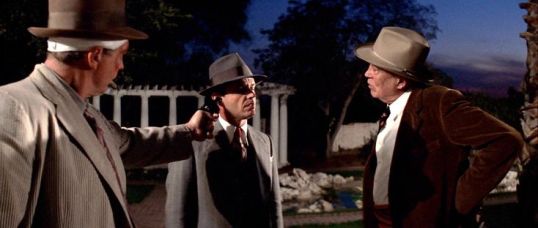
Chinatown (1974, dir by Roman Polanski, DP: John A. Alonzo)
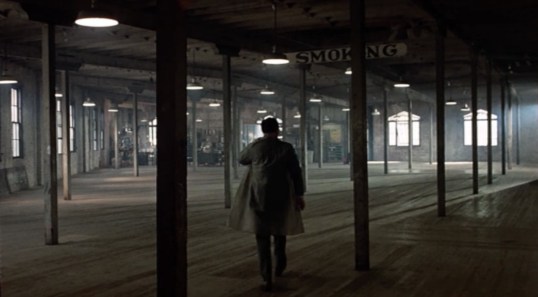
The Conversation (1974, dir by Francis Ford Coppola, DP: Bill Butler and Haskell Wexler)
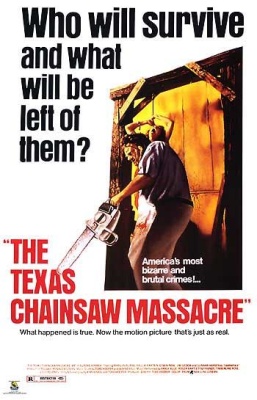
The Texas Chainsaw Massacre (1974, dir by Tobe Hooper, DP: Daniel Pearl)
4 Or More Shots From 4 Or More Films is just what it says it is, 4 shots from 4 of our favorite films. As opposed to the reviews and recaps that we usually post, 4 Shots From 4 Films lets the visuals do the talking!
Today, we pay tribute to the year 1982 with….
4 Shots From 4 1982 Films
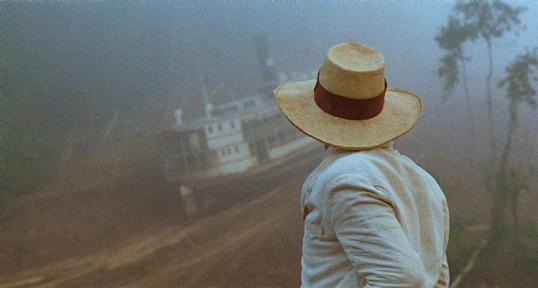
Fitzcarraldo (1982, dir by Werner Herzog, DP: Thomas Mauch)
Poltergeist (1982, dir by Tobe Hooper, DP: Matthew Leonetti)
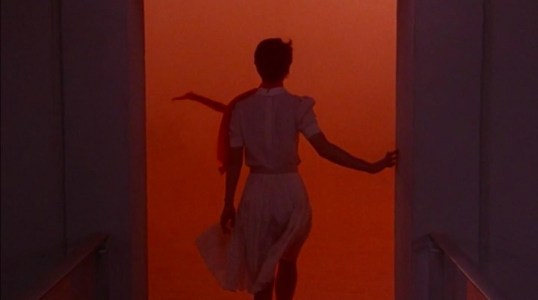
Cat People (1982, dir by Paul Schrader, DP: John Bailey)
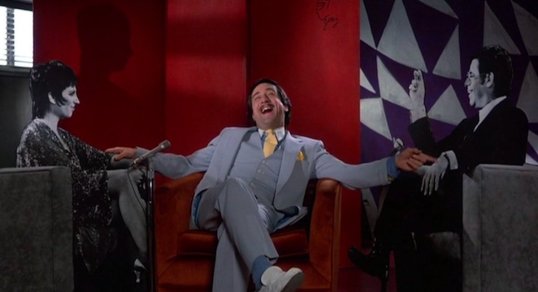
King of Comedy (1982, dir by Martin Scorsese, DP: Fred Schuler)
Since today is Tobe Hooper’s birthday, it seems fitting that today’s scene of the day should come from his best-known film. The opening of 1974’s The Texas Chainsaw Massacre is genuinely unsettling, from the opening narration to the scene of the body being dug up to the news reports of grave robbery. Even the opening credits feel ominous!
The narration was, of course, provided by a young John Larroquette, who has since said that he was “paid in marijuana” for what would become his first feature film credit.



 Through the Shattered Lens