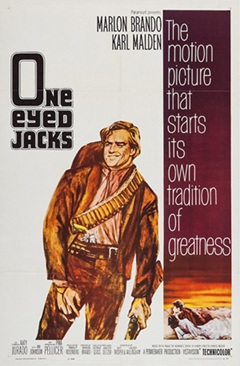
One-Eyed Jacks (1961, directed by Marlon Brando)


Rio (Marlon Brando), a young outlaw in the Old West, is betrayed by his partner and mentor Dad Longworth (Karl Malden) and ends up spending five years in a Mexican prison.  When Rio escapes, he gets together a new gang and heads for Monterey, California.  He wants to both get his revenge on Longworth and also rob the local bank.  Things get complicated when Rio actually confronts Longworth and suddenly realizes that he can’t bring himself just to gun the man down in cold blood.  Rio is not as ruthless of an outlaw as he thought he was.

However, Rio then meets and falls in love with Louisa (Pina Pellicer), Longworth’s stepdaughter  Longworth is willing to do whatever he has to keep Rio away from Louisa and, when Rio starts to think about going straight in an effort to win Louisa’s love, his new gang turn out to be even less trustworthy than his old partners.

A teenage rebellion film disguised as a western (and it’s not a coincidence that the main bad guy is named Dad), One-Eyed Jacks was Marlon Brando’s only film as a director.  The film was originally meant to be directed by Stanley Kubrick, who was working from a script written by a once-in-a-lifetime combination of Rod Serling and Sam Peckinpah.  Kubrick and Brando worked together to develop the film, with Brando insisting on Karl Malden as Dad.  (Kubrick wanted to cast Spencer Tracy.)  Ultimately realizing that working on One-Eyed Jacks would mean essentially taking orders from his star, Kubrick stepped down from directing so he could focus on Lolita and Brando took over as director.  The film finally went into production in 1958 and would not be released until 1961.  Brando’s perfectionism was blamed for the film going massively overbudget and, when it was finally released, One-Eyed Jacks was the first of Brando’s films to lose money.  The combined box office failures of One-Eyed Jacks and the remake of Mutiny on the Bounty left Brando in the cinematic wilderness for much of the 60s.

As for the film itself, One-Eyed Jacks takes what should have been a simple story and attempts to turn into an epic.  Rio spends a good deal of time brooding and the film seems to brood right along with him.  What starts out as a western becomes a forbidden love story as Rio and Louisa fall for each other.  Dad Longworth may be an outlaw-turned-sheriff but Malden plays him more as a possessive father who can’t handle that his two stepchildren — Rio and Louisa — are both turning against him and his strict rules.  Brando obviously viewed the film as being something bigger than a standard western.  Sometimes, his direction works and he does manage to get the epic feel that he was going for.  Other times, the film itself seems to be unsure what direction it wants to go in telling its story.  This is method directing.

Ultimately, One-Eyed Jacks is an interesting experiment, one that doesn’t really work but which still features Charles Lang’s outstanding cinematography and one of Karl Malden’s best performances.  As Brando’s only directorial effort, the film is a curiosity piece, one that will be best enjoyed by western fans who have the patience for something a little different.  And, for what it’s worth, based on the film’s visual beauty and the performances that he gets from the cat, I think Brando could have developed into a fine director with a little more experience.  However, it was not to be.


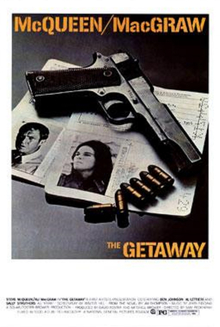
The Getaway (1972, directed by Sam Peckinpah)


Doc McCoy (Steve McQueen) is doing a ten-year sentence in a Texas state prison when he’s offered a chance at parole.  The only condition that Jack Benyon (Ben Johnson) gives Doc is that, once out of prison, Doc is going to have to plan and carry out a bank robbery with two other criminals, Frank (Bo Hopkins) and Rudy (Al Lettieri).  Desperate for his freedom and to be reunited with his wife, Carol (Ali MacGraw), Doc agrees.  On the outside, Doc carries out the robbery but it turns out that no one can be trusted.  With everyone double-crossing everyone else, Doc and Carol head for the border, pursued by the police, Rudy, and Benyon’s brother, Cully (Roy Jenson).

Based on a novel by Jim Thompson, The Getaway is a fast-paced and violent heist film.  It was on this film that Ali MacGraw and Steve McQueen first met and famously fell for each other.  Married to producer Robert Evans, Ali MacGraw left him for McQueen.  Their very real chemistry gives the film its forward momentum and it is so palpable that it doesn’t matter that the stunningly beautiful Ali MacGraw couldn’t really act.  Steve McQueen, on the other hand, is at his coolest in The Getaway.  McQueen was an actor who didn’t need much dialogue to say a lot and The Getaway features him at his tough and ruthless best.  Doc is not one of the good guys.  He’s a bad guy but not as bad as Rudy, Frank, Jack, and Cully.

As was typical of Peckinpah, The Getaway is full of small moments and details that make the movie’s world come to life.  While Doc and Carol flee across Texas, Rudy has a twisted loves story of his own with Fran (Sally Struthers, in a role that will surprise anyone who only knows her as Gloria Stivic).  Jack Dodson plays Fran’s kindly husband and gives a performance that reminds us of the human cost of crime.  Slim Pickens has a wonderful cameo as an old cowboy whose truck is hijakced by Jack and Carol.  Those who thought of Peckinpah as just being a director of violent thrillers often overlooked the moments of humanity that regularly emerged amongst all the bloodshed.

The Getaway was not given the critical acclaim it deserved when it was released but today, it’s regularly recognized as a career best for both Sam Peckinpah and Steve McQueen.

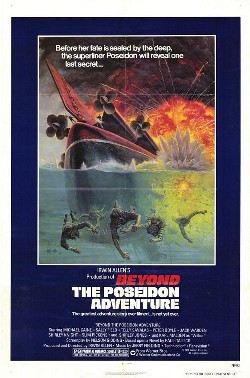
Lisa Marie’s First Review of 2025: Beyond the Poseidon Adventure (dir by Irwin Allen)


On New Year’s Eve in 1972, a tragedy struck in the Aegean Sea.  Just as the clock hit midnight and its passengers wished each other a happy new year, the cruise ship Poseidon was capsized by a tidal wave.  The majority of the ship’s crew and passengers were killed in the disaster but a small group managed to climb up through the wreckage and make their way to the ship’s hull, where they were rescued.  Gene Hackman sacrificed his life so that Ernest Borgnine, Red Buttons, Jack Albertson, Carol Lynley, and Pamela Sue Martin could all survive.

We all know the story of The Poseidon Adventure and some of us have even been goaded by our sisters into singing There’s Got To Be A Morning After for karaoke night at Grandpa Tony’s.  (Grandpa Tony’s has since shut down but, for a while, it was the best place in Dallas for nachos and karaoke.)  But do you know the story of what happened after that initial group of survivors was rescued from the ship?  Have you gone Beyond The Poseidon Adventure?

First released in 1979, Beyond The Poseidon Adventure picks up directly from where the first film ended.  Mere minutes after the rescue helicopter flies off, a tugboat pulls up alongside the still capsized wreck of the Poseidon.  Needing money to pay off his debts, Captain Mike Turner (Michael Caine) has decided to declare salvage rights and claim all of the cash and jewelry that he can find in the wreckage.  Accompanying him is his mentor Dead Meat (Karl Malden) and his protegee, Annoying and Cutesy (Sally Field).  Actually, Dead Meat is named Wilbur but, as soon as Karl Malden starts to dramatically grab at his chest, viewers will know that he’s destined to heroically sacrifice himself.  Annoying and Cutesy’s real name is Celeste.  Sally Field gives perhaps the worst performance of her career as the almost always perky Celeste.  This movie came out the same year that Sally Field appeared in the film for which she won her first Oscar, Norma Rae.  I have to imagine that Field was happy to win that Oscar because it meant she would never have to do another film like Beyond The Poseidon Adventure.

Before the tugboat crew can begin to explore the Poseidon, another boat shows up.  This boat is captained by Stefan Svevo (Telly Savalas), who claims to be a doctor who is responding to an S.O.S. from the capsized ship.  Svevo and his crew insist on accompanying the tugboat crew into the Poseidon.  It’s obvious from the start that Svevo is not actually a benevolent doctor.  For one thing, the men accompanying him are armed.  For another thing, he’s played by veteran screen villain Telly Savalas.

The two crews finally enter the ship and …. hey, there’s even more people on the boat!  At the end of The Poseidon Adventure, we were told that only six people had survived the disaster but apparently, that was just a damn lie.  The ship is literally crawling with people who still haven’t gotten out.  (Why didn’t the people who rescued the first batch of survivors check to make sure that they had gotten everyone?)  There’s Tex (Slim Pickens), who says he’s from “Big D” and talks about how he owns an oil well (as we all do in Big D).  There’s Frank Mazzetti (Peter Boyle, basically playing the same loudmouth that Ernest Borgnine played in the first film) and his daughter Theresa (Angela Cartwright) and Theresa’s new boyfriend, Larry (Mark Harmon).  There’s a nurse (Shirley Jones) and a blind man (Jack Warden) and his wife (Shirley Knight).  There’s Susanne (Veronica Hamel), the cool femme fatale who has a connection to Svevo.

While Svevo searches for a crate of plutonium (what the Hell was that doing on the Poseidon?), Mike tries to get the survivors to safety.  That means once again climbing up to the hull while the ship shakes and the engines continue to explode.  Both the first film and the sequel feature the exact same footage of the engines exploding.  At this rate, I guess the Poseidon might finally sink sometime this year.

Directed by Irwin Allen (who produced the first film), Beyond The Poseidon Adventure is about as bad as a film could be.  The first film had plenty of silly moments but it also had the entertaining spectacle of Gene Hackman and Ernest Borgnine competing to see who could yell the loudest.  Beyond the Poseidon Adventure has Michael Caine and Telly Savalas both looking bored while Peter Boyle complains, “That was the worst New Year’s Party I’ve ever been to!” and Sally Field says stuff like, “I’ve been to Anzio!  It’s the pits!”  At one point, Slim Pickens says that he’s as phony as a three dollar bill.  The same could be said of this film.  Beyond The Poseidon Adventure looks and feels cheap and generates none of the suspense of the first film.

As Beyond The Poseidon Adventure ended, I found myself worrying that there might be other passengers still stuck on the ship.  I mean, apparently, it’s very easy to not only survive on a capsized cruise ship but also to be overlooked by professional rescue crews.  Unfortunately, there was not another sequel so those folks were just out of luck.

Smokey And The Good Time Outlaws (1978, directed by Alexander Grasshoff)


After meeting a talent agent while spending a night in jail, aspiring singer J.D. (Jesse Turner) and his best friend, The Salt Flat Kid (Dennis Fimple), decide to leave Texas for Nashville.  J.D. wants to be a star and the Salt Flat Kid is a ventriloquist who doesn’t go anywhere without his dummy.

On the way to the Grand Old Opry, they pick up two women (Dianne Sherrill and Marcia Barkin), one of whom was engaged to marry the idiot nephew (Gailard Sartain) of Nashville’s Sheriff Leddy (Slim Pickens).  The sheriff sets out after the two men, planning on sending them back to Texas.

Despite the title and the subplot about the sheriff searching for his nephew’s former future wife, Smokey and the Good Time Outlaws doesn’t have much in common with Smokey and the Bandit.  J.D. has a Burt Reynolds-style mustache but he’s not a bandit.  He is just someone who wants to be a star and most of the movie is about him and the Salt Flat Kid tying to make their way onto the stage of the Grand Old Opry.  Helping them out is an eccentric woman named Marcie (who is played by Hope Summers, who older viewers will immediately recognize as having been Clara Edwards on The Andy Griffith Show).  When J.D. can’t get an audition, it occurs to him to just rush out on stage and start performing.

This film was a dream project for Jesse Turner, who was a real-life country musician.  He co-wrote and produced the film, as well as starred in it.  Jesse Turner wasn’t much of an actor but he’s surrounded by a good supporting cast.  Slim Pickens steals the show as a more menacing version of Buford T. Justice but he’s not in the film nearly enough.  Dennis Fimple is likable but appears to be too old to be known as “the Kid.”  You can tell this is a movie because no one is creeped out by the Kid’s ventriloquist dummy.

Smokey and the Good Time Outlaws was made for the Southern drive-in circuit and it is good-natured, even if the story is never that interesting.  Country music fans of a certain age will appreciate it.

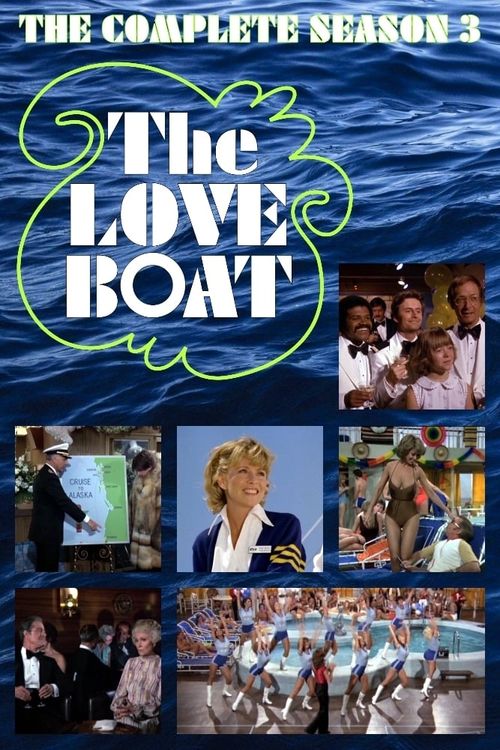
Retro Television Reviews: The Love Boat 3.18 and 3.19 “Kinfolk/Sis & the Slicker/Moonlight & Moonshine/Too Close for Comfort/The Affair: Part 2”


Welcome to Retro Television Reviews, a feature where we review some of our favorite and least favorite shows of the past!  On Wednesdays, I will be reviewing the original Love Boat, which aired on ABC from 1977 to 1986!  The series can be streamed on Paramount Plus!

This week, it’s a family affair on The Love Boat!

Episodes 3.18 & 3.19 “Kinfolk/Sis & the Slicker/Moonlight & Moonshine/Too Close for Comfort/The Affair: Part 2”

(Dir by Roger Duchowny, originally aired on January 19th, 1980)

Well, heck, it’s another double-sized, two-hour episode of The Love Boat.

This is actually the third two-hour episode of the third season, following the season premiere and the episode with the Dallas Cowboy Cheerleaders.  I have to admit that I don’t really look forward to these two hour episodes because they’re usually a bit uneven.  The Love Boat was the perfect hour show, one that featured stories that were specifically designed to be neatly wrapped up in 40 minutes.  The two-hour episodes always seem to lose their narrative momentum after that first hour and that’s certainly the case here.

At the center of the episode is Danny Fields (Donny Osmond), a singer who has been booked to perform on the cruise.  Julie is convinced that Danny is going to be a big star and she’s even convinced a talent scout named Steve Sorrell (Rich Little) to board the ship so that he can see Danny perform.  However, Steve is more interested in Kitty Scofield (Loni Anderson), an innocent West Virginia girl who is eager to see the rest of the world but who is also engaged to marry the unambitious Elmer Fargas (Randall Carver).  Kitty is also Danny’s sister and, in fact, Danny’s entire family (played by Richard Paul, Marion Ross, and Slim Pickens) are on the cruise.  Danny is worried that his hillbilly family will stand in the way of his rock ‘n’ roll career and he goes out of his way to avoid them.  While the rest of the Scofields are willing to accept that Danny doesn’t want to associate with them, Grandpa Luke Scofield (Slim Pickens) lets Danny know that he’s not to happy with Danny and his rock ‘n’ roll ways.  Of course, Luke himself is being courted by Brenda Watts (Eve Arden), a writer who wants to write about the Scofield family and who gets close to them by pretending to be from West Virginia herself.

Fortunately, Danny comes to realize the error of his ways, especially after he sees how Steve has been manipulating his sister.  At his next performance, Danny introduces his family and sings Country Roads especially for them.  Meanwhile, Kitty realizes that she needs to be independent for a while so she dumps both Steve and Elmer, though it’s suggested that she’ll eventually give Elmer a second chance.  Brenda comes clean to Luke about not being a hillbilly and Luke eventually forgives her because he’s in love with her and Brenda’s in love with him.  Even old Steve turns out to be not such a bad guy, though he does tell Danny that his record label just isn’t looking for any new country acts.  Hmmm …. maybe Danny should have stuck with the rock ‘n’ roll.  Oh well!

Got all that?  I hope so because I’m not typing all that out again.

Meanwhile, Frank (Robert Guillaume) and Maura Bellocque (Denise Nicholas) are taking the cruise with their best friends, Dave (Richard Roundtree) and Cynthia Wilbur (Pam Grier).  Frank and Cynthia are having an affair and they aren’t particularly discreet about it.  I was expecting Maura to decide that maybe she and Dave should have an affair of their own but instead, she just spent the entire cruise glaring at Frank.  This was actually a surprisingly dramatic story, one that did not end with the expected positive outcome.  (Is this the first cruise of the Love Boat to end in divorce?)  This is a story that demands at least one big, explosive moment but instead, it was all surprisingly low-key.

Finally, the sprinkler system malfunctioned while the boat was in dock and the cabins of Doc, Gopher, and Isaac were flooded.  So, they move in with the Captain!  The Captain is not amused by Doc’s snoring, Gopher’s New Age chanting, or Isaac’s disco dancing.  And when Doc, Gopher, and Isaac all try to bring different women back to the cabin with them, no one is amused by that.  I’m not really sure I understand why they all had move in together.  Why couldn’t Doc just sleep in his doctor’s office and maybe Isaac and Gopher could have shared an empty passenger’s cabin during the cruise?  (Julie did mention that there were some “small” cabins available.)  Anyway, the important thing is that they all manage to survive the cruise without killing each other.

This was an uneven episode.  The Captain annoyed with everyone as funny because Gavin MacLeod was always amusing whenever he acted annoyed.  The storyline with the cheating couple was well-acted, if dramatically a bit unsatisfying.  But then you get to all the stuff about Danny and his country family.  I know that The Love Boat is not meant to be a realistic or particularly nuanced show but still, Danny’s family was portrayed as being such a bunch of hicks that I was half-expecting them to ask the Captain whether he ever worried about the boat sailing over the edge of the world.  Loni Anderson and Slim Pickens gave likable performances but Donny Osmond was incredibly bland as Danny and the scenes where he “performed” featured some truly abysmal lip-synching.  It was also a bit difficult to buy Rich Little as a swinger.  He came across like he just couldn’t wait to get back home and hang out at the Elks Lodge.

This episode probably would have been fun if it had played out over a compact 60 minutes but, at two hours, things were just stretched a bit too thin.

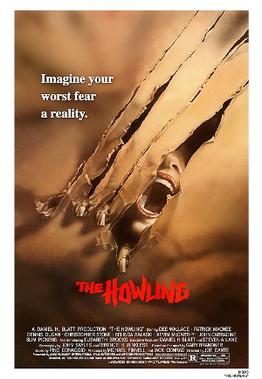
Horror Film Review: The Howling (dir by Joe Dante)


The 1981 film, The Howling, takes place at The Colony.

The Colony is a lovely place, a nice resort out in the middle of the countryside.  It’s a place that celebrity therapist George Waggener (Patrick Macnee) sends his clients so that they can recover from trauma.  It’s a bit of a grown-up version of the ranch to which Dr. Phil used to send juvenile delinquents.  Of course, the Colony is full of adults and they’re an eccentric bunch.  I mean, one of them — named Erle Kenton — is actually played by John Carradine!  That’s just how eccentric the place is.  Sheriff Sam Newfield (Slim Pickens) keeps an eye on the place but everyone knows that there’s nothing to worry about when it comes to The Colony.  Dr. Waggner does good work.

Karen White (Dee Wallace) is a Los Angeles news anchor who was held hostage by a serial killer named Eddie Quist (Robert Picardo).  While she was with Eddie, she was forced to not only watch videos of Eddie’s crimes but she also saw something happen with Eddie that terrified her to such an extent that she has blocked it from her mind.  Karen was rescued by the police but she is haunted by nightmares.  Dr. Waggner arranges for Karen and her husband, Bill Neill (Christopher Stone, who was married to Dee Wallace when they co-starred in this film), to spend some time at the Colony.

Bill loves the Colony, especially after he attracts the eye of Marsha (Elisabeth Brooks), the resort’s resident seductress.  Karen, however, is less enamored of the place.  The Colony feels off to her and she’s not happy about the howling in the distance or the fact that Bill has suddenly started to grow distant from her.  Could it be that The Colony is actually crawling with werewolves and that Bill has become one of them?  (It’s totally possible and, to The Howling‘s credit, it doesn’t waste any time letting us know that.)  Karen’s friend, Terry Fisher (Belinda Balanski), and her boyfriend, Chris Halloran (Dennis Dugan), do some research of their own into Eddie Quist, The Colony, and whether or not werewolves exists and they meet a helpful bookstore owner named Walter Paisley (Dick Miller).

To understand the approach that director Joe Dante and screenwriter John Sayles take to The Howling, one needs to only consider the names of some of the characters.  George Waggner.  Bill Neill. Terry (which can be short for Terence) Fisher.  Fred (or is that Freddie) Francis.  Erle Kenton.  Sam Newfield.  Jerry Warren.  All of these characters are named after horror film directors.  This is the type of werewolf film where Chris Halloran has a copy of The Three Little Pigs sitting on his desk.  Veteran actors like Kevin McCarthy, John Carradine, Slim Pickens, and Kenneth Tobey show up in small roles.  Roger Corman mainstay Dick Miller plays yet another character named Walter Paisley and he kicks Forrest J. Ackerman out of his bookstore.  Roger Corman himself plays a man making a phone call.  After a werewolf is shot on live TV, the program immediately cuts to a dog food commercial and we see a blank-faced child telling his unconcerned parents that someone just turned into a wolf.  The Howling was made by people who obviously love B-horror and that love is present in every frame of the film.

Like Dante’s Piranha, The Howling is a film with a sense of humor but it’s not a comedy.  The werewolves are still impressive, even forty-two years after the film was first released.  The character of Eddie Quist (“I’m going to give you a piece of my mind”) is a terrifying monster and the sight of his signature smiley face will fill you with dread, especially when it shows up in a place where it really shouldn’t be.  The film cynically ends on a note of noble sacrifice that will apparently not make much difference, with the suggestion being that human beings are either too distracted or too jaded to realize that there are monsters among them.  The Howling is a fast-paced and well-directed homage to B-horror and it’s still terrifically entertaining.

10 Oscar Snubs From The 1960s


Ah, the 60s. Both the studio system and the production code collapsed as Hollywood struggled to remain relevant during a time of great social upheaval. The Academy alternated between nominating films that took chances and nominating films that cost a lot of money. It led to some odd best picture lineups and some notable snubs!

1960: Psycho Is Not Nominated For Best Picture and Anthony Perkins Is Not Nominated For Best Actor

To be honest, considering that the Academy has never really embraced horror as a genre and spent most of the 60s nominating big budget prestige pictures, it’s a bit surprising that Psycho was actually nominated for four Oscars.  Along with being nominated for its production design and its cinematography, Psycho also won nominations for Alfred Hitchcock and Janet Leigh.  However, Anthony Perkins was not nominated for Best Actor, despite giving one of the most memorable performances of all time.  The film literally would not work without Perkins’s performance and, considering that Perkins pretty much spent the rest of his career in the shadow of Norman Bates, it’s a shame that he didn’t at least get a nomination for his trouble.  Psycho was also not nominated for Best Picture, despite being better remembered and certainly more influential than most of the films that were.

1962: The Man Who Shot Liberty Valance Is Almost Totally Snubbed

The Man Who Shot Liberty Valance was not totally snubbed by the Academy.  It received a nomination for Best Costume Design.  But still, it deserved so much more!  John Ford, James Stewart, John Wayne, Lee Marvin, Vera Miles, and the picture itself were all worthy of nominations.  Admittedly, 1962 was a year full of great American films and there was a lot of competition when it came to the Oscars.  Still, The Man Who Shot Liberty Valance definitely deserved a best picture nomination over the bloated remake of Mutiny on the Bounty.  Today, if the first Mutiny on the Bounty remake is known for anything, it’s for Marlon Brando being difficult on the set.  But The Man Who Shot Liberty Valance is still remembered for telling us to always print the legend.

1964: From Russia With Love Is Totally Snubbed

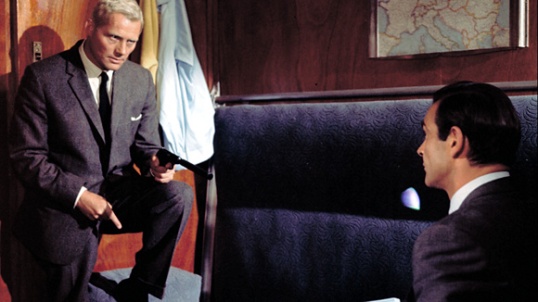
The same year that the Academy honored George Cukor’s creaky adaptation of My Fair Lady, it totally ignored my favorite James Bond film.  From Russia With Love is a Bond film that works wonderfully as both a love story and a thriller.  Sean Connery, Lotte Lenya, Robert Shaw, and Terence Young all deserved some award consideration.  From Russia With Love was released in the UK in 1963.  In a perfect world, it would have also been released concurrently in the U.S., allowing From Russia With Love to be the film that gave the the Academy the chance to recognize the British invasion.  Instead, Tom Jones was named the Best Picture of 1963 and From Russia With Love had to wait until 1964 to premiere in the U.S.  It was snubbed in favor of one of old Hollywood’s last grasps at relevance.

1964: Slim Pickens Is Not Nominated For Best Supporting Actor

Playing three separate roles, Peter Sellers dominates Dr. Strangelove: Or How I Learned To Stop Worrying And Love The Bomb.  But, as good as Sellers is, the film’s most memorable image is definitely Slim Pickens whooping it up as he rides the bomb down to Earth.  George C. Scott and Sterling Hyaden also undoubtedly deserved some award consideration but, in the end, Pickens is the one who brings the film to life even as he helps to bring society to an end.

1967: In Cold Blood Is Not Nominated For Best Picture

In Cold Blood, though not a perfect film, certainly deserved a nomination over Dr. Doolittle.  In Cold Blood is a film that still has the power to disturb and haunt viewers today.  Dr. Doolittle was a box office debacle that was nominated in an attempt to help 20th Century Fox make back some of their money.

1967: Sidney Poitier Is Not Nominated For Best Actor For In The Heat Of The Night

In 1967, Sidney Poitier starred in two of the films that were nominated for Best Picture but somehow, he did not pick up a nomination himself.  His restrained but fiercely intelligent performance in In The Heat Of The Night provided a powerful contrast to Rod Steiger’s more blustery turn.  That Poitier was not nominated for his performance as Virgil Tibbs truly is one of the stranger snubs in Academy history.  (If I had to guess, I’d say that the Actors Branch was split on whether to honor him for In The Heat of the Night or Guess Who’s Coming To Dinner or even for To Sir With Love and, as a result, he ended up getting nominated for none of them.)

1968: 2001: A Space Odyssey and Planet of the Apes Are Not Nominated For Best Picture

Neither one of these classic science fiction films were nominated for Best Picture, despite the fact that both of them are far superior and far more influential than Oliver!, the film that won that year.

1968: The Good, The Bad, and the Ugly Is Totally Ignored

Not even Ennio Morricone’s score received a nomination!

1968: Petulia Is Totally Snubbed

Seriously, I don’t know what was going on with the Academy in 1968 but it seems they went out of their way to ignore the best films of the year.  Richard Lester’s Petulia is usually cited as one of the definitive films of the 60s but it received not a single Oscar nomination.  Not only did the film fail to receive a nomination for Best Picture but Richard Lester, George C. Scott, Julie Christie, Shirley Knight, Richard Chamberlain, and the film’s screenwriters were snubbed as well.

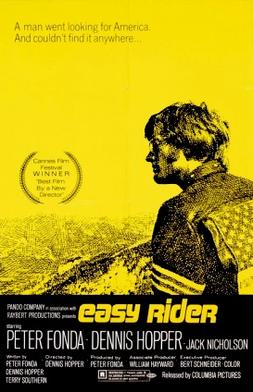
1969: Easy Rider Is Not Nominated For Best Picture

Yes, I know.  Easy Rider is a flawed film and there are certain moments that are just incredibly pretentious.  That said, Easy Rider defined an era and it also presented a portrait of everything that was and is good, bad, and timeless about America.  The film may have been produced, directed, and acted in a drug-razed haze but it’s also an important historical document and it was also a film whose success permanently changed Hollywood.  Certainly, Easy Rider’s legacy is superior to that of Hello, Dolly!

Agree? Disagree? Do you have an Oscar snub that you think is even worse than the 10 listed here? Let us know in the comments!

Up next: It’s the 70s!

Banjo Hackett: Roamin’ Free (1976, directed by Andrew V. McLaglen)


The great Don Meredith will always be remembered for a few things.

He’s remembered for being the first Dallas Cowboys quarterback, leading the team to multiple championship games but sadly never making it to the Super Bowl.  If you’ve seen North Dallas Forty, the quarterback played by Mac Davis was based on Meredith.  North Dallas Forty was based on a book by Phil Gent, a former Cowboys wide receiver.  When asked about the book and Gent’s portrayal of himself as being the best player on the team, Meredith reportedly said, “Hell, if I had known Phil was that good, I would have thrown him the ball more often.”

Don Mereidth was also one of the first players to make the jump from playing on the field to calling plays in the broadcast booth.  He was the good old boy who served as a foil to Howard Cosell and who sang “Turn out the lights, the party’s over” whenever it became obvious that one team was going to win the game.

He will also always be remembered for an incident in 1979 when, while covering a game in Denver, he supposedly said, “Welcome to Mile High Stadium — and I am!”  This is actually an urban legend.  Meredith never actually said he was high on national television but if a member of the original Monday Night Football Team was going to say that, it probably would have been Dandy Don.

Don Meredith is less remembered for his acting career but, like a lot of retired football players in the 70s, he tried his hand at performing.  As an actor, Don Meredith was a very good quarterback.  His performances were superior to Joe Namath’s but his range was undeniably limited.  Smart producers essentially had Don Meredith play himself, a laid back good old boy who liked his beer and enjoyed hanging out with his buddies.

Banjo Hackett was typical of Don Meredith’s films.  In this made-for-TV movie, Meredith plays the title character.  He’s the nicest horse trader in the old west but not even someone as laid back as Banjo Hackett is going to stand for someone stealing from him.  When he learns that his nephew, Jubal (Ike Eisenmann), has been put into an orphanage and that evil bounty hunter Sam Ivory (Chuck Conners) has stolen Jubal’s favorite horse, Banjo steps up to the huddle.  First, he engineers Jubal’s escape from the orphanage. Then he and his nephew track Sam across the frontier, determined to catch up with him before he sells Jubal’s horse.

Banjo Hackett was obviously meant to serve as a pilot for a television series.  The series never happened but Banjo Hackett itself is a likable film that will be best appreciated by western fans who are looking for something harmless to watch.  Don Meredith may not have been a versatile actor but he had a sincere screen presence and Chuck Conners was always an effective bad guy.  The cast is full of familiar western actors, including Slim Pickens, L.Q. Jones, and Jeff Corey.  As a movie, Banjo Hackett is as amiable as its lead character.

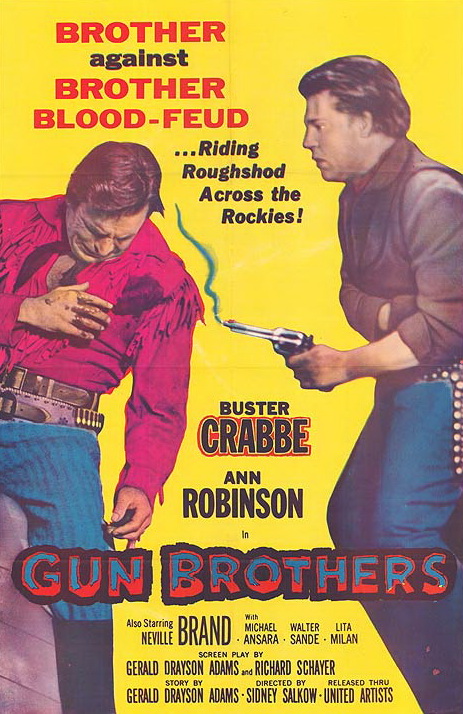
Gun Brothers (1956, directed by Sidney Salkow)


In this western, Buster Crabbe plays Chad Santee, a former Calvary officer who has traveled to Wyoming so he can visit his brother Jubal (Neville Brand) and see Jubal’s ranch.  Traveling by stagecoach, Chad meets and falls in love with a saloon singer named Rose Fargo (Ann Robinson).  When the stagecoach is held up by outlaws and one of them steals Rose’s broach, Chad decides to track the outlaws down.  What Chad doesn’t know is that Jubal is one of those outlaws.

Gun Brothers is an entertaining B-western.  There’s nothing surprising about the story but Buster Crabbe is a believable hero and Ann Robinson gets a chance to show off her saloon singing skills.  Neville Brand steals the film as Jubal.  Before going into acting, Brand was a highly decorated World War II combat officer and he brought his real-life toughness to every role that he played.  He could throw a punch and shoot a gun with an authority that few other actors could match.  Jubal, like Brand, has obviously seen and experienced things that his self-righteous brother will never be able to understand and, as a result, he’s not as tied down to the laws of society as everyone else.   Also turning in good performances are Michael Ansara as an outlaw and Lita Milan, as a Native American woman who is involved with the gang.

Not surprisingly, for a B-western, Gun Brothers is full of characters with names like Shawnee Jack, Yellowstone Kelly, Blackjack Silk, and Moose McClain.  It’s a simple movie but one that will be enjoyed by fans of old fashioned western action.

Tom Horn (1980, directed by William Wiard)


Today would have been Steve McQueen’s 90th birthday.

Sadly, McQueen died in 1980 at the absurdly young age of 50.  In life, McQueen never got as much respect as he deserved as an actor but in death, he’s been rediscovered as not just an icon of cool but also as an underrated actor who, much like Clint Eastwood, could say a lot without uttering a word.  (Be sure to read Marshall Terrill’s biography of McQueen.)  When Steve McQueen (as played by Damian Lewis) showed up in Once Upon A Time In Hollywood, it seemed appropriate.  McQueen and Tarantino both seem made for each other, even if McQueen died long before Tarantino even wrote his first screenplay.

McQueen made two films shortly before he died, The Hunter and Tom Horn. Unfortunately, neither one of them was a hit with audiences or critics.  The Hunter, which was McQueen’s last film, is a forgettable movie that features McQueen as a bounty hunter who can’t drive.  Tom Horn, however, was an underrated western that features one of McQueen’s best performances.

In Tom Horn, McQueen plays the title character, a legendary frontier scout who is known for the role he played in the capture of Geronimo.  When the film opens, Tom Horn has seen better days.  With the frontier changing and the old west being replaced by the modern age, Horn has been reduced to being almost a vagrant, wandering from town to town in search of work.  When the film begins, Horn has found employment as a “stock detective.”  He’s employed by the local cattlemen to keep rustlers from stealing their stock.  Horn uses the same violent methods that he’s always used, gunning down rustlers and often doing so in public.  What Horn doesn’t realize is that times have changed and the methods that previously made him a legend are now making him a pariah.  When the cattlemen realize that the townspeople are turning against them because of Horn’s activities, they conspire to take out Horn themselves.

Tom Horn is based on a true story.  In 1903, Tom Horn was hung for shooting a 15 year-old boy.  While it is agreed that Horn killed many men over the course of his life, he was undoubtedly framed for the murder for which he was executed.  While sitting in his jail cell, waiting to be executed, Horn wrote the autobiography upon which this movie is based.  The movie makes the argument that Horn was executed because he was a reminder of what the West used to be like.  In order to prove that they were now ready to be members of civilized society, the cattleman had to sacrifice Horn in the most public way possible.

The film does a good job of capturing the final days of the old west and Steve McQueen does an even better job of playing a man who doesn’t realize that his time has come to a close.  Horn often seems to be the only man who doesn’t understand that the time of outlaws and the gunslingers is coming to a close and that leaves him defenseless when he’s put on trial.  Even after found guilty, Horn remains confident that he will somehow escape the hangman’s noose.  Tragically, it’s not until time is up that Horn truly comes to understand that the world has changed and civilization no longer has place for men like him.  The same people who used to depend on men like Tom Horn now just want to forget that he ever existed.  McQueen took a long break between making The Towering Inferno and Tom Horn and dropped out of the public eye.  The only film he made during that period was a barely released version of Enemy of the People.  When McQueen made Tom Horn, he was also a man out of time and he brings a sense of resignation and loss to the role that he might not have been capable of doing earlier in his career.

Sadly, it was while filming Tom Horn that McQueen first started to show symptoms of the cancer that would eventually kill him.  Tom Horn was released in 1980 and never got the attention that it deserved.  It’s a minor western classic and features Steve McQueen at his best.