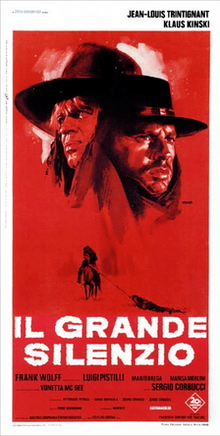
Today’s song of the day comes from Ennio Morricone’s score for the 1968 spaghetti western, The Great Silence. Directed by Sergio Corbucci and featuring Jean-Louis Trintigant as a mute bounty hunter and Klaus Kinski as a savage outlaw, The Great Silence is one the darkest of the Italian westerns and Morricone’s elegiac score compliments the mood perfectly.
I’m the youngest of four sisters and everyday, I’m thankful for that because I would seriously be so lost without them in my life. I think that’s one reason why I like HAIM. The Haim sisters remind me of my older sisters and that’s especially true in the video for The Steps.
The song, of course, is about a relationship that, if it hasn’t ended yet, is coming to an end. The messiness of Haim’s morning routine perfectly mirrors the lyrics of the song, in which the narrator says that every time she tries to move forward, her lover gets mad at her for “making a mess.” There’s something very liberating about HAIM’s messiness in this video. It’s not just the fact that they’re throwing stuff all over the apartment and stumbling out of bed (which is the way I think most of us wake up but it’s something you rarely see in movies or music videos, where everyone wakes up refreshed and ready for a photo shoot) but it’s also the fact that there’s none of the fake glamour that you might expect to see in a music video like this. It’s a song about freedom and being yourself and if that means making a mess then make a mess. It’s a liberating song and a liberating video. It’s not a video where HAIM tries to live up to some pop princess archetype. This is a video that says, “This is who we are and fuck you if you can’t handle it.”
That said, I have to admit that I’m a compulsive cleaner and my natural instinct is to usually tidy up so my room has never looked as messy as my life. I guess I should be happy about that because otherwise, I don’t think I’d ever be able to find anything. And that’s okay. It’s okay to be messy. It’s okay to be neat. What matters is that you’re being yourself and not allowing anyone to force you to try to be someone else.
This video, like most of HAIM’s recent videos, was directed by Paul Thomas Anderson. The film critic Armond White has argued that Anderson’s work with HAIM is actually superior to most of his recent films and I think White might have a point. (Before anyone starts yelling at me, I don’t care whether or not you like Armond White. He’s a consistently interesting writer and someone has to be willing to be a contrarian.) There’s a definitely naturalness to Anderson’s videos with HAIM, as if anything could happen at any moment.
On February 14th, 1929, seven men were murdered in a garage in Chicago, Illinois. Five of the seven men were known to be associates of gangster George “Bugs” Moran. The other two men were considered to be innocent bystanders, a mechanic and a dry cleaner who just happened to enjoy hanging out with gangsters. Though no one was ever convicted of the crime, it was well-known that the murders were carried out on the orders of Al Capone.
In many ways, the St. Valentine’s Day Massacre was a turning point in America’s relationship with organized crime. Before the massacre, Capone had become a bit of a folk hero. He knew how to talk to the press and he was viewed as merely breaking a law (in this case, prohibition) that most people opposed in the first place. However, after the murders, public opinion soured on Capone.
Some of it was the brutality of the crime. It’s been said that over five hundred bullets were fired in that garage, all to kill seven defenseless men who were lined up against a wall. Grisly pictures of the victims were released to the press. Perhaps if the seven men had been carrying weapons and had been involved in a shootout with their murderers, the public’s reaction would have been different. But this was a cold-blooded execution.
Personally, I think the fact that the killers disguised themselves as cops also played a role in the public’s outrage. It was a very calculated move on the part of the killers and it highlighted just how much planning went into the St. Valentine’s Day Massacre. As well, it undoubtedly made people paranoid. If a bunch of killer could dress up like cops, who knew who else they could dress up as?
Finally, I think that Capone’s biggest mistake was carrying out the crime on Valentine’s Day. You don’t murder people on a holiday. Anyone should know that. If Capone had waited until February 20th, he probably could have gotten away with it.
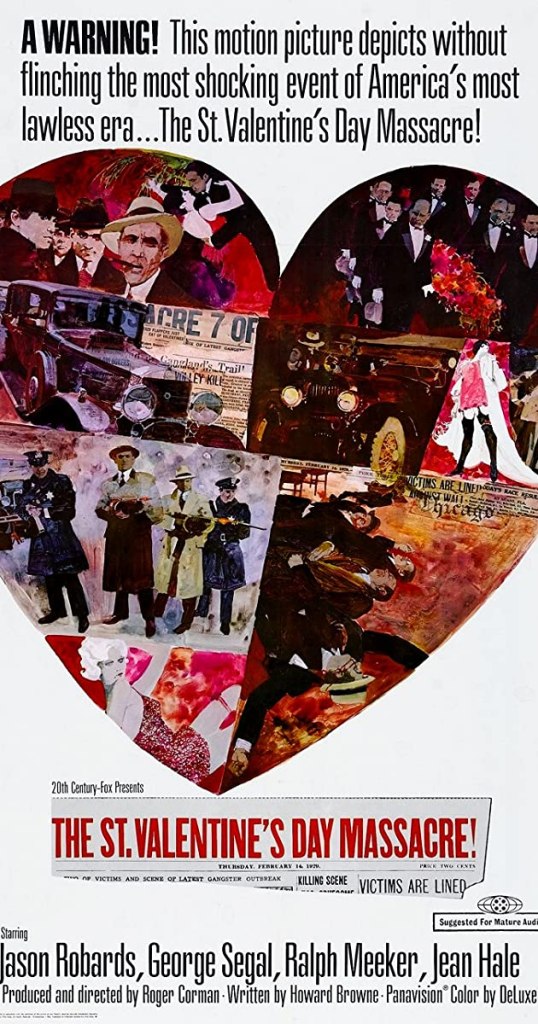
The 1967 film, The St. Valentine’s Day Massacre, details the rivalry between Capone and Moran, starting with them fighting for control over the Chicago rackets and ending with the title event. Moran is played by Ralph Meeker while Jason Robards plays Capone.
Now I know what you’re probably thinking. Perennial WASP Jason Robards as Al Capone? That may sound like odd casting and, let’s just be honest here, it is. However, it actually kind of works. Robards may not be convincingly Italian but he is convincingly ruthless. Add to that, one of the major subplots of the St. Valentine’s Day Massacre is that, even as the head of the Chicago Outfit, Capone still feels like an outsider in the world of organized crime because, while he is Italian, he isn’t Sicilian. Capone feels as if Lucky Luciano and all of the major New York crime bosses look down on him and one reason why he’s so ruthless about taking over Chicago is that wants to show Luciano that he can be just as effective a crime lord as any Sicilian. Capone feeling out of place in the Mafia is reflected by Robards initially seeming to be out of place in a gangster film. By the end of the movie, of course, Capone has proven himself and so has Jason Robards.
Robards isn’t the only familiar face to be found in The St. Valentine’s Day Massacre. Though this film was released by 20th Century Fox, it was directed by Roger Corman and Corman fills the production with members of his stock company. Dick Miller, Jonathan Haze, and Jack Nicholson all have small roles as gunmen. Bruce Dern plays the unlucky mechanic who enjoys hanging out with gangsters. Buck Taylor, Leo Gordon, and Joe Turkel all have small roles. John Agar plays Dion O’Bannon and is gunned down in his flower store. Though not members of the Corman stock company, George Segal and David Canary plays brothers who work for Moran. There’s a lot of characters wandering through this film but Corman makes sure that everyone gets a chance to make an impression.
It’s a good gangster film. Though he was working with a larger budget than usual, Corman still brought his exploitation film aesthetic to the material and the end result is a violent, melodramatic gangster film that looks really impressive. The film’s recreation of 1920s Chicago is a visual delight and looking at the well-dressed and stylish gangsters walking and driving down the vibrant city streets, you can understand why organized crime would have such a draw for some people.
The St. Valentine’s Day Massacre is a classic gangster film and a classic Corman film. It’s an offer you can’t refuse.
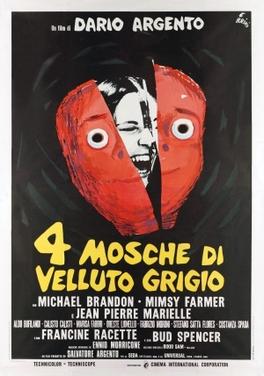
Today, we continue our tribute to Ennio Morricone with Come Un Madrigale, which he composed for Dario Arengto’s 1971 giallo, Four Flies on Grey Velvet! Morricone scored Argento’s first three films and his atmospheric music was as important to their success as Goblin would be to the success of later Argento films like Suspiriaand Deep Red.
I was going to do one of the videos that Paul Thomas Anderson directed for Haim today but I changed my mind at the last minute. That’s nothing against Haim or the video. Haim’s great and their videos — particularly the ones directed by Anderson — are frequently brilliant. It’s just, for whatever reason, I knew that today was not the day to write about their video for The Steps. That day will come soon.
Instead, I wrote about the video for Michael Penn’s Try.
Try was the very first music video to be directed by Paul Thomas Anderson. He directed it while he was editing Boogie Nights. Michael Penn, of course, did the score for both Boogie Nights and Anderson’s earlier Hard Eight. He can also be spotted in Boogie Nights, playing Nick in the recording studio and incredulously reacting to the efforts of Dirk Diggler and Reed Rothschild to record their own album.
When watching this video, pay attention to the blonde gentleman wearing the Planet of the Apes t-shirt. He shows up twice and, at one point, holds the microphone into which Penn is singing. If he looks familiar, that’s because he’s actor Philip Seymour Hoffman! When I first saw the video, I honestly didn’t recognize him. I just thought he was some random crew person who got the job because he could run fast enough to keep up with Penn. Of course, once I learned that Hoffman was in the video and I rewatched it, I immediately spotted him. I think it says something about what a good actor Hoffman was that, even in something like this, he could be so convincing that, despite being one of the most recognizable actors in the world, he still became somewhat anonymous. He disappeared into the role.
Thomas Jane and Melora Waters (who played Todd and Jessie St. Vincent in Boogie Nights) are also in this video, standing at the end of a a long line of exhausted dancers. (This was meant to be a reference to the film, They Shoot Horses, Don’t They?) There’s one other Boogie Nights reference, which is kind of interesting considering the fact that he and Anderson supposedly didn’t get along during filming. Keep an eye out for door with a purple 9 on it. That’s a reference to Burt Reynolds, who wore the number 9 when he played college football.
We all know the famous line from The Godfather. “I’m going to make him an offer he can’t refuse.” Of course, everyone also knows that “It’s not personal. It’s strictly business.” There’s another line that’s almost as famous: “One lawyer with his briefcase can steal more than a hundred men with guns.” That line comes from Mario Puzo’s novel. It’s never actually used in the film though it’s certainly present as a theme.
The idea of organized crime essentially being a huge corporation is hardly a new one. In fact, it’s become a bit of a cliche. Nearly every gangster film ever made has featured at least one scene where someone specifically compares their illegal activities to the day-to-day business of politicians and CEOs. However, just because it’s a familiar analogy, that doesn’t make it any less important. It’s hard not to think of organized crime as being big business when you consider that, in the 30s and the 40s, the mafia’s assassination squad was actually known as Murder, Inc.
Murder, Inc. was formed in Brooklyn, in the 30s. It was founded and initially led by a man named Lepke Buchalter. Lepke was a gangster but, because he was Jewish, he couldn’t actually become a made man. However, he used that to his advantage when he created Murder, Inc. The organization was largely made up of non-Italians who couldn’t actually become official members of the Mob. The major mafia families would hire Murder, Inc. to carry out hits because they knew that, since none of the members were made men, they wouldn’t be able to implicate any of the families if they were caught by the police.
It was a good idea and Lepke and his band of killers made a lot of money. Of course, eventually, the police did catch on. A member of the organization by the name Abe Reles was eventually arrested and agreed to be a rat. Lepke went to the electric chair. Reles ended up falling out of a window. Did he jump or was he thrown? It depends on who you ask.
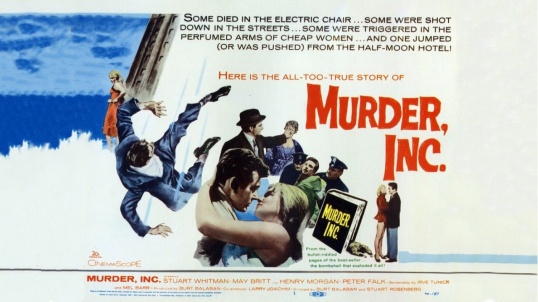
19 years after Reles plunged from that window and 16 years after Lepke was executed, their story was told in the 1960 film, Murder, Inc. Lepke was played by David J. Stewart while Reles was played by Peter Falk. The film is told in a documentary style, complete with a narrator who delivers his lines in a rat-a-tat-tat style. We follow Reles as he goes to work with Lepke and as he harasses a singer (Stuart Whitman) and his wife (May Britt), forcing them help him carry out a murder and then allowing them to live in a luxury apartment on the condition that they also let Lepke hide out there. (It’s probably not a surprise that a professional killer wouldn’t turn out to be the best houseguest.) Eventually, a crusading DA (Henry Morgan) and an honest cop (Simon Oakland) take it upon themselves to take down Murder, Inc.
To be honest, there’s not a whole lot that’s surprising about this film but it’s still an entertaining B-movie. The black-and-white cinematography and the on-location filming give the film an authentically gritty feel. The action moves quickly and there’s enough tough talk and violent deaths to keep most gangster aficionados happy. The best thing about the film is, without a doubt, Peter Falk’s portrayal of Abe Reles. Falk is magnetically evil in the role, playing Reles as a man without a soul. Even when Reles finally cooperates with the police, the film leaves no doubt that he’s only doing it to try to save himself. Falk plays Reles like a tough guy who secretly knows that his days are numbered but who has convinced himself that, as long as he keeps sneering and threatening people, the rest of the world will never figure out that he’s been doomed all the time. The more people he kills, the higher Reles moves up in the corporation and the more he tries to take on the look of a respectable member of society. But, no mater how hard he tries, Reles always remains just another violent thug. Falk was deservedly Oscar-nominated for his performance in this film, though he ultimately lost the award to Spartacus‘s Peter Ustinov.
Murder, Inc. may be a low-budget, B-movie but it’s also a classic of gangster cinema. It’s an offer you can’t refuse.
The 1955 film, Love Me or Leave Me, is a biopic about singer Ruth Etting.
Don’t know who Ruth Etting is? Well, don’t feel too bad. I didn’t know who she was either, at least not until I watched this movie. Judging from the trailer that I’ve embedded at the top of this review, she was apparently well-known enough in the 50s for a biopic about her to be a big deal. Having now watched Love Me or Leave Me and having done some independent research, I know that Ruth Etting was a popular singer in the 20 and 30s and that she was, for a while, married to a gangster named Marty Snyder (played, in the film, by James Cagney). I also know that, after her marriage to Snyder ended, she married a composer named Johnny Alderman (played by Cameron Mitchell).
I still couldn’t tell you just how closely Love Me or Leave Me actually sticks to the facts of Etting’s life. I imagine that there was a quite a bit of liberty taken with the truth, if just because the film was made in 1955 and it’s one of those big, glossy productions where all of the sets are ornate and all of the clothes are to die for and all of the dialogue has an edge that’s somehow both tough and sentimental. It feels less like real life and more like the way that you would imagine life to be.
The film begins in the roaring 20s, with Marty Snyder intervening when Ruth nearly gets fired for kicking an obnoxious admirer. For Marty, it’s obsession at first sight and, even after Ruth refuses to spend a weekend in Miami with him, Marty continues to help her out in her career. Marty uses his considerable clout (and the fact that everyone is scared to death of him and his temper) to get Ruth on the radio and then eventually a job with the Ziegfeld Follies. Despite the fact that Ruth is in love with Johnny and Johnny is in love with her, she ends up marrying Marty because she feels that she owes her entire career to him. Even after they get married, Marty continues to be obsessively jealous. It all eventually leads to a shooting, an arrest, and a final song from Doris Day.
It’s very much a film of the 50s. I imagine that audiences in 1955 thought it made perfect sense that Ruth would feel that she owed it to Marty to marry him despite the fact that she never really asked him to do anything for her. Seen today, though, Marty comes across as being a stalker and you really want someone to sit Ruth down and have a conversation with her about it and maybe explain concepts like gaslighting and restraining orders to her.
My advise, though, would be to not think too much about it because seriously, the film’s sets are beautiful, the musical numbers are entertainingly excessive, and Doris Day gives a really good performance. For those who only know her from the romantic comedies that she did with Rock Hudson, Love Me or Leave Me is a revelation. She’s likable and she’s tough and she sings as if the world depended upon it and watching her in Love Me Or Leave Me, you not only understand why Ruth Etting became a star but also why Doris Day did as well. James Cagney also gives a good performance as Marty Snyder, bringing all of his swaggering charisma to the role. As a fan of exploitation films, the most interesting thing about Love Me or Leave Me to me was getting to see Cameron Mitchell play a nice guy for a change. Mitchell does an okay job with the role, though Johnny is never as interesting a character as Marty. In the end, it’s an entertaining film, an ornate visual feast that works as long as you don’t think about it too much.
Love Me or Leave Me is an offer that you can’t refuse.
Remember how, a few weeks ago, I said I was going to spend the month of June reviewing 30 gangster movies? Well, I was doing pretty well but then I got distracted with some things and I ended up falling behind and now, it’s the last day of June and I’ve only reviewed 14 of the 30 films that I was planning on taking a look at. It’s frustrating but, as any movie blogger can tell you, it happens. Still, I’m not one to give up so easily! I promised to review 30 gangster movies and I’m going to keep my word. Or, at the very least, I’m going to try to…. like, definitely maybe try to….
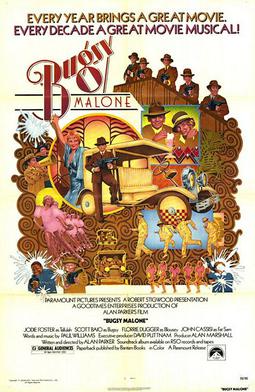
Anyway, let’s get back to it with 1976’s Bugsy Malone!
Bugsy Malone is an homage to the old gangster movies of the 1920s and 30s. It’s also a musical, featuring a lot of songs about wanting to make a lot of money, fall in love, and go away to Hollywood. On top of all that, it’s also a children’s film. Though they may be playing gangsters and going to war over who will control the rackets, the cast is entirely made up of children. Though the film does feature a lot of guns, none of the guns fire bullets. Instead, they shoot custard pies. Once you get cornered by a rival gangster and you get “splurged,” your career in the rackets is over. You’re humiliated. You’re nothing. You’re just another two-bit hood who couldn’t make it in the big leagues. You’re just….
Well, you get the idea.
Basically, the plot of the film is that Dandy Dan (Martin Lev) and Fat Sam (John Cassissi) are two rival gangsters who want to take over the Lower East Side. Fat Sam owns a speakeasy, which means that there’s always a lot of dancing and singing going on in the background. Bugsy Malone (Scott Baio) is a tough boxer who wants Fat Sam to give a job to Blousey Brown (Florrie Dugger), who dreams of going to Hollywood and becoming a big star. Tallulah (Jodie Foster) is Fat Sam’s gun moll but she used to go out with Bugsy and she still wants him back. Bugsy get caught up in the middle of the war between Dandy Dan and Fat Sam and it all eventually leads to a big pie fight and a lot of children covered in custard. “You give a little love,” the children sing as they realize that their lives don’t have to be defined by gang wars, “and it all comes back to you….”
So, I have to admit that I was absolutely dreading watching Bugsy Malone. I mean, singing children and custard pie guns? It all sound just unbearably cutesy. But, to my surprise, Bugsy Malone actually turned out to be a fun and clever little movie, one that was full of smart dialogue, catchy songs, excellent dancing, and wonderfully non-cutesy performances from its cast. Even though the film may be about a bunch of children dressing up as gangsters, all of the child actors take their characters seriously and director Alan Parker directs the film as if it were an actual gangster film as opposed to just a children’s musical. The end result is a film that’s cute but never cutesy. Believe me, there is a huge difference between the two.
To my shock, Bugsy Malone turned out to be an offer that you can’t refuse.
Along with their “official” videos, Saint Motel also frequently releases videos for alternate versions of their songs. This is for the acoustic version of Save Me, which can be found on The Original Motion Picture Soundtrack album.
This video description on YouTube offers up only one credit — which is “cinematography by Mario Contini.” I know that A/J Jackson is usually credited for directing the group’s videos (and, of course, he’s the band’s lead singer as well) but since I don’t have any official listing for a director, I’m just going to leave that credit blank.
Mario Contini, according the imdb, has worked on several music videos, including ones by Lady Gaga, Post Malone, and Muse. I like the look of this video. The band certainly has a talent for finding good locations in which to be filmed performing.
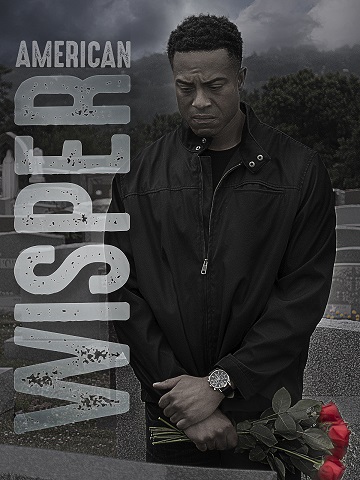
Josiah Wisper (Christian Barber) is a young and successful businessman. He owns a few bars in Harlem. He owns a few New York apartment building and, to his tenants, he’s a familiar site, walking up and down the hallways and making sure that everyone has paid their rent. He and his family have a nice, big house in New Jersey where, not insignificantly, they’re the only black family living in the neighborhood. Josiah is brash and confident and so sure of his future that he’s even hired a videographer to record every aspect of his life. Everywhere he goes, she follows and films.
She films him when he’s at his bar, kicking out a drug dealer. She films him while he’s collecting rent. She films when he’s talking to his parents. She films him when he’s flirting with his mistress. She even films him the night that he returns to New Jersey and discovers that his entire family has been shot to death. She continues to film as Wisper is interrogated by the police, shunned by his neighbors, and finally forced to investigate the murder on his own.
Usually, found footage films get on my last nerve and I have to admit that I was a little bit concerned when American Wisper began with Wisper talking to the camera. However, American Wisper actually makes fairly good use of the gimmick. There’s no shortage of people in the film who are willing to point out how strange it is that Wisper is allowing all of this to be filmed. In fact, once people start to suspect that Wisper committed the murder, many of them specifically claim that his obsession with being filmed proves that there’s something off about him. It’s held up as evidence that Wisper is a narcissist who only cares about himself. To the film’s credit, it doesn’t necessarily dismiss that possibility. As played by Christian Barber, Wisper does come across as a man who is happy to be living in a movie. When we first see him, he’s presiding over his bar and you can tell that he’s a man who loves being the center of attention. Even after the murders, Wisper still often seems to be playing up to the camera, leaving you wondering if maybe it’s possible that there is something that he’s not being honest about. It creates a genuine feel of suspense, which is more than can be said for most found footage films.
I liked American Wisper. It’s a low-budget film, made for under $500,000, but it makes good use of that low budget. When Wisper drives through New York or into New Jersey, he’s not visiting an elaborate Hollywood sound stage. Instead, he’s actually walking down those streets and driving down those roads and it brings an authenticity to the film that it might have lacked with a bigger budget or a more elaborate production. Some of the actors are a bit more convincing than others but Christian Barber does an excellent job in the lead role, making Wisper into a character with whom you sympathize despite his flaws. American Wisper is a murder mystery that’s about more than just a crime. It’s also an examination of race, upward mobility, and fame in America.

 Through the Shattered Lens