Welcome to Retro Television Reviews, a feature where we review some of our favorite and least favorite shows of the past! On Tuesdays, I will be reviewing the original Fantasy Island, which ran on ABC from 1977 to 1986. Almost entire show is currently streaming is on Youtube!
Smiles, everyone! Smiles!
Episode 3.16 “Rogues and Riches/Stark Terror”
(Dir by Cliff Bole, originally aired on January 19th, 1980)
Our latest weekend on Fantasy Island is both strange and entertaining!
Attorney Mark Hendicks (John Schuck) comes to the Island with a briefcase full of papers. He’s searching for his former law partner, Pete Gilbert (singer Robert Goulet). Years ago, Pete came to Fantasy Island with a simple fantasy. He wanted to be an 18th century British outlaw. However, Pete had so much fun in the past that he decided that he never wanted to leave. Mark needs to get Pete’s signature on some official forms so that Mark can sell some land that he and Pete bought before Pete’s fateful trip to the Island.
Mr. Roarke explains to Mark what’s going on with Pete and Mark is surprisingly accepting of Roarke’s explanation. Roarke drives Mark out to a bridge. He tells Mark that crossing the bridge will transport Mark to Pete’s fantasy. Mark crosses the bridge and immediately sees Pete being chased by a bunch of British soldiers. Pete is having a grand ol’ time in the 18th century but he’s more than willing to take some time out from plundering so that he can sign the papers so that will allow Mark to become a millionaire once he returns to the present. However, after a dinner scene that is basically lifted shot-for-shot from Tom Jones, Mark falls in love with Margaret Winston (Dolly Read), the wife of sword-wielding Judge Winston (Alan Hale, Jr). Mark is tempted to remain in the past but, in the end, he decides that his place is in the present. Fortunately, it turns out that Margaret was having a fantasy of her own and she and Mark leave the Island together.
While that silly but enjoyable fantasy plays out out, Amy Marson (Melissa Sue Anderson) searches for the solution to a mystery that was so traumatic that it caused her to lose her ability to speak. Amy’s mother (Elinor Donahue) died in front of her and Amy hopes to discover not only who killed her mother but also to recover her ability to speak. This leads to Amy visiting the lighthouse where she grew up and having a reunion with the kindly lighthouse keeper, Joshua Templar (Michael Constantine). Amy’s flashbacks lead her to the solution to the mystery of her mom’s death and also to Joshua’s secret son (David Drucker).
This storyline, much like last week’s battle against Elizabeth Bathory, was enjoyably creepy and it featured good performances from Anderson, Constantine, Donahue, and Drucker. In the best tradition of FantasyIsland, the storyline was both macabre and also rather life-affirming. Fantasy Island was always at its best when it revealed the hidden humanity at the heart of each fantasy. Amy learns the truth of her mother’s death and she regains her ability to speak. Tattoo tells her that she has a beautiful voice. Awwwwww!
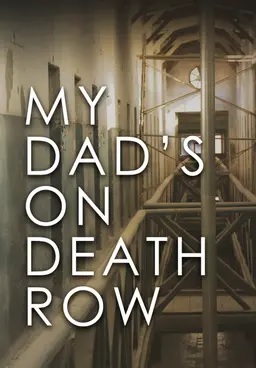
A British documentary from 2016, My Dad’s On Death Row tells the story of two men who sat on Texas’s death row.
John Battaglia was a handsome man with a charming smile who, despite having a violent criminal record, had established himself as a respected accountant who had friends who lived in Highland Park (the richest part of Dallas) and who lived in a hip apartment in Deep Ellum. In 1999, his wife filed for divorce and Battaglia was given probation after pleading guilty to a misdemeanor charge of spousal abuse. When he continued to call his ex-wife in violation of a restraining order, she threatened to inform his probation office. Battaglia reacted by taking his two youngest daughters to his apartment, calling his ex-wife, and then forcing her to listen as he murdered them. After killing his daughters, Battaglia went to a nearby tattoo parlor and got two roses tattooed on his bicep. The cops who saw the crime scene described it as the most horrific thing that they had ever seen. Battaglia was arrested and convicted of the crime. When Battaglia was sentenced to death, he turned to his ex-wife in the courtroom and told her to “Burn in Hell.”
Coy Wayne Westbrook murdered five people, including his ex-wife, at a party in Channelview, Texas. Westbrook said that, after his ex-wife and the other party guests made fun of him and his attempts to reconcile with her, Westbrook went out to his truck, grabbed a rifle, and opened fire when he returned. Despite Westbrook’s claim that he didn’t originally mean to kill anyone and the defense’s claim that Westbrook’s low IQ made his incapable of understanding his actions, a jury still sentenced him to death.
Both Coy Westbrook and John Battaglia are dead now, executed by the state of Texas. My Dad’s OnDeath Row documents their final days and features interviews with them, the surviving members of their families, and people who both support and oppose the death penalty. While this British-made documentary is critical of the death penalty, it never makes the mistake of idealizing or excusing either Coy Westbrook or John Battaglia. As someone who is personally opposed to the death penalty, nothing annoys me more than the counter-productive tendency of certain anti-capital punishment activists to insist that everyone on Death Row was either wrongly convicted or is a saint in disguise. This documentary leaves no doubt that both Westbrook and Battaglia were guilty of the crimes for which they were convicted. When John Battaglia smirks while he discusses abusing his wife and murdering his children, even the most liberal of viewers will want to reach through the screen and wring his neck.
The film focuses on two daughters. Westbrook’s daughter fought to save her father’s life. Battaglia’s surviving daughter supported his execution. Both of them carry the psychological scars of their father’s crimes. In its nonjudgmental way, the documentary examines what it’s like to be the child of a parent who has committed the worst crime imaginable. Even more than being about how people die in prison, it’s about how those left behind struggle to continue their lives. It’s a moving and thought-provoking documentary and it can currently be viewed on Tubi.
“Sex isn’t the only thing I care about. It’s just that I’ve always imagined myself falling in love with someone …. who’s alive. I know that may sound strange to you, but it’s just the way I was brought up.”
Sometimes, it just takes one line to transform a mere bad movie into a masterpiece of weirdness and that’s certainly what happens in 2003’s Julie and Jack when Jack Livingston (Justin Kunkle) attempts to explain why he’s having trouble with the idea of committing to Julie Romanov (Jenn Gotzon). Jack is a computer chip salesman who has been unlucky in love until he joins CupidMatchmaker.Com and meets Julie Romanov. He quickly falls in love with Julie, despite the fact that she refuses to tell him anything about her past and he never meets her in person. Instead, they spend their time walking around a virtual reality recreation of San Francisco.
Why is Julie so sensitive? Well, Julie is not exactly alive. When she was among the living, she was a brilliant computer programmer but, when she found out she was dying of a brain tumor, she managed to transfer her mind into the Internet. Her body may be dead but her mind and her personality live on, haunting dating websites. When Jack discovers the truth about his new girlfriend, he has to decide if he can be in love with someone with whom he can never have sex.
(It never seems to occur to either Jack or Julie that there also might be issues involved with someone having a relationship in which one person who is no longer among the living and will never age while her partner gets older and closer to his own death.)
It’s pretty dumb but it’s also so earnest and stupidly sincere that it’s kind of hard not to like it. Julie and Jack was the directorial debut of James Nguyen, who went on achieve a certain cinematic infamy with the Birdemic films. Just as the Birdemic films seemed to sincerely believe that they had something important to say about environmentalism, Julie and Jack has similar delusions of grandeur, with the main difference being that the message of Julie and Jack is a bit more heartfelt than Birdemic’s Al Gore-inspired preachiness.
The film has all of the things that we normally associate with James Nguyen’s work. The pointless driving scenes, the meandering travelogue shots of San Francisco, the scenes were everyone in a boardroom applauds, they’re all here with Nguyen’s other trademark obsessions. Because it’s not a Nguyen film without a reference to Hitchcock, Tippi Hedren has a cameo appearance as Julie’s mother and, of course, Nguyen includes a scene in which she talks about how much she loves birds. Do you think Hedren ever got tired of directors telling her to react to birds? I mean, she did make other films. Of course, other than Marnie and Roar, I can’t really think of any of them right now….
Anyway, Julie and Jack is silly and dumb and visually, it looks like a community college student film. At the same time, it’s so sincere and so cheerfully clueless about its inability to be the thought-provoking and mind-bending love story that it wants to be that I can’t help but like it a little. It’s a film that tries very, very hard and it’s difficult not to appreciate, on at least some level, the effort.
Welcome to Retro Television Reviews, a feature where we review some of our favorite and least favorite shows of the past! On Mondays, I will be reviewing Miami Vice, which ran on NBC from 1984 to 1989. The entire show is currently streaming on Tubi!
This week, Crockett and Tubbs drive into the abyss and discover what happens when you lose yourself in vice.
Episode 1.3 “Heart of Darkness”
(Dir by John Llewellyn Moxey, originally aired on September 28th, 1984)
The third episode of Miami Vice appears to be take place at least a month or two after the end of the pilot. Tubbs is not only now a member of the Miami Vice Squad but he and Crockett are now best friends. Gone is all the animosity and mistrust that characterized their initial relationship. Now, Crockett is willing to open up to Tubbs and Tubbs is willing to defend Crockett’s pet alligator, Elvis, when Sonny briefly flies into rage mode and threatens to throw away its favorite blanket.
(Sonny is upset because Elvis, who doesn’t like being left on the boat alone, ate one of Sonny’s records.)
Though Tubbs has been accepted by the Vice Squad, he’s still struggling to adjust to Miami, which is a bit more laid back than New York. Early on, he complains to Lt. Rodriguez about his apartment. Rodriguez just rolls his eyes. Sorry, Tubbs. Only one Miami cop gets to live with an alligator on a houseboat. Everyone else is stuck with a one-bedroom.
Crockett and Tubbs’s current assignment is to penetrate the world of Southern Florida porn kingpin, Walter Kovics (Paul Hecht). Kovics is involved with the Mafia and is suspected of having ordered several murders. When one of his actresses (played by Suzy Amis, making her television debut) is not only murdered but also turns out to be an underage runaway from Kansas, the case becomes personal. Crockett and Tubbs want to take down Kovics but the only way to get to Kovics is through his second-in-command, Artie Rollins. At first glance, Artie seems to be a typical coked up criminal but, upon further investigation, Crockett and Tubbs learn that Artie Rollins is actually Arthur Lawson, an FBI agent who has spent the last few years of his life working undercover. Now, no one is sure if Artie is still working undercover or if he’s truly gone over to the other side. Artie claims that he’s still working to bring down Kovics but when Kovics discovers that Crockett and Tubbs are undercover cops, Artie is the one who is ordered to shoot them. Which side is Artie on? Not even he seems to know for sure.
Artie is played by Ed O’Neill. The future star of Married With Children and Modern Family star was in his mid-thirties when he appeared in Miami Vice and this was one of his earliest television roles. O’Neill gives an unpredictable performance, one that is often frightening and sometimes even a bit poignant. As played by O’Neill, Arthur is a man who has truly lost himself and the character is compelling because Arthur himself doesn’t seem to know what he’s going to do from minute-to-minute. He may want to take down Kovics but he’s also spent so many years in Kovics’s world that he knows he won’t ever be able to adjust to anything else. In the end, Arthur does the right thing but he sacrifices his soul as he does it and his joy at gunning down Kovics is almost as disturbing as the look he had in his eyes when he was previously considering whether to execute Crockett and Tubbs. The show’s final moments find Crockett and Tubbs sitting in a cop bar. Crockett confesses that he saw a lot of himself in Arthur Lawson. Rodriguez approaches them and informs them that, while being debriefed at FBI headquarters, Arthur committed suicide.
This was an interesting episode. The plot was a bit conventional but it was elevated by Ed O’Neill’s performance as the unstable Arthur. (O’Neill kept the viewer guessing, along with Crockett and Tubbs, as to who Arthur really was.) And, of course, just when it seems like everyone’s gotten their happy ending, Rodriguez reminded us that happy endings are never guaranteed. Everything comes with a price. Indeed, that’s one of the major themes of Miami Vice. Arthur sacrificed his identity, his soul, and ultimately his life to see that justice was done but, in the end, someone will quickly replace Kovics and the business of vice will continue with little interruption. Arthur will be largely forgotten and only mentioned as a cautionary tale. Can anyone blame Sonny for wanting to spend all of his time on a boat with an alligator?
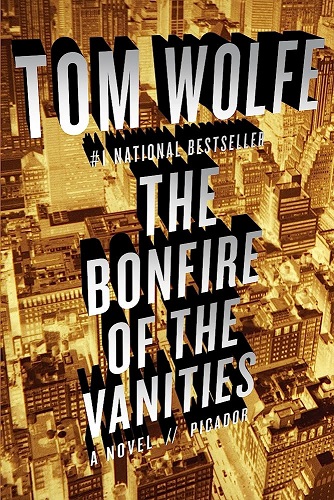
When it comes to The Bonfire of Vanities, after watching the movie and then reading the book about the making of the movie, you might as well order a copy of the original 1987 novel by Tom Wolfe and see where it all started.
At nearly 700 pages, The Bonfire of the Vanities is a big book about New York City in the mid-80s. It’s a book about economics, racism, municipal politics, high society, and what happens when one very privileged person loses everything that he felt defined him. As a writer and a satirist, Wolfe’s described the foibles and the mistakes of the book’s large cast of characters with a definite delight. The reader may end up feeling sorry for stockbroker Sherman McCoy after he is arrested and put on trial for the hit-and-run of a young black teenager but, at no point, does Sherman ever become a truly sympathetic character. As a character, Sherman never has the self-awareness necessary to truly confront his own mistakes and attitudes. Reading the original novel, one realizes just how miscast Tom Hanks was when he was cast in the lead role for the film adaptation. There are many ways to describe the aristocratic, arrogant, and ultimately hapless Sherman McCoy, but he is definitely not Tom Hanks.
Of course, Sherman is not the only character to lack self-awareness. There’s really not a shred of self-awareness to found amongst any of the characters. Both Sherman’s mistress and his wife are more concerned with how the trial is going to effect their social lives. District Attorney Abe Weiss sees the prosecution of McCoy as a way to further his own political career. Assistant District Attorney Jed Kramer finds himself obsessed with one the jurors. Sleazy British journalist Peter Fallow amplifies the more sordid aspects of the story and blithely turns Sherman McCoy into the epitome of everything that everyone hates about the wealthy, with the great irony being that Sherman and his social set have patterned their own social style after their idealized view of the British. The Mayor of New York obsesses over every little slight while a collection of detectives and attorneys do their job with blue collar efficiency and a cast of activists and grifters go out of their way to make headlines and to keep New York on the verge of exploding. In the end, there’s only one truly heroic character in the novel and that’s Judge Myron Kovitsky, a loud and profane New Yorker who rules his courtroom like a benign tyrant but who is the only character who truly cares about seeing justice done. In the end, the book suggests that the price of Kovitsky’s honorable stand will be the loss of his career.
(Kovitsky, the most vividly characterized of the many characters in the novel, was also one of the many characters to be changed for the film, becoming Judge Leonard White, the voice-of-God judge played by Morgan Freeman.)
In the end, the main character of the book really is New York City and Wolfe’s mix of love and disdain for the city comes through in every passage, from the detectives casually cursing around the station house to the waiters who efficiently handle the sudden death of a diner in restaurant to the politicians who hate and fear their own constituents. Reportedly, Wolfe said that the novel was about capturing what New York City was like in the 80s and it’s definitely a novel of that era. At the same time, when I read it in 2021, the story still felt relevant. If anything, it was easy for me to picture Sherman McCoy as one of those people who brags about how they would have voted for Obama a third time while, at the same time, protesting the idea of any sort of affordable housing units being built in his neighborhood. It was easy to imagine Fox and MSNBC and CNN all covering every moment of Sherman McCoy’s trial. It was easy to imagine Peter Fallow showing up on TMZ and it was just as easy to imagine all of Fallow’s articles being breathlessly shared on social media. Reading the novel, it was easy to see that the bonfire is still burning.
I was tempted to start this review by saying that, if you’ve seen The Bonfire of The Vanities and you wanted to know how such a film filled with so much talent could have been such a misfire, you need to read Julie Salomon’s The Devil’s Candy. First published in 1992, the book follows the making of The Bonfire of Vanities, from casting to pre-production to filming to post-production to box office failure. The Devil’s Candy is considered to be a classic of behind-the-scenes Hollywood reporting.
But you know what? If you watched The Bonfire of the Vanities recently, you probably did so because you read Salomon’s book. This is a good example where the making-of book has actually had a longer pop cultural shelf life than the movie itself. As a movie, The Bonfire of the Vanities is one of those things that you start to forget even while you’re watching it. But I can guarantee that anyone who has read TheDevil’s Candy can remember the moment when Bruce Willis felt that a scene was moving too slowly and he proceeded to usurp Brian De Palma’s role as director.
If you’ve read the book, you undoubtedly remembering everyone feeling that Uma Thurman was the perfect choice for the role of Maria, with the exception of Tom Hanks who felt their chemistry at the audition was off. For that matter, you probably also remember that Hanks read with Lena Olin and Lolita Davidovich before Melanie Griffith was given the role.
If you’ve read the book, you remember how frustrated Brian De Palma got with having to try to keep both the studios and the neighborhood activists happy. You remember costume designer Ann Roth’s frustration with extras who didn’t show up properly dressed. You remember the streetwise New York Judge Burton Roberts auditioning for the role of a character that was based on him, just for the character to then be so massively rewritten that the role ended up going to Morgan Freeman. You remember Geraldo Rivera showing up to shoot a cameo and acting like a diva. You remember the studio execs showing up on set and getting in the way. You remember the struggle to get the perfect shot of an airplane landing. You remember poor Beth Broderick, dating De Palma and trying to retain some semblance of dignity while doing take-after-take of the film’s most gratuitous scene. You remember Steven Spielberg showing up and worrying that De Palma’s film is too sharp in its satire….
(Of course, in the end, the main problem with the film version of The Bonfire of the Vanities is that the satire isn’t sharp at all.)
Indeed, the book is full of famous people, few of whom come across particularly well. Bruce Willis, in particular, is portrayed as being full of himself and Salomon’s comments about him do occasionally feel as if they’ve crossed the line from reporting to some sort of personal animosity. (That said, it should be noted that Salomon does point out that a lot of Willis’s attitude was the result of suddenly becoming a star and no longer knowing who he could trust.) Tom Hanks comes across as being genuinely nice but also genuinely in over his head. The book’s most tragic figure is Brian De Palma, the natural-born rebel who found himself suddenly working for a studio that feared even the least bit of subversion. De Palma starts the book needing a hit and, regardless of the many mistakes that De Palma makes while directing The Bonfire of the Vanities, it’s hard not to feel bad that the book ended with De Palma not getting that hit. If De Palma other flops were at least films that stayed true to his vision, De Palma’s most infamous flop was the one in which he allowed the studio too much control.
Reading the book, one gets the feeling that everyone understood that they were making a fatally compromised film from the beginning. If you’ve ever wondered how a bad film can be made by talented people, this is the book to read.
In 2021, I finally saw the infamous film, The Bonfire of the Vanities.
I saw it when it premiered on TCM. Now, I have to say that there were quite a few TCM fans who were not happy about The Bonfire of the Vanities showing up on TCM, feeling that the film had no place on a station that was supposed to be devoted to classic films. While it’s true that TCM has shown “bad” films before, they were usually films that, at the very least, had a cult reputation. And it is also true that TCM has frequently shown films that originally failed with audiences or critics or both. However, those films had almost all been subsequently rediscovered by new audiences and often reevaluated by new critics. The Bonfire of the Vanities is not a cult film. It’s not a film about which one can claim that it’s “so bad that it’s good.” As for the film being reevaluated, I’ll just say that there is no one more willing than me to embrace a film that was rejected by mainstream critics. But, as I watched The Bonfire of the Vanities, I saw that everything negative that I had previously read about the film was true.
Released in 1990 and based on a novel by Tom Wolfe, Bonfire of the Vanities stars Tom Hanks as Sherman McCoy, a superficial Wall Street trader who has the perfect penthouse and a painfully thin, status-obsessed wife (Kim Cattrall). Sherman also has a greedy mistress named Maria (Melanie Griffith). It’s while driving with Maria that Sherman takes a wrong turn and ends up in the South Bronx. When Sherman gets out of the car to move a tire that’s in the middle of the street, two black teenagers approach him. Maria panics and, after Sherman jumps back in the car, she runs over one of the teens. Maria talks Sherman into not calling the police. The police, however, figure out that Sherman’s car was the one who ran over the teen. Sherman is arrested and finds himself being prosecuted by a power-hungry district attorney (F. Murray Abraham). The trial becomes the center of all of New York City’s racial and economic strife, with Sherman becoming “the great white defendant,” upon whom blame for all of New York’s problems can be placed. Bruce Willis plays an alcoholic journalist who was British in the novel. Morgan Freeman plays the judge, who was Jewish in the novel. As well, in the novel, the judge was very much a New York character, profanely keeping order in the court and spitting at a criminal who spit at him first. In the movie, the judge delivers a speech ordering everyone to “be decent to each other” like their mothers taught them to be.
Having read Wolfe’s very novel before watching the film, I knew that there was no way that the adaptation would be able to remain a 100% faithful to Wolfe’s lacerating satire. Because the main character of Wolfe’s book was New York City, he was free to make almost all of the human characters as unlikable as possible. In the book, Peter Fallow is a perpetually soused opportunist who doesn’t worry about who he hurts with his inflammatory articles. Sherman McCoy is a haughty and out-of-touch WASP who never loses his elitist attitude. In the film, Bruce Willis smirks in his wiseguy manner and mocks the other reporters for being so eager to destroy Sherman. Hanks, meanwhile, attempts to play Sherman as an everyman who just happens to live in a luxury penthouse and spend his days on Wall Street. Hanks is so miscast and so clueless as how to play a character like this that Sherman actually comes across as if he’s suffering from some sort of brain damage. He feels less like a stockbroker and more like Forrest Gump without the Southern accent. There’s a scene, written specifically for the film, in which Fallow and Sherman ride the subway together and it literally feels like a parody of one of those sentimental buddy films where a cynic ends up having to take a road trip with someone who has been left innocent and naïve as result of spending the first half of their life locked in basement or a bomb shelter. It’s one thing to present Sherman as being wealthy and uncomfortable among those who are poor. It’s another thing to leave us wondering how he’s ever been able to successfully cross a street in New York City without getting run over by an angry cab driver.
Because the film can’t duplicate Wolfe’s unique prose, it instead resorts to mixing cartoonish comedy and overwrought melodrama. It doesn’t add up too much. At one point, Sherman ends a dinner party by firing a rifle in his apartment but, after it happens, the incident is never mentioned again. I mean, surely someone else in the apartment would have called the cops about someone firing a rifle in the building. Someone in the press would undoubtedly want to write a story about Sherman McCoy, the center of the city’s trial of the century, firing a rifle in his own apartment. If the novel ended with Sherman resigned to the fact that his legal problems are never going to end, the film ends with Sherman getting revenge on everyone who has persecuted him and he does so with a smirk that does not at all feel earned. After two hours of being an idiot, Sherman suddenly outthinks everyone else. Why? Because the film needed the happy ending that the book refused to offer up.
Of course, the film’s biggest sin is that it’s just boring. It’s a dull film, full of good actors who don’t really seem to care about the dialogue that they are reciting. Director Brian De Palma tries to give the film a certain visual flair, resorting to his usual collection of odd camera angles and split screens, none of which feel at all necessary to the story. In the end, De Palma is not at all the right director for the material. Perhaps Sidney Lumet could have done something with it, though he would have still had to deal with the less than impressive script. De Palma’s over-the-top, set piece-obsessed sensibilities just add to the film’s cartoonish feel.
The film flopped at the box office. De Palma’s career never recovered. Tom Hanks’s career as a leading man was momentarily derailed. Bruce Willis would have to wait a few more years to establish himself as a serious actor. Even the normally magnanimous Morgan Freeman has openly talked about how much he hated being involved with The Bonfire of the Vanities. That said, the film lives on because De Palma allowed journalist Julie Salomon to hang out on the set and the book she wrote about the production, The Devil’s Candy, is a classic of Hollywood non-fiction. (TCM adapted the book into a podcast, which is how The Bonfire of the Vanities came to be featured on the station.) Thanks to Salomon’s book, The Bonfire of the Vanities has gone to become the epitome of a certain type of flop, the literary adaptation that is fatally compromised by executives who don’t read.
Today, the Shattered Lens wishes a happy 79th birthday to actor and producer Michael Douglas!
For today’s scene that I love, we have a scene from Oliver Stone’s 1987 film, Wall Street. In this scene, Michael Douglas plays Gordon Gekko. Gekko is supposed to be the film’s villain but he’s actually a lot more compelling and, at times, sympathetic than the film’s heroes. He’s not a judgmental jerk like the union leader played by Martin Sheen. Nor is he a snitch like his protegee, played by Charlie Sheen. Instead, Gordon Gekko is honest about who he is.
This is the scene that won Michael Douglas an Oscar. Watching him in this scene, it’s easy to see why Douglas’s performance supposedly inspired a lot of people to get a job working on Wall Street. Douglas is so charismatic in this scene that he makes this movie, directed by a future supporter of Bernie Sanders, into one of the best advertisements for capitalism ever filmed.
Welcome to Retro Television Reviews, a feature where we review some of our favorite and least favorite shows of the past! On Sundays, I will be reviewing the made-for-television movies that used to be a primetime mainstay. Today’s film is 1986’s The George McKenna Story! It can be viewed on Netflix, under the title Hard Lessons!
George Washington High School is a school that has defeated many well-meaning principals. The hallways are full of drugs and gang members. A good deal of the student body never shows up for class. Fights are frequent. The police are a common sight. The majority of the teachers are men like Ben Proctor (Richard Masur), burned-out and content to hide in the teacher’s lounge.
New Orleans-raised George McKenna (Denzel Washington) is the latest principal and, from the minute that he shows up at the school, he seems a bit more confident than the other principals that the school has had. He barely flinches when a raw egg hits his suit. When he hears a fight occurring, he doesn’t hesitate to head down the hall to investigate. McKenna is determined to make George Washington High into a worthwhile institution and that means inspiring both the students and the teachers.
When it comes to films about dedicated educators trying to reform a troubled school, most films tend to take one of two approaches. One approach, the well-intentioned but not always realistic liberal approach, features the teacher or the principal who demands respect but who also treats the good students and teachers with equal respect and who turns around the school through the power of benevolence. The other approach is the one where the principal or teacher grows frustrated and turns into an armed vigilante who forces the students to shut up and learn. Think of The Principal or The Substitute or Class of 1984. The first approach is the one that most teachers claim that they try to follow but I imagine that, for most of them, there’s an element in wish-fulfillment to be found in watching the second approach. In the real world, of course, neither approach is as automatically successful as it is in the movies.
The George McKenna Story was made for television and it’s based on a true story so, not surprisingly, it follows the first approach. Denzel Washington plays McKenna as someone who could probably handle himself in a fight if he ever got into one but, for the most part, the film portrays McKenna as succeeding by treating his students with more empathy and respect that they’ve gotten from anyone else in their lives. Though cranky old Ben Proctor thinks that McKenna’s methods are foolish and that he’s asking the teachers to do too much, McKenna starts to turn the school around. One student, whose father was threatening to make him drop out, ends up getting nearly straight A’s and reciting Shakespeare. Unfortunately, not everyone can be rescued. One student is arrested for murder and taken away by the cops but McKenna is still willing to be there for that student. McKenna doesn’t give up on his students and, unlike that music teacher in The Class of 1984, he doesn’t allow them to fall through a skylight either.
The George McKenna Story is a predictable film. It’s easy to guess which student will be saved by McKenna’s approach and which student will end up getting stabbed in a gang fight and which student will end up in prison. That said, the film definitely benefits from Denzel Washington in the lead role. Washington exudes confidence from the minute that he appears on screen and you’re left with little doubt that if anyone could reform a school simply through good intentions, it would definitely be Denzel Washington.
To be honest, I watched so little this week that I nearly didn’t even bother with a week in television post. But what I can say? I’m a completist and, even though I spent most of this week focused on getting things ready for our annual October Horrorthon, I did watch a few things and I figured that I might as well share a few thoughts with you all!
I’m looking forward to next week. Both Survivor and Hell’s Kitchen are coming back!
Big Brother (24/7, CBS and Paramount Plus)
I wrote about Big Brother here! I have to admit that I’ve reached the point that I reach every season where I kind of hope this stupid show is canceled and I never have to watch or write about it again. Seriously, this has been a stupid show from the start, each season is worse than the last, and I just want my freedom! However, I do like my fellow Big Brother fans. Interacting with them is the only rewarding thing that I get from this show.
Degrassi: The Next Generation (Tubi)
I watched The Time Stands Still two-parter on Monday afternoon. Drake got shot in the back by Rick Murray and Joey struggled to find someone to buy his house. Joey never should have dumped Syd.
The Hitchhiker (YouTube)
I checked out a few more episodes of this series throughout the week, selecting which ones that I want to highlight in October.
Jennifer Slept Here (YouTube)
On Tuesday night, I watched the pilot of this old 80s sitcom about a family that moves into a house that is already occupied by a ghost. Look for my review in October!
Nightmare Café (YouTube)
On Saturday, I watched the pilot of this 1992 horror anthology series, which ran for 6 episodes. The show was produced by Wes Craven and Robert Englund was the show’s host. As you can probably guess, he was totally charming. I’ll be posting a review of this show in October.
South Central (YouTube)
I wrote about South Central here! Andre got a gun and Nicole decided that she no longer wanted anything to do with him. To be honest, I’m on Nicole’s side.
This week’s episode dealt with Prime Minister Hacker attempting to use one junior member of his cabinet’s radical anti-smoking campaign as a way to trick the Treasury into supporting Hacker’s planned tax cuts. Sir Humphrey, of course, was present to explain that the Treasury doesn’t budget for programs but instead, gets as much money as it can and then comes up with programs to justify the taxation. This episode was not quite as laugh-out-loud funny as the previous two episodes but, as always, I enjoyed the show’s portrayal of the excesses of the bureaucratic state. I’m in favor of any show that makes fun of taxation.







 Through the Shattered Lens