I’ve been watching the show for a while now and that opening theme music really is pretty good.
Welcome to Retro Television Reviews, a feature where we review some of our favorite and least favorite shows of the past! On Fridays, I will be reviewing St. Elsewhere, a medical show which ran on NBC from 1982 to 1988. The show can be found on Hulu and, for purchase, on Prime!
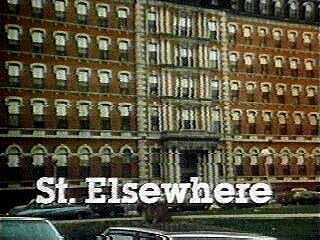
It’s another day at the hospital.
Episode 1.14 “Remission”
(Dir by Mark Tinker, originally aired on February 22nd, 1983)
A young Michael Madsen pops up in this episode, playing a hoodlum named Mike O’Connor who brings his severely beaten friend to the hospital. This was Madsen’s first role on television and, in his very first scene and while delivering his very first televised monologue, he drops the N-word as he accuses a group of black men of beating up his friend. Dr. Morrison is worried about whether or not Madsen’s friend is going to lose a kidney. Meanwhile, race relations in Boston are not doing well. What else is new?
(I remember, after the shooting of Michael Brown in Ferguson, there was a commentator who thought he was being clever when he said, “I don’t understand why blacks stay in the South when they could just move to Boston.” The response to his comments served as a reminder that Boston’s history of racism makes some Southern cities seem almost progressive by comparison.)
It’s interesting that Michael Madsen is the second well-known actor to appear on St. Elsewhere as a gang member. Just a few episodes ago, Howie Mandel was chasing Ray Liotta out of the hospital. This particular episode ended with a fight breaking out in the ER between a white gang and a black gang. I assume this will be continued next week so I guess we still have time to see Howie Mandel pull a gun on Michael Madsen. Seriously, it better happen. I’m plotting the upcoming week around it.
Speaking of Dr. Fiscus, he got evicted from his apartment. He was shocked, even though he hadn’t paid his rent in forever. No one wants Fiscus to stay with them but, after Fiscus saved Dr. Ehrlich from getting beaten up in the ER (and no, this was not a part of the gang fight, instead it was a different fight — goldang, Boston’s dangerous! And yes, I gave up cursing for Lent), Ehrlich agrees to let Fiscus stay with him until he gets a new place. I imagine Ehrlich will come to regret that, especially after Fiscus showed up with Dr. Kochar and a homeless guy who had earlier helped them steer a truck out of a traffic jam. What? Don’t ask, it didn’t make much sense on the show either.
Dr. Cavenero has been nominated for a prestigious fellowship by Dr. Auschlander but she’s not sure if she should accept it because the fellowship would be for research and she’s not sure that’s what she wants to focus on. Auschlander has bigger issues to deal with, as he ends up collapsing in the hospital hallway, a result of his liver cancer. The irony that Auschlander, a liver specialist, is dying of liver cancer is not lost on Auschlander and Norman Lloyd did a wonderful job in this episode, portraying not only Auschlander’s frustration but also his gentle humor.
Also, a woman was walking around the hospital and flashing people. She said it was because she wanted to show off that, even in middle age, she still had a good body. That makes sense to me. Played by Janis Page, she was somehow who was fine for a one episode storyline but I’m going to scream if this becomes a multi-episode thing, like it did with Ralph the Birdman.
This was a good episode, even if I get the feeling the whole gang thing is going to be cringey in the way that most 80s television shows tended to be whenever they tried to take on race relations. Norman Lloyd’s heartfelt performance carried the hour. I’m hoping the best for Dr. Auschlander. He’s a character that I would hate to lose.
Consider this to be proof that you don’t have to spend a lot to create an effective music video.
Enjoy!
Welcome to Late Night Retro Television Reviews, a feature where we review some of our favorite and least favorite shows of the past! On Thursdays, I will be reviewing Highway to Heaven, which aired on NBC from 1984 to 1989. The entire show is currently streaming on Tubi and several other services!
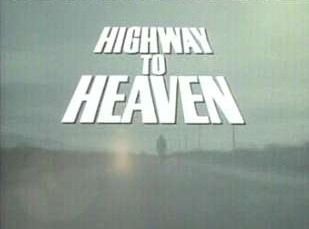
This week, Dick Van Dyke has a puppet show.
Episode 3.15 “Wally”
(Dir by Michael Landon, originally aired on January 14th, 1987)
Jonathan and Mark’s latest assignment is Wally (Dick Van Dyke), a lovable old man who lives in a box in an alley, puts on a streetside puppet show, and goes out of his way to show kindness to everyone, from a dying boy to a woman who, like Wally, is an alcoholic trying to stay sober to the blind men who line the street and ask for help from people walking by. Wally is destined to die, at which point he’ll become an angel. The show suggests that Wally already is angel, having devoted his life to helping other.
Let’s see …. Dick Van Dyke as a saintly, homeless, recovering alcoholic who puts on a puppet show where the puppets discuss the difficulty of being poor in America. Look, you all know how I usually feel about this stuff. I usually take real issue with any film or television show that I find to be overly manipulative or heavy-handed. I’ve also mentioned more than a few times that I think a lot of films and television shows tend to idealize homelessness, an instinct born from good intentions but one that often ignores the very real reality and which is often counter-productive. Too often, being homeless is treated in such a sentimental manner that it actually becomes a bit insulting. Maybe, someday, someone should ask the people who live at the bus stop across the street from the Frank Cowley Courthouse how they feel about things. Speaking as someone who once got called all sorts of names — and yes, one of them started with a C — because she refused an offer of a drink from a bottle in a brown paper bag while she waited for the bus to take her back to the DART train station after a day of jury duty, I could tell you a few things. (Another person who could tell you a few things is a friend of mine in Florida who got evicted from his apartment and who spent a month alternating between living on the street and in a shelter. He told me recently that the main thing he learned from the experience is that no one helps anyone.) When you add that Wally was being played by Dick Van Dyke, a good actor but one who can go a little overboard when cast in a serious role, you can maybe understand what I was expecting from this episode.
And, to a certain extent, I was right. This is Highway to Heaven. It’s not subtle show and this was not a subtle episode. This was an episode where everyone was so charmed by Dick Van Dyke and his puppets that they would happily let him into their homes to perform for sick children but no one was willing to help him get off the streets. This was also an episode where Wally revealed that the money he did make all went to providing a home for someone else. This is an episode where Wally’s kindness literally heals a dying child. This episode was sentimental, heavy-handed, and a little preachy but it worked. The show is just so earnest and Dick Van Dyke’s performance was just so heartfelt that it cast a spell that pretty much negated all cynicism for an hour. (Despite my fears, Van Dyke did not go overboard as Wally, giving a performance that felt genuine and heartfelt.) This was an episode that perhaps should not have worked but it did. It worked wonderfully.
Hey, it’s Hal Needham’s birthday. What other song could we go with?
East bound and down, loaded up and truckin’
A-we gonna do what they say can’t be done
We’ve got a long way to go, and a short time to get there
I’m east bound, just watch ol’ “Bandit” run
Keep your foot hard on the pedal
Son, never mind them brakes
Let it all hang out ’cause we got a run to make
The boys are thirsty in Atlanta
And there’s beer in Texarkana
And we’ll bring it back no matter what it takes
East bound and down, loaded up and truckin’
A-we gonna do what they say can’t be done
We’ve got a long way to go, and a short time to get there
I’m east bound, just watch ol’ “Bandit” run
East bound and down, loaded up and truckin’
A-we gonna do what they say can’t be done
We’ve got a long way to go, and a short time to get there
I’m east bound, just watch ol’ “Bandit” run
Ol’ Smokey’s got them ears on
He’s hot on your trail
And he aint gonna rest ’til you’re in jail
So you got to dodge ‘im and you got to duck ‘im
You got to keep that diesel truckin’
Just put that hammer down and give it hell
East bound and down, loaded up and truckin’
A-we gonna do what they say can’t be done
We’ve got a long way to go, and a short time to get there
I’m east bound, just watch ol’ “Bandit” run
Writer(s): Jerry Hubbard Reed, Dick Feller
Welcome to Retro Television Reviews, a feature where we review some of our favorite and least favorite shows of the past! On Thursdays, I will be reviewing Malibu CA, which aired in Syndication in 1998 and 1999. The entire show is currently streaming on YouTube!

Yes, this is from the first season. I don’t care. I refuse to waste my time looking for a second season advertisement.
Bye bye, Stads!
Episode 2.4 “Chasing Stads”
(dir by Gary Shimokawa, originally aired on October 30th, 1999)
After getting fired from her lifeguarding job after she follows Jason’s advice and complains about not getting promotion, Stads proceeds to accidentally burn down her apartment building when she used a faulty hair dryer. We hear a news report that says it’s the worst “apartment building” fire in Malibu history so I’m going to guess that people died.
Stads should be going to jail on a manslaughter charge. Instead, she hops on a plane and goes to Europe for a year. This is the same Stads who, earlier in the show, was saying that she was flat broke. Stads is gone and Jason is sad so he hops on a plane and joins here in Switzerland, where he gets a job working with her in a hotel. I guess Jason’s gone now. Yay!
Oh wait. It turns out that Jason is dreaming of pursuing his musical career and to do that, he needs to return to Malibu because God knows it’s not like there are record companies in Europe. Jason promises he’ll wait for Stads. “I’m going to miss you.” Stads says. Awww!
I, on the other hand, am not going to miss Stads because the show transformed her from being a fairly interesting character — a socially awkward lifeguard who was unlucky in love but totally capable of saving lives — into a fairly annoying killjoy whose main purpose was to roll her eyes and get mad at every single line of dialogue. In the end, Stads represented the fact that the writers of this show had no idea how to write female characters. In the world of Malibu CA, you could be a ditz or a …. well, I gave up cursing for Lent but you know what I’m saying.
Myself, I’m just trying to figure out the logistics of Jason suddenly showing up in Switzerland. How did he pay for the trip? How did he get over there so quickly? Did he give his two-weeks at the restaurant? Did he tell his dad or his brother? Were they cool with him just moving to another country? This episode certainly establishes that no one’s in high school any more so is their father okay with his two sons skipping college despite not really having any of the skills necessary to survive in the real world? Seriously, this episode raised too many questions.
Meanwhile Lisa Jones tried to break Murray of his soap opera addiction. It was pretty dumb. Marquita Terry may have improved an actress since Malibu CA, I don’t know. And let’s be honest …. it’s not like the show was really giving her great material work with. That said, we are four episodes into the second season and her performance on the show is making Trevor Merszei and Jason Hayes look like Oscar winners.
Oy vey, this show.
Today is Alamo Day. It was 189 years ago, today, that 600 men gave their lives in the name of Texas.
This music video is about the Alamo so it seems appropriate for today!
Enjoy!
Welcome to Late Night Retro Television Reviews, a feature where we review some of our favorite and least favorite shows of the past! On Wednesdays, I will be reviewing Monsters, which aired in syndication from 1988 to 1991. The entire series is streaming on YouTube.

This week, Monsters heads down south. No complaints from me. I like it when things head on down.
Episode 3.11 “Sin-Sop”
(Dir by P.J. Pesce, originally aired on December 9th, 1990)
In the deep South, a young man named Brother Roy (Christopher Shaw) claims that he can literally extract the sin from people, turning it into a black sludge that can then be disposed of. Brother Roy has the corpse of the most evil man in the world in his house. Touching the corpse (ew!) allows for the sin to be extracted. (This is why I prefer going to confession.)
Laura Daniel (Christine Dunford) is a reporter who is hopeful that she’ll be able to expose Brother Roy as being a fraud. Larch Lazaar (Richard Borg) is a sociopathic murderer who shows up at Roy’s place shortly after Laura. Laura and Lazaar are both skeptics but they’re also both about to discover the reality of sin-sop.
This was an atmospheric episode with an intriguing premise. I’m from the South and I’ve heard the stories of the so-called sin eaters, people who would go to the homes of the recently deceased and “eat” all of the dead person’s sins, usually by eating food that had been placed near the corpse. The deceased’s family would get the peace of mind of knowing their loved one was now without sin and the sin-eater usually got to eat a fairly large meal. (That said, I don’t know if I’d want to eat food that had been sitting next to or, in some cases, on a decaying corpse.) This episode makes good use of the sin eater legend and it features appropriately theatrical performances from Richard Borg and Christopher Shaw. This was an entertaining piece of Southern Gothic.
Welcome to Retro Television Reviews, a feature where we review some of our favorite and least favorite shows of the past! On Wednesdays, I will be reviewing the original Love Boat, which aired on ABC from 1977 to 1986! The series can be streamed on Paramount Plus!

Come aboard, we’re expecting you!
Episode 5.19 “New York, A.C./Live It Up/All’s Fair in Love and War”
(Dir by Richard Kinon, originally aired on February 20th, 1982)
Poor Captain Stubing! He’s just returned from burying an old friend named George and now, he’s thinking about his own mortality. When he starts to feel unwell, Stubing goes to Dr. Bricker who tells Stubing that his problems are not physical. The problem is that …. STUBING’S DEPRESSED! Stubing decides to live each day to the fullest and good for him. This was a simple storyline but I liked it. I always appreciate the episodes that allow Stubing to be vulnerable without turning him into a hard-luck doofus. In this episode, Stubing was dealing with something that almost everyone has either had to or will deal with at some point in their life. It was also nice to see Doc Bricker giving good advice for once. Bernie Kopell is so likable in the role that I always appreciate it when he gets to play Doc as being something other than a lech.
As for the other two stories …. agck!
Three New York friends (played by former teen idols Eddie Byrnes, Fabian, and Bobby Sherman) have boarded the cruise. They are members of the Alimony Club. They’re all divorced and they’ve all sworn that they’ll keep each other from marrying again. They are a club that believes all marriages are doomed to failure. But when Sherman’s ex-wife, Annette Funicello, boards the boat, it looks like the Alimony Club might lose a member. And listen, I know that guys have their little rituals and their little clubs and that’s okay. But the Alimony Club just feels weird. It should be called the Misery Club because they seem to be more interested in keeping Bobby Sherman depressed than anything else. I always find it odd when previously divorced couples get back together on The Love Boat. I mean, did they forget why they got divorced in the first place?
Meanwhile, Jill St. John and Ron Ely have been having an affair for four years. Every 12 months, they get together for a romantic getaway. Ron says he can’t marry Jill because he’s married and has children back home. (*cough* jerk *cough*) Jill, who really could do better, insists that Ron leave his wife. She even has her brother board the cruise and flirt with her (*cough* Oh my Gosh, creepy! *cough*) to make Ron jealous. Ron gets jealous, alright. He beats up Jill’s brother and then reveals that he was lying about having a wife. He’s not married …. he’s scared of commitment! And now he’s ready to get married! Uhmmm …. like seriously, WHAT THE HECK IS THAT!? (I gave up cursing for Lent.) Jill — you were a BOND GIRL! You were TIFFANY FREAKING CASE! YOU CAN DO BETTER!
Oy vey, this episode.
It’s Ash Wednesday!
I remember, when I was like 14, I got up early in the morning and I woke up my sisters by shouting, “It’s Ash Wednesday, bitches!” My mom was not amused. That said, Ash Wednesday is one of my favorite days. I just love the ritual of it all. Of course, I also usually wash my forehead fairly early in the day. That’s allowed, by the way.
Now, before anyone leaves any snarky comments, I fully understand that David Bowie’s Ashes to Ashes is not actually about Ash Wednesday nor are the ashes mentioned in the song literal ashes. I understand that but hey, this is a good song.
Do you remember a guy that’s been
In such an early song?
I’ve heard a rumor from Ground Control
Oh no, don’t say it’s true
They got a message from the Action Man
“I’m happy, hope you’re happy too
I’ve loved all I’ve needed, love
Sordid details following”
The shrieking of nothing is killing, just
Pictures of Jap girls in synthesis and I
Ain’t got no money and I ain’t got no hair
But I’m hoping to kick but the planet it’s glowing
Ashes to ashes, funk to funky
We know Major Tom’s a junkie
Strung out in heaven’s high
Hitting an all-time low
Time and again I tell myself
I’ll stay clean tonight
But the little green wheels are following me
Oh no, not again
I’m stuck with a valuable friend
“I’m happy, hope you’re happy too”
One flash of light but no smoking pistol
I never done good things (I never done good things)
I never done bad things (I never done bad things)
I never did anything out of the blue, woh-o-oh
Want an axe to break the ice
Wanna come down right now
Ashes to ashes, funk to funky
We know Major Tom’s a junkie
Strung out in heaven’s high
Hitting an all-time low
My mother said, to get things done
You’d better not mess with Major Tom
My mother said, to get things done
You’d better not mess with Major Tom
My mother said, to get things done
You’d better not mess with Major Tom
My mother said, to get things done
You’d better not mess with Major Tom
Songwriter: David Bowie

