Retro Television Review: Miami Vice 4.12 “The Cows of October”


Welcome to Retro Television Reviews, a feature where we review some of our favorite and least favorite shows of the past!  On Mondays, I will be reviewing Miami Vice, which ran on NBC from 1984 to 1989.  The entire show can be purchased on Prime!

This week …. I don’t even know how to describe it.

Episode 4.12 “The Cows Of October”

(Dir by Vince Gillum, originally aired on February 5th, 1988)

A cannister of bull seamen has been stolen from a Miami lab and the feds (represented by Harry Shearer) want it back before it falls into the hands of the Cubans.  Switek assists.  Izzy shows up to broker the deal.  Gerrit Graham plays a shady person who we are told is from Texas.  (His accent is more Arizona.)  Philip Michael Thomas wears a cowboy hat.  Don Johnson is largely absent until the final scene.  One gets the feeling that Johnson hated every minute of this episode while Thomas just seemed to be having fun.

This episode was, without a doubt, the stupidest episode of Miami Vice ever filmed.  And listen, I will admit that I haven’t seen every episode.  I’ve still got a season and a half to go.  There seems to be a general online consensus that the final two seasons of Miami Vice were not good at all.  I’m sure I have many dumb episodes ahead of me.  But I cannot — as much as I try — imagine any episode that could be as a dumb as the Vice Squad abandoning the war on drugs so that they could keep the Cubans from getting their hands on a cannister of bull semen.

Miami Vice has always been as its best when its been surrealistic, cynical, and gritty.  I would argue that Miami Vice really does not need to do comedic episodes.  For the first three seasons, nearly every episode ended with an innocent person either dead or forever embittered.  At its best, Miami Vice was not a happy show.  It was a show where Crockett and Tubbs drove around in the dark, loaded their guns, and Phil Collins sang in the background.  When Collins sang, “I can feel it coming in the air tonight,” he was not talking about bull semen.  At least, I hope he wasn’t.  (Oh, Lord….)

I really don’t know what to make of season 4.  Trudy’s going to space.  Crockett’s married.  The Vice Squad is searching for bull semen.  Yet somehow, through it all, Castillo continues to just stare at the floor and speak through gritted teeth.  Like seriously, shouldn’t Castillo be concerned about all this weird stuff going on?

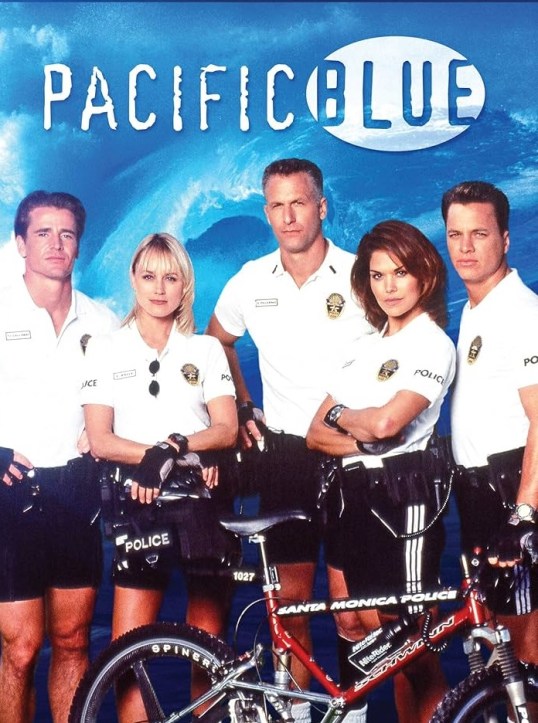
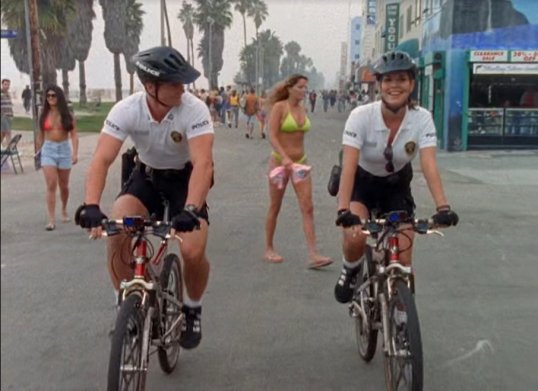
I didn’t care much for this episode.  Searching for bull semen is a Pacific Blue thing.  Miami Vice needs to handle real cases and leave all that other stuff for the bike cops.

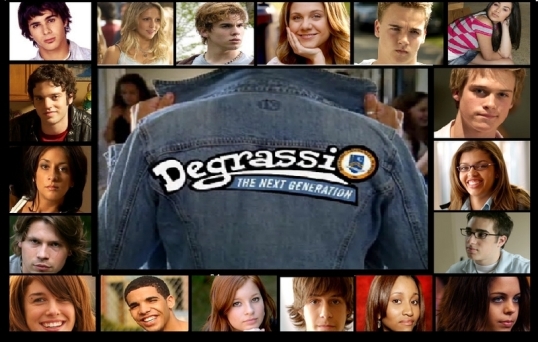
Late Night Retro Television Review: Degrassi High 2.11 “Showtime, Part 2”


Welcome to Late Night Retro Television Reviews, a feature where we review some of our favorite and least favorite shows of the past!  On Sunday, I will be reviewing the Canadian series, Degrassi High, which aired on CBC and PBS from 1989 to 1991!  The series can be streamed on YouTube and Tubi

In yourself, you must believe….

Episode 2.11 “Showtime Part 2”

(Dir by Kit Hood, originally aired on January 28th, 1991)

The students of Degrassi High struggle to move on from the suicide of Claude Tanner.  The talent show goes on, with all of the money raised being given to Claude’s parents.  Snake, for his part, goes to therapy and stays home from school.  When Joey visits him, Snake mentions that, when he found Claude, half of his face was missing.  Meanwhile, Caitlin is haunted by visions of Claude, smiling and trying to hand her a flower.

This episode was not quite what I was expecting.  Instead of embracing the melodrama (as Degrassi: The Next Generation would have), this episode is low-key and realistic about showing the ways that people deal with grief and trauma.  Snake is understandably shaken but what makes his scene so poignant is that he’s obviously struggling to pretend like he isn’t or that life can go back to normal after what he’s seen.  I spent this entire episode waiting for Caitlin to breakdown.  She didn’t and really, I have to commend the show for that because I sometimes think we put too much pressure on people to release all of their emotions before they’re ready to do so.  Caitlin is still emotionally number and it’s going to be a while before she’s ready to really talk about what happened.  And that’s okay!  Sometimes, it takes a while.  It’s only now, nearly a year after he died, that I’m really starting to realize how depressed I’ve been over the past year.  All those times that I thought I was moving on, I was really just distracting myself from the pain.  And now, with that one year anniversary approaching, I find myself crying at the most random of times.  It’s not pleasant.  My heart hurts on most days.  But I know that eventually, I’ll make it through.  Everyone grieves in their own way and apparently, this is the way that I grieve.

This was a good Joey episode.  Not only did Caitlin agree to tutor him in his science class but Wheels finally paid back the money that he stole from Joey’s mother.  During their study session, Joey and Caitlin talked about the suicide, with Joey asking if Caitlin knew Claude.  I guess the show’s writers forgot that, last season, Joey was intensely jealous over Caitlin and Claude’s relationship.  Still, regardless of that continuity error, the scenes between Joey and Caitlin were well-written, well-acted, and emotionally honest.

In other words, this was a good episode.  I’ve seen a lot of shows that have dealt with suicide.  I’ve rarely seen any that dealt with it as well and as honestly as Degrassi High.

Retro Television Review: Homicide: Life On The Street 3.18 “In Search of Crimes Past”


Welcome to Retro Television Reviews, a feature where we review some of our favorite and least favorite shows of the past!  On Sundays, I will be reviewing Homicide: Life On The Street, which aired from 1993 to 1999, on NBC!  It  can be viewed on Peacock.

This week, Giardello sets a dangerous precedent.

Episode 3.18 “In Search of Crimes Past”

(Dir by Kenneth Fink, originally aired on April 14th, 1995)

A woman (Felicia Shakman) takes Colonel Barnfather hostage, pointing a gun at his head and demanding that Bolander reopen the investigation into a murder that occurred sixteen years ago.  Bolander was the primary on the murder and the man that he arrested is scheduled to be executed in just a matter of hours.  The woman with the gun is the man’s daughter.  Russert wants to bring in the hostage negotiators but Giardello instead orders Bolander to take a look at the files and the evidence and to try to see if he arrested the wrong man.

I’m not really sure I buy Giardello’s response.  Giardello claims he has no choice but actually, it seems to me that Giardello is setting a dangerous precedent.  In Baltimore, if you think a relative has been wrongly convicted, you can apparently just take someone hostage and demand the case be reopened.  I’m not sure those are the rules that anyone wants to set.

Now, of course, it turns out that Bolander did arrest the wrong guy.  It perhaps would have been more interesting if Bolander had look at the files and said, “Yeah, I got the right guy,” but then this episode wouldn’t be able to make a statement against the death penalty.  Bolander realizes that he made a mistake and also that the actual murderer is a man who committed suicide that very evening.

While that’s going on, Pembleton and Bayliss investigate the death of an elderly woman who appears to have slipped and drowned in her bathtub.  Her husband (Barnard Hughes) seems to be heartbroken.  Of course, the husband actually killed her.  He has fallen in love with another woman and he killed his wife so that he could be with her.  I preferred this storyline to the Bolander one, just because it featured a lot of Pembleton/Bayliss scenes and a good performance from Barnard Hughes.

Finally, Munch hired a new bartender.  He didn’t bother to tell his partners beforehand but how could Lewis and Bayliss possibly complain about Munch hiring Jerry Stiller to tend bar?  (Technically, Stiller was playing an Irishman named McGonical.)  This was a minor but likeable storyline, mostly because of Jerry Stiller’s likably bizarre performance.

So, this was yet another good but not great episode.  The Bolander storyline was a bit too melodramatic for its own good.  It’s not the sort of thing that would have happened during the show’s first two seasons, back when the whole point was to be realistic.  But that Bayliss/Pembleton storyline featured the show’s two most compelling characters doing what they did did best.  This episode was not perfect but it held my attention nonetheless.

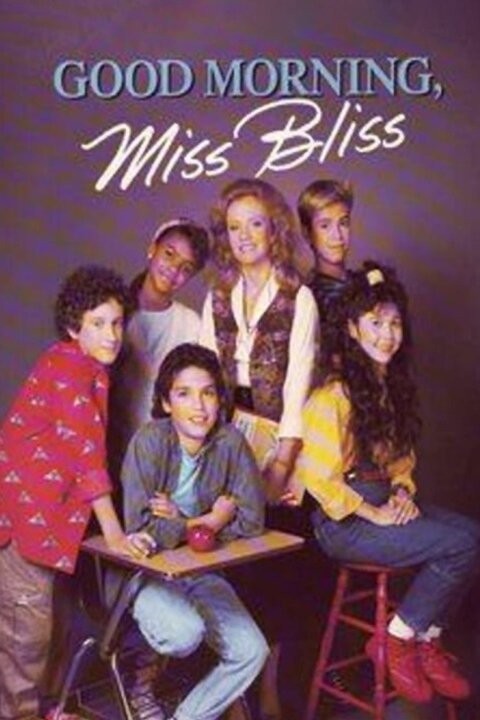
Late Night Retro Television Review: Good Morning, Miss Bliss 1.1 “Summer Love”


Welcome to Late Night Retro Television Reviews, a feature where we review some of our favorite and least favorite shows of the past!  On Saturdays, I will be reviewing Good Morning, Miss Bliss, which ran on the Disney Channel from 1988 to 1989 before then moving to NBC and being renamed Saved By The Bell.  The entire show is currently streaming on Prime!

With Check It Out! finished, it’s time to review a new show.  Continuing this feature’s tradition of highlighting the work of executive producer Peter Engel, it’s time for Good Morning, Miss Bliss, the show that would eventually become Saved By The Bell!

Episode 1.1 “Summer Love”

(Dir by Burt Brinckerhoff, originally aired on November 30th, 1988)

It’s the first day of school at JFK Junior High, located in beautiful Indianapolis, Indiana.

Miss Carrie Bliss (Hayley Mills), our narrator, is looking forward to a new year as a history teacher.  The school’s principal, Richard Belding (a surprisingly thin Dennis Haskins) is worried about a new year of out-of-control students and angry parents.  Miss Bliss’s best friend, Ms. Tina Palladino (Joan Ryan), worries that Mr. Belding has given her a bad schedule because of a disappointing school play she directed the previous year.

Miss Bliss has a date, the first one since her husband died.  Brian (Barry Jenner) is handsome and successful but romance will have to wait as Miss Bliss deals with the problems of her homeroom students.  Over the summer, pathological liar Zack Morris (Mark-Paul Gosselaar) told a girl named Karen (Carla Gugino, in one of her first roles) that he would soon be starting the 9th grade.  Of course, Zack is actually starting the 8th Grade but he figured that he would never see Karen again so why not…. oh my God, this kid is a terrible human being!  Anyway, Karen transfers to JFK and Zack has to pretend to be in the 9th Grade.  He does this despite the fact that all of his friends, Mickey (Max Battimo), Nikki (Heather Hopper), Lisa (Lark Voorhees), and the nerdy Screech (Dustin Diamond), are in the 8th Grade and Zack’s homeroom is in an 8th grade classroom.

Got all that?

Needless to say, this episode would not be remembered today if not for the fact that it was the first appearance of Mr. Belding, Zack Morris, Lisa Turtle, and Screech Powers.  These characters were, of course, later retconned to be Californians when Saved By The Bell started.  Miss Bliss did not make the transition to California and for that, we should all be happy.  Even in this first episode, Miss Bliss comes across as being a self-righteous know-it-all who obviously feels that she’s too good for a junior high in Indiana.  In her first scene, she brags about getting a good class schedule, dismisses Tina’s concerns about her own class schedule, and then smirks as Mr. Belding talks about his anxiety.  This would pretty much be Miss Bliss’s signature style for the rest of the short life of Good Morning, Miss Bliss.

How do our regulars do in their first appearance as the characters that would make them famous?  Dennis Haskins gives a semi-realistic performance as Belding, playing him as being a harried pencil-pusher as opposed to the cartoonish figure he would become later on.  Mark-Paul Gosselaar and Lark Voorhies do well-enough as Zack and Lisa, though both of their characters are far more simpler here than they would become later.  Dustin Diamond was only 11 year old when he was cast as Screech and he looked and comes across as being several years younger.  (I recently saw an interview with Mark-Paul Gosselaar where he explained that the main reason why Diamond struggled to fit in with the rest of the cast was because he was considerably younger than everyone else on the show.  I would say that he was probably too young.  Imagine looking back on your life as an actor and realizing that you were permanently typecast by a role you first played when you were 11.)

Anyway, this was a forgettable but historically important episode.  Just imagine if it had never aired.

Retro Television Review: The American Short Story Episode 7: The Displaced Person


Welcome to Retro Television Reviews, a feature where we review some of our favorite and least favorite shows of the past!  On Saturdays, I will be reviewing The American Short Story, which ran semi-regularly on PBS in 1974 to 1981.  The entire show can be purchased on Prime and found on YouTube and Tubi.

This week, we have an adaptation of Flannery O’Connor’s longest short story.

Episode #7: “The Displaced Person”

(Dir by Glenn Jordan, originally aired in 1977)

Life at a Georgia farm is thrown into turmoil when the farm’s owner, widow Mrs. McIntyre (Irene Worth), agrees to give a job to a Polish refugee named Mr. Guizac (Noam Yerushalmi).  As World War II has just ended and Father Flynn (John Houseman) has assured Mrs. McIntyre that Guizac can drive a tractor, Mrs. McIntyre is happy to give Guizac a home in America.  Less happy are the people who already work at the farm, most of whom see the hard-working Guizac as being a threat.  Mrs. Shortley (Shirley Stoler) worries that her husband (Lane Smith) is going to lose his job to Guizac.  Meanwhile, a young farmhand named Sulk (Samuel L. Jackson) enters into a business arrangement with Guizac, one that causes Mrs. McIntyre to change her opinion of Guizac.  Needless to say, it all ends in tragedy.

This adaptation is based on a short story that Flannery O’Connor wrote after her own mother hired a family of Polish refugees to work at their family farm, Andalusia.  This adaptation was actually filmed at Andalusia, only a few months after Flannery O’Connor’s death.  The furniture seen in the house was O’Connor’s own furniture.  The peacocks the drive Mrs. McIntyre crazy and which cause Father Flynn to have a religious epiphany are the same peacocks that roamed the farm when Flanney O’Connor lived there.  The cemetery that Mrs. McIntyre visits is the O’Connor family cemetery.  It brings a sense of authenticity to the film, one that is often missing from films made about the South.

The adaptation moves at a deliberate pace but it’s well-acted and it stays true to O’Connor’s aesthetic.  Those who might complain that there are only two likable characters in the film — Mr. Guizac and Father Flynn — are missing the point of O’Connor’s story.  Even Mrs. McIntyre, who initially seems to be trying to do the right thing, is blinded by the prejudices of race and class.  Father Flynn never gives up on trying to redeem both Mrs. McIntyre and the rest of the world but one gets the feeling that he might be too late.

The cast is what truly makes this adaptation stand-out.  Irene Worth, John Houseman, Lane Smith, Robert Earl Jones, they all give excellent performances.  Samuel L. Jackson was very young when he appeared in The Displaced Person but he already had the screen presence that has since made him famous.  The best performance comes from Shirley Stoler, who plays Mrs. Shortley as being a master manipulator who, unfortunately, happens to be married to a worthless man.  Mrs. Shortley does what she does to protect her husband.  Mr. Shortley does what he does because he’s a loud mouth bigot.  Everyone has their own reasons, to paraphrase Jean Renoir’s The Rules of the Game.  In this story, those reasons lead to tragedy.

Late Night Retro Television Review: Friday the 13th: The Series 3.20 “The Charnel Pit”


Welcome to Late Night Retro Television Reviews, a feature where we review some of our favorite and least favorite shows of the past! On Fridays, I will be reviewing Friday the 13th: The Series, a show which ran in syndication from 1987 to 1990. The entire series can be found on YouTube!

This week, we say goodbye to Friday the 13th.

Episode 3.20 “The Charnel Pit”

(Dir by Armand Mastroianni, originally aired on May 14th, 1990)

All things come to an end and that includes the adventures of Micki, Jack, and Johnny.

Friday the 13th: The Series ends with an episode about a professor (Vlasta Vrana) who owns a two-sided painting that he can use to send people into the past.  He sends female victims back to the time of the Marquis de Sade (Neil Munro) and the Marquis sends the professor his unpublished works.  If you’ve ever seen an episode of this show, you will not be surprised to learn that eventually Micki is sent back to the Marquis and briefly finds herself fascinated by the man for whom sadism is named.  Micki  gets to dress up in a cleavage-baring costume and Neil Munro plays another villain.  All the bad guys end up dead and the painting is tossed in the Curious Goods vault.  It’s Friday the 13th!

It might not seem like much of a finale.  Unfortunately, the cast and crew were not informed that the series wouldn’t be returning for a fourth season until they were almost finished filming this episode.  As a result, Friday the 13th did not get a proper send-off.  The series ended with many of the cursed antiques still out there and Jack, Micki, and Johnny apparently destined to spend the rest of their lives searching for them.

On the one hand, I enjoyed this series and I regret that it didn’t get a proper ending.  Micki, Jack, and even Johnny suffered so much that it seemed like they deserved to end things with some sort of triumph.  At the same time, it does feel appropriate that — after a season that featured some ill-thought experimentation with the show’s format — Friday the 13th went out with a traditional episode.  This show was always at its best when it focused on antiques and creepy villains.  That’s certainly the way that I’ll remember the show.

I enjoyed watching and reviewing Friday the 13th.  Was it uneven?  Sure.  It was a low-budget, syndicated show.  A certain uneveness is a part of the package.  At its best, though, it was a genuinely creepy show that was blessed with some wonderful chemistry between Chris Wiggins, Robey, and John D. LeMay.  (The show never really recovered from LeMay’s exit.)  On the whole, the good definitely outweighed the bad, even during the final season.  And who knows?  Perhaps, if there had been a fourth season, the writers would have finally figured out a way to make Johnny into a compelling character.

I’ll miss reviewing this series.

Next week, something new will premiere in this time slot.  What will it be?  You’ll find out next week!

Retro Television Review: St. Elsewhere 2.7 “Entrapment”


Welcome to Retro Television Reviews, a feature where we review some of our favorite and least favorite shows of the past! On Fridays, I will be reviewing St. Elsewhere, a medical show which ran on NBC from 1982 to 1988.  The show can be found on Hulu and, for purchase, on Prime!

This week, Peter’s in trouble …. again!

Episode 2.7 “Entrapment”

(Dir by Mark Tinker, originally aired on December 7th, 1983)

Oh, that Peter White!  Always in trouble for something!

This week, a woman comes into the Emergency Room with her baby and begs for some Seconal, just to help her get some sleep.  Peter says that Seconal might be too powerful a drug but he’s moved by the woman’s pleas.  Finally, he gives her the drugs.  The next morning, Dr. Craig and Dr. Westphall get a call.  The woman was an undercover cop and now, Dr. White — a recovering drug addict himself — is under investigation.

Both Dr. Craig and Dr. Auschlander think that the solution is to just kick Peter out of the hospital.  Westphall disagrees, saying that Peter has come a long way since he completed rehab.  Westphall promises Peter that he and Auschlander will support him when his hearing comes up.

As for Dr. Craig, he finally found out that his secret admirer was Kathy Martin.  This led to Ellen Craig (played by Bonnie Bartlett, William Daniels’s real-life wife) heading down to the morgue and politely telling Kathy to stay away from her man before then mentioning that, if politeness hadn’t worked, she was prepared to beat Kathy up.  I love Ellen.  She’s one of the best characters on the show.

Meanwhile, Irish kid Eddie Carson (Eric Stoltz), who was admitted to the hospital last week, is upset because he’s going to have a big ugly scar on his face.  He’ll probably be even more upset when he discovers that a rival Irish teenager (a protestant, naturally) planted a bomb in his family’s restaurant and blew up his parents.

This was an okay episode.  The highlight was definitely Ellen confronting Kathy Martin.  As for the other storylines, Eddie Carson’s story felt a bit contrived while Peter White’s story was just getting started.  I assume the hearing will be next week.  It’s interesting to see Peter as the victim for once.  Usually, it’s his own stupidity that screws things up for him.  This week, he really was unfairly targeted.

We’ll see what happens next week.

Late Night Retro Television Review: Highway to Heaven 4.5 “I Was A Middle-Aged Werewolf”


Welcome to Late Night Retro Television Reviews, a feature where we review some of our favorite and least favorite shows of the past!  On Thursdays, I will be reviewing Highway to Heaven, which aired on NBC from 1984 to 1989.  The entire show is currently streaming on Tubi and several other services!

This week, it’s Halloween!

Episode 4.5 “I Was A Middle-Aged Werewolf”

(Dir by Michael Landon, originally aired on October 28th, 1987)

This was a cute episode and one that I had actually seen before.  My friend Mark recommended it to me three years ago, during an October in which I was looking for a little something to add to Horrorthon.

The Devil (Michael Berryman) makes his second appearance on the show, this time selling Mark a submarine sandwich on Halloween night.  Mark eats the sandwich while watching I Was A Teenage Werewolf on television.  (“Hey, this guy kind of looks like you!” he tells Jonathan.  Michael Landon, of course, starred in I Was A Teenage Werewolf.)  Mark is then haunted by nightmares in which Jonathan turns into a werewolf.  (And yes, Landon is made up to look like he did in the film.)

Meanwhile, in the waking world, Jonathan helps a lost trick-or-treater go home and he briefly turns into a werewolf so that he can scare the kid’s mean older sister.  I’m not really sure what the rules were about angels pulling Halloween pranks but it should be noted that Jonathan is actually a fairly nice werewolf and he allows the kid to be a hero by pretending to be scared of him.

The episode ends with Mark once again yelling in fear as Jonathan turns into a werewolf, just for Michael Landon to look straight at the camera, break character, and say, “Happy Halloween.”

Awwww, what a sweet episode!

After a few weak and heavy-handed episodes, it was nice to see Highway to Heaven return to its earnest roots.  This was a likable episode, one that showed that Landon was willing to laugh at himself and one that, to me, seemed to indicate a genuine love for the Halloween holidau.  This was a fun 60 minutes and watching it has left me even more eager about the approaching horrorthon season.

Retro Television Review: Malibu CA 2.22 “Doctor Freeze”


Welcome to Retro Television Reviews, a feature where we review some of our favorite and least favorite shows of the past!  On Thursdays, I will be reviewing Malibu CA, which aired in Syndication in 1998 and 1999.  Almost the entire show is currently streaming on YouTube!

Yes, this is from the first season. I don’t care. I refuse to waste my time looking for a second season advertisement.

This week, everyone on the show continues to be absolutely terrible.  Every day, I am thankful that there are only a handful of episodes left.

Episode 2.22 “Doctor Freeze”

(Dir by Gary Shimokawa, originally aired on April 22nd, 2000)

This week’s episode of Malibu, CA was perhaps the worst 22 minutes of television that I have ever watched.  Not surprisingly, the episode focused on Lisa (the character, not me).

Lisa wants to be a doctor.  She’s just received an ER internship.  But when Scott cuts his finger, she sees the blood and faints.  When she shows up at the ER, she gets overwhelmed by all the patients and runs around in a panic saying things like, “You could have flesh-eating bacteria!”  The ER doctor tells Lisa that she has no business in the medical field.

And he’s absolutely right.  If you can’t handle the sight of blood, you shouldn’t be a doctor.  If you can’t check someone into the ER without telling them that they might have flesh-eating bacteria, you shouldn’t be a doctor.  That’s just common sense.  Being a doctor is an important job.  You don’t get a second chance to not kill someone.

And yet we’re supposed to feel bad for Lisa as she worries about never becoming a doctor, even though it’s her own fault for telling a patient with sunburn that he has flesh-eating bacteria.  Lisa’s reaction to what appears to be a rather small cut on Scott’s finger is so over-the-top that it should automatically be disqualifying as far as becoming a doctor is concerned. Being a woman means dealing with blood on a regular basis and I’m talking about a lot more blood then you’re going to get from cutting a finger.  Lisa (the character, not me) is an unforgivable wimp.

And yet she is given a second chance, after someone injures themselves while surfing and Lisa tells everyone not to move his head.  The doctor at the ER theorizes that Lisa only freaked out about the blood because of how much she loves Scott.  “That why most doctors don’t treat their own family members!” he explains.  Lisa was so worried about freaking out over the blood that she got overwhelmed during her first night at the ER and …. LISTEN, I DON’T WANT A DOCTOR WHO GETS OVERWHELMED!  I don’t care what the excuse is.  I don’t want an incompetent doctor!

Let’s move on.  The B-plot was yet another plot where something good happens to Traycee and her stupid friends ruin it for her.  Traycee runs into a record promoter on the beach and he automatically gives her a recording contract.  She sings one of Jason’s songs.  The music video is filmed overnight but, when Jason, Tracyee, and Alex watch the video, Jason and Alex realize that another singer has been dubbed over Traycee’s vocals.

Jason is offended.  It’s goes against his …. his what?  Up until now, Jason has been portrayed as a compulsive liar who only cares about money.  Now, suddenly, he cares about integrity?  Anyway, after Jason tells her, Traycee is also offended and she refuses to continue working with the promoter.  I assume that means Traycee will now be sued for several million dollars.  Way to go, Jason!

God, I hate this show.

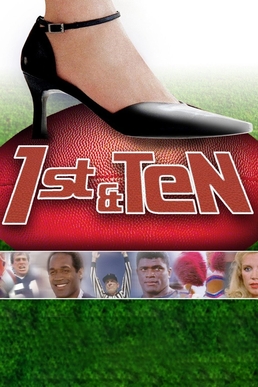
Late Night Retro Television Review: 1st & Ten 1.1 “By The Bulls”


Welcome to Late Night Retro Television Reviews, a feature where we review some of our favorite and least favorite shows of the past! On Wednesdays, I will be reviewing 1st and Ten, which aired in syndication from 1984 to 1991. The entire series is streaming on Tubi.

For a few years now, first Prime and now Tubi have been recommending that I watch a sitcom called 1st & Ten.

My initial reaction, upon looking the show up online and discovering that it was about a football team that was owned by a woman and coached (from the second season on) by OJ Simpson, was to say, “Why would I want to watch this?”  And, to be honest, that’s still kind of my reaction.  Football is not my thing.  The only thing that is less my thing than football is soccer.

(“But in the rest of the world, soccer is called….”  Yeah, yeah, I know.  I don’t care.)

But then I read on and discovered that this is actually a historically significant show in that it was HBO’s first attempt to produce an original sitcom.  It was later sold into syndication, with all of the cursing and nudity edited out.  (Apparently, most of the episodes that are currently on Tubi are the edited syndication versions.)  That piqued my interest.  I may not care about football but I love historical footnotes.

So, without further ado, let’s get things started.

Episode 1.1 “By The Bulls”

(Dir by Rod Daniel, originally aired on December 2nd, 1984)

The show begins as wealthy Diane Barrow (Delta Burke) comes home to her mansion and discovers her husband, naked in their bedroom with another man.  “This is Ty Tylor,” her husband says, “he’s a tight end.”

“I bet he is!” Diane replies.

Later, while talking to her divorce lawyer (Earl Boen), Diane announces, “I want his Bulls!”

“You want his….?” the lawyer replies, glancing down at his crotch.

No, Diane doesn’t want his balls  She wants the Los Angeles Bulls, the football team that he owns.  When the lawyer replies that Diane’s husband loves the Bulls, Diane announces that if she doesn’t get the football team, she’ll let the world know that her husband’s gay.

(It’s the 1980s, folks.)

Diane gets the Bulls and she also gets a lot of attention due to being apparently the only woman to ever own a football team.  Everyone doubts her but Diane is determined to prove herself.  However, her sniveling general manager (and her husband’s nephew), Roger Barrow (Clayton Landey), tries to end her ownership before the season even begins by planting cocaine in her mansion,  His plan is that, during the pre-season party, one of the players will snort the cocaine and …. I don’t know.  I guess he’s hoping some will call the police or something.  It doesn’t seem like much of a plan, to be honest.

Fortunately, veteran Coach Ernie Denardo (Reid Scott) hears about the plan from a friend of his so he rushes over to the party and gets rid of the cocaine, though not before letting Diane know that she has powerful enemies.  That was nice of him since Diane previously fired him for being incompetent.  Needless to say, Denardo gets his job back.

And that’s it!  We did get to see a few snippets of the players, who all seem to be wild and wacky.  Carl Witherspoon (Sam Scarber) shows up at the party with his lawyer and demands a lot of money.  Another player, Kyle Brody (Robert Logan), tries to hit on Diane.  I checked with the imdb and this is Logan’s only appearance on the show so I’m not really sure what the point of him being at the party was.  It’s a pilot so I imagine that a lot of the background people in this episode will never be seen again.

Overall, my feeling about the pilot was that it …. well, it sucked.  The humor fell flat.  The acting was terrible.  Delta Burke showed some potential as Diane but I didn’t like how, after demanding, “I want his Bulls!,” Diane suddenly became this passive character who needed Denardo to tell her about the cocaine in her mansion.  But you know what?  It’s always unfair to judge a show by it’s pilot.  The Office, for instance, had a terrible pilot.  In the end, this particular pilot did what it was supposed to do — it introduced us to the main character and it set up the premise of the show.

We’ll see if things get better in the weeks to come.