We Can Be Heroes If Just For One Day… (David Bowie, RIP)


I have never seen the online community as united about anything as they are today in both grieving and paying honor to David Bowie.

You can read Arleigh’s thoughts on Bowie the film actor here.

Click here to read Jeff’s tribute to David Bowie the musician.

And be sure to check out Gary’s overview of Bowie’s career.

As for me, I’m just going to share two videos.  One is the trailer for the German film, Christiane F.  This trailer — which I consider one of the best trailers ever made — is scored to David Bowie’s Heroes. (Both Bowie and the song also play a large and important in the film itself.) Secondly, I want to share a scene that I love, this one from Quentin Tarantino’s Inglorious Basterds and featuring Bowie’s Theme From Cat People reimagined as an anthem of the French Resistance.

First off, the trailer:

Secondly, the scene:

David Bowie, RIP

Playing Catch-Up With The Films of 2015: The Revenant (dir by Alejandro G Inarritu)


The_Revenant_2015_film_poster

Before I continue to catch up with reviewing the films of 2015 by taking a look at The Revenant, I want to ask a question and I request that you give this some serious thought.  Is Jeff Wells just a troll or is he seriously a moron?  Or maybe he’s both, that’s another possibility.  For those of you who stay out of the darker parts of the internet, Jeff Wells is a film blogger who thinks that, because he voted for Obama, he’s earned the right to regularly use his column to disparage women.  (Wells is the one who publicly complained that the lead of Diary of a Teenage Girl wasn’t, in his eyes, fuckable enough to be a compelling 15 year-old protagonist.)  Jeff Wells tweeted the following about The Revenant:

And Jeff Wells hasn’t been alone in claiming that only men can truly appreciate The Revenant.  On Overland, Alexandra Heller-Nicholas has an excellent post about this line of male critical thought.  Now, speaking for myself, I liked The Revenant a lot more than Heller-Nicholas apparently did.  But, at the same time, she hits the nail on the head when it comes to this idea that The Revenant is a film so intense and so full of agony that only men could possibly enjoy it.  Much like her, I felt as if “critics” like Jeff Wells and Rolling Stone‘s Peter Travers were personally challenging me, as a woman, to actually sit through The Revenant without running from the theater in disgust or hiding my eyes in terror.

And, quite frankly, that’s bullshit.  Yes, The Revenant is intense and yes, I did have a bit of a hard time watching that bear maul Leonardo DiCaprio but, at the same time, how would Jeff Wells or Peter Travers handle being mauled by a bear?  For that matter, how would either one of them handle being in a high-speed chase or being shot at?  Would either one of them be able to outrun an explosion or do any of the other stuff that regularly happens in films that supposedly only appeal to men?

(For that matter, how would Jeff Wells or Peter Travers handle monthly menstrual cramps or giving birth or anything else that women have to deal with in the real world?  I imagine they’d probably end up begging the bear to finish them off.)

And really, the whole point of The Revenant is that most human beings (regardless of gender) would not have survived being mauled by a bear or being buried alive or spending months exposed to the harsh wilderness or having pieces of their body start to decay.  These are all things that happen to hunter Hugh Glass (Leonardo DiCaprio) over the course of The Revenant and the film suggests that the only reason he survives is because he’s driven by a desire for revenge.  When Glass’s fellow hunter, the gruff Fitzgerald (Tom Hardy), decided to abandon Glass, he also murdered Glass’s son, Hawk.  Still immobilized by his wounds, Glass could only watch as Hawk was brutally killed.

(Interestingly enough, Fitzgerald is like Glass in that he has also survived a terrible injury.  Fitzgerald regularly wears a skullcap to hide the fact that he was scalped in the past.  In many ways, Fitzgerald is almost a shadow of Glass.  Glass has his son to remind him of what it means to be human but Fitzgerald has no one.  And after Hawk is murdered, neither does Glass.)

Though the film focused on Glass’s struggle to survive until he could again track down the men who abandoned him, I have to admit that my main concern was with the character of Jim Bridger (Will Poulter).  Bridger, after all, agreed to stay behind with Glass and Fitzgerald and to make sure that Glass received a proper burial after succumbing to his wounds.  Bridger was not present when Fitzgeralnd killed Hawk and buried Glass alive and expressed remorse after being falsely told that Glass was dead.  Still, The Revenant is a revenge flick and, as I watched, I found myself wondering if Glass would forgive Bridger or if he would take vengeance even on someone who was merely misguided.  (If you’ve ever seen a 70s revenge flick, you know that even sincere remorse is usually not enough to avoid being punished.)  Since the film continually asks whether or not Glass can survive without sacrificing his humanity, how he handles Bridger is one of the most important scenes in the film.

The Revenant opens with an absolutely terrifying sequence in which a group of hunters is slaughtered by a Native American tribe and it maintains that intensity through the entire film.  DiCaprio, Hardy, and Poulter all give excellent performances and special mention should also be made of Domhnall Gleeson, who plays the upright but ineffectual leader of the hunting party and for whom 2015 was a helluva year.  (Along with appearing in The Revenant, Gleeson also appeared in Brooklyn, Ex Machina, and Star Wars: The Force Awakens. )  It’s not always an easy film to watch (though, for me, the close-up of a wound oozing puss was a lot more unsettling than that bear mauling Glass) and there’s a few scenes where director Alejandro Inarritu gives in to his more pretentious tendencies but, for the most part, The Revenant is never less than watchable.

The Revenant is currently an Oscar front-runner.  Last night, it beat the highly hyped Spotlight at the Golden Globes.  Personally, as good as the film is, I think there are a lot of films that deserve a best picture nomination more than The Revenant.  It’s been a great year for film, after all.  That said, I do think The Revenant is definitely an improvement on Inarritu’s previous Oscar winner, Birdman.

The Revenant is an intense and harrowing film that can be seen and appreciated (or, for that matter, disliked) by anyone.  Don’t let anyone tell you differently!

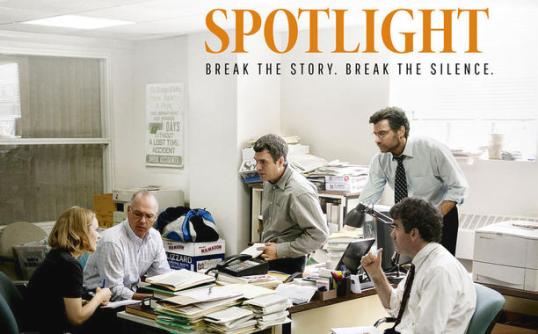
Playing Catch-Up: Spotlight (dir by Tom McCarthy)


Spotlight

Earlier today, I finally got to see Spotlight, the film that is currently the front-runner to win the Oscar for best picture.  Spotlight tells the story of how the Spotlight team, a group of journalists working for the Boston Globe, investigated the shameful history of sexual abuse of children by Catholic priests in the Archdiocese of Boston.  Starting with charges against one priest, the Spotlight team eventually uncovered sexual abuse by at least 70 priests and also revealed that the revered Cardinal Law was involved in covering up the crimes.

Having now seen Spotlight, I can say it’s a good film.  It’s well-made.  It’s well-acted.  The script contains some memorable lines.  I’ve talked to a few friends of mine who have actually worked as journalists and they have all assured me that Spotlight gets the details of their profession correct and that it’s pretty much an authentic look at what it’s like to be a reporter at a major newspaper.  There’s a lot of good things that can be said about Spotlight.

And yet, I’m not particularly enthusiastic about it.  I think my main issue with the film is that it’s just such an old-fashioned and rather conventional film.  It’s a throw back of sorts, an earnest exploration of a real-life outrage.  (Even the fact that the heroes are journalists makes the film feel as if it was made a decade or two in the past.)  On the one hand, you have to respect that director Tom McCarthy had the guts to tell his story in the least flashy way possible.  But, occasionally, his by-the-book approach is not as compelling as you want or need it to be.  Spotlight is a good film but it’s not a particularly challenging film and it’s the films that challenge us that truly stay with us after the final credits conclude.

Yes, it’s a good film but some are declaring that Spotlight is the best film of the year and I’m afraid that I just don’t see it.  There are a lot of 2015 films that will probably still be fondly remembered 5 years from now: Ex Machina, Mad Max: Fury Road, Inside Out, Sicario, and others.  When compared to those films, Spotlight feels more like an admirable made-for-TV movie.  It feels more like something that should sweep the Emmys than the Oscars.

That said, Spotlight does feature some excellent performances.  In fact, the entire cast does such a good job that it’s difficult to really single anyone out.  They come together as a nearly perfect ensemble.  (That said, I’m a bit torn on whether Mark Ruffalo came across as being passionate or merely mannered.)  Michael Keaton, especially, does a good job, embodying everyone’s ideal image of a journalist with integrity.

Spotlight‘s a good film but my favorite Tom McCarthy movie remains Win Win.

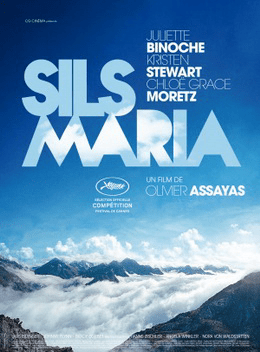
Playing Catch-Up: Clouds of Sils Maria (dir by Olivier Assayas)


Clouds_of_Sils_Maria_film_poster

It’s a little bit disheartening, to be honest, to see the lack of attention that has been given to Clouds of Sils Maria.  Kristen Stewart has picked up a lot of awards for her supporting performance and she might even get an Oscar nomination on Thursday but otherwise, the film has been ignored and that’s a shame.  Last year, it was one of the best films to be released here in the States.

Of course, it’s difficult to talk about Clouds of Sils Maria without also talking about Maps To The Stars.  After all, both films premiered at the 2014 Cannes Film Festival and both of them deal with an aging actress struggling to remain relevant in an industry that prizes youth above all else.  The main difference between the two is that Clouds of Sils Maria is a great movie while Maps To The Stars is a pretentious mess.  And yet, when initially released, Maps To The Stars was the more critically acclaimed of the two films.

Why was that?

I imagine it has something to do with the fact that Clouds of Sils Maria demands a certain amount of intelligence on the part of the audience.  Whereas there’s neither a subtle moment nor an unexpected detail to be found in Maps To The Stars, Clouds of Sils Maria rewards repeat viewing.  Clouds of Sils Maria invites the audience to ponder its mysteries and it does so without spelling anything out.  Clouds of Sils Maria is all about nuance and, as such, it’s not exactly the ideal film for critics who make their living off of clickbait.

As for what the film is about, it tells the story of Maria Enders (Juliette Binoche), a world-famous stage and screen actress.  20 years ago, Maria became a star when she appeared in both the theatrical and the film versions of Maloja Snake.  Maria played the role of Sigrid, a callous young woman who seduces a middle-aged, bourgeois woman named Helena.  When Sigrid eventually abandons Helena, the older woman is driven to suicide.  Though she is now closer in age to Helena, Maria continues to think of herself as being Sigrid.

When the writer of Maloja Snake dies, Maria is offered a chance to appear in a new stage production.  However, this time, she will be playing Helena and a young American actress named J0-Ann Ellis (Chloe Grace Moretz) will play Sigrid.  (Jo-Ann is better known for her scandalous private life than her acting.  Moretz appears to have a lot of fun playing the Lindsay Lohanesque Jo-Ann.)  At first, Maria does not want to play Helena.  She dismisses the role as being boring and says that she cannot see herself playing such a “normal” character.  (As well, Maria is haunted by the memory of the death of the actress who originally played Helena opposite Mara’s Sigrid.)  Even after Maria is finally convinced to take on the role, she continues to insist that she’s not right for it.  As quickly becomes apparent, it’s not so much the role that upsets Maria but what the role represents.  By playing Helena, Maria will be admitting that she is no longer the invulnerable Sigrid.

In order to rehearse, Maria retreats to a remote cabin in the Alps.  Accompanying her is Valentine (Kristen Stewart), her assistant.  At first, it seems that Val and Maria have an almost sisterly relationship but it quickly becomes obvious that the out-of-touch Maria is largely dependent on Val for any information about the outside world.  (Maria has to be constantly reminded that she can google any information she needs.)  Despite needing her, Maria occasionally talks down to Val (especially after learning that Val thinks Jo-Ann is a good actress and that Val likes a sci-fi film that Jo-Ann has appeared in) and Val occasionally seems to be annoyed with Maria’s neediness.

In the Alps, Maria continues to try to learn Helena’s role and, as the weeks pass, her line readings go from awkward to natural.  Reading opposite her, in the role of Sigrid, is Val and, often times, it’s difficult to distinguish between the play and reality.  How much of Val and Maria’s relationship is real and how much of it is just a rehearsal?

Clouds of Sils Maria is a visually stunning film, one of that is fully mystery and beautiful images.  Even more importantly, it’s a film that features three strong roles for three talented actresses, all of whom do some of their best work.  Clouds of Sils Maria did not get the attention that it deserved when it was first released but it’s never too late to discover a good movie.

Here’s What Won At The Golden Globes!


The Golden Globes just ended and here’s what won the film categories this year.  (Check out a full list of nominees here.)

Best Motion Picture (Drama) — The Revenant

Best Motion Picture (Comedy) — That freaking hilarious comedy The Martian

Best Actor (Comedy) — Matt Damon in that freaking hilarious comedy The Martian

Best Actor (Drama) — Leonardo DiCaprio in The Revenant

Best Actress (Comedy) — Jennifer Lawrence in Joy

Best Actress (Drama) — Brie Larson in Room

Best Supporting Actor — Sylvester Stallone in Creed

Best Supporting Actress — Kate Winslet in Steve Jobs

Best Director — Alejandro G. Inarritu for The Revenant

Best Screenplay — Aaron Sorkin for Steve Jobs

Best Original Score — Ennio Morricone for The Hateful Eight

Best Original Song — Writing’s on the Wall, that boringass song from Spectre

Best Animated Film: Inside Out

Best Foreign Language Film: Son of Saul


2015 in Review: Lisa’s 10 Favorite Non-Fiction Books Of The Year


MP_AI

Today, I continue my look back at the previous year with my ten favorite art and entertainment-related books of 2015!  All ten of these books are highly recommended and well-worth your time and money.

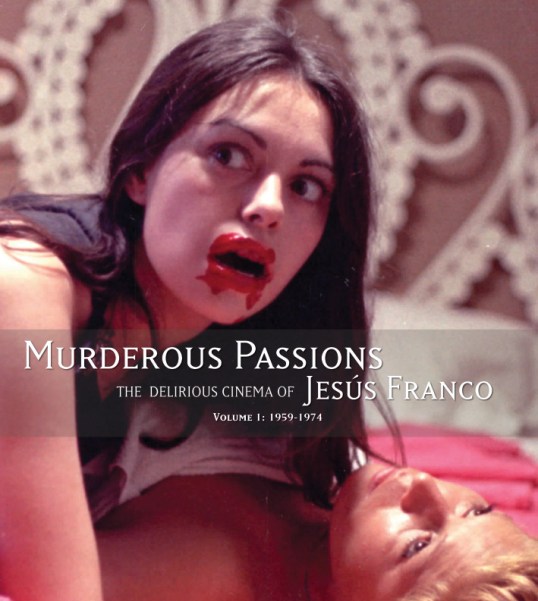
  1. Murderous Passions: The Delirious Cinema of Jesus Franco Volume 1 by Stephen Thrower
  2. Orson Welles’s Last Movie: The Making Of The Other Side Of The Wind by Josh Karp
  3. Dietrich & Riefenstahl: Hollywood, Berlin, and a Century in Two Lives by Karien Wieland
  4. Hunger Makes Me A Modern Girl by Carrie Brownstein
  5. Silver Screen Fiend by Patton Oswalt
  6. M Train by Patti Smith
  7. Romantic Outlaws: The Extraordinary Lives of Mary Wollstonecraft and Her Daughter Mary Shelley by Charlotte Gordon
  8. The Art of Grace by Sarah L. Kaufman
  9. A Kim Jong-Il Production: The Extraordinary True Story of a Kidnapped Filmmaker, His Star Actress, and a Young Dictator’s Rise to Power by Paul Fisher
  10. The Daemon Knows: Literary Greatness and the American Sublime by Harold Bloom

Tomorrow, my look back at the previous year continues with my 10 favorite novels of 2015!

Previous Entries In The Best of 2015:

  1. Valerie Troutman’s 25 Best, Worst, and Gems I Saw in 2015
  2. Necromoonyeti’s Top 15 Metal Albums of 2015
  3. 2015 In Review: The Best of SyFy
  4. 2015 in Review: The Best of Lifetime
  5. 2015 In Review: Lisa’s Picks For The 16 Worst Films of 2015
  6. 2015 in Review: Lisa Marie’s 10 Favorite Songs of 2015
  7. 2015 in Review: 16 Good Things Lisa Saw On TV

Here Are The Costume Designers Guild Nominations!


The Costume Designers Guild Nominations were announced today and here they are!  Ex Machina received a nomination, which would seem to be another indication that it’s popular with Academy voters.  (Then again, remember how excited we were last year when Nightcrawler kept getting love from the guilds?)

Excellence in Contemporary Film

Excellence in Period Film

  • “Brooklyn” – Odile Dicks-Mireaux
  • “Carol” – Sandy Powell
  • “Crimson Peak” – Kate Hawley
  • “The Danish Girl” – Paco Delgado
  • “Trumbo” – Daniel Orlandi

Excellence in Fantasy Film

Here Are The USC Scripter Nominations!


The USC Scripter nominations are meant to honor film scripts that were adapted from previously published material.  You’ll find their film nominations below and you may immediately notice that Oscar front runner Carol is missing.  Make of that what you will.

The Big Short
Screenwriters Adam McKay and Charles Randolph, adapted from Michael Lewis’s nonfiction work “The Big Short: Inside the Doomsday Machine”
Paramount Pictures and W.W. Norton

Brooklyn
Novelist Colm Tóibín and screenwriter Nick Hornby
Fox Searchlight and Viking

The End Of The Tour
Screenwriter Donald Margulies, adapted from David Lipsky’s memoir “Although of Course You End Up Becoming Yourself: A Road Trip with David Foster Wallace”
A24 and Broadway Books

The Martian
Novelist Andy Weir and screenwriter Drew Goddard
Twentieth Century Fox and Crown Publishing Group

Room
Emma Donoghue for the novel and screenplay
A24 and Little, Brown and Company

Playing Catch Up: The Good Dinosaur and The Peanuts Movie


The Good Dinosaur (dir by Peter Sohn)

It may be hard to remember this now but, at the beginning of 2015, a lot of film bloggers were very excited about an upcoming film from Pixar Studios.  “This,” they said, “is the film that will remind people why they love Pixar in the first place!  In fact, this might be the first animated film to get a best picture nomination since Toy Story 3!”  Of course, there was another movie from Pixar that was due to come out in 2015 but everyone agreed that movie sounded too weird and silly to be a legitimate contender.  One of the movies would be a huge success and the other would probably be forgotten in a year or two.

And, at the time, everyone was sure that The Good Dinosaur would be the triumph while Inside Out would be the also-ran.

Instead, the exact opposite happened.  Inside Out turned out to be one of the most innovative and charming animated films ever.  Meanwhile, The Good Dinosaur — despite being a financial and critical success — has struggled to escape from Inside Out‘s shadow.

But you know what?  Taken on its own terms, The Good Dinosaur is a likable and entertaining movie.  No, it’s not as good as Inside Out but then again, the same can be said for a lot of good movie that were released in 2015.  Inside Out, of course, is a movie for adults that can still be enjoyed by kids.  The Good Dinosaur is definitely a movie for kids but it’s still visually striking enough that adults can get something out of it as well.

Plotwise, The Good Dinosaur imagines a world in which that meteorite did not strike the Earth and dinosaurs and humans developed next to each other.  A teenage dinosaur — eager to prove that he’s worthy despite being clumsy and easily scared — gets separated from his family and tries to get back to them.  Along the way, he deals with villainous pterodactyls and befriends a human child that he names Spot.  Sadly, the film brings about as much depth to the idea of talking dinosaurs as Pixar previously brought to the idea of talking cars but still, it’s an enjoyable and undeniably effective film.  Unlike Inside Out, it may not be great but it’s definitely good enough.

The Peanuts Movie (dir by Steve Martino)

My sister Erin and I saw The Peanuts Movie when it first opened last November.  As we left the theater, we both agreed that the movie was genuinely sweet and cute but that the ending just didn’t feel right.  Ultimately, we agreed that the ending was just too happy.

I don’t claim to be the world’s biggest expert on the life of Charlie Brown but I do know that he’s been around for nearly 70 years and, in that time, I don’t think he’s ever really had a traditionally happy ending.  From what I’ve seen of his holiday specials, it seems that Charlie is usually fated to end up sitting by himself while snow falls all around him.  And really, that always seemed to be the main appeal of Charlie Brown as a character.  Even though nothing ever goes his way, he never stops trying.  Even though he may sometimes get discouraged, he never gives up.  The Peanuts Movie actually rewards Charlie Brown for his patience and that didn’t quite feel right.

But you know what?  Maybe, after 70 years, Charlie Brown has finally earned the right to have at least one unambiguously positive ending.  The Peanuts Movie was a financial success so I imagine there will be a sequel.  If, during that sequel, Charlie wins a game or kicks that football or gets a kite to fly or actually wears a flattering outfit, it’ll be a problem.  But for now, it’s acceptable and perhaps even appropriate that he finally got to feel good about something at the end of The Peanuts Movie.

As for the rest of the film, it’s a cute homage to the original Peanuts specials.  Despite that happy ending, it remains true to the spirit of its source material and it’s obvious that the filmmakers had a lot of affection for Charlie, Linus, Snoopy, and all the rest.

And yes, Snoopy does steal the entire film.

Was there ever any doubt?

Playing Catch-Up: The Stanford Prison Experiment and The Tribe


The_Stanford_Prison_Experiment

The Stanford Prison Experiment (dir by Kyle Patrick Alvarez)

The Stanford Prison Experiment tells a true story.  It’s important to point that out because this is one of those films that, if you didn’t know it was based on a true story, you would probably be inclined to dismiss as being totally improbable.

In 1971, Professor Philip Zimbardo (played in the movie by Billy Crudup) conducted a psychological experiment at Stanford University.  A fake prison was built in the basement of a campus building, complete with cells and even a room to be used for solitary confinement.  15 students volunteered to take part in the experiment.  For $15.00 a day, some of the students were randomly assigned to be prisoners while others got to be guards.  The experiment was supposed to last for two weeks but Zimbardo ended it after 6 days.  Why?  Because the students had started to the take the experiment very seriously, with the guards growing increasingly sadistic towards their “prisoners.”  Afterwards, many of the prisoner students claimed to have been traumatized while the guard students felt they were just playing a game.

(As one of the guards says in the film, “Am I still going to get paid?”)

The Stanford Prison Experiment tells the story of that controversial experiment and it is, at times, quite a harrowing experience.  Interestingly, when the film begins, the focus is on the prisoners.  I immediately noticed that Ezra Miller was one of the prisoners and, being familiar with his work in Perks of Being A Wallflower and We Need To Talk About Kevin, I naturally assumed that the majority of the film would revolve around him.  After all, among the actors playing the prisoners, Ezra Miller was the “biggest name.”  And, when the film began, it did seem to be centered around Miller’s likable and rebellious presence.

But then something happened.  Miller faded into the background.  In fact, all of the “prisoners” faded into the background and the actors became almost indistinguishable from each other.  Instead, the film started to focus on one of the guards.  Outside of the prison, Christopher Archer (Michael Angarano) is a laid back and rather amiable California college student.  But, once he shows up for the night shift, Archer starts to talk about all of the prison films that he’s seen.  He starts to speak in a Southern accent.  He says stuff like, “What we have here is a failure to communicate.”  And soon, Archer is making the rules inside the prison.

In much the same way that Christopher Archer takes over the experiment, actor Michael Angarano takes over the film.  While Zimbardo and his colleagues watch Archer’s actions with a mix of fascination and fear, the film’s audience becomes enthralled with Angarano’s intense performance.  Wisely, neither Angarano nor the film allow Archer to turn into a cardboard villain.  He’s not a bad guy.  Instead, he’s playing a role.  He’s been told to act like a guard and that’s what he’s going to do, regardless of whatever else may happen.  The most fascinating part of the film becomes the contrast between Archer the likable student and Archer the fascist authority figure.

It’s frustrating that more people didn’t see The Stanford Prison Experiment when it was released in 2015.  Considering the blind trust in authority that is currently so popular in certain parts of the American culture, The Stanford Prison Experiment is a film that a lot of people really do need to see and learn from.
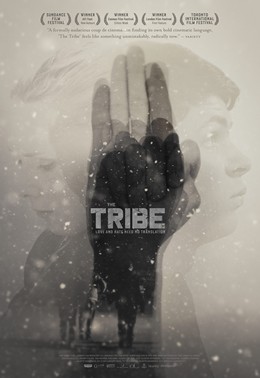
The_Tribe_poster

The Tribe (dir by Myroslav Slaboshpytskiy)

Anyone who says that they truly understand everything that happens in the disturbing Ukrainian film The Tribe is lying.  Taking place at a school for the deaf and exclusively cast with deaf actors, The Tribe is a film where everyone communicates in Ukrainian Sign Language and there are no subtitles.  However, the actors are often filmed with their back to the camera and occasionally, their hands are out of frame so, even if you do know Ukrainian Sign Language, there’s still going to be scenes where you have no idea what anyone is saying.

And it’s appropriate really.  The Tribe is a film about alienation and, by refusing to give us either an interpreter or subtitles, it forces the audience to feel the same alienation that the film’s characters have to deal with on a daily basis.  It quickly becomes obvious that these permanent outsiders have created their own society and the least of their concerns is whether the rest of the world understands it.

What can be learned about the film’s story largely comes from the body language of the actors and the audience’s own knowledge of gangster movies, which is what The Tribe basically is.  A new student at a boarding school for the deaf is recruited into a gang that deals drugs and pimps out two female students as prostitutes at a truck stop.  When the new student falls in love with one of the girls, it leads to some truly brutal acts of violence, all of which are somehow made more disturbing by the fact that they take place in total silence.

(The talkative criminals of most gangster films allow audiences to focus on something other than the violence.  When people talk about the opening of a film like Pulp Fiction, they talk about John Travolta and Samuel L. Jackson talking about Amsterdam.  They don’t focus on the guys getting gunned down in their apartment.  In The Tribe, there are no quips or one-liners before people are hurt and we are forced to pay more attention to the consequences of brutality.)

The Tribe is made up of only 34 shots.  The wide-angle lens forces us to consider these alienated characters against the barren Ukrainian landscape and the camera constantly moves with the characters, tracking them as closely as fate.  Intense and dream-lie, The Tribe is a hauntingly enigmatic film.  It’s not an easy film but it is a rewarding one.