Guilty Pleasure No. 63: Julie and Jack (dir by James Nguyen)


“Sex isn’t the only thing I care about. It’s just that I’ve always imagined myself falling in love with someone …. who’s alive. I know that may sound strange to you, but it’s just the way I was brought up.”

Sometimes, it just takes one line to transform a mere bad movie into a masterpiece of weirdness and that’s certainly what happens in 2003’s Julie and Jack when Jack Livingston (Justin Kunkle) attempts to explain why he’s having trouble with the idea of committing to Julie Romanov (Jenn Gotzon).  Jack is a computer chip salesman who has been unlucky in love until he joins CupidMatchmaker.Com and meets Julie Romanov.  He quickly falls in love with Julie, despite the fact that she refuses to tell him anything about her past and he never meets her in person.  Instead, they spend their time walking around a virtual reality recreation of San Francisco.

Why is Julie so sensitive?  Well, Julie is not exactly alive.  When she was among the living, she was a brilliant computer programmer but, when she found out she was dying of a brain tumor, she managed to transfer her mind into the Internet.  Her body may be dead but her mind and her personality live on, haunting dating websites.  When Jack discovers the truth about his new girlfriend, he has to decide if he can be in love with someone with whom he can never have sex.

(It never seems to occur to either Jack or Julie that there also might be issues involved with someone having a relationship in which one person who is no longer among the living and will never age while her partner gets older and closer to his own death.)

It’s pretty dumb but it’s also so earnest and stupidly sincere that it’s kind of hard not to like it.  Julie and Jack was the directorial debut of James Nguyen, who went on achieve a certain cinematic infamy with the Birdemic films.  Just as the Birdemic films seemed to sincerely believe that they had something important to say about environmentalism, Julie and Jack has similar delusions of grandeur, with the main difference being that the message of Julie and Jack is a bit more heartfelt than Birdemic’s Al Gore-inspired preachiness.

The film has all of the things that we normally associate with James Nguyen’s work.  The pointless driving scenes, the meandering travelogue shots of San Francisco, the scenes were everyone in a boardroom applauds, they’re all here with Nguyen’s other trademark obsessions.  Because it’s not a Nguyen film without a reference to Hitchcock,  Tippi Hedren has a cameo appearance as Julie’s mother and, of course, Nguyen includes a scene in which she talks about how much she loves birds.  Do you think Hedren ever got tired of directors telling her to react to birds?  I mean, she did make other films.  Of course, other than Marnie and Roar, I can’t really think of any of them right now….

Anyway, Julie and Jack is silly and dumb and visually, it looks like a community college student film.  At the same time, it’s so sincere and so cheerfully clueless about its inability to be the thought-provoking and mind-bending love story that it wants to be that I can’t help but like it a little.  It’s a film that tries very, very hard and it’s difficult not to appreciate, on at least some level, the effort.

Previous Guilty Pleasures

  1. Half-Baked
  2. Save The Last Dance
  3. Every Rose Has Its Thorns
  4. The Jeremy Kyle Show
  5. Invasion USA
  6. The Golden Child
  7. Final Destination 2
  8. Paparazzi
  9. The Principal
  10. The Substitute
  11. Terror In The Family
  12. Pandorum
  13. Lambada
  14. Fear
  15. Cocktail
  16. Keep Off The Grass
  17. Girls, Girls, Girls
  18. Class
  19. Tart
  20. King Kong vs. Godzilla
  21. Hawk the Slayer
  22. Battle Beyond the Stars
  23. Meridian
  24. Walk of Shame
  25. From Justin To Kelly
  26. Project Greenlight
  27. Sex Decoy: Love Stings
  28. Swimfan
  29. On the Line
  30. Wolfen
  31. Hail Caesar!
  32. It’s So Cold In The D
  33. In the Mix
  34. Healed By Grace
  35. Valley of the Dolls
  36. The Legend of Billie Jean
  37. Death Wish
  38. Shipping Wars
  39. Ghost Whisperer
  40. Parking Wars
  41. The Dead Are After Me
  42. Harper’s Island
  43. The Resurrection of Gavin Stone
  44. Paranormal State
  45. Utopia
  46. Bar Rescue
  47. The Powers of Matthew Star
  48. Spiker
  49. Heavenly Bodies
  50. Maid in Manhattan
  51. Rage and Honor
  52. Saved By The Bell 3. 21 “No Hope With Dope”
  53. Happy Gilmore
  54. Solarbabies
  55. The Dawn of Correction
  56. Once You Understand
  57. The Voyeurs 
  58. Robot Jox
  59. Teen Wolf
  60. The Running Man
  61. Double Dragon
  62. Backtrack

Icarus File No. 11: The Bonfire of the Vanities (dir by Brian De Palma)


In 2021, I finally saw the infamous film, The Bonfire of the Vanities.

I saw it when it premiered on TCM.  Now, I have to say that there were quite a few TCM fans who were not happy about The Bonfire of the Vanities showing up on TCM, feeling that the film had no place on a station that was supposed to be devoted to classic films.  While it’s true that TCM has shown “bad” films before, they were usually films that, at the very least, had a cult reputation.  And it is also true that TCM has frequently shown films that originally failed with audiences or critics or both.  However, those films had almost all been subsequently rediscovered by new audiences and often reevaluated by new critics.  The Bonfire of the Vanities is not a cult film.  It’s not a film about which one can claim that it’s “so bad that it’s good.”  As for the film being reevaluated, I’ll just say that there is no one more willing than me to embrace a film that was rejected by mainstream critics.  But, as I watched The Bonfire of the Vanities, I saw that everything negative that I had previously read about the film was true.

Released in 1990 and based on a novel by Tom Wolfe, Bonfire of the Vanities stars Tom Hanks as Sherman McCoy, a superficial Wall Street trader who has the perfect penthouse and a painfully thin, status-obsessed wife (Kim Cattrall).  Sherman also has a greedy mistress named Maria (Melanie Griffith).  It’s while driving with Maria that Sherman takes a wrong turn and ends up in the South Bronx.  When Sherman gets out of the car to move a tire that’s in the middle of the street, two black teenagers approach him.  Maria panics and, after Sherman jumps back in the car, she runs over one of the teens.  Maria talks Sherman into not calling the police.  The police, however, figure out that Sherman’s car was the one who ran over the teen.  Sherman is arrested and finds himself being prosecuted by a power-hungry district attorney (F. Murray Abraham).  The trial becomes the center of all of New York City’s racial and economic strife, with Sherman becoming “the great white defendant,” upon whom blame for all of New York’s problems can be placed.  Bruce Willis plays an alcoholic journalist who was British in the novel.  Morgan Freeman plays the judge, who was Jewish in the novel.  As well, in the novel, the judge was very much a New York character, profanely keeping order in the court and spitting at a criminal who spit at him first.  In the movie, the judge delivers a speech ordering everyone to “be decent to each other” like their mothers taught them to be.

Having read Wolfe’s very novel before watching the film, I knew that there was no way that the adaptation would be able to remain a 100% faithful to Wolfe’s lacerating satire.  Because the main character of Wolfe’s book was New York City, he was free to make almost all of the human characters as unlikable as possible.  In the book, Peter Fallow is a perpetually soused opportunist who doesn’t worry about who he hurts with his inflammatory articles.  Sherman McCoy is a haughty and out-of-touch WASP who never loses his elitist attitude.   In the film, Bruce Willis smirks in his wiseguy manner and mocks the other reporters for being so eager to destroy Sherman.  Hanks, meanwhile, attempts to play Sherman as an everyman who just happens to live in a luxury penthouse and spend his days on Wall Street.  Hanks is so miscast and so clueless as how to play a character like this that Sherman actually comes across as if he’s suffering from some sort of brain damage.  He feels less like a stockbroker and more like Forrest Gump without the Southern accent.  There’s a scene, written specifically for the film, in which Fallow and Sherman ride the subway together and it literally feels like a parody of one of those sentimental buddy films where a cynic ends up having to take a road trip with someone who has been left innocent and naïve as result of spending the first half of their life locked in basement or a bomb shelter.  It’s one thing to present Sherman as being wealthy and uncomfortable among those who are poor.  It’s another thing to leave us wondering how he’s ever been able to successfully cross a street in New York City without getting run over by an angry cab driver.

Because the film can’t duplicate Wolfe’s unique prose, it instead resorts to mixing cartoonish comedy and overwrought melodrama.  It doesn’t add up too much.  At one point, Sherman ends a dinner party by firing a rifle in his apartment but, after it happens, the incident is never mentioned again.  I mean, surely someone else in the apartment would have called the cops about someone firing a rifle in the building.  Someone in the press would undoubtedly want to write a story about Sherman McCoy, the center of the city’s trial of the century, firing a rifle in his own apartment.  If the novel ended with Sherman resigned to the fact that his legal problems are never going to end, the film ends with Sherman getting revenge on everyone who has persecuted him and he does so with a smirk that does not at all feel earned.  After two hours of being an idiot, Sherman suddenly outthinks everyone else.  Why?  Because the film needed the happy ending that the book refused to offer up.

Of course, the film’s biggest sin is that it’s just boring.  It’s a dull film, full of good actors who don’t really seem to care about the dialogue that they are reciting.  Director Brian De Palma tries to give the film a certain visual flair, resorting to his usual collection of odd camera angles and split screens, none of which feel at all necessary to the story.  In the end, De Palma is not at all the right director for the material.  Perhaps Sidney Lumet could have done something with it, though he would have still had to deal with the less than impressive script.  De Palma’s over-the-top, set piece-obsessed sensibilities just add to the film’s cartoonish feel.

The film flopped at the box office.  De Palma’s career never recovered.  Tom Hanks’s career as a leading man was momentarily derailed.  Bruce Willis would have to wait a few more years to establish himself as a serious actor.  Even the normally magnanimous Morgan Freeman has openly talked about how much he hated being involved with The Bonfire of the Vanities.  That said, the film lives on because  De Palma allowed journalist Julie Salomon to hang out on the set and the book she wrote about the production, The Devil’s Candy, is a classic of Hollywood non-fiction.  (TCM adapted the book into a podcast, which is how The Bonfire of the Vanities came to be featured on the station.)  Thanks to Salomon’s book, The Bonfire of the Vanities has gone to become the epitome of a certain type of flop, the literary adaptation that is fatally compromised by executives who don’t read.

Previous Icarus Files:

  1. Cloud Atlas
  2. Maximum Overdrive
  3. Glass
  4. Captive State
  5. Mother!
  6. The Man Who Killed Don Quixote
  7. Last Days
  8. Plan 9 From Outer Space
  9. The Last Movie
  10. 88

Monday Live Tweet Alert: Join us for Princess of Thieves and Wind River!


As some of our regular readers undoubtedly know, I am involved in hosting a few weekly live tweets on twitter and occasionally Mastodon.  I host #FridayNightFlix every Friday, I co-host #ScarySocial on Saturday, and I am one of the five hosts of Mastodon’s #MondayActionMovie!  Every week, we get together.  We watch a movie.  We snark our way through it.

Tonight, for #MondayActionMovie, the film will be 2001’s Princess of Thieves!  Selected and hosted by Sweet Emmy Cat, this movie features Malcolm McDowell with long hair so you know it has to be good!

Following #MondayActionMovie, Brad and Sierra will be hosting the #MondayMuggers live tweet.  We will be watching 2017’s Wind River, starring Jeremy Renner and Elizabeth Olsen!

It should make for a night of fun viewing and I invite all of you to join in.  If you want to join the live tweets, just hop onto Mastodon, pull up Princess of Thieves on YouTube, start the movie at 8 pm et, and use the #MondayActionMovie hashtag!  Then, at 10 pm et, switch over to Twitter and Netflix, start Wind River, and use the #MondayMuggers hashtag!  The live tweet community is a friendly group and welcoming of newcomers so don’t be shy. 

Scenes That I Love: “Greed is Good” from Wall Street


Today, the Shattered Lens wishes a happy 79th birthday to actor and producer Michael Douglas!

For today’s scene that I love, we have a scene from Oliver Stone’s 1987 film, Wall Street.  In this scene, Michael Douglas plays Gordon Gekko.  Gekko is supposed to be the film’s villain but he’s actually a lot more compelling and, at times, sympathetic than the film’s heroes.  He’s not a judgmental jerk like the union leader played by Martin Sheen.  Nor is he a snitch like his protegee, played by Charlie Sheen.  Instead, Gordon Gekko is honest about who he is.

This is the scene that won Michael Douglas an Oscar.  Watching him in this scene, it’s easy to see why Douglas’s performance supposedly inspired a lot of people to get a job working on Wall Street.  Douglas is so charismatic in this scene that he makes this movie, directed by a future supporter of Bernie Sanders, into one of the best advertisements for capitalism ever filmed.

4 Shots From 4 Films: Special Robert Bresson Edition


4 Or More Shots From 4 Or More Films is just what it says it is, 4 shots from 4 of our favorite films. As opposed to the reviews and recaps that we usually post, 4 Shots From 4 Films lets the visuals do the talking!

122 years ago, on this date, the great French director Robert Bresson was born in Bromont-Lamothe, France.  In honor of Robert Bresson’s life and cinematic legacy, it is time for….

4 Shots From 4 Robert Bresson Films

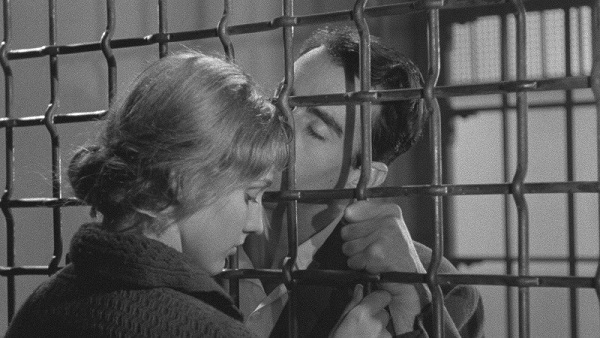
Pickpocket (1959, dir by Robert Bresson, DP: Leonce-Henri Burel)

Mouchette (1967, dir by Robert Bresson, DP: Ghislain Cloquet)

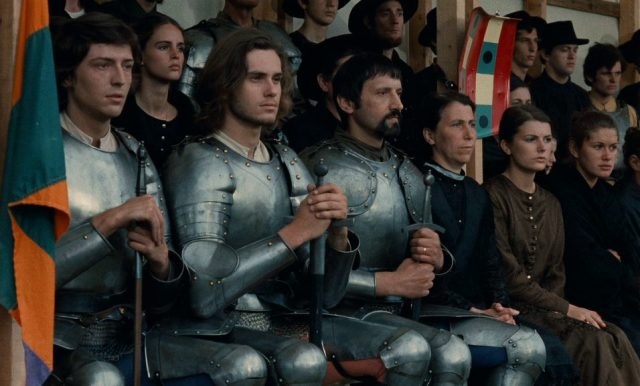
Lancelot Du Lac (1974, dir by Robert Bresson, DP: Pasqualino De Santis)

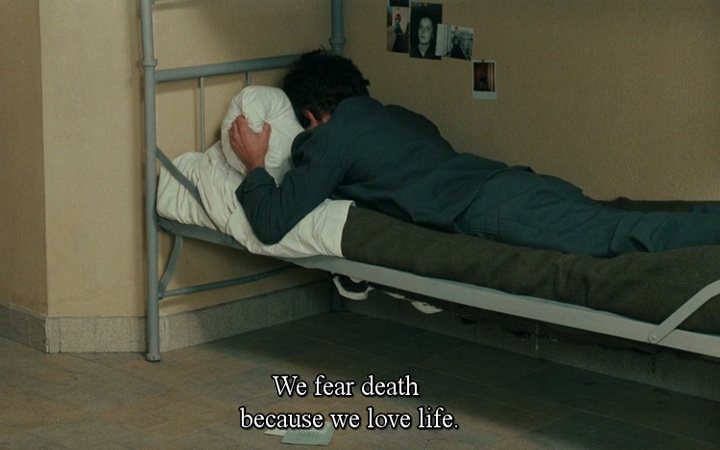
L’Argent (1983, dir by Robert Bresson, DP: Pasqualino De Santis)

Retro Television Reviews: The George McKenna Story (dir by Eric Laneuville)


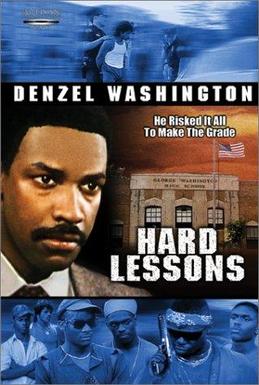
Welcome to Retro Television Reviews, a feature where we review some of our favorite and least favorite shows of the past!  On Sundays, I will be reviewing the made-for-television movies that used to be a primetime mainstay.  Today’s film is 1986’s The George McKenna Story!  It  can be viewed on Netflix, under the title Hard Lessons!

George Washington High School is a school that has defeated many well-meaning principals.  The hallways are full of drugs and gang members.  A good deal of the student body never shows up for class.  Fights are frequent.  The police are a common sight.  The majority of the teachers are men like Ben Proctor (Richard Masur), burned-out and content to hide in the teacher’s lounge.

New Orleans-raised George McKenna (Denzel Washington) is the latest principal and, from the minute that he shows up at the school, he seems a bit more confident than the other principals that the school has had.  He barely flinches when a raw egg hits his suit.  When he hears a fight occurring, he doesn’t hesitate to head down the hall to investigate.  McKenna is determined to make George Washington High into a worthwhile institution and that means inspiring both the students and the teachers.

When it comes to films about dedicated educators trying to reform a troubled school, most films tend to take one of two approaches.  One approach, the well-intentioned but not always realistic liberal approach, features the teacher or the principal who demands respect but who also treats the good students and teachers with equal respect and who turns around the school through the power of benevolence.  The other approach is the one where the principal or teacher grows frustrated and turns into an armed vigilante who forces the students to shut up and learn.  Think of The Principal or The Substitute or Class of 1984.  The first approach is the one that most teachers claim that they try to follow but I imagine that, for most of them, there’s an element in wish-fulfillment to be found in watching the second approach.  In the real world, of course, neither approach is as automatically successful as it is in the movies.

The George McKenna Story was made for television and it’s based on a true story so, not surprisingly, it follows the first approach.  Denzel Washington plays McKenna as someone who could probably handle himself in a fight if he ever got into one but, for the most part, the film portrays McKenna as succeeding by treating his students with more empathy and respect that they’ve gotten from anyone else in their lives.  Though cranky old Ben Proctor thinks that McKenna’s methods are foolish and that he’s asking the teachers to do too much, McKenna starts to turn the school around.  One student, whose father was threatening to make him drop out, ends up getting nearly straight A’s and reciting Shakespeare.  Unfortunately, not everyone can be rescued.  One student is arrested for murder and taken away by the cops but McKenna is still willing to be there for that student.  McKenna doesn’t give up on his students and, unlike that music teacher in The Class of 1984, he doesn’t allow them to fall through a skylight either.

The George McKenna Story is a predictable film.  It’s easy to guess which student will be saved by McKenna’s approach and which student will end up getting stabbed in a gang fight and which student will end up in prison.  That said, the film definitely benefits from Denzel Washington in the lead role.  Washington exudes confidence from the minute that he appears on screen and you’re left with little doubt that if anyone could reform a school simply through good intentions, it would definitely be Denzel Washington.

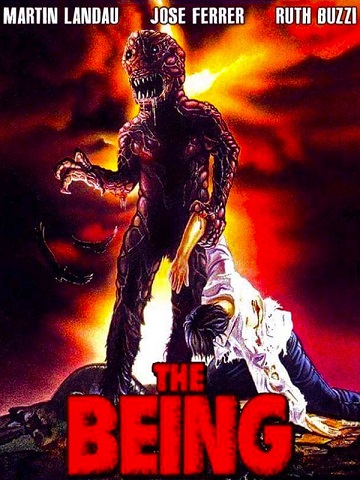
Live Tweet Alert: Watch The Being with #ScarySocial


As some of our regular readers undoubtedly know, I am involved in a few weekly live tweets on twitter.  I host #FridayNightFlix every Friday, I co-host #ScarySocial on Saturday, and I am one of the five hosts of #MondayActionMovie!  Every week, we get together.  We watch a movie.  We tweet our way through it.

Tonight, for #ScarySocial, Deanna Dawn will be hosting 1983’s The Being!

If you want to join us on Saturday night, just hop onto twitter, start the film at 9 pm et, and use the #ScarySocial hashtag!  The film is available on Prime.  I’ll probably be there and I imagine some other members of the TSL Crew will be there as well.  It’s a friendly group and welcoming of newcomers so don’t be shy.

A Blast From The Past: A Very Delicate Matter (dir by Claude Kerven)


Today’s blast from the past comes to use from 1982.

In A Very Delicate Matter, teenager Kristin Sorenson (Lori-Nan Engler) spends the summer working at a camp.  After her nominal boyfriend, Greg Pscharapolus (Zach Galligan), fails to call her even once, Kirstin ends up dating her superhot co-worker, Larry (future daytime drama star Grant Aleksander, making his television debut).  Once summer ends, Kristin returns home where Greg apologizes for not calling her.  Kristin takes Greg back and decides not to tell him about Larry.  But then Kristin gets a call from Larry.  Larry tells her that she might want to go by the free clinic and get some penicillin because Larry’s got gonorrhea and there’s a good chance to Kristin now has it as well.  And, since Kristin and Greg previously spent a day making up, Greg might have it too!

The plot description probably makes A Very Delicate Matter sound considerably campier than it is.  For the most part, this is a sensitive and nonjudgmental film, one in which no one is portrayed as being a villain.  (As one doctor points out, even Larry showed more courage than most by immediately calling Kristin and letting her know what was going on.)  While the two leads both give good performances (with Galligan just two years away from starring in Gremlins), the film is stolen by Marta Kober and John Didrichsen, who play the best friends of Kristen and Greg and who have a nice flirtatious chemistry with each other.  Just because your friend has a social disease, the film seems to be saying, don’t give up on love.  Marta Kober is probably best known for Friday the 13th Part 2, which featured its own warning about having unprotected sex at a summer camp.

Live Tweet Alert: Join #FridayNightFlix for The Best of Times


As some of our regular readers undoubtedly know, I am involved in a few weekly live tweets on Twitter and Mastodon.  I host #FridayNightFlix every Friday, I co-host #ScarySocial on Saturday, and I am one of the five hosts of #MondayActionMovie!  Every week, we get together.  We watch a movie.  We tweet our way through it.

Tonight, at 10 pm et, #FridayNightFlix has got 1986’s The Best of Times!  When Robin Williams teams up with Kurt Russell, it’s time for football action!

If you want to join us this Friday, just hop onto twitter, start the movie at 10 pm et, and use the #FridayNightFlix hashtag!  It’s a friendly group and welcoming of newcomers so don’t be shy.

The Best Of Times is available on Prime and Tubi!  See you there!

Here’s The Trailer for The Caine Mutiny Court-Martial Trailer!


Here’s the trailer for William Friedkin’s final film, an adaptation of The Caine Mutiny Court Martial Trailer.  The film will be premiering on Showtime in October and I look forward to seeing Kiefer Sutherland in the role of Lt. Commander Queeg.