4 Shots from 4 Films: Special George Pan Cosmatos Edition


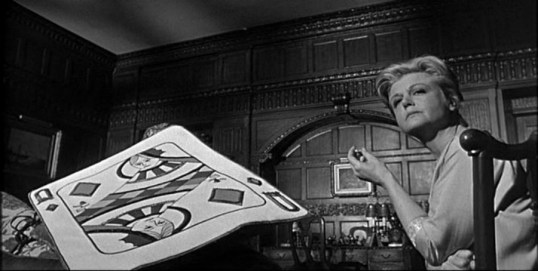
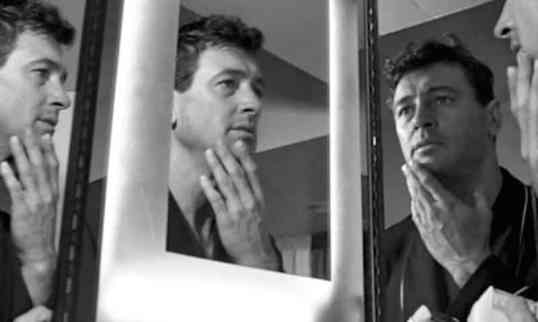
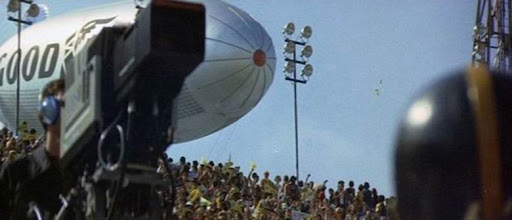
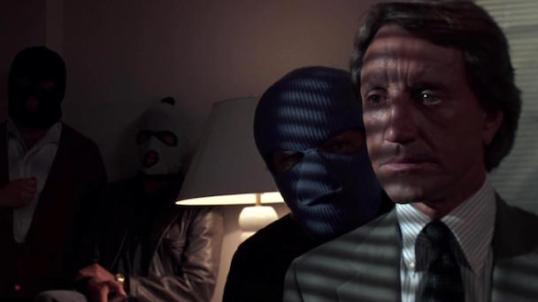
4 Or More Shots From 4 Or More Films is just what it says it is, 4 shots from 4 of our favorite films. As opposed to the reviews and recaps that we usually post, 4 Shots From 4 Films lets the visuals do the talking!

Today, we celebrate the birth of director George Pan Cosmatos!  It’s time for….

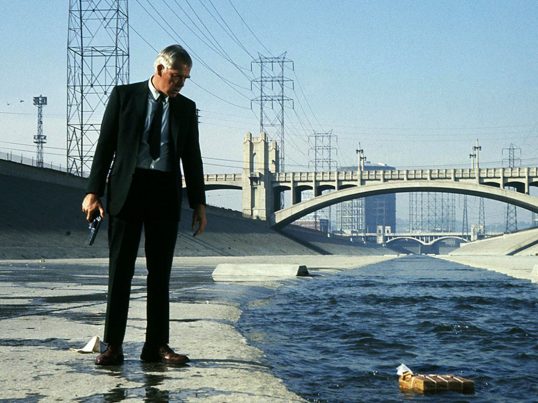
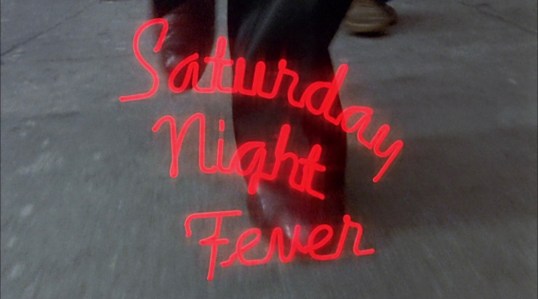
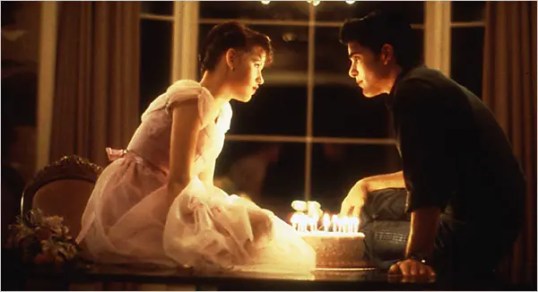
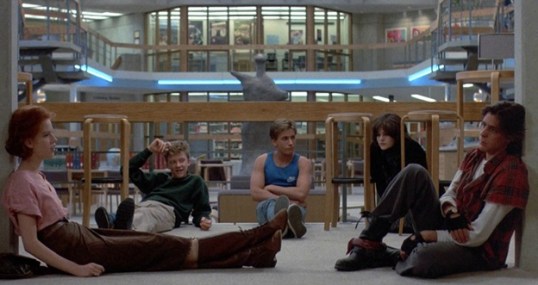
4 Shots From 4 George Pan Cosmatos Films

The Cassandra Crossing (1976, dir by George Pan Cosmatos, DP: Ennio Guarnieri)

Rambo: First Blood Part II (1985, dir by George Pan Cosmatos, DP: Jack Cardiff)

Cobra (1986, dir. George Pan Cosmatos, DP: Ric Waite)

Leviathan (1989, dir by George Pan Cosmatos, DP: Alex Thomson)

January Positivity: Tapestry (dir by Ken Kushner)


Oh, how I have struggled with Tapestry.

Seriously, I have lost track of the number of times that I’ve tried to watch 2019’s Tapestry, just to give up on it as I realized that it was next to impossible to actually follow the film’s story.  Earlier today, I tried to watch it again and I finally made it all the way to the end.

It’s the story of a family.  Ryan (Stephen Baldwin) is an executive who loses his job but doesn’t tell his wife about it.  She doesn’t find out until his former place of employment calls the house.  “He’s at work,” she says.  “Oh, he got another job already?” is the response.  Awkward!  What’s even more awkward is that Ryan is eventually hired back at his company but now he’s just a lowly salesman, with a boss who is several years younger than him.

Throughout this, we hear narration from his mother (Tina Louise) and the first part of the film is so haphazardly edited that I have to admit that I was frequently confused as to whether or not his mother was dead or alive.  Having now watched the entire film, I now know that his mother was alive but dying for the majority of the film, though her narration was still coming from beyond the grave.  Ryan’s father was played by Burt Young and I’ll say right now that I am a Burt Young fan.  I’ve seen the Rocky movies.  Burt Young’s performance as the always-drunk Paulie was always spot on, even if Paulie himself wasn’t always the most likable character.  That said, I also spent the first part of the movie confused as to whether or not the father was meant to be alive or not.  The film is so weirdly edited that it’s hard to keep track of who anyone is or where they are at any particular moment.

As Ryan, Stephen Baldwin mopes through the film, which I guess is understandable considering that his parents may or may not have been dead.  I mean, if it was confusing to me as a viewer, I can only imagine what it was like for him as a child.  It’s hard to really get a handle on who Ryan is supposed to be as a person or how we’re supposed to feel about him.  In many ways, he seems as depressed when his life is going well as he is when his life is falling apart.  Baldwin seems to be disconnected from the film, which is a polite way to say that he doesn’t really seem to be making much of an effort.

And that’s a shame because Stephen Baldwin is actually not a bad actor.  Back in the day, when he was actually invested in a role and making an effort, he was a consistently good actor, even if he did have a tendency to appear in terrible movies.  Like Alec, he could do both comedy and drama but he didn’t have Alec’s tendency to overact.  With this film, Stephen just glumly goes through the motions.  It’s a bit boring to watch.

That said, I will say that, now that I’ve actually seen it, the end of the film is effective.  Maybe it’s because I’ve lost both my parents but I did find the film’s final thought — that Ryan’s mother was heading to a better place even as she kept an eye on her family — to be a comforting one.

The National Society of Film Critics Honors One Battle After Another


The National Society of Film Critics have announced their picks for the best of 2025.  And here they are:

Best Picture
Winner: ONE BATTLE AFTER ANOTHER (57 points)
Runners-up: SINNERS (29 points) & THE SECRET AGENT (27 points)

Best Director
Winner: Paul Thomas Anderson, ONE BATTLE AFTER ANOTHER (54 points)
Runners-up: Jafar Panahi, IT WAS JUST AN ACCIDENT (48 points) & Richard Linklater, BLUE MOON and NOUVELLE VAGUE (39 points)

Best Actress
Winner: Kathleen Chalfant, FAMILIAR TOUCH (45 points)
Runners-up: Rose Byrne, IF I HAD LEGS I’D KICK YOU (39 points) & Renate Reinsve, SENTIMENTAL VALUE (37 points)

Best Actor
Winner: Ethan Hawke, BLUE MOON (57 points)
Runners-up: Wagner Moura, THE SECRET AGENT (43 points) & Michael B. Jordan, SINNERS (36 points)

Best Supporting Actress
Winner: Teyana Taylor, ONE BATTLE AFTER ANOTHER (56 points)
Runners-up: Inga Ibsdotter Lilleaas, SENTIMENTAL VALUE (47 points) & Wunmi Mosaku, SINNERS (41 points)

Best Supporting Actor
​Winner: Benicio del Toro, ONE BATTLE AFTER ANOTHER (54 points)
Runners-up: Delroy Lindo, SINNERS (37 points) & Stellan Skarsgård, SENTIMENTAL VALUE (30 points)

Best Screenplay
Winner: Jafar Panahi, IT WAS JUST AN ACCIDENT (53 points)
Runners-up: Robert Kaplow, BLUE MOON (50 points) & Kleber Mendonça Filho, THE SECRET AGENT (40 points)

Best Cinematography
Winner: Autumn Durald Arkapaw, SINNERS (50 points)
Runners-up: Adolpho Veloso, TRAIN DREAMS (36 points) & Michael Bauman, ONE BATTLE AFTER ANOTHER (29 points)

Best Nonfiction Film
Winner: MY UNDESIRABLE FRIENDS: PART I — LAST AIR IN MOSCOW (56 points)
Runners-up: THE PERFECT NEIGHBOR (22 points) & ORWELL: 2+2=5 (18 points)

Best Film Not In The English Language
Winner: THE SECRET AGENT (58 points)
Runners-up: IT WAS JUST AN ACCIDENT (57 points) & SENTIMENTAL VALUE (38 points)

Best Experimental Film: MORNING CIRCLE (Basma al-Sharif)

Film Heritage Award: The late Ken and Flo Jacobs, an irreplaceable, gravitational center of the American avant-garde, with a shared artistic sensibility that helped define experimental cinema.

Film Heritage Award: The Film Desk, for releasing key movies from all over the world, in 35mm prints and on home video, and publishing books that have enriched the public’s knowledge of cinema.

Film Heritage Award: Cinema Tropical, for its tireless efforts to distribute, program and promote Latin American cinema in the U.S.

Special Citation for a Film Awaiting U.S. Distribution: LANDMARKS (Lucrecia Martel)

Brad discusses THE MAGNIFICENT SEVEN (1960), directed by John Sturges!


Way back in 1960, Director John Sturges took Akira Kurosawa’s timeless classic SEVEN SAMURAI (1954) and translated its themes of honor and sacrifice into the American western THE MAGNIFICENT SEVEN. A classic on its own, the film stars such cinematic legends as Yul Brynner, Steve McQueen, James Coburn, Eli Wallach, and Charles Bronson. The storyline of a small group of men protecting a village from bandits proved to be an irresistible subject once again, especially the way it was handled here. Its theme music by Elmer Bernstein is one of the most instantly recognizable pieces of music in western cinema. It’s not easy translating a masterpiece without suffering quite negatively in comparison, and I’ve always admired how Sturges and his team of writers were able to create a film that both honored the source material while successfully transferring its content to a different part of the world. 

The lead performances of Yul Brynner and Steve McQueen anchor the film, and the screenplay masterfully takes the time to introduce us to each of the seven men and their myriad of reasons for taking on this mission. We care about the men because we get to know them. After Brynner and McQueen, we learn James Coburn is the most badass, Robert Vaughn is the most cowardly, Brad Dexter is the most money hungry, and Horst Buchholz is the most naive. Unsurprisingly, my favorite of the characters is Bernardo O’Reilly, played by Charles Bronson. In my opinion, the character of O’Reilly represents the heart of the story. His character is as tough as it gets and great with a gun, but it’s the way he cares for the actual people, especially the children of the village, that really stands out. It’s in these small moments and exchanges between Bronson and the kids, where the film seems to transcend the genre and become something even more reflective and meaningful. So when Bronson pays the ultimate price, it’s not for some grand purpose or ideal, it’s specifically for those kids, and the moment becomes powerful. For my money, Bronson gives one of the more moving turns in classic western cinema that remains under appreciated to this day. 

In 2025, THE MAGNIFICENT SEVEN celebrated its 65th anniversary, with many theaters around the country screening the film again. I was lucky enough to catch one of those screenings at a theater in downtown Little Rock. It was a wonderful night at the movies. Today, on what would have been his 116th Birthday, I celebrate Director John Sturges and this great film that has meant so much to me!

Brad reviews UNDER SIEGE (1992), starring Steven Seagal! 


I’ve always liked UNDER SIEGE. After his sudden emergence with a series of brutal action films in the late 80’s and early 90’s, like ABOVE THE LAW and OUT FOR JUSTICE, Steven Seagal entered the world of high concept action filmmaking when he starred in this “Die Hard on a Battleship.” Seagal would not be the underdog cop taking on drug dealers, coked up mafia hitmen, or crooked cops here. Rather, he emerges as a full blown movie star in a big budget studio action film. Directed by Andrew Davis, whose credits include Chuck Norris’ best movie CODE OF SILENCE (1985), Seagal’s debut ABOVE THE LAW (1988) and the next year’s global smash THE FUGITIVE (1993), this is the movie where everything came together for Seagal. I watched UNDER SIEGE at the movie theater myself in 1992 and had a great time with it. I didn’t realize at the time that this would be his career peak, with a global box office of over $156 million. No other film would really even come close. 

Casey Ryback (Seagal) is a “cook” aboard the USS Missouri, a battleship that is scheduled to be decommissioned. He’s also a former badass Navy SEAL who was demoted after punching out his commanding officer when a mission in Panama had gone wrong. When a group of mercenaries led by ex–CIA operative William Strannix (Tommy Lee Jones) seize control of the ship under the guise of a birthday celebration, they overlook Ryback. In classic John McClane style, Ryback goes on to become a fly in their ointment, a monkey in their wrench, and a big-time pain in their asses! Moving through the narrow corridors of the ship, and with the assistance of Playboy Playmate Jordan Tate (Erika Eleniak), Ryback begins taking out mercenaries one by one. But will he be able to stop Strannix and his partner Krill (Gary Busey) from stealing the ship’s nuclear Tomahawks and preserve the safety and security of the world? I’ll give you one guess!

First and foremost, UNDER SIEGE is a damn good action movie. It definitely helps that a director as talented as Andrew Davis is calling the shots. His film delivers on the entertainment front, with lots of well staged shootouts, violent scenes of close quarter, hand-to-hand combat, and a cake emergence sequence that still makes my head spin! I think the battleship makes for a great “movie” setting for this type of action. With its concoction of narrow hallways, engine rooms, and mess halls, there’s all kinds of interesting places for fighting and killing. Back in 2007, I was lucky enough to take a tour of the USS Alabama battleship, the primary filming location for UNDER SIEGE, which only enhances my appreciation for the work done here. On the heels of his confident and charismatic performance in the prior year’s OUT FOR JUSTICE, this is Steven Seagal at his most watchable. He’s in peak physical condition, so he can believably kick all the ass that’s necessary for this kind of film, and he’s also likable in his role as the underestimated “cook.” He will never be mistaken for Bruce Willis, but Seagal is good here.

Great action movies will usually have great villains, and UNDER SIEGE is especially blessed in this area. Tommy Lee Jones goes way over-the-top, chewing on scenery like he’s at a Golden Corral buffet, turning Strannix into the type of irrational lunatic that I love in my early 90’s action movies. And looking back now, Gary Busey seems to do what he does best. His traitorous Commander Krill comes off as goofy, disgusting, and unstable. In other words, he’s perfect. Even though Seagal does smile more in this film, Jones and Busey do bring an energy to the movie that balances out Seagal’s more stoic character, providing the type of spark not often found in the star’s movies. 

At the end of the day, I rank UNDER SIEGE as my second favorite Steven Seagal film, slightly below my preference for the more down and dirty OUT FOR JUSTICE. What it lacks in grit is more than made up with entertainment value, strong performances, and action on a scale that the star’s future films would never rise to again. If I were put in a position where I could only recommend one Steven Seagal film to a person who’d never seen one of his movies before, I’d probably go with this one. It’s an excellent, mainstream 90’s action movie. 

Scenes That I Love: Once Upon A Time In America


(SPOILERS BELOW)

The final moments of Sergio Leone’s epic 1984 gangster film, Once Upon A Time in America, are filled with questions and mysteries.

The final moments of Sergio Leone’s epic 1984 gangster film, Once Upon A Time in America, are filed with questions and mysteries.

In 1968, who did Noodles (played by Robert De Niro) see standing outside of Max’s mansion?  When the garbage truck pulled up, did the mysterious man get in the truck or was he thrown in by some unseen force?

Why, in 1968, did Noodles see a car from the 1920s, one that was full of people who appeared to be celebrating the end of prohibition?  Was the car really there, in 1968, or was it an element of Noodles’s past as a gangster suddenly popping into his mind?

Once Upon A Time In America (1984, dir by Sergio Leone, DP: Tonino Delli Colli)

When we then see a young Noodles in an opium den, are we flashing back to the 1920s?  Is Noodles remembering the past or is it possible that we’ve been in the 20s the whole time and all of the scenes set in 1968 were actually only a drug-induced dream?

Why, with men looking to kill him and all of his friends apparently dead, does Noodles suddenly smile at the end of the film?  Is that sudden smile a result of the drugs or is there something else going on?

Once Upon A Time In America was Sergio Leone’s final film.  It’s one that he spent decades trying to get made and, once it was finally produced, it was butchered and re-edited by a studio hacks who demanded that the film tell its story in a linear style.  Leone was reportedly heart-broken by how his film was treated.  Some have speculated that his disappointment may have even contributed to the heart attack that eventually killed him.  It was only after Leone passed that his version of Once Upon A Time In America became widely available in the U.S.  This enigmatic epic continues to spark debate.  One thing that can’t be denied is that it’s a brilliant film.

As today is Leone’s birthday, it only seems appropriate to share a pair of scenes that I love, from the ending of Once Upon A Time In America.

Live Tweet Alert: Join #ScarySocial for Re-Animator!


As some of our regular readers undoubtedly know, I am involved in a few weekly live tweets on twitter.  I host #FridayNightFlix every Friday, I co-host #ScarySocial on Saturday, and I am one of the five hosts of #MondayActionMovie!  Every week, we get together.  We watch a movie.  We tweet our way through it.

Tonight, at 9 pm et, Deanna Dawn will be hosting #ScarySocial!  The movie?  1985’s Re-Animator!  

If you want to join us this Saturday, just hop onto twitter, start the movie at 9 pm et, and use the #ScarySocial hashtag!  It’s a friendly group and welcoming of newcomers so don’t be shy.

The film is available on Prime and Tubi!

Silent Film Review: Tarzan of the Apes (dir by Scott Sidney)


Elmo Lincoln.

That name may not sound all the imposing but Elmo Lincoln played a very important role in the early days of Hollywood.  He was the first actor to play the adult version of Tarzan, the Lord of the Jungle.  Originally from Indiana, Elmo Lincoln was a 29 year-old former sailor and boxer when he was selected to replace Stellan Windrow as the star of 1918’s Tarzan of the Apes.  (A stunt man, Windrow had already filmed the majority of Tarzan’s stunts before he was drafted to serve in World War I.)  Lincoln, who had already appeared in a few of D.W. Griffith’s films, would briefly find stardom as a result of playing Tarzan.

Of course, it takes a while for Lincoln to appear in Tarzan of the Apes.  The film was reportedly two hours long when it was initially released but today, it only exists in a 61-minute version.  (Because each municipality had its own board of censors, the version of Tarzan of the Apes that played in one city could be quite different from the version that played in another.  Unfortunately, with that many censors snipping scenes from city to city, a lot of footage that was cut from the film was undoubtedly lost forever.)  The first half of the film deals with the birth of Tarzan while the second half features Tarzan as an adult.  Technically, the first actor to play Tarzan was the uncredited baby who appears shortly after Lord Greystoke (True Boardman) and his wife (Kathleen Kirkham) are abandoned by mutineers in Africa.  After the baby is given to the Apes, child actor Gordon Griffith takes over the role.  Finally, once an expedition is sent to investigate whether or not the stories about Tarzan are true, Elmo Lincoln takes over the role and saves Jane (Enid Markey) after she’s kidnapped by a group of natives.  The film ends with Tarzan and Jane just starting to fall in love.  (A sequel, The Romance of Tarzan, was released that same year but it’s a lost film.)

In the role of Tarzan, Elmo Lincoln is …. well, he’s okay.  He’s not a great actor but he’s a good Tarzan.  He’s obviously strong and athletic and he looks convincing when he’s hiding in the trees.  Lincoln was not a particularly expressive actor and that natural stiffness is noticeable whenever he’s called upon to demonstrate anything other than grim determination.  He has a strong physical presence and, in 1918, that was probably enough to make him a star.  When he gazes at Jane and the title cards tells us that he’s saying, “Tarzan is a man and man does not force the love of a woman,” the viewer believes it.  If I was lost in the jungle, I’d probably want Elmo Lincoln to help me out.  We wouldn’t have much to talk about but I would have faith in his ability to take care of any problems that we ran into on the way back to civilization.

That said, the film is at its best when it depicts Tarzan’s childhood.  There’s a sense of fun and wonder to those scenes that is missing from the second half of the film.  Gordon Griffith did a good job as the young Tarzan.  Louisiana is a surprisingly effective stand-in for the jungles of Africa.  By today’s standards, Tarzan of the Apes can seem a bit creaky.  (The camera barely moves at all.)  But watching it, one can still understand why Hollywood fell in love with the idea of a man raised by apes.  One can even understand why, for a brief period of time, Elmo Lincoln became a star.

Shattered Politics: The Alternate (dir by Sam Firstenberg)


Why is 2000’s The Alternate one of the greatest action films ever made?

Consider this: President John Fallbrook (John Beck) is scheduled to give a speech at a World Hunger Symposium, where he will be announcing legislation that will make it illegal for people not to have food.  (I’m not sure how that would work but whatever.  It’s a movie.)  Eric Roberts is The Alternate, a former intelligence agent who has just been recruited to serve as a member of a team that is being used by Agent William (Ice-T) to test the President’s security.  (Ronn Moss, of Hard Ticket to Hawaii and Bold and the Beautiful fame, plays the fake President.)  The Leader (Bryan Genesse) tells the Alternate that the CIA actually wants to abduct the President for real in order to help boost the President’s reelection campaign.  The Alternate agrees to help but then it turns out that the Leader is actually just in it for the money and he’s planning on holding the President hostage until he gets paid.  While Agent Briggs (Michael Madsen) watches from the outside, The Alternate makes his way through a nearly deserted hotel and attempts to defeat the bad guys.

It’s Die Hard …. with Eric Roberts!

The plot is so convoluted that it borders on self-parody but director Sam Firstenberg keeps the action moving quickly and, to its credit, this is a film that fully understands how to embrace the melodrama.  When the Leader tries to take out The Alternate, he doesn’t just pursue him with a gun.  Instead, he picks up a flame thrower!  When The Alternate gets into a gunfight at the hotel’s pool, he doesn’t just duck behind pillars and fire his gun.  Instead, he grabs a banner and swings back and forth over the water, all the while shooting his gun.  When the President says that he doesn’t like heights, it isn’t just a case of him getting nervous about being on the roof of the hotel.  Instead, he’s so paralyzed that he literally has to be picked up and carried from one location to the next.  When The Leader calls the police and gives them his list of demands, he doesn’t just make the usual threats.  Instead, he speaks in what sounds like a French accent and claims to be a infamous (and possibly fictional) terrorist.  When it’s time to kidnap the President, the kidnappers don’t just use guns.  Instead, they also use blow-darts to paralyze the Secret Service agents.  Everything about the film is gloriously and wonderfully over the top.

(I’ve always felt that, when it comes to low-budget action films, the best ones are the ones that are willing to just be as ridiculous as possible. Bring out the flame thrower. Fly the Money Plane. Cast Joe Don Baker as your lead. Just jump off that cliff and see what happens.)

The Alternate is definitely a film that deserves to be better-known.  (It was also released under the title The Replacement.)  In the realm of Die Hard rip-offs, it’s in a class by itself, a totally enjoyable thrill ride that manages to get more and more excessive with each passing minute.  Bryan Genesse, who also wrote the script, gets to show off some stylish martial arts moves.  John Beck is the wimpiest President ever.  Michael Madsen never takes off his dark glasses.  And, best of all, Eric Roberts gets to be the star!

The Alternate?  Why, it’s just one of the best action movies ever!

Previous Eric Roberts Films That We Have Reviewed:

  1. Paul’s Case (1980)
  2. Star 80 (1983)
  3. Runaway Train (1985)
  4. To Heal A Nation (1988)
  5. Best of the Best (1989)
  6. Blood Red (1989)
  7. The Ambulance (1990)
  8. The Lost Capone (1990)
  9. Best of the Best II (1993)
  10. Love, Cheat, & Steal (1993)
  11. Voyage (1993)
  12. Love Is A Gun (1994)
  13. Sensation (1994)
  14. Dark Angel (1996)
  15. Doctor Who (1996)
  16. Most Wanted (1997)
  17. Mercy Streets (2000)
  18. Raptor (2001)
  19. Rough Air: Danger on Flight 534 (2001)
  20. Strange Frequency (2001)
  21. Wolves of Wall Street (2002)
  22. Border Blues (2004)
  23. Mr. Brightside (2004)
  24. Six: The Mark Unleased (2004)
  25. We Belong Together (2005)
  26. Hey You (2006)
  27. Depth Charge (2008)
  28. Amazing Racer (2009)
  29. The Chaos Experiment (2009)
  30. In The Blink of an Eye (2009)
  31. Bed & Breakfast (2010)
  32. Enemies Among Us (2010)
  33. The Expendables (2010) 
  34. Sharktopus (2010)
  35. Beyond The Trophy (2012)
  36. The Dead Want Women (2012)
  37. Deadline (2012)
  38. The Mark (2012)
  39. Miss Atomic Bomb (2012)
  40. Assault on Wall Street (2013)
  41. Bonnie And Clyde: Justified (2013)
  42. Lovelace (2013)
  43. The Mark: Redemption (2013)
  44. The Perfect Summer (2013)
  45. Revelation Road: The Beginning of the End (2013)
  46. Revelation Road 2: The Sea of Glass and Fire (2013)
  47. Self-Storage (2013)
  48. Sink Hole (2013)
  49. A Talking Cat!?! (2013)
  50. This Is Our Time (2013)
  51. Bigfoot vs DB Cooper (2014)
  52. Doc Holliday’s Revenge (2014)
  53. Inherent Vice (2014)
  54. Road to the Open (2014)
  55. Rumors of War (2014)
  56. So This Is Christmas (2014)
  57. Amityville Death House (2015)
  58. Deadly Sanctuary (2015)
  59. A Fatal Obsession (2015)
  60. Las Vegas Story (2015)
  61. Sorority Slaughterhouse (2015)
  62. Stalked By My Doctor (2015)
  63. Enemy Within (2016)
  64. Hunting Season (2016)
  65. Joker’s Poltergeist (2016)
  66. Prayer Never Fails (2016)
  67. Stalked By My Doctor: The Return (2016)
  68. The Wrong Roommate (2016)
  69. Dark Image (2017)
  70. The Demonic Dead (2017)
  71. Black Wake (2018)
  72. Frank and Ava (2018)
  73. Stalked By My Doctor: Patient’s Revenge (2018)
  74. Clinton Island (2019)
  75. Monster Island (2019)
  76. The Reliant (2019)
  77. The Savant (2019)
  78. Seven Deadly Sins (2019)
  79. Stalked By My Doctor: A Sleepwalker’s Nightmare (2019)
  80. The Wrong Mommy (2019)
  81. Exodus of a Prodigal Son (2020)
  82. Free Lunch Express (2020)
  83. Her Deadly Groom (2020)
  84. Top Gunner (2020)
  85. Deadly Nightshade (2021)
  86. The Elevator (2021)
  87. Just What The Doctor Ordered (2021)
  88. Killer Advice (2021)
  89. Megaboa (2021)
  90. Night Night (2021)
  91. The Poltergeist Diaries (2021)
  92. The Rebels of PT-218 (2021)
  93. Red Prophecies (2021)
  94. A Town Called Parable (2021)
  95. Bleach (2022)
  96. Dawn (2022)
  97. My Dinner With Eric (2022)
  98. 69 Parts (2022)
  99. The Rideshare Killer (2022)
  100. The Company We Keep (2023)
  101. D.C. Down (2023)
  102. Aftermath (2024)
  103. Bad Substitute (2024)
  104. Devil’s Knight (2024)
  105. Insane Like Me? (2024)
  106. Space Sharks (2024)
  107. The Wrong Life Coach (2024)
  108. Broken Church (2025)
  109. Shakey Grounds (2025)
  110. When It Rains In L.A. (2025)