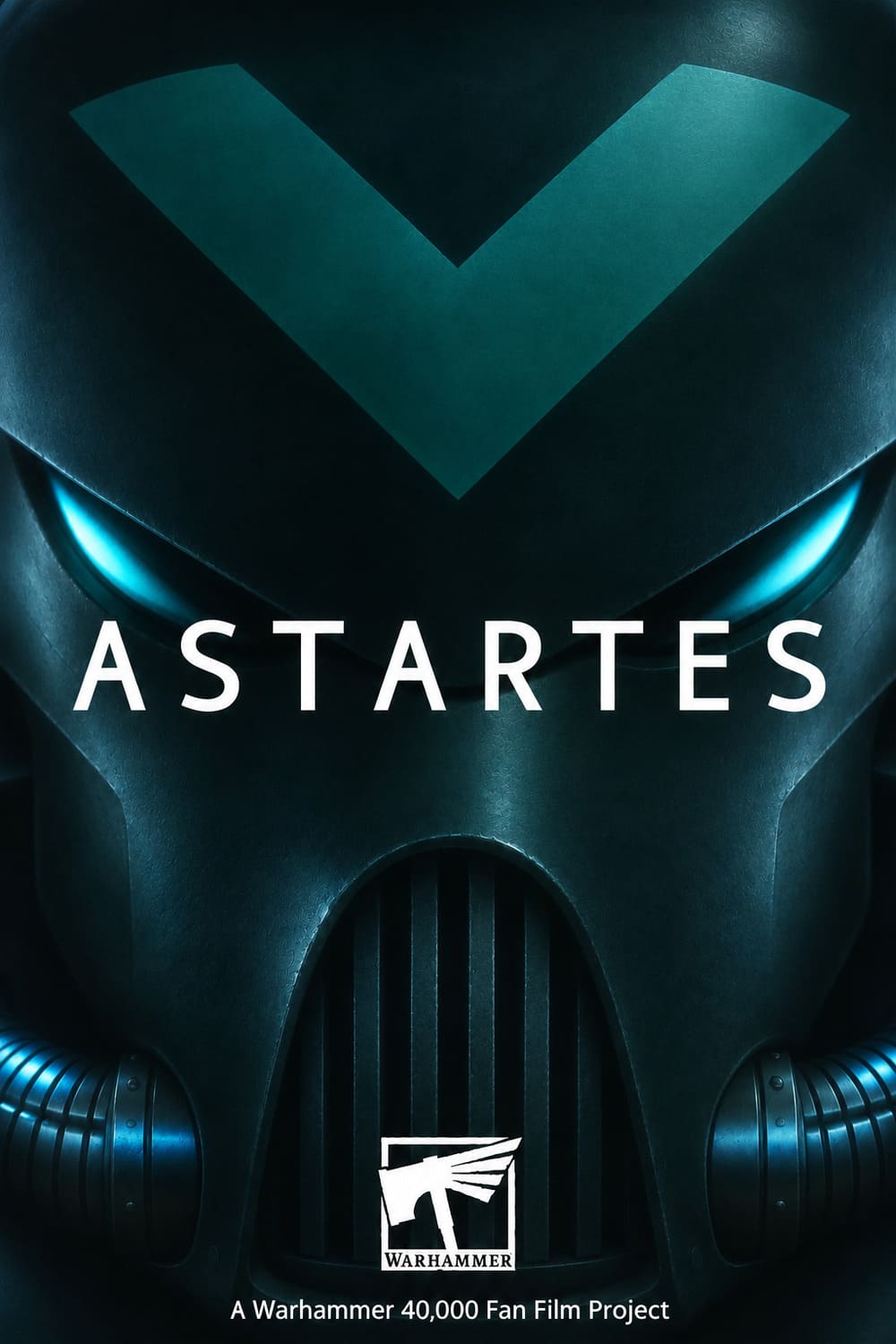
Syama Pedersen’s Astartes is a striking piece of independently created CG animation that understands what makes Warhammer 40,000’s Space Marines frightening: they are not simply soldiers in oversized armor, but instruments of overwhelming, methodical violence. Across its five installments, the short turns a boarding operation into an exercise in mounting dread, establishing the Adeptus Astartes’ superiority without lengthy exposition. Its greatest achievement is making their power feel tangible—not through declarations of their legendary status, but through the terrifying ease with which they overcome resistance.
The film does an exceptional job of showing just how far above baseline humanity the Astartes truly are. The human defenders are not merely smaller figures standing opposite larger opponents; their desperate resistance provides a measuring stick for the Marines’ extraordinary capabilities. Against the squad’s speed, precision, and armored resilience, ordinary soldiers seem tragically outmatched. What would be a desperate, chaotic battle for a human combatant appears almost routine to an Astartes. The contrast makes these warriors feel genuinely superhuman rather than simply well-equipped, exposing the immense gulf between humanity and the living weapons created to fight its wars.
Pedersen’s animation strengthens that distinction by reconciling enormous weight with startling agility. The Marines’ footsteps suggest industrial machinery, yet their movements become sudden and predatory when combat demands it. They never seem burdened by their bulk; their armor feels inseparable from their bodies. Their brutality is equally convincing because it is procedural rather than theatrical. They do not posture, celebrate, or waste movement—they identify threats and eliminate them. That absence of visible excitement makes their violence more unsettling: this is not uncontrolled rage, but the disciplined application of lethal force.
The visual and sonic presentation gives that violence its crushing impact. Claustrophobic corridors emphasize the Marines’ imposing size, while heavy footfalls and thunderous weapon reports make every advance feel consequential. Detailed environments establish the setting’s grim atmosphere without burying the action beneath visual clutter. When the mission encounters stranger powers and unknown technology, the short shifts toward cosmic horror, reminding viewers that even these formidable warriors inhabit a universe capable of threatening them. Its sparse exposition occasionally sacrifices clarity, particularly for newcomers, but the resulting mystery makes the world feel larger than the mission unfolding onscreen.
That such an assured production began as one animator’s independent project makes Astartes even more impressive. Pedersen’s work caught Games Workshop’s attention and led the company to hire him in 2021 to create official Warhammer animation—a remarkable transition from fan creator to professional contributor to the universe he admired. The recognition feels earned because the short does more than reproduce familiar armor and iconography: it translates the Space Marines’ defining qualities into movement, sound, and atmosphere. Their superiority is not simply part of the background lore; it becomes the organizing principle of every encounter.
Pedersen later contributed as a layout artist to “Warhammer 40,000: And They Shall Know No Fear,” the Astartes-centered episode of Amazon Prime Video’s Secret Level. His contribution formed part of a collaborative production rather than another solo undertaking. It is, in this reviewer’s estimation, the anthology’s best episode, carrying forward the same understanding that makes Astartes so compelling: Space Marines should feel simultaneously disciplined, brutally efficient, and terrifyingly inhuman. His involvement provides a fitting continuation of the original short’s achievement, bringing that distinctive approach from an independent fan project into a major studio production.
“I’m afraid, sir, I don’t believe God loves me at all.” — Tanya Degurechaff
Saga of Tanya the Evil (Yōjo Senki) sounds like a gimmick until its strange ingredients start working together. A ruthless Japanese salaryman gets reincarnated as a little girl, joins the military in an alternate European world, and ends up fighting a war involving rifles, artillery, and airborne magic. Somehow, this becomes both an entertaining action series and a nasty joke about corporate ambition. Across its two seasons and full-length film, the central irony never loses its bite: Tanya wants security, but everything she does to earn it makes her more useful on the battlefield. Being exceptional turns out to be a terrible career move.
It also stands out as one of the better isekai properties because reincarnation actually matters to the story. Where much of the genre uses another world as a shortcut to wish fulfillment, Saga of Tanya the Evil turns a second life into an argument about identity, faith, and survival. Tanya’s previous existence is not background information discarded after the opening episode. Her corporate mindset shapes her decisions, while her confrontation with Being X gives her new life a personal conflict. Remove the reincarnation premise, and you lose the machinery that makes the series interesting.
Adapted from Carlo Zen’s light novel series The Saga of Tanya the Evil, illustrated by Shinobu Shinotsuki, the anime began with a twelve-episode season in 2017. Saga of Tanya the Evil: The Movie followed in 2019, continuing the story rather than offering a disposable side adventure. The second season, Saga of Tanya the Evil II, followed in 2026. The viewing order is straightforward: first season, movie, second season. Together, they expand one soldier’s survival scheme into a wider examination of a war that keeps growing beyond anyone’s control.
The salaryman’s new identity is Tanya Degurechaff, an orphaned girl living in the Empire, an alternate-world counterpart to Imperial Germany. Instead of a familiar fantasy kingdom, her new home resembles early twentieth-century Europe, where a World War I–style conflict unfolds in the 1920s and magic has been incorporated into military operations. Trenches, artillery, and bureaucratic command structures exist alongside flying soldiers who turn magical ability into another weapon of industrial warfare. The setting gives Tanya a system she thinks she understands and a conflict she cannot simply outsmart.
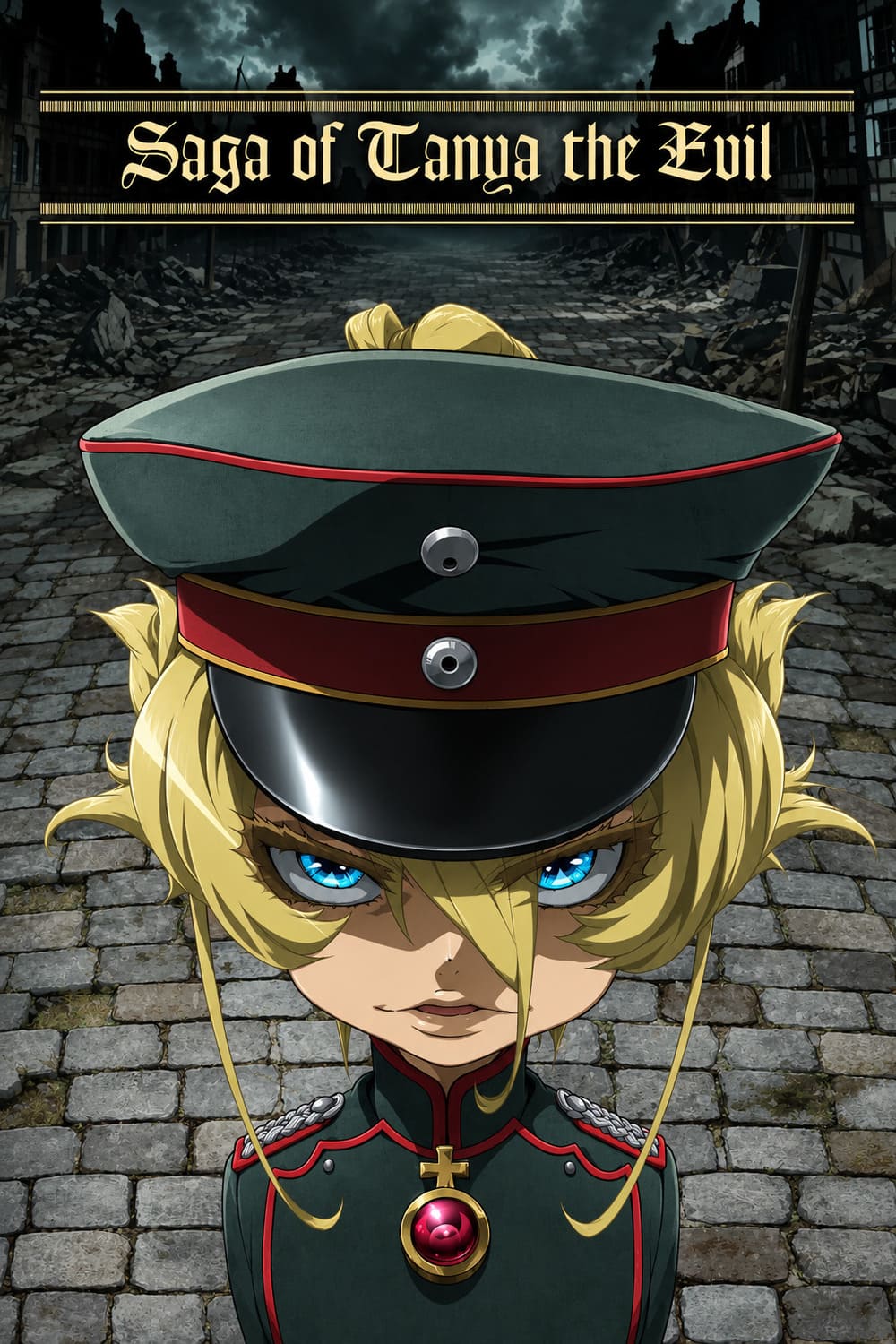
At heart, Tanya is pretty much a black-hearted upper-management executive reincarnated into the body of a young girl. The new appearance does not come with a softer personality or a sudden appreciation for human connection. Behind that small face is the same calculating adult who judges people by productivity, obedience, and usefulness. She approaches military service like a corporate ladder, hoping excellent performance will earn her a comfortable position away from danger. The contrast goes beyond appearances: she brings the cold logic of the boardroom into a world where a bad performance review can become a death sentence.
Crucially, the series does not try to sell Tanya as a hero. She is the protagonist, absolutely, but being the person whose story we follow does not make her morally admirable. If anything, her ruthlessness, manipulation, and willingness to treat people as expendable give her more villainous traits than heroic ones. The writing’s real achievement is making us root for her without hiding those red flags. We understand her goals, enjoy her ingenuity, and want to see how she escapes the next impossible situation, even when her methods make us uncomfortable. The series earns our investment without requiring our approval.
The first season establishes where that personality comes from. Before reincarnation, the salaryman was an efficiency-obsessed manager whose treatment of a fired employee ended with that employee murdering him. A confrontation with a self-proclaimed god, whom he labels Being X, turns death into an argument about faith. Being X apparently believes hardship will produce religious devotion; Tanya treats the arrangement like an unfair workplace dispute. It is a wonderfully petty foundation for such a violent story. Neither side seems interested in understanding the other, and ordinary people get caught inside their cosmic disagreement.
Tanya’s career supplies another layer of comedy. Her logic is recognizable: work hard, impress management, secure a comfortable position. Unfortunately, her superiors interpret every achievement as evidence that she belongs somewhere more dangerous. The military sees a dedicated prodigy where Tanya sees an employee trying to qualify for a better assignment. That gap between intention and reputation keeps the story entertaining while exposing her biggest blind spot. She can calculate battlefield risks with frightening precision and still misjudge how other people will interpret her behavior.
Unlike many isekai protagonists, Tanya does not arrive with modern knowledge and coast toward a better life. Her experience gives her advantages, but it also reinforces her limitations. She expects rational behavior to produce rational outcomes, even when the people around her operate through patriotism, fear, ambition, or wounded pride. Watching someone who considers herself exceptionally practical repeatedly misread the human side of her situation is darkly funny. Her old worldview survives reincarnation intact; the new world keeps demonstrating why it was never as foolproof as she believed.
Season one also makes its military structure matter. Promotions, command decisions, and strategic misunderstandings shape what Tanya can accomplish. The aerial mage battles provide immediate excitement, but the larger attraction is watching individual cleverness collide with a huge organization. Briefings occasionally slow the momentum, particularly when another stretch of terminology separates the audience from the next confrontation. Still, that administrative texture belongs here. Without it, Tanya’s managerial personality would have much less to push against, and the series would become a more ordinary superpowered-warrior story.
Visually, the anime embraces an abrasive personality. Tanya’s exaggerated expressions make her look less like an adorable mascot than a miniature officer whose customer-service smile has completely collapsed. Some character designs take getting used to, but the battlefield presentation is easier to appreciate. Airborne movement, magical attacks, and conventional weapons create an energetic mixture, while gunfire and explosions give the combat physical weight. Beneath the ridiculous premise, the fighting needs to feel dangerous, and the production generally understands that assignment.
Saga of Tanya the Evil: The Movie takes that foundation and pushes the spectacle harder. It functions as a direct continuation, so newcomers should not expect a patient introduction. Its strongest dramatic addition is Mary, the daughter of a man Tanya killed. Her hatred gives the conflict a personal dimension that military reports cannot contain. Tanya understands killing through operational necessity; Mary experiences its aftermath as grief and revenge. That contrast punctures the comfortable distance created by Tanya’s narration. What looks like another successful operation from her perspective can be a life-shattering tragedy from someone else’s.
The movie’s climactic confrontation provides an especially strong action showcase, although the road there can feel crowded. Characters and military developments compete for attention, and dialogue sometimes interrupts battles that already communicate their stakes. The film works better as the next substantial chapter than as an independent feature. Still, Mary’s furious directness makes a useful counterweight to Tanya’s calculations. Their conflict sharpens the distinction between following Tanya and endorsing her: we may want her to survive, but the story gives us reasons to understand why someone else desperately wants her stopped.
The second season shifts attention toward Tanya’s Salamander combat group and the increasingly punishing demands of the Eastern Front. Shortages, winter, guerrilla attacks, and repeated operations complicate the promise that one brilliant maneuver might solve everything. Season one establishes why Tanya excels at fighting; the continuation asks what that excellence is worth when the larger conflict resists a clean solution. Training a new unit also returns to an enjoyable tension: Tanya treats people as organizational components while remaining responsible for keeping them functional. Her managerial instincts help, but they cannot make the battlefield behave like a well-run department.
That broader scope brings a trade-off. Peace efforts involving neutral Ildoa and competing priorities within Imperial leadership deepen the political picture but make the story less immediately accessible than its original survival hook. Enjoyment increasingly depends on an appetite for logistics, negotiations, and the gap between tactical success and strategic progress. For the right audience, that is an upgrade. Tanya becomes trapped within institutions that reward effective violence without knowing how to stop needing it. Another battlefield victory does not necessarily bring her closer to peace.
Taken together, the two seasons and film offer dark comedy, military fantasy, and a central character who is fascinating precisely because she is not a conventional hero. The franchise can be talky, its designs can be off-putting, and Tanya’s behavior frequently deserves condemnation rather than applause. Yet the writing keeps us invested in her struggle without pretending those problems disappear because she gets top billing. For viewers new to anime, Saga of Tanya the Evildeserves a place on their must-see list, especially if dark humor, military strategy, and morally complicated protagonists sound appealing. It makes excellent use of its reincarnation premise and turns an alarming collection of red flags into someone we cannot stop watching.