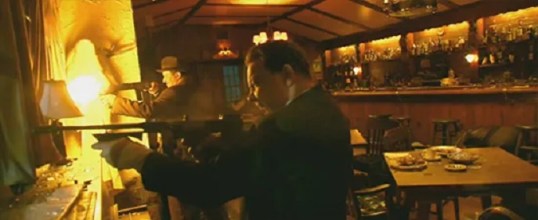
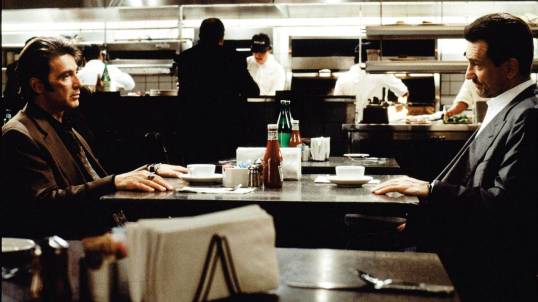
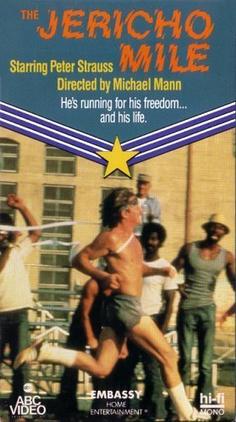
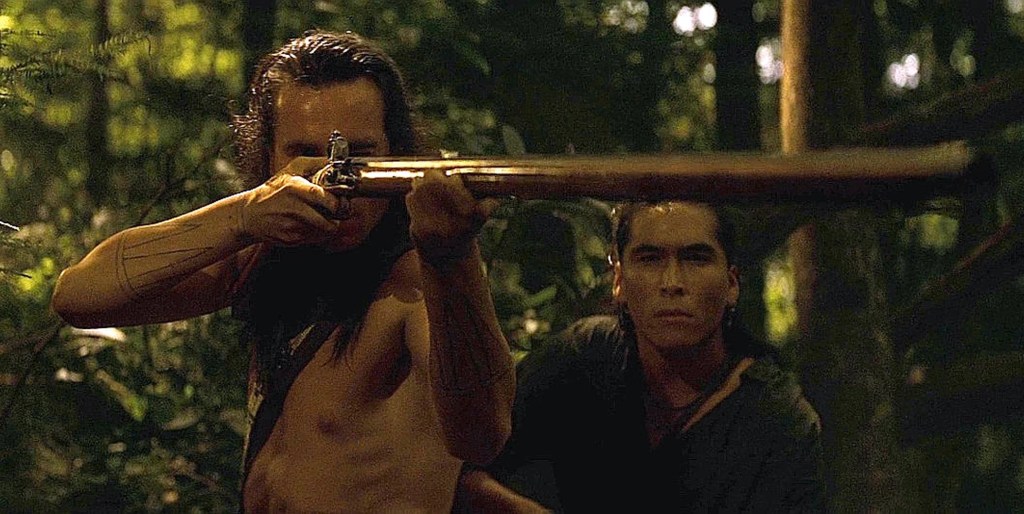
Seeing as how I raved about this film and James Caan’s performance earlier this week, it only seems appropriate that today’s scene that I love should come from 1981’s Thief. Here is the famous diner scene, featuring Caan and Tuesday Weld. Caan later said that he considered this to be the best acting he had ever done.
4 Or More Shots From 4 Or More Films is just what it says it is, 4 shots from 4 of our favorite films. As opposed to the reviews and recaps that we usually post, 4 Shots From 4 Films lets the visuals do the talking!
It’s tax day, which means that it’s time for….
4 Shots from 4 Heist Films
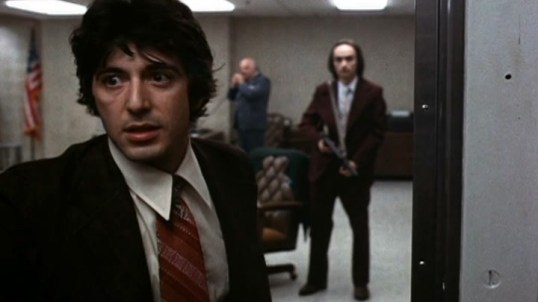
Dog Day Afternoon (1975, dir by Sidney Lumet, DP: Victor J. Kemper)
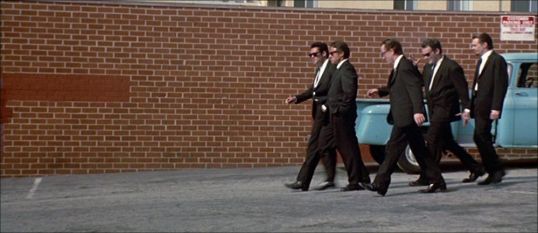
Reservoir Dogs (1992, dir by Quentin Tarantino, DP: Andrzej Sekuła)
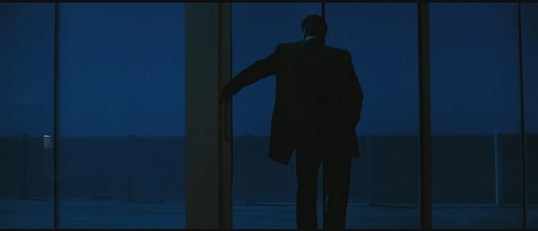
Heat (1995, dir by Michael Mann, DP: Dante Spinotti)
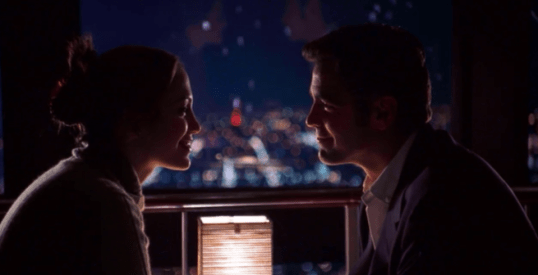
Out of Sight (1998, dir by Steven Soderbergh, DP: Elliot Davis)
2009’s Public Enemies is a portrait of the battle for the soul and imagination of America.
The films take place during the Great Depression. With Americans struggling to pay their bills and many citizens out-of-work and feeling desperate, a new breed of folk hero has emerged. Men like my distant relative Pretty Boy Floyd (Channing Tatum) and Alvin Karpis (Giovanni Ribisi) may be criminals who make their living by robbing banks but, to a nation of angry people who feel like they’ve been forgotten by the government and betrayed by the wealthy, they’re rebels who are challenging the system. They are viewed as being modern-day Robin Hoods, even though very few of them actually bother to give the money that they steal back to the poor.
John Dillinger (Johnny Depp) is perhaps the most famous of the criminals who have been declared a “public enemy” by the FBI. The handsome and charismatic Dillinger becomes almost a living legend, the man who cannot be captured by law enforcement. He becomes a folk hero but with the twist that his own death seems inevitable. Dillinger lives by his own set of rules and the press loves him even as they hungrily anticipate his violent end.
Pursuing Dillinger and the other so-called public enemies is a young FBI agent named Melvin Purvis (Christian Bale). Purvis’s job is not only to capture or eliminate men like Dillinger. It’s also to somehow figure out a way to replace them in the public’s imagination. Through the use of what was then-considered to be revolutionary techniques (like fingerprinting and phone taps), Purvis tracks down one public enemy after another and soon, he’s becoming as much of a folk hero as the people that he’s pursuing. If Dillinger and his cohorts represent the ultimate rebellion against an ineffectual system, Purvis and his success suggest that maybe the system actually can get something accomplished. Unfortunately, for Purvis, he not only has to deal with the challenge of capturing Dillinger but also with the growing jealousy of his publicity-hungry boss, J. Edgar Hoover (Billy Crudup). As is typical of the heroes of Michael Mann’s film, Dillinger and Purvis may be on different sides of the law but they have more in common than they realize. Neither one can trust the people that they’re working with.
I remember that I was really excited about Public Enemies when it was first released in 2009. I’m fascinated by the Depression-era outlaws and Dillinger’s story is certainly an interesting one. (I’ve always enjoyed the theory that Dillinger faked his death, even though I don’t believe it for a second.) Michael Mann seemed like the perfect director for the material and Johnny Depp seemed like ideal casting. I have to admit that I was a little bit disappointed in the film itself, which was poorly paced and stuck so closely to the facts of the case that it led me to realize that Dillinger will always be more interesting as a legend than an actual person. (I’ll concede that was probably the film’s point.) There were moments of brilliance in the film. The scene where Dillinger escaped from custody was wonderfully done. Stephen Graham’s unhinged performance as Baby Face Nelson was excellent. Johnny Depp had the right look for Dillinger but I have to admit that I found myself a little bit bored with Christian Bale’s Melvin Purvis.
Looking back today, though, the film feels almost prophetic. That may seem like an odd thing to say about a film set in the past but PublicEnemies portrait of an America caught between celebrating the rule of law and the excitement of rebellion feels very relevant to what’s happening today. In retrospect, PublicEnemies is a portrait of the contradiction at the heart of America, a country with a culture of both rebellion and loyal patriotism. PublicEnemies portrays a battle the continues to this day.
Public Enemies (2009, dir by Michael Mann, DP: Dante Spinotti)
In 2004’s Collateral, Jamie Foxx stars as Max, a taxicab driver who is hoping, in those days before Uber, to start his own limousine company. When we first see him, he’s giving a ride to a federal prosecutor named Annie (Jada Pinkett Smith) and he’s even getting her phone number after he drops her off at work. Unfortunately, for Max, his next passenger is a bit less friendly.
Vincent (Tom Cruise), with his gray hair that matches his suit, is polite, quiet, and direct when he speaks. He carries a briefcase with him everywhere that he goes and anyone who tries to take the briefcase soon discovers just how far Vincent will go to hold onto it. Vincent pays Max $600 to drive him around Los Angeles for the night. Vincent has a lot of business that he needs to attend to. Max agrees, not realizing until it’s too late that Vincent is a hired assassin and that his business is killing people. Vincent has been hired to wipe out a collection of crooks and lawyers and, though Vincent is careful not to reveal his emotions, it’s obvious that he’s looking forward to the challenge.
To his credit, Max doesn’t really have any interest in being a part of Max’s killing spree but he soon finds himself unable to escape from Vincent and being forced to drive from location to location. Along the way, Vincent and Max engage in debates of both morality and philosophy. Vincent sees death as just being a part of the job. Max is horrified, especially when people who haven’t done anything wrong end up as collateral damage in Vincent’s killing spree. The truth of the matter is that, even if Max hadn’t picked up Vincent, there’s no guarantee that he wouldn’t have picked up some other madman. As a taxi driver, Max surrenders his control once he unlocks the door and allows someone to get in the backseat. Sometimes, he gets a passenger like Annie. Other times, he’s going to get a passenger like Vincent. Somewhat improbably, Vincent and Annie turns out to be connected and Max’s chance encounter with her becomes even more important.
Because this is a Michael Mann film, Los Angeles is as much a character in this film as Max and Vincent. Mann captures the shadowy darkness of the city at the night and the feeling that both opportunity and danger could lurk around every corner. Claustrophobic scenes in the taxi cab are mixed with scenes in an equally claustrophobic (though for different reasons) club. The film’s haunting final image takes place not in the cab but instead on a train. Everyone is heading somewhere and, at some point during the film, both Vincent and Max deal with the feeling of having no control over where they’ll end up.
When Collateral first came out in 2004, I remember that a lot of people were shocked to see Cruise playing a villain. Cruise does give one of his best performances here, playing yet another one of Mann’s cool and efficient professionals. Strangely enough, Jamie Foxx is the one who was nominated for an Oscar, even though he’s actually a little on the boring side as Max. (In all fairness, Max is meant to be the conventional member of the film’s involuntary partnership.) The film is dominated by Cruise and his performance is still powerful to this day.
Though the Academy of Motion Picture Arts and Sciences claim that the Oscars honor the best of the year, we all know that there are always worthy films and performances that end up getting overlooked. Sometimes, it’s because the competition too fierce. Sometimes, it’s because the film itself was too controversial. Often, it’s just a case of a film’s quality not being fully recognized until years after its initial released. This series of reviews takes a look at the films and performances that should have been nominated but were, for whatever reason, overlooked. These are the Unnominated.
First released in 1995, Heat is one of the most influential and best-known films of the past 30 years. It also received absolutely zero Oscar nominations.
Maybe we shouldn’t be too surprised that Academy — especially the Academy of the 1990s — didn’t shower the film with nominations. For all of its many strengths, Heat is still a genre piece, an epic three-hour crime film from director Michael Mann. It’s a film about obsessive cops and tightly-wound crooks and it’s based on a made-for-TV movie that Mann directed in the late 80s. While the Academy had given a best picture nomination to The Fugitive just two years before, it still hadn’t fully come around to honoring genre films.
And yet one would think that the film could have at least picked up a nomination for its editing or maybe the sound design that helps to make the film’s signature 8-minute gun battle so unforgettable. (Heat is a film that leaves you feeling as if you’re trapped in the middle of its gunfights, running for cover while the cops and the crooks fire on each other.) The screenplay, featuring the scene where Al Pacino’s intense detective sits down for coffee with Robert De Niro’s career crook, also went unnominated.
Al Pacino was not nominated for playing Vincent Hanna and maybe we shouldn’t be too surprised at that. Pacino yells a lot in this movie. When people talk about Pacino having a reputation for bellowing his lines like a madman, they’re usually thinking about the scene where he confronts a weaselly executive (Hank Azaria) about the affair that he’s having with Charlene (Ashley Judd), the wife of criminal Chris Shiherlis (Val Kilmer). And yet, I think that Pacino’s performance works in the context of the film and it’s often forgotten that Pacino has quite scenes in Heat as well. Pacino’s intensity provides a contrast to Robert De Niro’s tightly controlled career criminal, Neil McCauley. McCauley has done time in prison and he has no intention of ever going back. But, as he admits during the famous diner scene, being a criminal is the only thing that he knows how to do and it’s also the only thing that he wants to do. (“The action is the juice,” Tom Sizemore says in another scene.) If any two actors deserved a joint Oscar nomination it was Pacino and De Niro. In Heat, they’re the perfect team. Pacino’s flamboyance and De Niro’s tightly-controlled emotions come together to form the heart of the picture.
No one from the film’s supporting cast was nominated either, despite there being a wealth of riches to choose from. Ashley Judd and Val Kilmer come to mind as obvious contenders. Kilmer is amazing in the shoot-out that occurs two hours into the film. Ashley Judd has a killer scene where she helps her husband escape from the police. Beyond Judd and Kilmer, I like the quiet menace of Tom Sizemore’s Michael Cheritto. (Just check out the look he gives to an onlooker who is getting a little bit too curious.) Kevin Gage’s sociopathic Waingro is one of the most loathsome characters to ever show up in a movie. William Fichtner, Jon Voight, Danny Trejo, and Tom Noonan all make a definite impression and add to Michael Mann’s portrait of the Los Angeles underworld. In an early role, Natalie Portman plays Hanna’s neglected stepdaughter and even Amy Brenneman has some good moments as Neil’s unsuspecting girlfriend, the one who Neil claims to be prepared to abandon if he sees “the heat coming.”
I have to mention the performance of Dennis Haysbert as Don Breedan, a man who has just been released from prison and who finds himself working as a cook in a diner. (The owner of the diner is played by Bud Cort.) Haysbert doesn’t have many scenes but he gives a poignant performance as a man struggling not to fall back into his old life of crime and what eventually happens to him still packs an emotional punch. For much of the film’s running time, he’s on the fringes of the story. It’s only by chance that he finds himself suddenly and briefly thrown into the middle of the action.
Heat is the ultimate Michael Mann film, a 3-hour crime epic that is full of amazing action sequences, powerful performances, and a moody atmosphere that leaves the viewer with no doubt that the film is actually about a lot more than just a bunch of crooks and the cops who try to stop them. Hanna and McCauley both live by their own code and are equally obsessed with their work. Their showdown is inevitable and, as directed by Michael Mann, it takes on almost mythological grandeur. The film is a portrait of uncertainty and fear in Los Angeles but it’s also a portrait of two men destined to confront each other. They’re both the best at what they do and, as a result, only one can remain alive at the end of the film.
I rewatched Heat yesterday and I was amazed at how well the film holds up. It’s one of the best-paced three-hour films that I’ve ever seen and that epic gunfight is still powerful and frightening to watch. Like Martin Scorsese’s Casino, it was a 1995 film that deserved more Oscar attention than it received.
Heat (1995, dir by Michael Mann, DP: Dante Spinotti)
1981’s Thief tells the story of Frank (James Caan).
Frank is a professional diamond thief, one of the best in the business. He’s so cool that he even has his own Tangerine Dream soundtrack. After doing a stint in prison, Frank lives his life very carefully and with discipline. He’s determined not to return to prison. His mentor (played by Willie Nelson) is still behind bars and will probably die there. In fact, Frank has even found himself thinking about abandoning his criminal lifestyle. He’s got two front businesses, both of which are doing well. (Frank’s used car lot looks like some sort of alien world.) He’s fallen in love with a cashier named Jessie (Tuesday Weld) and it’s starting to seem like now would be a good time to settle down and become a family man. The only problem is that Frank is working for Leo (Robert Prosky) and Leo has absolutely no intention of allowing Frank to walk away. As Leo puts it, Frank belongs to him. That’s not a smart thing to say to someone like Frank.
Frank’s an interesting character. He’s the film’s hero, not because he’s a good guy but because he’s a smidgen better than most of the other bad guys. He’s a professional, one who goes out of his way avoid unnecessary complications. When we see him on the job, it’s impossible not to admire just how good he is at stealing stuff. When he uses a blowtorch to break into a store or a safe, the screen is full of sparks and, for a few minutes, Frank looks like some sort of cosmic super hero brought to life. We admire Frank but we discover early on that he’s willing to get violent. He’s willing to pull a gun and threaten his way out of a situation. Frank is loyal. He visits his mentor in prison. He takes care of his partner-in-crime, Barry (Jim Belushi, making his film debut). He truly loves Jessie. But, at heart, he’s a criminal who doesn’t hesitate to pull the trigger when he has to. The question the film asks is whether one can just go straight, after years of breaking the law and living in the shadows. Can Frank abandon the lifestyle, even for love? Or is he destined to always be a thief?
Thief was Michael Mann’s feature film debut. (The Jericho Mile was Mann’s directorial debut but it was made for television.) Thief is full of the usual Mann themes and also Mann’s signature style, showing that Mann knew exactly what type of films he wanted to make from the start of his career. The nights are full of shadows. The days are deceptively calm. The neon of Frank’s car lot glows like another dimension. The final bloody shoot out takes place at night, in the type of suburban neighborhood in which most people would probably love to live. And holding the film together is James Caan, giving a coolly centered performance as a man who has learned to hold back his emotions and who won’t be controlled by anyone. Halfway through the film, Caan delivers a seven-minute monologue about life in prison and it’s an amazing moment, one in which Caan shows just how good of an actor he truly was. Thief is an effective and stylish neo-noir, one that sticks with you as the end credits roll.
1979’s The Jericho Mile tells the story of Larry Murphy (Peter Strauss).
Larry is serving a life sentence at Folsom Prison, convicted a crime that he admits to having committed. Larry murdered his father, specifically to protect his stepsister from being raped. Larry feels no guilt for his crime and, at the same time, he’s willing to quietly serve his sentence. He’s a loner, avoiding the rival racial factions in the prison. (Brian Dennehy leads the Aryans while Roger E. Moseley leads the black prisoners and Miguel Pinero is the head of the Mexican Mafia.) Larry just wants to spend his time running around the prison yard.
When Dr. Bill Janowski (Geoffrey Lewis) sees how fast Larry can run, he arranges for a local track coach, Jerry Beloit (Ed Lauter), to come up to the prison with a few potential Olympians so that they can race Larry. Larry manages to outrun all of them. Jerry becomes convinced that Larry could qualify for the Olympics, if only he had a regulation track to run on. The Warden, knowing good publicity when he sees it, assigns the inmates to build the track but doing so means dealing with Folsom’s highly charged racial politics. No matter how fast Larry can run and no matter how inspiring it would be for Larry to go from serving a life sentence to competing in the Olympics, Folsom is still a prison and Larry is still a prisoner. And while the guards may have the guns and may be the only ones who are allowed to go home at the end of the game, it’s the prison gangs who have all the power. When the Aryans go on strike and refuse to work on the track, it puts Larry’s chances in jeopardy.
Of course, Larry’s chances are already in jeopardy just because of who he is. Larry is a prisoner who refuses to show remorse. While other prisoners embrace religion or politics and try to convince outsiders that they’ve either reformed or been wrongly convicted, Larry just wants to run. Running is when he’s free. (The film’s title refers to the Walls of Jericho coming down.) And, for the other inmates, watching Larry run is a reminder that there are many ways once can escape from the drudgery of being locked away.
The Jericho Mile is a tough and rather cynical prison film, one that manages to combine downbeat social drama with a uplifting sports story. You’ll want to cheer Larry while he’s running, even if you secretly suspect that he’s ultimately chasing something that will never happen. Making his directorial debut, Michael Mann shot the film on location at Folsom and the cast is full of actual prisoners, all of whom bring some much need authenticity to the film’s story. Mann never lets us forget that this is a film about people in a very dangerous situation and, even at its most inspiring, the film leaves you feeling as if violence could break out at any moment. Peter Strauss, who usually played somewhat more refined characters, is totally believable as the taciturn Larry and character actors like Dennehy and Mosely skillfully blend in with the actual prisoners in the cast. The Jericho Mile is a portrait of crime, punishment, and dreams. It’s a movie that will stay with you.
Today’s scene that I love is a little scene from 1995’s Heat.
This isn’t a scene that regularly gets mentioned when it comes to discussing the many iconic scenes in this film but I picked it because it features good work from two actors who are no longer with us, Val Kilmer and Tom Sizemore. Add to that, Danny Trejo’s pithy comment at the end — after all the discussion that’s happened before it — is simply perfect.
I can’t let Michael Mann’s 82nd birthday pass without sharing one of my favorite scenes of his filmography. Have y’all ever started watching a movie and immediately knew you were going to love it?! That’s what the opening 4 minutes of THE LAST OF THE MOHICANS did for me. The credits start and the soundtrack reveals the powerful musical theme of the movie as well as its beautiful mountain setting. And then we join Hawkeye (Daniel Day-Lewis), his dad Chingachgook (Russell Means), and his brother Uncas (Eric Schweig) in the middle of their hunt as they’re sprinting through the woods after their prey. They just look so cool running together under Mann’s stylish direction. It’s not even the best scene in the film, but it’s the scene that drew me in and let me know I was in for something special.
Happy Birthday, Michael Mann and thanks for sharing your talent with all of us!
Since today is Michael Mann’s birthday, today’s scene that I love comes from his 1986 film, Manhunter.
In this scene, a blind woman (played by Joan Allen) pets a sedated tiger while her new boyfriend (Tom Noonan) watches. This would actually be a pretty romantic scene if not for the fact that her boyfriend is also a homicidal maniac. This is a scene that, when you watch the film, seems to come out of nowhere but, when you look back, you realize it was one of the key moments in the narrative. While the killer watches the woman who represents a possible redemption embrace another predator, the profiler played by William Petersen continues his way into the killer’s tortured psyche.