So, was Noah good or not?


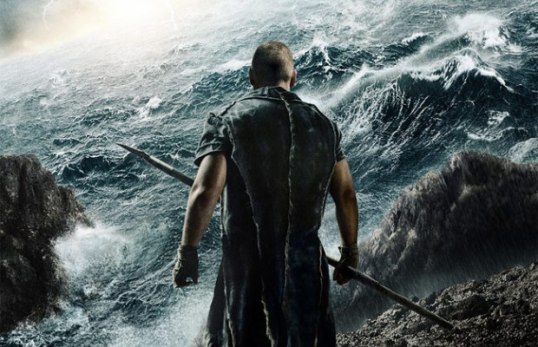
Poster-Noah-Aronofsky

Was Noah a good movie or not?

That’s a question that was first asked way back in March.  At the time, the answer depended on who you asked.  For instance, Noah is one of Arleigh’s favorite films of the year.  My reaction, however, was far more mixed.  Noah was one of those movies that I thought I would review as soon as I watched it but that proved to be a lot more difficult than I expected.  As I found myself wondering what I should say in my review, it became very apparent to me that I wasn’t sure whether I liked the film or not.

By the time that I finally decided that I was, overall, disappointed by Darren Aronofsky’s controversial and spiritual-but-not-quite-biblical version of the Deluge, over a month had passed and we had all moved on to different movies.

And so that review remained unwritten.  And, at first, I thought it wouldn’t matter.  As much as I try to review every single movie that I see, I know that the world is not going to end if I miss a film or two.  After all, I’ve never specifically written down just how much I hated the latest Transformers movie and the world has yet to plunge into the sun…

And yet, for all of its flaws and the fact that it left me feeling underwhelmed, Noah has stuck in my mind in a way that many of the films that I saw this year have not.  It would be a struggle for me to remember much of anything about Dracula Untold but Noah Noah has stayed with me.

Thinking back, it’s easy for me to say what did not work about Noah.

As opposed to Aronofsky’s best films (Requiem for A Dream, The Wrestler, and my beloved Black Swan), Noah felt oddly paced with certain scenes ending too quickly while other scenes seemed to drag on forever.

The film’s environmental message was delivered with such a heavy hand that it ultimately did not make much of a difference whether you agreed or not.  For a film that went out of its way to establish itself as not being a traditional biblical film, Noah was certainly preachy.

While the film deserves credit for not flinching in its portrait of a surly and self-righteous Noah, it still doesn’t change the fact that the movie was essentially 138 minutes spent with a very unlikable character.

Anthony Hopkins gave perhaps the worst performance of his career as Methuselah.  In the role of Tubal-Cain, Ray Winstone was such a one-dimensional villain that I half expected him to invent trains just so he could tie Emma Watson to the tracks.

And, of course, there were the Watchers — fallen angels who had been turned into sentient piles of stone by a vengeful God.  I know that some people loved the Watchers but to me, they looked ludicrous…
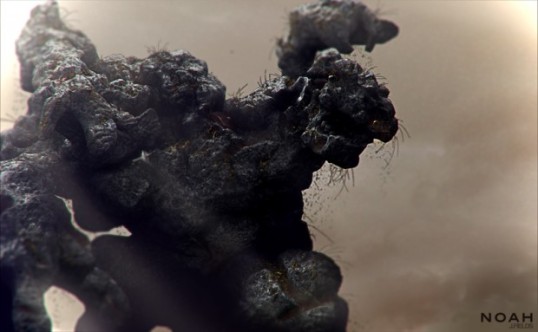
NoahWatchers

And yet, that’s the reason why we love Darren Aronofsky, isn’t it?

Obviously, it was a risk to portray the fallen angels as being a bunch of talking rocks.  It was also a risk to take a character who is mentioned only once in the book of Genesis — in this case, Tubal-Cain — and then use that character as a representation of everything that’s wrong with the human race.  It was a risk to make a “biblical” film that openly questioned both the existence and wisdom of God.  We expect and demand that directors take risks but, at the same time, we also want to ridicule and judge when those risks don’t work out.  That’s the issue that we, as film lovers, often face.  Do we celebrate and perhaps excuse a director for his intentions or do we solely judge him based on the results?

And the thing with Noah is that, as much as the movie did not work for me, it also did work for me.  For all of those flaws that I listed above, Noah is full of images that are so beautiful and so memorable that I can still visualize them as if I saw them yesterday:

Noah and his sons walk across a gray and blasted landscape, stopping just long enough to stare at a foreboding city in the distance.

Noah walks through a decadent settlement and briefly, this somber film is so full of bright colors and flamboyant characters that the viewer is almost as overwhelmed as Noah.

That Ark, looking small and isolated, floating across an endless blue ocean.

And finally, Noah talking about the horrors of humanity and briefly, we see that the shadows that he’s visualizing are dressed in modern clothing.

For all of my issues with Noah, it’s such a visually impressive film and takes so many risks that I can’t help but respect it.  I don’t consider it to be a great film but, after all this time, I can say that it’s a film that only a true artist could make.

And, considering the current state of American film, that’s one of the best compliments that one can give.

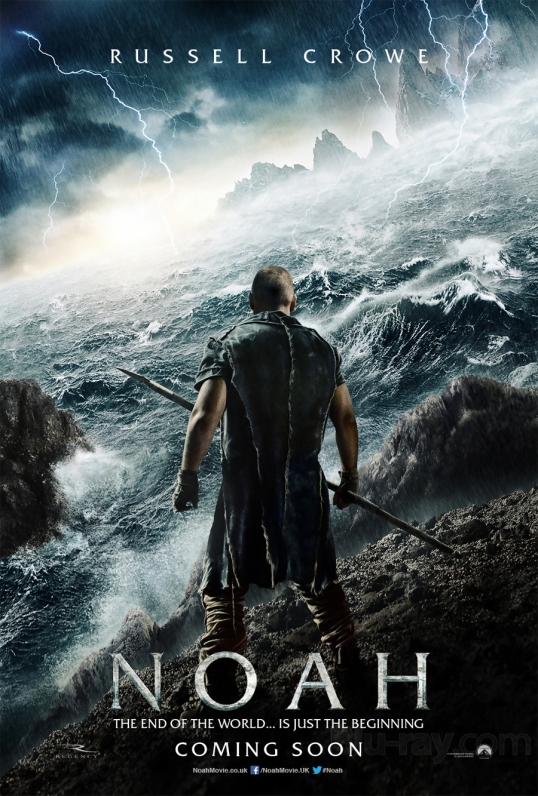
noah-banner222

Super Bowl Trailer: Noah


5204

Noah is Darren Aronofsky’s follow-up to his critically-acclaimed film Black Swan (which was reviewed by Lisa Marie Bowman herself) and he looks to tell the tale of Noah’s Ark from the Book of Genesis.

When news first came out that Aronofsky would follow-up Black Swan with a biblical epic that retold the Flood and Noah’s role in saving those not corrupted according to Heaven was a sort of headscratcher. The teasers and trailers that has come out about the film hasn’t really fired up the masses. Some think it as another sword-and-sandals epic that’s late to that particular subgenre’s resurgence. Some think too much fantasy elements has been added.

One thing I’m sure of is that Aronofsky will not make an uninteresting film.

Noah is set for a March 28, 2014 release date.

Review: The Thomas Crown Affair (dir. by John McTiernan)


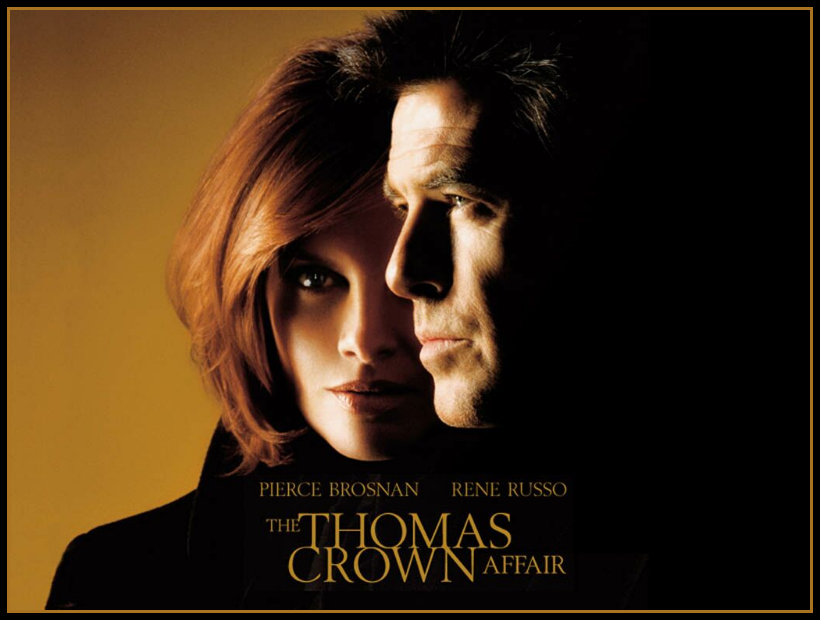
In 1968 there was a little caper film titled The Thomas Crown Affair starring the ever-cool Steve McQueen and a radiant Faye Dunaway. The film was considered hip, cool and sexy in its way during the late 60’s. It took 31 years, but a remake was finally made of this film but this time around starring Pierce Brosnan and Rene Russo in the roles originally played by McQueen and Dunaway. With some great direction from thriller and action filmmmaker John McTiernan, 1999’s The Thomas Crown Affair ends up being the exception to the rule of remakes of older films turning out lesser than the original. This modern and updated version of The Thomas Crown Affair actually surpasses the original McQueen production. McTiernan’s film ably combines humor, thrilling action set pieces, sexy chemistry between the leads and just a beautifully shot film.

Set in New York that never looked as good as shot by McTiernan and his crew, Pierce Brosnan stars and shines as the title character Thomas Crown. Thomas Crown is a suave, roguish and successful businessman who has everything a man could ask for: money, power and any woman he desires.

What does a man like Crown would ever want in life?

The film looks at this and shows that no amount of money in the world could replace the adrenaline rush and thrill of getting acquiring it. Crown does this by staging a complex and elaborate plan to steal a Monet (San Giorgio Maggiore at Dusk) from the NY Metropolitan Arts Museum and do so in the middle of the day. His plan goes off without a hitch and with none the wiser. This heist sequence was actually very fun to watch as McTiernan never lost command of the many threads being weaved to pull off Crown’s plan. McTiernan would one-up this with the climactic finish in the same museum but with a sequence I could only call as the anti-heist.

With the heist completed, the film soon introduces Crown’s foil in the form of Rene Russo as insurance investigator Catherine Banning. Ms. Russo never looked more beautiful, sensual and sexy as she did in this film. Her performance as the determined and crafty Banning more than holds up to Brosnan’s roguish and playful performance as Thomas Crown. From the moment she appears onscreen as the camera slowly pans up her silky-stocking leg and garters, Russo dominated the scene and pretty much commanded attention from everyone. This was especially true whenever she shared the screen with Denis Leary as police detective in charge of investigating the Monet heist. Leary’s always a strong performer in any film he’s in but was pretty much lost in the wake of Russo’s performance when both were on the screen.

The rest of the film was pretty much Crown and Banning trying to get into each others’ heads to find the one advantage that would give them an upper-hand in the “game” they’ve both decided to play. It’s hard to see who is chasing who in the film. Is Banning chasing Crown as her one and only suspect for the theft or is Crown playing her as part of a much more complicated scheme to spice his life. These questions swirl within the frame of the heist investigation and the growing relationship between the two strong-willed characters.

To say that Brosnan and Russo’s on-screen chemistry was strong would be a big understatement. The two pretty much sizzle when together. Whether it’s a playful, flirtation during a nice dinner out on the town to the two steamy dance numbers in the middle of the film. When Crown asks Banning if she wanted to dance or does she want to dance the temperature just went up by degrees. Their love scenes together shows that it could still be done with class and also have a sense of playfulness and fun. It also showed that young couples doing love scenes onscreen have nothing on the mature couple.

There’s not much else to say about McTiernan’s remake of the Thomas Crown Affair than to say that he took a good film, that showcased Steve McQueen’s coolness for everyone to see, and made a much more superior production in every sense. The direction was excellent and the cinematography was beautiful in every second shot. The cast performance was very strong with the two leads in Brosnan and Russo acting their hearts out on the screen. This film shows that remakes really are not bad ideas when put into capable hands. It would be nice to see how the sequel — tentatively titled The Topkapi Affair —  to this film turns out with pretty much the same cast and crew returning. I, for one, will be there to see it when it comes out.