Love On The Shattered Lens: Frank and Ava (dir by Michael Oblowitz)


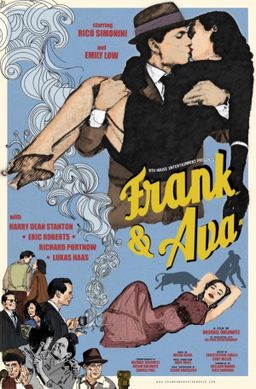
2018’s Frank & Ava tells the story of the tempestuous love affair and marriage of Frank Sinatra (Rico Simonini) and Ava Gardner (Emily Elicia Low).

The film opens with Sinatra at his lowest point.  His records are no longer selling.  His marriage to Nancy is in trouble.  The government is now investigating him for supposed communist sympathies (say it ain’t so, Frank!) and also his connections to the Mafia.  Hedda Hopper (Joanne Baron), Louella Parsons (Joanna Sanchez), and Walter Winchell (Richard Portnow) all pop up throughout the film, breathlessly reading the latest gossip into radio microphones.  Frank’s voice is weakening and it looks like he’s about to lose his fanbase to Eddie Fisher and Perry Como.  As for his acting career, everyone knows that he can’t act.  (At one point, even Frank’s friends laugh at the idea of Siantra ever winning an Oscar.)  Frank knows that he would be perfect for the role of Maggio in From Here To Eternity but the film’s director wants to cast someone like Harvey Lembeck or Eli Wallach.

As for Ava Gardner, she’s just gotten out of a relationship with Howard Hughes.  More famous for her then-scandalous personal life than her film roles, Gardner drinks too much, curses too much, and is too open about her affairs for the sensibilities of much of 1950 America.

When Frank and Ava meet, it’s love at first sight.  They drive around while drinking champagne straight from the bottle.  They crash cars.  When they’re arrested, they charm a local sheriff (Harry Dean Stanton, in his final film role).  They fight.  They make love.  They fight more.  They make love more.  Frank obsesses on the possibility of Ava being unfaithful to him while continually cheating on her with everyone from Lana Turner to Marilyn Maxwell.

The first thing that you notice about Frank & Ava is that it is full of references to real Hollywood gossip.  Names are dropped.  Real celebrities are depicted and the portrayals are not always positive.  The second thing that you notice is that, with the exception of Emily Elicia Low, no one is particularly convincing.  The actress who plays Marilyn Monroe not only looks nothing like Marilyn but her attempt to imitate Marilyn’s trademark voice made me laugh out loud.  Actors appear as Lana Turner, Montgomery Clift, Howard Hughes, and a host of mafiosos and none of them are the least bit convincing.  Much of the film is like attending a costume party where no one could spend more than five bucks on their costume.  Rico Simonini, who was so charming in My Dinner With Eric, is not particularly convincing as Frank Sinatra.  That said, Emily Elicia Low is well-cast as Ava Gardner and Eric Roberts shows up for two scenes as producer Harry Cohn.  In real life, Cohn was a notorious bully.  The old anecdote about everyone showing up at an unpopular man’s funeral to make sure that he’s actually dead is often said to have been inspired by Cohn.  In the film, Roberts plays Cohn as being a surprisingly reasonable guy.  If Fred Zinnemann wants Sinatra, he can have Sinatra.  If he wants Eli Wallach, he can have Eli Wallach.  Just make sure they aren’t communists!

Probably the most interesting thing about this film is its attempt to recreate the 50s without spending a good deal of money.  This is a low-budget movie and there’s an obvious artificiality to many of the sets and costumes that gives the entire film an oddly dream-like feel.  It’s less a recreation of the past and more a look at how the past might look in our fantasies.  All the men wear suits.  Ava dresses and talk as if she just stepped out of a parody of a film noir.  Famous scenes from Goodfellas and La Dolce Vita are awkwardly recreated by Santini and the cast.  The film, which was made by people who obviously loved the legend of Frank and Ava, ultimately transcends the conventional definition of good and bad and instead becomes a work of outsider art, a look into the hazier regions of the American cultural psyche.

Previous Eric Roberts Films That We Have Reviewed:

  1. Star 80 (1983)
  2. Blood Red (1989)
  3. The Ambulance (1990)
  4. The Lost Capone (1990)
  5. Love, Cheat, & Steal (1993)
  6. Voyage (1993)
  7. Love Is A Gun (1994)
  8. Sensation (1994)
  9. Dark Angel (1996)
  10. Doctor Who (1996)
  11. Most Wanted (1997)
  12. Mercy Streets (2000)
  13. Wolves of Wall Street (2002)
  14. Mr. Brightside (2004)
  15. Six: The Mark Unleased (2004)
  16. Hey You (2006)
  17. In The Blink of an Eye (2009)
  18. Enemies Among Us (2010)
  19. The Expendables (2010) 
  20. Sharktopus (2010)
  21. The Dead Want Women (2012)
  22. Deadline (2012)
  23. The Mark (2012)
  24. Miss Atomic Bomb (2012)
  25. Bonnie And Clyde: Justified (2013)
  26. Lovelace (2013)
  27. The Mark: Redemption (2013)
  28. Self-Storage (2013)
  29. This Is Our Time (2013)
  30. Inherent Vice (2014)
  31. Road to the Open (2014)
  32. Rumors of War (2014)
  33. Amityville Death House (2015)
  34. A Fatal Obsession (2015)
  35. Stalked By My Doctor (2015)
  36. Enemy Within (2016)
  37. Joker’s Poltergeist (2016)
  38. Prayer Never Fails (2016)
  39. Stalked By My Doctor: The Return (2016)
  40. The Wrong Roommate (2016)
  41. Dark Image (2017)
  42. Black Wake (2018)
  43. Stalked By My Doctor: Patient’s Revenge (2018)
  44. Clinton Island (2019)
  45. Monster Island (2019)
  46. The Savant (2019)
  47. Seven Deadly Sins (2019)
  48. Stalked By My Doctor: A Sleepwalker’s Nightmare (2019)
  49. The Wrong Mommy (2019)
  50. Exodus of a Prodigal Son (2020)
  51. Free Lunch Express (2020)
  52. Her Deadly Groom (2020)
  53. Top Gunner (2020)
  54. Deadly Nightshade (2021)
  55. The Elevator (2021)
  56. Just What The Doctor Ordered (2021)
  57. Killer Advice (2021)
  58. The Poltergeist Diaries (2021)
  59. The Rebels of PT-218 (2021)
  60. A Town Called Parable (2021)
  61. Bleach (2022)
  62. My Dinner With Eric (2022)
  63. Aftermath (2024)
  64. The Wrong Life Coach (2024)

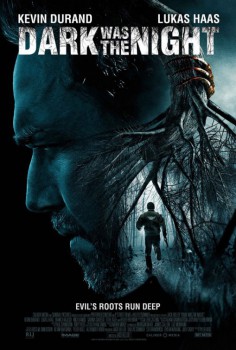
Horror Film Review: Dark Was The Night (dir by Jack Heller)


The 2014 horror film, Dark Was The Night, takes place in the town of Madison Woods.

Madison Woods is a small, isolated town that is located somewhere up north.  It’s one of those dreary blue collar towns where everyone knows everyone else.  Most of the citizens work in the logging industry, attend the same church, and drink at the same bar.  It’s not a town where much happens.  The police force consists of two guys, Sheriff Paul Shields (Kevin Durand) and his new deputy, Donny Saunders (Lukas Haas).  Donny worked in New York City before moving to Madison Woods.  Shields is currently estranged from his wife.  That’s the type of thing that passes for big news in Madison Woods.

When one of the local farmers complains that one of his horses has disappeared, Shields and Saunders assume that the horse has just run off.  When other animals start to disappear, Shields continues to insist that it’s all just a coincidence.  When the local hunters start to talk about an ancient legend of a monster that lives in the woods, Shields replies that there are no monsters and, for good measure, there’s no God as well.  (In many ways, Shields is a perfect example of the old joke about how the best way to spot an atheist is to wait a few minutes and he’ll tell you.)  Even when weird cloven footsteps start to show up around town and Shields himself spots something in his backyard, the Sheriff continues to insist that there is a rational explanation for all of this.  Meanwhile, Saunders hangs out at the bar and drinks and really, who can blame him?  As far as I can tell, it’s not like Madison Woods has a movie theater or anything like that.  It’s a really boring town.  You can either develop the beginnings of a drinking problem or you can start random fights or you can get ripped apart by the thing in the woods.  Make your choice.

Eventually, Shields and Saunders do discover that there is something lurking out in the woods.  And, despite their attempts to come up with a rational explanation, the creature proves itself to be more than just some animal.  Instead, it’s a true supernatural monster, tracking its prey through the community.  As a group of loggers discover at the start of the movie, the creature is just as quick to attack humans as it is to go after deer and other wild animals.  With the entire town locked away in the church basement (because, as Night of the Living Dead proved, the basement is always the safest place), Saunders and Shields try to figure out how to stop a monster that neither one of them has ever seen before.

Dark Was The Night was loosely inspired by a true story.  In 1885, the citizens of Topsham in the UK were stunned to wake up one cold morning and discover a series of cloven footprints in the snow.  The footprints led through the entire city and it appeared that whatever was responsible for them had stopped in front of every house and place of business.  Some claimed that the footprints belonged to the devil while others said that it was just some sort of animal.  The Devil’s Footprints, as the story became known, serves as a bit of Rorschach test.  Those inclined to believe in the supernatural have little trouble believing that the Devil visited the town of Topsham while the more rational among us assume that the footprints were left by a wild animal and then people saw whatever they wanted.  Dark Was The Night moves the story to the modern day and to America but the question remains the same.  Is there really a monster in the woods or, as Shields initially believes, are people just seeing what they want to see?  Unfortunately, the film reveals the monster’s existence within its opening minutes.  The film would have perhaps been more effective if there had at least been some mystery about whether or not Shields’s initial instincts were correct.

Dark Was The Night is a deliberately paced film, which again would be more effective if there was any mystery at all as to whether or not the monster actually existed.  On the plus side, the film is full of atmosphere and Kevin Durand and Lukas Haas are both effective as the two lawmen who find themselves in over their heads.  Fans of Lost will remember Durand as the evil Martin Keamy, who was one of the most heartless characters to ever appear on that show or any other show.  Durand gets to play the hero in Dark Was The Night and gives a good performance as a man who discovers that not everything has a rational explanation.  That said, while the film has some interesting ideas and performances, it ultimately becomes just another monster-laying-siege film and the ending is one that most viewers will see coming from miles away.  It’s not a bad film but it’s still never quite as good as one might hope.

Live Tweet Alert: Watch Dark Was The Night with #ScarySocial


As some of our regular readers undoubtedly know, I am involved in a few weekly live tweets on twitter.  I host #FridayNightFlix every Friday, I co-host #ScarySocial on Saturday, and I am one of the five hosts of #MondayActionMovie!  Every week, we get together.  We watch a movie.  We tweet our way through it.

Tonight, for #ScarySocial, Tim Buntley will be hosting 2014’s Dark Was The Night!

The forest near a small town serve as the home of a fearsome creature.  Can Kevin Durand and Lukas Haas save their town from supernatural destruction!?  I don’t know.  I’ll find out tonight when I watch Dark Was The Night with #ScarySocial!

If you want to join us on Saturday night, just hop onto twitter, start the film at 9 pm et, and use the #ScarySocial hashtag!  The film is available on Prime and a few other streaming sites.  I’ll be there co-hosting and I imagine some other members of the TSL Crew will be there as well.  It’s a friendly group and welcoming of newcomers so don’t be shy.

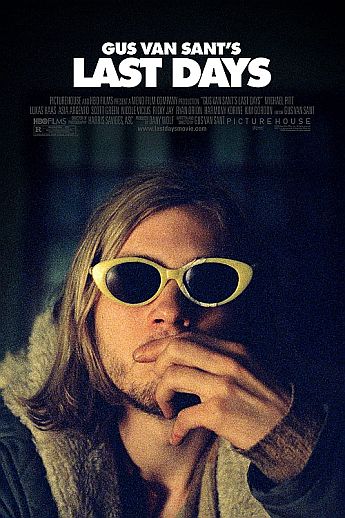
Icarus File No. 7: Last Days (dir by Gus Van Sant)


From 2002 to 2005, director Gus Van Sant offered audiences what he called his “Death Trilogy.”  2002’s Gerry followed two friends as they got lost in the desert and it featured what appeared to be a mercy killing.  2003’s Elephant was a mediation on the Columbine High School massacre and it featured several murders.  Finally, with 2005’s Last Days, Van Sant ended the trilogy with a film about a suicide.

Michael Pitt plays a world-famous musician who is suffering from depression.  Though the character is named Blake, no attempt is made to disguise the fact that he is meant to be Kurt Cobain.  When we first see Blake, he has just escaped from a rehab clinic and is walking through a forest.  There are no other human beings around and, perhaps not coincidentally, this is the only moment in the film in which Blake seems to be happy.  He even sings Home on the Range, shouting the lyrics like a little kid.

When he reaches his home, Blake’s demeanor changes.  He walks around the house with a rifle and pretends to shoot the four other people — Luke (Lukas Haas), Scott (Scott Patrick Green), Asia (Asia Argento), and Nicole (Nicole Vicius) — who are sleeping in his house.  Later, when those people wake up and attempt to speak to him, Blake is largely unresponsive.  When a detective comes to the door and asks if anyone has seen Blake, Blake hides.  When a record company exec calls to tell Blake that it’s time for him to tour again and that he’ll be letting down both his band and the label if he doesn’t, Blake hangs up on her.

Who are the people staying in Blake’s house?  Luke and Scott are both musicians but apparently neither one of them are in Blake’s band.  When Luke asks Blake to help him finish a song, Blake can only mutter a few vague words of encouragement.  Scott, meanwhile, appears to be more interested in Blake’s money.  Everyone in the film wants something from Blake but Blake wants to be alone.  In the one moment when Blake actually gets to work on his own music, his talent is obvious but so is his frustration.  With everyone demanding something from him, when will he ever have time to create?  With everyone telling him that it is now his job to be a rock star, how will he ever again feel the joy that came from performing just to perform?   

As one would expect from a Van Sant film, Last Days is often visually striking, especially in the early forest scenes.  In many ways, it feels like a combination of Gerry and Elephant.  Like those previous two films, it is fixated on death but stubbornly refuses to provide any answers to any larger, metaphysical  questions.  Like Elephant, it uses a jumbled timeline to tell its story and scenes are often repeated from a different perspective.  However, it eschews Elephant‘s use of an amateur cast and instead, Last Days follows Gerry’s lead of featuring familiar actors like Michael Pitt, Lukas Haas, and Asia Argento.  Unfortunately, though, Last Days doesn’t work as well as either one of the two previous entries in the Death Trilogy.

Last Days runs into the same problem that afflicts many films about pop cultural icons.  Kurt Cobain has become such a larger-than-life figure and his suicide is viewed as being such a momentous cultural moment that any attempt to portray it on film is going to feel inadequate.  No recreation can live up to the mythology.  The film itself feels as if it is somewhat intimidated by the task of doing justice to the near religious reverence that many have for Cobain.  As enigmatic as Gerry and Elephant were, one could still tell that Van Sant knew where he wanted to take those films.  He knew what he wanted to say and he had confidence that at least a few members of the audience would understand as well.  With Last Days, Van Sant himself seems to be a bit lost when it comes to whatever it may be that he’s trying to say about Cobain.  This leads to a rather embarrassing scene in which Blake’s ghost is seen literally climbing its way towards what I guess would be the immortality of being an icon.  One might wonder how Cobain himself would feel about such a sentimental coda to his suicide.

Last Days is a film that I respect, even if I don’t think it really works.  It does do a good job of capturing the ennui of depression and one cannot fault Van Sant for his ambition or his willingness to run the risk of alienating the audience by allowing the story to play out at its own slow and deliberate pace.  But ultimately, the film cannot compete with the mythology that has sprung up around its subject.

Previous Icarus Files:

  1. Cloud Atlas
  2. Maximum Overdrive
  3. Glass
  4. Captive State
  5. Mother!
  6. The Man Who Killed Don Quixote

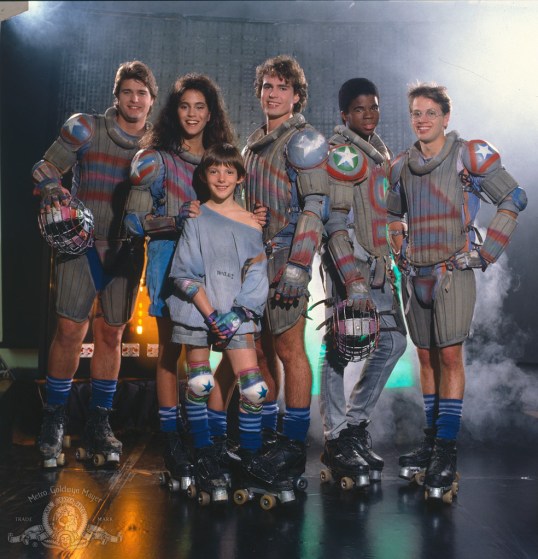
Guilty Pleasure No. 54: Solarbabies (dir by Alan Johnson)


Solarbabies is a film that has a reputation.  And it’s not a good one.

First released in 1986, Solarbabies is one of those post-Mad Max films that takes place in a post-apocalyptic desert society.  There are no more trees.  There is no more rain.  Order is kept by force.  The people are oppressed.  Outsiders live in desert towns that have names like “Tiretown.”  Children are forced to grow up in a combination of a prison and an orphanage.  The orphanage’s Warden (played by Charles Durning) mourns for the way the world used to be, before it became a sun-drenched nightmare without plants or water.  The fearsome Grock (Richard Jordan) makes sure that all of society’s rules are followed and the viewer knows he’s a bad guy because he wears a leather trench coat even when it’s over a 100 degrees outside.  (Grock never sweats.  If only the same could be said of the Warden.)  The evil Professor Shandray (Sarah Douglas) experiments on living subjects.  It’s a grim, grim world.

However, hope arrives in the form of a glowing orb!  A ten year-old deaf boy named Daniel (Lukas Haas) finds the orb and, after regaining his ability to hear, he names it Bodhi.  When Darstar (Adrian Pasdar) realizes that he can use Bodhi to protect the people of Tiretown, he steals the orb and runs off with it.  Determined to retrieve Bodhi, Daniel chases after him

How will Daniel survive in the desert?  Well, luckily, he’s not alone!  Daniel was a member of the orphanage’s roller hockey team, the Solarbabies.  Terra (Jami Gertz), Jason (Jason Patric), Metron (James LeGros), Rabbit (Claude Brooks), and Tug (Peter DeLuise) strap on their skates and roll out into the desert.  Pursuing them is Grock and his stormtroopers.

Meanwhile, somewhere in the desert, an old man named Greentree (Frank Converse) hopes to help the world recover.  Greentree looks like a thin version of Santa Claus and he hopes to bring rain and trees back to the Earth.  Yes, his name is Greentree.  There’s not really much room for subtlety in the world of Solarbabies.

Now, as I said at the beginning of this review, Solarbabies has a reputation.  Today, it’s probably best known for being the film that nearly bankrupted Mel Brooks.  Yes, that Mel Brooks.  When Brooks originally signed on to produce Solarbabies, it was envisioned as being a low-budget sci-fi film that would not have any spectacular special effects.  However, Brooks became convinced that Solarbabies had the potential to be a Star Wars-level hit so he increased the budget.  He also brought in Alan Johnson to direct the film, despite the fact that Johnson was a choreographer who had only directed one other film and had no experience with science fiction.  (Johnson’s previous film had been a remake of To Be Or Not To Be, which starred Brooks and featured Solarbabies’s Charles Durning in a supporting role).  At Brooks’s insistence, the film was shot in Spain to save money.  Unfortunately, no sooner had Johnson and the film’s cast arrived than Spain was hit by a series of unexpected storms that caused production to shut down.  Even when the rain stopped, disagreements between Johnson and the cast delayed the film even further.  The footage that was shot satisfied no one, leading to expensive reshoots.  In the end, Mel Brooks invested close to $20 million dollars in the film, even taking a second mortgage out on his house.  When the film was finally released, it was a critical and box office disaster, though Brooks later said that he did eventually break even after Solarbabies was released on DVD.

So, yes, Solarbabies has a bad reputation and it could be argued that it deserves it.  Tonally, the film’s a mess.  For a film that appears to have been made for a “family” audience, parts of the film are surprisingly violent  Scenes of the Solarbabies playing LaCrosse and cheerfully crossing the desert are mixed with some surprisingly graphic scenes of Grock and Shandray torturing prisoners.  Bodhi is a cute and glowing orb who gives Daniel back his hearing and then later brutally kills a lot of bad guys.  Jason Patric, Jami Gertz, and Charles Durning all seem to be trying to take the film seriously while Richard Jordan and Sarah Douglas give performances that feel more appropriate for a Hammer horror film.  Solarbabies is a bizarre mix of sincerity, sadism, and camp.  Nothing about it makes much sense.

And yet….

Listen, I can’t help it.  When I watched it last week, I enjoyed Solarbabies.  For all of its many and obvious flaws, it’s a hard film not to like.  It’s just so thoroughly ludicrous and messy that watching it becomes a rather fascinating viewing experience.  It’s hard not to, at the very least, be entertained by the sight of the cast roller skating through the desert.  A LaCrosse team battling futuristic Nazis for possession of a glowing orb that can cause rain to fall from a cloudless sky?  As far as I’m concerned, it’s impossible not to enjoy that on some level.

Of course, I seem to be in the minority as far as that’s concerned.  Alan Johnson never directed another movie after Solarbabies, though he did direct some of those really cool GAP commercials that aired in the early aughts.  You know the ones that featured people enthusiastically dancing in khakis?  That was him!  Those commercials are kind of a guilty pleasure themselves.  (Of course, because Mel Brooks nearly didn’t lose his house producing them, they’re not quite as infamous as Solarbabies.)  But still, Johnson stared his directorial career by directing Charles Durning to an Oscar nomination in To Be Or Not To Be and he ended it by directing Durning in a box office flop.  Well, no matter!  I enjoyed Solarbabies and I don’t care who knows it.

Previous Guilty Pleasures

  1. Half-Baked
  2. Save The Last Dance
  3. Every Rose Has Its Thorns
  4. The Jeremy Kyle Show
  5. Invasion USA
  6. The Golden Child
  7. Final Destination 2
  8. Paparazzi
  9. The Principal
  10. The Substitute
  11. Terror In The Family
  12. Pandorum
  13. Lambada
  14. Fear
  15. Cocktail
  16. Keep Off The Grass
  17. Girls, Girls, Girls
  18. Class
  19. Tart
  20. King Kong vs. Godzilla
  21. Hawk the Slayer
  22. Battle Beyond the Stars
  23. Meridian
  24. Walk of Shame
  25. From Justin To Kelly
  26. Project Greenlight
  27. Sex Decoy: Love Stings
  28. Swimfan
  29. On the Line
  30. Wolfen
  31. Hail Caesar!
  32. It’s So Cold In The D
  33. In the Mix
  34. Healed By Grace
  35. Valley of the Dolls
  36. The Legend of Billie Jean
  37. Death Wish
  38. Shipping Wars
  39. Ghost Whisperer
  40. Parking Wars
  41. The Dead Are After Me
  42. Harper’s Island
  43. The Resurrection of Gavin Stone
  44. Paranormal State
  45. Utopia
  46. Bar Rescue
  47. The Powers of Matthew Star
  48. Spiker
  49. Heavenly Bodies
  50. Maid in Manhattan
  51. Rage and Honor
  52. Saved By The Bell 3. 21 “No Hope With Dope”
  53. Happy Gilmore

Film Review: Testament (dir by Lynne Littman)


The 1983 film, Testament, is about death.  It’s about the death of a family, the death of a town, the death of a way of life, and the death of hope.

And you may be saying, “Well, gee, Lisa — that sounds like a really happy movie.”

Well, it’s not meant to be a happy movie.  Testament is a painfully grim movie about the end of the world.

The movie takes place in the town of Hamelin, California, which we’re told is 90 minutes away from San Francisco.  It’s a nice town, the type of place where everyone knows each other.  Mike (Mako) runs the local gas station and cares for his disabled son, Hiroshi (Gerry Murillo).  Elderly Henry Abhart (Leon Ames) spends his time on his radio, talking to strangers across the world.  Fania (Lilia Skala) offers up piano lessons.  Father Hollis (Philip Anglim) looks over the spiritual needs of the parish.  It’s a normal town.

The town is home to the Weatherlys.  Carol (Jane Alexander) is a stay-at-home mom who does volunteer work and who is directing the school play.  Tom (William Devane) is a common sight riding his bicycle through town every morning before heading off to work in San Francisco.  They have three children.  Mary Liz (Roxanna Zal) is a teenager who is taking piano lessons.  Brad (Ross Harris) is always trying to impress his father and is looking forward to his 14th birthday.  Scottie (Lukas Haas, in his first film) is the youngest and never goes anywhere without his teddy bear. They’re a normal family living a normal life in a normal town.

And then, one day, everything changes.  Scottie is watching Sesame Street when the program is suddenly interrupted by a clearly terrified anchorman who announces that New York has been bombed.  The president is about to speak but, before he can, there’s a bright flash of light, an distant explosion, and the entire town loses power.

At first, the people of Hamelin try to remain hopeful.  Though Tom works in San Francisco and San Francisco is among the many cities that have apparently been bombed (by who, we never learn), he also left a message on the family’s answer machine, telling them that he was on his way home.  Even with Tom missing, Carol continues to insist the he’ll be coming home at any minute.

Tom doesn’t come home.

The rest of the film follows the slow death of the town.  Even though the town was not damaged by the blast, the fallout soon hits.  Cathy (Rebecca De Mornay) and Phil (Kevin Costner) bury their newborn baby after it falls ill from radiation poisoning.  Mike, Henry, and Fania all start to grow physically ill and, in some cases, dementia sets in.  Father Hollis goes from being hopeful to being tired and withdrawn as he tries to attend to each and every death.  Larry (Mico Olmos), a young boy whose parents have disappeared, briefly moves in with the Wetherly family.  He disappears about halfway through the movie and we never learn if he left or if he died.  All we know is that no one mentions him or seems to notice that he’s gone.

Over the course of the film, Carol buries two of her children.  By the end of the film, her remaining child is starting to show signs of being sick, as is she.  Testament, which opened with bright scenes of a happy town, ends in darkness, with only a handful of people left among the living.  Even those who are alive are clearly dying and can only speak of the importance of remembering all of it, what they had and what they lost.

Sounds like a really happy film, right?  Well, it’s meant to be depressing.  It was made at a time when nuclear war was viewed as being not just probable but also inevitable.  Testament is a film that portrayed what a lot of people at the time were expecting to see in the future and, as a result, it’s not meant to be a particularly hopeful movie.  It’s a film that accomplishes what it set out to do, thanks to a great (and Oscar-nominated) performance from Jane Alexander and Lynne Littman’s low-key direction.  Unlike a lot of atomic war films, Testament does not feature any scenes of burning buildings or excessive gore.  That actually what makes it even more disturbing.  Even after the war, Hamelin still looks like it did beforehand, with the exception that many of the houses are now empty and that all of the residents are slowly dying.

(Would I have reacted as strongly to the film if I hadn’t watched it at a time when many people are afraid to go outside?  Perhaps not.  But this pandemic has brought extra power to a lot of films that may not have had as much of an impact in 2018.)

Testament is a powerful film, though not necessarily one that I ever want to watch again.

Sundance Film Review: Alpha Dog (dir by Nick Cassavetes)


The Sundance Film Festival is currently taking place in Utah so, for this week, I’m reviewing films that either premiered, won awards at, or otherwise made a splash at Sundance!  Today, I take a look at 2006’s Alpha Dog, which premiered, out of competition, at Sundance.

Sometimes, I suspect that I may be the only person who actually likes this movie.

Alpha Dog is a film about a group of stupid people who end up doing a terrible thing.  Johnny Truelove (Emile Hirsch) is a 20 year-old living in Los Angeles.  His father, Sonny (Bruce Willis) and his godfather, Cosmo (Harry Dean Stanton), are both mob-connected and keep Johnny supplied with the drugs that Johnny then sells to his friends.  It’s a pretty good deal for Johnny.  He’s got a nice house and a group of friends who are willing to literally do anything for him.  Johnny, after all, is the one who has the money.

When Johnny’s former best friend, Jake Mazursky (Ben Foster), fails to pay a drug debt, things quickly escalate.  When Johnny refuses to accept even a partial payment, Jake responds by breaking into Johnny’s house and vandalizing the place.  (Just what exactly Jake does, I’m not going to go into because it’s nasty.  Seriously, burn that house down…)  Johnny decides that the best way to force Jake to pay up is to kidnap Jake’s younger brother, Zack (Anton Yelchin, who is heartbreakingly good in this film).

It quickly turns out that Zack doesn’t mind being kidnapped.  Everyone tells Zack not to worry about anything and that he’ll be set free as soon as Jake pays his debt.  Zack decides to just enjoy his weekend.  Since Johnny is better at ordering people to commit crimes than committing them himself, he tells his friend, Frankie (Justin Timberlake), to keep an eye on Zack.

And so it goes from there.  While Johnny leaves town, Frankie introduces Zack to all of his friends.  Everyone laughs about how Zack is “stolen boy.”  Zack’s going to parties and having a good time.  However, Johnny returns and reveals that he’s been doing some thinking, as well as talking to his lawyer.  Regardless of whether Zack’s enjoying himself, both Johnny and Frankie could go to prison for kidnapping him.  Frankie argues that Zack won’t tell anyone about what happened.  Maybe they could just pay him off.  Johnny thinks it might be easier to just have him killed.  Frankie’s not a murderer but what about Elvis Schmidt (Shawn Hatosy)?  Elvis is a loser who desperately wants to be a part of Johnny’s crew and he owes Johnny almost as much money as Jake does.  How far would Elvis be willing to go?

(While this plays out, the film keeps a running tally of everyone who witnesses Zack not only being kidnapped but also held hostage.  In the end, there were at least 32 witnesses but none of them said a word.)

Alpha Dog is based on the true story of Jesse James Hollywood and the murder of 15 year-old Nicholas Markowitz.  Hollywood spent five years as a fugitive from justice, hiding out in Brazil and reportedly being protected by his wealthy family.  He was arrested shortly before the Sundance premiere of Alpha Dog.  Since it was filmed before Hollywood’s arrest and subsequent conviction, Alpha Dog changed his name to Johnny Truelove.  Johnny Truelove is a good name but it’s nowhere near as memorable as Jesse James Hollywood.

Alpha Dog sticks close to the facts of the case, providing a disturbing portrait of a group of aimless wannabe gangsters who, insulated by money and privilege, ended up getting in over their heads and committing a terrible crime.  Emile Hirsch gives one of his best performances as the sociopathic Johnny Truelove while Ben Foster is both frightening and, at times, sympathetic as Jake.  Justin Timberlake is compelling as he wrestles with his conscience while Shawn Hatosy is properly loathsome as the type of idiot that everyone knows but wish they didn’t.  The dearly missed Anton Yelchin is heartbreaking and poignant as Zack.  And finally, there’s Harry Dean Stanton.  Stanton doesn’t say a lot in this movie.  Often times, he’s just hovering in the background.  The moment when he reveals his true self is one of the best in the movie.

As I said, I sometimes feel as if I’m the only person who likes this movie.  It got mixed reviews when it was released and, in the years since, it rarely seems to ever get mentioned in a positive context.  Personally, I think it’s a well-done portrait of privilege, stupidity, and the lengths to which people will go to avoid taking a stand.  In the end, no one escapes punishment but it’s the rich guy who, at the very least, gets to spend at least a few years enjoying his freedom in Brazil.

Previous Sundance Film Reviews:

  1. Blood Simple
  2. I Don’t Feel At Home In This World Anymore
  3. Circle of Power
  4. Old Enough
  5. Blue Caprice
  6. The Big Sick

The TSL’s Daily Horror Grindhouse: Long Time Dead (dir by Marcus Adams)


key_art_long_time_dead

Am I the only person in the world who likes the 2002 British horror film, Long Time Dead?

I sometimes think that I may be.  Whenever I mention the film to anyone, they either say they’ve never heard of it or they kind of roll their eyes.  I have yet to read a positive review online.  Long Time Dead has only got a 4.9 rating at the imdb, which is saying something because usually even the worst of films can still manage to score at least a 6.0.

So, I guess it’s true.  I guess only I like Long Time Dead.

Now, I should clarify that, just because I like a movie, that doesn’t necessarily mean that it’s very good.  Long Time Dead is definitely a flawed film.  This is one of those films where an evil spirit — in this case, a fire demon known as a djinn — pursues a group of friends, killing them one-by-one.  There are eight friends, which seems to be a bit excessive for a 94 minute film.  We’re never quite sure how all of these characters got to know each other in the first place.  Some of them appear to be college students.  Four of them share a flat.  Another one lives on a boat.  And as for the other three, they appear to all live in the same building but still, you’re never really sure how everyone is related.

What’s odd is that we only really get to know five of the eight characters, which again leads the viewer to wonder why we needed the other three.  We know that Spencer (James Hillier) is perpetually stoned and that all of this is kind of his fault because he’s the one who suggested that the group should use a Ouija board to try to contact a spirit.  We know that his girlfriend, Lucy (Marsha Thomason), knows about the supernatural and, for some reason, lives on a boat.  We know that Liam (Alec Newman) was traumatized when his father murdered his mother.  We know that Liam’s girlfriend, Annie (Melanie Gutteridge), has asthma.  We know that Rob (Joe Absolom) appears to be a nice guy.  And then there’s Webster (Lukas Haas), Stella (Lara Belmont), and Joe (Mel Raido), who don’t really have any reason for being in the movie.

(Seriously, what is respected Texas character actor and friend-of-Leonardo-DiCaprio Lukas Haas doing in a low-budget British horror film?)

At first, we’re led to believe that the djinn is killing people because it’s upset that it was dragged out of its world by the Ouija board.  But, as the film progresses, we learn that the djinn has a personal score to settle with one of his potential victims.  We also learn that someone may or may not be possessed by the djinn.  It’s all a bit too much to keep track of.  I’ve read rumors that Long Time Dead was a difficult production and the fact that the film has seven credited writers might provide a clue as to why the film is such a narrative mess.

And yet, despite all of that, I still like Long Time Dead.

Why?

The reason is very simple.

The movie scared me.

Maybe it was because I was watching it late at night and I had the lights out or maybe it was because, as an asthmatic, I related to poor Annie but Long Time Dead scared the Hell out of me the first time I saw it.   Not only is the film full of effective jump scenes but the djinn is a terrifying monster.  He’s relentless, ruthless, and merciless.  I think what truly scared me is that the djinn would attack anyone anywhere.  There was literally nowhere that you could hide from it.

Long Time Dead is no classic but it still made me scream.

Playing Catch-Up With The Films of 2015: The Revenant (dir by Alejandro G Inarritu)


The_Revenant_2015_film_poster

Before I continue to catch up with reviewing the films of 2015 by taking a look at The Revenant, I want to ask a question and I request that you give this some serious thought.  Is Jeff Wells just a troll or is he seriously a moron?  Or maybe he’s both, that’s another possibility.  For those of you who stay out of the darker parts of the internet, Jeff Wells is a film blogger who thinks that, because he voted for Obama, he’s earned the right to regularly use his column to disparage women.  (Wells is the one who publicly complained that the lead of Diary of a Teenage Girl wasn’t, in his eyes, fuckable enough to be a compelling 15 year-old protagonist.)  Jeff Wells tweeted the following about The Revenant:

And Jeff Wells hasn’t been alone in claiming that only men can truly appreciate The Revenant.  On Overland, Alexandra Heller-Nicholas has an excellent post about this line of male critical thought.  Now, speaking for myself, I liked The Revenant a lot more than Heller-Nicholas apparently did.  But, at the same time, she hits the nail on the head when it comes to this idea that The Revenant is a film so intense and so full of agony that only men could possibly enjoy it.  Much like her, I felt as if “critics” like Jeff Wells and Rolling Stone‘s Peter Travers were personally challenging me, as a woman, to actually sit through The Revenant without running from the theater in disgust or hiding my eyes in terror.

And, quite frankly, that’s bullshit.  Yes, The Revenant is intense and yes, I did have a bit of a hard time watching that bear maul Leonardo DiCaprio but, at the same time, how would Jeff Wells or Peter Travers handle being mauled by a bear?  For that matter, how would either one of them handle being in a high-speed chase or being shot at?  Would either one of them be able to outrun an explosion or do any of the other stuff that regularly happens in films that supposedly only appeal to men?

(For that matter, how would Jeff Wells or Peter Travers handle monthly menstrual cramps or giving birth or anything else that women have to deal with in the real world?  I imagine they’d probably end up begging the bear to finish them off.)

And really, the whole point of The Revenant is that most human beings (regardless of gender) would not have survived being mauled by a bear or being buried alive or spending months exposed to the harsh wilderness or having pieces of their body start to decay.  These are all things that happen to hunter Hugh Glass (Leonardo DiCaprio) over the course of The Revenant and the film suggests that the only reason he survives is because he’s driven by a desire for revenge.  When Glass’s fellow hunter, the gruff Fitzgerald (Tom Hardy), decided to abandon Glass, he also murdered Glass’s son, Hawk.  Still immobilized by his wounds, Glass could only watch as Hawk was brutally killed.

(Interestingly enough, Fitzgerald is like Glass in that he has also survived a terrible injury.  Fitzgerald regularly wears a skullcap to hide the fact that he was scalped in the past.  In many ways, Fitzgerald is almost a shadow of Glass.  Glass has his son to remind him of what it means to be human but Fitzgerald has no one.  And after Hawk is murdered, neither does Glass.)

Though the film focused on Glass’s struggle to survive until he could again track down the men who abandoned him, I have to admit that my main concern was with the character of Jim Bridger (Will Poulter).  Bridger, after all, agreed to stay behind with Glass and Fitzgerald and to make sure that Glass received a proper burial after succumbing to his wounds.  Bridger was not present when Fitzgeralnd killed Hawk and buried Glass alive and expressed remorse after being falsely told that Glass was dead.  Still, The Revenant is a revenge flick and, as I watched, I found myself wondering if Glass would forgive Bridger or if he would take vengeance even on someone who was merely misguided.  (If you’ve ever seen a 70s revenge flick, you know that even sincere remorse is usually not enough to avoid being punished.)  Since the film continually asks whether or not Glass can survive without sacrificing his humanity, how he handles Bridger is one of the most important scenes in the film.

The Revenant opens with an absolutely terrifying sequence in which a group of hunters is slaughtered by a Native American tribe and it maintains that intensity through the entire film.  DiCaprio, Hardy, and Poulter all give excellent performances and special mention should also be made of Domhnall Gleeson, who plays the upright but ineffectual leader of the hunting party and for whom 2015 was a helluva year.  (Along with appearing in The Revenant, Gleeson also appeared in Brooklyn, Ex Machina, and Star Wars: The Force Awakens. )  It’s not always an easy film to watch (though, for me, the close-up of a wound oozing puss was a lot more unsettling than that bear mauling Glass) and there’s a few scenes where director Alejandro Inarritu gives in to his more pretentious tendencies but, for the most part, The Revenant is never less than watchable.

The Revenant is currently an Oscar front-runner.  Last night, it beat the highly hyped Spotlight at the Golden Globes.  Personally, as good as the film is, I think there are a lot of films that deserve a best picture nomination more than The Revenant.  It’s been a great year for film, after all.  That said, I do think The Revenant is definitely an improvement on Inarritu’s previous Oscar winner, Birdman.

The Revenant is an intense and harrowing film that can be seen and appreciated (or, for that matter, disliked) by anyone.  Don’t let anyone tell you differently!

Embracing the Melodrama Part II #75: Witness (dir by Peter Weir)


Witness_movieLast night, I was lucky enough to watch Witness, a best picture nominee from 1985.

Taking place in Pennsylvania, Witness tells the story of what happens when an Amish widow named Rachel (Kelly McGillis) and her 8 year-old son Samuel (Lukas Haas) decide to take a trip to visit Rachel’s sister.  Traveling on an Amtrak train, Samuel is amazed by his first view of the world outside of the close-knit and insular Amish society.  However, Samuel’s excitement soon turns to horror when they arrive in Philadelphia and he witnesses a man being brutally murdered.

Detective John Book (Harrison Ford, who received his first and, to date, only Oscar nomination for this film) is assigned to the case and arranges for Rachel and Samuel to stay with his sister.  John soon discovers that the murder was committed by two crooked cops, McFee (Danny Glover, who is pure evil in this film) and Ferguson (Angus MacInnes).  John goes to his superior officer, Chief Schaefer (Josef Sommer) with his evidence.  Soon after, McFee attempts to kill and seriously wounds John.  John realizes that Schaefer must be corrupt as well.

Book manages to drive Rachel and Samuel back to their farm in Lancaster County but, after dropping them off, he passes out from blood loss.  Knowing that sending John to the hospital would reveal Rachel and Samuel’s location to Schaefer, Rachel’s father (Jan Rubes) reluctantly allows John to stay at the farm.

And so, while McFee, Ferguson, and Schaefer search for him, John temporarily pretends to be Amish.  He works in the fields.  He helps to build a barn.  He becomes something of a surrogate father to Samuel and he begins a forbidden flirtation with Rachel.

He also goes to town, where he watches as an idiotic local bullies the Amish, knowing that their religion forbids them from fighting back.  John responds by punching a bully, upsetting both the Amish and the a local store owner who yells that this will be terrible for the tourism.  In many ways, the scene is played for laughs and applause but there’s a very serious subtext here, as it would appear that the area’s main appeal to tourists is that you can humiliate the Amish without having to worry about any sort of retaliation.

While we, as viewers, definitely get some satisfaction from seeing John punch that jackass, it also allows Schaefer to discover where he and Rachel are hiding.  One morning, McFee, Ferguson, and Schaefer pull up outside the farm.  They get out of their car and, as the sun rises and with beautiful green fields on either side of them, the three men hold up their shotguns and start to walk down the road….

Witness may technically be a cop film but it’s actually so much more.  It’s a character study of a deeply cynical man who finds himself changed by simple and innocent surroundings.  It’s a love story, with Ford and McGillis illuminating the screen with their chemistry.  It’s a celebration of community, with the harshness of Philadelphia being contrasted with life among the Amish.  It’s a film full of beautiful images and it also features an excellent performance from Harrison Ford.

It’s a good film.  I’m glad that I witnessed Witness.